Introduction: Navigating the Global Market for Professional painters tape
Sourcing professional painters tape for large-scale commercial finishing projects requires navigating a complex landscape of adhesion technologies, surface compatibility requirements, and regional supply chain variables. For procurement teams managing multi-site developments across diverse climates—from the humidity of Vietnam to the industrial standards of Germany—selecting the right masking solutions directly impacts project timelines, finish quality, and labor costs. The challenge lies not merely in finding tape, but in securing consistent, high-performance products that adhere reliably to wood, ceramic, metal, and glass while enabling clean removal across varying environmental conditions and surface textures.
What challenges do international buyers face when sourcing professional-grade masking solutions?
Global procurement teams encounter significant variability in adhesive performance standards, particularly when sourcing across continents with differing humidity levels, temperature extremes, and surface preparation protocols. The absence of universal quality benchmarks means buyers must evaluate solvent-free formulations, clean removal timeframes of up to 14 days, and PaintBlock® technologies while ensuring compliance with regional regulations—from EU environmental standards to local construction codes in emerging African and South American markets.
How does surface compatibility influence tape selection for diverse applications?
This guide examines critical differentiation factors between medium and high-adhesion formulations, analyzing performance across cured painted walls, glass, metal, vinyl, and textured surfaces common in Middle Eastern and European construction. We explore technical specifications including immediate paint application capabilities, multi-surface bonding requirements, and residue-free removal essential for professional finishing standards.
What procurement strategies ensure cost-effective bulk purchasing across regions?
Beyond product specifications, we address comprehensive supplier vetting methodologies, technical documentation requirements (MSDS, FSC certifications, compliance letters), and logistics optimization for markets including Vietnam, Germany, and South America. By analyzing adhesion science, climate-specific performance data, and bulk procurement frameworks, this guide equips B2B buyers with actionable intelligence to secure reliable, high-quality professional painters tape that meets diverse regional demands while optimizing project economics and minimizing rework costs.
Understanding Professional painters tape Types and Variations
| Type Name | Key Distinguishing Features | Primary B2B Applications | Brief Pros & Cons for Buyers |
|---|---|---|---|
| Blue Pro-Grade Multi-Surface | Medium adhesion, 14-day clean removal, solvent-free adhesive, compatible with cured painted walls/trim, immediate paint application | Interior commercial painting, residential renovations, general construction finishing, office fit-outs | Pros: Versatile across climates, no wait time before painting, clean removal. Cons: Unsuitable for fresh paint (<30 days), limited outdoor UV resistance |
| Advanced Edge-Seal (PaintBlock Technology) | Proprietary polymer edge barrier prevents paint bleed, medium adhesion, blue backing, solvent-free formulation | Precision trim work, decorative painting, multi-pattern designs, luxury hospitality projects, high-end residential | Pros: Razor-sharp lines, reduces touch-up labor, professional finish. Cons: Premium pricing, requires proper application technique, specific to latex paints |
| Delicate Surface/Low Tack | Low adhesion strength, 60-day removal window, designed for sensitive substrates, flexible crepe backing | Restoration projects, wallpaper installation, historic building maintenance, freshly painted commercial spaces (<30 days) | Pros: Prevents surface damage on curing paint, safe for fabric/wallpaper, extended application window. Cons: Poor adhesion on rough/textured surfaces, unsuitable for high-traffic masking |
| Exterior/UV-Resistant Heavy-Duty | High-tack weather-resistant adhesive, UV-stable backing, 7-21 day outdoor rating, temperature range -40°F to 200°F | Exterior commercial facades, industrial equipment painting, outdoor signage, infrastructure projects, masonry work | Pros: Withstands temperature fluctuations, strong hold on metal/masonry, extended outdoor durability. Cons: Risk of residue if overexposed, higher cost per roll, requires timely removal |
What Makes Blue Pro-Grade Multi-Surface Tape Essential for Commercial Projects?
Blue pro-grade multi-surface tape represents the industry standard for interior commercial painting and renovation contracts across international markets. Featuring medium adhesion formulations and solvent-free adhesives, these tapes bond effectively to cured painted walls, glass, metal, and vinyl trim while allowing immediate paint application without wait times. For B2B buyers sourcing for construction crews across diverse climates—from humid Southeast Asian markets to temperate European zones—this type offers 14-day clean removal windows and compatibility with latex-based coatings. When procuring in bulk, prioritize rolls with consistent unwind tension and crepe paper backing durability to minimize waste on large-scale residential developments or office fit-outs, while verifying FSC certification for sustainability-compliant European projects.
How Does Advanced Edge-Seal Technology Improve Project Outcomes?
Advanced edge-seal tapes, notably those incorporating proprietary polymer barriers like PaintBlock® technology, create a micro-barrier along tape edges to prevent paint bleed and deliver razor-sharp lines essential for decorative and high-end commercial applications. These medium-adhesion variants excel on baseboards, crown molding, and intricate trim work where precision defines contractor reputation and client satisfaction. B2B purchasers should evaluate the adhesive’s solvent-free composition for regulatory compliance in German and EU markets and ensure compatibility with both latex and low-VOC coatings. While commanding premium pricing compared to standard blue tape, the reduction in touch-up labor and material waste delivers measurable ROI for professional painting firms, facility maintenance contractors, and luxury hospitality developers.
When Should Procurement Teams Specify Delicate Surface Tape?
Delicate surface tapes, characterized by low-tack adhesives and extended 60-day removal windows, serve critical functions in restoration, historic preservation, and newly constructed environments where substrates remain curing-sensitive. These variations prevent surface damage on fresh paint (less than 30 days old), wallpaper, fabric, and sealed countertops—common scenarios in hospitality renovations and commercial interior upgrades across Vietnam and emerging African markets. For buyers sourcing across Middle Eastern and African markets where temperature fluctuations affect adhesive performance, selecting UV-stable delicate tapes ensures clean removal without substrate lifting or adhesive transfer. Procurement considerations should include verifying backing flexibility for curved architectural elements and ensuring adhesive formulations resist drying out during extended tropical storage periods.
Why Invest in Exterior-Grade UV-Resistant Masking Solutions?
Exterior-grade professional tapes utilize high-tack, weather-resistant adhesives and UV-stable backings designed to withstand 7-21 days of outdoor exposure across varying climatic conditions. These heavy-duty variants adhere aggressively to masonry, aluminum siding, vinyl molding, and industrial metal fixtures—essential for infrastructure projects, exterior commercial facades, and industrial equipment refinishing in demanding environments. B2B buyers must balance adhesion strength against removal timelines, as extended outdoor exposure in high-heat environments common in South American and Middle Eastern construction increases residue risks. Specifying tapes with temperature-rated adhesives (typically -40°F to 200°F) and bulk packaging options ensures performance integrity during seasonal painting schedules while optimizing shipping costs for international logistics.
Key Industrial Applications of Professional painters tape
| Industry/Sector | Specific Application of Professional painters tape | Value/Benefit for the Business | Key Sourcing Considerations for this Application |
|---|---|---|---|
| Automotive Manufacturing & Collision Repair | Precision masking during OEM multi-stage coating, two-tone design execution, and protection of trim/seals during refinishing | Prevents overspray on sensitive components, eliminates costly rework, and ensures sharp paint lines for premium finishes | Heat resistance up to 100°C+, compatibility with solvent-based automotive paints, clean removal from metal/plastic without adhesive transfer |
| Commercial Construction & Infrastructure Development | Masking drywall joints, protecting aluminum window frames/glass during exterior painting, and temporary surface protection on flooring | Enables efficient multi-trade workflows, protects high-value architectural finishes, and ensures clean demarcation on large-scale projects | UV resistance for 14+ day outdoor exposure, strong adhesion to dusty concrete/masonry, availability in bulk rolls for large project volumes |
| Aerospace & Aviation Maintenance | Masking aircraft fuselages during repainting, protecting avionics/sensors during coating applications, and precision lines on composite materials | Maintains aerodynamic surface integrity, prevents chemical contamination of critical systems, and supports regulatory compliance | Compatibility with aviation-grade polyurethane coatings, static-dissipative properties, residue-free removal from aluminum/composites, temperature stability |
| Marine & Offshore Engineering | Masking hull sections during anti-fouling coating application, protecting deck hardware during maintenance, and creating safety markings on vessels | Withstands harsh saltwater environments during application, prevents corrosion-inducing residue, and supports efficient dry-dock maintenance schedules | Water-resistant adhesive backing, resistance to salt spray and humidity during curing, UV stability for outdoor dry-dock operations, clean removal from gelcoat |
How Does Professional Painters Tape Optimize Automotive Manufacturing Workflows?
In automotive OEM and collision repair facilities, professional painters tape functions as a precision masking solution during multi-stage coating processes, enabling intricate two-tone designs while protecting rubber seals, chrome trim, and polycarbonate headlights from overspray. For B2B buyers managing operations in emerging manufacturing hubs like Vietnam or Brazil, selecting tapes with solvent-resistant adhesives prevents edge bleeding during basecoat and clearcoat applications. Additionally, clean-removal formulations are essential to avoid adhesive transfer onto delicate plastic components and painted surfaces, significantly reducing rework costs and maintaining production schedules in high-volume assembly environments.
What Masking Solutions Are Essential for Large-Scale Commercial Construction?
Large-scale commercial construction and infrastructure projects across Germany and the Middle East demand painters tape capable of withstanding prolonged UV exposure during high-rise exterior painting while adhering reliably to dusty concrete, masonry, and aluminum substrates. The tape facilitates efficient multi-trade workflows by allowing painters to mask drywall joints and protect window glass while other contractors complete rough-in electrical or plumbing work. This coordination reduces project timelines and protects high-value finishes—such as anodized aluminum frames and natural stone facades—from concrete splatter, mortar, and paint migration in challenging climatic conditions ranging from desert heat to European humidity.
Why Is Precision Masking Critical for Aerospace Maintenance and Safety?
Aerospace manufacturing and MRO (Maintenance, Repair, Overhaul) facilities require professional masking solutions that maintain secure adhesion during aggressive chemical stripping and repainting of aircraft fuselages without leaving residue on sensitive aluminum alloys, titanium, or carbon fiber composites. For aviation service providers operating in high-humidity regions like coastal Africa or Southeast Asia, tapes must demonstrate static-dissipative properties to protect sensitive avionics and radar equipment. Furthermore, compatibility with military-grade polyurethane and epoxy coatings is essential to ensure regulatory compliance with aviation safety standards while supporting rapid turnaround times critical to fleet availability and operational efficiency.
How Can Marine Contractors Ensure Coating Integrity in Harsh Environments?
Marine and offshore engineering contractors rely on professional painters tape to mask hull sections, waterlines, and superstructures during the application of anti-corrosive primers and anti-fouling coatings, where constant exposure to salt spray and tropical humidity challenges adhesive performance. The tape must form aggressive bonds to gelcoat, fiberglass, and marine-grade aluminum surfaces yet release cleanly after extended curing periods in outdoor dry-dock conditions. For shipyards in South America and the Middle East, sourcing UV-stable formulations prevents the tape from becoming brittle or leaving difficult-to-remove adhesive deposits that could compromise coating integrity, ensuring vessels meet classification society standards while minimizing maintenance downtime.
A stock image related to Professional painters tape.
3 Common User Pain Points for ‘Professional painters tape’ & Their Solutions
How Do You Prevent Surface Damage When Masking Freshly Painted or Delicate Walls?
The Problem:
B2B buyers frequently encounter costly rework when contractors apply high-adhesion painter’s tape to insufficiently cured painted surfaces, decorative wallpaper, or natural wood veneer. Standard masking tapes or aggressive multi-surface pro tapes can pull up finish coats, leave sticky residue, or damage delicate substrates upon removal, particularly when left applied beyond 24 hours. This challenge intensifies in commercial projects across humid climates where paint curing times extend unpredictably, creating inconsistent adhesion that results in surface damage requiring expensive touch-ups and delaying project handover. The financial impact multiplies across large hospitality or residential developments where hundreds of linear meters require remasking and repainting.
The Solution:
Specify low-to-medium adhesion formulations specifically engineered for delicate surfaces and paint cured less than 30 days. Prioritize tapes offering 14-day clean removal windows with solvent-free, high-performance adhesives that bond quickly without penetrating porous surfaces. Mandate 24-hour test patches on inconspicuous areas before full application, and establish protocols for removal at 45-degree angles while paint edges remain slightly tacky rather than fully cured. For international procurement across diverse climates—from German temperate zones to Vietnamese tropical environments—verify that adhesive formulations suit local humidity levels. Consider tapes with FSC certification for sustainable sourcing requirements common in European markets, ensuring environmental compliance alongside technical performance.
Why Does Paint Bleed Under Masking Edges on Textured Surfaces?
The Problem:
Professional contractors consistently struggle with paint seepage beneath tape edges when working on textured drywall, stucco, or popcorn ceilings, resulting in jagged lines that necessitate manual cutting-in or complete repainting. This issue typically stems from using general-purpose masking tape rather than professional-grade painter’s tape, which lacks edge-sealing technology necessary to prevent capillary action of liquid paint. On large commercial projects, bleed-through significantly reduces productivity and compromises the crisp aesthetic required for high-end residential finishes or hospitality environments. The problem worsens when contractors select incorrect tape widths for specific applications, using narrow tapes on wide trim or failing to seal edges properly against irregular surfaces common in Middle Eastern and Mediterranean construction.
The Solution:
Invest in professional painter’s tapes featuring proprietary edge-sealing technologies, such as PaintBlock® or similar polymer-based barriers that activate upon contact with latex paint to create a micro-barrier against seepage. Ensure comprehensive surface preparation includes cleaning dust, oils, and debris that prevent proper adhesion. Apply tape with consistent pressure using a plastic blade or putty knife to seal edges completely against texture peaks. For professional contractors, stock multiple widths—typically 24mm for trim detail and 48mm for broad surface protection—to optimize application speed. Remove tape immediately after painting while the coating remains wet; waiting for full cure allows paint bridges to form between tape and wall, tearing when removed and ruining the clean line. Train crews to recognize that medium-adhesion blue tapes outperform high-tack alternatives on textured surfaces common in international construction markets.
How Long Can Professional Painter’s Tape Remain Applied Without Compromising Removal?
The Problem:
Project delays in international construction frequently result in tape remaining applied beyond recommended timeframes, causing adhesive transfer, difficult removal, or permanent substrate damage that increases labor costs significantly. B2B buyers sourcing from global suppliers face additional complications when tapes formulated for temperate European climates lose adhesion in high-humidity African or Southeast Asian environments, curling at edges and allowing paint infiltration. Temperature fluctuations during shipping can also degrade adhesive performance before products reach job sites. This creates logistical challenges for contractors managing multi-phase projects where masking must remain in place for weeks, particularly in commercial developments with extended drying periods between coats or weather-dependent exterior work.
The Solution:
Select UV-resistant professional tapes explicitly rated for 14-day clean removal, ensuring adhesive stability during extended project timelines common in large-scale developments. For tropical climates, specify tapes with humidity-resistant synthetic rubber adhesives rather than standard acrylic formulations that fail above 70% relative humidity. Store inventory in climate-controlled environments between 60-80°F (15-27°C) during transit and warehousing to prevent adhesive degradation. Implement color-coded tape systems—blue for general cured surfaces, green for multi-surface applications, yellow for delicate finishes—to standardize removal schedules across international teams with varying language capabilities. When extended masking periods are unavoidable, choose premium grades specifically rated for 21-day removal, and strictly avoid solvent-based coatings that can degrade adhesive polymers over time, ensuring clean removal even after unforeseen project delays.
Strategic Material Selection Guide for Professional painters tape
When sourcing professional-grade painters tape for large-scale contracting or retail distribution across diverse international markets, understanding substrate composition directly impacts project outcomes, labor efficiency, and client satisfaction. Material selection determines not only adhesion reliability and surface compatibility, but also clean removal characteristics across varying climate conditions—from humid Southeast Asian construction sites to arid Middle Eastern developments. Understanding these material distinctions enables procurement managers to align product specifications with regional climate challenges, surface prevalence, and labor cost structures.
Which Crepe Paper Masking Tape Specifications Suit General Contracting?
Crepe paper remains the industry standard for interior residential and commercial painting due to its versatile conformability and cost efficiency. This creped, textured paper backing flexes around irregular surfaces and trim edges while providing sufficient tensile strength for clean removal. Medium-adhesion formulations bond effectively to cured painted walls, drywall, glass, and metal without damaging underlying finishes. For B2B procurement across European and South American markets, specify solvent-free rubber-based adhesives that accommodate latex paint applications and offer 7-14 day clean removal windows. While crepe paper tapes present economical solutions for high-volume usage, they exhibit limited UV resistance and may become difficult to remove if exposed to direct sunlight or high temperatures beyond recommended durations. This makes them particularly suitable for large-scale housing developments and commercial interior refreshes where budget optimization outweighs extended outdoor exposure requirements.
When Should B2B Buyers Specify Washi Paper Tape for Premium Finishes?
Washi paper (Japanese rice paper) tapes address high-end architectural finishing and hospitality projects where razor-sharp paint lines justify premium investment. The thin yet strong natural fibers create minimal edge buildup while preventing paint bleed through advanced micro-barrier technology or proprietary sealant coatings. These tapes excel on delicate surfaces such as fresh drywall, wallpaper borders, and custom woodwork where traditional tapes might lift substrate material or leave adhesive residue. Procurement teams should note that washi tapes typically command 40-60% higher unit costs than standard crepe paper, but reduce total project labor time through reliable single-pass application and extended clean removal windows up to 30 days post-application. For international buyers, verifying FSC certification ensures sustainable sourcing compliance increasingly required in European and Middle Eastern green building standards.
How Does Polypropylene Film Tape Perform in Exterior and High-Humidity Applications?
Polypropylene film backing, commonly recognized as blue or green painters tape, offers superior dimensional stability in challenging environmental conditions prevalent in Middle Eastern and African construction sectors. The plastic-based substrate resists moisture absorption and humidity-induced curling, making it ideal for exterior masonry, metal siding, aluminum trim, and bathroom renovations in tropical climates. Unlike paper-based alternatives, these tapes maintain structural integrity during unexpected rain exposure and provide UV resistance for up to 14 days without adhesive transfer. Additionally, the film substrate prevents paint absorption, allowing for multiple re-taping cycles during complex multi-color decorative schemes without edge fraying. However, the film lacks the conformability of crepe paper on heavily textured surfaces, potentially compromising seal quality on stippled walls or rough concrete.
What Applications Require Flatback Paper Tape for Heavy-Duty Masking?
Flatback paper tapes utilize smooth, non-creped kraft paper engineered specifically for aggressive adhesion on rough, porous substrates common in industrial infrastructure. These heavy-duty formulations bond effectively to stucco, brick, concrete block, and unfinished wood prevalent in commercial developments throughout emerging markets. The high-tack adhesive systems withstand plaster texture, masonry dust, and uneven surface profiles, though they require strict adherence to removal timing—typically within 3-7 days—to prevent substrate damage or adhesive residue. Inventory planning should account for seasonal construction peaks in regions with heavy monsoon or dry seasons where masonry work concentrates. B2B buyers should reserve flatback options for exterior commercial work and renovation projects rather than delicate interior finishes, as the aggressive bond may lift paint or damage sensitive surfaces upon removal.
| Material | Typical Use Case for Professional painters tape | Key Advantage | Key Disadvantage/Limitation | Relative Cost |
|---|---|---|---|---|
| Crepe Paper Masking Tape | Interior residential/commercial painting on cured walls, trim, glass | Cost-effective conformability on irregular surfaces | Limited UV resistance; difficult removal if overheated | Low |
| Washi Paper Tape | High-end finishes, delicate surfaces, sharp line requirements | Extended 30-day clean removal; superior edge seal | Premium pricing; limited availability in some regions | High |
| Polypropylene Film Tape | Exterior masonry, humid environments, metal/trim work | UV and moisture resistance; dimensional stability | Poor conformability on textured surfaces | Medium-High |
| Flatback Paper Tape | Rough substrates: stucco, brick, concrete, unfinished wood | Aggressive adhesion on porous/dusty surfaces | Risk of surface damage; narrow removal window | Medium |
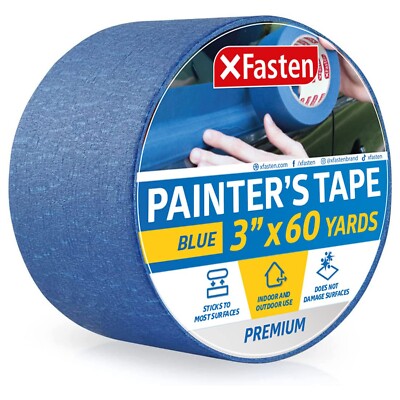
A stock image related to Professional painters tape.
In-depth Look: Manufacturing Processes and Quality Assurance for Professional painters tape
Understanding the manufacturing intricacies behind professional painter’s tape enables procurement teams to distinguish between commodity masking products and premium solutions engineered for commercial applications. The production process involves precision coating technologies, specialized adhesive formulations, and rigorous quality assurance protocols that directly impact performance across diverse climates and surface substrates common in international construction markets.
What Raw Materials Define Premium Professional Painter’s Tape?
The foundation of high-performance painter’s tape begins with Japanese crepe paper backing, typically ranging from 4.5 to 6.5 mils in thickness, which provides the tensile strength necessary for clean removal without tearing. Manufacturers source long-fiber cellulose pulp certified by the Forest Stewardship Council (FSC) to ensure sustainable forestry practices—a critical consideration for European markets, particularly Germany, where environmental compliance regulations are stringent.
Adhesive formulation represents the primary differentiator between professional and consumer-grade products. Premium tapes utilize solvent-free synthetic rubber adhesives applied through hot-melt coating processes, eliminating volatile organic compounds (VOCs) while maintaining aggressive initial tack. The adhesive layer typically measures 25-35 microns in thickness, calibrated to provide medium adhesion suitable for cured painted walls, glass, and metal without substrate damage. Advanced formulations incorporate proprietary polymers that activate upon contact with latex paint moisture, creating micro-barriers that prevent bleed-through.
How Is Edge-Sealing Technology Integrated During Manufacturing?
Leading manufacturers employ patented technologies like PaintBlock® during the saturation phase of production. This process involves impregnating the crepe paper edges with a polymer-based sealant that reacts with water-based paints to form a gel barrier. The application requires precision coating heads that deposit the sealant within 0.5mm of the tape edge, ensuring consistent coverage without compromising flexibility.
Micro-creping techniques follow, where the paper undergoes mechanical compression to create a conformable structure that maintains adhesion over textured surfaces. This mechanical processing must achieve specific elongation percentages—typically 8-12%—to balance conformability with structural integrity. Quality checkpoints during this phase verify that the crepe pattern remains uniform across the entire web width, preventing weak points that could cause adhesive transfer or edge lifting during application.
What Quality Control Protocols Ensure Multi-Surface Compatibility?
Manufacturers conduct ASTM D3330 adhesion testing to validate performance across the diverse surfaces encountered in Middle Eastern and African construction markets, where temperature fluctuations and humidity variations challenge tape integrity. Laboratory technicians apply standardized samples to stainless steel, glass, drywall, and vinyl substrates, measuring peel adhesion values that must fall within 20-35 oz/in width for professional-grade classification.
Shear strength testing evaluates the tape’s resistance to slippage on vertical surfaces, particularly critical for ceiling applications and exterior siding work common in South American markets. Batches undergo accelerated aging tests in environmental chambers simulating 60°C temperatures and 90% humidity to replicate tropical storage conditions. Products must maintain adhesion stability for minimum 14-day removal windows without increasing adhesive transfer risk.
Surface compatibility matrices test each production batch against oil-based and latex paint systems, verifying that the tape releases cleanly without pulling underlying paint layers—a frequent concern when working with newer low-VOC formulations prevalent in European commercial projects.
How Do Manufacturers Validate Clean Removal Performance?
Clean removal capability requires cyclic testing protocols where applied tape samples undergo UV exposure testing for 14-day periods, simulating outdoor construction delays. Spectrophotometric analysis measures adhesive residue left on various substrates, with acceptable thresholds set below 5% surface coverage. For tapes destined for high-end interior markets like Vietnam’s growing hospitality sector, manufacturers perform low-temperature removal testing at 4°C to ensure the adhesive releases properly in air-conditioned environments without fracturing.
Edge bleed testing represents another critical QA checkpoint. Technicians apply tape to standardized test panels, paint with high-solids latex formulations, and inspect under 10x magnification for paint seepage. Professional-grade products must demonstrate zero bleed-through on smooth surfaces and less than 0.1mm penetration on lightly textured drywall.
What Environmental and Safety Certifications Matter for Global Distribution?
B2B buyers should verify REACH compliance for European Union distribution, ensuring tapes contain no restricted phthalates or heavy metals in adhesive formulations. FSC Chain of Custody certification demonstrates responsible paper sourcing, increasingly required by corporate sustainability mandates in German and Scandinavian markets.
For Middle Eastern procurement teams, manufacturers should provide Material Safety Data Sheets (MSDS) confirming halal-compliant adhesive components and VOC emissions below 50 g/L. South American distributors often require ISO 9001:2015 quality management certification to meet local construction industry standards.
How Should International Buyers Evaluate Production Consistency?
Request batch testing documentation that includes adhesive coat weight measurements, which should vary less than ±5% within production lots. Verify that the manufacturer employs automated vision inspection systems to detect pinholes, wrinkles, or adhesive voids that could compromise performance on automated taping equipment increasingly common in large-scale commercial painting operations.
Core quality specifications matter for contractors using mechanical dispensers—cardboard cores must maintain 3-inch diameter tolerances within ±0.5mm to prevent jamming in professional-grade applicators. Moisture barrier packaging utilizing polyethylene film and silica gel desiccants prevents humidity degradation during ocean freight to tropical destinations.
Packaging and Logistics Considerations for Bulk Procurement
Professional painter’s tape requires climate-controlled storage between 15-30°C prior to shipment to prevent adhesive cold flow or edge curling. For African and South American markets, manufacturers should utilize UV-resistant pallet wrapping and humidity indicators to alert distributors to potential moisture exposure during transit. Shelf life guarantees of 24 months from production date ensure inventory viability through extended supply chains, while multilingual labeling compliant with local hazard communication standards facilitates customs clearance and workplace safety compliance.
Practical Sourcing Guide: A Step-by-Step Checklist for ‘Professional painters tape’
Procuring professional-grade painters tape for international construction and renovation markets requires moving beyond retail specifications to verify industrial-scale performance consistency. Buyers sourcing for diverse climates—from the humidity of Southeast Asia to the temperature fluctuations of Central Europe—must establish rigorous vetting protocols that address adhesion chemistry, surface compatibility, and supply chain integrity. This checklist provides actionable steps to ensure your bulk procurement delivers reliable edge-sealing performance across varied job site conditions while minimizing costly application failures.
How Do You Match Adhesion Levels to Specific Surface Applications?
Verify whether your projects require light, medium, or heavy adhesion formulations based on substrate porosity and texture. Medium adhesion suits cured painted walls and trim common in European renovations, while heavy-duty variants bond better to textured exterior surfaces prevalent in Middle Eastern construction. Request technical data sheets specifying shear strength and tack levels to prevent surface damage upon removal or adhesion failure on challenging substrates like stucco, brick, or unfinished wood commonly found in emerging markets.
What Clean Removal Timeframes Should You Specify for Project Duration?
Define maximum adhesion duration based on realistic project timelines rather than ideal conditions. Standard professional tapes offer 14-day clean removal, but extended infrastructure projects in regions like South America or Africa may require 21-day formulations to prevent adhesive residue buildup. Confirm that “clean removal” guarantees apply to the specific humidity ranges and UV exposure levels typical of your target markets, not just climate-controlled storage conditions, to avoid labor-intensive cleanup costs.
Which Compliance Certifications Indicate Solvent-Free Adhesive Technology?
Demand documentation proving solvent-free, high-performance adhesives that comply with stringent regional environmental regulations. Request FSC-certified paper backing for sustainability mandates common in German and Scandinavian markets, and verify low-VOC emissions for indoor air quality standards in occupied buildings. Ensure suppliers provide Material Safety Data Sheets (MSDS) and Regulatory Compliance Letters translated into your required languages to expedite customs clearance and satisfy local safety authority requirements.
How Should You Evaluate Packaging Integrity for International Transit?
Assess whether bulk packaging adequately protects against humidity degradation during extended sea freight to tropical destinations like Vietnam or Brazil. Verify that cartons include moisture-barrier wrapping and that temperature-sensitive adhesives ship with climate-controlled storage recommendations. Inspect pallet configurations to minimize compression damage that could deform tape edges and compromise PaintBlock® or similar edge-sealing technologies essential for crisp paint lines on high-end finishes.
Why Conduct Climate-Specific Performance Testing Before Bulk Orders?
Require sample batches tested under actual regional climate conditions rather than standardized laboratory environments. Tape performance varies significantly between dry Middle Eastern heat and humid Southeast Asian monsoons, affecting both initial tack and removal characteristics. Test adhesion on locally sourced substrates—such as regional drywall compounds, lime-based plasters, or exterior masonry paints—to verify compatibility with indigenous building materials and local curing timeframes before committing to container-load quantities.
What Quality Control Protocols Ensure Consistent Roll Integrity?
Establish rigorous acceptance criteria for roll consistency, including uniform adhesive coating thickness, absence of edge curling, and consistent unwind tension. Specify maximum allowable defect rates for bulk shipments and require third-party pre-shipment inspection reports for orders exceeding specific value thresholds. Confirm that manufacturers maintain comprehensive batch traceability systems to isolate quality issues quickly, particularly critical when managing just-in-time inventory across multiple simultaneous international job sites.
A stock image related to Professional painters tape.
Comprehensive Cost and Pricing Analysis for Professional painters tape Sourcing
When sourcing professional painters tape at scale, B2B procurement teams must look beyond unit sticker prices to evaluate total cost of ownership (TCO), performance specifications, and regional supply chain efficiencies. International buyers operating across diverse climates—from humid Southeast Asian construction sites to European interior renovation projects—require pricing strategies that balance material quality with logistics optimization.
What Factors Determine Volume-Based Pricing Tiers for Professional Masking Tapes?
Bulk procurement pricing typically follows tiered structures based on minimum order quantities (MOQs) and customization levels. Standard crepe paper tapes without proprietary edge-sealing technologies command commodity pricing, often 40-60% lower per square meter than premium grades featuring advanced adhesive systems. However, B2B buyers should negotiate multipack configurations rather than individual roll pricing; manufacturers frequently offer 15-25% discounts on contractor packs containing 6–12 rolls compared to retail single units. Custom specifications—such as non-standard widths for specialized trim work or private labeling—introduce setup costs that amortize favorably only above 10,000-roll order thresholds.
How Do Adhesion Technologies Impact Per-Unit Sourcing Costs?
The adhesive formulation represents the primary cost differentiator in professional grades. Solvent-free, high-performance adhesives designed for immediate paint application and 14-day clean removal (essential for complex multi-phase projects) carry raw material premiums of 20-30% over standard rubber-based adhesives. Technologies that create micro-barriers at tape edges to prevent paint bleed—critical for achieving sharp lines on cured painted walls and delicate trim—justify higher per-roll costs through labor savings. For buyers in Germany and EU markets, environmental compliance certifications such as FSC-certified backing materials add incremental costs but ensure adherence to stringent sustainability mandates that affect import eligibility.
Which Surface Specifications Justify Premium Pricing in B2B Procurement?
Multi-surface compatibility commands higher pricing than single-application tapes. Products rated for carpet, fabric, glass, metal, and vinyl siding simultaneously require sophisticated adhesive polymers that maintain tack across varying surface energies. Conversely, sourcing surface-specific formulations—low-adhesion for delicate wallpaper versus heavy-duty for exterior masonry—allows buyers to optimize costs by matching tape grades to actual project requirements rather than over-specifying. For Middle Eastern and African markets where exterior UV exposure is intense, tapes with ultraviolet-resistant backings prevent adhesive degradation, reducing waste from tape failure during extended outdoor painting schedules.
How Can International Buyers Optimize Shipping and Logistics Costs?
Professional painters tape presents unique logistics challenges due to its high volume-to-weight ratio. When shipping intercontinental containers from manufacturing hubs in Asia to South American or African ports, cubic meter efficiency often outweighs weight-based freight calculations. Requesting compressed bulk packaging without individual retail blister packs can increase container capacity by 35-40%. Additionally, buyers should evaluate regional manufacturing alternatives; European-sourced tapes may carry higher unit costs but eliminate trans-Atlantic shipping expenses and import duty complexities for German or neighboring market distribution.
What Is the Cost-Benefit Analysis of Certified Sustainable Painters Tape?
While FSC-certified and solvent-free tapes typically cost 10-15% more upfront, they mitigate regulatory risks in environmentally conscious markets and appeal to green building certification requirements (LEED, BREEAM). For large-scale contractors, the hidden cost of substandard tape—touch-up labor, paint waste from bleed-through, and surface damage during removal—often exceeds the initial savings from economy grades. Calculating break-even points based on labor rates in target markets reveals that premium professional tapes deliver positive ROI when daily painter wages exceed $25 USD, a threshold common across European and Middle Eastern construction sectors.
Alternatives Analysis: Comparing Professional painters tape With Other Solutions
While professional painter’s tape represents the gold standard for precision masking in commercial painting and finishing operations, procurement teams across international markets frequently evaluate alternatives based on project scale, substrate complexity, climate conditions, and total cost of ownership. Understanding the performance trade-offs between engineered painter’s tape and viable substitutes enables B2B buyers to optimize material specifications for specific industrial applications, from high-volume automotive manufacturing in Germany to infrastructure development in emerging African and South American markets.
| Comparison Aspect | Professional Painters Tape | General Purpose Masking Tape | Liquid Masking Systems |
|---|---|---|---|
| Performance | Sharp paint lines; minimal bleed; clean removal up to 14 days | Risk of adhesive transfer and bleed-through; residue risk after 48-72 hours | Excellent for complex geometries; no edge bleeding; requires cure time |
| Cost per Linear Meter | $0.08 – $0.15 (premium grades) | $0.02 – $0.05 | $0.12 – $0.25 (including application labor and equipment) |
| Ease of Implementation | Immediate application; no cure time; low skill threshold | Immediate application; requires skill to prevent bleeding | Requires spray equipment; 15–30 minute dry time; technical training needed |
| Surface Compatibility | Cured paint, glass, metal, vinyl, carpet, delicate trim | Unfinished wood, concrete, metal (risk of residue on delicate surfaces) | Irregular surfaces, automotive panels, intricate architectural moldings |
| Best Use Cases | Precision finishing, multi-day projects, detail work | Temporary protection, rough construction, non-critical masking | High-volume repetitive masking, complex curves, automated spray lines |
When Should B2B Buyers Choose General Purpose Masking Tape Over Professional Painters Tape?
General purpose masking tape—often referred to as utility-grade or beige tape—represents the most common cost-driven alternative for B2B procurement teams managing large-scale infrastructure, construction, or industrial maintenance projects across diverse climates. This alternative utilizes natural rubber adhesives bonded to standard crepe paper backing, delivering aggressive initial tack that performs adequately on unfinished concrete, raw lumber, and metal fabrication surfaces. For buyers in emerging African and South American markets where material costs drive procurement decisions, the 60-70% unit cost savings compared to professional painter’s tape present immediate budgetary appeal. However, facility managers must carefully evaluate the total cost of ownership: natural rubber adhesives cure aggressively to substrates within 48-72 hours, particularly in high-temperature, high-humidity climates common in Middle Eastern and Southeast Asian operations, frequently resulting in adhesive residue transfer, surface damage, or labor-intensive cleanup that negates initial savings. Additionally, the lack of edge-sealing technology increases paint bleed probability, requiring skilled touch-up labor that extends project timelines. Reserve this alternative strictly for non-critical masking applications, temporary surface protection during transport, or substrates where paint line precision remains secondary to coverage speed.
Are Liquid Masking Systems a Viable Alternative to Professional Painters Tape for Complex Geometries?
Liquid masking systems—spray-applied peelable coatings based on latex or synthetic polymers—function as the specialized alternative when professional painter’s tape encounters physical limitations on intricate architectural moldings, automotive body curves, or industrial equipment with irregular surface topologies. These chemical solutions eliminate the physical edges and air gaps where traditional tapes fail, providing seamless protection for applications such as spray booth operations, window manufacturing, or decorative concrete work prevalent in European industrial sectors. For German automotive suppliers or Vietnamese manufacturing facilities managing high-volume production lines, liquid masking significantly reduces material waste from tape overlaps and discarded partial rolls, aligning with circular economy mandates increasingly critical in EU procurement frameworks. However, B2B buyers must account for substantial indirect costs: capital expenditure on spray equipment, 15-30 minute cure times that extend production schedules, and technical training requirements for maintaining consistent film thickness. While per-project material costs typically exceed premium tape products by 40-60%, liquid masking proves economically advantageous for repetitive masking of identical components where setup costs amortize across thousands of units, particularly in Middle Eastern industrial coating operations where labor specialization justifies the technical investment.
Essential Technical Properties and Trade Terminology for Professional painters tape
Professional painters tape serves as the critical interface between precision and protection in commercial finishing operations. For procurement teams and project managers across diverse climates—from humid Southeast Asian construction sites to temperature-variable European renovations—understanding the material science behind these adhesive systems ensures specification accuracy and cost-efficiency. The following technical specifications and industry terminology provide the necessary framework for evaluating product performance against specific substrate requirements and environmental conditions.
What Are the Critical Technical Specifications for Professional Painters Tape?
Adhesion Grade (Low/Medium/High): This classification determines surface compatibility and removal risk. For B2B applications across humid climates like Vietnam or Brazil, medium-tack acrylic adhesives provide optimal balance for cured drywall and trim without aggressive bonding that risks substrate damage. High-tack variants suit porous concrete block or unfinished wood common in African construction, while low-tack formulations protect delicate vinyl wall coverings or fresh plaster prevalent in European restoration projects.
Clean Removal Window: Critical for phased construction schedules, this specifies the maximum duration tape can remain adhered without adhesive polymerization creating permanent bonds. Professional grades typically offer 14-21 day removal windows, whereas standard commodity tapes may require removal within 72 hours to prevent surface damage and costly rework.
Edge Seal Technology: Advanced polymer barriers or moisture-activated treatments that create a micro-seal against capillary action when contacted by latex paint. This technology eliminates touch-up labor costs on high-visibility architectural features, particularly valuable when specifying for luxury hospitality or healthcare environments where finish quality is non-negotiable.
Conformability Index: Measured by backing thickness and flexibility, this determines the tape’s ability to maintain contact across irregular surfaces like textured stucco (common in Middle Eastern construction) or ornate crown molding. Washi paper backings (0.05-0.08mm) provide superior conformability compared to standard crepe paper, preventing paint bridging that necessitates razor-blade corrections.
Temperature Operating Range: Specifies adhesive stability across climatic extremes, typically -10°C to 60°C for professional grades. This parameter ensures consistent tack during desert heat or high-humidity monsoon conditions without adhesive flow or embrittlement, crucial for exterior applications in the Middle East and South America.
Backing Saturation Resistance: The degree to which the paper substrate resists penetration by paint solvents or moisture. High-saturation resistance prevents bleed-through during spray applications and maintains structural integrity when exposed to exterior weathering, reducing tape fragmentation during removal.
What Industry Terminology Should B2B Buyers Understand When Sourcing Painters Tape?
Paint Bleed (Seepage): The capillary migration of coating beneath tape edges, measured by line-edge roughness (LER) in technical datasheets. Understanding bleed rates helps procurement teams calculate true project costs; while premium edge-seal tapes command higher unit prices, they eliminate labor hours associated with touch-ups on critical aesthetic surfaces.
Adhesion Build Rate: The time-dependent exponential increase in bond strength as adhesive polymers cold-flow into surface micro-topography. B2B buyers must factor build rates into project timelines—tapes left beyond specified windows in hot climates may require mechanical removal methods that damage substrates and void contractor warranties.
Transfer Resistance: Quantified by ASTM D3330 testing, this indicates the percentage of adhesive mass remaining on the substrate post-removal. Low-transfer formulations prevent solvent-based cleanup costs and surface damage claims on high-value architectural elements like glass, powder-coated aluminum, and natural stone.
Masking vs. Painter’s Tape Distinction: While masking tape
Navigating Market Dynamics and Sourcing Trends in the Professional painters tape Sector
What Are the Emerging Demand Patterns for Professional Painters Tape in Global B2B Markets?
The professional painters tape sector is experiencing significant transformation as construction and renovation markets expand across Africa, South America, and the Middle East. Unlike consumer-grade alternatives found in retail hobby markets, professional-grade masking tapes now command premium positioning due to their verified multi-surface compatibility and clean removal capabilities on wood, ceramic, vinyl, carpet, and metal substrates. B2B procurement teams are increasingly prioritizing products that offer immediate paint application without curing delays, recognizing that solvent-free high-performance adhesives reduce project timelines while maintaining adhesion integrity in diverse climatic conditions ranging from humid Southeast Asian environments to arid Middle Eastern developments.
How Is Technology Reshaping Professional Masking Tape Performance Standards?
Innovation in edge-sealing technologies, such as proprietary PaintBlock® formulations, is setting new benchmarks for bleed prevention and line precision in professional applications. These advancements address the critical pain point of paint seepage under tape edges, which historically necessitated costly rework in commercial painting projects and damaged client relationships. Furthermore, extended clean removal windows—now reaching up to 14 days—provide contractors with greater flexibility in large-scale developments where painting schedules may span multiple weeks, particularly relevant for European and Vietnamese construction markets managing complex renovation timelines and phased occupancy requirements.
Which Regional Markets Show the Highest Growth Potential for Premium Painting Solutions?
Emerging economies in Southeast Asia and the Middle East are driving exponential demand for professional-grade solutions as infrastructure investment increases and quality standards align with Western specifications. Simultaneously, mature European markets continue to emphasize performance differentiation between DIY and professional segments, with German buyers particularly focused on technical compliance, surface versatility, and FSC-certified materials. Procurement strategies must account for these regional variations, ensuring inventory includes medium-adhesion formulations suitable for cured painted walls, baseboards, glass, and metal surfaces prevalent in modern commercial architecture, while maintaining competitive pricing structures for price-sensitive African and South American developing markets.
Why Should B2B Buyers Prioritize FSC-Certified and Solvent-Free Adhesive Technologies?
Sustainability credentials have transitioned from optional preferences to mandatory procurement criteria, particularly for buyers serving environmentally regulated markets like the European Union and increasingly eco-conscious Middle Eastern developers. Forest Stewardship Council (FSC) certification ensures responsible forestry practices in tape backing materials, providing the documented chain of custody required for green building submissions. Simultaneously, solvent-free adhesive formulations eliminate volatile organic compound (VOC) emissions during application, protecting worker health in confined construction environments. These specifications ensure compliance with stringent EU REACH regulations and appeal to South American developers pursuing LEED or BREEAM certifications, where comprehensive documentation of sustainable sourcing becomes a competitive tender requirement rather than a value-added feature.
How Can International Buyers Ensure Ethical Supply Chain Compliance When Sourcing Painters Tape?
Establishing transparent supplier relationships requires verification beyond basic product specifications to encompass manufacturing ethics, labor standards, and raw material traceability. B2B purchasers should demand comprehensive technical data sheets, material safety data sheets, and regulatory compliance letters that validate claims regarding latex paint compatibility and surface safety certifications. For African and South American markets, where import logistics and customs clearance can complicate quality assurance, partnering with manufacturers offering consistent multi-pack professional configurations reduces per-unit shipping costs while ensuring batch uniformity across large commercial projects. Additionally, implementing rigorous pre-purchase testing protocols for solvent-based coating compatibility—critical when specifying tapes for industrial automotive or marine applications—should be standardized across supply chains to prevent adhesion failures in high-humidity climates prevalent in Southeast Asian and Gulf Coast projects, ultimately protecting both project margins and professional reputations.
Frequently Asked Questions (FAQs) for B2B Buyers of Professional painters tape
How Does Professional Painters Tape Differ From Standard Masking Tape for Commercial Projects?
1. What is the difference between professional painters tape and masking tape?
Professional painters tape utilizes engineered medium-tack adhesives and edge-sealing technologies like PaintBlock® that create chemical barriers preventing paint bleed, whereas standard masking tape relies on rubber-based adhesives that often leave residue or lift fresh substrate. For B2B procurement teams, professional grades offer defined clean-removal windows of up to 14 days without surface damage, critical for phased construction projects where tape may remain through multiple coating cycles. Unlike utility masking tape, professional variants undergo UV-stabilization testing, making them suitable for exterior commercial applications on aluminum siding, vinyl molding, and glass where sun exposure would degrade standard adhesives.
What Adhesion Specifications Work Best for Delicate Surfaces in Professional Settings?
2. Which painters tape is best for delicate surfaces and professional use?
Specify low-to-medium adhesion formulations labeled for “delicate” or “multi-surface” applications when working with fresh drywall, cured caulk, or specialty veneers common in high-end European and Middle Eastern interiors. These solvent-free adhesives bond securely to glass, sealed countertops, and vinyl trim while preventing substrate lifting during removal, essential for healthcare and hospitality sectors where surface integrity determines project acceptance. For markets like Germany and Vietnam with strict indoor air quality standards, verify formaldehyde-free certifications and low-VOC formulations that comply with environmental regulations while maintaining sufficient tack for automated taping tools.
What Are the Time Constraints for Tape Removal in Large-Scale Painting Operations?
3. How long can professional painters tape be left on without damaging paint?
Most premium tapes support clean removal within 14 days for interior drywall and 7-10 days for exterior surfaces, though tropical climates in Africa and Southeast Asia necessitate shorter windows due to humidity-accelerated adhesive curing. B2B buyers should confirm temperature-specific ratings, as tapes applied in ambient conditions exceeding 32°C (90°F) may set within 72 hours, risking paint pull-up or substrate damage upon removal. Train installation crews to remove tape at 45-degree angles while the coating remains slightly wet to prevent bridging and ensure the crisp edges required for commercial handover inspections.
Which Tape Widths Maximize Efficiency for Commercial Contracting Teams?
4. What width painters tape do professional contractors prefer?
Professional contractors typically standardize on 24mm (1-inch) and 48mm (2-inch) widths for baseboard and trim masking, while 36mm widths optimize detailed cabinetry work prevalent in commercial fit-outs across South America and Europe. For large-scale infrastructure projects, procure 72mm+ widths that function as both masking tape and temporary surface protection for aluminum siding and fixtures, reducing material waste. Consider suppliers offering bulk multipack assortments containing varied widths to accommodate diverse project phases—from office renovations to industrial coating applications—without requiring multiple SKU procurement processes.
How Should B2B Buyers Evaluate Surface Compatibility for International Projects?
5. How do I ensure painters tape adhesion across diverse climate zones and substrate types?
Request sample testing on locally prevalent substrates—such as textured stucco in Middle Eastern markets or high-porosity ceramic tiles in tropical African regions—as adhesion coefficients vary significantly by surface energy and ambient humidity. Professional tapes optimized for latex paints may fail with solvent-based industrial coatings common in manufacturing facilities, necessitating explicit compatibility documentation and Material Safety Data Sheets (MSDS) in multiple languages. Verify that technical specifications include performance metrics for challenging applications including carpet edges, metal fixtures, and exterior vinyl trim to prevent costly callbacks on commercial projects.
What Certifications and Compliance Documents Should International Buyers Request?
6. Which regulatory compliance standards matter when sourcing painters tape for global distribution?
Prioritize FSC-certified backing materials and solvent-free adhesives to satisfy EU environmental directives and North American sustainability requirements, while ensuring regulatory compliance letters explicitly approve both interior and exterior commercial uses. For healthcare and educational tenders in Germany, Vietnam, and the Middle East, demand documentation proving adherence to low-emission standards and formaldehyde-free formulations that meet stringent indoor air quality protocols. Suppliers should provide multilingual safety documentation to expedite customs clearance in regions with strict building material import regulations and VOC restrictions.
How Does Climate Impact Tape Performance During Shipping and Application?
7. What storage and application temperature ranges ensure adhesive integrity in extreme climates?
Maintain storage conditions between 15°C and 30°C (59°F-86°F) during ocean freight to prevent adhesive degradation in container environments that can exceed 50°C (122°F) when shipping to desert climates or tropical ports. Application surfaces must be clean, dry, and within 10°C to 32°C (50°F-90°F) for optimal bonding—critical parameters for winter construction in Northern Europe or monsoon-season projects in South America. Specify moisture-resistant packaging and UV-stabilized formulations for tapes intended for exterior use in high-sun regions to prevent edge curling and adhesive bleed-through during extended exposure.
What Application Techniques Ensure Clean Lines in High-Value Commercial Finishes?
8. How do professional crews achieve sharp paint lines without bleed-through on detailed trim work?
Implement firm edge-sealing techniques using plastic applicator tools that activate polymer barriers in the tape adhesive, preventing latex coatings from seeping beneath edges on intricate baseboards and window trim. For carpeted commercial spaces, train teams to tuck tape beneath fiber edges rather than pressing onto pile surfaces to prevent fiber pull-up during removal, preserving the flooring integrity required for hotel and office handovers. Emphasize immediate removal protocols while paint remains wet, pulling slowly at consistent angles to deliver the professional-grade boundaries that differentiate commercial painting standards from residential DIY applications.
Important Disclaimer & Terms of Use
⚠️ Important Disclaimer
The information provided in this guide, including content regarding manufacturers, technical specifications, and market analysis, is for informational and educational purposes only. It does not constitute professional procurement advice, financial advice, or legal advice.
B2B buyers must conduct their own independent and thorough due diligence before making any purchasing decisions. The risk of relying on any information in this guide is borne solely by the reader.
Top 1 Professional Painters Tape Manufacturers & Suppliers List
1. Taglues – Industrial Adhesive Tapes

Domain: taglues.com
Registered: 2024 (2 years)
Introduction: 3M: VHB high-strength double-sided tape, industrial tape, automotive tape, electrical tape, medical tape for building curtain walls, automotive structural bonding, and electronic equipment assembly. CCT Tape: Over 300 product types including industrial tape, medical tape, high-performance pressure-sensitive tapes for door/window manufacturing, medical industry, and optical equipment. MBK Tape Solu…
Strategic Sourcing Conclusion and Outlook for Professional painters tape
As global construction markets demand higher finishing standards, strategic procurement of professional painters tape requires balancing technical performance with supply chain resilience. The following considerations enable B2B buyers to optimize sourcing decisions across diverse regional markets.
How Do Surface Compatibility and Adhesion Technologies Impact Large-Scale Project Outcomes?
Regional construction practices vary significantly—from humidity-prone Southeast Asian interiors to European textured plaster. Premium tapes featuring edge-sealing technologies (such as PaintBlock®) deliver superior bleed prevention on cured painted walls, glass, and metal trim compared to conventional masking options. Medium-adhesion formulations offer essential versatility for multi-surface applications while ensuring clean removal within 14-day windows, directly reducing rework expenses on major commercial developments.
What Certifications and Compliance Standards Should International Buyers Prioritize?
Sustainability credentials increasingly drive B2B purchasing decisions across African, Middle Eastern, and South American markets. Prioritize FSC-certified products with solvent-free adhesives that meet stringent EU and North American environmental regulations. These certifications ensure regulatory compliance while supporting corporate ESG objectives. Additionally, require suppliers to provide comprehensive technical data sheets and material safety documentation to facilitate customs clearance and quality assurance protocols in diverse international jurisdictions.
By integrating advanced adhesive technologies with verified environmental compliance and robust documentation practices, procurement teams can establish resilient supply chains that consistently deliver professional-grade results across varied construction environments.