Introduction: Navigating the Global Market for Aluminum Foil HVAC Tape
Sourcing reliable aluminum foil HVAC tape for international distribution requires navigating a complex landscape of quality standards, climate adaptability, and supply chain logistics. For procurement teams across Brazil, Nigeria, and emerging markets throughout the Middle East and Europe, securing consistent, high-performance sealing solutions means balancing cost efficiency against the demanding requirements of diverse HVAC infrastructures—from humid tropical environments to extreme desert conditions where vapor barrier integrity remains paramount.
What Critical Challenges Do Global Buyers Face When Procuring HVAC Sealing Solutions?
The international marketplace for aluminum foil HVAC tape presents significant procurement hurdles, including variable adhesive performance across temperature extremes, inconsistent manufacturing standards between regions, and the logistical complexities of cross-border shipping and customs compliance. Buyers must distinguish between general-purpose acrylic adhesives and specialized high-tack formulations suitable for fiberglass duct board and duct wrap applications, ensuring products meet both local building codes and stringent international performance benchmarks for thermal insulation and air handling systems.
How Does This Guide Empower Strategic Procurement Across Emerging Markets?
This comprehensive resource examines critical selection criteria including tape thickness specifications, thermal resistance ratings, and humidity-resistant adhesive technologies essential for high-performance installations in Africa, South America, and the Middle East. We analyze rigorous supplier vetting methodologies, bulk purchasing strategies for industrial-scale rolls, and compliance frameworks specific to regional HVAC installation standards. By exploring application techniques for maintaining vapor barrier integrity across diverse climates, seaming requirements for fiberglass duct board, and cost-optimization strategies for large-scale infrastructure projects, this guide equips B2B decision-makers with actionable insights to optimize inventory investments, mitigate supply chain risks, and ensure long-term system reliability in their respective markets.
Understanding Aluminum Foil HVAC Tape Types and Variations
| Type Name | Key Distinguishing Features | Primary B2B Applications | Brief Pros & Cons for Buyers |
|---|---|---|---|
| Acrylic Adhesive Foil Tape | Water/solvent-based acrylic adhesive; superior UV and oxidation resistance; stable across moderate temperature ranges (-20°C to 80°C); clean removal characteristics | Outdoor exposed ductwork in high-sun regions (Middle East, Africa), long-term insulation projects, architectural finishes requiring paintability | Pros: Exceptional longevity (10+ years), environmentally stable, minimal residue. Cons: Lower initial tack requiring firm pressure, poor performance below 10°C application temp, higher cost per roll |
| Rubber-Based (High Tack) Foil Tape | Synthetic rubber adhesive (hot-melt or solvent); aggressive immediate grab; high conformability to irregular surfaces and textures | High-humidity environments (Brazil, Southeast Asia), emergency repair contracts, quick-install fiberglass duct board sealing, dusty field conditions | Pros: Instant bond reduces labor time, works on slightly contaminated surfaces, cost-effective for large projects. Cons: Adhesive may harden or oxidize over 5-7 years, potential gumming residue on removal, limited UV resistance without protective coating |
| UL 181A-P/B-FX Listed Tape | Meets Underwriters Laboratories standards for closure systems; flame retardant; tested for mold growth, humidity aging, and air leakage | Commercial buildings requiring code compliance, government infrastructure projects, insurance-mandated installations, export to regulated markets | Pros: Guaranteed regulatory acceptance, reduces liability exposure, inspector-preferred documentation. Cons: Premium pricing (30-50% higher), strict application surface requirements, certification paperwork needed for customs |
| Cold Weather/All-Temperature Tape | Specialized low-temperature adhesive formulation; maintains flexibility and tack to -30°C; moisture-resistant backing prevents frost delamination | European winter installations, high-altitude South American projects (Andes), refrigerated transport systems, desert environments with extreme diurnal temperature swings | Pros: Eliminates weather-related installation delays, stable performance across climate zones, year-round inventory utility. Cons: Higher material cost, some formulations soften excessively above 60°C, requires verification of actual minimum temp rating vs marketing claims |
| Reinforced Foil-Scrim-Kraft (FSK) Tape | Fiberglass scrim reinforcement sandwiched between aluminum foil and kraft paper; high tensile strength; tear-resistant; dimensional stability | Rigid duct board reinforcement, industrial pipe insulation facing, external vapor barrier seams subject to mechanical stress, large-diameter ductwork | Pros: Exceptional tear strength prevents application waste, compatible with standard insulation facings, resists thermal expansion stress. Cons: Reduced conformability around tight curves, requires precise cutting tools, higher material cost than plain foil |
Which Acrylic Adhesive Foil Tape Ensures Maximum Durability in Harsh Sunlight?
Acrylic adhesive foil tapes utilize either water-based or solvent-based formulations that cure over time to create a permanent, environmentally stable bond. These tapes excel in Middle Eastern and African markets where intense UV exposure degrades lesser adhesives, offering superior resistance to oxidation and thermal cycling between day and night temperatures. For B2B buyers, the key purchasing consideration involves balancing higher upfront costs against reduced callback rates and maintenance; however, these tapes require
Key Industrial Applications of Aluminum Foil HVAC Tape
| Industry/Sector | Specific Application of Aluminum Foil HVAC Tape | Value/Benefit for the Business | Key Sourcing Considerations for this Application |
|---|---|---|---|
| Commercial HVAC & Mechanical Contracting | Sealing joints in flexible ductwork and rigid fiberglass duct board systems | Prevents air leakage, improves energy efficiency by up to 30%, maintains indoor air quality standards | UL 181A-P/B-FX listed products, acrylic adhesive for tropical humidity resistance, bulk packaging for large infrastructure projects |
| Industrial Dust Collection & Air Filtration | Seaming and sealing joints in metal ductwork for woodworking, mining, and manufacturing facilities | Maintains suction pressure, prevents hazardous dust leakage, ensures worker safety compliance | High-tack rubber adhesive for vibration resistance, puncture-resistant foil backing, UL 181B-FX compliance for international safety standards |
| Building Construction & Infrastructure Development | Vapor barrier sealing for insulation wraps and duct board in commercial buildings | Prevents moisture intrusion, enhances thermal insulation performance, reduces HVAC operational load | Moisture-resistant acrylic adhesive, compliance with ASTM standards and local building codes, climate-appropriate formulations for tropical/humid regions |
| Oil & Gas/Petrochemical Processing | Thermal insulation sealing for pipes and HVAC systems in refineries and processing plants | Withstands extreme temperatures up to 150°C, prevents corrosion under insulation (CUI), maintains process efficiency | High-temperature silicone or acrylic adhesive, chemical resistance certification, flame retardant properties for hazardous environments |
How Does Aluminum Foil HVAC Tape Improve Energy Efficiency in Commercial Buildings?
In commercial HVAC installations across Nigeria and Brazil, aluminum foil tape creates airtight seals at duct board joints and flexible duct connections, addressing the energy inefficiency challenges prevalent in tropical climates. The high
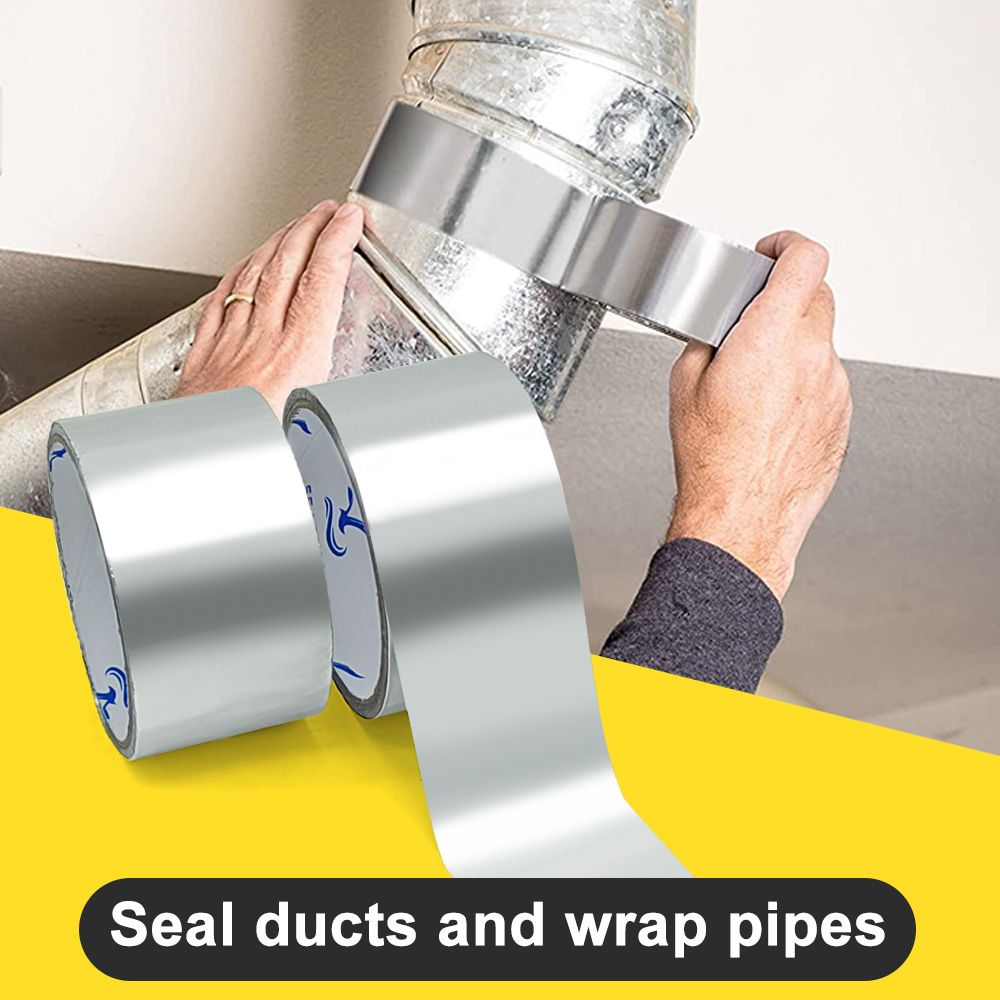
A stock image related to Aluminum Foil HVAC Tape.
3 Common User Pain Points for ‘Aluminum Foil HVAC Tape’ & Their Solutions
Scenario 1: Why Does Aluminum Foil HVAC Tape Fail in High-Temperature Climates?
The Problem: Procurement managers sourcing for HVAC infrastructure in extreme heat regions—such as the Middle East, North Africa, or tropical zones in Brazil—frequently encounter catastrophic adhesive failure when duct surface temperatures exceed the limitations of standard acrylic formulations. In ambient conditions regularly surpassing 40°C with metal ductwork reaching 80°C or higher, acrylic adhesives can soften, oxidize, or lose tack entirely, causing vapor barrier breaches that lead to condensation accumulation, insulation degradation, and significant energy loss. This creates a cascade of warranty claims, costly callback visits, and project delays that damage contractor relationships and profitability across international supply chains.
The Solution: Specify rubber-based adhesive systems (synthetic rubber or butyl formulations) rated for continuous operating temperatures up to 200°F (93°C) with intermittent exposure tolerance to 300°F (149°C). When evaluating international suppliers, request comprehensive technical data sheets that specify temperature performance across your specific climate zone’s thermal cycling patterns, not just static laboratory ratings. Conduct accelerated aging tests on sample batches under local temperature and humidity conditions before committing to bulk procurement. For mission-critical commercial installations, mandate UL 181A-P or UL 181B-FX listed products, as these certifications require rigorous thermal cycling validation that simulates years of extreme operational stress.
Scenario 2: Is Your Aluminum Foil Tape UL 181A-P Listed for Commercial Ductwork Compliance?
The Problem: B2B buyers importing aluminum foil HVAC tape into regulated markets like Nigeria, Brazil, or EU member states often face devastating project halts when inspectors discover tape lacks mandatory UL 181A-P listings or local equivalent certifications (such as INMETRO approval or SONCAP conformity). Many procurement teams assume that “HVAC-grade” foil tape automatically meets commercial ductwork standards, only to learn during final inspection that unlisted tape cannot be installed on UL-classified systems or violates local fire safety regulations. This results in stranded inventory, emergency sourcing at inflated prices, and contractual penalties for project delays that erode margins.
The Solution: Establish a pre-procurement compliance checklist that verifies UL 181A-P certification for rigid fiberglass ductboard applications or UL 181B-FX for flexible duct systems, confirming these standards are recognized by your local building authority. Request third-party laboratory test reports demonstrating flame spread indices and smoke development ratings that align with regional fire codes. Implement a pre-shipment inspection protocol that validates batch-specific conformity certificates and ensures packaging includes proper certification markings. Partner with manufacturers who maintain multi-regional certification databases and can provide localized documentation, preventing costly customs detentions and ensuring seamless project approval.
Scenario 3: How Do You Ensure Maximum Adhesion When Applying Foil Tape to HVAC Ducts?
The Problem: Installation crews working in active construction zones—common in rapidly developing urban markets across Africa and South America—consistently report adhesion failures when aluminum foil tape is applied to duct surfaces contaminated with oil residues from manufacturing, concrete dust, or atmospheric particulates. In high-humidity tropical climates, moisture accumulation on metal surfaces further prevents pressure-sensitive adhesives from achieving proper molecular bonding, resulting in edge lifting, seam separation, and air leakage that compromises system efficiency. These failures necessitate labor-intensive rework, delay project completion, and increase material waste ratios that impact profitability.
The Solution: Mandate a rigorous surface preparation protocol requiring mechanical cleaning with lint-free cloths and isopropyl alcohol (minimum 70% concentration) or commercial degreasing agents to remove manufacturing oils and construction debris, followed by mandatory drying periods in humid environments. Specify high-tack rubber-based adhesives formulated for “dirty” application conditions rather than standard acrylic products. Require installation teams to utilize silicone seam rollers or plastic squeegees to apply uniform 15-20 psi pressure across the tape surface, ensuring complete adhesive wet-out at seams and corners. For procurement in high-dust regions, specify tape with two-sided release liners that protect the adhesive until immediate application, and establish on-site storage protocols that prevent contamination of bulk tape inventories.
Strategic Material Selection Guide for Aluminum Foil HVAC Tape
Material selection for aluminum foil HVAC
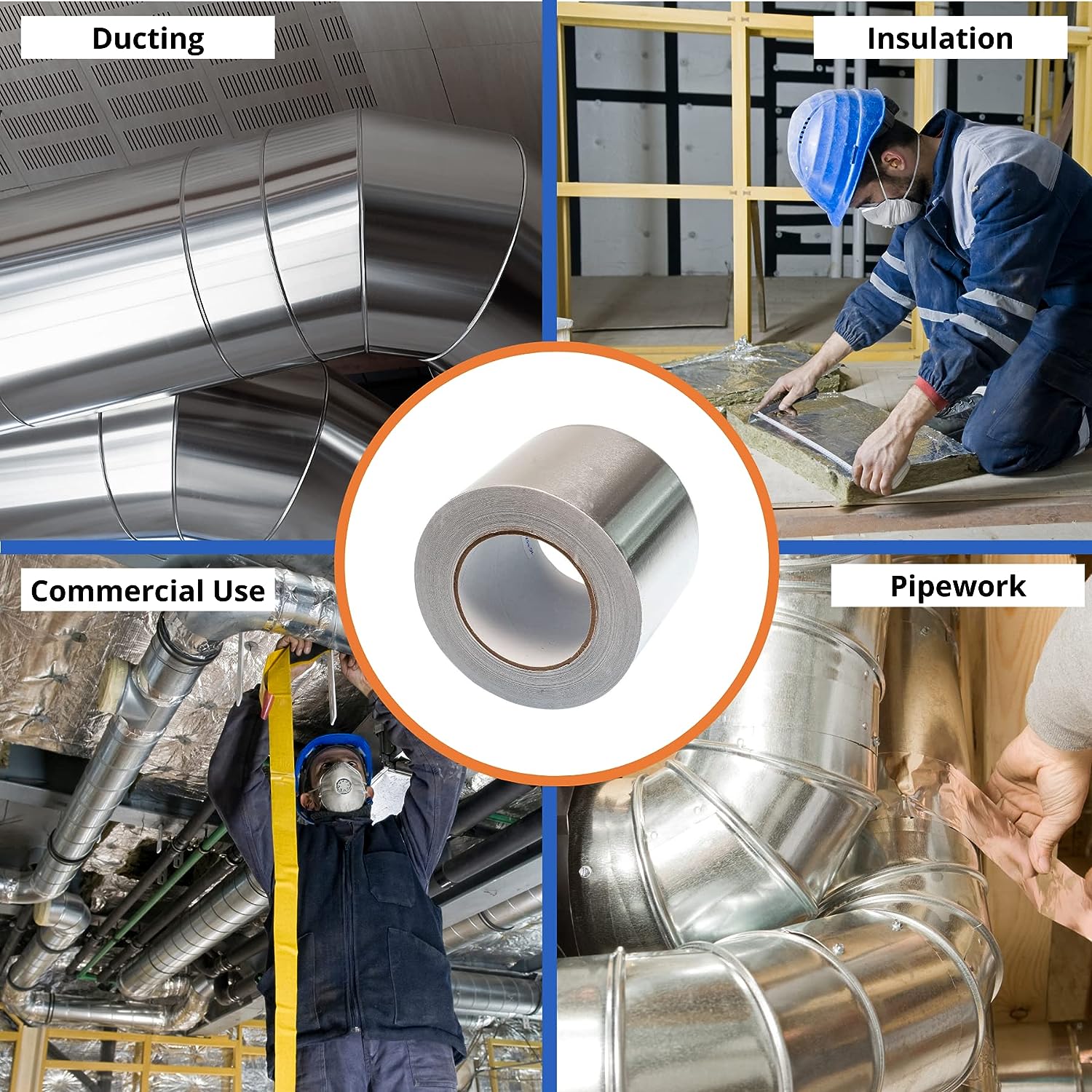
A stock image related to Aluminum Foil HVAC Tape.
In-depth Look: Manufacturing Processes and Quality Assurance for Aluminum Foil HVAC Tape
When sourcing aluminum foil HVAC tape for large-scale infrastructure projects, understanding the production workflow and quality benchmarks separates commodity-grade products from performance-engineered solutions. For procurement teams operating in regions with extreme thermal cycles—from the humid tropics of Brazil to the arid climates of the Middle East—manufacturing rigor directly correlates with installation longevity and energy efficiency.
What Raw Material Specifications Determine Aluminum Foil HVAC Tape Durability?
The foundation of high-performance HVAC tape begins with aluminum alloy selection. Premium manufacturers utilize 1235 or 8011 aluminum alloys, annealed to soft temper (H18 or O temper) to achieve the optimal balance between conformability and puncture resistance. For B2B buyers, specifying foil thickness between 30–50 microns (0.03–0.05mm) ensures sufficient structural integrity for duct board seaming without compromising hand-tearability during installation.
Equally critical is the surface treatment protocol. Corona discharge treatment or chemical priming creates micro-roughness on the foil surface, dramatically improving adhesive wet-out and long-term bond strength. Reputable suppliers will provide surface energy test reports (typically >38 dynes/cm) verifying that the backing material can maintain adhesion under the pressure differentials common in commercial HVAC systems.
How Is the Adhesive Layer Engineered for Extreme Climate Performance?
The adhesive coating process distinguishes general-purpose tapes from HVAC-specific solutions. Hot-melt coating systems apply pressure-sensitive adhesives (PSA) at controlled temperatures, typically using high-tack acrylic or synthetic rubber formulations. Acrylic adhesives offer superior UV and aging resistance—essential for outdoor ductwork exposed to intense solar radiation in African or Middle Eastern markets—while rubber-based adhesives provide immediate tack and flexibility for cold-weather applications in European winters.
During lamination, automated coating heads apply adhesive at precise thicknesses (usually 25–40 microns), followed by immediate lamination with silicone-coated release liners. The curing phase involves controlled drying tunnels that eliminate residual solvents, preventing outgassing that could compromise vapor barrier integrity. Buyers should inquire about the manufacturer’s adhesive aging protocols; accelerated aging tests at 70°C for 7 days simulate long-term performance, ensuring the tape maintains peel adhesion values above 20 N/25mm after years of service.
What Quality Control Tests Validate Performance in Harsh Environments?
Rigorous QC checkpoints separate export-grade manufacturers from local suppliers. Incoming inspection verifies aluminum foil gauge consistency using eddy current testing, while adhesive viscosity is monitored via Brookfield viscosimeters to ensure batch-to-batch uniformity.
Performance validation includes ASTM D3330 peel adhesion testing, which measures the force required to remove the tape from stainless steel at 180 degrees. For HVAC applications in high-humidity regions like Nigeria or coastal Brazil, manufacturers must conduct 85°C/85% relative humidity aging tests for 1,000+ hours, verifying that the tape maintains vapor barrier properties without delamination. Shear strength testing (ASTM D3654) ensures the tape can withstand the mechanical stress of thermal expansion and contraction without creeping or flagging on vertical duct surfaces.
Which International Certifications Should Procurement Teams Verify?
For cross-border trade, compliance documentation serves as shorthand for manufacturing quality. UL 181 certification (or equivalent European EN standards) specifically validates that the tape meets flame resistance and mold growth requirements for HVAC duct sealing. ISO 9001:2015 certification indicates standardized process controls, while REACH and RoHS compliance ensures adhesive formulations contain no restricted heavy metals or phthalates—critical for EU import regulations and increasingly important for Middle Eastern environmental standards.
Buyers should request mill test certificates (MTCs) that trace aluminum lot numbers to specific smelter sources, ensuring alloy consistency. For large infrastructure projects, third-party inspection reports from SGS or Bureau Veritas provide additional assurance that production lots match approved samples.
How Does Slitting and Packaging Preserve Tape Integrity During International Shipping?
The final manufacturing stages significantly impact field performance. Precision slitting equipment maintains width tolerances within ±0.5mm, preventing edge curling that causes application failures. Core selection matters for tropical climates; moisture-resistant plastic cores prevent cardboard degradation during humid sea freight, while UV-stable outer wraps protect against container heat exposure during transoceanic shipping to South American or African ports.
Packaging specifications should include moisture-barrier bags with desiccant packs and palletized loading that prevents compression damage. Traceability labeling with batch codes enables quality investigations if performance issues arise post-installation, protecting both the installer and end-user from liability.
By evaluating manufacturing partners against these technical criteria—rather than unit price alone—procurement teams secure aluminum foil HVAC tape that maintains vapor barrier integrity and adhesive performance across diverse climatic conditions, reducing callback rates and ensuring compliance with international building standards.
Practical Sourcing Guide: A Step-by-Step Checklist for ‘Aluminum Foil HVAC Tape’
Procuring aluminum foil HVAC tape for international commercial projects requires balancing technical performance with supply chain reliability. This checklist guides procurement teams through critical material specifications and vendor evaluation protocols to ensure optimal tape performance in demanding climates while optimizing landed costs and minimizing project delays.
How Do You Determine the Right Adhesive and Backing Specifications for Your Application?
Specify solvent acrylic or high-tack rubber-based pressure-sensitive adhesives formulated for immediate bonding to fiberglass duct board, foil-faced insulation, and galvanized sheet metal. For humid regions like coastal Brazil or tropical Nigeria, prioritize acrylic formulations that resist moisture-induced delamination over natural rubber alternatives. Verify aluminum backing thickness between 1.5 to 3.0 mils to ensure puncture resistance during application while maintaining sufficient conformability for curved ductwork and irregular joints.
What Temperature Ratings and Climate Resilience Should You Verify for Regional Conditions?
Confirm operational temperature ranges spanning -20°F to 250°F (-29°C to 121°C) to accommodate extreme desert heat in Middle Eastern installations and winter conditions in European markets. Request UV resistance certifications for outdoor HVAC applications where direct sunlight exposure occurs. Verify moisture vapor transmission rates (MVTR) below 0.05 perms to maintain vapor barrier integrity in high-humidity African and South American environments, preventing condensation-related mold growth within duct systems.
Which Certifications and Compliance Standards Matter for Your Target Markets?
Require UL 723 (ASTM E84) Class A flame spread and smoke development ratings for fire safety compliance in commercial building codes. Verify adherence to regional standards such as ABNT NBR 16468 for Brazilian HVAC installations, SASO certification for Saudi Arabian projects, or CE marking for European Union construction products. Ensure REACH and RoHS compliance for European markets, confirming tapes contain no restricted heavy metals or hazardous substances in adhesives or foil treatments.
How Should You Evaluate Supplier Manufacturing Capabilities and Consistency?
Assess whether potential suppliers operate integrated coating and slitting facilities or function as converters purchasing bulk adhesive laminates. Direct manufacturers typically offer superior batch-to-batch consistency, custom roll length configurations beyond standard 150-foot rolls, and competitive pricing on container-volume orders. Evaluate their quality control laboratories for adhesion testing capabilities and raw material traceability systems that ensure consistent coating weights across production runs.
What Packaging and Logistics Considerations Are Critical for International Procurement?
Specify moisture-barrier packaging with silica gel desiccants and polyethylene wrapping to prevent adhesive oxidation during multi-week ocean freight through humid transit corridors. Optimize pallet configurations to maximize 20-foot and 40-foot container utilization—typically 40-48 rolls per pallet with specific stacking patterns—to reduce per-unit shipping costs to African and South American ports. Clarify Incoterms regarding temperature-controlled warehousing responsibilities if shipping routes pass through extreme climate zones that could compromise adhesive properties.
How Do You Validate Product Quality Before Committing to Bulk Orders?
Conduct quantitative peel adhesion tests per ASTM D3330 standards, requiring minimum 60 ounces per inch width on stainless steel and actual duct board substrates from your specific project. Evaluate sample rolls under local ambient temperature and humidity conditions to verify tack performance matches specifications. Establish clear acceptance criteria including uniform adhesive coating without dry spots, easy unwind tension between 20-50 ounces, and shelf-life documentation confirming 12-24 month viability from production date to account for extended shipping and storage periods.
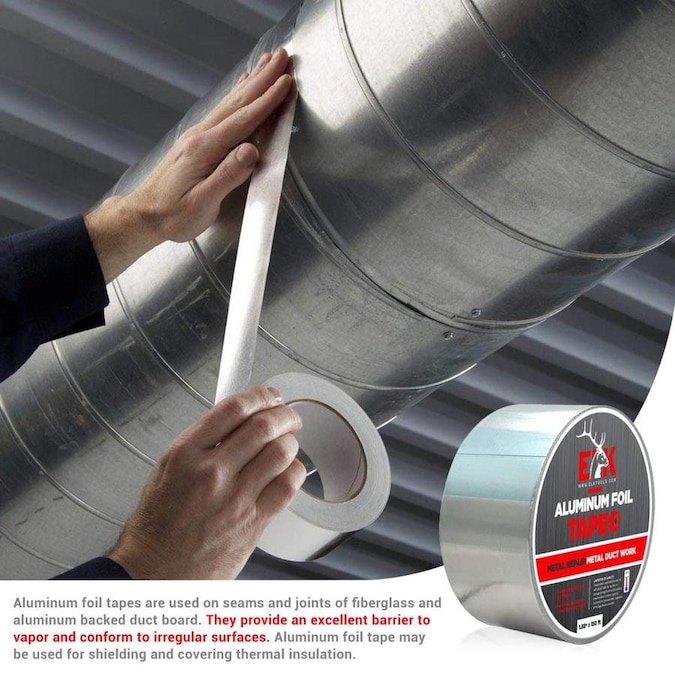
A stock image related to Aluminum Foil HVAC Tape.
Comprehensive Cost and Pricing Analysis for Aluminum Foil HVAC Tape Sourcing
Understanding the true cost structure of aluminum foil HVAC tape requires looking beyond the per-roll price tag. For international buyers sourcing from global manufacturing hubs, pricing dynamics are influenced by raw material volatility, adhesive technology specifications, and complex logistics networks. A strategic approach to procurement involves analyzing both direct material costs and the indirect expenses that impact total landed costs in regions like Nigeria, Brazil, or the UAE.
What Raw Material and Specification Factors Determine Base Pricing?
The foundation of any cost analysis begins with material composition. High-purity aluminum foil (typically 30-50 microns thick) combined with acrylic or rubber-based pressure-sensitive adhesives creates price variability based on commodity market fluctuations. Buyers should note that HVAC-specific grades requiring UL 181A-P/B-FX listings or enhanced temperature resistance (ranging from -30°C to 120°C) command premium pricing compared to general-purpose foil tapes. Additionally, liner quality and roll dimensions—standard 2-inch by 150-foot rolls versus bulk industrial sizes—significantly impact per-meter economics.
How Do Volume Tiers and MOQs Affect Procurement Economics?
B2B pricing structures typically operate on steep volume curves. While retail equivalents may price 150-foot rolls at $15-$25, container-level procurement (20-foot or 40-foot FCL) can reduce unit costs by 40-60% depending on annual volume commitments. Manufacturers often structure MOQs at 5,000-10,000 rolls for customized specifications, though stock items may offer flexibility at 1,000-roll minimums. For emerging market buyers in Africa or South America, consolidating orders to achieve FCL status rather than LCL (Less than Container Load) shipments eliminates consolidation fees and reduces per-unit freight costs substantially.
Why Do Regional Logistics and Import Duties Create Price Disparities?
Geographic location dramatically impacts landed costs. Buyers in the Middle East may benefit from proximity to Asian manufacturing hubs, reducing ocean freight expenses, while Brazilian importers face complex customs regulations and ICMS tax calculations that can increase total costs by 15-25%. African markets often encounter additional challenges including port congestion surcharges and inland transportation complexities. Smart buyers factor in Incoterms selection—FOB versus CIF—as currency fluctuations and marine insurance rates vary significantly between the Eurozone, USD-dependent economies, and local currencies.
What Hidden Costs Impact the Total Cost of Ownership?
Beyond unit pricing, B2B buyers must evaluate application efficiency and storage requirements. Low-tack adhesives may reduce upfront costs but increase labor time and material waste during installation, particularly in humid climates common in target regions. Temperature-controlled warehousing requirements for certain adhesive formulations add carrying costs in hot climates. Furthermore, compliance certifications (ASTM E84, NFPA standards) necessary for commercial HVAC projects in European markets may require additional testing documentation fees not included in base quotes.
How Can Buyers Negotiate Favorable Long-Term Pricing Structures?
Establishing strategic partnerships rather than transactional relationships unlocks cost stability. Requesting quarterly price locks during volatile aluminum markets, negotiating consignment inventory arrangements for high-volume projects, and specifying exact tolerances to prevent over-engineering can yield 10-15% savings annually. Buyers should also evaluate regional distribution hubs that maintain buffer stock, reducing emergency air freight expenses when project timelines accelerate unexpectedly.
Alternatives Analysis: Comparing Aluminum Foil HVAC Tape With Other Solutions
When evaluating sealing methodologies for international HVAC infrastructure projects spanning Nigeria’s humid coastal regions to the arid climates of the Middle East, procurement professionals must assess whether aluminum foil HVAC tape delivers optimal value compared to alternative sealing technologies. While acrylic-based foil tape offers immediate adhesion and clean aesthetics, brush-applied mastic sealants and butyl rubber adhesive tapes present distinct operational advantages in specific environmental and labor contexts. Understanding the nuanced trade-offs between application speed, material durability, and total installed cost enables B2B buyers to specify solutions that align with local workforce capabilities, climate extremes, and project timelines.
What Are the Primary Alternatives to Aluminum Foil HVAC Tape for International Projects?
| Comparison Aspect | Aluminum Foil HVAC Tape (Acrylic) | Brush-Applied Duct Mastic | Butyl Rubber Foil Tape |
|---|---|---|---|
| Performance & Seal Integrity | Excellent immediate adhesion; conforms to irregular surfaces; limited gap-filling (best for <1/8 inch gaps) | Superior long-term flexibility; fills gaps |
Essential Technical Properties and Trade Terminology for Aluminum Foil HVAC Tape
When procuring aluminum foil HVAC tape for large-scale infrastructure projects across diverse climates—from the humidity of West Africa to the temperature extremes of the Middle East—understanding technical specifications ensures compliance with regional building codes and long-term system integrity. Specifications vary significantly between general-purpose sealing and critical vapor barrier applications, directly impacting installation efficiency, energy loss prevention, and resistance to environmental degradation.
What Are the Critical Technical Specifications for Aluminum Foil HVAC Tape?
Adhesive Chemistry and Tack Properties
The adhesive formulation determines temperature resistance and bonding speed. Acrylic adhesives offer superior UV stability and heat resistance (often rated up to 150°C), making them ideal for outdoor ductwork in hot climates like Brazil or the Gulf states. Synthetic rubber adhesives provide aggressive initial tack for immediate bonding to fiberglass duct board but may degrade under sustained high-temperature cycling common in industrial European HVAC systems.
Foil Backing Thickness (Gauge)
Measured in mils (thousandths of an inch) or micrometers, standard HVAC foil tapes range from 1.5 mil to 3.0 mil (approximately 0.04mm to 0.08mm). Thicker backings provide enhanced puncture resistance for heavy-duty commercial applications, while thinner gauges offer superior conformability for irregular duct surfaces and tight radius bends common in retrofit projects.
Temperature Operating Range
Critical for international procurement, the service temperature typically spans -35°C to +120°C for standard grades. For extreme environments—such as Nigerian oil facilities or European cold storage warehouses—specify tapes rated for -40°C cold weather adhesion or +150°C continuous heat exposure to prevent adhesive failure and seam lifting.
Peel Adhesion and Tensile Strength
Peel adhesion measures bonding power (typically 50–100 oz/inch width), ensuring the tape maintains seal integrity under system vibration and thermal expansion. Tensile strength (15–30 lbs/inch) indicates resistance to longitudinal tearing during high-tension application, crucial for long duct runs requiring tight, wrinkle-free wrapping.
Vapor Permeance Rating
Expressed in perms (grains of water vapor per hour per square foot), high-quality HVAC foil tapes achieve ratings below 0.05 perms, creating an impermeable moisture barrier essential for preventing condensation and mold growth in humid climates like coastal West Africa or the Amazon region.
What Industry Certifications and Trade Terms Should B2B Buyers Know?
UL 181A-P and UL 181B-FX Listings
These Underwriters Laboratories classifications indicate compliance with rigid duct closure standards (181A-P) or flexible air connector standards (181B-FX). For buyers in regulated markets like the EU or GCC countries, these listings verify fire safety, smoke generation ratings, and pressure resistance—often mandatory for commercial building insurance and code compliance.
FSK (Foil-Scrim-Kraft) Lamination
This term describes tape incorporating a fiberglass scrim reinforcement mesh laminated between the aluminum foil and kraft paper backing. FSK tapes provide enhanced tear resistance and dimensional stability for heavy-duty commercial applications, distinguishing them from plain foil tapes used in light residential work.
Cold Weather Adhesion (CWA)
A critical specification for projects in temperate regions, CWA-rated tapes maintain tack properties below freezing. While standard tapes may require surface temperatures above 10°C to bond effectively, CWA formulations adhere at -10°C or lower, essential for European winter installations or high-altitude Middle Eastern construction sites.
Liner Release Force
This technical term describes the ease of removing the silicone-coated release liner from the adhesive side. Low liner release force (typically <50 g/25mm) facilitates rapid, single-handed application by contractors, significantly reducing labor costs and installation time on large commercial jobs.
Conformability and Dead-Soft Aluminum
“Dead-soft” refers to fully annealed aluminum that molds easily to irregular surfaces without spring-back or memory. High conformability ensures the tape maintains intimate contact across corrugated duct board, spiral pipe seams, or embossed insulation facings, preventing air leakage at critical joints.
Vapor Barrier Integrity
In HVAC trade terminology, this refers to the tape’s ability to maintain a continuous, pinhole-free moisture seal over the system lifecycle. B2B buyers should verify that products specify “zero permeance” or “vapor retarder” classification for applications involving chilled water lines, refrigeration ductwork, or high-humidity environments where condensation control is paramount.
Navigating Market Dynamics and Sourcing Trends in the Aluminum Foil HVAC Tape Sector
The aluminum foil HVAC tape sector is undergoing significant transformation as global construction markets expand and energy efficiency mandates tighten across residential, commercial, and industrial HVAC applications. For procurement teams operating across Africa, South America, the Middle East, and Europe, understanding these evolving dynamics is essential for securing high-performance materials while navigating complex supply chain landscapes characterized by raw material volatility and shifting regulatory requirements.
How Are Infrastructure Developments in Emerging Economies Reshaping HVAC Tape Demand?
Rapid urbanization across Nigeria, Brazil, and Gulf Cooperation Council (GCC) countries is driving unprecedented demand for HVAC infrastructure, directly increasing consumption of specification-grade aluminum foil tapes. These regions are witnessing a shift from traditional cloth-backed or unlisted sealing methods toward UL-listed aluminum foil tapes that meet international fire safety and vapor barrier standards. B2B buyers in these markets must account for import dependency factors, as local manufacturing capacity for specialized HVAC adhesives remains limited, creating opportunities for established exporters who can provide consistent quality and technical documentation required for large-scale infrastructure projects.
What Supply Chain Risks Should B2B Buyers Anticipate in the Aluminum Tape Sector?
Global aluminum price volatility represents a primary concern for procurement teams, as foil backing constitutes the primary cost driver in tape manufacturing. Buyers should implement strategic inventory management practices to mitigate exposure to London Metal Exchange (LME) fluctuations, particularly when sourcing from Asian manufacturing hubs for delivery to African or South American markets. Additionally, logistics complexity—including port congestion in Lagos or São Paulo and customs clearance variations across Middle Eastern free trade zones—necessitates partnerships with suppliers offering regional warehousing or bonded stock solutions to ensure project continuity without excessive working capital tie-up.
Why Is Sustainable Sourcing Becoming Critical for HVAC Tape Procurement?
Sustainability certifications are transitioning from market differentiators to baseline procurement requirements, particularly for European buyers and multinational contractors subject to the EU Green Deal and similar environmental frameworks. Modern B2B specifications increasingly demand aluminum foil tapes manufactured with low-VOC acrylic adhesives rather than traditional solvent-based rubber adhesives, reducing harmful emissions during installation while maintaining high-temperature performance. Furthermore, end-of-life recyclability is gaining prominence; aluminum-backed tapes that can be separated from ductwork during building decommissioning support circular economy objectives and waste reduction targets increasingly mandated in public sector tenders across target regions.
How Can Buyers Verify Ethical Aluminum Sourcing and Manufacturing Practices?
Ethical governance within aluminum supply chains requires rigorous due diligence regarding bauxite mining practices and smelting operations. Procurement teams should prioritize suppliers holding Aluminum Stewardship Initiative (ASI) certification, which ensures responsible production standards from raw material extraction through manufacturing. For buyers sourcing from regions with complex labor landscapes, verifying factory audit reports against SA8000 or equivalent social accountability standards is crucial. Additionally, confirming that adhesive components are free from conflict minerals and that manufacturing facilities maintain ISO 14001 environmental management systems provides the transparency necessary for ESG reporting requirements while mitigating reputational risks associated with supply chain malpractice.
Frequently Asked Questions (FAQs) for B2B Buyers of Aluminum Foil HVAC Tape
What Temperature Range Can Aluminum Foil HVAC Tape Withstand in Extreme Climates?
Standard aluminum foil HVAC tapes typically handle operating temperatures from -35°C to 120°C (-31°F to 248°F), with high-performance variants rated up to 150°C (302°F) for industrial exhaust applications. For procurement teams in the Middle East or tropical South America, verify that the upper threshold exceeds ambient duct surface temperatures, which can surpass 80°C in uninsulated roof installations. Cold climate operations in Northern Europe or high-altitude African regions require low-temperature flexibility ratings to prevent adhesive embrittlement during winter commissioning.
What Is the Difference Between Acrylic and Rubber Adhesive HVAC Foil Tape?
Acrylic adhesives provide superior UV resistance and aging stability for outdoor exposed ductwork, maintaining structural integrity in temperatures up to 150°C. Rubber-based adhesives deliver immediate high-tack bonding ideal for dusty construction environments common in developing markets, though they may degrade faster under prolonged UV exposure. For permanent commercial installations in Nigeria or Brazil, specify acrylic formulations for rooftop applications, while utilizing rubber adhesives for temporary containment or rough-surface repairs where immediate grab is essential.
Is Aluminum Foil Tape UL 181A-P Listed for Commercial Ductwork Compliance?
Not all foil tapes carry UL 181A-P certification; this listing specifically applies to pressure-sensitive tapes meeting strict flame spread and smoke development requirements under ASTM E84 standards. Verify the mill test certificates explicitly reference UL 181A-P or UL 181B-FX listings before specifying for hospitals, airports, or high-rise developments in European and Middle Eastern markets. Uncertified tapes may violate local civil defense regulations, potentially voiding insurance coverage for commercial projects in regulated jurisdictions.
How Do You Properly Apply Foil Tape to HVAC Ducts for Maximum Adhesion?
Surface preparation determines bond strength—clean substrates with isopropyl alcohol to remove manufacturing oils, oxidation, and construction dust prevalent in African and South American job sites. Apply tape at ambient temperatures above 10°C (50°F) using firm pressure with a squeegee or plastic roller to eliminate air pockets that trap moisture. Overlap seams by minimum 25mm (1 inch), and avoid application during precipitation or when condensation is present, as water vapor compromises the pressure-sensitive adhesive’s initial tack in humid climates.
What Are the Bulk Packaging and Shipping Considerations for International Procurement?
Standard export configurations include 24-36 rolls per master carton with moisture-barrier polyethylene wrapping to prevent adhesive degradation during ocean freight to ports like Lagos, Santos, or Jebel Ali. Request palletized loads with corner protectors for LCL shipments, as crushed rolls compromise the foil backing integrity and create waste. Clarify Incoterms regarding moisture damage liability, particularly for containerized shipments transiting tropical zones where condensation risks are elevated.
How Should Aluminum Foil HVAC Tape Be Stored in High-Temperature Warehouses?
Store rolls horizontally in original packaging away from direct sunlight and heat sources exceeding 35°C (95°F), which causes adhesive flow and edge oozing that renders the product unusable. In humid climates prevalent across West Africa and Southeast Asia, maintain storage facilities below 70% relative humidity to prevent interleaving paper from bonding permanently to the adhesive layer. Implement FIFO inventory rotation, as shelf life typically extends 18-24 months when maintained in climate-controlled conditions but degrades rapidly in unventilated metal warehouses.
Which Duct Materials Are Compatible with Aluminum Foil Tape Beyond Standard Sheet Metal?
While optimized for galvanized steel and aluminum ductwork, quality foil tapes effectively seal fiberglass duct board, flexible duct liners, and vapor barrier wraps when using appropriate application pressure. For rigid fiberglass duct board common in European energy-efficient buildings, specify minimum 50mm (2-inch) width to bridge the porous substrate without delamination. Avoid direct application to PVC, polypropylene, or unprimed concrete—instead, utilize mechanical fasteners with tape serving as a secondary vapor seal in these configurations.
When Should B2B Procurement Teams Choose Foil Tape Over Liquid Mastic?
Foil tape offers immediate cure times and cleaner application for production line assembly or retrofit projects where operational downtime is costly, whereas mastic requires 24-48 hour curing periods. For vibration-prone industrial environments in mining or manufacturing sectors across Africa and South America, tape provides flexible joints that resist cracking better than rigid mastic compounds. Cost analysis should factor local labor rates—tape application requires less skilled labor than brush-applied sealants, typically reducing installation costs by 40-60% in emerging markets with high contractor day-rates.
Important Disclaimer & Terms of Use
⚠️ Important Disclaimer
The information provided in this guide, including content regarding manufacturers, technical specifications, and market analysis, is for informational and educational purposes only. It does not constitute professional procurement advice, financial advice, or legal advice.
B2B buyers must conduct their own independent and thorough due diligence before making any purchasing decisions. The risk of relying on any information in this guide is borne solely by the reader.
Top 4 Aluminum Foil Hvac Tape Manufacturers & Suppliers List
1. Merco Tape – Aluminum Foil Tapes
Domain: mercotape.com
Registered: 1998 (28 years)
Introduction: Collection contains 50 aluminum foil and specialty metal tapes for HVAC, manufacturing, and maintenance applications. Product categories include: Aluminum Foil Tapes (cold weather, contractor, premium, utility, military grades), FSK Tapes (Foil/Scrim/Kraft), Copper Foil Tapes (with electrically conductive and non-conductive adhesives), Butyl Foil/Sealant Tapes, and ASJ (All Service Jacket) Insulat…
2. Tape Suppliers – Foil Tape
Domain: tapesuppliers.com
Registered: 2007 (19 years)
Introduction: Foil tape, also known as aluminum tape or aluminum foil tape, is a versatile pressure-sensitive adhesive product offering chemical resistance, light reflectance, weatherability, flame resistance, and moisture resistance. It provides electrical and thermal conductivity properties for applications in HVAC, electrical, construction, and various industrial, commercial, and residential industries. The …
3. IPG – Aluminum Foil Tapes
Domain: itape.com
Registered: 1998 (28 years)
Introduction: IPG offers a comprehensive range of aluminum foil tapes for building and construction applications. Product categories include: 1) Premium Grade (ALF300/ALF300L): 3.0 mil dead soft aluminum foil with aggressive acrylic adhesive, self-wound or with liner, UV resistant, water-resistant; 2) Medium Grade (ALF200/ALF200L): 2.0 mil dead soft foil, flame retardant, high shear adhesion, UV/mold resistant;…
4. Oneida Air – Aluminum Foil Tape

Domain: oneida-air.com
Registered: 1998 (28 years)
Introduction: Product: HVAC Aluminum Foil Acrylic Tape – 150′ Roll (SKU: ATF000000). Price: $24.95. Description: General purpose aluminum foil tape with high tack pressure-sensitive rubber based adhesive for seaming and sealing fiberglass duct board and duct wrap to enhance appearance and maintain vapor barrier integrity. Key Features: Aggressive, long-lasting pressure-sensitive adhesive with superior bonding i…
Strategic Sourcing Conclusion and Outlook for Aluminum Foil HVAC Tape
As global infrastructure investments accelerate across Africa, South America, and the Middle East, aluminum foil HVAC tape has evolved from a commodity accessory to a critical enabler of energy-efficient climate control systems. Procurement teams must now balance immediate cost considerations with long-term performance metrics, particularly as regional building codes increasingly mandate stringent vapor barrier integrity and thermal sealing standards.
How Can Buyers Future-Proof Their HVAC Tape Sourcing Strategy in High-Growth Markets?
Strategic procurement requires diversifying supplier portfolios to mitigate geopolitical risks while prioritizing acrylic adhesive formulations engineered for tropical humidity and extreme temperature fluctuations common in regions like Nigeria and Brazil. Establishing direct partnerships with manufacturers who provide batch-specific certification documentation ensures compliance with evolving international HVAC standards, reducing liability exposure while optimizing total cost of ownership through extended product lifecycles.
What Quality Benchmarks Define Next-Generation Aluminum Foil Tape Partnerships?
Forward-looking buyers should prioritize suppliers offering UL-listed products with demonstrated resistance to thermal degradation and moisture infiltration. The convergence of sustainability mandates and performance requirements suggests increasing demand for solvent-free acrylic adhesives and recyclable backing materials, particularly within European regulatory frameworks. Digital procurement platforms enabling real-time inventory tracking and specification verification will become essential competitive differentiators.
By integrating climate-specific performance testing, certification compliance, and supply chain resilience into sourcing criteria, procurement teams can transform aluminum foil HVAC tape acquisition from a routine operational expense into a strategic value driver for complex international projects.