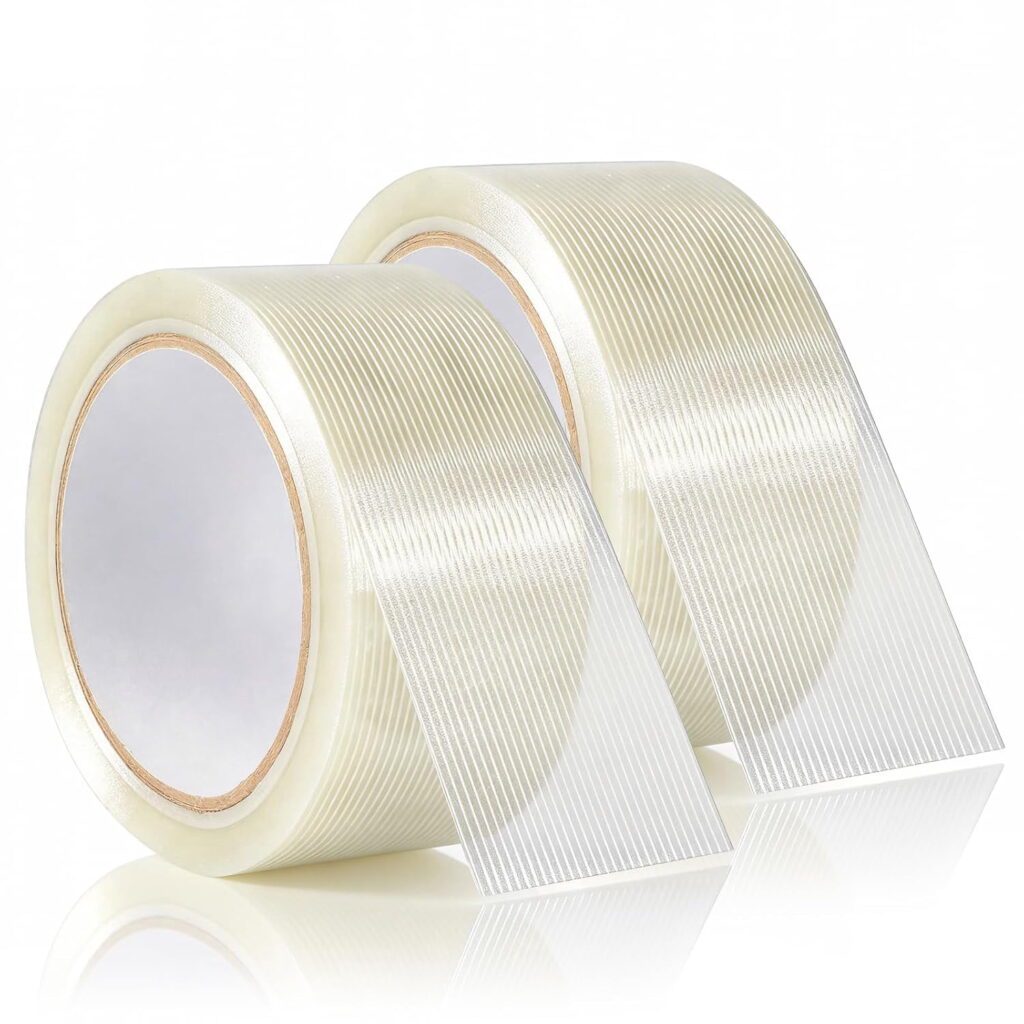
Introduction: Navigating the Global Market for Clear nano tape
When sourcing clear nano tape for industrial-scale manufacturing, retail distribution, or construction projects, international buyers encounter a fragmented marketplace where quality inconsistencies, unclear technical specifications, and supply chain opacity threaten procurement efficiency. This transparent adhesive technology—utilizing microscopic suction cup structures for residue-free mounting—promises superior aesthetics and reusability, yet navigating supplier networks across Africa, South America, the Middle East, and Europe requires strategic insight. From emerging manufacturing hubs in Vietnam to established distribution centers in Saudi Arabia, procurement teams must balance high-performance requirements with cost optimization while ensuring compliance with diverse regional import standards and environmental regulations.
Why Is Strategic Sourcing Essential for Clear Nano Tape Procurement?
The global market presents distinct challenges: varying polymer compositions directly impact transparency grades and long-term adhesion strength, while counterfeit alternatives compromise structural integrity in critical electronics and automotive applications. Buyers managing bulk orders through complex international supply chains need reliable partners capable of delivering consistent nano-scale performance across temperature extremes and diverse surface materials, particularly when coordinating logistics between continents with differing quality certification frameworks.
What Comprehensive Insights Will Empower Your Purchasing Decisions?
This guide examines technical specifications including double-sided variants and heavy-duty formulations, application-specific requirements for glass mounting and industrial bonding, and rigorous supplier vetting protocols. We analyze cost structures, import compliance frameworks, and quality assurance standards relevant to both emerging markets and established European industries, ensuring you can evaluate material specifications against operational requirements.
By providing actionable intelligence on transparency validation, adhesion longevity testing, and regional supplier capabilities, this resource enables B2B buyers to mitigate supply chain risks. Whether securing inventory for Brazilian retail distribution, German manufacturing operations, or South African construction projects, you will gain the expertise to assess total cost of ownership and performance reliability—ensuring your clear nano tape investments deliver sustained operational value across international markets.
Understanding Clear nano tape Types and Variations
| Type Name | Key Distinguishing Features | Primary B2B Applications | Brief Pros & Cons for Buyers |
|---|---|---|---|
| Standard Double-Sided Clear Nano Tape | 1mm–2mm thickness, acrylic gel composition, immediate tack without curing, double-sided micro-suction | Retail display mounting, office signage, light-duty fixture attachment, temporary exhibition setups | Pros: Cost-effective for bulk procurement, versatile across surfaces, residue-free removal protects leased properties. Cons: Limited load capacity (typically under 1kg per meter), temperature sensitivity above 60°C, reduced efficacy on highly textured surfaces. |
| Heavy-Duty Industrial Clear Nano Tape | 3mm+ thickness, enhanced polymer density, tensile strength 5–10kg per meter, reinforced gel matrix | Warehouse racking labels, industrial equipment mounting, heavy mirror/glass installation, machinery safety signage | Pros: Superior load-bearing for demanding environments, durable in high-traffic areas, washable for repeated use. Cons: Higher unit cost than standard variants, requires rigorous surface preparation (degreasing/drying) for optimal adhesion. |
| High-Temperature Automotive Clear Nano Tape | Silicone-acrylic hybrid formulation, thermal stability -40°C to 150°C, UV and oxidation resistant | Automotive trim attachment, electronics heat sink mounting, outdoor building cladding, solar panel fixture bonding | Pros: Withstands extreme climates (critical for Middle Eastern and tropical markets), maintains adhesion under direct sunlight, resists thermal expansion mismatches. Cons: Premium pricing tier, specialized removal process required to prevent substrate damage, longer curing time for maximum hold. |
| Ultra-Thin Optical Grade Clear Nano Tape | 0.5mm thickness, 95%+ light transmission rate, anti-yellowing polymer formula, sub-millimeter profile | Smartphone/tablet screen bonding, museum display cases, luxury retail fixtures, glass-to-glass architectural connections | Pros: Virtually invisible mounting preserves aesthetic integrity, no optical distortion for display applications, stable clarity for 5+ years. Cons: Lower structural shear strength, requires dust-free application environments and precision tools, limited reusability compared to thicker variants. |
What Specifications Should B2B Buyers Prioritize in Standard Double-Sided Clear Nano Tape?
Standard double-sided clear nano tape serves as the entry point for commercial applications, featuring acrylic gel construction with micro-suction technology on both surfaces. This variant offers immediate tack without curing time, making it ideal for temporary retail displays and office reconfigurations in fast-moving markets like Vietnam or Saudi Arabia. B2B purchasers should verify the tape’s reusability count—quality variants withstand 500+ wash-and-reuse cycles—and confirm compatibility with painted drywall, glass, and metal surfaces common in commercial interiors. Bulk procurement requires attention to roll length standardization to minimize installation waste across large facility portfolios.
Which Heavy-Duty Clear Nano Tape Variants Support Industrial Manufacturing Requirements?
Heavy-duty industrial clear nano tape addresses demanding B2B environments through enhanced polymer density and thickness exceeding 3mm, enabling load capacities of 5–10kg per meter. This variation utilizes reinforced gel matrices that resist shear forces in warehouse settings and manufacturing facilities prevalent in African and South American industrial sectors. Procurement teams should prioritize variants with ISO-certified tensile strength ratings and verify performance on textured surfaces like concrete or unfinished metal. While commanding higher per-unit costs, these tapes reduce long-term facility maintenance by eliminating drilling damage and supporting reusable mounting systems for heavy machinery labels.
How Does High-Temperature Clear Nano Tape Perform in Extreme Climate Applications?
High-temperature automotive clear nano tape employs silicone-acrylic hybrid adhesives engineered to maintain structural integrity from -40°C to 150°C, addressing critical B2B needs in automotive assembly and outdoor infrastructure. This specialized variant resists thermal expansion mismatches between dissimilar materials, crucial for mounting components on vehicles or exterior building cladding in Middle Eastern and tropical climates. Buyers should evaluate temperature cycling test data and UV stability certifications, as prolonged sun exposure degrades standard nano tapes. The investment in thermal-grade variants prevents costly adhesive failures in mission-critical outdoor installations and reduces warranty claims.
Why Should Premium Retail Sectors Consider Ultra-Thin Optical Grade Clear Nano Tape?
Ultra-thin optical grade clear nano tape delivers sub-millimeter profiles with 95%+ light transmission, eliminating visible bonding lines in luxury retail fixtures and museum display cases across European markets. This variation utilizes anti-yellowing polymers that maintain transparency for extended periods, essential for high-end product presentations where aesthetic perfection determines brand perception. B2B buyers in electronics and jewelry sectors should specify dust-free application environments, as the reduced thickness limits debris tolerance during installation. While offering lower shear strength than industrial variants, optical grade tapes provide the invisible mounting solution required for modern architectural glass connections and premium consumer electronics assembly.
Key Industrial Applications of Clear nano tape
| Industry/Sector | Specific Application of Clear nano tape | Value/Benefit for the Business | Key Sourcing Considerations for this Application |
|---|---|---|---|
| Electronics Manufacturing | Temporary fixation of LCD/OLED displays and touchscreens during assembly; dust-free masking of sensitive sensors | Eliminates residue contamination on microchips; enables visual QC inspection through transparency; reduces material waste via reusability in prototyping | Verify anti-static properties; ensure RoHS/REACH compliance; confirm humidity resistance for tropical manufacturing climates (Vietnam, Southeast Asia) |
| Automotive Interior & Trim | Mounting transparent acrylic trim, fiber-optic lighting channels, and cable management systems in luxury vehicle cabins | Maintains premium aesthetic with invisible bonding; withstands interior temperature fluctuations; allows repositioning during custom fit-out | Request temperature resistance data (up to 80-100°C); validate adhesion on textured automotive plastics; bulk roll sizing for automated assembly line efficiency |
| Retail Display & Visual Merchandising | Securing promotional signage to glass storefronts; mounting products on transparent acrylic displays in malls and airports | Damage-free installation protects leased commercial property; crystal-clear appearance enhances product visibility; rapid deployment for seasonal campaign changes | Prioritize residue-free certification for rental properties; evaluate UV stability for high-sun regions (Africa, Middle East, South America); assess ease of removal for temporary installations |
| Construction & Architectural Glass | Temporary holding of glass panels during curtain wall installation; mounting protective films on high-rise windows; securing transparent safety barriers | Provides strong temporary hold without surface scratching; eliminates drilling on delicate glass; reusable for multiple panel installations reducing material costs | Confirm heavy-duty load capacity (kg/cm²); verify performance in high-heat/high-dust environments (Gulf states, desert climates); check compatibility with low-emissivity glass coatings |
| Exhibition & Event Management | Mounting transparent acrylic signage and LED lighting on glass exhibition booths; securing protective films on display screens and interactive kiosks | Enables rapid booth setup without violating venue damage clauses; preserves booth deposits by eliminating surface damage; invisible fastening enhances brand presentation | Confirm clean removal within 48-72 hour exhibition cycles; verify adhesion on powder-coated aluminum frames common in exhibition halls; check humidity resistance for outdoor events in tropical climates |
How Does Clear Nano Tape Optimize Electronics Assembly Workflows?
Clear nano tape serves as an indispensable tool in electronics assembly, particularly for temporarily securing delicate LCD and OLED components during calibration and testing phases. Its transparent nature allows quality control technicians to inspect solder joints and circuitry without removing the adhesive, while the residue-free removal prevents costly contamination of sensitive microchips. For buyers in Vietnam and similar Southeast Asian manufacturing hubs, sourcing anti-static formulations is critical to prevent electrostatic discharge damage in high-volume production environments characterized by fluctuating humidity levels and rapid production cycles.
What Are the Best Practices for Using Clear Nano Tape in Automotive Interior Applications?
In automotive assembly, clear nano tape addresses the escalating demand for invisible fastening solutions in luxury vehicle interiors where visible screws or brackets compromise aesthetic integrity. The tape bonds transparent trim pieces and fiber-optic lighting channels to dashboards and door panels, maintaining the pristine appearance required in premium markets such as Saudi Arabia and the UAE. Buyers must prioritize variants with validated high-temperature resistance to withstand interior heat buildup exceeding 70°C in desert climates, ensuring the nano-suction structure does not degrade when vehicles are parked in extreme sun exposure for extended periods.
Why Is Clear Nano Tape Essential for Modern Retail Display Solutions?
For retail environments across rapidly expanding markets in Africa and South America, clear nano tape enables rapid visual merchandising without damaging expensive glass storefronts or leased fixtures in
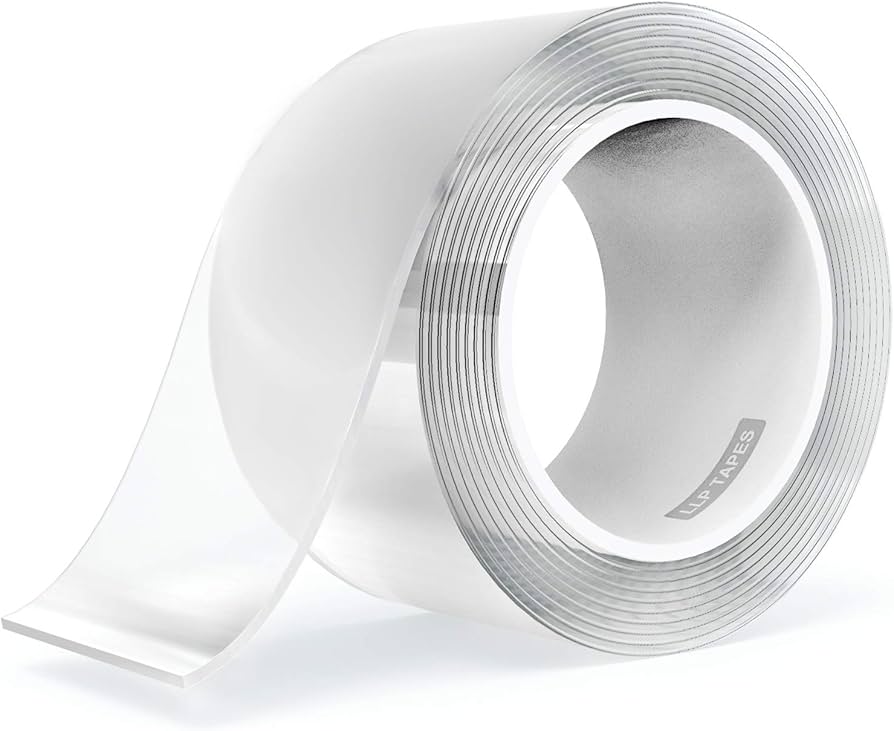
A stock image related to Clear nano tape.
3 Common User Pain Points for ‘Clear nano tape’ & Their Solutions
Scenario 1: Why Does Clear Nano Tape Fail Under Heavy Commercial Loads?
The Problem: B2B buyers frequently encounter specification mismatches when deploying clear nano tape for mounting retail signage, glass partitions, or exhibition displays in commercial spaces. Standard consumer-grade variants often lack the tensile strength required for industrial applications, leading to catastrophic failures when supporting loads exceeding 5-10 kilograms. In regions with high ambient temperatures, such as the Middle East or Southeast Asia, thermal expansion can further compromise adhesion, causing mounted objects to detach from vertical surfaces. This results in project delays, potential liability issues, and damaged client relationships when displays fall in high-traffic commercial environments. Additionally, buyers often struggle to verify manufacturer weight claims, as testing conditions rarely reflect real-world variables like humidity, surface texture, and dynamic loads from vibration or wind.
The Solution: Specify industrial-grade clear nano tape with enhanced thickness (typically 1.0mm to 2.0mm) and independently verified weight ratings of 15kg+ per square meter for critical applications. Conduct substrate-specific adhesion tests prior to full deployment, particularly on painted drywall, tempered glass, and powder-coated metals common in commercial construction across target markets. For high-temperature environments, select formulations with silicone-modified acrylic adhesives that maintain viscosity up to 80°C. Implement a safety factor of 2:1—if your display weighs 10kg, use tape rated for 20kg—and combine with mechanical fasteners for semi-permanent installations requiring absolute security. Request comprehensive technical data sheets (TDS) from suppliers that include shear strength measurements and temperature resistance specifications rather than relying on marketing claims alone.
Scenario 2: How Can Facilities Transition from VHB Tape Without Surface Damage?
The Problem: Facilities managers and commercial contractors face significant challenges when replacing or repositioning fixtures mounted with traditional VHB (Very High Bond) foam tape. The aggressive adhesive often leaves permanent residue on glass facades, marble lobbies, or polished aluminum surfaces, requiring costly professional cleaning or surface refinishing that can exceed the original installation budget. In hospitality and retail sectors across Europe and South America, where aesthetic standards are stringent and lease agreements mandate damage-free property return, this residue creates end-of-contract disputes and unexpected maintenance expenditures. Additionally, VHB tape’s single-use nature and difficult removal process generate substantial material waste and labor costs in environments requiring frequent layout changes or seasonal merchandising updates.
The Solution: Deploy clear nano tape as a residue-free alternative for temporary and semi-permanent mounting applications in commercial fit-outs. The nano-suction technology creates mechanical bonds rather than chemical adhesion, allowing clean removal without solvents, scraping, or surface damage. For B2B procurement, specify optical-grade clarity (90%+ light transmission) to ensure invisibility on glass and acrylic surfaces in premium retail environments. When transitioning from VHB systems, thoroughly clean surfaces with isopropyl alcohol to remove old adhesive oils before nano tape application. For heavy-duty commercial applications, utilize double-sided nano tape in conjunction with mechanical support brackets, leveraging the tape’s repositionability during installation while maintaining VHB-level holding power through distributed weight loading across larger surface areas.
Scenario 3: What Are the Hidden Costs of Single-Use Adhesives in High-Volume Manufacturing?
The Problem: Manufacturing
Strategic Material Selection Guide for Clear nano tape
Selecting the optimal substrate composition for clear nano tape requires understanding how polymer matrices interact with environmental stressors and surface energies across global supply chains. For procurement teams operating across diverse climates—from the humid manufacturing zones of Vietnam to the arid construction sites of Saudi Arabia—material specification directly impacts product longevity, adhesion performance, and total cost of ownership. While all nano tapes utilize micro-suction technology, the base polymer determines critical factors including temperature tolerance, load-bearing capacity, and optical clarity under varying humidity conditions.
What Are the Performance Characteristics of Standard Acrylic Gel Formulations?
Polyacrylate-based acrylic gel represents the most widely specified material for general-purpose clear nano tape applications in commercial and retail environments. This thermoplastic polymer creates the microscopic suction cup structures characteristic of nano adhesion while maintaining crystal-clear transparency ideal for glass mounting, acrylic signage, and temporary exhibition installations. Acrylic formulations offer excellent initial tack and conformability to smooth surfaces such as polished metal, tile, and mirror finishes. However, procurement teams should note that standard acrylic tapes typically degrade when exposed to continuous temperatures exceeding 60°C or high UV indices, making them unsuitable for outdoor applications in Middle Eastern or North African markets during peak summer months. The cost-to-performance ratio remains highly favorable for climate-controlled indoor applications, offering the lowest entry point for bulk procurement across African and South American retail sectors.
Which Polymer Composition Excels in Extreme Temperature Environments?
Silicone-based nano composites provide the thermal stability required for automotive assembly, outdoor infrastructure, and industrial machinery mounting in high-heat climates. Unlike acrylic alternatives, silicone polymers maintain adhesive integrity across extreme temperatures ranging from -40°C to 200°C, resisting both desert heat and freezing conditions prevalent in high-altitude South American operations. This material exhibits superior chemical resistance against oils, solvents, and automotive fluids, making it indispensable for manufacturing facilities and transportation sectors. The primary limitation involves higher material costs—typically 30-40% above acrylic variants—and reduced initial bonding strength that requires 24-hour curing periods to achieve maximum hold. For B2B buyers in Saudi Arabia and industrial zones across Africa requiring outdoor durability, this material justifies the premium investment despite extended lead times.
How Do Polyurethane Heavy-Duty Formulations Support Structural Applications?
Polyurethane (PU) gel heavy-duty variants address substantial load-bearing requirements in construction, exhibition, and commercial interior industries throughout developing markets. These formulations utilize thicker gel layers—often 1mm to 2mm—to distribute weight across broader surface areas while maintaining sufficient transparency for aesthetic mounting of glass panels and aluminum composite boards. PU materials demonstrate exceptional shear strength, preventing lateral movement when mounting LED fixtures, bathroom hardware, or machinery enclosures. The material’s viscoelastic properties provide vibration dampening, crucial for transportation applications and high-traffic environments. Disadvantages include slight yellowing under prolonged UV exposure and reduced reusability compared to thinner alternatives, as the gel structure compresses permanently under heavy static loads exceeding 5kg per square centimeter. Relative costs position PU heavy-duty tapes in the mid-to-high range, reflecting their industrial-grade specifications and extended durability.
When Should Procurement Teams Specify PET Film-Backed Nano Acrylic?
Ultra-thin polyethylene terephthalate (PET) film substrates combined with nano-acrylic adhesives serve precision electronics and high-end retail sectors prevalent in European and Vietnamese manufacturing markets. This hybrid construction provides dimensional stability for automated dispensing processes while maintaining sub-millimeter thickness profiles (0.1mm to 0.3mm) that remain virtually invisible in luxury point-of-sale displays. The PET backing prevents stretching during application, ensuring precise alignment of components in smartphone assembly, automotive interior trim, and medical device mounting. Limitations include rigidity that prevents conforming to textured, curved, or irregular surfaces, restricting use to perfectly flat substrates with high surface energy. This material commands premium pricing due to precision manufacturing requirements and cleanroom production standards, positioning it for high-value technical applications rather than general construction use.
| Material | Typical Use Case for Clear nano tape | Key Advantage | Key Disadvantage/Limit
A stock image related to Clear nano tape.
In-depth Look: Manufacturing Processes and Quality Assurance for Clear nano tape
Understanding the manufacturing backbone of clear nano tape is essential for B2B procurement teams sourcing mounting solutions for retail displays, electronics assembly, or construction applications across international markets. The production of this acrylic gel-based adhesive involves sophisticated polymer engineering that directly impacts load-bearing capacity, reusability cycles, and optical transparency. For buyers operating across diverse climates—from the humidity of Southeast Asia to the extreme heat of the Middle East and varying conditions in Africa and South America—manufacturing quality determines whether the product maintains its nano-suction properties during ocean freight shipping and extended warehouse storage. High-grade manufacturing facilities employ medical-grade materials and precision coating technologies that distinguish professional-grade products from commodity alternatives flooding wholesale markets.
What Raw Materials Define Premium Clear Nano Tape Production?
Premium clear nano tape begins with medical-grade acrylic polymer formulations rather than standard rubber-based adhesives or silicone compounds. Manufacturers utilize advanced polyurethane-acrylic hybrid gels engineered at the molecular level to create the microscopic suction cup structures that generate nano-adhesion through physical rather than chemical bonding. The base materials must exhibit high clarity indices (typically above 90% light transmission) and gel densities between 0.8-1.2 g/cm³ to ensure the final product remains invisible when applied to glass, acrylic, or polished metal surfaces. B2B buyers should verify that suppliers use virgin polymer resins rather than recycled compounds, as reprocessed materials can compromise the uniform distribution of nano-pores critical for suction performance. Additionally, the PET release liner should utilize low-haze polyester film (below 3% haze value) to prevent optical distortion during application.
How Is the Nano-Scale Adhesive Structure Engineered?
The manufacturing process employs precision coating technology to create the distinctive nano-porous surface structure that enables reusable adhesion. Raw acrylic gel undergoes controlled expansion through physical foaming processes, creating millions of microscopic voids ranging from 10-100 nanometers that function as suction cups when pressed against smooth substrates. This expanded gel is coated onto transparent PET film substrates using automated slot-die coating systems that maintain thickness tolerances within ±0.01mm, typically producing layers between 0.5mm to 2.0mm depending on weight-bearing requirements. The critical phase involves surface activation treatments—either corona or plasma processing—to enhance the gel’s immediate tack without requiring chemical solvents that could leave residues. Temperature-controlled curing chambers then stabilize the polymer matrix at 60-80°C for 12-24 hours, ensuring the adhesive maintains its viscoelastic properties across the temperature ranges encountered in European warehouses or Saudi Arabian distribution centers where ambient temperatures can exceed 50°C during summer months.
What Quality Control Protocols Ensure Batch Consistency?
Rigorous QC protocols separate industrial-quality products suitable for B2B procurement from commodity-grade tapes intended for consumer retail. Automated optical inspection systems utilizing high-resolution cameras scan every roll for microscopic defects, bubbles, or contamination exceeding 50 microns that could compromise the nano-suction mechanism. Peel strength testing measures adhesion values against standardized surfaces (glass, metal, painted drywall) to verify consistency with declared specifications, typically requiring 1-2 kg/cm² holding force for standard grades and up to 3 kg/cm² for heavy-duty variants. Reusability testing protocols
Practical Sourcing Guide: A Step-by-Step Checklist for ‘Clear nano tape’
Procuring clear nano tape for international distribution requires rigorous technical validation beyond standard adhesive specifications. This checklist provides procurement professionals with actionable verification steps to ensure product performance across diverse climates and regulatory environments, from humid Southeast Asian markets to temperature-fluctuating Middle Eastern regions.
1. How Do You Verify Optical Clarity Specifications for Bulk Clear Nano Tape Orders?
Request optical transmission certificates verifying 85-90% clarity rates, essential for aesthetic applications on glass and acrylic surfaces in modern commercial buildings. Verify thickness consistency—typically 1mm to 2mm—since variations affect both transparency and structural load-bearing capacity. Insist on sample rolls to assess yellowing resistance under prolonged UV exposure, particularly critical for Middle Eastern and African markets with intense sunlight and high ultraviolet indexes.
2. What Load-Bearing Standards Should You Specify for Regional Climate Conditions?
Specify weight tolerance requirements based on your target applications, whether mounting lightweight IoT sensors or heavier retail signage displays. Demand temperature resistance documentation spanning -20°C to 80°C to accommodate European winters and Gulf region summers exceeding 50°C. Test shear strength on locally prevalent surfaces, as nano tape performance varies significantly on painted concrete, glass, and textured substrates common in South American commercial construction and African urban developments.
3. How Can You Validate Washable Reusability Claims Before Committing to Volume?
Conduct washability trials using local water conditions—hard water minerals in some regions degrade adhesive properties faster than laboratory distilled water. Quality clear nano tape should maintain 80-90% adhesion after five washing cycles and dust removal procedures. Verify that microscopic nano-suction structures remain intact after exposure to ambient particulate matter and sand prevalent in Middle Eastern and North African industrial zones.
4. Which Surface Compatibility Tests Are Essential for Multi-Regional Applications?
Execute compatibility testing on region-specific surfaces: glossy ceramic tiles popular in Middle Eastern architecture, painted cinder block common in African commercial buildings, and curved glass facades in European urban centers. Confirm residue-free removal after 48-hour adhesion tests, protecting end-users’ surface warranties and rental agreement terms. Test adhesion on slightly porous surfaces where traditional tapes fail, giving you competitive advantage in diverse construction markets.
5. How Do You Ensure Regulatory Compliance Across Diverse International Markets?
Validate REACH compliance for European Union distribution and RoHS certification for electronics mounting applications in tech sectors. Request Material Safety Data Sheets (MSDS) documenting acrylic polymer composition and volatile organic compound (VOC) levels. For Saudi Arabian and Gulf Cooperation Council markets, verify conformity with local standards authority requirements regarding chemical import regulations and safety certifications specific to adhesive products.
6. What Packaging Protocols Prevent Adhesive Degradation During International Shipping?
Inspect packaging specifications ensuring dust-free sealing and moisture barrier properties essential for sea freight to humid climates. Confirm roll cores withstand 30+ day shipping durations without compression damage that could deform the nano-structure layer. Negotiate climate-controlled container provisions or desiccant inclusion for routes through high-humidity Southeast Asian transshipment hubs, and verify shelf-life documentation extends beyond your projected inventory turnover periods.
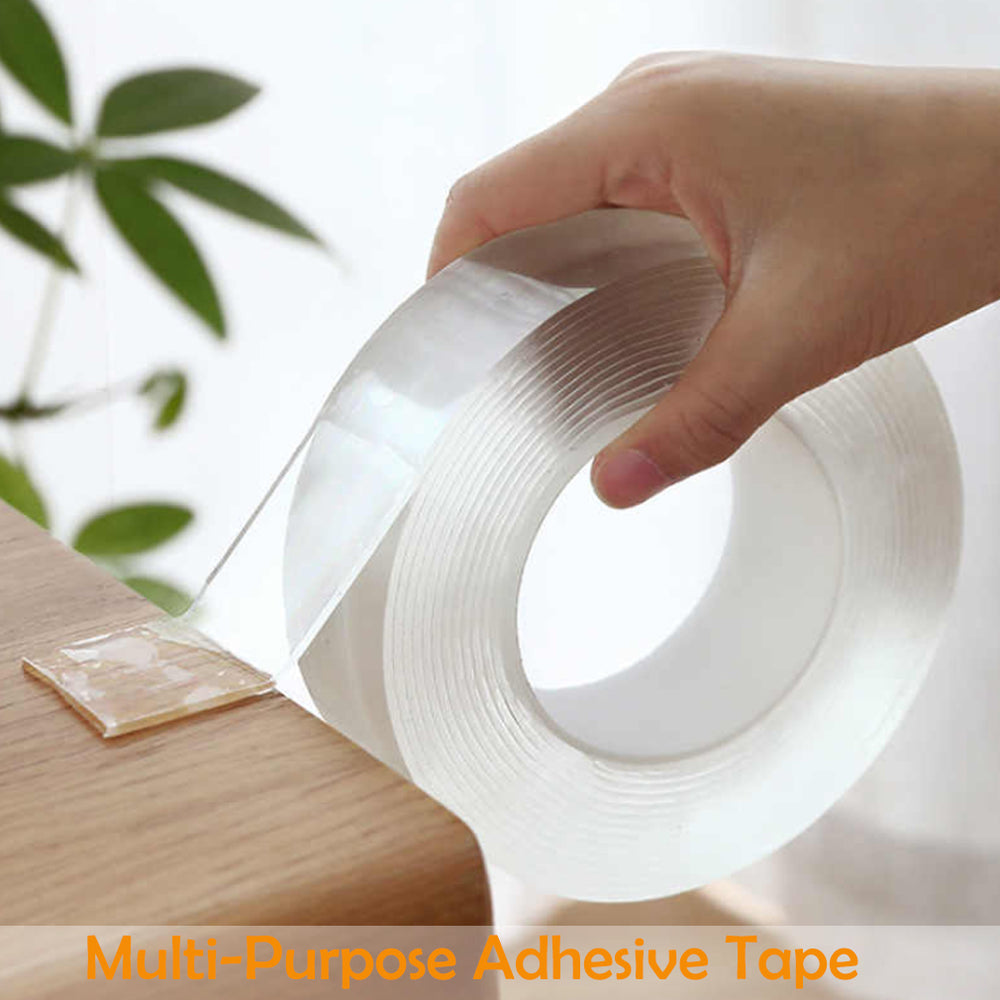
A stock image related to Clear nano tape.
Comprehensive Cost and Pricing Analysis for Clear nano tape Sourcing
Clear nano tape procurement requires navigating a complex pricing landscape where material specifications, volume commitments, and regional logistics converge. For buyers sourcing across Africa, South America, the Middle East, and Europe, unit costs represent only the surface of total expenditure, necessitating a granular understanding of cost drivers specific to this reusable adhesive category.
What Technical Specifications Drive Clear Nano Tape Manufacturing Costs?
Material thickness constitutes the primary pricing variable, with industrial-grade tapes ranging from 1.0mm to 3.0mm commanding significantly different price points per square meter. Width and length configurations—commonly available in 1-inch, 1.5-inch, and 3-inch variants—impact per-meter economics, with bulk rolls offering 15-30% cost advantages over consumer-length alternatives. High-transparency gel formulations with advanced UV resistance typically carry 20-25% premiums over standard grades, while certifications such as RoHS and REACH compliance add regulatory costs that vary substantially by manufacturing origin and destination market requirements.
How Do Volume Tiers and MOQs Structure B2B Pricing?
Chinese manufacturers typically establish minimum order quantities (MOQs) between 1,000 to 5,000 rolls for customized specifications, with significant price breaks occurring at 20-foot container volumes. Buyers in Vietnam and Saudi Arabia should anticipate tiered pricing strategies: sample orders (100-500 units) may cost $2.50-$4.00 per roll, while container-level commitments reduce unit costs to $0.80-$1.50 depending on thickness and transparency grade. OEM branding and private labeling add $0.15-$0.30 per unit but enable margin control and market differentiation in local distribution channels across diverse regions.
What Hidden Logistics Costs Impact Total Landed Pricing?
Beyond FOB pricing, international buyers must factor freight differentials and regional handling complexities. Sea freight from Guangdong to Lagos or São Paulo averages $800-$1,200 per cubic meter with 25-35 day transit times, while Middle Eastern ports (Jeddah, Dubai) benefit from shorter routes reducing shipping costs by 30-40% and delivery windows of 12-18 days. Import duties vary dramatically by trade classification: Saudi Arabia imposes 5% customs duty plus 15% VAT on adhesive products, whereas certain African trade zones under AfCFTA offer preferential rates for industrial inputs. Temperature-controlled storage requirements during transit, essential for maintaining gel adhesion properties in extreme heat, add $200-$400 per container in climate-controlled fees.
How Should Buyers Calculate Total Cost of Ownership Across Multiple Use Cycles?
The reusability factor fundamentally alters cost-per-use calculations for procurement teams. While standard double-sided foam tapes cost $0.50-$1.00 per application (single-use), premium clear nano tape supporting 1,000+ wash-and-reuse cycles effectively reduces per-use costs to $0.002-$0.005. For industrial applications in automotive assembly or electronics manufacturing, this translates to 90% adhesive cost reduction over 24-month periods, offsetting higher upfront procurement investments within three to six months of deployment despite initially higher unit prices.
What Regional Pricing Strategies Should Buyers Anticipate?
European suppliers typically position clear nano tape at $3.00-$5.00 per roll emphasizing REACH compliance and sustainability credentials, while established Chinese manufacturers compete at $1.20-$2.00 with flexible OEM customization and shorter lead times. Middle Eastern distributors and trading companies typically apply 35-50% markups over factory pricing, making direct Asian sourcing advantageous for volume buyers despite higher initial logistics coordination. African markets demonstrate high price sensitivity, favoring mid-thickness (1.5mm) variants that balance performance with affordability, whereas European industrial buyers prioritize heavy-duty (2mm+) specifications regardless of premium pricing.
Alternatives Analysis: Comparing Clear nano tape With Other Solutions
When evaluating mounting solutions for commercial environments across diverse international markets—from Saudi Arabian retail developments to Vietnamese manufacturing facilities—procurement teams must carefully weigh the trade-offs between installation flexibility, bond permanence, and long-term operational efficiency. While clear nano tape represents a significant advancement in reusable adhesive technology utilizing microscopic suction cup structures, established alternatives like acrylic foam mounting tapes and mechanical fastening systems remain prevalent in industrial supply chains across Europe, Africa, and South America. Understanding the specific performance characteristics, cost implications, and substrate compatibility of each solution enables buyers to align purchasing decisions with project longevity requirements, facility lease terms, and total cost of ownership calculations unique to their regional operating conditions.
How Does Clear Nano Tape Compare to Traditional Mounting Solutions?
| Comparison Aspect | Clear Nano Tape | Acrylic Foam Mounting Tape | Mechanical Fasteners (Screws/Brackets) |
|---|---|---|---|
| Bond Permanence | Temporary/Reusable (500+ cycles) | Permanent/Structural | Permanent/Structural |
| Surface Residue | None (clean removal) | High (requires chemical solvents) | Minimal (patching/repainting required) |
| Load Capacity | Moderate (1-2 kg/cm²) | High (up to 30 kg/cm²) | Very High (substrate dependent) |
| Installation Speed | Immediate (tool-free) | Immediate (tool-free) | Slow (requires drilling/tools) |
| Cost per Application | Low (multi-use capability) | High (single-use only) | Low (reusable hardware) |
| Surface Versatility | Smooth non-porous only | Most surfaces including textured | Universal (requires substrate integrity) |
| Aesthetic Impact | Invisible (transparent) | Visible edges/thickness | Visible hardware |
| Temperature Range | -20°C to 60°C | -40°C to 150°C | Material dependent (-50°C to 300°C+) |
Is Acrylic Foam Tape a Better Choice Than Clear Nano Tape for Permanent Applications?
Acrylic foam mounting tapes, frequently categorized as Very High Bond (VHB) solutions, serve as the primary permanent adhesive alternative to clear nano tape in industrial procurement portfolios. These tapes utilize viscoelastic acrylic polymers that chemically bond with substrates at the molecular level, delivering superior load-bearing capacity suitable for structural metal panel bonding, automotive trim attachment, and heavy machinery vibration damping. However, this permanence creates significant operational limitations for B2B buyers managing temporary installations, leased commercial facilities, or dynamic retail environments, as removal requires aggressive chemical solvents and typically damages painted surfaces or drywall. While acrylic foam tapes demonstrate superior performance in extreme temperature environments ranging from -40°C to 150°C, they lack the reusability that makes nano tape economically advantageous for exhibition setups, seasonal promotional displays, and configurable workspace environments where mounting requirements frequently evolve.
When Should B2B Buyers Choose Mechanical Fasteners Over Clear Nano Tape?
Mechanical fastening systems—including screws, wall anchors, toggle bolts, and specialized mounting brackets—represent the traditional benchmark for heavy-duty industrial mounting applications where structural integrity and safety certification are non-negotiable. For permanent installations supporting substantial static or dynamic weight loads, such as heavy HVAC components, industrial shelving systems, or safety-critical equipment, mechanical solutions provide predictable failure points, seismic compliance, and code-compliant security that adhesive technologies cannot reliably match. The primary trade-off involves significant installation complexity and irreversible substrate damage; drilling requirements make mechanical fasteners unsuitable for glass partitions, polished stone facades, or thin-gauge metal surfaces where clear nano tape performs exceptionally. Procurement teams should reserve mechanical solutions for permanent infrastructure and safety-critical applications while utilizing clear nano tape for non-invasive mounting of lightweight IoT sensors, temporary wayfinding signage, and damage-sensitive environments such as heritage buildings, premium commercial interiors, or aircraft cabins where surface preservation is mandatory.
Essential Technical Properties and Trade Terminology for Clear nano tape
When procuring clear nano tape for international distribution, understanding precise technical specifications and standardized trade terminology ensures compliance with regional safety standards and application requirements. The following parameters distinguish industrial-grade products from consumer variants while facilitating accurate cross-border communication between suppliers and procurement teams.
What Load Capacity and Thickness Specifications Define Industrial-Grade Nano Tape?
Tensile strength indicates the maximum weight per unit area the tape can support before breaking, typically measured in kilograms per square centimeter (kg/cm²) or pounds per square inch (PSI). Industrial buyers should specify shear resistance, which measures the tape’s ability to maintain adhesion under parallel loads—critical for vertical mounting applications in construction and electronics. Thickness tolerance, usually ranging between 1.0mm and 3.0mm, determines conformability to irregular substrates and overall durability under sustained loads.
How Does Optical Transmittance Percentage Impact B2B Purchasing Decisions?
Optical clarity ratings exceeding 90% light transmittance ensure the tape remains virtually invisible between bonded surfaces, essential for retail displays and glass installations. Haze measurements below 5% indicate minimal light diffusion, maintaining aesthetic transparency. For markets with intense solar exposure, such as the Middle East and South America, UV stability specifications prevent polymer degradation and yellowing over time, preserving both adhesion strength and visual clarity throughout the product lifecycle.
What Temperature Ranges Ensure Adhesive Stability in Extreme Climates?
Service temperature range defines operational limits, with standard grades performing between -20°C and 80°C, while industrial variants withstand -40°C to 150°C. Thermal cycling resistance measures performance through repeated expansion and contraction cycles, crucial for outdoor signage and automotive applications. Humidity resistance ratings indicate efficacy in tropical climates, ensuring the nano-gel matrix maintains suction integrity despite high moisture levels common in Southeast Asian and West African markets.
What Is Nano-Gel Matrix Composition and Why Does It Matter for Performance?
The nano-gel matrix refers to the cross-linked acrylic polymer structure containing microscopic suction cups that create physical adhesion through van der Waals forces rather than chemical bonding. Unlike traditional pressure-sensitive adhesives (PSA), this composition allows viscoelastic deformation, enabling the tape to flow into surface irregularities while maintaining structural integrity. Understanding durometer hardness (Shore A scale) helps buyers select appropriate flexibility levels for specific mounting substrates.
How Do Peel Adhesion and Shear Resistance Measurements Determine Application Suitability?
Peel adhesion strength, measured in Newtons per 25mm width (N/25mm) or ounces per inch, quantifies the force required to remove the tape at a 180-degree angle. Static shear resistance tests how long the tape holds a specified weight on a vertical surface, while dynamic shear evaluates performance under vibration. These metrics determine whether formulations suit temporary exhibition mounting or permanent structural bonding in industrial environments.
What Does Surface Energy Compatibility Mean for Substrate Selection?
Surface energy measures a substrate’s molecular attraction force, with high-energy surfaces (glass, aluminum) bonding readily and low-energy surfaces (polypropylene, powder-coated metals) requiring specialized nano-tape formulations. Surface preparation standards, including isopropyl alcohol cleaning protocols and corona treatment levels, directly impact adhesion longevity. Buyers should request substrate compatibility charts to verify performance on specific materials common in their regional markets, such as textured wall surfaces or oily metals.
Navigating Market Dynamics and Sourcing Trends in the Clear nano tape Sector
What Are the Current Market Dynamics Driving Clear Nano Tape Demand Globally?
The clear nano tape sector is experiencing accelerated growth driven by cross-industry demand for invisible mounting solutions that preserve aesthetic integrity. Unlike conventional mechanical fasteners or foam adhesives, transparent nano tape variants utilize microscopic suction cup technology to deliver high-tensile bonding without surface damage—a critical requirement for glass-heavy commercial architecture, retail display systems, and consumer electronics assembly across Middle Eastern and European markets. Procurement officers are increasingly specifying clear formulations for luxury retail fit-outs and hospitality projects where visible mounting hardware compromises brand presentation.
Emerging economies in Africa, South America, and Southeast Asia represent high-growth procurement zones, fueled by rapid urbanization and expanding DIY retail sectors. In regions like Vietnam and Saudi Arabia, infrastructure development and smart city initiatives are driving bulk orders for heavy-duty clear nano tape variants capable of supporting signage, architectural films, and temporary mounting applications in extreme temperature environments. B2B buyers should note the market bifurcation between commodity-grade consumer products and industrial-specification tapes featuring enhanced UV resistance and load-bearing capacities exceeding 1kg per square centimeter.
How Is Supply Chain Diversification Impacting Clear Nano Tape Sourcing Strategies?
Post-pandemic supply chain resilience has become paramount for international buyers sourcing adhesive technologies from Asian manufacturing hubs. While China remains the primary production center for nano tape utilizing advanced polymer engineering, forward-thinking procurement teams are establishing dual-source agreements with certified manufacturers in Vietnam and India to mitigate geopolitical risks and shipping volatility. The sector is witnessing increased demand for customizable roll dimensions and private-label packaging, particularly from European distributors serving the professional construction and automotive aftermarket sectors.
Quality verification protocols now extend beyond basic adhesion testing to include nanostructure consistency analysis, ensuring microscopic suction cup integrity across large production batches. Buyers sourcing for electronics and automotive applications must prioritize suppliers offering temperature-resistant clear nano tape formulations (-20°C to 80°C operational ranges) that maintain transparency without yellowing during thermal cycling—a specification critical for Middle Eastern climate conditions and outdoor digital signage deployments.
Why Are B2B Buyers Prioritizing Sustainable Sourcing for Nano Adhesive Solutions?
Sustainability credentials have transitioned from marketing differentiators to mandatory procurement criteria across international markets. Clear nano tape supports circular economy objectives through its reusability factor; unlike single-use foam tapes that generate construction waste, high-grade nano adhesives withstand 500+ wash-and-reuse cycles, significantly reducing material consumption in temporary mounting applications. Procurement teams should evaluate suppliers based on polymer source traceability and RoHS/REACH compliance certifications, particularly when supplying to regulated European markets or automotive OEMs requiring hazardous substance documentation.
What Ethical Considerations Should Procurement Teams Evaluate in Nano Tape Supply Chains?
Ethical sourcing extends beyond environmental impact to encompass manufacturing labor standards and raw material provenance. B2B buyers must verify that suppliers adhere to ISO 14001 environmental management systems and SA8000 social accountability standards, particularly when sourcing from high-volume Asian production facilities. The lightweight nature of nano tape (reducing shipping carbon footprints compared to mechanical fasteners) offers sustainability advantages, but buyers should demand transparency regarding virgin versus recycled polymer content in the acrylic or PU gel substrates.
Due diligence should include verification of anti-static and automotive-grade specialty formulations to ensure compliance with industry-specific safety standards. Establishing direct relationships with manufacturers—rather than relying solely on trading companies—enables better oversight of production ethics while securing competitive pricing for bulk clear nano tape orders destined for African and South American distribution networks.
Frequently Asked Questions (FAQs) for B2B Buyers of Clear nano tape
What weight capacity does industrial-grade clear nano tape support for heavy-duty commercial applications?
1. What weight capacity does industrial-grade clear nano tape support per square inch when mounting industrial components?
Industrial-grade clear nano tape typically supports between 1 to 2 pounds per square inch for standard applications, with heavy-duty variants engineered to hold 5 to 8 pounds per square inch when applied to clean, non-porous surfaces. Load distribution and surface texture significantly impact performance; smooth glass or polished metal substrates maximize weight capacity, while textured surfaces require additional coverage area to achieve equivalent holding strength. For B2B procurement, always request technical data sheets specifying shear strength measured in N/cm and tensile ratings
Important Disclaimer & Terms of Use
⚠️ Important Disclaimer
The information provided in this guide, including content regarding manufacturers, technical specifications, and market analysis, is for informational and educational purposes only. It does not constitute professional procurement advice, financial advice, or legal advice.
B2B buyers must conduct their own independent and thorough due diligence before making any purchasing decisions. The risk of relying on any information in this guide is borne solely by the reader.
Top 3 Clear Nano Tape Manufacturers & Suppliers List
1. Toptape – Alien Tape
Domain: allfoamtape.com
Registered: 2019 (7 years)
Introduction: This company, Toptape – Alien Tape, is a notable entity in the market.
2. Topever – Self Adhesive Tapes
Domain: topevertape.com
Registered: 2022 (4 years)
Introduction: This company, Topever – Self Adhesive Tapes, is a notable entity in the market.
3. Nano-Tape – Transparent Double Sided Nano Tape
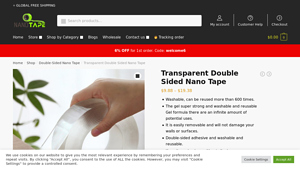
Domain: nano-tape.com
Registered: 2020 (6 years)
Introduction: Product Name: Transparent Double Sided Nano Tape (also referenced as 3M 5M Nano Magic Tape). Price Range: $9.88 – $19.38. Customer Rating: 3.78 out of 5 based on 9 reviews. Key Features: Washable and reusable over 600 times; super strong gel formula; double-sided adhesive; easily removable without damaging walls or surfaces; waterproof; transparent/no trace; keeps items in place without slipping. …
Strategic Sourcing Conclusion and Outlook for Clear nano tape
As global supply chains pivot toward sustainable, high-performance bonding solutions, clear nano tape represents a strategic evolution beyond traditional single-use adhesives. For procurement teams operating across Africa, South America, the Middle East, and Europe, this transparent mounting technology delivers not only operational versatility but measurable competitive advantages in assembly, retail display, and construction applications.
How Can B2B Buyers Ensure Long-Term Supply Chain Resilience?
When evaluating clear nano tape suppliers, prioritize partners demonstrating consistent polymer quality, ISO-certified manufacturing processes, and regional distribution capabilities. Establishing dual-source agreements mitigates logistics risks particularly critical for rapidly industrializing markets like Vietnam and Saudi Arabia, where humidity and temperature variations demand adhesive stability and consistent product availability.
What Strategic Value Does Reusable Adhesive Technology Deliver?
Integrating reusable nano adhesion aligns with circular economy procurement mandates while reducing material waste expenditures by up to 60% versus conventional mounting systems. Forward-thinking buyers should negotiate flexible volume contracts accommodating seasonal fluctuations in construction and electronics manufacturing, ensuring inventory optimization without compromising project timelines or surface integrity requirements.
By embedding clear nano tape sourcing into strategic procurement frameworks today, organizations secure a future-ready position—balancing cost efficiency, environmental compliance, and supply chain agility across diverse international markets while meeting evolving sustainability benchmarks.