Introduction: Navigating the Global Market for Quiet packing tape
In high-volume packaging environments across São Paulo, Frankfurt, and Dubai, the relentless screech of traditional adhesive tape has become more than an annoyance—it represents measurable productivity loss and workplace compliance risks. When sourcing quiet packing tape for international operations, procurement teams face a complex landscape of varying acoustic standards, adhesive technologies, and supplier reliability metrics that extend far beyond simple noise reduction. This persistent challenge has transformed low-noise packaging from a niche comfort feature into a strategic operational requirement for competitive enterprises.
Why Are Global Buyers Prioritizing Acoustic Packaging Solutions?
From German manufacturing facilities adhering to strict occupational noise limits to Brazil’s rapidly expanding e-commerce fulfillment centers seeking to optimize working conditions, the demand for silent sealing solutions is accelerating across diverse markets. Middle Eastern logistics hubs and African distribution networks increasingly recognize that noise-reduction technology directly correlates with employee retention and regulatory compliance, making technical tape specification—from heavy-duty 2.4mil thickness variants to specialized acrylic formulations—a critical procurement decision rather than an afterthought.
What Strategic Insights Does This Global Procurement Guide Deliver?
This comprehensive resource examines the complete quiet packing tape ecosystem, analyzing width optimizations (1.88-inch standards versus custom formats), yardage efficiency for high-volume shipping operations, and compatibility with automated dispensing systems. We evaluate regional compliance frameworks, vetting protocols for Asian manufacturing partners, total cost of ownership calculations, and sector-specific applications ranging from pharmaceutical clean rooms to residential moving services and retail distribution centers.
Whether you are establishing supplier relationships in Shenzhen for European distribution or optimizing warehouse acoustics for Middle Eastern expansion, this guide equips you with actionable intelligence to navigate quality certifications, negotiate bulk pricing structures, and implement noise-reduction strategies that align with your operational scale and regional regulatory requirements.
Understanding Quiet packing tape Types and Variations
| Type Name | Key Distinguishing Features | Primary B2B Applications | Brief Pros & Cons for Buyers |
|---|---|---|---|
| Standard Low-Noise Acrylic PP | Water-based adhesive, 28–40 micron thickness, UV-stable formulation, moderate noise reduction | E-commerce fulfillment, light manufacturing, climate-controlled warehousing, office relocations | Pros: Cost-effective for high volumes, excellent aging resistance, stable in temperature fluctuations Cons: Lower initial tack requires pressure, poor adhesion to dusty/recycled surfaces |
| Heavy-Duty Low-Noise Hot Melt | Synthetic rubber adhesive, 45–60 micron (2.0–2.4mil) backing, aggressive immediate tack, cold-resistant | Export shipping, heavy cartons, recycled board packaging, cold storage logistics, African and South American markets | Pros: Strong bond on difficult surfaces, works in sub-optimal climates, quick application Cons: 15–20% higher cost than acrylic, adhesive oxidation risk over multi-year storage |
| Premium Low-Noise PVC | Vinyl backing, <35dB unwind rating, high conformability, superior optical clarity, consistent unwind | Luxury retail, pharmaceuticals, German automotive parts, noise-sensitive Middle Eastern offices | Pros: Ultra-quiet operation, professional presentation, excellent for barcode scanning Cons: Significant cost premium, limited recyclability, heavier rolls increase shipping costs |
| Reinforced Low-Noise Filament | Fiberglass strand integration, 100+ lbs/inch tensile strength, low-noise coating, rigid backing | Heavy machinery, metal components, Brazilian agricultural equipment, pallet unitization, industrial bundling | Pros: Exceptional load containment, maintains quiet properties under high tension Cons: Requires specialized dispensers, highest cost per meter, overkill for standard cartons |
What distinguishes standard acrylic low-noise tape from heavy-duty variants?
Standard low-noise acrylic tapes utilize water-based adhesives on polypropylene backing, typically ranging 28–40 microns in thickness. These variants excel in climate-stable warehouse environments and offer excellent UV resistance for inventory requiring extended storage. B2B buyers should evaluate carton weight capacities and surface conditions; while cost-effective for high-volume e-commerce operations, these tapes may require extended pressure application to achieve optimal bond strength on heavily recycled corrugated materials common in circular economy supply chains.
Why choose heavy-duty hot melt low-noise tape for export operations?
Heavy-duty hot melt variants feature synthetic rubber adhesives and thicker polypropylene backings (45–60 microns), delivering aggressive initial tack even in colder climates prevalent in Northern European logistics. These tapes maintain adhesion integrity on dusty or recycled board surfaces frequently encountered in African and South American markets. Procurement teams should assess specific decibel reduction ratings and verify compatibility with automated case sealers, as the increased adhesive mass can affect dispenser roller mechanics and unwind consistency compared to standard acrylic grades.
Is premium PVC low-noise tape worth the investment for luxury goods shipping?
Premium PVC low-noise tapes offer superior conformability and near-silent unwind characteristics below 35 decibels, making them ideal for retail environments and luxury goods distribution where acoustic comfort impacts worker productivity. The vinyl backing provides exceptional optical clarity for barcode scanning and professional presentation. However, buyers must weigh the significant cost premium against polypropylene alternatives and consider end-of-life recyclability challenges,
Key Industrial Applications of Quiet packing tape
| Industry/Sector | Specific Application of Quiet packing tape | Value/Benefit for the Business | Key Sourcing Considerations for this Application |
|---|---|---|---|
| E-commerce Fulfillment & 3PL | High-volume carton sealing in distribution centers operating extended shifts | Reduces ambient noise pollution by up to 50%, improving worker concentration and reducing fatigue-related errors in voice-picking environments | High tensile strength (2.0+ mil), compatibility with automated dispensers, bulk container pricing, moisture-resistant acrylic for humid climates |
| Healthcare & Pharmaceutical Logistics | Sealing medical supplies and pharmacy shipments in hospital mailrooms and clean environments | Maintains quiet healing environments; prevents noise disruption in patient care areas while ensuring sterile package integrity for temperature-sensitive shipments | FDA-compliant adhesives, residue-free removal, anti-static properties, temperature stability for cross-continental shipping routes |
| Corporate Office & Commercial Real Estate | Daily mailroom operations and internal document distribution in multi-tenant buildings | Eliminates acoustic disruption in open-plan offices; supports hybrid work environments requiring focus and complies with workplace noise directives | Clear finish for professional aesthetics, easy hand-tear capability, low VOC emissions for indoor air quality standards |
| Education & Public Sector | University logistics, library archives, and school supply distribution | Prevents noise disruption in study areas and classrooms; supports 24-hour library operations without disturbing patrons or examination periods | Archival-safe adhesive, UV resistance for storage longevity, cost-effectiveness for tight institutional budgets and tender compliance |
| Residential Property Management & Luxury Retail | High-end residential move-in kits and evening delivery window logistics in dense urban centers | Complies with strict municipal noise ordinances; enables off-peak delivery operations without tenant complaints in mixed-use developments | UV-stable formulations for sun-exposed storage, compatibility with recycled corrugated materials, premium aesthetic standards |
How Does Quiet Packing Tape Enhance Operations in High-Volume Fulfillment Centers?
In high-throughput distribution centers across Germany and Brazil, quiet packing tape addresses critical occupational health challenges by reducing ambient noise levels during 24/7 operations. When sealing thousands of cartons daily, traditional tape’s screech contributes to worker fatigue and communication barriers. Heavy-duty low-noise formulations maintain 2.4mil thickness for secure palletizing while allowing voice-picking systems to function clearly. For African and Middle Eastern buyers, sourcing moisture-resistant acrylic adhesives ensures performance in varying humidity levels, while European markets prioritize compliance with workplace noise directive 2003/10/EC.
What Are the Compliance Benefits of Low-Noise Sealing Solutions in Healthcare Logistics?
Hospital mailrooms and pharmaceutical distribution hubs in urban centers require packaging solutions that preserve patient recovery environments. Quiet packing tape enables early-morning and late-night logistics operations without disrupting intensive care units or open-plan wards. The technology proves essential for Middle Eastern healthcare infrastructure projects and South American clinic networks where space constraints place supply rooms adjacent to treatment areas. Buyers should verify medical-grade adhesives that resist temperature fluctuations during intercontinental shipping, ensuring seals remain intact from humid ports to climate-controlled storage.
Why Should Corporate Facilities Managers Invest in Silent Packaging for Office Environments?
Multi-tenant office buildings and corporate campuses utilize quiet packing tape in centralized mailrooms to eliminate acoustic disruption across open-floor plans. This application supports hybrid work models where concentration zones abut logistics areas. For European buyers managing historic office conversions with poor sound insulation, and Brazilian commercial towers with strict condominium regulations, silent sealing prevents tenant complaints. Sourcing considerations include clear optical properties for branded packaging visibility and compatibility with recycled corrugated materials common in sustainability-focused markets.
How Can Educational Institutions Balance Budget Constraints with Noise Reduction Packaging?
Universities from Johannesburg to São Paulo operate 24-hour library logistics and campus supply distribution requiring noise mitigation in study zones. Quiet packing tape allows facilities teams to process textbook deliveries and archival shipments during peak study hours without acoustic penalties. This proves critical for Middle Eastern educational institutions expanding digital-physical hybrid learning spaces. Procurement teams must balance decibel reduction with archival-safe formulations that won’t degrade rare document collections, while meeting public sector tender requirements for cost efficiency at volume.
What Sourcing Strategies Support Noise Compliance in Residential and Luxury Retail Logistics?
High-end residential complexes and luxury retail distribution across Europe and the Middle East utilize quiet packing tape to comply with strict noise ordinances during evening delivery windows. Property managers in dense Brazilian urban centers and Nigerian commercial districts require silent sealing for tenant move-in kits and maintenance supply logistics. This application demands tape that performs on recycled corrugated materials while maintaining premium aesthetic standards. Buyers should prioritize UV-stable formulations that resist degradation in sun-exposed storage areas typical of equatorial climates, ensuring adhesive integrity from warehouse to final mile.
A stock image related to Quiet packing tape.
3 Common User Pain Points for ‘Quiet packing tape’ & Their Solutions
Scenario 1: How Can High-Volume Fulfillment Centers Meet Noise Compliance Without Sacrificing Throughput?
The Problem:
Operations in densely populated industrial zones—common in European cities like Berlin or rapidly urbanizing African hubs such as Nairobi and Lagos—face increasingly strict municipal noise ordinances and occupational safety limits. Standard BOPP packing tape generates piercing 85-90dB screeches during unwind, frequently exceeding EU Machinery Directive limits of 85dB for 8-hour worker exposure. This creates compliance violations, potential regulatory fines, and worker compensation claims for hearing fatigue. Additionally, the constant high-pitched noise disrupts verbal communication between packers and floor managers, reducing error detection rates and creating safety hazards in busy warehouses where forklift traffic requires clear auditory warnings. Night shift operations, essential for serving global time zones, become particularly problematic when noise carries to nearby residential areas.
The Solution:
Deploy low-noise acrylic packing tape specifically engineered with specialized release coatings and micro-embossed film technology that reduces unwind noise to 60-65dB—comparable to normal conversation levels. This allows 24/7 operations in mixed-use industrial parks without installing expensive acoustic barrier walls or requiring mandatory hearing protection PPE that hampers team coordination. When sourcing for high-throughput environments, specify 2.4mil thickness and 1.88-inch width to ensure compatibility with standard tape guns and automated dispensers. Verify that suppliers provide consistent roll tension specifications, as uneven winding can create noise spikes even with low-noise adhesives. By implementing these specifications, facilities can maintain standard strokes-per-minute packing rates while eliminating the acoustic disruption that previously limited operational hours in noise-sensitive districts.
Scenario 2: Is Quiet Packing Tape Strong Enough for Rough-Handling International Supply Chains?
The Problem:
Export managers shipping to South American, Middle Eastern, or African markets often operate under the misconception that low-noise formulations compromise adhesive integrity. Given that packages bound for São Paulo, Dubai, or Lagos frequently endure high humidity at ports, temperature fluctuations in container ships, and rough handling across variable terrain, buyers fear that quiet tape will fail mid-shipment. This concern often forces procurement teams to choose noisy but “trusted” hot-melt tapes, sacrificing workplace comfort for perceived security. The anxiety intensifies when shipping high-value electronics or fragile goods where tape failure means total inventory loss and damaged client relationships in emerging markets where replacement logistics are challenging.
The Solution:
Specify heavy-duty quiet packing tape utilizing solvent-free acrylic adhesives rather than noisy hot-melt rubber formulations. Modern 2.4mil low-noise tapes actually offer superior shear resistance and temperature stability, performing reliably from -10°C to 60°C while maintaining 50lb+ tensile strength. Unlike hot-melt adhesives that soften in humid climates, acrylic creates a permanent chemical bond with corrugated fibers that strengthens over 24 hours, ensuring cartons remain sealed through challenging last-mile conditions. Request suppliers provide ASTM D3654 shear adhesion test results and ASTM D3759 tensile strength certifications specific to their low-noise formulations. Conduct pilot shipments to your most challenging destinations—perhaps rural Brazil or coastal Middle Eastern ports—to verify performance before committing to bulk procurement of 60-yard bulk rolls.
Scenario 3: Where Can Growing E-commerce Operations Source Cost-Effective Bulk Quiet Tape for Open-Plan Facilities?
The Problem:
Modern fulfillment centers in competitive markets like Germany and Brazil increasingly adopt open-plan layouts where packing stations sit adjacent to customer service teams, tech support, or retail showrooms. The acoustic disruption from standard tape—often described as “screeching”—destroys workplace productivity and creates negative brand impressions during facility tours with potential clients. However, retail-priced low-noise tape purchased through office supply intermediaries often carries
Strategic Material Selection Guide for Quiet packing tape
Selecting the optimal substrate for noise-reduction packaging requires balancing acoustic engineering with regional logistical demands and regulatory compliance. For procurement teams operating across Germany’s stringent sustainability mandates, Brazil’s humid distribution networks, or the Middle East’s temperature extremes, understanding how film composition affects decibel levels, structural integrity, and end-of-life recyclability is paramount. Material selection directly impacts not only workplace noise ordinances but also automated line efficiency and cross-border environmental compliance. The following analysis examines four primary material configurations, evaluating their
A stock image related to Quiet packing tape.
In-depth Look: Manufacturing Processes and Quality Assurance for Quiet packing tape
Quiet packing tape represents a specialized evolution in pressure-sensitive adhesive technology, where acoustic dampening is engineered directly into the film substrate and adhesive interface. Unlike standard polypropylene tapes that generate significant unwinding noise through high-frequency vibration—often exceeding 75 decibels and creating workplace fatigue in high-volume packing environments—quiet variants utilize modified BOPP (Biaxially Oriented Polypropylene) films and specialized release coatings to achieve noise reductions of 60-80%. For B2B procurement teams across diverse markets—from Germany’s precision logistics sector to Brazil’s high-volume distribution centers—understanding these manufacturing nuances ensures specification alignment with operational requirements and regulatory compliance.
How Is Quiet Packing Tape Engineered to Minimize Acoustic Disturbance?
The acoustic signature of packing tape originates primarily at the adhesive-release coating interface during unwind, a phenomenon known as “stick-slip” oscillation. Manufacturers achieve noise reduction through three core engineering approaches: modified film formulations that dampen vibration transmission, specialized release coatings that reduce friction variance, and controlled adhesive rheology that ensures smooth peel characteristics without compromising tack.
The film substrate typically utilizes a proprietary blend of polypropylene with added elastomers or metallocene polyethylene to increase flexibility while maintaining tensile strength above 20 N/cm². These molecular modifications alter the vibrational frequency of the unwinding tape, shifting energy dissipation below the human hearing sensitivity threshold or diffusing sound across a broader, less perceptible spectrum. The release coating—often silicone-based or fluoropolymer-enhanced—must maintain a precise coefficient of friction (typically 0.2-0.4) to prevent the high-frequency screeching associated with standard acrylic release coatings.
What Manufacturing Processes Ensure Consistent Low-Noise Performance?
Production of quiet packing tape requires precision-controlled coating and slitting operations that differ significantly from standard tape manufacturing. The extrusion phase begins with BOPP film production using the tenter frame process, where controlled stretching ratios (typically 4:1 to 8:1) create the molecular orientation necessary for strength while preserving the acoustic dampening properties introduced during polymer compounding. Corona treatment levels (measured in dynes/cm) require careful calibration to ensure adequate surface energy for adhesive bonding without increasing film rigidity that could amplify noise.
Following extrusion, the adhesive application process utilizes direct gravure or Meyer rod coating techniques to achieve uniform adhesive deposition between 25-35 microns. Critical to noise reduction is the application of the specialized release coating on the non-adhesive side, applied through reverse-roll coating or air-knife methods to ensure sub-micron uniformity. Slitting operations present particular challenges for acoustic integrity; manufacturers employ tension control systems maintaining ±5% variance and laser-guided edge detection to prevent micro-fractures that would compromise the smooth unwind characteristics. High-speed winding (often exceeding 1000 meters per minute) requires programmable logic controllers (PLCs) that adjust torque dynamically to prevent telescoping or edge deformation that generates noise during end-use unwinding.
Which Quality Assurance Protocols Validate Acoustic and Mechanical Integrity?
Comprehensive QA for quiet packing tape extends beyond standard adhesion and tensile testing to include specific acoustic validation and long-term stability verification. Manufacturers employ calibrated decibel meters positioned at standardized distances (usually 30cm) during unwind testing at typical packing speeds (30-50 cm/second), with premium quiet tapes registering below 60 dB compared to standard tapes exceeding 75 dB.
Mechanical testing includes loop tack testing (ASTM D6195) to ensure immediate adhesion integrity, holding power tests (ASTM D3654) verifying resistance to shear forces, and thickness uniformity checks using micrometer gauges calibrated to ±0.1 mil precision. For heavy-duty variants like 2.4mil constructions (such as those used in industrial shipping), additional puncture resistance and elongation-at-break testing (ASTM D3759) ensure the acoustic modifications haven’t compromised structural integrity. Batch consistency protocols require statistical process control (SPC) charting of adhesive coat weights and release coating uniformity, with Acceptable Quality Levels (AQL) typically set at 1.0 or stricter for B2B contracts exceeding 10,000 rolls.
How Should International Buyers Evaluate Manufacturing Certifications and Standards?
B2B procurement teams should prioritize suppliers demonstrating ISO 9001:2015 quality management systems and ISO 14001 environmental compliance, particularly important for European markets with stringent sustainability requirements. Technical specifications should reference ASTM D5486 for pressure-sensitive tape standards or equivalent EN 1939 standards for European conformity. For the Brazilian market, ABNT NBR certification may be required, while Middle Eastern buyers should verify GCC conformity marks for regional distribution.
For markets with extreme climate variations—such as the high-humidity environments of West Africa or the Middle East, or the temperature fluctuations in South American logistics corridors—buyers should request accelerated aging tests (ASTM D3611) that validate adhesive stability across 0°C to 60°C storage conditions and 85% relative humidity exposure. Requesting batch-specific test reports including unwind noise decibel readings, rather than generic product claims, provides verifiable quality assurance. Additionally, suppliers offering customized thickness profiles (ranging from standard 2.0mil to heavy-duty 2.4mil or 3.0mil) with maintained acoustic properties demonstrate advanced manufacturing capabilities suitable for diverse industrial applications.
What Regional Considerations Affect Manufacturing Specifications for Global Distribution?
Manufacturing specifications must account for regional environmental stressors that affect acoustic performance over time. For European markets, particularly Germany, compliance with REACH regulations regarding adhesive chemical composition is mandatory, often requiring water-based acrylic formulations rather than solvent-based alternatives that may emit volatile organic compounds (VOCs) during storage.
In tropical markets (Brazil, West Africa, Southeast Asia), manufacturers must optimize adhesive formulations with enhanced moisture resistance to prevent hydrolysis that can increase unwind noise as tape ages, often incorporating desiccant packaging or moisture-barrier film wraps for sea freight. Conversely, Middle Eastern distribution centers require adhesives with high-temperature shear resistance (tested to 60°C+) to prevent adhesive bleed-through that compromises the release coating’s acoustic properties during warehouse storage. Leading manufacturers address these variances through regional formulation variants or universal formulations tested against the most stringent climatic conditions, ensuring consistent acoustic performance from manufacturing through end-use, regardless of supply chain duration or storage environments.
Practical Sourcing Guide: A Step-by-Step Checklist for ‘Quiet packing tape’
Quiet packing tape reduces workplace noise pollution while maintaining seal integrity, critical for shared office spaces and residential delivery operations. For international procurement teams sourcing from global manufacturers, success requires balancing acoustic performance with logistics efficiency, regional compliance standards, and total cost optimization.
1. How Do You Verify Decibel Ratings and Thickness Specifications?
Request independent acoustic testing reports measuring unwinding noise in decibels (dB), specifically comparing the product against standard polypropylene tape benchmarks. Verify film thickness—typically 2.0–2.5 mil for heavy-duty applications—and width consistency (1.88 inches/48mm standard) to ensure compatibility with existing dispensers and load-bearing requirements for shipping to Germany or Brazil.
2. What Material Composition Balances Noise Reduction with Adhesion?
Examine the substrate-adhesive combination. Premium quiet tapes utilize specialized polypropylene films with modified acrylic adhesives that minimize the “snap” sound during application. Confirm the adhesive maintains tack across temperature ranges relevant to your logistics routes, particularly for Middle Eastern heat exposure or European cold-chain environments, without leaving residue on high-value packaging.
3. How Should You Evaluate Supplier Logistics for Global Distribution?
Assess the manufacturer’s export experience to your specific regions, including familiarity with African port documentation and Brazilian customs clearance procedures. Verify their ability to provide flexible MOQs that match your consumption rates without excessive inventory costs. Confirm Incoterms understanding and their capability to provide climate-controlled shipping options for humid transit routes common in South America and West Africa.
4. Which Compliance Certifications Are Required for Your Target Markets?
European buyers must verify REACH and RoHS compliance for chemical safety and Germany’s VerpackG (Packaging Act) registration. Middle Eastern importers should request SASO or GCC conformity certificates. Brazilian operations need documentation aligned with INMETRO standards. Ensure the supplier provides material safety data sheets (MSDS) translated into Portuguese, Arabic, or German for customs and workplace safety inspections.
5. How Can You Test Operational Compatibility Before Full Commitment?
Request pre-production samples for dispenser compatibility testing. Quiet tapes require specific unwind tension; verify they function seamlessly with your existing manual or automated packing stations without causing jams. Test in your actual environment—whether a high-volume Nigerian distribution center or a German e-commerce fulfillment hub—to confirm the noise reduction meets workplace comfort standards without sacrificing throughput speed.
6. What Storage Specifications Prevent Quality Degradation During Transit?
Inquire about moisture-resistant pallet packaging and UV protection for ocean freight. Quiet tape adhesives can degrade in high-humidity conditions common in tropical transit routes. Specify storage temperature requirements between 15–25°C and shelf-life guarantees of 12+ months. Verify the supplier uses reinforced cartons suitable for rough handling at busy Middle Eastern or African ports.
7. How Do You Calculate True Total Cost of Ownership Beyond Unit Price?
Factor in dispenser compatibility, waste reduction from clean unwinding, and productivity gains from reduced noise-related fatigue. Calculate per-meter costs rather than per-roll to account for varying yardage (50–60 yards standard). Include landed costs—tariffs, inland transport, insurance, and potential demurrage charges—to compare suppliers accurately across regions and avoid budget overruns in volatile shipping markets.

A stock image related to Quiet packing tape.
Comprehensive Cost and Pricing Analysis for Quiet packing tape Sourcing
Quiet packing tape commands a premium over standard acrylic alternatives due to specialized adhesive formulations and precision film technologies that dampen unwinding noise. For international B2B buyers sourcing across Africa, South America, the Middle East, and Europe, understanding the nuanced cost structure beyond per-roll pricing is essential for strategic procurement. Effective sourcing requires analyzing how technical specifications, volume thresholds, and regional logistics impact total landed costs.
How Does Quiet Packing Tape Pricing Compare to Standard Acrylic Options?
Quiet packing tape typically carries a 15–30% price premium compared to conventional BOPP (Biaxially Oriented Polypropylene) tapes due to the specialized coating processes required for noise reduction. While standard packaging tape might range from $0.50–$0.80 per roll in bulk quantities, low-noise variants generally start at $0.85–$1.20 per roll for comparable dimensions. However, this differential narrows significantly at higher volumes (10,000+ rolls), where economies of scale and direct manufacturer partnerships—particularly with Asian producers—can reduce the premium to 8–12%.
What Volume Thresholds Unlock Competitive Pricing for Cross-Border Buyers?
Minimum Order Quantities (MOQs) serve as the primary leverage point for cost optimization. Most manufacturers require 5,000–10,000 roll commitments for customized quiet tape specifications, though stock products may be available at 1,000-roll minimums. For buyers in Brazil or Germany importing from Asia, consolidating quarterly requirements into single shipments rather than monthly orders can reduce per-unit costs by 18–25% while optimizing container utilization. Negotiating annual contracts with quarterly release schedules often secures additional 5–7% discounts compared to spot purchasing.
Which Technical Specifications Drive Cost Variations in Silent Tape?
Thickness and adhesive quality significantly impact pricing tiers. Standard 2.0mil quiet tape costs approximately 20% less than heavy-duty 2.4mil variants suitable for export shipping to humid climates like those in West Africa or Southeast Asia. Width customization (moving beyond standard 48mm/1.88-inch widths) incurs die-change fees ranging from $200–$500 per production run. Additionally, UV-resistant formulations for outdoor storage in Middle Eastern markets add $0.15–$0.25 per roll but prevent adhesive degradation that would necessitate costly reapplication.
How Can Buyers Optimize Total Landed Costs Across Regions?
Shipping configurations dramatically affect final pricing for international buyers. Quiet packing tape’s lower density compared to reinforced alternatives means 20-foot containers typically accommodate 25–30% more rolls by volume, though weight-based freight calculations favor sea freight over air for cost efficiency. Import duties vary significantly: European Union buyers face 6.5% tariffs on plastic adhesive tapes, while Mercosur countries (including Brazil) impose rates between 12–18%. Establishing regional distribution hubs in free-trade zones—such as Dubai for Middle Eastern markets or Lagos for West Africa—can defer duty payments until final sale, improving cash flow.
What Hidden Costs Should Procurement Teams Anticipate?
Beyond unit pricing, buyers must factor in quality certification expenses (ISO 9001, SGS testing for noise levels), which add $0.02–$0.05 per roll but are essential for corporate compliance in regulated European markets. Currency fluctuation risks between USD-denominated supplier contracts and local sales currencies require hedging strategies, particularly volatile for South American and African markets. Finally, storage conditions matter: quiet tape requires climate-controlled warehousing (18–25°C) to prevent adhesive migration, adding $3–$5 per cubic meter monthly in storage costs that must be amortized across inventory turns.
Alternatives Analysis: Comparing Quiet packing tape With Other Solutions
When evaluating sealing solutions for international logistics operations, procurement teams must weigh acoustic benefits against throughput requirements, regional regulatory frameworks, and total cost of ownership. While quiet packing tape addresses stringent EU occupational health directives and noise abatement concerns in densely populated Brazilian urban centers, alternative methods may offer superior value for specific commodity types or industrial environments. Understanding the operational trade-offs between low-noise polypropylene formulations, conventional acrylic options, and fiber-reinforced water-activated systems enables strategic alignment with your facility’s acoustic profile, security protocols, and sustainability targets.
How Does Quiet Packing Tape Compare to Standard and Sustainable Alternatives?
| Comparison Aspect | Quiet Packing Tape (Low-Noise BOPP) | Standard Acrylic Packing Tape | Water-Activated Kraft Tape |
|---|---|---|---|
| Operational Noise Level | Low (50–60 dB, reduced screech frequency) | High (75–85 dB, sharp tearing sound) | Minimal (<40 dB, silent unwinding) |
| Application Throughput | High (manual/automatic dispensers) | High (standard handheld guns) | Moderate (requires water activation time) |
| Security & Tamper Evidence | Moderate (surface bond, can be reheated) | Low (easy to lift and reseal) | High (permanent fiber bond, visible damage) |
| Total Cost of Ownership | Medium (10–20% premium over standard) | Low (economical bulk pricing) | Medium-High (dispenser investment + material) |
| Implementation Complexity | Low (drop-in replacement) | Low | Moderate (requires water dispenser infrastructure) |
| Sustainability Profile | Recyclable with carton (PP #5) | Recyclable with carton | Biodegradable, repulpable, plastic-free |
| Optimal Deployment | Urban warehouses, night shifts, EU OSHA compliance | Rural/industrial hubs, extreme cost sensitivity | Export packaging, food/pharma, eco-conscious brands |
Is Standard BOPP Tape Still Viable for High-Volume Operations?
Standard polypropylene tape remains the default choice for price-sensitive markets and high-decibel industrial environments where acoustic comfort is not a regulatory priority. For operations across Africa and South America where material unit costs drive procurement decisions, the 15–25% price differential against low-noise variants favors conventional acrylic adhesives. However, facilities must calculate hidden liabilities: increased worker compensation claims for acoustic trauma in Brazilian manufacturing zones, and potential penalties for violating municipal noise ordinances in Middle Eastern urban distribution centers. While suitable for isolated bulk commodity handling or temporary warehousing, standard tape presents compliance risks for European exporters bound by Directive 2003/10/EC on noise exposure limits, particularly during night-shift operations in residential-adjacent logistics hubs.
Can Water-Activated Tape Replace Low-Noise Solutions for Secure Shipping?
Water-activated kraft tape (WAT) offers a distinct value proposition for B2B buyers prioritizing supply chain security over pure application velocity. Unlike pressure-sensitive quiet tapes, WAT creates a permanent chemical bond with corrugated fibers, providing immediate pilferage evidence that satisfies German automotive and pharmaceutical export standards. The complete silence during application eliminates ergonomic concerns entirely, while the paper-based composition meets stringent European packaging waste regulations and South American ESG mandates. However, the requirement for electric or manual water dispensers introduces capital expenditure and maintenance protocols that may challenge lean operations in emerging markets. For high-value shipments from Middle Eastern free trade zones or organic agricultural exports from Africa requiring tamper-evident sealing, WAT delivers superior protection and brand alignment despite slower throughput speeds and higher initial infrastructure costs.
Essential Technical Properties and Trade Terminology for Quiet packing tape
What Are the Critical Technical Specifications for Low-Noise Packaging Tape?
When evaluating quiet packing tape for high-volume operations, six specifications determine both acoustic performance and sealing reliability. Film thickness (caliper) typically ranges between 45–65 microns (1.8–2.5 mil), with heavy-duty export applications requiring 60+ microns (2.4mil) to prevent breakage during automated application while maintaining the flexibility necessary for silent unwinding. The adhesive coating weight, measured in grams per square meter (g/m²), directly impacts noise levels; premium quiet tapes utilize 20–25 g/m² of specialized hot melt adhesive formulated with plasticizing agents that minimize the “stick-slip” friction generating screeching sounds.
Noise reduction metrics, though not universally standardized, distinguish commercial grades: quality low-noise tape produces less than 35 decibels during unwinding compared to 60+ decibels for standard acrylic varieties. Tensile strength—minimum 30 N/cm in the machine direction (longitudinal)—ensures the tape withstands longitudinal stress without snapping, critical for pneumatic dispenser systems common in German and Brazilian manufacturing facilities. Additionally, elongation at break (150–180%) allows the tape to absorb shock during rough handling in long-haul African or South American logistics corridors without losing adhesion. Finally, verify adhesion to recycled corrugated (minimum 2.5 N/25mm) and release coating composition, as modern sustainability mandates across European and Middle Eastern markets demand reliable sealing on 100% recycled
Navigating Market Dynamics and Sourcing Trends in the Quiet packing tape Sector
The global quiet packing tape sector is experiencing accelerated transformation as urban logistics constraints and workplace safety standards converge across international markets. Unlike conventional polypropylene tapes that generate significant decibel levels during application—often exceeding 85dB in standard warehouse environments—low-noise variants utilizing micro-embossed film technologies and specialized acrylic adhesives are becoming essential for B2B operations in noise-sensitive environments. For procurement teams managing supply chains across Germany’s regulated industrial landscape, Brazil’s rapidly expanding e-commerce infrastructure, and emerging logistics hubs throughout Africa and the Middle East, understanding these market dynamics is critical for optimizing both operational efficiency and cross-border regulatory compliance when sourcing heavy-duty specifications such as 2.4mil thickness and 60-yard roll lengths.
What Are the Key Market Dynamics Driving Adoption of Low-Noise Packaging Solutions?
The proliferation of urban fulfillment centers represents the primary catalyst reshaping global demand, particularly in densely populated European cities and sprawling metropolitan areas across South America where distribution facilities operate adjacent to residential zones. This geographic compression has elevated noise reduction from a workplace comfort feature to a regulatory compliance necessity, driving standardization around heavy-duty specifications—typically 2.4mil thickness, 1.88-inch width, and extended yardage lengths—for high-volume B2B procurement. Market analysis reveals that African and Middle Eastern markets are currently experiencing accelerated adoption curves as these regions develop logistics infrastructure near urban commercial centers, creating demand for tapes that maintain adhesive integrity across variable climate conditions while meeting international noise reduction benchmarks. Furthermore, the normalization of 24/7 fulfillment operations across pharmaceutical, electronics, and luxury goods sectors has made low-noise properties essential for night-shift productivity, prompting procurement teams to prioritize suppliers capable of consistent quality tolerances across multiple regional production facilities.
How Do Regional Regulatory Frameworks Influence Global Sourcing Strategies?
Regulatory fragmentation presents distinct procurement challenges that vary significantly across target markets. Within the European Union, particularly Germany’s industrial sector, the Technical Instructions for Noise Reduction (TA Lärm) mandate strict decibel limitations for commercial packaging operations, requiring suppliers to provide comprehensive acoustic testing documentation, Certificates of Analysis (COA), and REACH compliance verification. Conversely, Brazilian and broader South American markets currently operate under voluntary noise standards that position low-noise tapes as competitive differentiators rather than legal mandates, though municipal regulations in major logistics hubs are tightening rapidly. In African and Middle Eastern markets, import regulations increasingly emphasize material safety certifications alongside performance specifications, with Gulf Cooperation Council (GCC) countries implementing harmonized standards for adhesive chemical content and South African markets requiring SABS approval for industrial packaging materials. Strategic B2B procurement now necessitates suppliers capable of maintaining multi-regional compliance portfolios, ensuring quiet tape formulations meet both EU environmental standards and local content requirements in emerging economies.
What Sustainability Criteria Should B2B Buyers Prioritize When Evaluating Quiet Tape Suppliers?
The acoustic performance characteristics of quiet tapes often rely on specialized release coatings and micro-embossed film structures that complicate mechanical recycling streams, creating inherent tension between operational noise reduction requirements and circular economy objectives. B2B buyers should prioritize suppliers utilizing FSC-certified paper cores and virgin polypropylene films with post-industrial recycled content, particularly critical in environmentally regulated European markets where Extended Producer Responsibility (EPR) schemes apply to packaging materials. Ethical sourcing considerations extend beyond materials to manufacturing processes, where energy-intensive embossing techniques may increase carbon footprints; progressive suppliers are now investing in renewable energy-powered production facilities to offset these impacts while maintaining the 2.4mil thickness standards required for heavy-duty shipping applications. For buyers sourcing from manufacturing hubs for distribution across Africa and South America, verifying supplier adherence to ISO 14001 environmental management systems and SA8000 social accountability standards ensures alignment with corporate ESG commitments. Additionally, buyers should evaluate end-of-life pathways and bulk consolidation strategies, as quiet tapes typically require specialized recycling streams separate from standard BOPP tape waste, necessitating partnerships with suppliers offering regional take-back programs
Frequently Asked Questions (FAQs) for B2B Buyers of Quiet packing tape
What is quiet packing tape used for in warehouses and distribution centers?
1. What is quiet packing tape used for in warehouses?
Quiet packing tape is essential for high-volume fulfillment centers operating in noise-sensitive environments or running extended shifts including night operations. It eliminates the sharp screeching sound associated with standard polypropylene tape unwinding, making it ideal for shared office-warehouse spaces, urban distribution centers near residential areas, and facilities complying with strict occupational noise limits below 85 decibels. B2B buyers in Europe and the Middle East particularly utilize this tape to maintain workplace safety standards while enabling 24/7 operations without disturbing adjacent business units or violating local noise ordinances.
How does quiet packing tape reduce noise levels in packaging facilities?
2. How does quiet packing tape reduce noise in packaging facilities?
Low-noise packing tape utilizes a specialized pressure-sensitive adhesive and modified polypropylene film that dampens vibrations during the unwind process. Unlike standard tapes that create a high-frequency “snap” when pulled from the roll, quiet variants feature optimized release coatings that allow the tape to separate smoothly from the roll surface at approximately 50% reduced decibel levels. The 2.4mil thickness common in heavy-duty variants further absorbs acoustic energy, creating a dull “whisper” sound rather than the characteristic packaging noise that disrupts communication in open floor plans and shared workspaces.
Is quiet packing tape as strong as standard packing tape for international shipping?
3. Is quiet packing tape as strong as standard packing tape for shipping?
Yes, industrial-grade quiet packing tape matches or exceeds standard tape performance metrics, typically featuring 2.4mil thickness and 1.88-inch width specifications suitable for cartons up to 30 kilograms. The noise reduction comes from the unwind mechanics and adhesive formulation, not from compromising film strength or tensile resistance. B2B buyers can expect equivalent adhesion to corrugated cardboard, temperature resistance from -20°C to 60°C, and shelf stability, making it suitable for international shipping routes from Germany to Brazil or throughout the African continent without seal failure risks.
Where can businesses buy quiet packing
Important Disclaimer & Terms of Use
⚠️ Important Disclaimer
The information provided in this guide, including content regarding manufacturers, technical specifications, and market analysis, is for informational and educational purposes only. It does not constitute professional procurement advice, financial advice, or legal advice.
B2B buyers must conduct their own independent and thorough due diligence before making any purchasing decisions. The risk of relying on any information in this guide is borne solely by the reader.
Top 1 Quiet Packing Tape Manufacturers & Suppliers List
1. STM – Low Noise Packaging Tape
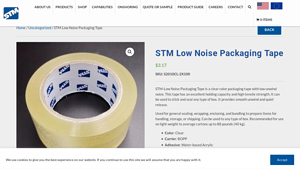
Domain: specialtytapes.net
Registered: 1999 (27 years)
Introduction: STM Low Noise Packaging Tape (SKU: S2010CL-2X100) is a clear BOPP packaging tape featuring water-based acrylic adhesive. Key features include low unwind noise, excellent holding capacity, high tensile strength, smooth unwind, and quiet release. Technical specifications: 2 mils total thickness, 20 oz/in peel adhesion. Applications include general sealing, wrapping, enclosing, and bundling for handl…
Strategic Sourcing Conclusion and Outlook for Quiet packing tape
Why Should Global Procurement Teams Prioritize Low-Noise Packaging Solutions?
Forward-thinking procurement leaders recognize that noise reduction represents more than workplace comfort—it directly impacts regulatory compliance and operational efficiency. In European markets with strict occupational noise directives, and rapidly urbanizing logistics centers across Africa and South America, silent sealing solutions mitigate hearing risk while enabling 24/7 fulfillment operations without residential disturbance. Transitioning from standard to low-noise tape transforms packaging from a commodity cost into a strategic asset for brand reputation and employee retention.
What Technical Specifications Ensure Optimal Performance in Quiet Packing Tape?
When evaluating suppliers, prioritize heavy-duty formulations offering 2.4mil thickness and premium acrylic adhesives that maintain structural integrity while minimizing unwinding decibels. Standard 1.88-inch width configurations ensure compatibility with automated dispensers, while 60-yard roll lengths optimize changeover frequency in high-volume environments. Request independent acoustic testing data to verify that “quiet” claims translate to measurable reductions in warehouse ambient noise levels without compromising tensile strength or temperature resistance.
How Will the Quiet Packaging Market Evolve Across Emerging Economies?
The convergence of e-commerce expansion and workplace safety regulations across Brazil, the UAE, and Germany is accelerating demand for specialized packaging acoustics. Future procurement strategies must balance noise reduction with circular economy principles, selecting manufacturers offering recyclable BOPP films and solvent-free adhesives. As fulfillment centers in these regions scale operations, early adoption of certified low-noise tape will provide competitive differentiation while ensuring compliance with evolving international logistics standards.