Introduction: Navigating the Global Market for Fragile packaging tape
When sourcing fragile packaging tape for high-volume international export operations, procurement teams face a critical balancing act: ensuring maximum protection for delicate goods while optimizing costs across complex, multi-modal supply chains. For businesses shipping electronics, glassware, or precision components from manufacturing hubs to markets in Brazil, Saudi Arabia, and beyond, the right sealing solution serves as both a physical barrier and a universal communication tool that transcends language barriers. Yet navigating technical specifications—acrylic versus hot melt adhesives, mil thickness durability standards, and bulk pricing structures—across diverse regulatory environments presents distinct challenges for buyers operating across Africa, South America, the Middle East, and Europe.
Why is selecting the right fragile tape critical for cross-border logistics?
International shipments endure multiple handling cycles, climate fluctuations, and transit stresses that domestic packages rarely encounter. While standard packing tape secures cartons, high-visibility printed fragile warning tape acts as a visual safeguard that reduces handling damage by alerting warehouse staff and carriers regardless of local language proficiency. Understanding material specifications—such as 2.2 mil thickness for heavy-duty applications or temperature-stable acrylic adhesives—becomes essential when goods traverse environments from humid South American ports to arid Middle Eastern distribution centers.
What comprehensive procurement insights will you discover in this guide?
This resource examines technical standards including optimal roll dimensions (standard 2″ x 110 yard configurations), adhesive technologies for varying climates, and case quantity optimization (typically 36-roll cases) for warehouse efficiency. We analyze application-specific requirements for e-commerce fulfillment centers, electronics manufacturers, and glass exporters while providing frameworks for supplier vetting, quality certification verification, and volume-based cost negotiation strategies tailored to emerging markets.
By synthesizing technical specifications with regional procurement intelligence, this guide equips international buyers with actionable criteria to evaluate tape performance, streamline packaging workflows, and secure competitive bulk pricing—transforming fragile tape from a commodity purchase into a strategic supply chain investment that protects product integrity across continental boundaries.
Understanding Fragile packaging tape Types and Variations
| Type Name | Key Distinguishing Features | Primary B2B Applications | Brief Pros & Cons for Buyers |
|---|---|---|---|
| Standard Acrylic Pre-Printed | 2.2-mil polypropylene, white backing with red “FRAGILE” text, pressure-sensitive acrylic adhesive, available in 2″ and 3″ widths | High-volume e-commerce fulfillment, retail distribution, general warehouse carton sealing | Pros: Cost-effective for bulk purchasing, immediate stock availability, high-contrast visibility. Cons: Moderate temperature resistance limits use in extreme climates, generic appearance offers no brand differentiation. |
| Heavy-Duty Export-Grade | 2.5-3.0+ mil thickness, hot melt or natural rubber adhesive, UV-resistant inks, reinforced backing substrates | International export shipping, heavy freight, long-term storage, humid or high-temperature climates | Pros: Superior tensile strength and shear resistance, performs across temperature extremes, tamper-evident seal integrity. Cons: Higher per-roll cost, potential adhesive residue on recycled corrugated, requires climate-controlled storage pre-application. |
| Custom Branded Fragile | Multi-color printing (1-4 colors), integrates company logos with standard fragile warnings, customizable background colors | Luxury goods, consumer electronics, pharmaceutical exports, anti-counterfeiting measures | Pros: Marketing value and brand reinforcement, theft deterrence, ability to include multilingual instructions. Cons: High MOQs (typically 50+ cases), 2-4 week production lead times, design plate fees impact small batch economics. |
| Color-Coded Variations | Non-white base colors (yellow, orange, blue) with contrasting text, denotes specific handling categories (e.g., “GLASS” vs. “ELECTRONICS”) | Multi-category distribution centers, chemical/pharmaceutical segregation, 3PL operations with diverse SKU portfolios | Pros: Instant visual sorting without language barriers, reduces mis-handling errors, compatible with automated warehouse vision systems. Cons: Limited supplier availability for non-standard colors, requires staff training on color protocols, dye lot consistency critical for bulk orders. |
What are the specifications of standard pre-printed fragile tape for general shipping?
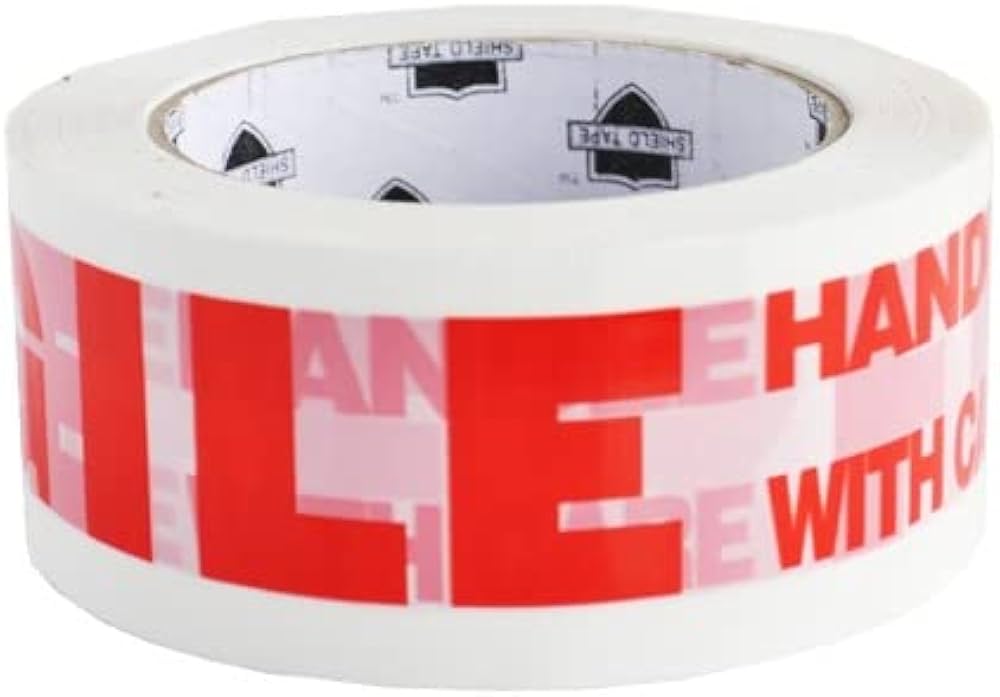
Standard pre-printed fragile tape typically features a 2.2-mil polypropylene film with high-visibility red lettering on a white background, utilizing pressure-sensitive acrylic adhesive. This configuration offers excellent clarity for automated scanning and manual handling alerts across standard carton surfaces. For B2B buyers managing high-volume e-commerce or retail distribution centers, this type provides the optimal balance of cost efficiency and functional performance. When procuring, verify that the adhesive formulation suits your climate zone—acrylic performs well in moderate temperatures but may require upgrading for extreme heat common in Middle Eastern or African logistics corridors.
How does heavy-duty fragile tape ensure secure transit for export and heavy loads?
Heavy-duty variations utilize thicker 2.5-3.0 mil film substrates combined with hot melt or natural rubber adhesives, delivering significantly higher tensile strength and shear resistance than standard acrylic versions. These specifications are critical for international shipments facing multiple handling points, temperature fluctuations, and extended transit times. B2B buyers sourcing for export operations should prioritize tapes with UV-resistant inks and backing materials to prevent message degradation during outdoor storage. While the per-unit cost exceeds standard options, the reduction in damage claims and insurance costs typically justifies the investment for high-value or heavy freight.
Why should B2B buyers consider custom printed fragile tape for brand protection?
Custom printed fragile tape integrates standard handling warnings with corporate branding elements, including logos or specific instructions in multiple languages. This variation transforms packaging into a marketing asset while deterring tampering and counterfeiting—critical concerns in complex cross-border supply chains. Procurement teams must account for minimum order quantities (MOQs) typically ranging from 50-100 cases and 2-4 week lead times. However, for businesses shipping consumer electronics or luxury goods to discerning markets in Europe or South America, the brand reinforcement and security benefits deliver measurable ROI despite higher upfront costs.
When is color-coded fragile tape the optimal choice for warehouse categorization?
Color-coded fragile tape employs distinct base colors—such as yellow, orange, or blue—rather than traditional white, often paired with black or white text to denote specific fragility levels or product categories. This system enables instant visual sorting in high-velocity distribution centers without requiring staff to read fine print. For B2B operations managing diverse SKU portfolios across African or Middle Eastern markets where multilingual workforces are common, color-coding reduces handling errors and accelerates dock-to-stock processes. Buyers should ensure color selections align with international shipping standards and that suppliers provide consistent dye lots to maintain visual consistency across bulk orders.
Key Industrial Applications of Fragile packaging tape
| Industry/Sector | Specific Application of Fragile packaging tape | Value/Benefit for the Business | Key Sourcing Considerations for this Application |
|---|---|---|---|
| E-commerce Fulfillment & 3PL | Carton sealing for last-mile delivery of consumer electronics and glassware | Reduces damage-related returns by 30-40%; minimizes insurance claims and enhances customer satisfaction scores | UV-resistant acrylic adhesive for hot climates (Middle East, Africa); high-visibility red-on-white print for low-light warehouses |
| Electronics Manufacturing & Distribution | Secondary sealing of anti-static boxes containing semiconductors and circuit boards | Prevents electrostatic discharge damage during handling; ensures compliance with international shipping standards | Low-noise unwinding for cleanroom environments; compatibility with automated tape dispensers |
| Glass & Ceramics Export | Reinforcement of export crates containing construction tiles, sanitary ware, and artisanal glass | Mitigates breakage during multi-modal transport; reduces customs inspection delays through clear hazard identification | High-tack adhesive for dusty surfaces (ceramic dust); moisture-resistant backing for humid ports (Brazil, West Africa) |
| Pharmaceutical & Medical Device Distribution | Sealing temperature-sensitive biologics and diagnostic instrument packaging | Maintains cold chain integrity by preventing box compromise; supports GDP (Good Distribution Practice) compliance | FDA/EU compliant adhesive formulations; tamper-evident properties; resistance to condensation |
| Automotive Parts Supply Chain | Packaging of precision sensors, lighting assemblies, and EV battery components | Protects high-value components from impact damage; streamlines inventory handling in JIT manufacturing systems | Heavy-duty 2.2+ mil thickness for heavy automotive parts; solvent-free adhesives for sustainability requirements (EU) |
How Does Fragile Tape Support High-Volume Fulfillment Operations in Emerging Markets?
In rapidly growing e-commerce markets like Brazil and Saudi Arabia, fragile packaging tape serves as a critical damage-prevention tool for 3PL providers handling diverse product mixes. The high-visibility red printing ensures handlers immediately recognize delicate shipments during high-temperature warehouse operations common in Middle Eastern and African logistics hubs. Buyers should prioritize UV-stable acrylic adhesives that maintain tack in extreme heat, ensuring carton integrity throughout the supply chain from fulfillment center to last-mile delivery.
What Role Does Fragile Tape Play in Protecting Semiconductors During International Shipping?
For electronics manufacturers exporting to Europe or the Middle East, fragile tape provides both physical sealing and visual communication across language barriers. The tape’s bold messaging alerts handlers to sensitive contents without requiring multilingual labels, crucial for smooth customs transitions. Procurement teams must ensure the tape offers clean removal properties to prevent residue on reusable anti-static packaging, while maintaining strong adhesion to corrugated surfaces during long-haul maritime transport.
Why Is Fragile Tape Essential for Ceramic Tile Exporters Targeting Tropical Markets?
African and South American construction markets rely heavily on imported ceramics, where rough handling at ports and inadequate infrastructure pose significant risks. Fragile tape reinforces crate integrity while signaling careful handling requirements to dockworkers managing heavy cargo. Sourcing specifications should emphasize high-tack formulations that bond effectively with dusty ceramic surfaces and resist humidity degradation during ocean freight through tropical climates, ensuring products arrive intact at construction sites.
How Can Pharmaceutical Distributors Ensure Cold Chain Integrity Using Fragile Packaging?
In the pharmaceutical sector, fragile tape complements temperature-monitoring devices by ensuring packaging remains sealed during transit to African healthcare facilities and Middle Eastern distribution centers. For European and Gulf-region distributors, this prevents contamination risks and maintains GDP compliance. The tape must perform reliably in refrigerated environments without adhesive failure, while providing tamper-evident security. Buyers should verify pharmaceutical-grade adhesives that won’t leach chemicals into primary packaging.
What Are the Critical Packaging Requirements for Automotive Parts in JIT Systems?
As automotive manufacturing expands in Brazil and Eastern Europe, just-in-time delivery systems require damage-free arrival of precision components. Fragile tape identifies sensitive electronic modules and glass components within mixed shipments, preventing costly production line delays. Procurement managers should specify heavy-duty 2.2+ mil thickness tapes with solvent-free adhesives to meet EU sustainability standards, while ensuring the tape provides immediate visual identification for automated sorting systems in high-volume distribution centers.
A stock image related to Fragile packaging tape.
3 Common User Pain Points for ‘Fragile packaging tape’ & Their Solutions
Scenario 1: Integration Challenges with High-Speed Automated Packaging Lines
The Problem: As fulfillment centers across Brazil and Saudi Arabia scale operations, B2B buyers frequently discover that generic fragile tapes cause jams in automated carton sealers. Inconsistent roll dimensions and printed message disruptions often trigger sensor malfunctions, leading to misaligned application or production stoppages. Consequently, delicate electronics and glassware ship without visible warnings, exposing inventory to rough handling in high-volume distribution hubs where manual inspection is impractical.
The Solution: Specify machine-grade fragile packaging tape with uniform 3-inch core diameters and consistent 2.2-mil thicknesses compatible with pneumatic dispensers. Opt for acrylic adhesive formulations that unwind smoothly at high speeds without flagging. Conduct calibration tests using your specific corrugated substrates—particularly those common in African and Middle Eastern logistics—to ensure the “Handle With Care” message remains centered during automated sealing, maintaining throughput while protecting fragile inventory.
Scenario 2: Adhesion Failure in Tropical and High-Humidity Climates
The Problem: How do you ensure fragile tape remains effective when shipping through humid regions like West Africa or coastal South America? Standard tapes with hot-melt adhesives often soften in extreme heat, causing warnings to peel or become obscured by dust. This visibility failure renders shipments indistinguishable from standard cargo, resulting in stack-crush damage to ceramics and sensitive equipment during transit through climate-variable port facilities.
The Solution: Select pressure-sensitive acrylic adhesive tapes rated for tropical climates, maintaining tack integrity from 0°C to 60°C. Prioritize UV-resistant red printing on white polypropylene backings that resist fading under intense Middle Eastern or Brazilian sun. Implement an H-pattern sealing method using 2-inch or 3-inch wide rolls to maximize surface contact, ensuring the warning remains prominent throughout multi-modal journeys from humid ports to arid inland centers.
Scenario 3: Ambiguous Handling Instructions and Security Gaps
The Problem: What is the difference between fragile packaging tape and standard packing tape when security matters? Warehouse staff often confuse low-contrast printed tape with clear standard tape, especially in dim facilities. Furthermore, conventional fragile tape offers no tamper-evidence—if a box is opened and resealed, there’s no indication of compromise. This creates liability gaps for exporters shipping high-value goods to European markets with strict receiving protocols, where unmarked damage leads to costly claims disputes.
The Solution: Differentiate shipments using high-contrast tape featuring bold red “FRAGILE” messaging on opaque white backgrounds, immediately distinguishable from clear alternatives. For secure B2B routes, specify tamper-evident variants with hidden “VOID” patterns that activate upon removal. Train packing stations to apply tape across top seams and 50mm down box sides, ensuring the message appears on multiple faces. This approach satisfies both handling protocols and chain-of-custody requirements for cross-border logistics.
Strategic Material Selection Guide for Fragile packaging tape
Selecting the optimal substrate for fragile warning tape requires balancing print visibility, adhesive performance, and environmental resilience against total cost of ownership. For procurement teams managing high-value electronics, artisanal glassware, or ceramic shipments across diverse climates—from humid Brazilian port facilities to arid Saudi Arabian logistics hubs—material choice directly impacts damage reduction rates, customs inspection efficiency, and brand reputation. Understanding the mechanical properties and chemical limitations of each substrate enables strategic inventory decisions that align with regional warehousing conditions and sustainability mandates.
Which Film Substrate Delivers the Best Cost-Efficiency for High-Volume Operations?
Biaxially Oriented Polypropylene (BOPP) dominates the fragile tape market due to its exceptional tensile strength and compatibility with high-speed application equipment. This thermoplastic polymer accepts high-contrast “FRAGILE” messaging through flexographic or hot-stamp printing, ensuring visibility across automated warehouse scanning systems and manual handling checkpoints. BOPP tapes typically utilize water-based acrylic adhesives that perform reliably in ambient temperatures between 15°C and 50°C, making them suitable for varied Middle Eastern and South American climates. The material offers excellent moisture resistance and dimensional stability, though it exhibits limited conformability on irregular carton surfaces and may experience adhesive degradation in extreme humidity without climate-controlled storage protocols.
Why Do Premium Operations Prefer PVC-Based Warning Tape?
Polyvinyl Chloride (PVC) film offers superior conformability and “quiet unwind” characteristics critical for noise-sensitive environments like European distribution centers or Saudi retail fulfillment operations where worker comfort regulations apply. The material’s natural flexibility allows it to adhere aggressively to corrugated fibers and recycled cardboard surfaces, reducing edge-lifting during multi-modal transit. PVC maintains adhesive integrity across broader temperature ranges (-10°C to 60°C), essential for cold-chain pharmaceutical shipments or outdoor storage in variable climates. The primary limitations involve higher material costs—typically 30-40% above BOPP—and environmental concerns regarding plasticizer content, which may conflict with evolving EU packaging waste regulations and corporate sustainability targets.
Is Reinforced Paper Tape Suitable for Sustainable Fragile Packaging?
Water-activated reinforced Kraft paper tape presents an eco-conscious alternative for B2B buyers facing strict European Extended Producer Responsibility (EPR) mandates or corporate ESG requirements in Scandinavian markets. The fiberglass-reinforced paper substrate provides inherent tamper-evident sealing—any attempt to remove the tape destroys the carton surface, offering additional security for high-value fragile electronics and luxury goods. While biodegradable and recyclable alongside standard cardboard without separation, this material requires specialized water-activated dispensers and suffers performance degradation in high-humidity African or Southeast Asian logistics environments where moisture resistance is paramount for supply chain integrity.
How Does Adhesive Chemistry Influence Material Selection?
Beyond the film substrate, adhesive chemistry determines long-term seal integrity under mechanical stress. Hot-melt synthetic rubber adhesives offer aggressive initial tack and quick grab ideal for dusty Middle Eastern warehouse conditions or powder-coated cartons, while solvent acrylic adhesives provide superior UV resistance and aging stability for outdoor storage in intense Brazilian or African sunlight. Procurement teams should specify adhesive coat weights (typically 25-35 grams per square meter) relative to carton weight classifications—heavy ceramic shipments require aggressive bonding formulations, while lightweight glassware needs standard pressure-sensitive adhesives that won’t damage delicate finishes upon unboxing.
| Material | Typical Use Case for Fragile packaging tape | Key Advantage | Key Disadvantage/Limitation | Relative Cost |
|---|---|---|---|---|
| BOPP (Polypropylene) | High-volume e-commerce and retail distribution of glassware and ceramics | Excellent moisture resistance and high-speed application compatibility | Limited conformability on irregular surfaces; humidity-sensitive adhesive storage | Low |
| PVC (Polyvinyl Chloride) | Premium electronics, pharmaceutical cold-chain, and noise-sensitive warehouse operations | Superior conformability and temperature stability (-10°C to 60°C) | Higher material cost; environmental regulatory concerns in EU markets | High |
| Reinforced Kraft Paper | Sustainable luxury goods and high-value electronics requiring tamper evidence | Biodegradable and recyclable; provides tamper-evident security | Requires water activation; poor performance in high-humidity climates | Medium |
A stock image related to Fragile packaging tape.
In-depth Look: Manufacturing Processes and Quality Assurance for Fragile packaging tape
Fragile packaging tape represents a specialized segment within the industrial adhesive sector, requiring precise manufacturing controls to balance high-visibility messaging with structural integrity. Unlike standard clear packing tape, these printed variants undergo additional processing stages to ensure that warning labels remain legible throughout the logistics chain while maintaining the tensile strength necessary for heavy-duty carton sealing. For procurement teams sourcing from international markets, understanding these production nuances is essential for evaluating supplier capabilities and mitigating quality risks in large-volume contracts.
How Is Fragile Packaging Tape Manufactured to Ensure Durability and Print Clarity?
The production of high-quality fragile tape begins with biaxially oriented polypropylene (BOPP) film extrusion, where polymer pellets are stretched in both machine and transverse directions to create a thin, strong substrate typically ranging from 1.8 to 2.2 mil thickness. This biaxial orientation provides the tear resistance necessary for securing corrugated boxes containing glassware, electronics, or ceramics while maintaining the flexibility required for manual or automated dispenser application.
Following film preparation, manufacturers apply pressure-sensitive acrylic adhesive coatings through precision slot-die or roll-coating processes. Acrylic formulations are preferred over hot-melt alternatives for printed fragile tape because they offer superior aging characteristics and temperature stability—critical factors for shipments traversing diverse climate zones from the humid ports of West Africa to the arid logistics hubs of the Middle East. The adhesive layer typically measures between 0.8 and 1.2 mil, providing immediate tack and shear strength sufficient for 30-50 pound box weights.
The distinguishing manufacturing stage involves flexographic printing, where the “FRAGILE – Handle With Care” message is applied using UV-cured or solvent-based inks in high-contrast color schemes (typically red text on white or clear backgrounds). Leading manufacturers employ reverse-printing techniques, sandwiching the ink between the BOPP film and adhesive layer to prevent scuffing during transit. This process requires precise registration controls to ensure message clarity across continuous rolls measuring 110 yards or more, with quality checks verifying that text remains readable even after 72-hour adhesion to corrugated surfaces.
What Quality Control Standards Should B2B Buyers Verify in Fragile Tape Production?
Robust quality assurance protocols separate commodity-grade tape from industrial-suitable products capable of withstanding international shipping rigors. Buyers should verify that suppliers conduct peel adhesion testing per ASTM D3330 standards, measuring the force required to remove tape from stainless steel panels at 180-degree angles. For fragile packaging applications, optimal adhesion values typically fall between 20-30 ounces per inch, ensuring secure sealing without damaging box surfaces upon opening.
Print durability represents another critical QC checkpoint, particularly for buyers in Brazil and Saudi Arabia where extreme UV exposure during outdoor storage can fade warning messages. Reputable manufacturers conduct accelerated aging tests using UV chambers and humidity cabinets (85°C/85% RH conditions) to verify that red pigments maintain chromatic integrity and legibility throughout the product shelf life. Additionally, edge-bleed testing ensures that ink does not migrate into the adhesive layer, which could compromise sealing performance or leave residue on packaging surfaces.
Dimensional consistency across bulk orders requires statistical process control during slitting operations. Buyers should expect width tolerances of ±0.5mm for 2-inch (48mm) and 3-inch (76mm) standard widths, with length verification ensuring that 110-yard rolls contain sufficient material to prevent premature depletion during high-volume packing operations. Core integrity testing—verifying that cardboard cores withstand 50+ PSI compression—prevents collapse during automated dispenser usage in warehouse environments.
How Do Environmental Conditions Affect Fragile Tape Manufacturing and Performance?
Manufacturing specifications must account for the climatic diversity of target markets, particularly when supplying to regions with extreme humidity fluctuations or temperature differentials. Acrylic adhesive formulations for African and South American markets often require modified tackifiers to maintain performance in 80-90% relative humidity conditions common in coastal shipping ports like Lagos or Santos. Conversely, Middle Eastern distribution requires adhesives with elevated softening points to prevent adhesive creep when containers experience temperatures exceeding 60°C during desert transit or port delays.
B2B buyers should inquire about suppliers’ climate-specific product variants and storage recommendations. Premium fragile tape manufacturers often offer “tropical grade” formulations with enhanced moisture barriers in the BOPP film substrate, preventing water vapor transmission that could delaminate printed messages during monsoon seasons or ocean freight. Warehouse storage protocols should maintain temperatures between 15-25°C with 40-60% relative humidity to preserve adhesive properties, particularly for buyers maintaining 6-12 month inventory cycles.
What Certifications and Compliance Standards Matter for International Fragile Tape Procurement?
International procurement teams must verify regulatory compliance beyond basic adhesive performance. European buyers require REACH compliance and RoHS certification ensuring that printed inks contain no heavy metals or restricted phthalates, while Saudi Arabian markets increasingly demand SASO conformity certificates for imported packaging materials. ISO 9001:2015 certification for quality management systems provides baseline assurance of consistent manufacturing processes, though buyers should also seek ISO 14001 environmental credentials to meet corporate sustainability mandates.
For food-adjacent logistics applications—such as fragile glassware containing beverages or condiments—FDA 21 CFR 175.105 compliance regarding indirect food contact additives becomes essential. Additionally, ASTM D5486 and D5748 standards for box closure tapes provide objective benchmarks for tensile strength and elongation properties that procurement teams can specify in technical data sheets.
How Can Buyers Assess Manufacturing Consistency Across Large-Volume Orders?
Ensuring uniformity across container-load quantities (typically 36-72 rolls per case, 20-40 cases per pallet) requires suppliers to implement statistical process control (SPC) during coating and slitting operations. Buyers should request batch testing reports documenting adhesion values, unwind noise levels (indicating coating uniformity), and colorimetric data confirming Pantone color matching for branded fragile messaging.
Pre-shipment inspection protocols should include randomized roll testing from multiple production lots, verifying that print registration remains consistent within ±0.25mm across the entire order. For automated packaging lines, buyers should request sample rolls to test compatibility with high-speed dispensers, ensuring that the tape unwinds smoothly without flagging or splitting that could interrupt production workflows. Establishing these quality benchmarks during the supplier qualification phase prevents costly production line stoppages and ensures that fragile warnings remain visible from warehouse dispatch through final-mile delivery.
Practical Sourcing Guide: A Step-by-Step Checklist for ‘Fragile packaging tape’
This checklist provides a systematic framework for international procurement teams evaluating fragile packaging tape suppliers. It ensures compliance with regional shipping standards while optimizing cost-efficiency across diverse climates—from humid South American ports to arid Middle Eastern distribution centers.
What Tape Specifications Ensure Maximum Protection During International Transit?
Begin by verifying dimensional requirements for your logistics infrastructure. Standard 2-inch width suits most carton sealing applications, while 3-inch options provide enhanced security for heavy export shipments. Evaluate mil thickness—2.2 mil offers superior puncture resistance for long-haul freight compared to standard grades. Confirm roll lengths (55-yard for low-volume operations, 110-yard for high-throughput warehouses) align with your consumption rates to minimize changeover downtime and storage requirements.
How Do You Select Adhesives for Extreme Climate Variations?
For operations spanning humid Brazilian ports or arid Middle Eastern distribution centers, prioritize acrylic-based pressure-sensitive adhesives over rubber-based alternatives. Acrylic formulations maintain tack integrity across temperature fluctuations (-20°C to 60°C) and resist UV degradation during outdoor storage. Request shear-strength test data specific to high-humidity environments to prevent edge-lifting during containerized ocean freight transits lasting several weeks.
Which Visual Warning Standards Comply with Regional Shipping Regulations?
Ensure printed messaging meets destination-country visibility requirements. High-contrast red-on-white printing provides universal recognition, but verify if multilingual variants (Portuguese for Mercosur markets, Arabic for GCC countries) are necessary for customs compliance. The warning message should occupy minimum 30% of tape surface area to satisfy international handling protocols and carrier liability standards.
What Volume Configurations Optimize Total Landed Costs?
Analyze case-pack economics beyond unit pricing. Standard 36-roll cases optimize palletization for sea freight, reducing cubic meter waste. Negotiate tiered pricing structures—suppliers typically offer significant reductions at 611+ and 1,200+ roll thresholds. Calculate total cost-per-meter rather than per-roll to account for length variations between 55-yard and 110-yard options, factoring in import duties and inland transportation.
How Should You Evaluate Supplier Logistics Capabilities?
Verify lead times accommodate your inventory turnover without excessive safety stock holding costs. Confirm suppliers provide export-grade packaging and necessary customs documentation—including Certificates of Origin and material safety data sheets—for African and Middle Eastern import regulations. Establish quality assurance protocols requiring pre-shipment samples tested under your specific climate conditions. Secure favorable payment terms (Letter of Credit or 30-day open account) to protect against currency fluctuations in emerging markets.
Which Complementary Systems Ensure Seamless Warehouse Integration?
Confirm tape compatibility with existing dispenser equipment—2-inch and 3-inch cores must match your station configurations to prevent operational bottlenecks. Coordinate procurement with complementary protective materials (bubble wrap, corrugated inserts) to create unified handling protocols. For e-commerce fulfillment centers, verify that tape application positioning doesn’t obscure barcode scanning zones or shipping labels, ensuring automated sorting system compatibility.
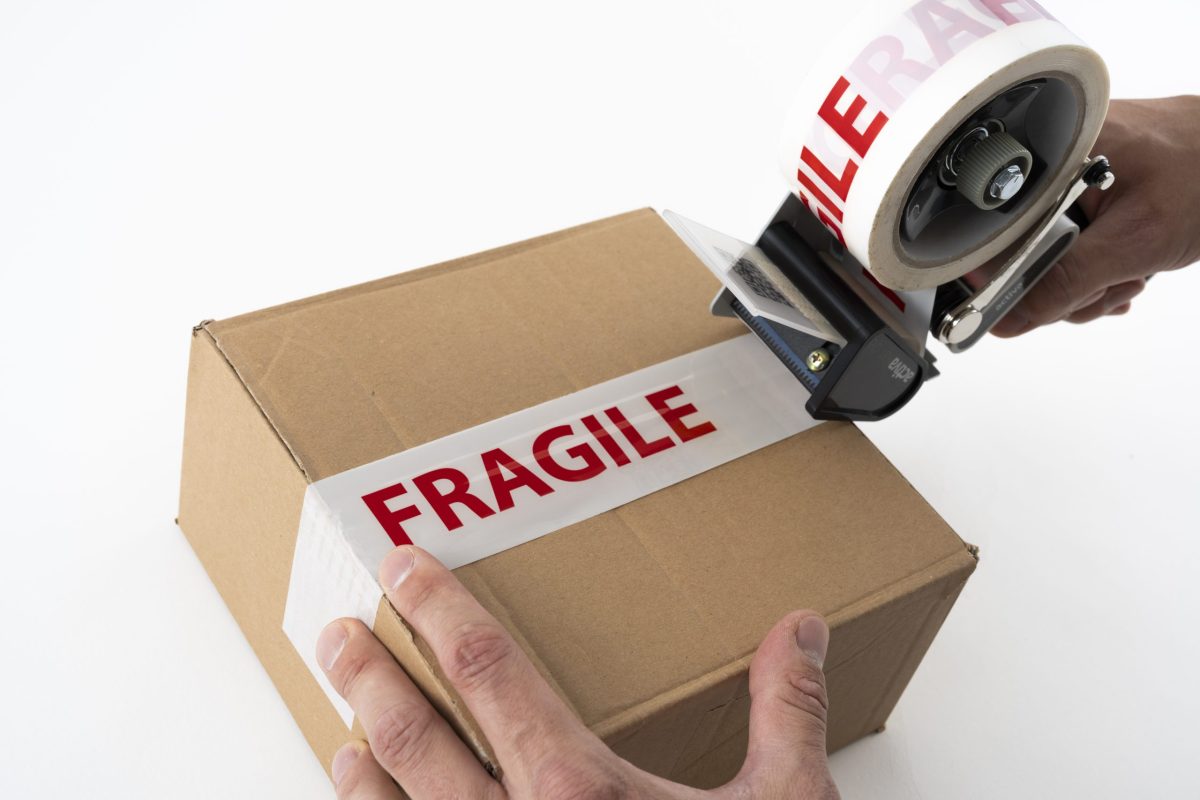
A stock image related to Fragile packaging tape.
Comprehensive Cost and Pricing Analysis for Fragile packaging tape Sourcing
When sourcing fragile packaging tape internationally, understanding the true cost structure requires looking beyond sticker prices to metrics like cost-per-yard and total landed costs. For procurement teams in markets like Brazil, Saudi Arabia, or South Africa, navigating volume tiers and material specifications ensures competitive unit economics while maintaining packaging integrity across complex supply chains.
How Do Roll Dimensions Impact Cost-Per-Unit Calculations?
Standard fragile tape comes in 55-yard and 110-yard lengths, with pricing reflecting more than double the material volume. While shorter rolls may list lower per-roll prices, the cost-per-yard often favors larger rolls significantly. For example, 110-yard configurations typically offer 15-20% better yardage economics compared to purchasing two 55-yard rolls, though they require compatible heavy-duty tape dispensers and additional warehouse storage space. Buyers should calculate total seal requirements per shipment to determine whether the savings from bulk rolls outweigh potential waste from damaged roll ends during handling.
What Volume Pricing Tiers Should Bulk Buyers Expect?
B2B procurement follows case-based pricing structures, with 36-roll cases serving as standard bulk units. Entry-level pricing for individual rolls ranges from $1.80 to $4.60 depending on supplier tier and regional manufacturing proximity, while volume commitments of 36+ units typically reduce per-roll costs by 20-40%. Regional distributors in Middle Eastern or Latin American markets may offer additional tiered discounts at pallet quantities (20+ cases), particularly for annual supply contracts with quarterly delivery schedules. Establishing direct relationships with manufacturers rather than intermediaries often unlocks further 8-12% reductions for container-load commitments.
How Do Material Specifications Affect Fragile Tape Pricing?
Thickness measured in mils (typically 2.2-2.6 mil) directly correlates with durability and price. Standard 2.2-mil acrylic adhesive tapes suit general warehouse use, while heavier 2.6-mil variants command 10-15% premiums for high-stress shipping environments. Hot-melt adhesive alternatives may offer cost savings in extreme climates common in Gulf Cooperation Council (GCC) regions, though they sacrifice some clarity in printed warning messages. Premium UV-resistant formulations, essential for outdoor storage in African or Middle Eastern markets, can increase costs by 25% but prevent adhesive degradation and tape failure during extended transit.
What Hidden Costs Impact International Sourcing?
Beyond unit pricing, buyers must factor freight classification (packaging materials often ship as Class 55 freight), import duties varying 5-12% across Mercosur and African Continental Free Trade Area (AfCFTA) nations, and currency hedging for USD-denominated contracts. Storage conditions also matter—acrylic adhesives degrade in high humidity, potentially increasing waste rates by 8-12% in tropical climates if inventory turnover exceeds 90 days. Smart buyers negotiate Incoterms that transfer risk at destination ports rather than factories, protecting against damage during ocean freight and inland transportation.
How Can Buyers Optimize Total Cost of Ownership?
Consolidating SKUs to standard 2-inch widths (48mm) maximizes dispenser compatibility and reduces changeover downtime across packing stations. Negotiating landed-cost agreements that include freight, duties, and insurance prevents budget variance from currency fluctuations. For emerging market operations, establishing safety stock equivalent to 60 days of usage buffers against shipping delays while avoiding expedited freight premiums that can triple logistics costs. Finally, implementing automated tape dispensers reduces per-package material waste by 30%, quickly offsetting equipment investments through consumable savings.
Alternatives Analysis: Comparing Fragile packaging tape With Other Solutions
When evaluating protective packaging strategies for international supply chains, procurement teams often weigh specialized fragile tape against alternative marking methods that achieve similar handling compliance. While printed packing tape offers an integrated sealing-and-warning solution, pre-printed corrugated cartons and standalone adhesive labels present distinct operational trade-offs regarding capital investment, warehouse efficiency, and climate resilience. Understanding these differences helps buyers optimize for cost, handling consistency, and brand presence across diverse logistics environments from São Paulo to Riyadh.
| Comparison Aspect | Fragile Packaging Tape | Pre-Printed Corrugated Boxes | Adhesive Warning Labels |
|---|---|---|---|
| Performance & Visibility | High-contrast warning integrated with seal; resistant to edge lifting and abrasion during transit | Large-format graphics visible on multiple box faces; permanent substrate integration eliminates peeling | Variable adhesion depending on substrate; may detach in high-humidity conditions; requires precise placement |
| Cost Structure | Low capital investment; volume pricing reduces per-roll cost significantly (e.g., sub-$4.00 per roll at scale) | High minimum order quantities (often 1,000+ units); expensive for SKU diversification; substantial storage costs | Low per-label material cost; requires additional clear tape expenditure for sealing function |
| Ease of Implementation | Single-pass application with standard tape dispensers; minimal training required for warehouse staff | Immediate use; no secondary labeling step; reduces packing station touchpoints | Two-step process (seal box, apply label); increases labor time and creates potential bottlenecks during peak seasons |
| Customization Flexibility | Limited to standard “Fragile/Handle With Care” prints; custom branding requires high MOQs and plate fees | Full-color custom printing available; reinforces brand identity but locked into specific dimensions | High flexibility for variable data, multi-language warnings, and frequent design updates |
| Storage Efficiency | Compact rolls; long shelf life; minimal warehouse footprint | Bulky; requires significant floor space; risk of obsolete inventory for slow-moving SKUs or seasonal items | Compact storage; but requires dual inventory management (labels + sealing tape) and stock monitoring |
Is Pre-Printed Corrugated Packaging More Cost-Effective Than Fragile Tape for High-Volume Operations?
Pre-printed corrugated boxes integrate the fragile warning directly into the cardboard substrate, eliminating the need for secondary marking materials entirely. For B2B buyers managing high-volume, consistent product lines—such as artisanal glass manufacturers in the Middle East or consumer electronics exporters in Brazil—this approach streamlines packing station workflows by removing the tape application step. However, the economic advantage only materializes at substantial scale; minimum order quantities for custom-printed boxes often exceed 1,000 units per SKU, creating significant upfront capital commitment and demanding considerable warehouse floor space. Additionally, SKU proliferation becomes prohibitively expensive, as each box dimension requires separate print runs and plate fees, whereas fragile tape adapts universally to any carton size. For operations shipping diverse product mixes or experiencing seasonal volume fluctuations, the inventory inflexibility and risk of obsolescence often outweigh the marginal labor savings achieved at the packing station.
How Do Adhesive Warning Labels Compare to Integrated Tape Solutions for Multi-Modal Shipping?
Adhesive warning labels provide maximum operational flexibility for logistics operations requiring variable messaging, multi-language warnings, or temporary promotional branding across international distribution networks spanning Europe and Africa. These labels enable procurement teams to standardize on economical clear packing tape for basic sealing while applying fragile indicators only when specific handling protocols demand them. This modularity proves advantageous for third-party logistics providers and e-commerce fulfillment centers handling highly mixed freight, though it introduces measurable operational complexity. Each package requires two distinct handling steps—sealing and labeling—increasing labor costs per unit and creating potential bottlenecks during peak shipping seasons. Furthermore, label adhesion performance varies significantly across climate conditions; high humidity
Essential Technical Properties and Trade Terminology for Fragile packaging tape
When sourcing fragile packaging tape for international distribution networks, understanding precise technical specifications and standard trade terminology prevents costly specification mismatches and customs delays. B2B buyers must evaluate both material performance metrics and commercial contract terms to ensure compliance with regional logistics standards, climate conditions, and warehousing protocols across diverse markets.
What Mil Thickness and Film Specifications Ensure Carton Integrity?
The Mil (one-thousandth of an inch) denotes film thickness, with 2.2 Mil representing the industry standard for printed fragile tape. This BOPP (Biaxially Oriented Polypropylene) construction provides optimal tensile strength—typically 20–30 lbs per inch—preventing splitting during high-tension application while maintaining flexibility. For heavy-duty export shipments subject to rough handling in multi-modal transit common in African and Middle Eastern logistics corridors, specify 2.6 Mil or higher to ensure carton integrity throughout the supply chain.
How Do Adhesive Properties Affect Performance in Tropical Climates?
Acrylic adhesive offers superior UV and temperature resistance, maintaining tack in environments exceeding 40°C (104°F), crucial for Saudi Arabian and Brazilian warehouse conditions. Alternatively, hot melt rubber adhesive provides aggressive initial tack for dusty or recycled corrugated surfaces but may soften in extreme heat. Pressure-sensitive adhesive (PSA) indicates immediate bonding capability without moisture activation, essential for high-speed automated packing lines in European fulfillment centers.
What Roll Dimensions Optimize Cost and Application Efficiency?
Standard widths include 48mm (2″) for standard cartons and 72mm (3″) for heavy boxes requiring reinforced sealing. Lengths typically range from 55 yards (50 meters) for low-volume operations to 110 yards (100 meters) for automated dispensers. Verify whether specifications use imperial (yards) or metric (meters) systems to avoid procurement errors when coordinating between North American suppliers and South American or European distribution networks.
What Do MOQ and FOB Terms Mean for Fragile Tape Procurement?
MOQ (Minimum Order Quantity) refers to the lowest volume a manufacturer will produce, typically 36–72 rolls for stock items but 500+ rolls for custom-printed warnings with localized languages. Understanding FOB (Free On Board) versus CIF (Cost, Insurance, and Freight) Incoterms determines whether the supplier or buyer assumes shipping liability and insurance costs during ocean freight to African or South American ports, directly impacting landed cost calculations.
How Do “Slitting” and “OEM” Services Support Branding Requirements?
Slitting describes the process of cutting master rolls into specific widths, allowing customization beyond standard 2″ dimensions for specialized box sealing. OEM (Original Equipment Manufacturing) and ODM (Original Design Manufacturing) indicate whether suppliers print your proprietary warning designs or offer standard “Fragile” templates. These terms define intellectual property rights and customization capabilities critical for private-label distributors establishing brand presence in competitive markets.
Why Is “Master Carton” Configuration Critical for Import Logistics?
Master Carton specifications detail the outer packaging containing individual tape rolls—commonly 36 rolls per case with specific weight and dimension limits. Understanding inner pack quantities (rolls per sub-carton) helps calculate cubic meter efficiency for container loading. This impacts freight costs significantly when importing full container loads (FCL) versus less-than-container loads (LCL) to Middle Eastern or European distribution centers, optimizing inventory turnover rates.
Navigating Market Dynamics and Sourcing Trends in the Fragile packaging tape Sector
What Market Forces Are Shaping Global Demand for Fragile Packaging Tape?
The fragile packaging tape sector is experiencing robust growth, driven primarily by the exponential expansion of e-commerce fulfillment centers across emerging markets. For B2B buyers in Brazil, Saudi Arabia, and Nigeria, this translates to increased demand for high-visibility printed tapes that clearly communicate handling instructions in multilingual warehouse environments. Standardization has become a critical trend, with 2-inch width rolls (typically 55 to 110 yards) now serving as the global baseline for both automated sealing machinery and manual packing stations.
Regional logistics hubs are fundamentally reshaping sourcing strategies for international buyers. Miami serves as a primary distribution gateway for Latin American markets, offering Spanish-language packaging specifications and localized inventory management, while Dubai and Rotterdam function as critical consolidation points for Middle Eastern and African supply chains. Smart procurement teams are leveraging these strategic hubs to mitigate currency fluctuation risks and reduce lead times from primary manufacturing centers in Asia and North America.
Volume-based procurement models dominate the B2B landscape, with tiered pricing structures offering significant economies of scale for high-throughput operations. Orders exceeding 600 rolls frequently unlock 20-25% price reductions per unit, making consolidated purchasing essential for warehouse operations managing electronics, glassware, and pharmaceutical shipments. Additionally, the industry-wide shift toward 2.2-mil thickness acrylic adhesives reflects growing demands for superior tensile strength and temperature resistance in humid climates common to Gulf Cooperation Council (GCC) nations and Southeast Asian markets. Buyers should also consider the rise of bilingual printing options, as Arabic-English and Portuguese-English variants gain traction in regional distribution centers.
How Can International Buyers Integrate Sustainability and Ethical Standards into Fragile Tape Sourcing?
Sustainability has transitioned from a value-added feature to a core procurement requirement, particularly for buyers serving European markets and multinational corporations with strict ESG mandates. When evaluating suppliers, prioritize water-based acrylic adhesives over solvent-based alternatives, as they significantly reduce volatile organic compound (VOC) emissions during production and improve indoor air quality for warehouse staff. The backing material presents another critical decision point; recyclable polypropylene films are increasingly replacing PVC variants, offering comparable durability while supporting circular economy initiatives and reducing landfill impact.
Ethical sourcing demands comprehensive visibility into manufacturing standards and labor practices. Buyers should verify supplier compliance with ISO 14001 environmental management systems and ensure that printed “Fragile” messaging utilizes non-toxic, food-safe inks—essential for companies handling food-grade ceramics, laboratory glassware, or pharmaceutical products. For African and South American importers, partnering with suppliers who maintain carbon-neutral shipping options from major export hubs can help meet corporate sustainability targets while navigating increasingly stringent EU import regulations regarding plastic packaging waste and extended producer responsibility (EPR) schemes.
Regional sustainability certifications vary significantly in importance across target markets. While European buyers prioritize REACH compliance and minimum recycled content percentages, Middle Eastern markets increasingly value water conservation certifications in manufacturing processes due to regional scarcity concerns. Brazilian buyers must navigate complex import tariffs on non-recyclable packaging materials, making sustainable tape options not merely ethical choices but financial imperatives for cost-competitive operations. Establishing annual supplier audits that verify ethical labor practices, sustainable raw material sourcing, and waste reduction protocols protects brand reputation while ensuring long-term supply chain resilience against evolving regulatory frameworks in key export destinations.
Frequently Asked Questions (FAQs) for B2B Buyers of Fragile packaging tape
How does fragile packaging tape differ from standard packing tape in B2B shipping operations?
Fragile packaging tape serves a dual function that standard clear tape cannot match: it provides structural carton sealing while simultaneously communicating handling requirements through high-visibility pre-printed messaging. While both tape types typically utilize pressure-sensitive acrylic adhesives and polypropylene backings, fragile tape features bold contrasting colors—commonly red text on white backgrounds—to alert handlers throughout complex supply chains. Standard packing tape offers no visual indication of contents, forcing operations to rely on separate adhesive labels that may detach during international transit or automated sorting. For B2B buyers shipping ceramics, glassware, or precision electronics, fragile tape eliminates secondary labeling costs while maintaining comparable tensile strength and adhesion performance to industrial-grade clear tape.
What are the best practices for applying fragile tape to maximize visibility in international transit?
Strategic placement ensures your warning survives multiple handling points across diverse logistics networks by positioning printed messaging across high-contact surfaces rather than concealing it along single seams. Apply tape strips in an “H-pattern” configuration—sealing the center top and bottom seams plus both edge seams—with the text oriented outward and unobstructed by shipping labels or corner protectors. For pallets destined for busy ports in Brazil or Saudi Arabia, wrap individual boxes before palletizing to ensure visibility even when outer shrink wrap obscures cartons. Avoid complete circumferential wrapping that places printed text against the box surface, as this renders the warning invisible to automated scanners and manual handlers during customs inspections.
Can fragile packaging tape be integrated with automated carton sealing systems?
Most modern automated case sealers accommodate pre-printed fragile tape provided the roll dimensions match your equipment specifications—typically 2-inch or 3-inch widths with 3-inch diameter cores for standard dispensers. High-speed automation requires consistent caliper thickness, usually 2.2–2.6 mil, to prevent jamming in tape heads and ensure clean cuts without flagging or curling. When implementing fragile tape in automated lines, verify that the ink formulation is scuff-resistant to prevent red pigment from transferring onto machine rollers and contaminating subsequent clear tape applications. For mixed-model fulfillment centers, dedicate specific sealers to fragile tape to avoid workflow bottlenecks, or invest in tape changers that automatically switch between standard and printed rolls based on barcode scanning triggers.
Does printed fragile tape provide tamper-evident security for high-value shipments?
Standard printed fragile tape offers basic tamper indication through substrate disruption—removal tears the corrugated surface or leaves visible adhesive residue—but lacks advanced security features like void-release messaging or holographic elements. For B2B shipments requiring chain-of-custody documentation between Middle Eastern or European distribution centers, combine fragile tape with specialized tamper-evident seals that leave “VOID” patterns upon removal. The primary security value lies in deterrence and traceability; prominent “Handle With Care” messaging reduces rough handling that could compromise package integrity while creating visual evidence of mishandling. When sourcing from international suppliers, specify if you require dual-function tape combining fragile warnings with tamper-evident properties, as these demand specialized adhesive formulations that may affect application temperature ranges.
Which fragile tape specifications withstand humid climates and temperature fluctuations in global supply chains?
For shipments traversing tropical regions like West Africa or Southeast Asia, specify acrylic-based adhesives rather than hot-melt rubber formulations, as acrylic maintains tack in humidity levels up to 95% and temperature ranges from -20°C to 60°C without delamination. Select tape thickness between 2.2–3.0 mil for export cartons subject to rough handling in port environments, ensuring the backing withstands abrasion during extended ocean freight transits. UV-resistant ink formulations prevent message fading during outdoor storage in sunny climates common in Middle Eastern logistics hubs, while moisture-resistant backings prevent the printed warning from bleeding or smearing during monsoon seasons. Request technical data sheets verifying adhesion strength to recycled corrugated board, as emerging markets often utilize varying box qualities that challenge standard adhesive formulations.
How should international buyers calculate roll lengths and case quantities for cost-efficient procurement?
Calculate consumption by multiplying your cartons-per-hour by sealing points per box—typically 1.5–3 strips for standard boxes—then convert to linear yards, remembering that 2-inch width tape consumes approximately 1.5 inches of length per inch of surface coverage due to overlap. For high-volume operations in South American or African distribution centers, 110-yard rolls reduce changeover frequency by 50% compared to 55-yard alternatives, minimizing labor downtime and increasing throughput. When sourcing from Asian manufacturers, balance case pack quantities (usually 24–36 rolls per carton) against sea freight lead times of 8–12 weeks to Brazil or Nigeria, maintaining 90-day buffer stock to prevent production halts. Consider regional warehousing partnerships that allow just-in-time delivery for your specific roll configurations, reducing inventory holding costs while ensuring consistent supply for seasonal demand fluctuations.
What width and thickness configurations optimize fragile tape performance for heavy industrial versus e-commerce applications?
Industrial machinery and glass manufacturers shipping heavy rigid containers require 3-inch width tapes with higher mil thickness (2.6–3.0 mil) or reinforced filaments to secure double-wall corrugated, while e-commerce operations prioritize 2-inch widths for compatibility with automated sortation systems handling smaller parcels. Heavy-duty acrylic adhesives suit industrial pallets exposed to warehouse dust and temperature fluctuations common in outdoor storage yards, whereas standard 2.2 mil tapes suffice for climate-controlled fulfillment centers shipping consumer electronics. For diversified B2B portfolios serving both sectors, standardize on 2-inch by 110-yard rolls as the versatile baseline, reserving wider formats for specialized heavy-fragile categories exceeding 25 kilograms. Evaluate custom printing options that incorporate orientation arrows or “This Side Up” indicators alongside fragile warnings to create comprehensive handling instruction systems without additional label costs.
How can fragile tape protocols reduce damage claims across multilingual logistics networks?
Implementing color-coded tape standards creates immediate visual hierarchy that transcends language barriers in international freight hubs where handlers may not read English or Portuguese safety instructions. Establish fragile tape application as the final quality control checkpoint, requiring warehouse staff to inspect for pre-existing damage before sealing, thereby documenting package condition prior to carrier handoff. Track damage rates by specific trade lanes—such as Europe to Africa or intra-Middle East routes—to identify whether particular carriers respect fragile markings, using this data to negotiate service level agreements or diversify your logistics provider portfolio. Combine high-contrast tape with standardized box orientation markers to create universal handling cues that reduce mishandling incidents by up to 40% in busy trans-shipment ports where packages undergo multiple handler transitions.
Important Disclaimer & Terms of Use
⚠️ Important Disclaimer
The information provided in this guide, including content regarding manufacturers, technical specifications, and market analysis, is for informational and educational purposes only. It does not constitute professional procurement advice, financial advice, or legal advice.
B2B buyers must conduct their own independent and thorough due diligence before making any purchasing decisions. The risk of relying on any information in this guide is borne solely by the reader.
Top 3 Fragile Packaging Tape Manufacturers & Suppliers List
1. Topever Tape – Fragile Tape & BOPP Adhesive Packing Tape
Domain: topevertape.com
Registered: 2022 (4 years)
Introduction: Topever Tape is a China-based manufacturer and supplier specializing in fragile tape and BOPP adhesive packing tape products. Key offerings include: Fragile Tape (including Pink Fragile Tape), Self Adhesive Shim Tape, Printed Carton Sealing Tape, BOPP Adhesive Packing Tape, and Color BOPP Tape Jumbo Rolls with custom logo printing capabilities. Additional products include Duct Tape, General Purpos…
2. Rize – Thermal Paper Rolls
Domain: rizetape.com
Registered: 2022 (4 years)
Introduction: This company, Rize – Thermal Paper Rolls, is a notable entity in the market.
3. Phoenix Tape – Custom Printed Fragile Tape

Domain: phoenix-tape.com
Registered: 1996 (30 years)
Introduction: Custom printed tape options for fragile items include polypropylene, paper, and PVC tape. Water-activated paper tape recommended for boxes requiring gentle sealing without pressure. Custom printing available with messages like ‘fragile’ or ‘handle with care’. Example product specifications: Reinforced 240 Grade paper tape, 3 inch width, 375 feet length, Tan color, single ink color (Reflex Blue), s…
Strategic Sourcing Conclusion and Outlook for Fragile packaging tape
As global supply chains navigate increasing complexity, fragile packaging tape has evolved from a simple consumable to a critical risk-mitigation tool. Procurement teams across Africa, South America, the Middle East, and Europe must balance immediate cost efficiencies with long-term supply chain resilience when sourcing these essential materials. The convergence of high-visibility warning requirements and climate-adaptive adhesive technologies now defines best-in-class procurement strategies for international logistics operations.
How Can Buyers Optimize Fragile Tape Procurement for Emerging Markets?
Strategic sourcing requires evaluating climate-resistant acrylic adhesives and optimal mil thickness specifications—particularly crucial for regions experiencing extreme humidity or temperature fluctuations common in tropical and desert logistics corridors. Buyers should prioritize suppliers offering transparent tiered volume pricing structures, where commitments exceeding 1,000 rolls unlock significant per-unit savings, while ensuring consistent 2.2+ mil thickness standards across international shipments to maintain seal integrity during extended transit times.
What Integration Strategies Reduce Total Packaging Costs?
Forward-thinking organizations are consolidating fragile tape procurement with complementary protective materials like corrugated solutions and void-fill systems. This integrated approach streamlines vendor management and ensures adhesive compatibility with primary packaging substrates, reducing damage rates during multi-modal transit through challenging infrastructure environments while simplifying customs documentation processes and inventory complexity.
Looking ahead, expect accelerated demand for high-visibility printing standards and sustainable hot-melt adhesive formulations. Procurement leaders who establish diversified supplier networks—combining regional fulfillment hubs with global quality certifications—will best position their operations to maintain continuity while optimizing cost structures in increasingly volatile international markets.