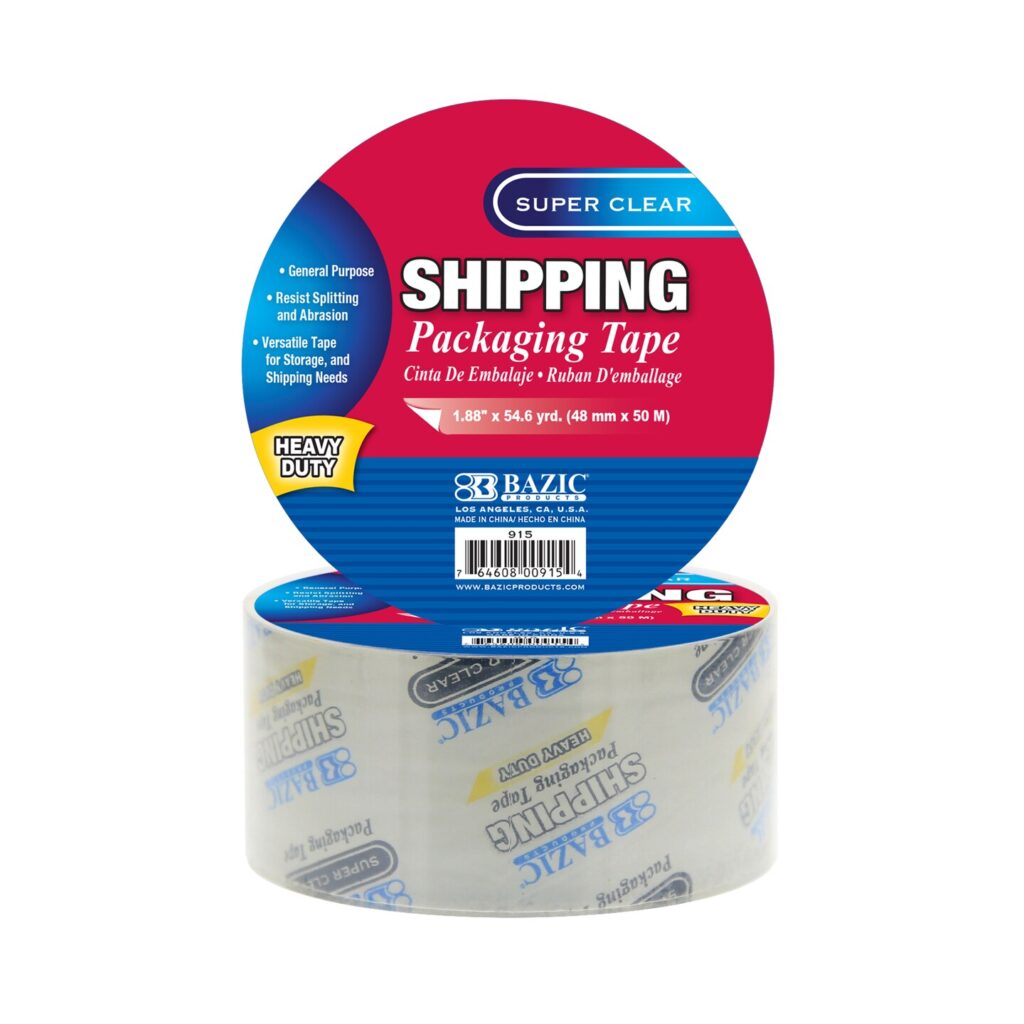
Introduction: Navigating the Global Market for Fragile packing tape
Sourcing high-performance fragile packing tape for cross-border supply chains requires navigating complex adhesive specifications, mil thickness standards, and regional compliance requirements that directly impact product integrity during international transit. Whether you’re procuring packaging materials for electronics distribution centers in Germany or managing fragile agricultural exports from Brazil to Middle Eastern markets, the stakes extend far beyond basic carton sealing—every roll influences damage rates, customs handling protocols, and end-customer satisfaction. In an era where e-commerce fulfillment standards vary significantly between African logistics hubs and European retail channels, selecting the right printed warning tape has become a strategic risk management decision for procurement teams across diverse global markets.
What Critical Specifications Should Buyers Evaluate When Importing Fragile Tape?
This comprehensive guide examines essential procurement factors including acrylic versus hot melt adhesive formulations, dimensional variations from 2-inch to 3-inch widths, and roll length configurations (55-yard versus 110-yard) that affect warehouse efficiency. We analyze application-specific requirements for glassware, ceramics, and electronics fulfillment, while addressing volume pricing tiers, MOQ (Minimum Order Quantity) strategies, and quality certification standards that determine total cost of ownership for bulk importers operating across South American, African, and Middle Eastern trade corridors.
How Does This Resource Empower Strategic Sourcing Decisions Across Global Markets?
Designed specifically for B2B buyers in emerging and established economies—from Nigerian logistics providers to Argentine manufacturers and UAE-based e-commerce operators—this guide provides actionable frameworks for supplier vetting, lead time optimization, and logistics coordination. You’ll discover region-specific compliance insights, cost-benefit analyses comparing American versus Asian manufacturing sources, and risk mitigation strategies that enable data-driven purchasing decisions regardless of whether you’re sourcing for warehouses in São Paulo or distribution networks in Frankfurt.
Understanding Fragile packing tape Types and Variations
| タイプ名 | 主な特徴 | 主なB2Bアプリケーション | バイヤーのための簡単な長所と短所 |
|---|---|---|---|
| Standard Acrylic Fragile Tape | 2.2 mil thickness, water-based acrylic adhesive, white polypropylene film with red “FRAGILE” print, immediate tack | General e-commerce fulfillment, electronics shipping, glassware distribution, climate-controlled warehousing | Pros: Cost-effective, excellent print visibility, suitable for high-speed application. Cons: Limited performance on recycled or dusty corrugated surfaces, temperature sensitivity below 40°F (4°C). |
| Heavy-Duty Hot Melt Fragile Tape | 2.5+ mil thickness, synthetic rubber adhesive, high shear strength, superior quick tack | Heavy machinery parts, ceramic tiles, industrial equipment shipping, long-haul international transit | Pros: Aggressive adhesion to challenging surfaces, performs in wider temperature ranges, abrasion resistant. Cons: Higher cost per roll, louder unwind noise, potential residue in extreme heat. |
| Low-Noise Acoustic Optimized Tape | Modified acrylic adhesive formulation, reduced decibel levels during unwind (up to 50% quieter), consistent 2.2-2.5 mil thickness | High-volume warehouse operations, 24/7 fulfillment centers, noise-restricted urban facilities (common in Germany and Middle East) | Pros: Improved worker comfort and safety, reduced fatigue during high-volume shifts, maintains strong hold. Cons: 15-20% price premium, limited supplier availability in some African and South American markets. |
| Tamper-Evident Security Tape | “VOID” message or checkerboard pattern revealed upon removal, permanent adhesive, often includes sequential numbering or barcoding | High-value electronics, pharmaceutical shipments, luxury goods distribution, cross-border e-commerce | Pros: Deters pilferage, provides legal evidence of tampering, combines security with handling instructions. Cons: Single-use only (cannot be repositioned), higher unit cost, requires precise initial application training. |
| Custom Printed Branding |
Key Industrial Applications of Fragile packing tape
| 業界/セクター | Specific Application of Fragile packing tape | ビジネスにとっての価値/利益 | このアプリケーションにおける主な調達上の考慮事項 |
|---|---|---|---|
| 電子機器製造・組立 | Sealing anti-static cartons containing circuit boards, semiconductors, and display panels; marking high-value component boxes for international distribution | Reduces transit damage by 40-60%; minimizes RMA (Return Merchandise Authorization) costs; ensures compliance with international shipping standards for sensitive goods | Temperature-resistant acrylic adhesive for varying climates (humidity/tropical heat); high-visibility red/white contrast for multilingual handling crews; anti-static compatibility |
| E-commerce Fulfillment & Retail Distribution | Cross-border parcel sealing for fragile consumer goods; integration with automated packing lines for glassware, cosmetics, and home décor items | Decreases customer complaint and return rates; reduces replacement shipping costs; improves brand reputation through visible care indicators in last-mile delivery | High-tack formulation for recycled corrugated boxes (sustainability compliance); compatibility with thermal printers for batch tracking; bulk case pricing for high-volume operations |
| Glass & Ceramics Manufacturing | Export packaging for architectural glass, sanitary ware, and artisan ceramics; pallet labeling and carton sealing for ocean freight to emerging markets | Prevents costly breakage during long-haul maritime transport; reduces insurance claims; meets international shipping regulations for fragile cargo handling | UV-resistant ink for tropical storage conditions (Africa/South America); 2.2+ mil thickness for heavy-duty sealing; multilingual “Fragile” markings for global port handling |
| Pharmaceutical & Medical Logistics | Cold chain packaging for diagnostic equipment, glass ampoules, and precision medical instruments; secondary sealing for temperature-controlled shipments | Maintains product integrity for temperature-sensitive medical devices; reduces waste from damaged sterile equipment; ensures compliance with GDP (Good Distribution Practice) | FDA/EU compliant adhesive formulations; low-noise unwinding for cleanroom environments; chemical resistance for condensation exposure in refrigerated transport |
How Does Fragile Packing Tape Protect High-Value Electronics During International Shipping?
In electronics manufacturing hubs across Germany and the Middle East, fragile packing tape serves as both a sealant and a critical damage-prevention tool for circuit boards, semiconductors, and display panels. The high-visibility printed messaging alerts multilingual warehouse staff and carriers to handle cartons with appropriate care, reducing mishandling incidents by up to 60%. For buyers in humid climates like Brazil or dust-prone regions in Africa, selecting acrylic-based adhesives ensures the tape maintains tack strength across varying environmental conditions, preventing carton seal failures that could expose sensitive components to contamination.
What Are the Cost-Saving Benefits for E-commerce Fulfillment Centers Handling Fragile Goods?
E-commerce operations in rapidly growing markets like Brazil and South Africa rely on fragile packing tape to minimize return rates for glassware, ceramics, and cosmetics shipped directly to consumers. By clearly identifying packages requiring careful handling, businesses reduce replacement costs and protect brand reputation during last-mile delivery. High-volume fulfillment centers should prioritize tapes compatible with automated dispensers and recycled corrugated materials—essential for meeting EU sustainability mandates while maintaining operational efficiency. Bulk case purchasing options help manage costs for facilities processing thousands of fragile items daily.
Why Is Heavy-Duty Fragile Tape Essential for Glass and Ceramics Exporters?
For manufacturers exporting architectural glass, sanitary ware, and artisan ceramics from Europe to Africa and the Middle East, fragile packing tape must withstand ocean freight and rough port handling. The tape’s 2.2+ mil thickness provides structural reinforcement for heavy cartons, while UV-resistant printed messages remain legible during extended storage in tropical climates. This visibility is crucial in busy international ports where language barriers exist; universal “Fragile” symbols and high-contrast colors ensure handlers recognize delicate cargo regardless of local language proficiency, significantly reducing insurance claims for breakage.
How Does Specialized Tape Support Pharmaceutical Cold Chain Compliance?
Pharmaceutical distributors in Germany and temperature-controlled logistics providers across the Middle East utilize fragile packing tape to secure diagnostic equipment, glass ampoules, and precision medical instruments within cold chain packaging. The tape must perform reliably in condensation-prone refrigerated environments while meeting FDA and EU Good Distribution Practice (GDP) standards. Low-noise unwinding properties are essential for cleanroom packing stations, and chemical-resistant adhesives prevent seal degradation from exposure to sanitizing agents. This ensures sterile medical devices reach healthcare facilities intact, maintaining product integrity and regulatory compliance across international borders.
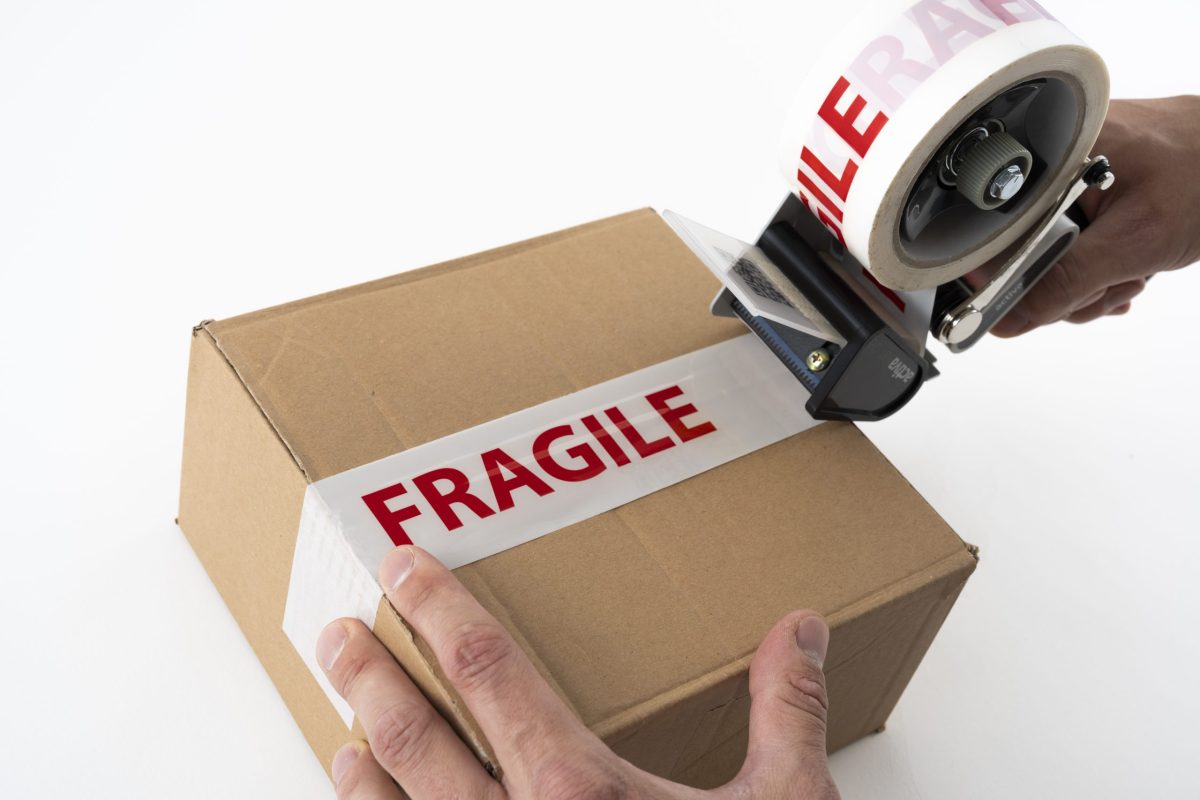
A stock image related to Fragile packing tape.
3 Common User Pain Points for ‘Fragile packing tape’ & Their Solutions
Scenario 1: Why Does Fragile Packing Tape Lose Adhesion in Tropical and Cold Storage Environments?
問題だ:
B2B buyers managing supply chains across Brazil’s humid coastal regions, the Middle East’s extreme heat, or Northern Europe’s freezing logistics hubs face a critical failure point when standard acrylic adhesive tapes are used for fragile shipments. In temperatures exceeding 30°C (86°F) with 80%+ humidity, or conversely in sub-zero European warehouses, acrylic adhesives soften, oxidize, or crystallize—causing the “Fragile” warning tape to peel at the edges or detach entirely. This exposes high-value electronics, glassware, and ceramics to unmarked handling, resulting in contamination, impact damage, and costly reverse logistics when customers reject compromised deliveries.
解決策
Specify hot-melt rubber adhesive formulations for tropical climates, which maintain aggressive tack in temperatures up to 60°C (140°F), or synthetic rubber adhesives for cold chain logistics operating below -10°C. When vetting suppliers, request technical data sheets verifying temperature resistance ranges and shear adhesion tests. For critical international shipments, implement 2.2 mil or higher thickness tape with reinforced backing, and consider dual-sealing protocols where fragile tape reinforces carton bottoms subjected to maximum handling stress. Always verify that the printed warning remains legible after 72-hour adhesion tests in your specific climate conditions.
Scenario 2: How Can You Overcome Language Barriers and Visibility Issues in Global Distribution Centers?
問題だ:
When German manufacturers or Brazilian exporters ship delicate goods to diverse African, Middle Eastern, or Asian markets, monolingual “Fragile” tape creates dangerous communication gaps. Warehouse handlers who do not read English may ignore warnings, while low-contrast red-on-white printing becomes invisible under fluorescent warehouse lighting or when obscured by dust in open-air African distribution centers. This visibility failure results in improper stacking, rough handling by automated sorting systems, and fragile items being loaded under heavy freight—directly contradicting the tape’s protective purpose and generating insurance claims for damaged goods.
解決策
Procure fragile tape featuring ISO 780-compliant universal symbols (broken glass icons) alongside multilingual text including Arabic
Strategic Material Selection Guide for Fragile packing tape
Selecting the appropriate substrate for fragile packing tape extends beyond aesthetic considerations; it directly impacts supply chain integrity, customs compliance, and damage reduction rates. For B2B buyers managing cross-border shipments to regions with varying climate conditions and regulatory standards—from Germany’s packaging ordinances to Brazil’s humidity challenges—understanding material specifications ensures operational efficiency. This guide analyzes four primary tape substrates, evaluating their performance characteristics against the dual requirements of secure sealing and high-visibility fragile messaging.
Is Polypropylene (BOPP) Tape the Optimal Solution for High-Volume Fragile Logistics?
Biaxially Oriented Polypropylene (BOPP) film dominates the fragile tape market due to exceptional cost-efficiency and compatibility with high-speed carton sealing equipment. At standard thicknesses of 2.2 mil (0.056mm), this material offers sufficient tensile strength for corrugated box sealing while maintaining excellent print clarity for red “FRAGILE” warnings on white backgrounds. Acrylic adhesive formulations provide stable performance across ambient temperature ranges (15°C to 40°C), making them suitable for warehouse operations in South American and Middle Eastern climates. However, BOPP’s rigidity limits conformability to irregular surfaces, and its characteristic noise during unwind can disrupt quiet fulfillment environments. For African and South American markets prioritizing cost optimization in high-volume e-commerce, BOPP represents the baseline procurement standard.
When Does PVC Tape Outperform Standard Options for Delicate Electronics?
Polyvinyl Chloride (PVC) based fragile tapes command premium positioning in European markets, particularly German industrial sectors where noise reduction and professional presentation carry operational weight. The material’s inherent flexibility allows superior adhesion to textured or recycled cardboard surfaces common in sustainable packaging loops. With thicknesses typically exceeding 2.5 mil, PVC offers quieter unwind characteristics—critical for retail fulfillment centers—and maintains tack in lower temperature ranges (5°C to 30°C) better than standard polypropylene. The trade-off involves higher material costs and environmental compliance challenges, as PVC contains plasticizers that may face restrictions under EU REACH regulations. Buyers serving luxury goods or electronics sectors should evaluate PVC for its premium handling experience despite the 20-30% cost premium over BOPP alternatives.
How Can Kraft Paper Tape Meet EU Sustainability Mandates for Fragile Exports?
Kraft paper tapes—available in self-adhesive or water-activated gummed varieties—address stringent sustainability requirements increasingly prevalent in European and Middle Eastern B2B procurement. These substrates integrate seamlessly with corrugated recycling streams without separation, supporting circular economy mandates and Germany’s Packaging Act compliance. The fibrous material accepts soy-based inks effectively, producing matte-finish “FRAGILE” warnings that convey eco-conscious brand values. From a security standpoint, paper tapes provide tamper-evidence through fiber tear upon removal, deterring pilferage in complex African and South American logistics networks. Limitations include moisture sensitivity in humid climates (unless reinforced) and the necessity of water-activated dispensers for gummed varieties, which may slow high-speed packing lines. Relative costs run 40-50% higher than BOPP but align with corporate ESG targets.
Is Reinforced Filament Tape Necessary for Heavy Ceramic and Glass Shipments?
For heavy fragile commodities—industrial glass, ceramic machinery components, or dense electronics—standard tapes risk shear failure under load. Reinforced Polyester (PET) tapes incorporate longitudinal fiberglass filaments or synthetic yarns, providing tensile strengths exceeding 100 lbs/inch while maintaining printed fragile warnings. This substrate excels in palletized shipments where box integrity must withstand stacking pressures during ocean freight to Africa or South America. The material’s rigidity requires manual or heavy-duty dispenser application, limiting suitability for lightweight consumer goods. Cost positioning places this at the premium tier, approximately 3-4x standard BOPP pricing, reserved for industrial B2B applications where damage costs outweigh material expenses.
| 素材 | Typical Use Case for Fragile packing tape | 主な利点 | 主な欠点/制限 | 相対コスト |
|---|---|---|---|---|
| BOPP (Polypropylene) | High-volume e-commerce, general warehouse operations | Cost-effective, high-speed compatible, excellent print clarity | Noisy unwind, limited low-temp performance, non-biodegradable | 低い |
| PVC(ビニール) | Premium electronics, luxury goods, noise-sensitive environments | Quiet application, superior conformability to recycled board, strong initial tack | Higher cost, plasticizer regulatory concerns (EU), less eco-friendly | ミディアム-ハイ |
| Kraft Paper | Sustainable brands, EU exports, tamper-evident requirements | Biodegradable, recyclable with packaging, tamper-evident tear | Moisture sensitive, requires water activation (gummed), slower application | ミディアム |
| Reinforced PET | Heavy industrial ceramics, machinery, |
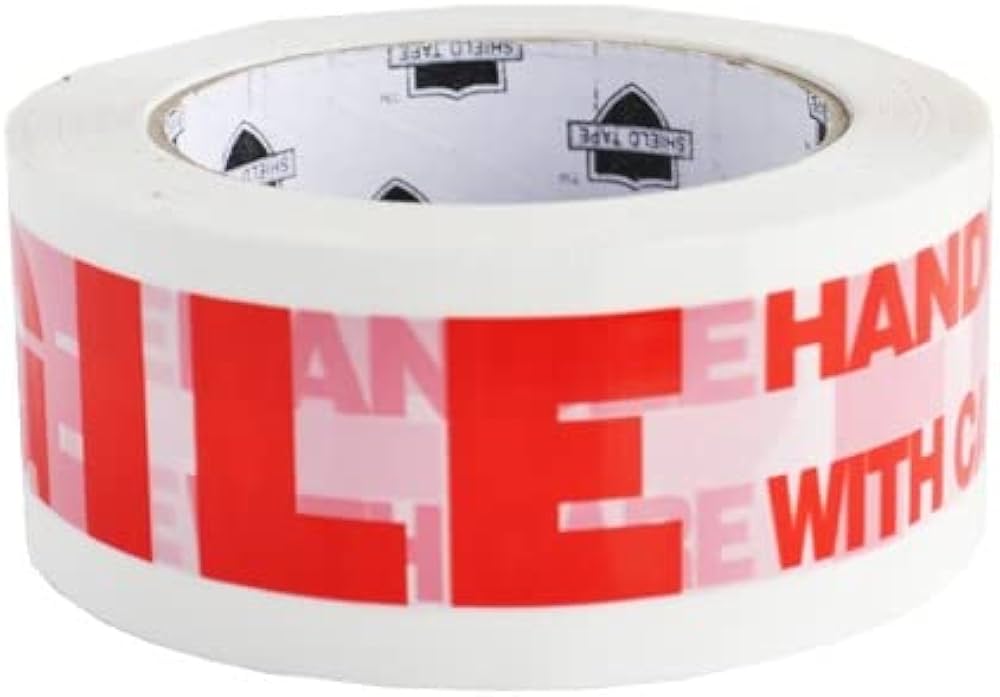
A stock image related to Fragile packing tape.
In-depth Look: Manufacturing Processes and Quality Assurance for Fragile packing tape
For international procurement teams sourcing fragile packing tape across diverse markets—from São Paulo to Lagos to Dubai—understanding the production pipeline is essential for risk mitigation and supply chain optimization. The manufacturing sophistication behind printed warning tape directly correlates with seal integrity, print legibility after handling, and consistent performance across varying climate conditions during transit.
How Is Fragile Packing Tape Manufactured Using BOPP Substrates?
The production of high-visibility fragile tape begins with biaxially oriented polypropylene (BOPP) film extrusion. Raw polypropylene resin undergoes melting and extrusion through a flat die, followed by sequential stretching in both machine and transverse directions. This biaxial orientation creates the molecular structure responsible for the tape’s characteristic tensile strength and dimensional stability—critical properties when securing heavy corrugated containers marked for delicate contents.
Following film preparation, manufacturers apply pressure-sensitive adhesive (PSA) coatings, typically acrylic emulsion-based systems for standard fragile tape applications. The coating process utilizes gravure or Meyer rod techniques to achieve precise adhesive thickness, usually resulting in finished products ranging from 2.0 to 2.6 mil total thickness. Acrylic adhesives offer superior UV resistance and aging stability compared to rubber-based alternatives, ensuring that “Handle With Care” warnings remain affixed during extended international shipping cycles through high-temperature port environments.
The distinguishing feature of fragile tape—its high-contrast printed messaging—requires integrated flexographic printing stations within the manufacturing line. Water-based or UV-curable inks are applied to the non-adhesive side of the BOPP film before the adhesive coating stage, with red pigmentation on white or clear substrates providing maximum visual alertness. Advanced manufacturers employ ceramic anilox rollers and automated vision systems to ensure print registration accuracy within ±0.1mm, preventing misaligned or blurred warning text that could compromise handler awareness in busy warehouse environments.
What Quality Control Protocols Validate Adhesive Performance and Print Durability?
Quality assurance for fragile packing tape extends beyond visual inspection to quantitative performance benchmarking. Reputable suppliers conduct standardized peel adhesion testing per ASTM D3330 protocols, measuring the force required to remove tape from stainless steel and corrugated surfaces. For B2B applications, minimum adhesion values of 20-25 oz/inch width ensure secure carton sealing, while controlled tack levels prevent aggressive bonding that damages fiberboard upon removal.
Shear resistance testing (ASTM D3654) evaluates the tape’s ability to maintain seal integrity under constant load—simulating the vertical stacking pressures encountered during ocean freight or air cargo transport. Premium fragile tape formulations demonstrate shear resistance exceeding 72 hours at standard test loads, ensuring that warning labels remain attached to packages even when subjected to tropical humidity or desert heat during transshipment through Middle Eastern or African logistics hubs.
Print durability undergoes abrasion resistance testing using Taber abraders or Sutherland rub testers. Since the “FRAGILE” message serves as a critical communication tool for handlers, manufacturers must verify that printed text remains legible after contact with conveyor belts, sorting equipment, and adjacent packages. Quality specifications typically require 90%+ ink retention after 50+ abrasion cycles, ensuring that warning visibility persists from warehouse dispatch through final-mile delivery.
Which International Standards and Certifications Should Procurement Teams Verify?
When evaluating suppliers for multi-regional operations, B2B buyers should prioritize manufacturers holding ISO 9001:2015 certification for quality management systems and ISO 14001:2015 for environmental management. These certifications indicate standardized production controls capable of delivering consistent roll-to-roll specifications across high-volume orders—essential for automated packing lines in German automotive parts facilities or Brazilian electronics exporters.
For European markets, REACH compliance and RoHS certification verify the absence of restricted substances in adhesive formulations and ink pigments. This regulatory adherence prevents customs complications and aligns with corporate sustainability mandates increasingly prevalent in EU procurement frameworks. Additionally, TAPPI (Technical Association of the Pulp and Paper Industry) standards compliance ensures that tape performance metrics align with international packaging industry benchmarks.
Climate-specific certifications become relevant when sourcing for diverse geographic markets. Suppliers conducting accelerated aging tests per ASTM D4332 (environmental conditioning) demonstrate product viability for buyers operating in high-humidity regions like West Africa or Southeast Asia, where inferior adhesive formulations may experience cohesive failure or edge lifting.
How Does Manufacturing Precision Impact Operational Efficiency and Total Cost?
Manufacturing consistency directly influences total cost of ownership beyond unit pricing. Tape with uniform thickness and adhesive coating weight prevents jamming in high-speed case sealers and automated packing stations—common pain points for e-commerce fulfillment centers handling fragile goods. Variations in roll diameter or core alignment exceeding ±1mm can trigger machine stoppages, reducing throughput in high-volume operations.
Print registration consistency also affects operational efficiency. Precisely printed fragile tape eliminates the need for secondary warning labels, streamlining packing station workflows and reducing material waste. For buyers sourcing 36-roll cases or full container quantities, manufacturing precision ensures that every roll performs identically, eliminating the “weak link” scenarios where individual rolls exhibit poor adhesion or illegible printing that necessitate repackaging.
The integration of quality assurance data—such as batch-specific test reports and certificate of analysis (CoA) documentation—enables traceability requirements for industries handling high-value electronics, glassware, or pharmaceutical products. This documentation becomes critical during insurance claims or quality audits when proving that packaging materials met specified performance standards.
By scrutinizing manufacturing capabilities and quality protocols rather than focusing solely on unit cost, procurement teams secure fragile packing tape that functions as an active damage-prevention tool rather than merely a decorative strip. This technical diligence ensures that “Handle With Care” messages fulfill their intended purpose across complex international supply chains, protecting both product integrity and brand reputation.
Practical Sourcing Guide: A Step-by-Step Checklist for ‘Fragile packing tape’
Procuring fragile packing tape for international B2B operations requires balancing technical specifications with regional logistics realities. This checklist guides procurement teams through critical selection criteria—from adhesive chemistry suited to humid climates to volume pricing structures that optimize landed costs across African, South American, Middle Eastern, and European markets.
1. How Do You Determine the Optimal Tape Dimensions and Mil Thickness for Your Cargo?
Standard 2-inch width suits most carton sealing applications, while 3-inch variants provide enhanced security for heavy electronics or glass shipments requiring additional reinforcement. Evaluate roll lengths strategically—55 yards for low-volume operations versus 110 yards for high-throughput fulfillment centers—to minimize changeover frequency and labor costs. Specify 2.2-mil thickness or higher to ensure tensile strength withstands automated dispensing equipment and rough handling during multi-modal international transit.
2. What Adhesive Specifications Should You Verify for Cross-Climate Performance?
Acrylic pressure-sensitive adhesives offer superior temperature resistance for shipments traversing diverse climate zones, from Middle Eastern heat to European humidity and tropical African conditions. Request technical data sheets confirming adhesion strength on recycled corrugated materials common in emerging markets. Avoid rubber-based adhesives that degrade in high-temperature storage environments typical of Brazilian or Gulf-region warehouses.
3. How Can You Leverage Volume Pricing Tiers to Reduce Unit Costs?
Analyze break-even points between case quantities—typically 36-roll cases versus individual rolls. Suppliers often structure pricing tiers at 6-11, 12-35, and 36+ roll thresholds, with per-unit costs dropping significantly at full-case volumes. Calculate total cost of ownership including freight density; while 110-yard rolls reduce packaging waste, they increase weight-based shipping costs compared to 55-yard alternatives, affecting landed costs in distant markets.
4. Which Multi-Language and Compliance Markings Are Required for International Shipments?
Verify “Fragile” and “Handle With Care” legends appear in languages matching your destination markets—Portuguese for Brazil, Arabic for Middle Eastern distribution hubs, and German for European compliance. Ensure printed messages meet international shipping symbol standards (ISO 780) to facilitate customs clearance and carrier handling protocols without linguistic barriers that could delay deliveries.
5. How Should You Evaluate Supplier Logistics for Regional Distribution?
Assess whether suppliers offer regional warehousing or local pickup options in your target markets to mitigate lead times and import duty complications. For African and South American operations, confirm suppliers possess documented experience navigating complex customs documentation for adhesive products, which may face chemical import restrictions or require specific safety data sheets in certain jurisdictions.
6. What Storage Protocols Ensure Adhesive Integrity in Tropical or Variable Climates?
Implement climate-controlled storage between 60-80°F (15-27°C) to preserve acrylic adhesive activation properties. In tropical regions with high humidity, avoid direct sunlight exposure that can cause premature aging and edge lifting. Rotate inventory using first-in-first-out methods, as pressure-sensitive tapes typically maintain optimal adhesion for 6-12 months when stored properly away from dust, moisture, and extreme temperature fluctuations common in non-conditioned warehouses.
7. How Do You Match Tape Specifications with Automated Dispensing Systems?
For high-volume operations in Germany or Brazil, verify tape core dimensions (typically 3-inch diameter) compatibility with existing dispensers and automated packing lines. Test unwind tension characteristics to prevent jamming in humid environments, ensuring the 2.2-mil construction feeds smoothly through mechanized equipment without excessive noise or static buildup that could damage sensitive electronics.
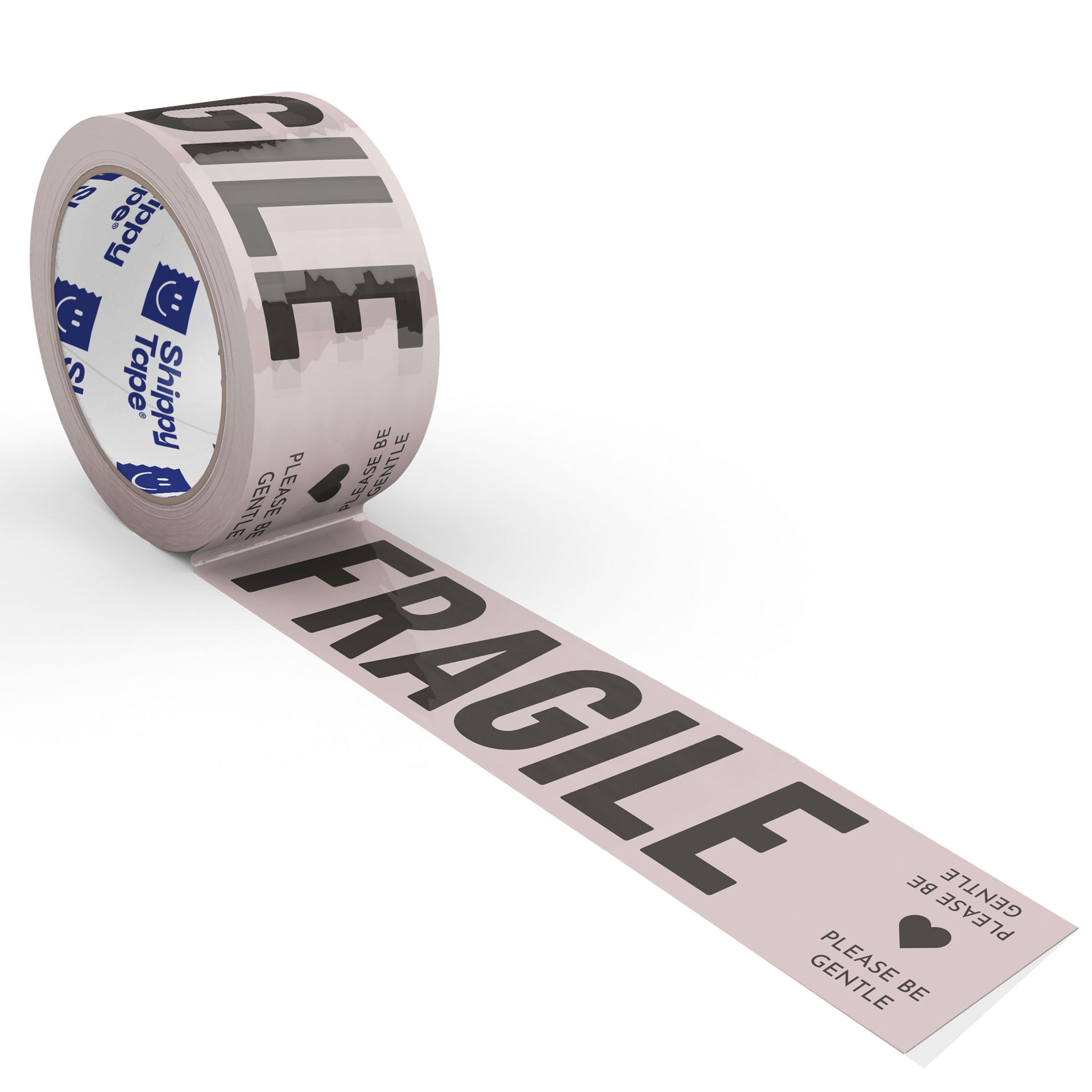
A stock image related to Fragile packing tape.
Comprehensive Cost and Pricing Analysis for Fragile packing tape Sourcing
Understanding the cost architecture of fragile packing tape requires looking beyond sticker prices to material specifications, volume economics, and regional logistics variables. For procurement teams across emerging and established markets, strategic sourcing decisions hinge on analyzing per-yard costs rather than per-roll pricing, while accounting for the total landed expenses that impact operational budgets.
What Material Specifications Drive Price Variations in Fragile Tape?
The fundamental cost structure correlates directly with film thickness and adhesive formulation. Standard BOPP (Biaxially Oriented Polypropylene) tapes typically range from 2.0 to 2.6 mil thickness, with acrylic adhesives commanding premium pricing over hot-melt alternatives due to superior temperature resistance—critical for shipments traversing diverse climates between manufacturing hubs and destinations like Brazil or the UAE. Roll dimensions significantly alter unit economics; comparing a 55-yard roll priced at $4.59 retail against 110-yard alternatives reveals that doubling the length rarely doubles the cost, often yielding 15-20% savings per yard. Printed warning tapes incur additional plate setup costs for custom messaging, though standard “Fragile – Handle With Care” imprints typically utilize pre-made designs that minimize these surcharges.
How Do Volume Tiers and MOQs Impact Procurement Costs?
B2B pricing follows aggressive volume depreciation curves. Single-roll purchases may exceed $4.50 per unit, whereas case quantities of 36 rolls frequently drop below $1.80 per roll—a 60% reduction that rewards inventory commitment. For mid-sized operations, the 12-35 roll tier typically represents the inflection point where per-unit costs stabilize around $3.79, offering smaller enterprises access to competitive rates without requiring warehouse-scale storage capacity. Buyers should negotiate sliding scale agreements that accommodate seasonal demand fluctuations while securing annual volume commitments that lock in favorable rates.
What Hidden Costs Affect Total Landed Pricing for International Shipments?
Cross-border procurement introduces logistics variables that can exceed product costs. Fragile tape’s high volume-to-weight ratio makes it particularly susceptible to dimensional weight shipping charges, where carriers bill based on package size rather than actual weight. Import duties vary by HS code classification (typically 3919.10 for adhesive tapes), with rates fluctuating between 5-15% depending on destination country regulations and existing trade agreements. European buyers sourcing from North American suppliers should factor in VAT implications and currency hedging costs, while African and South American importers must consider port handling fees and inland transportation from gateway cities to final distribution centers.
How Should Buyers Evaluate Total Cost of Ownership?
True procurement value emerges when analyzing application efficiency and risk mitigation. Thicker 2.6-mil tapes may cost 20% more upfront but reduce application waste through fewer splits and tears during high-speed dispensing. More significantly, the investment in high-visibility fragile messaging delivers measurable returns through reduced damage claims—particularly valuable when shipping electronics, glassware, or precision components where single-incident replacement costs dwarf annual tape expenditures. Smart buyers calculate the “cost per secure shipment” rather than isolating material expenses, recognizing that premium acrylic adhesives prevent costly reopening during humid transit conditions common in tropical climates.
Alternatives Analysis: Comparing Fragile packing tape With Other Solutions
When evaluating protective packaging strategies for delicate goods, procurement teams often weigh specialized fragile packing tape against hybrid labeling systems or integrated packaging solutions. While printed fragile tape combines sealing and warning functions in a single application, alternatives such as standard clear tape paired with adhesive fragile labels, or pre-printed corrugated boxes with built-in handling instructions, offer distinct operational and economic advantages depending on shipment volume, branding requirements, and supply chain complexity.
Comparative Analysis: Performance, Cost, and Implementation
| 比較の側面 | Fragile Packing Tape | Standard Clear Tape + Fragile Labels | Pre-Printed Corrugated Boxes |
|---|---|---|---|
| Performance & Visibility | High-contrast continuous messaging (red/white); immediate recognition by handlers | Variable; dependent on label size/placement; risk of obscured warnings | Excellent; large-format integrated graphics; impossible to remove |
| Cost Structure | Medium per-unit cost; no setup fees | Lower material cost; higher labor cost | High upfront (plate/setup fees); economies of scale at 10,000+ units |
| 実施しやすさ | Single-step application; compatible with standard dispensers | Two-step process; requires label inventory management | Zero application steps; requires SKU-specific inventory |
| Climate Resilience | 2.2 mil acrylic adhesive; waterproof; withstands humidity (ideal for tropical climates like Brazil/West Africa) | Paper labels vulnerable to moisture; adhesive degradation in high heat | Water-based flexographic inks may run if board gets saturated |
| 運用の柔軟性 | Universal application across all box sizes; immediate language switching | High flexibility; repositionable labels | Fixed design; requires separate box SKUs for different warnings |
| Throughput Efficiency | 3-5 seconds per carton | 8-12 seconds per carton (dual application) | 0 seconds (pre-applied) |
Is Standard Clear Tape with Fragile Labels a Viable Alternative for Cost-Conscious Operations?
This hybrid approach remains popular among small-to-medium enterprises managing diverse product lines with variable fragility requirements. By applying generic acrylic packing tape for carton sealing and subsequently affixing adhesive fragile labels, businesses achieve similar visual warnings at reduced material costs—particularly advantageous for companies shipping to regions with strict import labeling regulations where label content must be multilingual. However, this method introduces operational friction: warehouse staff must manage two separate consumables, increasing application time by approximately 15-20% per package and risking misalignment or detachment of paper-based labels during humid transit conditions common in tropical climates like Brazil or West Africa. For B2B buyers prioritizing throughput over marginal cost savings, the dual-application process often creates bottlenecks during peak fulfillment periods.
How Does Pre-Printed Corrugated Packaging Compare to Fragile Tape for High-Volume Manufacturing?
For enterprises operating dedicated production lines with consistent fragile goods—such as German automotive parts manufacturers or Middle Eastern electronics distributors—pre-printed corrugated boxes eliminate the need for warning tape entirely while reinforcing brand identity through custom graphics. This solution excels in high-volume environments where changeover frequency is minimal, offering superior durability since handling instructions are flexographically printed directly onto the board rather than applied as a surface layer. Nevertheless, the approach demands significant upfront investment in printing plates and minimum order quantities (typically 1,000+ units), creating inventory management challenges for businesses with limited warehouse space or those serving multiple markets requiring different language warnings. Additionally, unlike fragile tape which can be applied selectively to specific sides of a carton, pre-printed boxes commit the shipper to universal fragile classification regardless of actual contents, potentially increasing shipping insurance costs for mixed loads.
Essential Technical Properties and Trade Terminology for Fragile packing tape
When sourcing fragile packing tape for international logistics operations, understanding precise technical specifications ensures compliance with regional shipping standards and operational compatibility across diverse climates. The following specifications and terminology guide procurement decisions for high-volume B2B applications in markets from Germany to Brazil.
What Are the Critical Technical Specifications for Fragile Packing Tape?
Width and Length Configurations
Standard widths include 48mm (2 inches) and 72mm (3 inches), with roll lengths typically ranging from 50 to 110 yards (45-100 meters). European markets often prefer metric equivalents (50mm width), while North American suppliers standardize at 2-inch widths. Longer 110-yard rolls reduce changeover frequency in automated packing stations, improving throughput efficiency.
Film Thickness (Mil Rating)
Thickness is measured in mils (thousandths of an inch), with 2.0-2.6 Mil being standard for general fragile items. Heavy-duty applications may require 3.0+ Mil for enhanced puncture resistance during rough handling. This specification directly correlates with tensile strength and edge tear resistance, particularly important for shipments traversing multiple handling points in African or South American logistics networks.
接着剤の化学的性質とコート重量
Acrylic adhesives offer superior UV resistance and aging stability for long-term storage in hot climates, while hot melt rubber adhesives provide aggressive initial tack for immediate carton sealing. Coat weight (measured in grams per square meter) determines adhesion strength to recycled corrugated surfaces common in sustainable packaging initiatives. Selecting the appropriate chemistry prevents tape failure in high-humidity environments like tropical regions.
Core Dimensions and Dispenser Compatibility
Standard 3-inch (76mm) cardboard cores fit most industrial tape dispensers and automated case sealers. Verify core crush resistance for high-humidity environments common in West African or Southeast Asian ports. This standardization ensures seamless integration with existing warehouse equipment across global distribution centers.
Print Quality and Legibility Standards
High-visibility red or black printing on white or clear substrates requires solvent-resistant inks to prevent smearing during exposure to moisture. Regulatory compliance for hazardous goods may require specific color contrasts that exceed standard commercial printing. Minimum font height regulations often apply for dangerous goods shipping to Middle Eastern markets.
引張強さと伸び
Measured in pounds per inch (PPI) or Newtons per 25mm, tensile strength indicates resistance to breaking under stress. Elongation percentage (typically 150-200%) determines the tape’s ability to conform to irregular carton surfaces without snapping. Higher elongation accommodates thermal expansion in containers during transoceanic shipping.
What Trade Terminology Should B2B Buyers Understand?
Mil Thickness vs. Micron Measurement
While North American suppliers use “Mil” (0.001 inch), European and Asian manufacturers may specify microns (1 mil = 25.4 microns). Clarify measurement standards when comparing quotes between German and Brazilian suppliers. Conversion errors can lead to significant specification mismatches in high-volume contracts.
感圧接着剤 (PSA)
Refers to tapes requiring only finger pressure to adhere, distinct from water-activated or heat-seal tapes. PSA fragile tapes offer immediate handling strength without curing time. This characteristic proves essential for high-throughput fulfillment centers where curing delays create operational bottlenecks.
Case Pack Configuration
Typically denoted as “36 rolls per case” or similar, indicating master carton quantities. Understanding MOQ (Minimum Order Quantity) versus case multiples affects freight optimization for container shipments. Efficient case pack optimization reduces per-unit freight costs when importing full container loads from Asian manufacturing hubs.
Custom OEM Printing
Original Equipment Manufacturer capabilities allow customization of warning messages beyond standard “Fragile” text, including multilingual alerts (e.g., Portuguese “Frágil” for Brazilian markets or Arabic for Middle Eastern logistics). Regional compliance often mandates local language warnings to meet consumer protection laws in target markets.
Shear Resistance
The ability to resist sliding or creeping under constant load, critical for vertically stacked palletized shipments in warehouse environments. High shear resistance prevents tape flagging on carton edges. Inadequate shear strength results in carton opening during automated conveyor transport, compromising fragile contents.
Release Coat
A silicone-based treatment on the tape’s non-adhesive side preventing layers from sticking together on the roll, ensuring smooth unwinding in high-speed dispensing equipment. Premium release coatings minimize static buildup that attracts dust in dry climates prevalent in Middle Eastern distribution centers.
Navigating Market Dynamics and Sourcing Trends in the Fragile packing tape Sector
What Are the Current Market Dynamics Shaping Fragile Packing Tape Demand Globally?
The fragile packing tape sector is experiencing accelerated growth driven by the rapid expansion of e-commerce logistics across emerging markets. In regions like Brazil and Nigeria, where digital retail adoption has surged alongside infrastructure investments, demand for high-visibility printed warning tapes has increased by double digits annually as fulfillment centers prioritize damage reduction for electronics and glassware. Standard specifications have largely converged on 2-inch width rolls with 2.2-mil thickness utilizing acrylic pressure-sensitive adhesives, though European industrial buyers—particularly in Germany’s precision manufacturing export sector—increasingly specify 3-inch widths for heavy-export applications requiring additional carton reinforcement and tamper-evident sealing.
Pricing structures reflect significant volume efficiencies that benefit large-scale procurement operations managing cross-border supply chains. While single-roll pricing for 55-yard lengths typically ranges from $4.50 to $6.50, strategic buyers leveraging 36-roll case quantities can achieve unit costs below $4.00, with additional tiered discounts available for container-level purchases exceeding 1,000 rolls. Regional distribution hubs—such as Miami serving Latin American markets, Dubai addressing Middle Eastern transshipment needs, or Rotterdam facilitating Continental European distribution—have become critical for reducing lead times and mitigating currency fluctuation risks that particularly impact African importers facing volatile exchange rates against the US dollar.
Raw material volatility represents a persistent challenge, with polypropylene film and adhesive costs tracking crude oil indices, necessitating flexible procurement contracts with price-lock provisions. Seasonal demand spikes during Q4 holiday periods create capacity constraints, prompting forward-thinking buyers from South America and Africa to establish annual framework agreements rather than spot purchasing. Additionally, smart packaging integration is emerging as a differentiator; some suppliers now embed QR codes alongside standard fragile warnings, enabling German automotive manufacturers and UAE luxury distributors to track handling compliance and address liability documentation for international shipping insurance claims.
How Can B2B Buyers Navigate Sustainability and Ethical Sourcing in Fragile Tape Procurement?
Sustainability has transitioned from peripheral concern to core procurement mandate, particularly for European buyers facing stringent Extended Producer Responsibility (EPR) regulations under the EU Packaging and Packaging Waste Directive. The market is witnessing a definitive shift from PVC-based tapes to recyclable polypropylene (PP) films, which offer equivalent 2.2-mil tensile strength while enabling corrugated box recycling without adhesive contamination that degrades pulp quality. Forward-thinking suppliers now provide water-based acrylic adhesives rather than solvent-based alternatives, significantly reducing volatile organic compound (VOC) emissions during manufacturing—a critical consideration for Middle Eastern buyers sourcing from factories with increasing environmental audit requirements and for German distributors meeting Blauer Engel eco-label standards.
Ethical sourcing protocols demand rigorous vetting of manufacturing partners, particularly in Asia where the majority of global tape production concentrates. B2B buyers should prioritize suppliers demonstrating SA8000 or equivalent labor standard certifications, ensuring fair wage practices and safe working conditions in production facilities. Bulk packaging configurations—specifically 36-roll cases rather than individual shrink-wrapped units—have gained traction as a primary waste-reduction strategy, minimizing secondary cardboard and plastic usage while optimizing container loading efficiency for sea freight from Chinese or Indian ports to African and South American destinations, effectively reducing per-unit carbon footprints by 15-20%.
End-of-life circularity presents another sophisticated sourcing criterion gaining prominence among environmentally conscious procurement teams. While traditional pressure-sensitive tapes complicate cardboard recycling processes, newer easy-release formulations allow clean separation from corrugated fibers, supporting box reuse programs prevalent in German automotive closed-loop logistics and Brazilian agricultural export packaging systems. Social impact considerations extend beyond factory walls to encompass community development programs in manufacturing regions. Progressive suppliers are investing in local education initiatives and renewable energy transitions at production facilities, factors increasingly weighted in RFP evaluations by Scandinavian and Benelux buyers seeking partners aligned with corporate ESG commitments.
Frequently Asked Questions (FAQs) for B2B Buyers of Fragile packing tape
What is the difference between fragile packing tape and standard packing tape for B2B logistics operations?
Standard packing tape provides structural sealing for cartons, while fragile packing tape combines high-visibility printed warnings with robust adhesive strength to create a dual-function solution. The printed messaging—typically “FRAGILE” or “Handle With Care” in contrasting colors like red on white—serves as an immediate visual cue for handlers across multilingual supply chains. Unlike standard clear tape, fragile tape functions as both a sealing mechanism and a communication tool, significantly reducing handling errors and damage claims in busy warehouse environments.
Can fragile packing tape be customized with company logos and multilingual warnings for international B2B orders?
Yes, most manufacturers offer OEM customization for bulk orders, allowing you to incorporate corporate branding alongside standard fragile warnings to reinforce brand presence upon delivery. Custom printing supports multiple languages essential for cross-border trade to Africa, South America, and the Middle East, ensuring handlers understand handling requirements regardless of local language barriers. Minimum order quantities typically start at 5,000–10,000 rolls depending on design complexity, with lead times of 4–6 weeks for custom printed orders.
What are the standard dimensions and adhesive specifications for fragile packing tape when sourcing in bulk quantities?
Standard B2B specifications include 2-inch (48mm) width with lengths ranging from 55 to 110 yards per roll, packaged in cases of 36 rolls for warehouse efficiency and inventory management. Acrylic adhesive systems with 2.0–2.2 mil thickness provide optimal performance across temperature variations encountered in international shipping containers. For heavy-duty applications, hot melt adhesives offer superior shear strength on recycled corrugated materials, while acrylic formulations excel in extreme temperature fluctuations common in transcontinental logistics.
How do you choose the right fragile packing tape for heavy-duty industrial shipping and export logistics?
Select tapes with minimum 2.5 mil thickness and reinforced hot melt adhesives for containers exceeding 25kg or palletized shipments subject to rough handling in port environments. Consider UV-resistant formulations for goods stored in outdoor staging areas common in emerging market ports throughout Africa and the Middle East. For automated packaging lines, ensure the tape offers consistent unwind tension and works with high-speed dispensers to maintain throughput efficiency without jamming.
What quantity pricing structures should B2B buyers expect when procuring fragile packing tape for international distribution?
Volume pricing typically activates at 36-roll case quantities, with tiered discounts at 100, 500, and 1000+ roll thresholds that can reduce per-roll costs by 20–30% at maximum volumes. When importing to Brazil, Germany, or African markets, factor in Incoterms that include bulk palletization to minimize per-unit shipping costs and simplify customs clearance. Request detailed quotes specifying exact roll length consistency, as shorter rolls may appear cheaper upfront but reduce operational efficiency through frequent changeovers and increased labor costs.
How should fragile packing tape be stored to maintain adhesive integrity during international transit and warehousing?
Store tape in climate-controlled environments between 15–25°C (59–77°F) with 40–60% relative humidity to prevent adhesive degradation during extended ocean freight voyages. Avoid direct sunlight exposure in outdoor storage facilities common in South American and Middle Eastern logistics hubs, as UV radiation can compromise adhesive activation properties. Properly stored acrylic adhesive tape maintains optimal performance for 12–18 months, while hot melt formulations typically offer 6–12 month shelf stability before application quality diminishes.
Does fragile packing tape meet international shipping compliance standards for hazardous or delicate materials?
While fragile tape improves handling awareness, it does not replace mandatory regulatory labeling for hazardous materials under IATA, IMDG, or ADR regulations required for chemical or dangerous goods shipments. For electronics and glass exports to EU markets such as Germany, ensure tape adhesives comply with REACH regulations regarding chemical substances and restricted materials. The tape serves as a supplementary handling indicator rather than a primary compliance label, working alongside standard shipping marks required by customs authorities in destination countries.
Can fragile packing tape integrate with automated packaging systems used in high-volume B2B fulfillment centers?
Modern fragile tapes are engineered for compatibility with automated case sealers and robotic packaging lines, featuring consistent roll geometry and controlled unwind tension to prevent misalignment. When implementing automation for e-commerce fulfillment operations, select tapes with anti-static properties to protect sensitive electronic components from electrostatic discharge. Always test sample rolls with your specific dispenser models to verify smooth application without flagging or wrinkling at high speeds before committing to large-volume contracts.
重要な免責事項および利用規約
⚠️ 重要な免責事項
メーカー、技術仕様、市場分析に関する内容を含め、本ガイドラインで提供される情報は、情報提供と教育目的のみのものです。専門的な調達アドバイス、財務アドバイス、または法的アドバイスを提供するものではありません。.
B2Bバイヤーは、独自の徹底的なデューデリジェンスを行う必要がある。 をご覧の上、ご購入をお決めください。本ガイドに記載された情報を信頼した場合のリスクは、読者が単独で負うものとします。.
Top 3 Fragile Packing Tape Manufacturers & Suppliers List
1. Topever – Fragile Tape Manufacturer
ドメイン topevertape.com
登録:2022年(4年)
はじめに Topever Tape is a China-based manufacturer and supplier specializing in fragile tape and adhesive packaging solutions with 10+ years of experience. Core product categories include: Fragile Tape (including Pink Fragile Tape), BOPP Adhesive Packing Tape (clear/yellowish), Printed Carton Sealing Tape, Self-Adhesive Shim Tape, Duct Tape, General Purpose Masking Tape (jumbo rolls), PE Stretch Film, BOP…
2. Baywater Packaging – Industrial Packing Tapes
Registered: 2005 (21 years)
はじめに Major packing tape types for 2024 include pressure-sensitive adhesive tapes, water-activated tapes, and eco-friendly options such as biodegradable tapes made from natural materials and recyclable products. Key manufacturers include 3M (and its Scotch brand) known for advanced adhesive technologies and durability across retail, shipping, and construction sectors; Tesa SE (Beiersdorf subsidiary) spe…
3. Tape Suppliers – Sealing Tape
ドメイン tapesuppliers.com
登録:2007年(19年)
はじめに Sealing tape is an adhesive product designed to prevent the passage of liquids, gases, dust, moisture, air, and noise through crevices, serving as both a cushion and barrier against the elements. Also known as insulating tape, gasket tape, or weather tape, it is manufactured from materials including foams, rubber, films, foils, and coated fabrics that can be die-cut into custom forms or patterns. …
Strategic Sourcing Conclusion and Outlook for Fragile packing tape
How Can Global Buyers Optimize Fragile Tape Procurement Costs?
Strategic sourcing of fragile packing tape requires balancing unit economics with supply chain resilience. Volume-based tier pricing—evident in case quantities of 36 rolls or bulk orders exceeding 1,000 units—offers significant per-roll reductions, particularly critical for price-sensitive markets across Africa and South America. Buyers should standardize on 2-inch width acrylic adhesive tapes with 2.2-mil thickness to ensure compatibility with automated dispensers while minimizing material waste. Consolidating purchases with suppliers offering regional distribution hubs—such as Miami for Latin American access or Rotterdam for European markets—reduces freight costs and customs complexity while ensuring consistent availability for high-volume electronics and glass shipments.
What Future Innovations Should Sourcing Managers Anticipate?
The fragile tape segment is evolving toward higher-visibility printing technologies and sustainable substrate alternatives. Forward-thinking procurement teams are negotiating multi-year contracts that lock in pricing for high-performance acrylic formulations while requiring suppliers to provide compliance documentation for EU packaging regulations and emerging Middle Eastern sustainability mandates. As e-commerce fulfillment volumes accelerate across Brazil and Germany, integrating fragile tape specifications with broader protective packaging ecosystems—including corrugated compatibility and void-fill coordination—will define competitive logistics operations and reduce damage-related returns in international distribution centers.