Introduction: Navigating the Global Market for Alien tape
Sourcing Alien tape for industrial mounting and temporary adhesion solutions has become increasingly complex for procurement teams navigating the gap between aggressive consumer marketing claims and real-world B2B performance requirements. While manufacturers promise nano-grip technology capable of defying gravity on surfaces ranging from concrete to glass, international buyers—particularly those importing into Brazil, Vietnam, and emerging markets across Africa and the Middle East—face critical challenges in verifying load capacities, ensuring consistent quality at scale, and managing cross-border supply chain logistics. The stakes are high: selecting subpar adhesive solutions can result in product failures, damaged client property, and significant financial liability.
Why Are Procurement Teams Sourcing Alien Tape for Damage-Free Industrial Applications?
Modern commercial construction and retail display industries increasingly demand fastening solutions that eliminate surface damage while maintaining heavy-duty holding power. Alien tape’s nano-suction technology promises to replace traditional drilling and mechanical fasteners, offering particular value for temporary installations, leased commercial spaces, and delicate substrates where permanent attachment isn’t viable. However, the variance between laboratory-tested specifications and field performance—especially in extreme climates common to Middle Eastern and South American markets—creates significant procurement risk.
What Critical Factors Should Global Buyers Evaluate When Importing Nano-Adhesive Solutions?
This comprehensive guide addresses the complete procurement lifecycle for B2B buyers. We analyze technical specifications including true load-bearing capacities across different substrates, surface preparation requirements, and weather resistance ratings essential for outdoor applications. You’ll discover methodologies for vetting manufacturers and trading companies, navigating import compliance for adhesive products, and conducting cost-per-application analyses that account for shipping, customs duties, and potential waste factors. Whether you’re sourcing for construction projects in Nigeria, retail fit-outs in São Paulo, or manufacturing facilities in Vietnam, this resource provides actionable frameworks for mitigating supply chain risks while maximizing adhesion performance.
Understanding Alien tape Types and Variations
| タイプ名 | 主な特徴 | 主なB2Bアプリケーション | バイヤーのための簡単な長所と短所 |
|---|---|---|---|
| Standard Multi-Surface Nano-Grip | Double-sided gel formulation with micro-suction pockets; 17.5 lbs load capacity; washable and reusable up to 100 times | General office mounting, retail signage installation, light fixture suspension, temporary event infrastructure | Pros: Versatile across glass, metal, and tile; cost-effective for bulk facility management. Cons: Inconsistent performance on porous surfaces; requires pristine application conditions. |
| Heavy-Duty Industrial Grade | Thicker acrylic gel matrix; 35+ lbs shear strength; permanent bonding with vibration dampening properties | Manufacturing equipment mounting, warehouse organization systems, heavy machinery fixture attachment, automotive assembly | Pros: Superior load-bearing for industrial environments; resists shear forces. Cons: Higher per-unit cost; removal requires chemical solvents; not reusable once removed. |
| Weather-Resistant Exterior Grade | UV-stabilized polymer composition; operational temperature range -30°C to 90°C; hydrophobic nano-structure prevents moisture infiltration | Outdoor advertising hoardings, construction site safety signage, agricultural equipment mounting, marine facility maintenance | Pros: Withstands extreme tropical and desert climates; maintains adhesion in high humidity. Cons: Premium pricing tier; may require surface priming on certain unfinished masonry. |
| Removable/Repositionable Clear | Low-tack initial grip chemistry; residue-free removal within 6 months; transparent appearance for aesthetic mounting | Museum exhibition displays, luxury retail fixtures, trade show booth construction, leased commercial property installations | Pros: Protects surface integrity; ideal for temporary installations on painted drywall and glass. Cons: Limited weight capacity (5-8 lbs); frequent repositioning degrades adhesive performance. |
| Textured Surface Masonry Grade | Conformable foam backing; deep-penetrating nano-grip adhesive fills surface irregularities up to 2mm; permanent application formula | Rough concrete mounting, exposed brick installations, stone cladding attachment, unfinished construction site safety equipment | Pros: Bonds to porous/uneven substrates where standard tapes fail; high durability. Cons: Requires 24-hour curing period before load-bearing; single-use application; not washable. |
Which Alien Tape Type Works Best for Heavy Industrial Loads?
Heavy-Duty Industrial Grade Alien Tape features a denser acrylic gel matrix specifically engineered for permanent structural applications in manufacturing environments. With shear strength exceeding 35 lbs per square inch, this variation excels in heavy machinery installations where vibration dampening and secure tool mounting are critical safety requirements. B2B buyers should verify substrate compatibility with rough-cut metals and unfinished concrete, as the aggressive adhesive may require mechanical surface preparation or priming agents. When procuring in bulk, ensure supply chain logistics account for temperature-controlled shipping to prevent premature adhesion activation during transit through hot climates.
What Are the Best Alien Tape Options for Outdoor and Climate-Exposed Applications?
Weather-Resistant Exterior Grade formulations incorporate advanced UV inhibitors and hydrophobic nano-structures that prevent polymer degradation in extreme environments. This type maintains adhesion integrity from -30°C to 90°C, making it suitable for construction sites across the Middle East, agricultural facilities in Brazil, or marine applications in Southeast Asian markets. Procurement teams should request accelerated aging test data to verify 12-month outdoor performance guarantees, particularly for high-UV environments where standard adhesive tapes typically degrade within weeks. The initial investment premium pays dividends through reduced maintenance cycles and elimination of mechanical fastening labor costs.
How Does Removable Alien Tape Support Temporary B2B Installations?
Removable/Repositionable Clear tape addresses the temporary mounting needs of exhibition contractors, museum curators, and retail fit-out specialists managing rotating displays. The reduced initial tack allows for precise alignment of signage and acrylic displays while ensuring completely clean removal from glass, painted drywall, and polished stone without residue or surface damage. B2B buyers managing international trade show circuits or pop-up retail concepts in leased European properties should prioritize this variation, though procurement specifications must acknowledge weight limitations requiring supplemental mechanical fastening for objects exceeding 8 lbs to ensure safety compliance.
Is Standard Multi-Surface Alien Tape Suitable for General Facility Management?
The Standard Multi-Surface variation serves as the versatile workhorse for facility maintenance teams managing distributed office networks or hospitality portfolios across international markets. Its washable nano-grip technology enables repeated reuse on glass, metal, and tile surfaces, offering significant cost efficiency for businesses standardizing procurement across multiple locations. However, facility managers should conduct substrate testing before bulk deployment, as performance on porous surfaces like unpainted brick or stucco varies significantly by regional construction materials, potentially requiring surface sealing treatments or alternative mounting solutions in older African or Middle Eastern building stock.
What Alien Tape Solutions Work for Porous Masonry and Rough Concrete?
Textured Surface Masonry Grade specifically addresses the challenge of mounting safety signage, conduit, and temporary lighting on unfinished concrete, exposed brick, and natural stone surfaces prevalent in construction zones and industrial facilities throughout Africa and South America. The conformable foam backing allows the nano-grip adhesive to penetrate surface irregularities up to 2mm, creating mechanical adhesion where standard smooth-surface tapes fail completely. B2B buyers should note this variation requires a mandatory 24-hour curing period before applying load stress and is engineered as a permanent mounting solution rather than reusable fastening, making it ideal for long-term infrastructure projects but economically inefficient for temporary applications.
Key Industrial Applications of Alien tape
| 業界/セクター | Specific Application of Alien tape | ビジネスにとっての価値/利益 | このアプリケーションにおける主な調達上の考慮事項 |
|---|---|---|---|
| Commercial Construction & Infrastructure | Temporary mounting of safety signage, conduit, and lightweight fixtures on concrete, brick, and tile surfaces | Eliminates drilling delays and surface damage; enables rapid site mobilization and demobilization without repair costs | Verify temperature resistance for tropical climates; confirm bulk packaging for large-scale projects; ensure compliance with local building codes for temporary fixtures |
| Manufacturing & Assembly Operations | Securing lightweight jigs, tool shadow boards, and temporary cable management on production lines | Reduces downtime for equipment reconfiguration; allows rapid 5S implementation without permanent modifications to machinery | Assess adhesive performance against industrial oils and dust; evaluate washability for repeated repositioning; confirm load capacity per square inch for safety-critical applications |
| Events, Exhibition & Retail Fit-Out | Mounting promotional displays, temporary shelving, and signage on varied surfaces (glass, metal, painted walls) | Enables rapid booth setup/breakdown; eliminates surface damage penalties at exhibition centers; supports reusable display systems | Check residue-free removal guarantees on delicate surfaces; verify weather resistance for outdoor events; ensure packaging supports international shipping without temperature damage |
| Facility Management & Maintenance | Emergency repairs and temporary mounting of HVAC components, mirrors, and hygiene fixtures in hotels, hospitals, and commercial buildings | Provides immediate solutions without tenant disruption; reduces emergency contractor call-outs; supports infection control with washable adhesive | Confirm antimicrobial properties if required; validate holding strength on painted drywall and tile; assess shelf life for inventory storage in humid climates |
How Does Alien Tape Support Rapid Infrastructure Development in Emerging Markets?
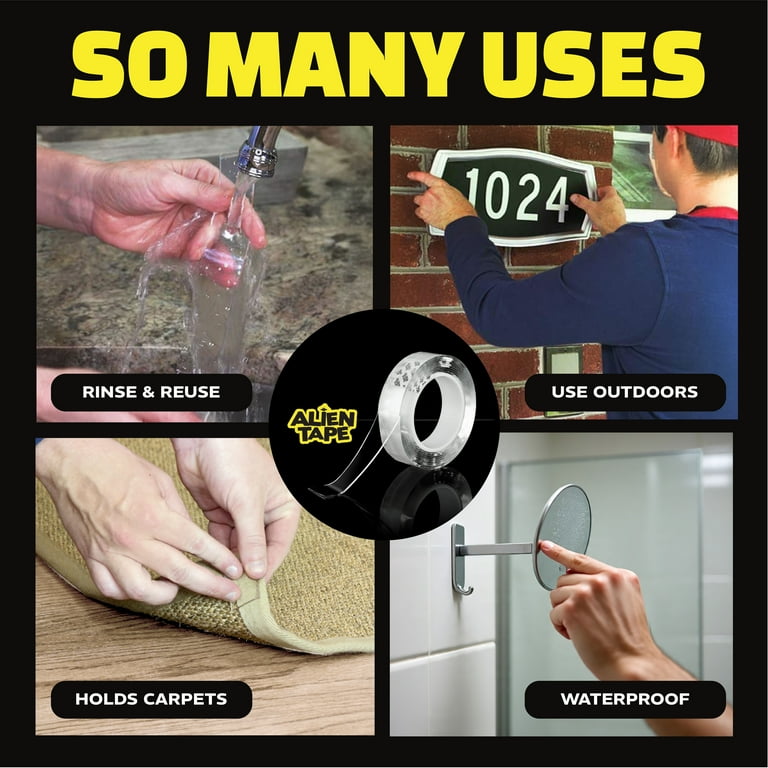
In commercial construction across Brazil, Vietnam, and the Middle East, Alien Tape serves as a critical temporary mounting solution for safety signage, electrical conduit, and lightweight fixtures on unfinished concrete and brick surfaces. The nano-grip technology eliminates the need for drilling into cured concrete, significantly accelerating site mobilization while preventing costly surface damage. For buyers in tropical climates, the tape’s weather-resistant properties ensure reliable adhesion despite high humidity and temperature fluctuations, though bulk procurement should prioritize UV-stabilized formulations for outdoor applications exceeding six months.
What Role Does Nano-Adhesive Technology Play in Lean Manufacturing Operations?
Manufacturing facilities across Africa and South America utilize Alien Tape for implementing 5S workplace organization methodologies, specifically for mounting tool shadow boards and temporary cable management systems on production machinery. The washable, reusable nature allows operations managers to reconfigure production lines rapidly without permanent modifications, supporting just-in-time manufacturing requirements essential for export-oriented industries. Buyers should verify the tape’s performance against industrial contaminants common in textile and assembly operations, including oil mist and textile dust, while ensuring load ratings accommodate vibration-prone environments typical of heavy manufacturing zones.
Why Are Exhibition Contractors Switching to Damage-Free Mounting Solutions?
The events industry throughout Europe and the Middle East increasingly relies on Alien Tape for constructing temporary exhibition
A stock image related to Alien tape.
3 Common User Pain Points for ‘Alien tape’ & Their Solutions
Scenario 1: Why Does Alien Tape Fail on Porous Surfaces in Tropical Climates?
問題だ: B2B buyers sourcing for construction and retail markets in humid regions (Brazil, Vietnam) or dusty environments (Middle East, Africa) frequently encounter adhesion failures when Alien Tape is applied to porous concrete, brick, or stone. Nano-grip technology often struggles with high humidity, temperature fluctuations, and particulate-coated surfaces common in emerging market job sites. This leads to product returns, damaged client relationships, and installation delays when mounting signage, fixtures, or temporary structures fails to meet performance expectations promised in marketing materials.
解決策 Implement mandatory surface preparation protocols requiring isopropyl alcohol cleaning to remove dust, oils, and moisture before application. For porous substrates like untreated brick or concrete, recommend complementary mechanical fasteners or surface sealant primers rather than relying solely on adhesive bonding. Request climate-specific technical data sheets from manufacturers verifying performance metrics for your region’s specific humidity and temperature ranges. Additionally, stock surface preparation kits as value-added accessories to ensure proper installation conditions and reduce failure rates in challenging environments.
Scenario 2: How Can Small Distributors Navigate High MOQs for Alien Tape?
問題だ: Small-to-medium distributors in emerging markets face significant capital constraints when confronted with inflexible minimum order quantities for Alien Tape wholesale purchases. Without transparent tiered pricing structures or private labeling options, buyers cannot adequately test regional demand or compete with established industrial adhesive brands carrying lower entry barriers. This creates inventory risk, limits ability to offer localized packaging, and prevents market penetration strategies that require agile stock management and brand differentiation for institutional clients.
解決策 Negotiate pilot program agreements featuring reduced MOQs (20-30% of standard bulk requirements) for initial 90-day market testing phases. Request sliding-scale pricing tiers based on quarterly volume commitments rather than upfront bulk purchases, allowing cash flow flexibility. Explore white-label partnerships for hospitality and property management sectors, enabling you to brand Alien Tape under your own label for institutional clients while building demand proof. This approach minimizes risk while establishing market presence before committing to exclusive distribution contracts or container-level orders.
Scenario 3: What Solutions Address
Strategic Material Selection Guide for Alien tape
When specifying fastening solutions for international procurement across African, South American, Middle Eastern, and European markets, understanding substrate compatibility is critical for Alien Tape’s nano-grip technology. While marketed as a universal solution, the acrylic gel-based nano-suction system performs variably across surface energy levels and porosity gradients encountered in diverse industrial environments. B2B buyers must evaluate specific material interactions to prevent project delays, ensure load-bearing compliance, and optimize cost-per-application ratios in settings ranging from humid Southeast Asian factories to dusty construction sites.
How Effective Is Alien Tape on Non-Porous Glass and Metal Surfaces?
On glass, polished aluminum, and stainless steel, Alien Tape achieves optimal performance through maximum surface contact with its microscopic suction pockets. These substrates allow the nano-grip technology to create vacuum seals ideal for temporary mounting of retail signage, IoT sensors, or exhibition displays in commercial spaces. The material’s transparency and clean removal characteristics make it preferable to mechanical fasteners for leased properties. However, B2B buyers should note that microscopic industrial dust or oxidation films common in manufacturing environments can significantly reduce adhesion, requiring rigorous isopropyl alcohol cleaning protocols prior to application. Procurement teams should verify that surface temperatures remain within 10°C to 40°C during application to ensure proper molecular adhesion of the nano-grip pockets.
What Challenges Arise When Bonding Alien Tape to Rough Masonry and Concrete?
Despite marketing claims, independent testing reveals significant limitations on unsealed brick, concrete, and stone surfaces prevalent in construction and outdoor event management. The porous, uneven topography prevents uniform suction cup engagement, resulting in bond failure under sustained loads exceeding 5kg within minutes. While the tape’s weather resistance suits temporary outdoor installations, the fibrous nature of masonry causes tape deformation and adhesive residue entrapment upon removal. For B2B applications involving these substrates, surface sealing or mechanical fastening remains the reliable standard, with Alien Tape serving only as supplementary positioning aid for non-structural, lightweight markers. Additionally, the alkaline nature of concrete can accelerate adhesive degradation, necessitating frequent inspection intervals for safety-critical temporary installations.
Does Alien Tape Provide Reliable Adhesion on Wood and Painted Drywall?
Wood and painted drywall present intermediate compatibility scenarios for procurement teams outfitting office spaces or residential developments. The tape conforms adequately to smooth painted surfaces and sealed wood finishes, supporting lightweight cable management systems and temporary decor mounting without curing time. However, the removal process risks damaging painted finishes or leaving gummy residues that require solvent cleaning, particularly on matte or eggshell paints. For unfinished timber, the tape’s adhesion weakens as wood fibers separate under load. B2B buyers should limit applications to items under 2kg and conduct patch tests on painted surfaces to assess substrate integrity. For high-traffic commercial environments, consider that repeated vibration from HVAC systems may gradually compromise the bond on drywall applications over time.
Can Alien Tape Secure Components to Low-Surface-Energy Plastics?
Engineering plastics like polyethylene (PE), polypropylene (PP), and polycarbonate pose significant challenges due to low surface energy that resists nano-suction mechanisms. While smooth PVC and acrylic surfaces demonstrate moderate success for temporary automotive trim or equipment labeling, curved polymer composites often experience edge lift in high-temperature environments. The tape’s flexibility benefits conformable applications, yet UV exposure in outdoor settings may degrade the nano-grip structure faster than traditional VHB tapes. Procurement specialists should specify Alien Tape only for short-term plastic bonding in climate-controlled environments, avoiding critical load-bearing applications on polymer substrates. Surface treatment with corona or flame treatment methods can improve adhesion on polyolefin plastics, though this adds process complexity that may negate the tape’s convenience advantage.
| 素材 | Typical Use Case for Alien tape | 主な利点 | Key Disadvantation/Limitation | 相対コスト |
|---|---|---|---|---|
| Glass & Polished Metal | Temporary mounting of retail signage, IoT sensors, exhibition displays | Superior nano-suction grip; clean removal without residue | Requires pristine surface prep; dust-sensitive | Low-Moderate |
| Brick & Concrete | Construction site markers, temporary outdoor event signage | Eliminates drilling; weather-resistant | Inconsistent adhesion on porous surfaces; load failure risk | 中・高 |
| Wood & Painted Drywall | Interior cable management, lightweight decor mounting | Immediate bond; no curing time | Risk of paint damage; reduced capacity on textured surfaces | 低い |
| Plastic & Polymer Composites | Automotive trim, equipment labeling, temporary fixes | Conforms to curved surfaces; chemical resistant | Poor adhesion to low-energy plastics (PE/PP); UV degradation | 中程度 |
A stock image related to Alien tape.
In-depth Look: Manufacturing Processes and Quality Assurance for Alien tape
For B2B procurement teams evaluating adhesive solutions for construction, retail, or industrial distribution, understanding the technical backbone of nano-grip tape technology is essential for mitigating supply chain risks. While consumer marketing emphasizes “defying gravity,” the reality of manufacturing these products involves precise polymer science, controlled micro-molding processes, and rigorous validation protocols that determine whether bulk shipments will perform consistently across diverse climates and surface applications.
What Raw Materials Define Alien Tape’s Nano-Grip Performance?
The distinctive holding power attributed to Alien Tape stems from its gel-based acrylic polymer matrix rather than traditional pressure-sensitive adhesives (PSAs). Manufacturing facilities typically utilize medical-grade silicone or advanced acrylic copolymers formulated to create microscopic suction pockets—often ranging from 10 to 100 microns in diameter—across the tape surface.
For B2B buyers sourcing from OEM facilities, material certification becomes critical. The base polymer must maintain viscoelastic properties across temperature ranges (-20°C to 80°C) to prevent hardening in cold storage or liquefaction in tropical climates. Reputable manufacturers provide Material Safety Data Sheets (MSDS) documenting the absence of plasticizers that could migrate and cause surface staining—a particular concern for glass and painted wall applications in commercial settings. Additionally, the backing film (usually PET or PVC) requires UV stabilizers to prevent degradation during outdoor mounting applications, ensuring the tape maintains structural integrity for the claimed duration.
How Is the Nano-Suction Structure Manufactured at Scale?
The production of nano-grip surfaces relies on precision molding or laser-etching techniques that create the microscopic suction arrays visible only under electron microscopy. In high-volume manufacturing, liquid silicone or acrylic gel is poured onto master templates featuring inverse pyramid or dome-shaped micro-cavities, then cured under controlled temperature and humidity conditions to preserve structural fidelity.
B2B buyers should inquire about cavity density specifications—typically measured in structures per square centimeter. Higher density (exceeding 10,000 structures/cm²) generally correlates with enhanced holding capacity on smooth surfaces like glass and metal, though this may reduce performance on porous materials like brick or unpainted concrete. The double-sided construction requires lamination processes that bond two nano-structured surfaces with a flexible core carrier, demanding alignment precision within ±0.1mm to prevent edge curling during application. Facilities utilizing automated optical inspection (AOI) systems during lamination demonstrate superior batch consistency compared to manual assembly lines.
What Quality Control Protocols Ensure Load-Bearing Reliability?
Independent testing reveals significant variance between marketed load capacities (often cited at 17.5 lbs per strip) and real-world performance, particularly on rough or dusty substrates. Robust manufacturing facilities implement ASTM D3654 (shear adhesion testing) and ASTM D3330 (peel adhesion testing) protocols at multiple production stages.
For B2B procurement, requesting test reports based on ISO 29862 standards provides objective verification of peel strength. Quality assurance teams should conduct destructive testing on sample batches from each production run, measuring not just initial tack but sustained load capacity over 24, 48, and 72-hour periods. This temporal testing is crucial because nano-grip tapes often exhibit “creep” behavior under constant load, particularly in high-humidity environments. Manufacturers maintaining Six Sigma quality standards typically achieve defect rates below 3.4 per million units, essential for buyers distributing across regions where product returns are logistically expensive.
How Do Manufacturers Validate Weather Resistance and Reusability Claims?
The “wash and reuse” functionality heavily marketed to consumers presents significant manufacturing challenges. For the tape to maintain adhesion after rinsing, the polymer formulation must resist contamination by dust particles and oils while allowing water to evacuate from micro-structures without leaving mineral deposits.
B2B buyers should verify that suppliers conduct accelerated aging tests per ASTM D573 standards, exposing samples to 70°C heat and 85% relative humidity for extended periods to simulate tropical climates. Additionally, reusability validation requires cyclic testing—applying, removing, washing, and reapplying the tape through 50+ cycles while measuring retention of original peel strength. Facilities lacking environmental simulation chambers cannot reliably guarantee performance across the Middle Eastern desert heat or Southeast Asian monsoon conditions. Requesting wash-test documentation showing <15% degradation in adhesion after five cleaning cycles indicates manufacturing processes capable of supporting warranty claims.
What Certifications Should B2B Buyers Demand for International Distribution?
For distribution across Africa, South America, the Middle East, and Europe, compliance documentation prevents customs delays and liability issues. Essential certifications include REACH compliance for European markets (ensuring no SVHC substances above 0.1% concentration), RoHS certification for electronics mounting applications, and ISO 9001:2015 quality management system accreditation.
In regions with extreme temperature variations, such as Brazil’s interior or the Middle East, requesting specific flammability ratings (UL 94 HB or better) becomes prudent for construction applications. For food-processing or medical facility applications, FDA 21 CFR 175.105 compliance regarding indirect food contact adhesives provides additional marketability. B2B buyers should also verify that manufacturing facilities maintain social compliance certifications (SA8000 or BSCI) to meet increasingly stringent ESG requirements from European retail partners.
How Can Buyers Audit Production Consistency Across Batches?
When sourcing nano-grip tapes in bulk, batch-to-batch consistency determines retail success and brand reputation. Implementing incoming quality control (IQC) procedures that include rheological testing of raw gel viscosity and microscopic surface analysis of the nano-structures prevents inventory surprises.
Requesting Certificate of Analysis (CoA) documents for each shipment allows verification that thickness tolerances remain within ±5% and that surface energy levels (measured in dynes/cm) match specifications required for target substrates. For large-scale distributors, conducting annual factory audits focusing on the curing oven temperature uniformity and cleanroom classification (ISO Class 7 or better preferred) ensures that environmental contaminants do not compromise the micro-suction structures during manufacturing.
Strategic procurement of Alien Tape requires looking beyond infomercial demonstrations to validate the material science and quality systems underlying the product. By demanding specific testing protocols, environmental certifications, and batch consistency documentation, B2B buyers can secure inventory that performs reliably across the diverse surface conditions and climate challenges present in emerging markets, transforming a novelty consumer item into a viable professional-grade mounting solution.
Practical Sourcing Guide: A Step-by-Step Checklist for ‘Alien tape’
Procuring Alien tape for commercial distribution requires moving beyond consumer-level marketing claims to verify actual performance specifications. This checklist equips procurement teams with actionable verification steps to assess nano-grip adhesive technology, validate load-bearing capacities, and ensure compliance with regional import standards—mitigating risks associated with inconsistent adhesion and residue claims before committing to bulk orders.
1. Verify Manufacturer Credentials and Nano-Grip Technology Authenticity
Begin by distinguishing between OEM manufacturers possessing proprietary nano-suction technology and trading companies repackaging standard acrylic foam tapes. Request technical data sheets detailing microscopic suction pocket density and gel composition. Authentic Alien tape utilizes specialized nano-grip polymers distinct from conventional double-sided adhesives; verify ISO 9001 certification and request sample batches to test against generic alternatives that mimic “defies gravity” marketing language without delivering comparable shear strength.
2. How Do You Validate Weight Capacity Claims Through Pre-Shipment Testing?
While marketing materials claim up to 17.5 lbs per strip, independent testing reveals significant variance based on surface texture and load duration. Implement pre-shipment verification requiring suppliers to demonstrate sustained load-bearing over 24-hour periods using your specific use cases—whether mounting glass panels or securing tools to concrete. Specify third-party testing for shear strength to ensure performance beyond the six-minute failure threshold observed with heavy objects, particularly for industrial applications where liability concerns outweigh consumer convenience.
3. What Surface Compatibility Testing Should You Conduct for Your Target Markets?
Surface performance varies dramatically between polished glass, porous brick, and painted metal—materials common in construction across Africa, the Middle East, and South America. Before finalizing orders, conduct compatibility matrices testing adhesion on locally sourced substrates. Document that while the tape grips non-porous surfaces effectively, textured concrete and rough-hewn brick may require additional surface preparation, preventing costly returns from end-users expecting universal adhesion on unfinished masonry.
4. Evaluate Washability and Residue Claims for Reusable Applications
Despite “leaves no residue” marketing claims, field tests indicate gummy adhesive transfer during removal from painted and varnished surfaces. For B2B clients emphasizing reusability, verify performance through multiple wash-and-reuse cycles using warm water protocols. Inspect for adhesive degradation and surface staining after three removal cycles. Establish clear residue liability terms in procurement contracts, specifying acceptable cleanliness standards post-removal for commercial rental or temporary mounting applications.
5. Confirm Weather Resistance Specifications for Outdoor Industrial Use
For distribution in humid climates like Vietnam or coastal Brazil, validate weather-resistant claims beyond marketing language. Request UV exposure testing and humidity cycle certifications proving nano-grip technology maintains adhesion during monsoon seasons. Verify the gel composition resists hardening in cold storage or melting in high-temperature shipping containers, ensuring product arrives at destination ports with intact adhesive properties suitable for outdoor signage and construction site applications.
6. Assess Packaging Integrity and Shelf Life for International Logistics
Nano-grip adhesives degrade when exposed to dust and pressure during ocean freight. Specify individual roll packaging with protective film layers and rigid core supports to prevent premature activation of microscopic suction pockets. Confirm 24-month shelf life guarantees with accelerated aging test reports, and require moisture-barrier packaging for tropical destinations. Calculate landed costs including volume pricing structures versus industrial bulk discounts to optimize container utilization rates and minimize damage claims upon arrival.
A stock image related to Alien tape.
Comprehensive Cost and Pricing Analysis for Alien tape Sourcing
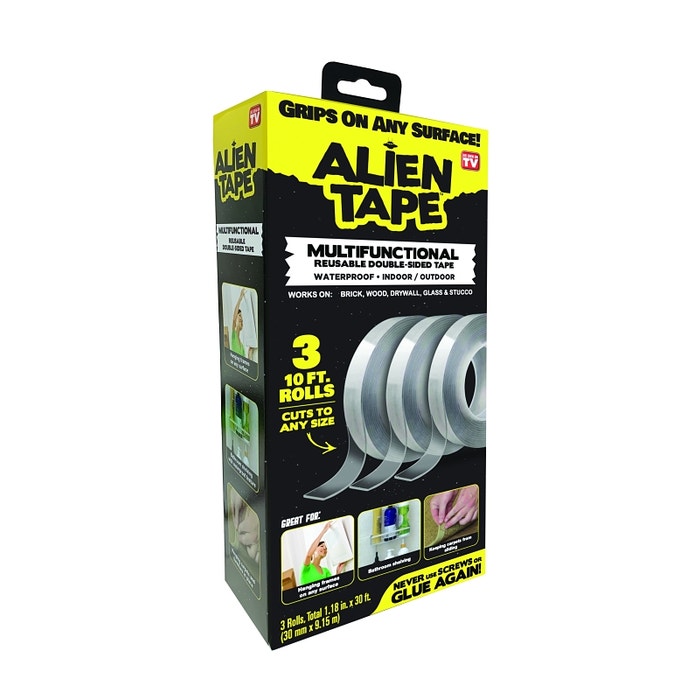
When sourcing Alien Tape for commercial resale or industrial application, understanding the true cost structure requires looking beyond the advertised $19.99 retail price point. For B2B buyers operating across diverse markets—from São Paulo to Lagos to Dubai—factors including volume scalability, quality inconsistency risks, and international logistics can significantly impact total landed costs and profit margins. Unlike traditional adhesive products, this nano-grip technology presents unique procurement challenges related to performance variability and climate sensitivity that directly affect inventory planning and warranty exposure.
What Factors Drive Alien Tape Pricing in International Bulk Markets?
The baseline consumer pricing of approximately $20 USD for three-roll sets establishes a reference point, but wholesale negotiations typically begin at 40-60% below retail for container-level orders. However, the “double offer” structure seen in direct-to-consumer channels—where second sets ship at 50% discount—reveals substantial margin flexibility that savvy procurement teams can leverage. For Middle Eastern and African distributors, currency fluctuation hedging becomes critical when negotiating multi-month contracts, as the tape’s gel-based nano-grip technology requires specific storage conditions that may incur climate-controlled warehousing costs. Additionally, payment terms significantly impact working capital; manufacturers often require 30% deposits for international orders, with balance due upon Bill of Lading release. Letters of credit add 1-3% to transaction costs but provide essential security for cross-border deals.
How Does Unit Cost Scale with Volume Orders?
Standard MOQs (Minimum Order Quantities) from manufacturers typically start at 5,000-10,000 roll equivalents for private labeling opportunities, dropping per-unit costs to $3-5 per roll depending on specifications. European buyers should factor in CE compliance certification costs, which add $0.50-$1.20 per unit but are essential for EU market entry. South American importers must calculate Mercosur tariff classifications—adhesive tapes typically fall under HS Code 3919.10, attracting duties ranging from 12-18% depending on the specific country of origin. Volume commitments beyond 20,000 units often unlock exclusive distribution rights for specific territories, though these agreements typically require annual minimum purchase guarantees that tie up significant capital. For African markets, SADC and ECOWAS trade agreements may offer preferential rates if sourcing from member states.
Are There Hidden Costs Beyond the Per-Roll Price?
Independent testing reveals significant performance variability that directly affects total cost of ownership. While marketed as reusable and washable with 17.5-pound holding capacity, field tests indicate adhesion failures on porous surfaces like brick within six minutes under moderate loads, suggesting higher replacement rates than advertised. B2B buyers should budget for 15-25% excess inventory to account for quality inconsistencies and temperature-sensitive adhesive degradation during ocean freight. Additionally, the tape’s difficulty in cutting (noted in consumer reviews) may necessitate specialized dispensing equipment for commercial applications, adding $2,000-$5,000 in operational setup costs. The 30-day money-back guarantee, while consumer-friendly, creates reverse logistics complexities that distributors must price into their models, particularly given the product’s susceptibility to dust contamination that renders it non-resalable.
How Can Regional Buyers Optimize Total Landed Costs?
For Vietnamese and Brazilian distributors, consolidating shipments through regional hubs like Singapore or Miami reduces per-unit freight costs by 30-40% compared to direct small-parcel shipping. Negotiating 30-45 day payment terms rather than advance payment structures improves cash flow, particularly given the 30-day money-back guarantee window that manufacturers offer. Smart buyers also request batch testing protocols before full container acceptance, ensuring the nano-grip technology performs consistently across different climate conditions—critical for preventing costly returns in humid tropical markets or arid Middle Eastern environments. Establishing local quality-control checkpoints upon arrival prevents distributing defective batches that could damage brand reputation and trigger expensive warranty claims. For European buyers, warehousing in Rotterdam or Hamburg provides efficient distribution access while minimizing customs clearance delays.
By analyzing these cost layers—from tariff classifications to quality-control contingencies—procurement teams can develop realistic pricing models that account for Alien Tape’s innovative but occasionally inconsistent performance profile, ensuring sustainable margins across diverse international markets while mitigating the financial risks associated with adhesive technology that may not always defy gravity as advertised.
Alternatives Analysis: Comparing Alien tape With Other Solutions
When evaluating mounting solutions for commercial facilities across diverse climates—from the humid tropics of Vietnam to the temperature-variable industrial zones of Brazil—procurement teams must weigh immediate convenience against long-term structural integrity and total cost of ownership. While Alien Tape utilizes nano-grip technology marketed for tool-free installation, traditional industrial fastening methods remain relevant for specific load-bearing applications where failure carries operational or liability risks.
How Does Alien Tape Compare to Traditional Industrial Fastening Methods?
| 比較の側面 | Alien Tape (Nano-Grip) | メカニカル・ファスニング・システム | Industrial Acrylic Foam Tapes |
|---|---|---|---|
| Load Capacity | Up to 17.5 lbs per strip (consumer grade) | 50+ lbs per anchor (structural grade) | 30-100 lbs per square inch |
| Installation Time | Immediate (peel-and-stick) | 5-15 minutes per anchor (drilling required) | 24-72 hour curing period |
| Surface Damage | None (theoretically removable) | Permanent holes/damage | Permanent bond (removal damages substrate) |
| Weather Resistance | Moderate (washable but limited long-term data) | Excellent (metal/galvanized options) | Excellent (-40°F to 200°F+ range) |
| 申請1件あたりのコスト | $0.15-0.30 per linear foot | $0.50-2.00 per fastener (including labor) | $1.50-4.00 per square foot |
| Reusability | Claimed (washable) | N/A | N/A |
| ベスト・ユースケース | Temporary fixtures, lightweight decor | Heavy machinery, safety equipment | Permanent signage, architectural panels |
When Is Mechanical Fastening Superior to Alien Tape for Industrial Applications?
Mechanical fastening systems—including masonry anchors, toggle bolts, and structural screws—remain the preferred solution for heavy-duty commercial applications where seismic activity or humidity fluctuations challenge adhesive performance. Unlike Alien Tape’s nano-grip suction mechanism, which independent testing suggests may release under sustained shear loads on porous surfaces like brick or concrete, mechanical anchors distribute weight through physical substrate penetration. For B2B buyers managing manufacturing facilities in the Middle East or mining operations in Africa, mechanical fasteners provide predictable load ratings required for safety compliance and insurance validation. While installation requires specialized labor and creates permanent substrate damage, the total cost of ownership favors mechanical solutions for equipment exceeding 20 pounds or requiring vibration resistance.
How Do Industrial Acrylic Foam Tapes Compare to Nano-Grip Solutions for Commercial Mounting?
Industrial-grade acrylic foam tapes, such as 3M VHB or comparable Tesa and Nitto alternatives common in European and Asian markets, represent the professional-grade counterpart to consumer-oriented nano-grip tapes. These viscoelastic acrylic adhesives create permanent chemical bonds rather than mechanical suction, offering superior temperature resistance (-40°C to 150°C) and UV stability essential for outdoor architectural cladding and transportation equipment. While Alien Tape emphasizes removability and washability—features attractive for temporary retail displays in shopping centers—industrial foam tapes prioritize permanent structural adhesion with documented shear strength for metal, glass, and powder-coated surfaces. For procurement teams evaluating signage installation or HVAC mounting, industrial acrylic tapes provide validated engineering data necessary for warranty compliance, whereas nano-grip solutions remain suitable only for temporary, low-weight interior applications where surface preservation outweighs holding power requirements.
Essential Technical Properties and Trade Terminology for Alien tape
When sourcing advanced mounting solutions for international distribution across construction, retail display, and industrial sectors, understanding the material science behind nano-adhesive technologies is critical for quality assurance and application suitability. Unlike conventional pressure-sensitive adhesives, Alien Tape utilizes physical micro-suction rather than chemical bonding, necessitating distinct evaluation criteria for B2B procurement teams.
What Are the Critical Load-Bearing and Material Specifications for Nano-Grip Tapes?
Shear Strength and Load Distribution: Alien Tape specifications indicate approximately 17.5 lbs (7.9 kg) per strip under static conditions, though B2B buyers must distinguish between tensile strength (vertical pull) and shear strength (lateral force). Load capacity varies significantly across substrate types, with non-porous surfaces like glass and polished metal achieving maximum ratings while porous materials like unsealed brick demonstrate reduced holding power.
Micro-Suction Architecture: The technology relies on thousands of microscopic suction pockets that create vacuum-based adhesion rather than chemical bonding. This nano-grip mechanism requires smooth, clean surfaces for optimal performance and enables the characteristic residue-free removal that distinguishes it from traditional foam tapes or structural adhesives.
Environmental Operating Parameters: Weather-resistant formulations allow deployment across indoor and outdoor applications, with performance maintained through temperature fluctuations and humidity exposure. Procurement teams should request specific data on temperature tolerance ranges and UV stability ratings to ensure suitability for regional climate conditions in target markets.
Reusability Cycle Life: The washable design supports multiple reuse cycles when rinsed with warm water and air-dried completely. For bulk purchasing decisions, buyers should request adhesion degradation data after repeated wash cycles to calculate accurate cost-per-use metrics versus single-use adhesive alternatives.
Substrate Compatibility Matrix: Performance correlates directly with surface energy levels. High-surface-energy materials (glass, glazed tile, metal) achieve optimal bonds, while low-energy or porous substrates (concrete, untreated wood, fabric) may require surface preparation or demonstrate significantly reduced holding capacity.
What Industry Terminology Defines Quality Standards for Removable Mounting Solutions?
Nano-Suction or Micro-Grip Technology: Industry terminology describing physical adhesion through microscopic suction cups rather than chemical bonding, enabling clean removal and reusability without adhesive transfer.
Double-Sided Mounting Tape: Classification for pressure-sensitive tapes coated on both sides with adhesive or gripping mechanisms, designed for invisible fastening of objects to walls, fixtures, or other surfaces.
Working Load Limit (WLL): The maximum safe working weight under specified conditions, distinct from ultimate breaking strength. Critical for compliance with safety standards in commercial display and construction applications.
Surface Energy Compatibility: Technical measure of how well a substrate supports adhesion. High-energy surfaces (metals, glass) promote strong bonds, while low-energy surfaces (polypropylene, unsealed concrete) resist adhesion without priming.
Residue-Free Removal: Quality standard indicating clean detachment without surface damage or adhesive residue, essential for temporary installations in rental properties, exhibition spaces, and leased commercial environments.
Temperature Cycling Resistance: Performance metric describing adhesion stability through freeze-thaw cycles and thermal expansion, vital for outdoor construction and automotive applications in variable climates.
Navigating Market Dynamics and Sourcing Trends in the Alien tape Sector
The global adhesive solutions market is undergoing significant transformation as nano-grip technologies challenge traditional mechanical fastening across industrial, retail, and construction sectors. For international B2B buyers operating in diverse climates—from the humid tropics of Vietnam to the arid regions of the Middle East—sourcing products like Alien Tape requires navigating a complex landscape where consumer marketing claims often diverge from industrial performance realities. Strategic procurement demands technical verification of load-bearing capacities and climate resilience, particularly when independent testing reveals discrepancies between advertised specifications and actual adhesion performance on porous substrates.
Which Regional Markets Are Driving Demand for Nano-Adhesive Mounting Solutions?
Emerging economies across Africa, South America, and Southeast Asia are experiencing accelerated adoption of drill-free mounting technologies, driven by booming retail infrastructure and temporary construction methodologies. Brazilian exhibition contractors and Vietnamese retail fixture installers increasingly favor these solutions for rapid deployment scenarios where surface preservation is paramount. However, B2B procurement teams must account for performance variability across climate zones; independent stress tests demonstrate that while nano-grip tapes adhere effectively to glass and metal, they frequently fail to maintain grip on brick and concrete surfaces common in tropical construction—often dropping loads within six minutes of application. Buyers should prioritize suppliers providing region-specific adhesion data and humidity-resistant formulations rather than relying on generic marketing claims of universal surface compatibility.
How Are Supply Chain Disruptions Reshaping Alien Tape Procurement Strategies?
The dominant direct-to-consumer distribution model—characterized by promotional pricing around $19.99 for three-roll sets—has created procurement fragmentation that challenges traditional B2B volume purchasing. Forward-thinking buyers are circumventing retail markup structures by establishing direct OEM relationships with polymer manufacturers in East Asia, enabling private-label opportunities and customized width specifications for industrial applications. This shift requires sophisticated quality assurance frameworks, as unbranded alternatives often exhibit the “gummy residue” and reusability failures documented in field tests, where tapes become contaminated and lose tack after initial removal. Successful procurement strategies now incorporate third-party laboratory verification of nano-grip efficacy before committing to bulk orders, ensuring that weather-resistant claims hold up under actual outdoor exposure conditions.
What Sustainability Credentials Should B2B Buyers Prioritize When Sourcing Reusable Adhesive Tapes?
While reusability is marketed as a primary sustainability benefit, B2B buyers must critically evaluate lifecycle performance against circular economy principles. Practical application in dusty industrial environments—common in Middle Eastern manufacturing zones and African construction sites—often compromises the tape’s claimed washability, with microscopic suction pockets clogging and rendering the product single-use despite manufacturer claims. Sustainable procurement should instead emphasize material composition transparency, seeking halogen-free polymer bases and recyclable silicone adhesives that comply with EU REACH regulations and emerging Brazilian environmental standards. Additionally, buyers should assess packaging minimization strategies, as the individual roll packaging typical of consumer marketing generates excessive plastic waste at industrial procurement scales.
How Can Procurement Teams Ensure Ethical Manufacturing Standards in Low-Volume Adhesive Production?
The specialized manufacturing processes required for nano-grip technology often concentrate production in facilities with limited supply chain visibility. B2B buyers must conduct rigorous due diligence beyond standard ISO 9001 certifications, specifically verifying SA8000 social accountability compliance and ISO 14001 environmental management systems. Particular scrutiny should apply to the chemical etching processes used to create microscopic suction pockets, ensuring these do not involve hazardous substances prohibited under European Chemicals Agency (ECHA) guidelines. Establishing audit protocols for raw material sourcing—particularly the acrylic and silicone polymers essential for weather-resistant adhesion—protects against labor rights violations while ensuring compliance with Vietnam’s stringent industrial chemical regulations and the GCC’s emerging product safety frameworks. Long-term supplier agreements should mandate batch-specific material safety data sheets (MSDS) and carbon footprint disclosures to meet increasingly stringent ESG reporting requirements across European and African markets.
Frequently Asked Questions (FAQs) for B2B Buyers of Alien tape
1. What is the minimum order quantity for Alien tape wholesale purchases in emerging markets?
Standard MOQs typically begin at 1,000 units for authorized distributors, with full container load (FCL) quantities of 20ft or 40ft unlocking preferential freight rates and landed cost efficiencies. For initial market entry in regions like Africa, Vietnam, or Brazil, manufacturers often accommodate pilot orders of 500 units to validate regional demand before committing to larger annual contracts. Volume commitments exceeding 10,000 units annually generally qualify for exclusive territorial rights and marketing development funds.
2. How does Alien tape compare to traditional industrial adhesives for commercial mounting applications?
Unlike permanent chemical adhesives requiring curing time and specialized surface preparation, Alien tape utilizes nano-grip suction technology for immediate bonding without substrate damage or residue. While industrial epoxies offer superior shear strength for structural loads, Alien tape excels in temporary installations, retail fixture mounting, and rental property applications where clean removability is essential. B2B buyers should note that performance varies significantly on porous surfaces like untreated brick or concrete, where mechanical fasteners may still be necessary for loads exceeding 8-10 kg.
3. Are there exclusive distributor pricing tiers available for Alien tape bulk orders?
Yes, tiered pricing structures typically reward volume commitment with margin improvements at 5,000, 10,000, and 50,000+ unit thresholds annually. Exclusive distribution agreements for specific countries or regions usually require minimum annual commitments of 20,000 units and include co-op marketing allowances, localized POS materials, and technical training support. Emerging market distributors should negotiate container-mixed product loads to optimize shipping costs from manufacturing facilities.
4. Can Alien tape be private labeled for retail brand partnerships in international markets?
Comprehensive OEM/ODM services allow for custom branding, localized packaging dimensions, and private label roll configurations tailored to specific retail channels. Partners can customize backing card designs, integrate country-specific barcodes, and include multilingual instruction inserts while maintaining the proprietary nano-grip adhesive formulation. Lead times for private label production typically range 60-90 days, requiring minimum runs of 3,000 units per SKU to justify tooling and printing setup costs.
5. How do I ensure Alien tape performs reliably on porous surfaces like brick in humid climates?
Surface preparation is critical—surfaces must be clean, completely dry, and free of dust, oils, or oxidation before application. In high-humidity environments common in Brazil or Southeast Asia, allow 24 hours of cure time before loading, and use multiple overlapping strips rather than single strips for loads approaching the claimed 17.5 lbs capacity. B2B buyers should conduct localized adhesion testing on representative substrates, as textured or porous surfaces may require 30-50% more tape surface area than smooth substrates to achieve comparable hold strength.
6. What storage conditions prevent degradation of Alien tape during tropical shipping and warehousing?
Alien tape maintains optimal adhesion for 24 months when stored in climate-controlled environments between 10°C and 25°C with relative humidity below 60%. For container shipping through tropical zones or extended warehousing in Middle Eastern or African markets, moisture barrier packaging with silica gel desiccants is essential to prevent premature activation of the nano-grip surface. Implementing FIFO (First In, First Out) inventory rotation and avoiding direct sunlight exposure ensures maximum sell-through performance and prevents edge curling or adhesive migration.
7. Which regulatory certifications does Alien tape require for EU and Middle East import compliance?
The product complies with EU REACH regulations regarding chemical safety and substance restrictions, making it suitable for distribution throughout Europe. For GCC countries including Saudi Arabia and UAE, compliance with SASO (Saudi Standards, Metrology and Quality Organization) and G-Mark certification is required for customs clearance. The acrylic adhesive formulation is typically RoHS compliant for electronics mounting applications, though buyers should verify current MSDS (Material Safety Data Sheets) and Certificate of Origin documentation accompanies each shipment to prevent port delays.
8. How can facility managers leverage reusable Alien tape to reduce commercial maintenance costs?
The washable, reusable nature allows facility management companies to redeploy mounting solutions during office reconfigurations, seasonal retail displays, or exhibition setups without material waste or wall damage. This sustainability feature supports corporate ESG reporting requirements while reducing per-use costs by 60-70% compared to single-use adhesive solutions or mechanical drilling methods. Property management firms particularly benefit from eliminated wall repair costs between tenant turnovers and reduced security deposit disputes related to mounting damage in commercial and residential units.
重要な免責事項および利用規約
⚠️ 重要な免責事項
メーカー、技術仕様、市場分析に関する内容を含め、本ガイドラインで提供される情報は、情報提供と教育目的のみのものです。専門的な調達アドバイス、財務アドバイス、または法的アドバイスを提供するものではありません。.
B2Bバイヤーは、独自の徹底的なデューデリジェンスを行う必要がある。 をご覧の上、ご購入をお決めください。本ガイドに記載された情報を信頼した場合のリスクは、読者が単独で負うものとします。.
Top 2 Alien Tape Manufacturers & Suppliers List
1. Jiuding – Alien Tape Outdoors
ドメイン jiudingtape.com
登録:2023年(3年間)
はじめに Alien Tape Outdoors is a versatile, durable adhesive tape manufactured by Jiangsu Jiuding Tape Technology Co., Ltd. for outdoor fixing and mounting needs. Designed to secure camping gear, garden decorations, and various outdoor items, it provides a strong, weather-resistant bond without requiring nails, screws, or causing surface damage. The tape is produced using state-of-the-art technology and h…
2. All Foam Tape – Double Sided Alien Tape
ドメイン allfoamtape.com
Registered: 2019 (7 years)
はじめに This company, All Foam Tape – Double Sided Alien Tape, is a notable entity in the market.
Strategic Sourcing Conclusion and Outlook for Alien tape
While Alien Tape offers compelling convenience for tool-free mounting, strategic procurement requires balancing innovation against verified performance metrics. Independent stress testing reveals significant limitations under sustained heavy loads, positioning this nano-adhesive as a specialized solution rather than a universal fastening replacement.
Is Alien Tape Suitable for Heavy-Duty Industrial Applications?
Despite marketing claims of exceptional bonding strength, documented performance indicates optimal utility for loads under 5 kg on clean, non-porous surfaces. For industrial buyers, this restricts applications to temporary fixtures, lightweight signage, and organizational systems rather than structural mounting. Procurement teams should mandate mechanical anchoring for permanent installations exceeding 2 kg to mitigate liability risks.
What Should International B2B Buyers Evaluate Before Bulk Purchasing?
Buyers operating in high-humidity markets like Brazil or Vietnam must verify weather-resistant claims through localized batch testing, as nano-suction effectiveness degrades significantly with surface moisture and dust—common challenges in Middle Eastern and African industrial environments. Negotiate comprehensive B2B warranty terms beyond standard 30-day consumer guarantees, ensuring quality consistency across bulk shipments and established protocols for defective batch returns.
How Will Nano-Adhesive Technology Impact Future Procurement Strategies?
Alien Tape represents an emerging category of reusable mounting solutions gaining traction in facilities management and retail display sectors. However, current technological limitations suggest hybrid sourcing strategies—leveraging nano-tapes for temporary, non-critical applications while reserving mechanical fasteners for permanent fixtures—will deliver optimal risk-adjusted value through 2025.