Introduction: Navigating the Global Market for Heavy duty cloth tape
Sourcing heavy-duty cloth tape that meets rigorous industrial standards while navigating complex international supply chains presents a significant procurement challenge for B2B buyers across diverse markets. Whether securing cargo in São Paulo, reinforcing theatrical rigging in Berlin, or repairing heavy machinery textiles in Dubai, procurement teams face critical decisions balancing adhesive performance, regulatory compliance, and supplier reliability against volatile shipping costs and quality inconsistencies that can halt production lines.
What challenges do international buyers face when selecting industrial fabric tapes?
The global marketplace offers myriad adhesive solutions, yet distinguishing between commodity-grade masking tapes and genuine heavy-duty cloth reinforced options requires technical expertise. Buyers frequently encounter specification mismatches, where products marketed as “heavy-duty” fail under load-bearing conditions or extreme temperatures common in African logistics corridors or Middle Eastern construction sites. Additionally, navigating certification requirements across Brazilian, German, and other European regulatory frameworks demands precise documentation that many suppliers struggle to provide consistently, creating compliance risks.
How does this guide optimize your heavy-duty tape procurement strategy?
This comprehensive resource examines critical selection criteria including woven backing durability, natural rubber versus synthetic adhesive formulations, and tensile strength ratings essential for upholstery, carpet installation, and industrial bundling applications. We analyze application-specific requirements—from temporary theatrical fixes to permanent automotive interior solutions—while providing robust frameworks for vetting manufacturers, evaluating total cost of ownership, and ensuring compliance with regional safety standards across your target markets.
Specifically tailored for procurement professionals in Brazil, Germany, and emerging markets across Africa, South America, and the Middle East, this guide equips you with actionable insights to mitigate supply chain risks, negotiate favorable terms, and establish quality benchmarks that align with your operational demands. By translating complex technical specifications into strategic procurement decisions, we empower you to secure reliable adhesive partnerships that drive operational efficiency and reduce downtime across continental operations.
Understanding Heavy duty cloth tape Types and Variations
| タイプ名 | 主な特徴 | 主なB2Bアプリケーション | バイヤーのための簡単な長所と短所 |
|---|---|---|---|
| Poly-Coated Industrial Duct Tape | Polyethylene film laminated to woven scrim; aggressive synthetic rubber adhesive; waterproof backing; tensile strength typically 20+ lbs/inch | HVAC sealing, construction bundling, heavy-duty packaging, temporary pipe repair, outdoor weatherproofing | Pros: Superior moisture resistance; versatile across substrates; high tensile strength Cons: May leave adhesive residue on removal; glossy finish unsuitable for aesthetic applications |
| Matte Gaffer Tape (Entertainment Grade) | Vinyl-coated cloth backing; non-reflective matte finish; clean removal properties; hand-tearable; residue-free for 48+ hours | Film/TV production, stage setup, cable management, exhibition marking, temporary fixture mounting in corporate events | Pros: No residue removal; blends with backgrounds; easy hand-tearing; safe on painted surfaces Cons: Premium pricing compared to standard duct tape; limited water resistance |
| Double-Sided Heavy Duty Cloth Tape | Woven cloth carrier with aggressive pressure-sensitive adhesive on both sides; high shear strength; dimensional stability under heavy loads | Carpet installation, exhibition flooring, textile manufacturing assembly, temporary industrial bonding, mounting heavy fabrics | Pros: Eliminates mechanical fasteners; provides clean bonded edges; high load capacity Cons: Requires precise initial application; temperature-sensitive during installation |
| Reinforced Canvas Repair Tape | Heavy cotton or polyester woven backing; flexible conformability; aggressive synthetic rubber adhesive; UV-stabilized options available | Tarpaulin repair, tent manufacturing, upholstery restoration, agricultural covers, marine sail repair, flexible truck curtain mending | Pros: Moves with substrate preventing edge lift; conforms to irregular surfaces; durable in extreme temperatures Cons: Limited waterproofing compared to poly-coated variants; requires color matching for visible repairs |
What distinguishes industrial poly-coated duct tape from standard variants?
Industrial poly-coated duct tape represents the heavy-duty evolution of general-purpose cloth tapes, engineered specifically for B2B procurement in construction, HVAC, and logistics sectors across diverse climates. Characterized by a polyethylene film laminated to woven scrim, this variation offers superior moisture resistance and tensile strength often exceeding 20 lbs per inch, making it suitable for outdoor bundling, temporary weatherproofing, and aggressive surface bonding. For buyers sourcing from humid climates like Brazil or West Africa, prioritize tapes with UV stabilizers and synthetic rubber adhesives to prevent degradation. Key purchasing considerations include verifying tensile strength ratings, checking temperature resistance for extreme environments, and ensuring the adhesive formulation matches your specific substrate—whether metal, concrete, or fabric—to avoid costly application failures.
Why do professional event managers specify matte gaffer tape over glossy alternatives?
Matte gaffer tape serves as the industry standard for entertainment and exhibition professionals who require secure bonding without reflective interference or surface damage. Unlike standard duct tape, this variation utilizes a vinyl-coated cloth backing that eliminates light reflection while enabling clean, residue-free removal from sensitive surfaces like painted stages, camera equipment, or finished woodwork. Its balanced adhesive system provides strong holding power for cable management and marking in corporate events or film productions, yet removes cleanly even after extended use. B2B buyers should assess the adhesive’s holding power versus removal window—premium grades offer 48
Key Industrial Applications of Heavy duty cloth tape
| 業界/セクター | Specific Application of Heavy duty cloth tape | ビジネスにとっての価値/利益 | このアプリケーションにおける主な調達上の考慮事項 |
|---|---|---|---|
| Commercial Upholstery & Interior Furnishings | Bonding heavy-weight curtain fabrics, carpet edge binding, and temporary furniture frame padding fixation | Eliminates sewing bottlenecks in high-volume manufacturing; enables rapid repair services without downtime; provides clean aesthetic finish visible in luxury interiors | High shear strength adhesive for vertical loads; residue-free removal for temporary fixtures; compliance with fire retardancy standards (e.g., EN 13501 for EU markets) |
| Event Management & Exhibition Construction | Securing heavy theatrical backdrops, bundling stage cables, repairing tent fabrics, and mounting indoor banners | Enables rapid venue setup/breakdown; reduces labor costs vs traditional sewing; provides weather-resistant temporary seals for outdoor events in variable climates | UV-resistant adhesive for outdoor Middle Eastern/African sun exposure; matte finish to prevent stage glare; conformability to irregular surfaces like trusses and fabric poles |
| Automotive Interior & Transportation | Wire harness wrapping, temporary seat upholstery repairs, headliner stabilization, and carpet edge sealing | Reduces vehicle assembly time; provides noise-dampening properties; allows mobile repair units to fix interior fabrics without specialized equipment | Heat resistance for engine bay proximity (up to 80°C+); compatibility with synthetic automotive fabrics; availability in bulk rolls for OEM procurement |
| Agriculture & Outdoor Infrastructure | Emergency repairs to greenhouse polyethylene, mending heavy-duty tarpaulins, securing shade cloths, and temporary irrigation line bundling | Minimizes crop exposure to elements during repairs; extends lifespan of expensive agricultural textiles; provides immediate waterproof seals | Mold and mildew resistance for humid South American/African climates; waterproof backing; high tack for dusty or damp application surfaces |
| Manufacturing & Heavy Equipment Maintenance | Temporary pipe insulation sealing, machinery cover repairs, and floor marking in industrial facilities | Allows immediate maintenance response without production shutdowns; withstands industrial cleaning solvents; provides visible safety marking on factory floors | Chemical resistance for petrochemical environments; high tensile strength for heavy-duty holding; adhesion to dusty metal surfaces common in mining operations |
How is heavy duty cloth tape utilized in high-volume upholstery manufacturing and interior refurbishment?
In sectors ranging from hotel furnishing to commercial carpet installation across Europe and South America, this tape serves as a critical bonding agent for heavy fabrics where traditional sewing would create production bottlenecks. For manufacturers serving German and Brazilian markets, compliance with regional fire safety standards and residue-free removal capabilities are essential when applying tape to luxury textiles or temporary exhibition furnishings. The adhesive must maintain superior shear strength under vertical loads common in curtain wall applications while allowing repositioning during installation to ensure precise alignment on large-scale interior projects.
What makes heavy duty cloth tape indispensable for event production companies managing international exhibitions and theatrical productions?
This solution enables rapid deployment of heavy backdrops, banner installations, and temporary flooring without capital-intensive sewing infrastructure, crucial for temporary venues across Africa and the Middle East where setup speed directly determines profitability. The tape’s matte finish prevents distracting stage glare under professional lighting conditions, while its conformability allows secure attachment to irregular truss systems and fabric poles. Procurement teams should prioritize UV-resistant formulations that withstand intense solar exposure during outdoor events in Brazilian and Middle Eastern climates, ensuring adhesive integrity throughout extended festival seasons.
Why do automotive manufacturers and fleet maintenance operators in Europe and South America specify heavy duty cloth tape for interior assembly and emergency repairs?
Beyond critical wire harness bundling, this tape provides immediate stabilization for headliners, seat upholstery, and carpet edges in commercial vehicle fleets where production line downtime or roadside delays prove costly. German automotive suppliers particularly value heat-resistant formulations that maintain adhesion in engine bay proximity while offering clean removal during model changeovers. The tape’s ability to bond aggressively to synthetic automotive fabrics and foam substrates without surface preparation makes it ideal for mobile repair units operating across Brazil’s diverse climate zones.
How does heavy duty cloth tape support agricultural operations facing extreme weather variability in Brazil and across African growing regions?
For greenhouse operators and agribusinesses managing large-scale tarpaul
A stock image related to Heavy duty cloth tape.
3 Common User Pain Points for ‘Heavy duty cloth tape’ & Their Solutions
Scenario 1: What Happens When Load Capacity Specifications Are Misaligned with Industrial Applications?
問題だ:
Procurement teams frequently encounter ambiguity when aligning heavy duty cloth tape specifications with actual load-bearing requirements in bundling, palletizing, or temporary rigging operations. Without access to standardized tensile strength data—such as ASTM D3759 break strength ratings—buyers risk selecting tapes that cannot withstand dynamic shear forces. This miscalculation leads to catastrophic load failures, significant liability exposure, and operational downtime. Conversely, over-specifying military-grade tensile strength for light industrial use results in unnecessary budget expenditure and material waste, particularly problematic for cost-sensitive markets in South America and Africa.
解決策
Require suppliers to provide comprehensive technical data sheets specifying break strength (measured in lbs/inch width), elongation percentage, and adhesive shear resistance values. Conduct field validation tests using sample rolls under actual load conditions before committing to bulk orders. For critical applications, specify woven cotton or synthetic fiber backings paired with natural rubber adhesives, and always incorporate a minimum 5:1 safety factor between the tape’s rated break strength and your maximum anticipated operational load.
Scenario 2: Can Heavy Duty Cloth Tape Withstand High Temperatures in HVAC Without Adhesive Failure?
問題だ:
Facilities managers and HVAC contractors across the Middle East and Southern Europe face adhesive degradation when standard cloth tapes encounter temperatures exceeding 60°C in ventilation ducts, engine compartments, or industrial drying equipment. Natural rubber-based adhesives soften and migrate under thermal stress, causing tape flagging, seal breaches, and compromised energy efficiency. These failures necessitate costly rework and may violate building code compliance in regulated European markets, particularly when tapes lose adhesion during critical thermal cycling periods.
解決策
Specify heavy duty cloth tapes formulated with silicone or high-tack acrylic adhesives explicitly rated for continuous operating temperatures up to 150°C or higher. Verify UL 181 certification for HVAC-specific applications and review ASTM D3654 shear adhesion test results at elevated temperatures. For extreme thermal environments, select glass cloth-backed variants rather than standard cotton/polyester blends, ensuring the adhesive system maintains structural integrity throughout repeated thermal expansion and contraction cycles.
Scenario 3: Is Heavy Duty Cloth Tape Suitable for Waterproof Sealing in Construction Environments?
問題だ:
Construction procurement teams often conflate heavy duty cloth tape with reinforced duct tape, selecting products lacking hydrophobic backings for exterior waterproofing and marine applications. When exposed to monsoon conditions, high humidity, or standing water, non-laminated cloth tapes absorb moisture, causing rapid delamination, substrate corrosion, and structural damage. This confusion stems from ambiguous product nomenclature and inadequate water resistance testing data, creating significant risk for infrastructure projects in coastal regions of Brazil and West Africa.
解決策
Differentiate between general-purpose and waterproof cloth tape by specifying polyethylene-laminated backings combined with butyl rubber or hot-melt adhesives. Request ASTM D570 water absorption test results demonstrating less than 3% weight gain after 24-hour immersion. For exterior construction or marine applications, select tapes with IP67-equivalent ratings and verify substrate compatibility with concrete, galvanized metal, or EPDM roofing membranes to prevent adhesive oxidation and ensure long-term hydrostatic resistance.
Strategic Material Selection Guide for Heavy duty cloth tape
Selecting the appropriate backing material for heavy-duty cloth tape directly impacts adhesion longevity, tensile strength, and cost-efficiency across your international supply chain. While adhesive chemistry determines initial tack, the fabric substrate governs durability under mechanical stress and environmental exposure. For procurement teams sourcing across diverse climates—from humid Brazilian ports to arid Middle Eastern construction sites, and from European automotive facilities to African mining operations—understanding the mechanical properties of cotton, polyester, and reinforced hybrid backings ensures specification alignment with end-use demands. Material selection errors can result in catastrophic bond failure, inventory waste, or excessive spending on over-engineered solutions.
Which Natural Fiber Backing Provides Superior Conformability for Temporary Industrial Applications?
Cotton cloth remains the traditional substrate for general-purpose heavy-duty cloth tape, prized for its exceptional hand-tearability and conformability to irregular surfaces. Woven from natural fibers, cotton backings allow operators to apply tape without cutting tools, accelerating installation in event management, theatrical productions, and temporary carpet binding where speed outweighs permanence. The material’s breathability prevents condensation buildup in short-term indoor applications, while its matte finish accepts paint or labeling for identification purposes. However, cotton’s hygroscopic nature renders it susceptible to moisture absorption, leading to dimensional instability and adhesive degradation in outdoor or high-humidity environments typical of tropical African or South American regions. Additionally, pure cotton offers lower tensile strength compared to synthetic alternatives, limiting its suitability for permanent structural bundling or heavy-load securing where elongation under stress could compromise safety standards and require frequent reapplication.
Why Does Polyester Cloth Backing Dominate Outdoor and Marine Heavy-Duty Applications?
Polyester cloth backings deliver superior dimensional stability and chemical resistance for demanding industrial environments where moisture, UV exposure, and temperature fluctuations are constant operational factors. The synthetic polymer structure resists
A stock image related to Heavy duty cloth tape.
In-depth Look: Manufacturing Processes and Quality Assurance for Heavy duty cloth tape
For procurement teams sourcing industrial-grade adhesive solutions across diverse international markets, understanding the manufacturing pipeline behind heavy-duty cloth tape is essential for risk mitigation and long-term supplier qualification. The transition from raw textile fibers to finished industrial product involves sophisticated engineering of woven substrates and adhesive matrices, with quality assurance checkpoints that ultimately determine field performance in demanding construction, automotive, and logistics applications. This technical examination details the production processes and verification standards that distinguish premium heavy-duty cloth tape from standard consumer-grade alternatives, providing actionable insights for buyers evaluating manufacturing partners in Asia, Europe, and the Americas.
What Raw Materials Determine the Structural Integrity of Heavy-Duty Cloth Tape?
The foundational element of industrial cloth tape lies in its woven backing material, typically constructed from high-tenacity cotton, polyester, or specialized hybrid blends engineered for specific load-bearing requirements. Manufacturers select yarn counts ranging from 20s to 40s depending on required tensile strength, with heavy-duty variants utilizing double-weave, twill
Practical Sourcing Guide: A Step-by-Step Checklist for ‘Heavy duty cloth tape’
Procuring heavy-duty cloth tape for international manufacturing operations requires balancing technical performance with supply chain reliability. This checklist guides B2B buyers through critical evaluation criteria—from substrate compatibility to cross-border logistics—ensuring your selected adhesive solution meets both production demands and regional compliance standards.
How Do You Determine Load-Bearing Requirements for Industrial Fabric Applications?
Begin by mapping specific stress factors your tape must withstand. Heavy-duty cloth tape serves diverse functions, from carpet edge binding to upholstery reinforcement and theatrical rigging. Document the weight of materials being bonded, frequency of movement or flexing, and whether the application requires permanent adhesion or clean removability. For industries like automotive or marine textiles, specify resistance to oils, saltwater, or UV exposure that could compromise adhesive integrity over time.
What Adhesive Specifications Ensure Long-Term Bonding in High-Stress Environments?
Evaluate adhesive chemistry based on your climate and substrate porosity. Hot-melt adhesives offer immediate tack for high-speed production lines, while solvent-based formulations provide superior shear strength for heavy fabrics like canvas or denim. Request technical data sheets detailing tensile strength, peel adhesion values, and temperature operating ranges. For buyers in humid regions like Brazil or Southeast Asia, prioritize moisture-resistant formulations that resist delamination during monsoon seasons or tropical storage conditions.
Which Roll Dimensions and Core Sizes Optimize Manufacturing Efficiency?
Standardize dimensions to minimize production line changeovers. Heavy-duty cloth tape typically ranges from 25mm to 100mm widths, with wider rolls (75mm+) ideal for carpet installation or tent manufacturing. Confirm core diameters (76mm standard) match your dispensers or automated applicators. Calculate total linear meters needed per production cycle to determine whether jumbo rolls or pre-cut lengths reduce waste and labor costs for your specific assembly processes.
How Can You Verify Compliance with EU REACH and Regional Safety Standards?
Regulatory adherence varies significantly across target markets. European buyers must ensure suppliers provide REACH compliance documentation regarding Substances of Very High Concern (SVHC). For Middle Eastern markets, verify SABER conformity for adhesive products. African importers should check for SGS or Bureau Veritas certifications indicating lead-free and phthalate-safe formulations. Request Material Safety Data Sheets (MSDS) translated into local languages to facilitate customs clearance and workplace safety compliance.
What Quality Testing Protocols Validate Performance in Extreme Climates?
Implement rigorous sample testing before committing to container-level orders. Subject samples to accelerated aging tests simulating local humidity and temperature extremes. Test adhesion on your specific fabric substrates—whether cotton blends, polyester, or treated canvas—after exposure to dust or oil common in industrial environments. For outdoor applications in desert climates, verify UV stability to prevent backing embrittlement and adhesive yellowing that could compromise aesthetic and structural integrity.
How Do You Structure Logistics to Prevent Adhesive Degradation During Transit?
Protect adhesive integrity during international shipping. Require suppliers to use moisture-barrier packaging with silica gel desiccants for sea freight through tropical zones. Specify vertical pallet stacking limits to prevent roll deformation, and confirm temperature-controlled containers for solvent-based adhesives crossing equatorial regions. Clarify Incoterms responsibilities regarding customs documentation for chemical products, ensuring proper HS code classification (typically 3919.10 for adhesive tapes) to avoid port delays in complex regulatory environments like Germany or Nigeria.
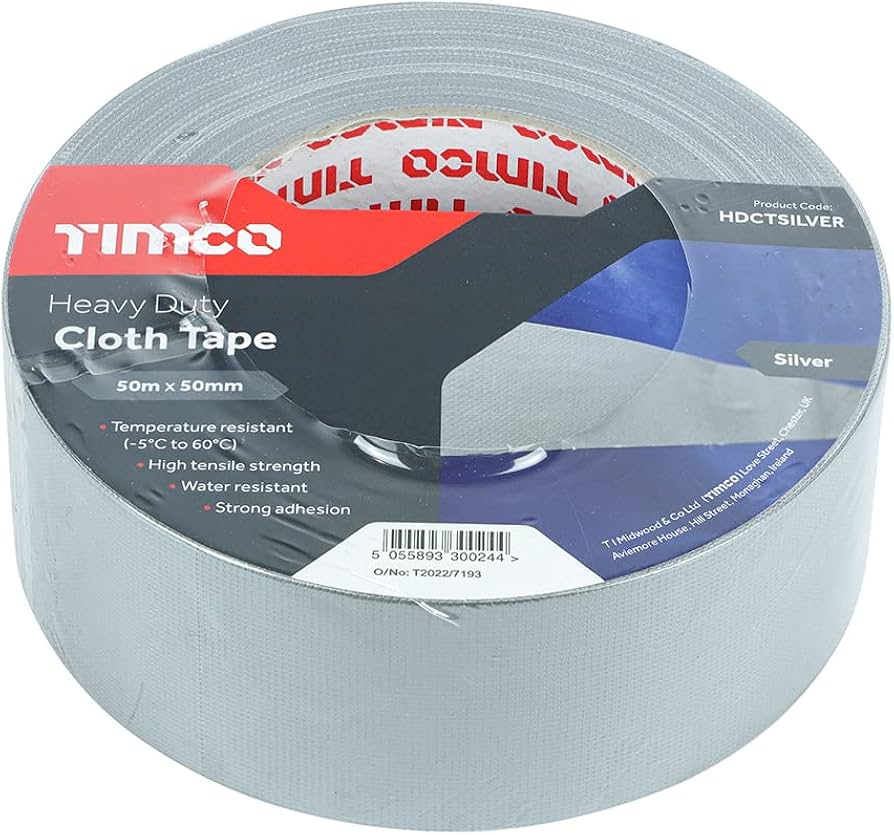
A stock image related to Heavy duty cloth tape.
Comprehensive Cost and Pricing Analysis for Heavy duty cloth tape Sourcing
Heavy duty cloth tape sourcing requires understanding a complex cost structure that extends far beyond per-roll pricing. For procurement teams operating across diverse markets like Brazil, Germany, or the UAE, material specifications and supply chain logistics create significant variance in total landed costs. Strategic buyers must evaluate how backing materials, adhesive chemistry, and regional trade dynamics interact to determine true procurement value.
What Raw Material Specifications Drive Heavy Duty Cloth Tape Costs?
The primary cost determinant lies in the backing material composition. Cotton-based cloth tapes command premium pricing due to superior conformability and breathability, while synthetic polyester blends offer cost efficiencies for bulk industrial applications. Adhesive formulations further stratify pricing—natural rubber adhesives provide economical solutions for general purpose binding, whereas synthetic acrylic or silicone adhesives necessary for high-temperature resistance or outdoor UV stability can increase material costs by 30-40%. Coating weight, measured in grams per square meter (GSM), directly correlates with durability; heavy-duty variants requiring 200+ GSM for carpet installation or theatrical rigging demand proportionally higher investment than standard 100 GSM alternatives.
How Do Volume Tiers and MOQs Affect Unit Economics?
B2B procurement operates on steep volume curves. Orders below 1,000 rolls typically incur 15-25% premiums compared to container-load quantities exceeding 10,000 units. Manufacturers often structure pricing with minimum order quantities (MOQs) starting at 500-1,000 rolls for customized widths or printed branding. For buyers in Africa and South America, consolidating shipments to achieve full container load (FCL) status—rather than less-than-container load (LCL)—can reduce per-unit logistics costs by up to 60%. Payment terms also influence effective pricing; manufacturers frequently offer 2/10 net 30 discounts for early payment, while letters of credit required for initial transactions with emerging market importers may add 1.5-3% in banking fees that erode margin if not negotiated into the base price.
What Regional Pricing Variations Exist Across Supply Markets?
Geographic sourcing creates distinct cost profiles. Chinese manufacturers dominate bulk commodity production, offering competitive base pricing for standard heavy-duty cloth tapes but requiring longer lead times. European suppliers, particularly German and Italian producers, command 20-35% premiums but provide compliance with REACH regulations and faster turnaround for technical specifications. Middle Eastern buyers often benefit from strategic positioning between Asian manufacturing hubs and African distribution networks. However, import duties vary significantly—Brazil’s industrial tape imports face Mercosur tariff structures that can add 12-18% to landed costs compared to EU duty-free agreements within Europe. African markets increasingly source from both Chinese manufacturers and emerging regional converters in Egypt or South Africa, balancing freight costs against import duty savings.
Which Hidden Costs Impact Total Cost of Ownership?
Beyond FOB pricing, B2B buyers must calculate certification expenses (ISO 9001, RoHS compliance), specialized packaging for humidity-sensitive adhesives in tropical climates, and currency hedging for multi-year contracts. Custom slitting services for non-standard widths—common in upholstery and automotive applications—typically add $0.15-$0.30 per linear meter. Additionally, storage considerations matter; cloth tapes with aggressive natural rubber adhesives require climate-controlled warehousing in hot climates, adding logistics overhead that procurement teams in Nigeria or Saudi Arabia must factor into annual budgeting rather than treating as incidental operational costs.
Strategic sourcing of heavy duty cloth tape demands moving beyond sticker price to evaluate total cost of ownership. By aligning material specifications with actual application requirements and optimizing shipment volumes for regional logistics realities, international buyers can achieve 15-20% cost reductions while maintaining the adhesive performance standards critical for heavy fabric applications.
Alternatives Analysis: Comparing Heavy duty cloth tape With Other Solutions
When evaluating fastening methods for high-stress fabric applications, procurement teams must balance immediate deployment capabilities against long-term structural integrity requirements. While heavy duty cloth tape excels in rapid repairs and temporary installations, alternative solutions such as industrial acrylic foam tapes and mechanical fastening systems offer distinct advantages for permanent bonding scenarios. Understanding these comparative trade-offs enables B2B buyers across manufacturing, construction, and logistics sectors to optimize material specifications based on load requirements, environmental exposure, and total cost of ownership rather than upfront material pricing alone.
| 比較の側面 | Heavy Duty Cloth Tape | Industrial Acrylic Foam Tape (VHB) | Mechanical Fastening (Sewing/Riveting) |
|---|---|---|---|
| Performance | High tensile strength; conforms to irregular surfaces; vibration dampening; temporary to semi-permanent hold | Superior structural bonding; permanent hold; excellent weather/UV resistance; thermal expansion accommodation | Maximum load-bearing capacity; permanent solution; creates stress concentration points; punctures material integrity |
| Cost | Low to moderate material cost; minimal labor expense; no equipment needed | Moderate to high material cost; requires surface preparation chemicals; immediate handling strength | Low material cost; high labor/installation costs; equipment maintenance; no shelf-life concerns |
| 実施しやすさ | Immediate application; no curing time; tool-free installation; works on dusty/oily surfaces | Requires solvent cleaning and priming; pressure-sensitive activation; sensitive to surface contamination | Requires specialized equipment (industrial sewing machines/rivet guns); skilled labor certification; time-intensive process |
How Do Industrial Acrylic Foam Tapes Compare for Structural Fabric Bonding?
Industrial acrylic foam tapes—often categorized as Very High Bond (VHB) systems—represent the premium alternative to cloth tape for applications demanding permanent adhesion and structural load distribution. These viscoelastic acrylic adhesives create molecular-level bonds with fabric substrates and rigid backing materials, delivering superior resistance to UV degradation, temperature cycling (-40°C to +90°C), and shear forces common in outdoor architectural installations and European transportation manufacturing. Unlike cloth tape’s woven backing, foam tapes absorb thermal expansion and vibration without delaminating, making them ideal for solar panel fabric installations or tensioned membrane structures in Middle Eastern markets. However, B2B buyers must account for rigorous surface preparation requirements; substrates demand solvent cleaning and priming to achieve
Essential Technical Properties and Trade Terminology for Heavy duty cloth tape
What Tensile Strength Specifications Define Heavy-Duty Performance?
Tensile strength measures the longitudinal force required to break the tape, expressed in pounds per inch (lbs/in) or Newtons per 25 millimeters (N/25mm). For industrial bundling, construction, and logistics applications prevalent in German manufacturing or Brazilian agribusiness, B2B buyers should specify ratings exceeding 40 lbs/in (70 N/25mm). This ensures the tape can contain heavy-gauge cables, metal piping, or palletized loads without snapping under dynamic stress or during transport vibration.
How Does Temperature Resistance Impact Cloth Tape Selection for Global Markets?
Operating temperature range is critical when sourcing for diverse climates, from European winters to Middle Eastern summers. Standard cloth tapes function between -10°C and 60°C, whereas high-performance variants withstand continuous exposure up to 80°C and intermittent peaks to 150°C. Exceeding the adhesive’s softening point causes “creep”—a gradual slippage under load—compromising HVAC seals or outdoor construction repairs in high-heat African or South American environments.
Why Is Scrim Reinforcement Density Critical for Load-Bearing Applications?
Scrim refers to the internal woven mesh—typically cotton, polyester, or fiberglass—laminated within the backing. Density is defined by thread count (e.g., 9×9 or 12×12 threads per square inch). Higher mesh counts provide superior tear resistance and dimensional stability for heavy-duty bundling, while lower counts enhance conformability for irregular surfaces. Buyers should verify that the polyethylene coating over the scrim prevents moisture ingress without sacrificing flexibility.
What Adhesion Metrics Indicate Professional-Grade Quality?
Peel adhesion quantifies the force required to remove the tape from a standardized steel surface, typically measured in ounces per inch (oz/in). Heavy-duty industrial applications demand values exceeding 60 oz/in for reliable bonding. Equally vital is shear strength, which measures resistance to slippage under constant load. High shear values are non-negotiable for vertical cable bundling or suspended theatrical rigging, preventing catastrophic failure under sustained tension.
Why Does Backing Thickness (Caliper) Influence Durability?
Caliper, measured in mils (thousandths of an inch) or millimeters, directly impacts abrasion resistance and hand-tearability. Heavy-duty cloth tapes typically range from 11 to 17 mils (0.28–0.43 mm). Thicker backings withstand rough handling in logistics and mining operations, while thinner variants conform to curved substrates like conduit pipes or automotive wiring harnesses, offering versatility across industrial sectors.
What Is “Scrim” and Why Does Thread Count Matter?
In trade terminology, “scrim” describes the open-weave reinforcing fabric embedded within the tape backing. “Thread count” or “mesh count” (e.g., “9-mesh”) indicates the density of this weave. Procurement teams must specify scrim composition based on application priorities: fiberglass scrims offer maximum strength for permanent bundling, while cotton/polyester blends provide balanced tear resistance and clean hand-tearing for rapid field application.
How Do “Hot Melt” and “Natural Rubber” Adhesive Systems Differ?
These terms define the adhesive chemistry. “Hot melt” adhesives are thermoplastic synthetic rubbers offering aggressive initial tack and cost efficiency, suitable for general-purpose packaging and short-term holds. “Natural rubber” adhesives provide superior long-term cohesion, enhanced adhesion to low-surface-energy materials (like polyethylene tarps), and greater UV stability, making them preferred for outdoor construction and event industries in Brazil and the Middle East.
Navigating Market Dynamics and Sourcing Trends in the Heavy duty cloth tape Sector
How Is the Global Heavy Duty Cloth Tape Market Evolving for Industrial Buyers?
The heavy duty cloth tape sector is experiencing robust growth driven by expanding infrastructure projects across emerging economies and the resurgence of manufacturing in key European markets. Unlike standard packaging solutions, industrial-grade cloth tape—reinforced with woven fabric backings and high-tack synthetic rubber adhesives—has become essential for heavy-load bundling, temporary pipe repairs, and extreme-weather sealing in construction and logistics operations. For B2B buyers in Brazil and Germany, where automotive and manufacturing sectors demand superior tensile strength, the market is shifting toward specialized formulations that offer UV resistance and clean removal properties. Recent procurement trends indicate a 15-20% increase in bulk orders from Middle Eastern construction hubs and African mining operations, where durability under harsh conditions is non-negotiable. Additionally, raw material volatility—particularly fluctuations in cotton and synthetic fiber prices—continues to influence contract negotiations, prompting many procurement teams to secure long-term supply agreements with tier-one manufacturers who maintain strategic resin and fabric inventories.
What Regional Sourcing Strategies Should B2B Buyers Consider?
Sourcing heavy duty cloth tape requires navigating distinct regional supply chain dynamics and regulatory frameworks. European buyers, particularly in Germany, increasingly prioritize suppliers offering REACH-compliant adhesives and consistent ISO 9001-certified production runs, often favoring manufacturers with localized warehousing to minimize lead times and carbon footprints. Conversely, buyers across Africa and South America face unique challenges regarding import tariffs, currency volatility, and port infrastructure limitations, making flexible MOQ (Minimum Order Quantity) arrangements and regional distribution partnerships critical for cost management and delivery reliability. The Middle Eastern market demonstrates strong demand for heat-resistant variants suitable for outdoor pipeline applications and desert construction sites, prompting many buyers to establish direct relationships with Asian manufacturers who can customize adhesive formulations for extreme temperature ranges while maintaining competitive bulk pricing. Successful procurement strategies now emphasize multi-regional sourcing portfolios that balance cost efficiency with geopolitical risk mitigation.
Why Does Sustainability Matter in Heavy Duty Cloth Tape Procurement?
Sustainability has transitioned from a niche consideration to a core procurement criterion for international B2B buyers across industrial sectors. Forward-thinking enterprises now scrutinize the environmental impact of cloth tape backings—traditionally polyester or cotton blends—and increasingly demand recyclable, biodegradable, or post-consumer recycled alternatives that maintain shear strength and adhesion performance. Ethical sourcing extends beyond material composition to encompass labor practices within manufacturing facilities, with European and Middle Eastern buyers particularly vigilant about SMETA (Sedex Members Ethical Trade Audit) certifications and fair labor compliance. Additionally, the shift toward water-based acrylic and hot-melt adhesives, replacing traditional solvent-based options, reflects growing regulatory pressure across Brazil and EU markets to reduce VOC (Volatile Organic Compound) emissions in industrial supply chains. Circular economy principles are also driving innovation, with some manufacturers now offering take-back programs for used tape rolls or developing linerless products that eliminate silicone release paper waste.
How Can Buyers Ensure Ethical and Resilient Supply Chains?
Building resilient sourcing strategies for heavy duty cloth tape involves verifying material traceability, supplier transparency, and quality consistency across global operations. B2B purchasers should prioritize manufacturers who provide comprehensive documentation on raw material origins, particularly for cotton-based backings where sustainable agricultural practices and water usage impact ESG credentials. For markets in Africa and South America, where infrastructure projects often face tight deadlines and challenging logistics, establishing dual-sourcing agreements with certified producers prevents disruption risks while ensuring consistent quality standards that meet international safety regulations. Smart procurement teams are leveraging blockchain-enabled tracking and digital audit platforms to verify supplier compliance in real-time, ensuring that heavy duty cloth tape production aligns with both local environmental regulations and international ethical labor standards. Furthermore, conducting on-site factory assessments or working with third-party inspection agencies helps verify that production facilities maintain proper safety protocols and waste management systems—critical factors when supplying to government contracts, ESG-focused European distributors, or socially responsible construction projects across the Middle East.
Frequently Asked Questions (FAQs) for B2B Buyers of Heavy duty cloth tape
1. How do I distinguish between heavy duty cloth tape and reinforced duct tape for industrial procurement?
Heavy duty cloth tape utilizes a woven fabric backing—typically cotton, polyester, or fiberglass—saturated with high-tack adhesive, while reinforced duct tape employs a polyethylene-laminated scrim with a thick rubber-based adhesive layer. For B2B buyers serving construction or event industries in Europe and the Middle East, cloth tape offers superior conformability to irregular surfaces and cleaner removal without adhesive transfer, making it ideal for temporary holds on delicate textiles or finished surfaces. Reinforced duct tape excels in permanent utility binding and moisture resistance but often leaves residue; therefore, specify woven cloth backing when applications require frequent repositioning or residue-free removal on high-value materials.
2. What load capacity specifications should I verify when sourcing industrial heavy duty cloth tape for heavy fabric applications?
Verify tensile strength ratings between 30–50 lbs per inch width and shear adhesion values exceeding 50 oz/inch when bonding heavy textiles like canvas, upholstery, or theatrical curtains common in South American and African markets. Request technical data sheets specifying adhesion to cotton/polyester blends and foam substrates, as load capacity varies significantly between natural rubber and synthetic acrylic adhesives. For industrial sewing alternatives or carpet installation, ensure the tape demonstrates dynamic shear resistance of 500+ minutes to prevent seam slippage under constant load.
3. Can heavy duty cloth tape withstand high temperatures in HVAC and mechanical applications?
Standard heavy duty cloth tape with natural rubber adhesive typically tolerates temperatures from -10°C to 60°C, but HVAC applications in Middle Eastern climates often require silicone-based cloth tape rated for 150°C–200°C continuous exposure. When sourcing for ductwork insulation or temporary pipe wrapping in regions like Germany or Brazil, specify heat-resistant formulations that maintain adhesion during thermal cycling without delaminating from the woven backing. Always confirm temperature ratings exceed your operational maximum by 20% to account for ambient heat accumulation in enclosed mechanical spaces.
4. Is heavy duty cloth tape suitable for waterproof sealing in construction and infrastructure projects?
While heavy duty cloth tape provides excellent water resistance for temporary outdoor applications, it is not inherently waterproof unless specified with a polyethylene laminate or butyl rubber adhesive layer. For construction sealing in rainy climates like those in coastal Africa or South America, specify “waterproof cloth tape” or “marine-grade” variants that prevent moisture ingress through the woven fibers. Standard cloth-backed tapes absorb moisture over time, making them suitable for dust barriers or temporary protection rather than permanent waterproof seals in foundation work or roofing applications.
5. What international certifications should heavy duty cloth tape suppliers provide for compliance in European and Middle Eastern markets?
Require suppliers to provide REACH and RoHS compliance documentation for European imports, confirming the absence of restricted phthalates and heavy metals in adhesive formulations. For Middle Eastern markets, request SASO (Saudi Standards) or GCC conformity certificates, while Brazilian buyers should verify INMETRO accreditation for industrial adhesive products. Additionally, ISO 9001:2015 quality management certification ensures consistent manufacturing standards critical for large-scale infrastructure projects across these diverse regulatory environments.
6. How do I optimize shipping logistics and storage conditions when importing heavy duty cloth tape to high-humidity regions?
Source tape with moisture-barrier polypropylene wrapping and silica gel desiccants to prevent adhesive degradation during ocean freight to tropical destinations like West Africa or Southeast Asia. Store inventory in climate-controlled warehouses maintaining 40-60% relative humidity, as extreme moisture can activate pre-applied adhesives and cause blocking between layers. Consider ordering slit-width customization at the factory level to maximize container space utilization, reducing freight costs per linear meter by up to 15% compared to importing master rolls for local conversion.
7. What customization options are available for B2B buyers requiring specific dimensions or private labeling?
Manufacturers typically offer slit widths from 12mm to 1000mm, with custom die-cutting available for specialized automotive or marine applications prevalent in European markets. Request color-matched backing—such as black for theatrical use or olive drab for military contracts common in Middle Eastern procurement—along with private label printing on the tape core or outer packaging. Minimum order quantities for custom slit widths typically range from 5,000–10,000 square meters, though stock dimension modifications may require lower commitments depending on the supplier’s slitting capabilities.
8. How do I evaluate adhesive compatibility when bonding heavy duty cloth tape to low-surface-energy substrates in industrial applications?
Conduct preliminary adhesion testing on substrates like powder-coated metals, polypropylene tarps, or PVC fabrics common in industrial tent manufacturing and automotive interiors. Specify high-tack synthetic rubber or hybrid adhesives rather than standard natural rubber when bonding to low-surface-energy materials, as these formulations provide initial grab strengths exceeding 40 oz/inch without primer application. For critical applications in German automotive or Brazilian agricultural equipment manufacturing, request ASTM D3330 peel adhesion test reports specific to your substrate to ensure long-term bond integrity under vibration and thermal stress.
重要な免責事項および利用規約
⚠️ 重要な免責事項
メーカー、技術仕様、市場分析に関する内容を含め、本ガイドラインで提供される情報は、情報提供と教育目的のみのものです。専門的な調達アドバイス、財務アドバイス、または法的アドバイスを提供するものではありません。.
B2Bバイヤーは、独自の徹底的なデューデリジェンスを行う必要がある。 をご覧の上、ご購入をお決めください。本ガイドに記載された情報を信頼した場合のリスクは、読者が単独で負うものとします。.
Top 4 Heavy Duty Cloth Tape Manufacturers & Suppliers List
1. Tape Suppliers – Cloth Tape
ドメイン tapesuppliers.com
登録:2007年(19年)
はじめに Cloth tape (also known as fabric tape) is a strong, durable adhesive tape with a cloth backing or core that resembles classic duct tape and gaffer tape. Key characteristics include high tensile strength, flexibility, and resilience due to its fabric construction. It is useful for a wide range of applications including safety, repair, and emergency repairs. The tape comes in various designs and sty…
2. IQS Directory – Cloth Tape
ドメイン iqsdirectory.com
登録:2004年(22年)
はじめに Cloth tape (also known as fabric tape) is an adhesive tape featuring a cloth backing material, distinguishing it from tapes with fiberglass or plastic backings. Key applications include medical use (wound setting, joint support, allowing body movement without sacrificing strength), craft industry (marking edges, outlining shapes), construction (wall sealing), and print industry (bookbinding, repai…
3. Crown Packaging – Cloth & Duct Tape
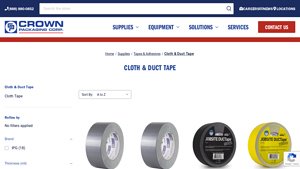
ドメイン shop.crownpack.com
登録:1997年(29年)
はじめに Crown Packaging Corp. offers cloth and duct tape options including double-coated cloth tape, metalized duct tape, and matte finish cloth tape. Cloth tape is a heavy-duty laminated/polylaminated tape with cloth backing that is heat-resistant, easily torn/removed without residue, and used for protective covering, heat-resistant projects, sealing joints, fabric repairs, and labeling. Duct tape is a r…
4. Elite Tape – Cloth Tapes
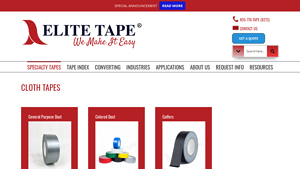
ドメイン elitetape.com
Registered: 2014 (12 years)
はじめに Elite Tape offers a comprehensive range of cloth tapes including General Purpose Duct Tape (#615, 7.0 mil), Industrial Cloth Tape (#620), Premium Duct Tape (#670), Colored Duct Tape (#620C available in 11 vibrant colors), and Gaffer’s Tapes (economical #650 and premium #665). Additional products include Double-Sided Cloth Tape, Bookbinding Tape, Carpet Tape (506BL, 11.0 mil white double-coated), a…
Strategic Sourcing Conclusion and Outlook for Heavy duty cloth tape
As global industrial markets evolve, sourcing heavy-duty cloth tape demands a decisive shift from transactional commodity purchasing to strategic supplier partnership. Procurement teams must prioritize vendors offering certified durability standards, regional compliance expertise, and adaptive manufacturing capabilities to effectively navigate volatile adhesive raw material markets and ensure long-term operational resilience.
How Can Buyers Optimize Supplier Selection Across Diverse Regional Markets?
When evaluating potential partners across Africa, South America, and the Middle East, prioritize suppliers maintaining localized warehousing networks and climate-specific adhesive formulations capable of withstanding extreme humidity and temperature fluctuations. Establishing dual-source agreements for both cotton-backed and synthetic variants ensures critical supply continuity, while requiring comprehensive VOC compliance documentation safeguards operations in highly regulated European markets such as Germany and Brazil’s industrial sectors.
What Future Trends Will Reshape Heavy-Duty Fabric Tape Procurement?
Industry outlook indicates accelerating demand for eco-conscious, solvent-free adhesive solutions across European manufacturing sectors, alongside enhanced heat-resistant variants for heavy machinery and automotive applications. Forward-thinking procurement strategies should incorporate flexible volume commitments, transparent sustainability reporting, and collaborative R&D partnerships to capitalize on emerging bonding technologies and circular economy initiatives.
By integrating regional logistics optimization, climate-specific performance validation, and innovation-aligned partnerships into their sourcing frameworks, B2B buyers can secure sustainable competitive advantages while ensuring operational continuity across diverse international markets.