Introduction: Navigating the Global Market for Fragile tape for shipping
When managing international supply chains, sourcing fragile tape for shipping that meets both durability standards and regulatory compliance represents a critical yet often underestimated challenge. For procurement teams navigating complex logistics networks, the difference between standard packaging tape and specialized fragile indicators can determine whether high-value ceramics, electronics, or glassware arrive intact—or become costly insurance claims. As cross-border e-commerce accelerates and customer expectations for damage-free delivery intensify, selecting the right protective signaling solutions has evolved from a simple procurement task to a strategic supply chain imperative.
Why Do International Buyers Struggle with Fragile Tape Specifications?
Global procurement teams frequently encounter inconsistent quality standards when importing fragile tape across different manufacturing regions. Variations in adhesive formulations, substrate durability, and printed warning visibility create significant procurement risks, particularly for businesses managing multi-modal shipments through diverse climate zones and handling environments.
What Comprehensive Solutions Does This Guide Provide?
This resource examines critical procurement dimensions including tape material compositions (polypropylene, PVC, and paper-based variants), adhesion technologies suited for extreme temperatures, and printing standards that ensure visibility throughout the supply chain. We analyze application-specific requirements for electronics, glassware, and ceramics, alongside rigorous supplier vetting frameworks covering ISO certifications, export documentation capabilities, and bulk pricing negotiation strategies. Additionally, we address total cost of ownership calculations beyond unit pricing, encompassing customs considerations and inventory optimization for high-volume operations.
For buyers operating in emerging markets across Africa and South America, established European hubs like Germany, or manufacturing centers in Vietnam and the Middle East, this guide provides actionable frameworks to evaluate adhesive performance, negotiate bulk pricing, and establish quality assurance protocols. By demystifying technical specifications and supplier landscapes, we equip you with the procurement intelligence necessary to minimize transit damage, reduce replacement costs, and maintain brand reputation across diverse logistical environments.
Understanding Fragile tape for shipping Types and Variations
| タイプ名 | 主な特徴 | 主なB2Bアプリケーション | バイヤーのための簡単な長所と短所 |
|---|---|---|---|
| Standard Polypropylene Pre-Printed Tape | High-contrast “FRAGILE” printing (red/white or black/yellow); acrylic or hotmelt adhesive; 28-50 micron thickness | High-volume e-commerce, electronics distribution, glassware manufacturing | Pros: Cost-effective, immediate availability, high visibility. Cons: Limited tamper evidence, environmental concerns with plastic waste |
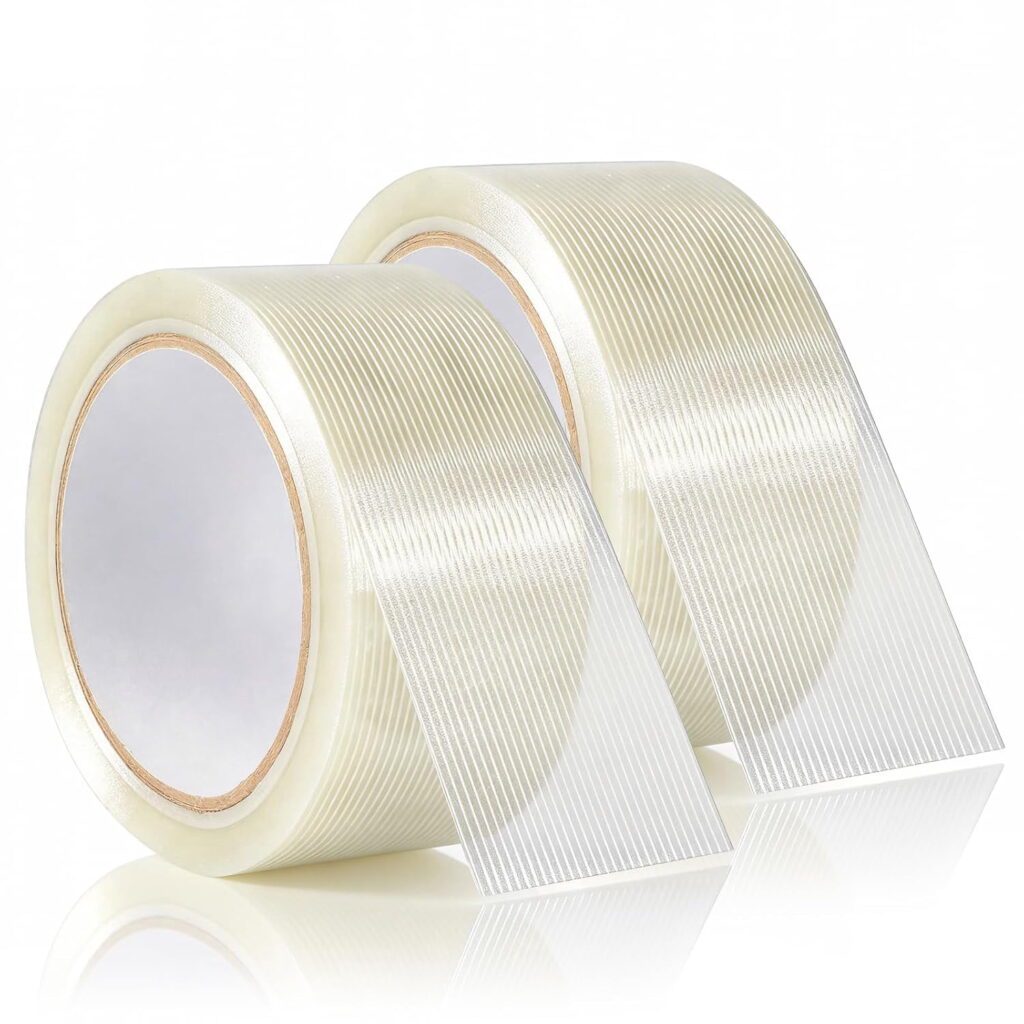
| Reinforced Cross-Woven Fragile Tape | Fiberglass filament reinforcement; tear-resistant backing; aggressive high-tack adhesive | Heavy industrial parts, ceramic exports, construction materials | Pros: Prevents box splitting, extreme durability, temperature resistant. Cons: Premium pricing, requires specialized dispensers |
| Custom Branded Fragile Tape | Company logo integration; Pantone color matching; combined security/brand messaging | Luxury retail, pharmaceuticals, high-value electronics | Pros: Brand protection, marketing exposure, theft deterrence. Cons: High MOQs (50+ rolls), 2-4 week lead times, setup costs |
| Water-Activated Kraft Paper Tape | Paper backing with starch adhesive; permanent fiber-bonding seal; recyclable with cardboard | EU exports, sustainable packaging mandates, artisan goods | Pros: 100% recyclable, tamper-evident, professional aesthetic. Cons: Requires water dispenser, humidity sensitive, slower application |
| Tamper-Evident Security Fragile Tape | Void message reveal upon removal; sequential numbering options; UV-sensitive inks | High-value electronics, confidential documents, luxury cosmetics | Pros: Theft deterrence, chain of custody verification, cannot be resealed. Cons: Highest cost per roll, complex inventory management |
What is standard polypropylene fragile tape and when should bulk buyers use it?
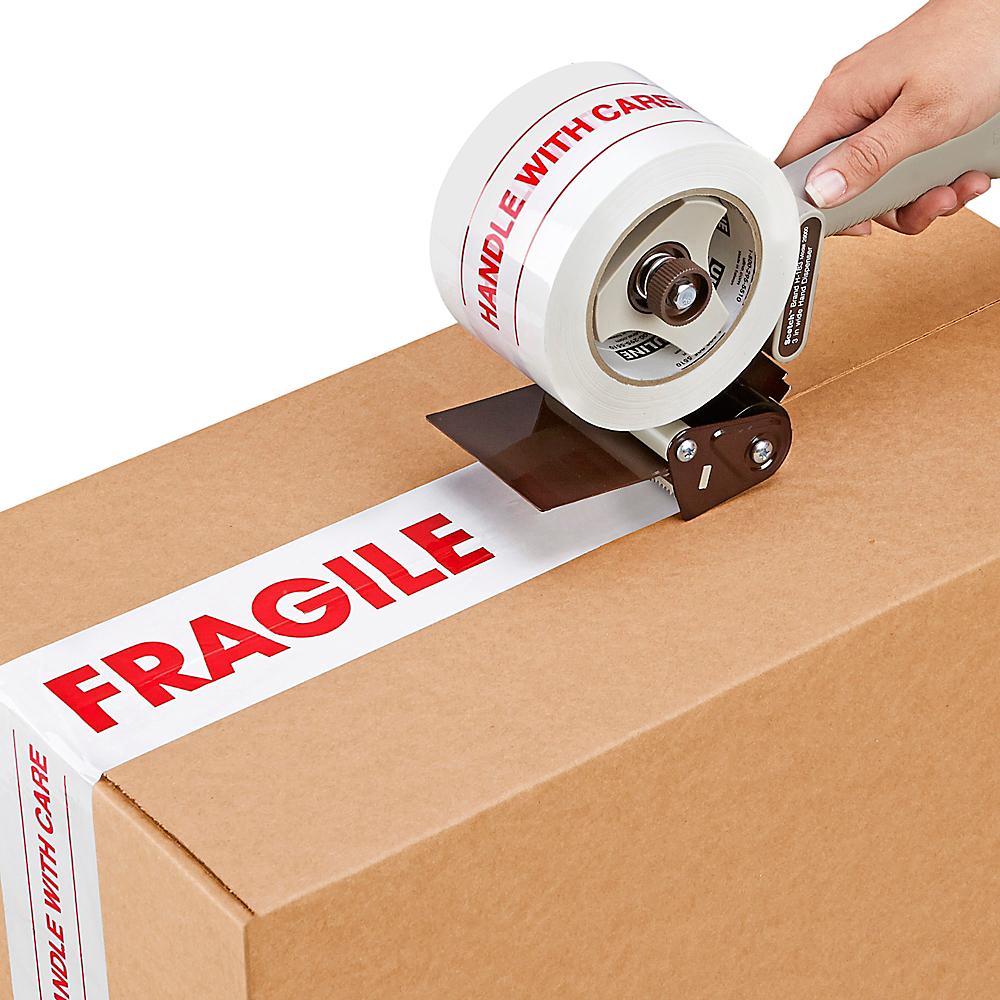
Standard polypropylene fragile tape serves as the industry baseline for high-volume operations, featuring bold two-tone warning prints—typically red-and-white or black-and-yellow—on durable plastic backing with either hotmelt or acrylic adhesive systems. This variation dominates e-commerce fulfillment and electronics distribution due to its compatibility with automated case sealers and hand dispensers alike, offering excellent shear strength at competitive per-meter pricing. B2B procurement teams should specify hotmelt adhesives for cold-chain logistics and acrylic formulations for dust-prone warehouse environments, ensuring the 28-50 micron thickness rating aligns with carton weights exceeding 20 kilograms.
How does reinforced fragile tape protect heavy industrial shipments?
Reinforced fragile tape integrates fiberglass filaments or cross-woven synthetic fibers into the backing material, delivering exceptional tensile strength that prevents package splitting when handling dense, fragile commodities like ceramic tiles, automotive glass, or industrial instrumentation. This heavy-duty variation withstands rough handling during international freight forwarding, particularly beneficial for African and South American trade routes where multi-modal transport stresses packaging integrity. Buyers must verify filament density specifications—typically 50-100 threads per inch—and confirm compatibility with existing tape dispensers, as the rigid structure often requires reinforced blade mechanisms to prevent dispenser jamming.
Why invest in custom branded fragile tape for B2B logistics?
Custom branded fragile tape merges security warnings with corporate identity elements, transforming standard packaging into a mobile marketing asset while deterring pilferage through unique, difficult-to-replicate print patterns. This variation proves particularly valuable for German and Middle Eastern luxury retailers, pharmaceutical distributors, and high-value electronics manufacturers seeking to differentiate unboxing experiences and reinforce brand authenticity. When sourcing, procurement teams should anticipate minimum order quantities ranging from 50 to 500 rolls depending on width specifications, factor in 2-4 week production lead times for custom plate creation, and evaluate whether the theft-prevention benefits justify the 30-50% premium over standard printed options.
Is water-activated kraft paper fragile tape suitable for sustainable export packaging?
Water-activated kraft paper fragile tape utilizes starch-based adhesives that chemically bond with corrugated cardboard fibers, creating a permanent tamper-evident seal that destroys the box surface upon removal while maintaining full recyclability within standard paper waste streams. This eco-conscious option addresses stringent EU packaging regulations, particularly in Germany and Scandinavian markets, helping B2B exporters avoid plastic tax penalties and meet corporate sustainability mandates. However, procurement teams must invest in water-dispensing equipment and train warehouse staff on proper activation techniques, as the tape performs poorly in high-humidity environments and requires 2-3 minutes of curing time to achieve full adhesion strength.
When should B2B buyers choose tamper-evident security fragile tape?
Tamper-evident security fragile tape reveals a permanent “VOID” or “OPENED” message when removed, often incorporating sequential numbering and UV-sensitive inks to provide forensic-level chain-of-c
Key Industrial Applications of Fragile tape for shipping
| 業界/セクター | Specific Application of Fragile tape for shipping | ビジネスにとっての価値/利益 | このアプリケーションにおける主な調達上の考慮事項 |
|---|---|---|---|
| Electronics & Technology Manufacturing | Sealing cartons containing semiconductors, LCD screens, and circuit boards for international export | Minimizes costly damage to high-value components during multi-modal transit; reduces insurance claims and customs delays associated with damaged goods | High-tack acrylic adhesive for temperature fluctuations; UV-resistant printing for tropical climates; compliance with international shipping standards |
| Glass & Ceramics Export | Exterior carton sealing for artisan pottery, architectural glass, and ceramic tiles bound for international markets | Visual warning prevents stacking compression in container ships; significantly reduces breakage rates during long-haul freight and rough port handling | Heavy-duty vinyl or reinforced tape for weighty boxes; moisture-resistant adhesive for humid ports; multi-language “Fragile” warnings for diverse logistics teams |
| Pharmaceutical & Medical Distribution | Securing secondary packaging for glass ampoules, vials, and sensitive diagnostic equipment | Ensures temperature-sensitive medical supplies arrive intact; prevents contamination from broken glass; maintains supply chain integrity for critical healthcare deliveries | FDA/EU compliant adhesives; tamper-evident features; chemical-resistant materials that endure sterilization and condensation from cold chain environments |
| Automotive Parts Logistics | Packaging for OEM sensors, infotainment screens, and precision optical components in just-in-time supply chains | Protects strict delivery schedules; prevents electrostatic damage through proper handling cues; reduces production line delays from damaged precision parts | Anti-static properties; high-visibility colors for warehouse automation; strong adhesion to corrugated plastics and varying surface textures |
| E-commerce & Retail Fulfillment | Cross-border B2C and B2B shipping of consumer electronics, home décor, and collectibles from high-volume distribution centers | Reduces return rates and negative reviews; streamlines warehouse sorting processes; enhances brand professionalism through visible care standards | Custom printed options for branding; cost-effective bulk purchasing for high-volume operations; compatibility with automated tape dispensers |
How Does Fragile Tape Secure High-Value Electronics During Global Distribution?
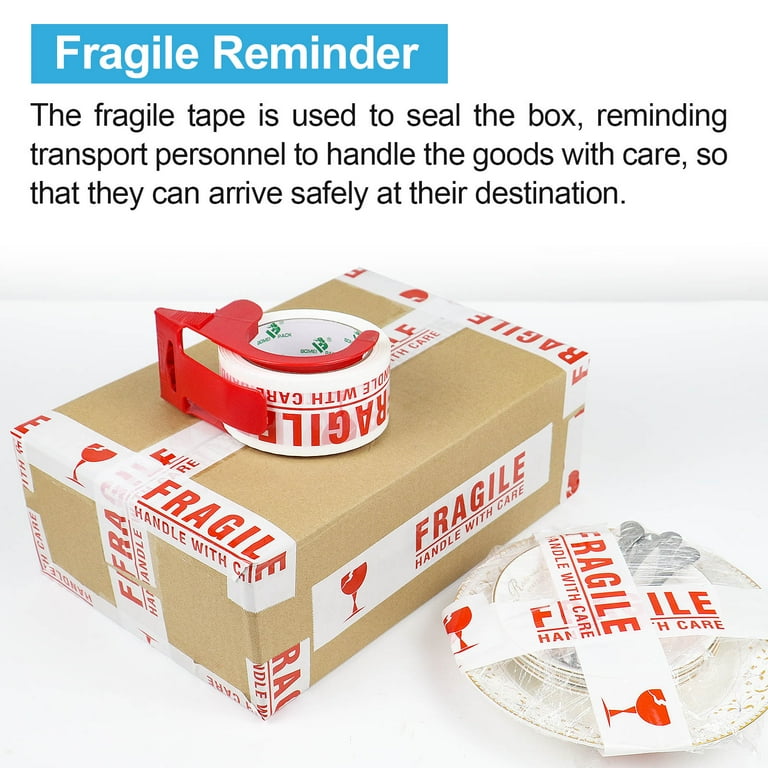
Electronics manufacturers shipping semiconductors, LCD panels, and circuit boards across continents rely on fragile tape to prevent catastrophic losses from rough handling in transit. For buyers in Germany and Vietnam sourcing components from Asian manufacturing hubs, high-tack acrylic adhesives withstand temperature fluctuations encountered in container ships traversing equatorial regions. The tape’s vivid warning labels alert handlers at busy Middle Eastern and African ports to avoid stacking heavy freight atop sensitive cartons, significantly reducing damage rates for high-margin technological goods while ensuring compliance with international shipping insurance requirements.
What Role Does Fragile Tape Play in Glass and Ceramics Export Protection?
Artisan pottery manufacturers in South America and architectural glass exporters shipping to European markets face unique challenges with moisture exposure and rough port handling. Heavy-duty fragile tape with reinforced fibers provides essential structural integrity to cartons containing ceramic tiles and decorative glassware, while moisture-resistant adhesives prevent seal failure during humid transits through tropical climates. Clear multilingual “Fragile” warnings ensure visibility to diverse logistics teams across African and Middle Eastern transit hubs, minimizing compression damage from improper stacking in shared container environments.
Why Is Specialized Fragile Tape Essential for Pharmaceutical Cold Chain Integrity?
Pharmaceutical distributors transporting glass ampoules and diagnostic equipment from European manufacturing centers to Middle Eastern and African healthcare facilities require tamper-evident fragile tape that maintains adhesion in refrigerated environments. These specialized tapes solve critical contamination risks by alerting cold-chain handlers to delicate contents while withstanding condensation and temperature cycling. Buyers must prioritize FDA-compliant adhesives and chemical-resistant materials that endure sterilization protocols, ensuring sensitive medical supplies arrive intact despite the rigors of international air freight and varying customs handling standards.
How Can Automotive Suppliers Optimize Just-in-Time Delivery with Fragile Tape?
Automotive OEMs and tier-one suppliers shipping precision sensors, infotainment systems, and optical components to German assembly plants or emerging Vietnamese manufacturing sectors depend on fragile tape to maintain strict delivery schedules. Damage to these high-precision parts can halt entire production lines, making visible handling instructions crucial for warehouse automation systems and manual sorting facilities alike. Anti-static variants prevent electrostatic discharge damage to sensitive circuitry, while high-visibility colors ensure rapid identification in fast-paced logistics environments across South American and African distribution networks.
What Are the Key Considerations for E-commerce Businesses Using Fragile Tape in Cross-Border Logistics?
Global e-commerce fulfillment centers processing high volumes of consumer electronics and home décor for markets in Africa, South America, and the Middle East require cost-effective fragile tape solutions that integrate with automated packaging lines. Custom-printed options allow Vietnamese and European retailers to reinforce brand identity while providing essential damage prevention, reducing costly return rates and negative customer reviews. Bulk sourcing strategies must balance adhesive quality for tropical climates with compatibility for high-speed dispensers, ensuring operational efficiency without compromising the protective visibility needed for international last-mile delivery.
A stock image related to Fragile tape for shipping.
3 Common User Pain Points for ‘Fragile tape for shipping’ & Their Solutions
How to Prevent Fragile Tape Adhesion Failure in High-Humidity International Supply Chains?
問題だ:
B2B buyers managing logistics across tropical regions—such as Southeast Asia, Sub-Saharan Africa, or humid South American climates—frequently encounter adhesive degradation when using standard fragile tape. High humidity, condensation during container shipping, and extreme temperature fluctuations cause tape edges to lift and warning messages to detach entirely. When the “FRAGILE” indicator peels off during transit, packages lose their protective status and are treated as standard freight, significantly increasing damage rates for glassware, electronics, and ceramics during the critical last-mile delivery phase.
解決策
Specify industrial-grade fragile tape with hot-melt rubber or high-tack acrylic adhesive formulations specifically rated for high-moisture environments and temperature ranges between -20°C to 60°C. Prioritize tapes featuring UV-resistant inks that maintain visibility despite sun exposure during outdoor storage. Implement warehouse protocols requiring surface preparation—ensuring corrugated boxes are dry and free from dust before application. For heavy-duty commercial shipping, select cross-woven reinforced fragile tape that provides both structural box reinforcement and persistent adhesion, ensuring the warning remains intact from origin to destination.
Can Custom-Printed Fragile Tape Balance Corporate Branding with Shipping Safety Requirements?
問題だ:
Premium B2B wholesalers and direct-to-consumer brands face a significant packaging dilemma when standard bright red or orange fragile tape clashes with sophisticated brand aesthetics. In competitive European markets like Germany, where unboxing experience directly influences B2B client retention, generic warning tape can appear unprofessional and disrupt carefully designed corporate identity systems. This creates tension between operational safety requirements and marketing consistency, particularly for luxury goods, artisan products, or high-end electronics where brand perception is as critical as physical protection.
解決策
Commission custom-printed fragile tape utilizing flexographic or digital printing technologies that integrate company logos, brand-specific color palettes, and handling instructions alongside mandatory “FRAGILE” warnings. Modern printing techniques allow for semi-transparent or tone-on-tone designs that maintain visibility for handlers while reinforcing brand recognition. This approach transforms every shipment into a mobile marketing asset, reduces the need for separate branded stickers, and ensures that safety compliance enhances rather than compromises professional presentation during international transit.
What Are the Cost Benefits of Integrating Fragile Warnings into Packing Tape Versus Using Separate Labels?
問題だ:
Procurement teams in high-volume shipping operations—common in manufacturing hubs like Vietnam or distribution centers across the Middle East—often default to using separate fragile stickers combined with standard clear packing tape. This redundant approach creates hidden costs: doubled material expenditure, extended packing station time, inventory management complexity for two SKUs instead of one, and increased risk of human error when workers forget to apply labels. These inefficiencies compound at scale, eroding profit margins in price-sensitive international trade environments.
解決策
Transition to integrated fragile packing tape that combines high-strength sealing capabilities with prominent visual warnings in a single application step. Calculate total cost of ownership by factoring in labor time reduction—typically saving 15-30 seconds per package—and elimination of secondary label purchases. For B2B procurement, negotiate bulk pricing on 50mm+ width industrial rolls featuring aggressive hot-melt adhesives. Implement automated tape dispensers programmed for consistent application lengths, further streamlining warehouse workflows while ensuring every package maintains clear fragile identification without the administrative burden of dual inventory systems.
Strategic Material Selection Guide for Fragile tape for shipping
Selecting the optimal substrate for fragile tape requires balancing cost efficiency, environmental resilience, and handling requirements. For B2B buyers managing diverse supply chains across varying climates—from humid Southeast Asian ports to arid Middle Eastern logistics hubs—material composition directly impacts adhesion integrity and warning visibility during multi-modal transit.
Which Backing Material Provides Optimal Cost-Efficiency for High-Volume Fragile Shipments?
ポリプロピレン(BOPP) dominates global procurement due to its exceptional tensile strength-to-cost ratio. This thermoplastic polymer resists moisture and chemical solvents, making it indispensable for multi-modal transport involving prolonged sea freight exposure. Its compatibility with both hot-melt and acrylic adhesives ensures reliable box sealing while supporting high-resolution “FRAGILE” printing in multiple languages. However, BOPP exhibits limited performance in extreme temperature fluctuations, potentially compromising adhesion integrity in freezing warehouse environments or desert heat above 50°C. For standard e-commerce and retail distribution across stable climates, it offers the most economical entry point without sacrificing basic protection standards.
Is PVC Fragile Tape the Superior Choice for High-Value Electronics and Glassware?
Polyvinyl Chloride (PVC) tape delivers premium performance through superior conformability and quieter unwind characteristics—critical factors for high-speed automated packing lines in German or Vietnamese fulfillment centers. Its thicker caliper provides enhanced puncture resistance during rough handling, while stable adhesive performance across wider temperature ranges (-10°C to 60°C) suits diverse Middle Eastern and European logistics networks. The material’s natural flexibility allows superior adhesion to corrugated irregularities and recycled cardboard surfaces compared to polypropylene alternatives. The primary limitation involves procurement cost; PVC commands a 30-40% price premium over BOPP, making it strategically appropriate for luxury goods, precision electronics, and artisan ceramics where potential damage costs significantly exceed material expenses.
How Does Reinforced Kraft Paper Tape Support Sustainability Mandates in European Markets?
As circular economy regulations tighten across Germany and expanding African markets, Kraft Paper (specifically reinforced versions) offers a fully recyclable, biodegradable alternative that integrates seamlessly with cardboard waste streams. Reinforced varieties utilizing fiberglass or cellulose threads provide surprising tensile strength for lighter fragile items including glassware, ceramics under 5kg, and sensitive documents. Natural rubber adhesives ensure strong initial tack on corrugated surfaces without plastic contamination. The critical constraint remains moisture vulnerability; high humidity in Brazilian or Southeast Asian climates can weaken the paper backing and activate premature adhesive degradation. This material optimally suits dry-climate distribution networks and brands prioritizing plastic-free packaging certifications for European export compliance.
When Should B2B Buyers Specify Polyester (PET) Backing for Industrial Fragile Components?
For heavy industrial fragile components—machinery parts, automotive glass, or dense ceramic substrates exceeding 20kg—ポリエステル(PET) backing provides exceptional dimensional stability and chemical resistance. This material maintains structural integrity under extreme tensile stress and temperature variations (-20°C to 80°C), outperforming both BOPP and PVC in harsh environments including outdoor storage and uncontrolled warehouse conditions. Its rigidity, however, reduces conformability on irregular box edges and rough-cut cardboard, while the material cost positions it significantly above standard options. PET fragile tape represents a specialized procurement choice for heavy-duty export crating where mechanical stress exceeds standard parcel handling parameters and failure is not financially viable.
| 素材 | Typical Use Case for Fragile tape for shipping | 主な利点 | 主な欠点/制限 | 相対コスト |
|---|---|---|---|---|
| ポリプロピレン(BOPP) | General e-commerce, consumer electronics, ceramics in standard climates | Superior cost-efficiency and moisture resistance | Poor performance in extreme temperature fluctuations | 低い |
| Polyvinyl Chloride (PVC) | High-value electronics, luxury glassware, automated packing lines | Excellent conformability and temperature stability (-10°C to 60°C) | 30-40% price premium over polypropylene | 高い |
| Kraft Paper (Reinforced) | Eco-conscious brands, lightweight ceramics, EU-regulated markets | Fully recyclable with cardboard; biodegradable | Vulnerable to moisture/humidity; limited weight capacity | ミディアム |
| ポリエステル(PET) | Heavy industrial machinery parts, automotive glass, extreme climate exports | Maximum tensile strength and chemical resistance | High material cost; reduced flexibility on irregular surfaces | Premium |
A stock image related to Fragile tape for shipping.
In-depth Look: Manufacturing Processes and Quality Assurance for Fragile tape for shipping
Understanding the technical specifications behind fragile tape production empowers procurement teams to evaluate suppliers beyond unit pricing, ensuring that selected materials withstand the rigors of multi-modal international transport. For buyers sourcing from manufacturing hubs in Asia or evaluating European suppliers for distribution across diverse climate zones, knowledge of substrate engineering and adhesive chemistry directly correlates with reduced damage claims and customs clearance efficiency.
What Raw Materials Determine the Performance of Industrial Fragile Tape?
The foundation of high-performance fragile shipping tape begins with biaxially oriented polypropylene (BOPP) film selection, typically ranging from 28 to 50 microns in thickness depending on load-bearing requirements. Premium manufacturers utilize virgin resin BOPP rather than recycled blends to ensure consistent tensile strength—critical for maintaining box integrity during automated sorting processes in high-volume distribution centers.
The adhesive layer distinguishes commodity tape from industrial-grade solutions. Hot melt synthetic rubber adhesives dominate standard cardboard applications due to their aggressive initial tack and cost efficiency, while solvent acrylic formulations offer superior temperature resistance for shipments traversing extreme climates common in Middle Eastern or South American logistics corridors. Water-based acrylics provide an eco-friendly middle ground with moderate tack development, suitable for European markets with stringent VOC regulations. B2B buyers should verify that suppliers disclose adhesive coat weights, measured in grams per square meter (gsm), as insufficient coating leads to edge lifting during extended sea freight.
How Are High-Visibility “Fragile” Warnings Applied During Manufacturing?
The integration of warning text occurs through flexographic printing, a high-speed rotary process utilizing photopolymer plates etched with the “FRAGILE” messaging. Leading manufacturers employ UV-cured inks rather than water-based alternatives, creating abrasion-resistant print layers that remain legible despite package abrasion against conveyor belts and container walls. For buyers requiring bilingual warnings (essential for markets like Vietnam or German-speaking regions), modern flexo setups accommodate up to eight color stations, enabling simultaneous application of handling instructions and brand logos.
Print durability testing occurs inline using abrasion wheels simulating transit friction. B2B procurement teams should request samples subjected to 50-cycle Taber abrasion tests to ensure warning visibility persists through customs inspections and final-mile delivery. Digital printing technologies are emerging for lower MOQ (Minimum Order Quantity) custom runs, though flexographic remains the standard for volume procurement due to lower per-unit costs and faster production speeds exceeding 300 meters per minute.
Which Quality Control Tests Validate Tape Performance for Global Logistics?
Comprehensive quality assurance protocols separate ISO-certified manufacturers from commodity traders. Peel adhesion testing, following ASTM D3330 standards, measures the force required to remove tape from standardized stainless steel and corrugated cardboard surfaces at 180-degree angles. Industrial fragile tape should demonstrate minimum 5 N/25mm adhesion to cardboard, with values exceeding 7 N/25mm for heavy-duty applications involving glassware or ceramic exports.
Shear strength testing (ASTM D3654) evaluates the tape’s resistance to slippage under constant load—critical for palletized shipments experiencing prolonged vertical stress. Quality labs also conduct climate chamber testing, subjecting tape samples to 40°C/90% humidity cycles for 72 hours to simulate tropical port conditions prevalent in African and Southeast Asian trade routes. Additionally, tensile strength measurements ensure the backing film withstands 40-60 N/cm² before breaking, preventing catastrophic seal failure during automated handling.
How Do Manufacturers Ensure Adhesive Stability Across Different Climate Zones?
Adhesive formulation adjustments address the thermal expansion coefficients encountered during international shipping. For buyers distributing through hot-climate corridors (Gulf Cooperation Council countries or Sub-Saharan Africa), manufacturers incorporate cross-linked polymer additives that prevent adhesive flow (bleeding) at surface temperatures exceeding 60°C. Conversely, cold-chain logistics serving European pharmaceutical or food sectors require specialized low-temperature adhesives maintaining tack at -10°C without becoming brittle.
Humidity resistance presents another variable, particularly for sea freight originating from humid port cities. Solvent acrylic adhesives demonstrate superior moisture resistance compared to hot melt alternatives, preventing delamination during vessel condensation cycles. Reputable suppliers provide technical data sheets specifying service temperature ranges and humidity resistance percentages, enabling buyers to match tape specifications to their primary shipping lanes.
What Certifications and Compliance Standards Should B2B Buyers Prioritize?
Beyond mechanical performance, regulatory compliance determines market access and liability protection. ISO 9001:2015 certification indicates standardized quality management systems, while ISO 14001:2015 demonstrates environmental responsibility increasingly required by German and Scandinavian procurement policies. For electronics exporters, RoHS compliance ensures tape adhesives contain no restricted heavy metals, preventing customs holds in EU member states.
REACH compliance (Registration, Evaluation, Authorization and Restriction of Chemicals) remains mandatory for tape imported into the European Economic Area, requiring disclosure of Substances of Very High Concern (SVHC). Buyers sourcing for food-contact applications should verify FDA 21 CFR 175.105 compliance or EU 10/2011 food contact material certifications, even for secondary packaging tape, as contamination risks during shipping can trigger regulatory penalties.
How Does Precision Slitting Impact Operational Efficiency in High-Volume Shipping?
The final manufacturing stage—slitting and winding—determines compatibility with automated case sealers and handheld dispensers. Precision slitting to exact widths (48mm and 72mm being standard) with tolerance margins under ±0.5mm prevents tracking issues in automated machinery that cause line stoppages. Core quality matters significantly; 3-inch (76mm) cardboard cores with crush resistance above 200N prevent deformation during high-speed unwinding, while plastic cores offer moisture resistance for tropical storage conditions.
Winding tension consistency eliminates “telescoping” (lateral shifting of tape layers) and adhesive oozing that causes blocking between layers. Buyers should inspect sample rolls for uniform wind patterns and verify that suppliers utilize tension-control slitting lines rather than manual rewinding equipment. Additionally, release coating uniformity on the backing film ensures consistent unwind force—typically measured at 0.5-1.5 N/cm—reducing operator fatigue during high-volume packaging operations.
By scrutinizing these manufacturing parameters and quality benchmarks, international procurement teams can establish supplier scorecards that prioritize performance consistency over lowest-bid pricing, ultimately reducing total cost of ownership through decreased damage rates and improved logistics reliability.
Practical Sourcing Guide: A Step-by-Step Checklist for ‘Fragile tape for shipping’
Procuring fragile tape for international shipping operations requires more than selecting a standard adhesive product. B2B buyers must balance material performance, regulatory compliance, and supply chain reliability to protect delicate goods across diverse logistics networks spanning Africa, South America, the Middle East, and Europe. This checklist provides a systematic framework for evaluating suppliers, specifications, and quality assurance protocols when sourcing fragile warning tape at scale.
What Technical Specifications Should B2B Buyers Prioritize When Sourcing Fragile Tape?
Begin by defining material composition based on regional climate conditions. Specify oriented polypropylene (OPP) backing for humid environments like Vietnam, while PVC formulations suit German cold-chain logistics requiring rigid application. Demand acrylic or hotmelt adhesives rated for 48-hour minimum shear resistance and temperature stability between -20°C and +60°C. Verify tape thickness (35–50 microns) and tensile strength to prevent splitting during high-speed automated carton sealing.
How Can International Buyers Verify Supplier Export Compliance and Certifications?
Evaluate manufacturers against ISO 9001 quality management systems and EU REACH chemical safety standards for European distribution. For Middle Eastern and African markets, confirm suppliers possess experience navigating import documentation and can provide SGS or Bureau Veritas inspection certificates. Request documentation proving compliance with customs regulations in target countries, particularly regarding adhesive chemical compositions that may face restrictions in specific South American jurisdictions.
Which Customization Options Deliver Maximum Brand Protection and Handler Awareness?
Beyond standard “FRAGILE” printing, specify multilingual warnings incorporating Arabic, Spanish, or Vietnamese text for regional warehouse staff. Evaluate custom Pantone color matching to align with corporate branding while maintaining high-visibility contrast against brown corrugate. For high-value electronics shipments, consider tape with tamper-evident security slitting or sequential numbering to deter pilferage during international transit through multiple handling points.
How Should Buyers Conduct Pre-Procurement Adhesion and Durability Testing?
Request full-width roll samples for shear adhesion tests on various corrugated grades and dusty surfaces common in emerging markets. Subject samples to temperature cycling and 85% humidity exposure to simulate container shipping conditions from Asia to Europe. Test print durability against rubbing and UV exposure, ensuring warnings remain legible after 30 days of warehouse storage. Document baseline performance metrics before committing to bulk orders exceeding 10,000 roll quantities.
What Total Cost of Ownership Factors Extend Beyond Unit Pricing?
Calculate waste factors based on roll length consistency and core alignment—irregular rolls cause 15–20% material loss in automated dispensers. Evaluate packaging density; compact pallet configurations reduce shipping costs from manufacturing hubs to distribution centers. Factor in payment terms impact on cash flow, particularly for African markets where letters of credit may extend settlement periods. Include Incoterms clarity and customs duty classifications (typically HS Code 3919.10) in landed cost models.
How Do You Establish Quality Control Protocols for Consistent Supply?
Implement incoming inspection procedures checking roll diameter variance, print registration accuracy, and adhesive coat weight uniformity. Require suppliers to provide batch-specific test reports and maintain 3–6 months of safety stock buffer for critical SKUs. Establish escalation protocols for adhesion failures exceeding 2% of received volume. Schedule quarterly supplier audits focusing on raw material traceability and production environment controls to prevent contamination that could compromise tape performance during long-haul shipping.
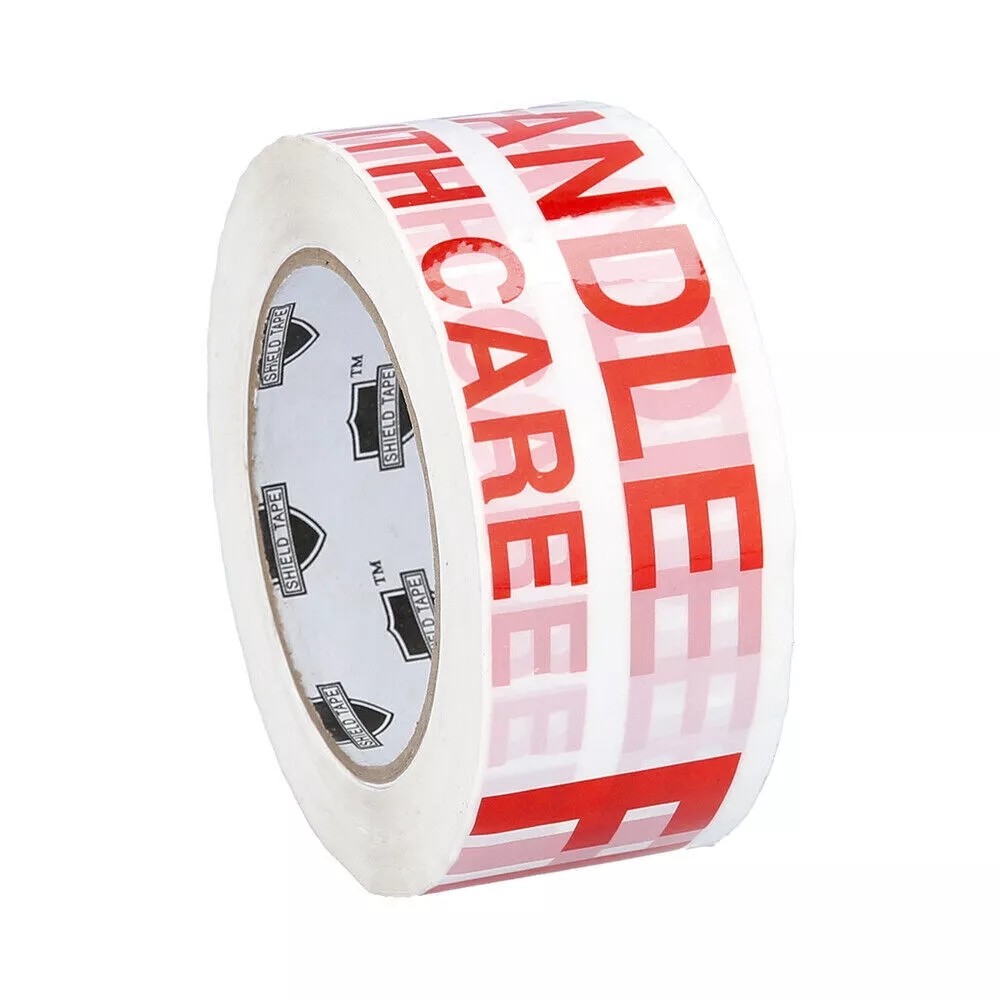
A stock image related to Fragile tape for shipping.
Comprehensive Cost and Pricing Analysis for Fragile tape for shipping Sourcing
Understanding the cost architecture of fragile tape procurement requires looking beyond per-roll pricing to encompass material specifications, volume commitments, and regional logistics variables. For international buyers sourcing from global manufacturing hubs or regional distributors, strategic cost analysis directly impacts both operational budgets and damage prevention ROI.
What Factors Determine Fragile Tape Pricing for Bulk Orders?
Unit costs typically scale inversely with order volume, with manufacturers offering tiered pricing structures starting at 1,000-roll minimum order quantities (MOQs) for standard specifications. Custom-printed fragile tape commands 15–30% premiums over generic alternatives due to plate-making and setup costs, though these amortize significantly above 10,000-unit quantities. Acrylic adhesive formulations generally price lower than hot-melt alternatives but may sacrifice performance in extreme climates—a critical consideration for buyers in humid regions like Southeast Asia or the Middle East.
How Do Material Specifications Impact Long-Term Procurement Costs?
Film thickness measured in microns (typically 35–50μm for standard duty) directly correlates with durability and price points. Heavy-duty variants (50μm+) reduce application frequency and waste but increase per-unit costs by 20–25%. Core size standardization (76mm vs. 50mm cores) affects compatibility with existing dispensers; retrofitting equipment to accommodate non-standard dimensions often negates initial material savings through operational disruption and downtime.
Why Should B2B Buyers Consider Total Cost of Ownership Beyond Unit Price?
The true economic value emerges when calculating damage prevention against tape expenditure. High-visibility fragile tape reduces handling incidents by signaling careful treatment requirements, potentially saving 40–60 times the tape cost in avoided product replacement and reverse logistics. Additionally, storage efficiency matters: UV-resistant formulations prevent adhesive degradation in warehouse environments, eliminating waste from spoiled inventory common in high-temperature climates prevalent across African and South American markets.
How Can International Buyers Optimize Cross-Border Sourcing Expenses?
Strategic sourcing from manufacturing clusters—particularly in China, India, Turkey, or Germany—requires analyzing landed costs rather than ex-factory pricing. Consolidating fragile tape shipments with complementary packaging materials (corrugated boxes, bubble wrap) maximizes container utilization and reduces per-unit freight expenses by 15–20%. Buyers should verify HS code classifications (typically 3919.10 for adhesive tapes) to anticipate duty structures, while negotiating Incoterms that balance risk transfer with cost control—FOB terms often proving optimal for experienced importers managing their own freight forwarding and customs clearance.
What Pricing Strategies Work Best for Multi-Regional Supply Chains?
Establishing annual volume agreements with quarterly call-off provisions secures bulk pricing while maintaining cash flow flexibility. For buyers operating across multiple continents, hybrid sourcing models—utilizing regional hubs for urgent replenishment while maintaining primary bulk shipments from manufacturing centers—balance carrying costs against freight expenses. Requesting multi-currency quotations or hedging against USD/EUR fluctuations protects margins in volatile markets like Nigeria, Argentina, or Vietnam, ensuring predictable packaging expenditures despite currency volatility.
Alternatives Analysis: Comparing Fragile tape for shipping With Other Solutions
While fragile packing tape serves as an efficient dual-purpose solution for securing cartons and communicating handling instructions, B2B procurement teams frequently evaluate alternative approaches based on operational scale, budget cycles, and supply chain complexity. Understanding how specialized fragile tape compares to modular labeling systems, integrated packaging solutions, and physical protection methods enables informed sourcing decisions that align with specific logistics workflows, damage prevention strategies, and regional supplier availability across diverse markets.
| 比較の側面 | Fragile Tape For Shipping | Adhesive Warning Labels + Standard Tape | Direct-to-Box Printing (Custom Packaging) |
|---|---|---|---|
| Performance | High visibility; dual function (seal + warn); tamper-evident seal | Moderate visibility; separate functions; risk of label peeling | Permanent marking; weather-resistant; cannot detach |
| Cost Structure | Mid-range per unit; no setup fees | Lower material cost; higher labor cost; minimal setup | High upfront (MOQs/plates); low per-unit at volume |
| 実施しやすさ | Single-step application; immediate deployment | Two-step process; requires inventory management of dual SKUs | Design lead time required; supplier coordination needed |
| Scalability | Excellent for mixed inventory; flexible batch sizes | Labor-intensive at high volumes; suitable for low-throughput | Best for high-volume consistent SKUs; inflexible for varied goods |
| Regional Suitability | Widely available globally; works in humid climates | Labels may detach in tropical humidity (Africa/S. America) | Ideal for established trade routes (Europe/Germany); requires warehousing |
Is Combining Standard Tape with Fragile Labels More Flexible for Diverse Product Lines?
For businesses managing mixed inventories where only a portion of shipments require delicate handling, separating the sealing and warning functions can optimize material costs and storage efficiency. This modular approach utilizes standard clear or brown packing tape for carton sealing—often purchased in bulk at lower unit costs—paired with adhesive “FRAGILE” labels applied to critical faces of the package. While this system offers flexibility to switch between warning and non-warning configurations without changing tape inventory, it introduces operational complexity requiring two distinct application steps and risks label detachment during humid transit conditions common in tropical climates. This method particularly suits SMEs in emerging markets handling seasonal fragile goods, businesses utilizing automated tape dispensers incompatible with printed fragile rolls, or operations requiring bilingual warning labels that might not be available on standard fragile tape rolls in their region.
Does Direct-to-Box Printing Offer Superior Branding Compared to Fragile Tape?
High-volume shippers moving consistent fragile product lines may find that custom-printed corrugated boxes eliminate the need for separate warning tape entirely while elevating brand presence. By integrating “FRAGILE” messaging, handling icons, and company logos directly into box manufacturing through flexographic or digital printing, companies achieve permanent, weather-resistant warnings that cannot peel, tear, or obscure during customs inspections. While this solution requires higher minimum order quantities (MOQs) and upfront design costs—potentially challenging for buyers in Africa or South America managing cash flow—it significantly reduces per-unit labor costs, eliminates tape waste for sustainability-conscious European markets, and creates premium unboxing experiences ideal for electronics, glassware, and luxury cosmetics. The inflexibility of pre-printed stock for non-fragile items, however, necessitates careful demand forecasting and adequate warehousing space.
Can Corner Protectors and Edge Guards Replace Warning Tape for Physical Protection?
Physical protective elements such as cardboard corner protectors, foam edge guards, or U-profile edge boards offer a tactile alternative to visual warnings by absorbing impact directly rather than relying on handler compliance. These solutions work synergistically with standard sealing tape, providing structural reinforcement that prevents compression damage and edge crushing common in palletized ocean freight routes
Essential Technical Properties and Trade Terminology for Fragile tape for shipping
When sourcing fragile tape for international supply chains, technical specifications directly impact cargo integrity across diverse climates and handling conditions. Understanding material properties and standard industry terminology enables procurement teams to specify exact requirements for suppliers in Vietnam, Germany, or emerging markets, ensuring compliance with logistics standards while mitigating damage liability.
What Technical Specifications Determine Fragile Tape Performance in Global Shipping?
引張強さと伸び measure the force required to break the tape (typically 20–50 N/25mm) and its stretch capacity before failure. High tensile strength prevents longitudinal splitting when packages slide against container walls during ocean freight, while controlled elongation absorbs impact without snapping.
Adhesive Shear Resistance indicates the tape’s ability to resist sliding under constant load, measured in hours until failure. This property proves critical for maintaining seal integrity when palletized goods endure stacking pressure in humid conditions common in African or Southeast Asian ports.
Film Caliper (Thickness) expressed in microns (μm) or mils, determines puncture resistance. Standard BOPP fragile tape ranges from 28μm to 50μm, with heavier calipers providing superior protection for export shipments containing dense ceramics or glassware.
Temperature Service Range defines operational limits, typically -10°C to 60°C for standard acrylics. Hot-melt adhesives perform better in cold chain logistics but may soften in extreme Middle Eastern heat, while solvent acrylics maintain stability across broader climate variations.
Print Scuff Resistance ensures the “FRAGILE” warning remains legible after automated sorting friction. UV-resistant inks prevent message degradation during outdoor storage in high-sunlight regions, maintaining visual alert status throughout the shipping journey.
What Trade Terminology Is Essential for International Fragile Tape Procurement?
Hot Melt Rubber Adhesive refers to synthetic rubber-based formulations offering immediate high tack and strong initial adhesion to recycled corrugated fibers. While cost-effective, these adhesives are susceptible to oxidation and may yellow over time in UV exposure.
Solvent Acrylic Adhesive represents a premium chemistry providing superior aging stability and temperature resistance. This terminology signals requirements for long-term storage applications or extreme climate routes where tape must maintain bond integrity for extended durations.
BOPP Carrier (Biaxially Oriented Polypropylene) identifies the standard plastic film backing providing moisture resistance and dimensional stability. Distinct from PVC or paper alternatives, BOPP offers the rigidity needed for clean unwinding on automated packaging lines.
Release Coating describes the silicone-based treatment applied to the tape’s inner surface, preventing adhesive transfer during unwinding. This specification is crucial when integrating tape dispensers into high-speed fulfillment operations.
Custom Printed Parcel Tape indicates OEM branding capabilities where company logos and handling instructions integrate with standard fragile warnings. This value-added service transforms packaging into a marketing asset while maintaining protective functions.
Tamper-Evident Pattern denotes security features leaving “VOID” messages or distinct patterns upon removal. Essential for high-value electronics shipments, this terminology ensures suppliers provide pilferage-resistant sealing solutions for sensitive cargo.
Navigating Market Dynamics and Sourcing Trends in the Fragile tape for shipping Sector
The fragile tape sector is undergoing rapid transformation as global supply chains adapt to e-commerce acceleration, climate volatility, and evolving regulatory frameworks. For procurement teams operating across diverse economic landscapes—from Germany’s precision-engineered logistics networks to the emerging digital commerce corridors of Vietnam, Africa, and South America—strategic sourcing requires nuanced understanding of regional market dynamics. This analysis provides actionable intelligence for B2B buyers navigating the complexities of international fragile tape procurement, balancing cost efficiency with operational reliability.
How Is the Global Fragile Tape Market Evolving for International Procurement Teams?
The fragile tape market exhibits distinct regional characteristics that demand tailored sourcing strategies. Mature European markets, particularly Germany, increasingly prioritize high-tack acrylic adhesives compatible with high-speed automated packaging lines and temperature-stable formulations suitable for pharmaceutical cold chains. Conversely, emerging economies across Africa and South America are driving volume growth through e-commerce infrastructure expansion, requiring versatile solutions that withstand multi-modal transport challenges—from humid coastal ports to arid inland distribution centers.
Vietnam and the Middle East function as critical manufacturing hubs and consumption centers, creating unique procurement dynamics. Buyers in these regions must navigate raw material volatility, particularly petroleum-based adhesive components, by establishing flexible supply agreements that account for currency fluctuations and geopolitical logistics disruptions. The strategic pivot toward regional nearshoring—sourcing from geographically proximate suppliers—has prompted many African and South American enterprises to evaluate Turkish, Southeast Asian, and local manufacturers, balancing freight costs against unit pricing advantages while reducing lead time vulnerabilities.
Digital procurement platforms are fundamentally altering B2B sourcing methodologies. Real-time inventory visibility, predictive analytics for seasonal demand forecasting, and blockchain-verified quality certifications now enable procurement teams to optimize bulk purchasing cycles. These technologies prove particularly valuable when managing the complexity of custom-printed fragile tapes, where minimum order quantities and plate-making costs vary significantly between traditional manufacturers and digital printing specialists.
Why Are Sustainable and Ethical Sourcing Practices Becoming Non-Negotiable in B2B Tape Procurement?
Sustainability has transitioned from a value-added feature to a compliance necessity, particularly for buyers supplying into European markets with stringent Extended Producer Responsibility (EPR) regulations. Modern fragile tape procurement increasingly centers on material circularity—shifting from conventional PVC films to biodegradable alternatives such as reinforced kraft paper tapes with water-based or natural rubber adhesives. These innovations maintain structural integrity during transit while enabling corrugated packaging to enter standard recycling streams without contamination-related separation costs.
Ethical manufacturing audits now constitute a critical component of supplier vetting protocols. Procurement teams must verify adherence to fair labor standards and environmental safety certifications, particularly when engaging high-volume producers in Asia. The total cost of ownership calculation has evolved to encompass carbon accounting for international shipping, end-of-life disposal fees, and potential regulatory penalties, making certified sustainable suppliers economically viable despite nominal price premiums.
Furthermore, brand-conscious enterprises are demanding custom-printed fragile tapes manufactured using soy-based inks and renewable energy sources. These specifications satisfy corporate ESG reporting requirements while transforming protective packaging into a brand communication vehicle that resonates with environmentally conscious recipients. For Middle Eastern and African markets, where import restrictions on single-use plastics are tightening, investing in compostable or recyclable tape solutions mitigates regulatory risk while future-proofing supply chains against anticipated environmental mandates.
Frequently Asked Questions (FAQs) for B2B Buyers of Fragile tape for shipping
1. What is the difference between fragile tape and standard packing tape for B2B shipping operations?
Standard packing tape serves solely as a closure mechanism, while fragile tape functions as a dual-purpose solution combining high-tensile sealing with high-visibility warning indicators. For B2B buyers managing international supply chains, fragile tape eliminates separate handling labels by integrating “FRAGILE” messaging directly into the adhesive strip, ensuring compliance with carrier protocols while reducing material costs. Unlike clear tape, fragile tape utilizes bold, contrasting colors—typically red or white backgrounds with black text—that trigger immediate visual recognition among warehouse personnel across diverse logistics environments.
2. How durable is fragile tape for heavy-duty commercial shipping and international freight applications?
Industrial-grade fragile tape utilizes reinforced polypropylene substrates delivering tensile strength exceeding 20-30 N/cm, suitable for cartons exceeding 30kg in commercial freight scenarios. Hot-melt synthetic rubber or acrylic emulsion adhesives maintain bonding integrity across temperature fluctuations common in Middle Eastern and African logistics corridors, resisting humidity-induced delamination during maritime transport. For palletized goods in European and South American operations, heavy-duty fragile tape provides tamper-evident security while withstanding shear forces encountered during automated sorting processes.
3. Can fragile tape be custom printed with company branding and handling instructions for professional B2B shipments?
Yes, custom-printed fragile tape enables simultaneous display of standard “FRAGILE” warnings alongside corporate logos, QR codes, or multilingual instructions tailored to specific export markets. Digital and flexographic printing technologies accommodate high-resolution branding on 48mm or 50mm tape widths, with minimum order quantities typically starting at 500-1000 rolls for cost-effective customization. This branded approach transforms shipments into marketing touchpoints while providing chain-of-custody traceability for high-value electronics and pharmaceutical exports destined for German or Vietnamese distribution centers.
4. What are the cost benefits of using fragile tape versus fragile labels for high-volume B2B shipping operations?
Fragile tape reduces per-package material costs by consolidating sealing and warning functions into a single application step, eliminating separate labor expenses associated with standalone labels. For operations shipping 1,000+ units monthly, this consolidation reduces packaging time by approximately 15-20 seconds per carton, translating to significant labor cost reductions and increased warehouse throughput. Superior surface coverage minimizes edge-lifting during long-haul international shipping, reducing damage claims and insurance premiums for fragile goods.
5. How do I select the appropriate adhesive formulation for fragile tape in humid tropical climates versus dry temperate regions?
B2B buyers sourcing for African and Southeast Asian markets should prioritize hot-melt synthetic rubber adhesives that maintain aggressive tack despite high humidity and temperature variations. European operations may utilize standard acrylic adhesives offering cleaner removal and UV resistance for climate-controlled warehouses. Hot-melt formulations provide immediate bond strength
重要な免責事項および利用規約
⚠️ 重要な免責事項
メーカー、技術仕様、市場分析に関する内容を含め、本ガイドラインで提供される情報は、情報提供と教育目的のみのものです。専門的な調達アドバイス、財務アドバイス、または法的アドバイスを提供するものではありません。.
B2Bバイヤーは、独自の徹底的なデューデリジェンスを行う必要がある。 をご覧の上、ご購入をお決めください。本ガイドに記載された情報を信頼した場合のリスクは、読者が単独で負うものとします。.
Top 3 Fragile Tape For Shipping Manufacturers & Suppliers List
1. Topever – Fragile Tape
ドメイン topevertape.com
登録:2022年(4年)
はじめに Manufacturer specializes in Fragile Tape and adhesive packaging solutions with 10+ years experience. Core products include: Fragile Tape (including Pink Fragile Tape), Self Adhesive Shim Tape, Printed Carton Sealing Tape, BOPP Adhesive Packing Tape (clear/yellowish), Color BOPP Tape Jumbo Rolls with custom logo printing and branding options, Duct Tape, General Purpose Masking Tape Jumbo Rolls, Hig…
2. Rize Tape – Fragile Sealing Tape
ドメイン リゼテープ・ドットコム
登録:2022年(4年)
はじめに Fragile Sealing Tape offered by Rize Tape, a China-based factory, supplier, and manufacturer. The company supplies to global markets including Europe, America, Australia, Netherlands, Greece, United States, and Somalia. The product is marketed alongside related items such as PVC Tape Clear, Heavy Duty Two Sided Tape, Wide PVC Tape, and Wrapping Tape For Furniture. The supplier emphasizes high qual…
3. SupplyLeader – Fragile Tape
ドメイン supplyleader.com
登録:2010年(16年)
はじめに Fragile Tape wholesale product available for white label manufacturing with custom branding options. Low MOQ (Minimum Order Quantity). Pricing may be per component rather than for entire product. Shipping costs vary from free for original products to $3-$8 per volumetric kg for white label manufacturers. Worldwide shipping available including direct to Amazon, eBay, and Walmart warehouses. Platfor…
Strategic Sourcing Conclusion and Outlook for Fragile tape for shipping
How Can Global Buyers Optimize Fragile Tape Procurement for Long-Term Value?
For international B2B buyers spanning Africa, South America, the Middle East, and Europe, strategic fragile tape sourcing extends beyond immediate unit costs. Prioritizing suppliers that deliver consistent adhesive performance across diverse climate conditions—from humid Southeast Asian ports to arid Middle Eastern logistics hubs—ensures supply chain integrity. Establishing direct partnerships with manufacturers capable of custom-printed solutions enhances brand visibility during transit while reducing dependency on fragmented local distributors.
What Does the Future Hold for Sustainable Fragile Packaging Solutions?
The fragile tape market is rapidly evolving toward eco-conscious innovation, with biodegradable adhesives and recyclable film substrates gaining traction among compliance-focused enterprises. Forward-thinking procurement teams should anticipate regulatory shifts in the EU and emerging markets by vetting suppliers with certified environmental credentials now. Additionally, smart packaging integration—such as tamper-evident fragile indicators and color-shifting damage detection—represents the next frontier for high-value shipments requiring chain-of-custody verification.
Why Is Now the Time to Standardize Your Fragile Tape Specifications?
Standardizing fragile tape specifications across your global distribution network mitigates handling inconsistencies and strengthens carrier accountability. By treating fragile tape not merely as a consumable but as a critical risk-management tool, businesses transform packaging from a cost center into a competitive advantage that protects both products and brand reputation across international borders.