Introduction: Navigating the Global Market for Industrial fragile tape
When sourcing industrial fragile tape for high-stakes international export operations, procurement teams face the critical challenge of balancing cargo protection with customs compliance across diverse regulatory environments. Whether you’re managing logistics from Lagos to London or coordinating shipments between São Paulo and Dubai, selecting inadequate sealing solutions can result in damaged goods, rejected customs clearances, and significant revenue loss. The complexity intensifies when navigating between water-activated reinforced options and pressure-sensitive alternatives, each offering distinct advantages for specific transit conditions and weight requirements up to 25 kilograms.
Why Does Tape Selection Matter for Cross-Border Logistics?
International shipping demands more than standard packaging. Industrial fragile tape serves dual functions: physical carton reinforcement capable of securing heavy loads, and clear visual communication to handlers across language barriers. For buyers in Nigeria, Vietnam, and emerging European markets, understanding the distinction between fiberglass-reinforced water-activated tapes and acrylic-based alternatives directly impacts tamper evidence capabilities and recyclability credentials—factors increasingly scrutinized by global distributors and customs authorities.
What Comprehensive Procurement Insights Does This Guide Provide?
This resource examines technical specifications including tensile strength and adhesive chemistry, explores industry-specific applications from aerospace to food processing, and provides frameworks for vetting reliable suppliers across continents. We analyze cost-optimization strategies without compromising load integrity, address eco-friendly material considerations critical for EU and Middle Eastern compliance standards, and outline automation compatibility for high-volume operations.
By mastering these elements, procurement professionals throughout Africa, South America, the Middle East, and Europe will gain the strategic clarity needed to secure supply chains against the rigors of global transit while maintaining competitive operational costs.
Understanding Industrial fragile tape Types and Variations
| タイプ名 | 主な特徴 | 主なB2Bアプリケーション | バイヤーのための簡単な長所と短所 |
|---|---|---|---|
| Water-Activated Reinforced (Gummed) Fragile Tape | 3-way fiberglass reinforcement; permanent molecular bond with carton fibers; tamper-evident; requires water activation | Electronics export, aerospace components, recycled carton sealing, food processing | Pros: Superior security, recyclable, excellent for dusty surfaces. Cons: Requires dispenser investment, humidity-sensitive before application |
| Pressure-Sensitive Polypropylene (BOPP) Fragile Tape | Biaxially-oriented film with acrylic adhesive; instant tack; clear printed messaging; operational temperature range 40°F–120°F | E-commerce fulfillment, retail distribution, light manufacturing, appliance packaging | Pros: Immediate application, lower equipment costs, versatile climate performance. Cons: Less tamper-evident, potential adhesion issues on high-recycled-content fibers |
| Heavy-Duty Cross-Woven Reinforced Fragile Tape | Multi-directional fiberglass mesh; tensile strength >100 lbs/in; abrasion-resistant coating; two-strip sealing capability | Heavy machinery parts, automotive aftermarket, construction materials, non-unitized international freight | Pros: Extreme load security, puncture resistance, prevents pop-open failures. Cons: Higher per-roll cost, requires sharp cutters, excessive for shipments under 25 kg |
| Custom-Printed Security Fragile Tape | Combines handling instructions with corporate branding; optional sequential numbering; void-message technology available | High-value pharmaceuticals, luxury goods, confidential documents, brand-conscious exporters | Pros: Marketing integration, chain-of-custody tracking, theft deterrence. Cons: Higher MOQs, 4-6 week lead times, design approval complexity |
What Makes Water-Activated Reinforced Tape Ideal for High-Security Shipments?
Water-activated reinforced fragile tape creates a permanent molecular bond with carton fibers, making it the gold standard for B2B exporters handling sensitive electronics or aerospace components across international borders. The fiberglass reinforcement provides structural integrity that prevents “pop-open” failures during rough handling in transit. When evaluating this type, procurement teams should verify the tape’s compatibility with high-recycled-content cartons—particularly important for African and South American markets emphasizing sustainable packaging—and budget for compatible dispenser systems that ensure consistent water application and drying time in humid climates.
When Should B2B Buyers Choose Pressure-Sensitive Polypropylene Fragile Tape?
Pressure-sensitive BOPP fragile tape offers operational flexibility for high-volume e-commerce and retail distribution centers requiring immediate application without capital equipment delays. Its acrylic adhesive performs reliably across the 40°F to 120°F range, suiting varied Middle Eastern and European warehouse climates without climate-controlled storage. However, buyers should assess carton surface quality; while excellent for virgin fiber boxes, this tape may exhibit reduced adhesion on heavily recycled materials common in emerging markets, potentially requiring additional reinforcement or corrugate grade upgrades for loads exceeding 15 kg to prevent seal failure.
Is Heavy-Duty Cross-Woven Reinforced Tape Necessary for Industrial Applications?
Heavy-duty cross-woven variants address the rigorous demands of non-unitized loads and abrasive shipping environments typical of construction, mining, and automotive aftermarket supply chains. The multi-directional fiberglass matrix distributes stress across the entire seal, preventing catastrophic failure when heavy cartons shift during ocean freight or rough terrain transport. Procurement managers should conduct detailed cost-benefit analyses regarding weight thresholds—this tape justifies its premium pricing for shipments exceeding 25 kg or those requiring two-strip sealing protocols, but represents inefficient over-specification for standard consumer goods, potentially impacting per-unit packaging economics in price-sensitive markets.
How Does Custom-Printed Security Fragile Tape Enhance Brand Protection?
Custom-printed security fragile tape merges handling instructions with brand identity, incorporating sequential numbering, barcodes, or void-message technology to combat diversion and counterfeiting in high-value pharmaceutical and luxury goods supply chains. This variation proves particularly valuable for exporters targeting European regulatory environments requiring full traceability and Middle Eastern markets where brand authenticity concerns are paramount. Buyers must anticipate 4-6 week lead times for design approval and production, ensuring artwork meets international shipping label standards while maintaining high-contrast legibility of critical “FRAGILE” messaging across different lighting conditions and handling environments.
Key Industrial Applications of Industrial fragile tape
| 業界/セクター | Specific Application of Industrial fragile tape | ビジネスにとっての価値/利益 | このアプリケーションにおける主な調達上の考慮事項 |
|---|---|---|---|
| E-Commerce & Third-Party Logistics (3PL) | Two-strip carton sealing for mixed inventory; automated case sealing lines handling fragile and non-fragile goods | Reduces damage claims by providing visible handling instructions; tamper-evident security prevents pilferage in cross-border parcels | Moisture-resistant adhesive for tropical climates (humidity >70%); compatibility with recycled corrugated common in African and South American markets; dispenser automation compatibility |
| 食品・飲料加工 | Sealing export cartons for glass-packaged goods (sauces, beverages, preserves) during ocean freight | Maintains cold-chain integrity with tamper evidence; prevents costly breakage of glass containers; aligns with sustainability mandates using natural kraft materials | FDA/EU food-contact compliant adhesives; validated performance in 0°C to 40°C temperature ranges; adhesion stability in refrigerated transport containers |
| Electronics & Appliance Manufacturing | Securing corrugated containers for LCD screens, smartphones, and small appliances weighing up to 25kg | Fiberglass reinforcement prevents box failure under stacking pressure in containerized shipping; clear “Fragile” marking reduces mishandling across language barriers | High-tensile strength (3-way fiberglass); compatibility with anti-static packaging protocols; print durability for international shipping labels and barcodes |
| Automotive & Aerospace Aftermarket | Packaging precision spare parts, sensors, and fragile components for international distribution networks | Custom printed branding enhances traceability and part authentication; reinforced seal integrity prevents contamination of sensitive mechanical components | Industrial-grade adhesion for non-unitized loads; compliance with IATA/IMO shipping regulations; availability of custom printing for part identification codes |
| 医薬品・ヘルスケア流通 | Sealing temperature-sensitive shipments containing glass vials, ampoules, and diagnostic equipment | Provides tamper-evident security for high-value medical supplies; prevents breakage during air freight; supports chain-of-custody compliance | GDP (Good Distribution Practice) standard compliance; validated performance in 2-8°C cold chain environments; low-linting natural kraft for cleanroom compatibility |
How Does Industrial Fragile Tape Secure High-Volume E-Commerce Operations in Humid Climates?
For fulfillment centers operating in Nigeria, Vietnam, and Brazil, industrial fragile tape provides critical protection during monsoon seasons and high-humidity storage. The water-activated adhesive creates a permanent bond with recycled corrugated materials commonly used in these markets, preventing carton “blow-outs” during last-mile delivery. When applied via automated dispensers, the two-strip sealing method ensures that mixed inventory receives appropriate handling visibility, significantly reducing return rates and customer disputes in cross-border trade while accommodating the non-unitized loads typical of emerging market logistics.
What Packaging Standards Should Food Exporters Consider for Glass Container Shipments?
Food and beverage exporters across the Middle East and Latin America rely on reinforced fragile tape to secure glass-packaged products like olive oils, sauces, and preserves during ocean freight. The tape’s tamper-evident properties satisfy HACCP and BRC compliance requirements while its natural kraft construction aligns with European sustainability mandates. Unlike plastic alternatives, this tape maintains adhesion in refrigerated transport containers, ensuring that temperature fluctuations between processing facilities and port terminals do not compromise seal integrity or lead to contamination risks during extended transit periods.
Why Is Reinforced Water-Activated Tape Essential for Electronics Distribution?
Electronics manufacturers shipping from industrial hubs in Eastern Europe and Southeast Asia require packaging that withstands stacking pressures in containerized shipping. Industrial fragile tape’s three-way fiberglass reinforcement supports cartons weighing up to 25 kilograms—typical for small appliances and consumer electronics—while the prominent “Fragile” print communicates handling requirements across language barriers. This is particularly valuable for B2B buyers managing non-unitized loads where individual boxes may shift during intermodal transport, as the tape’s aggressive tack prevents the “flagging” that exposes sensitive components to dust and moisture.
How Can Automotive Suppliers Protect Precision Parts During International Transit?
In the automotive aftermarket sector, where precision sensors and glass components travel from manufacturing centers to repair shops across Africa and South America, industrial fragile tape serves dual functions as both a security seal and a branding tool. The tape’s compatibility with automated case sealing systems allows for high-throughput operations, while its printable surface enables part-number identification and origin tracking. For heavy industrial components, the fiberglass reinforcement provides structural support that prevents carton failure under the rigorous handling conditions typical of port logistics and inland freight networks.
What Role Does Fragile Tape Play in Pharmaceutical Cold Chain Integrity?
Pharmaceutical distributors handling vaccines and biologics in regions with limited infrastructure depend on industrial fragile tape to maintain shipment integrity through varying temperature zones. The water-activated adhesive performs reliably in refrigerated warehouses common in Middle Eastern and European logistics hubs, while the tape’s tamper-evident nature helps comply with strict chain-of-custody requirements for controlled substances. For buyers in emerging markets, sourcing tape with validated cold-chain adhesion prevents seal failure during the critical “last mile” where temperature-controlled vehicles may be unavailable, ensuring that fragile glass vials reach healthcare facilities intact.
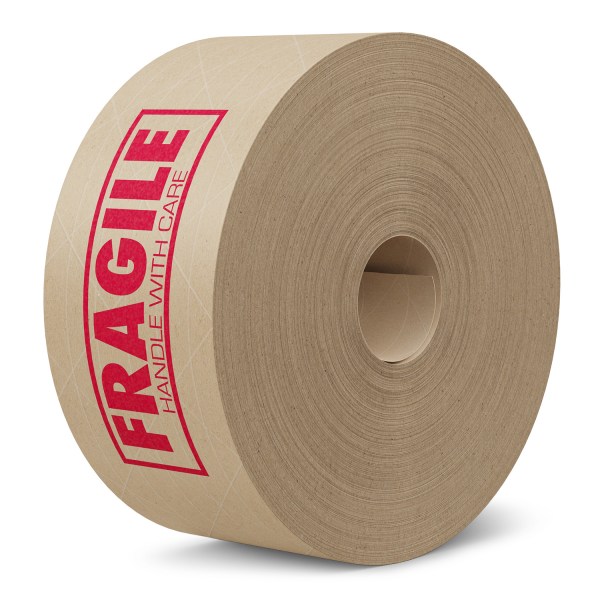
A stock image related to Industrial fragile tape.
3 Common User Pain Points for ‘Industrial fragile tape’ & Their Solutions
Scenario 1: Adhesion Failures in Extreme Temperatures and Humid Climates
問題だ: B2B buyers operating across Africa, Southeast Asia, and the Middle East frequently encounter seal failures when standard pressure-sensitive fragile tape faces high humidity, dust, or temperature swings. In tropical ports like Lagos or Ho Chi Minh City, acrylic adhesives soften and lose tackiness, while cold storage shipments to European markets experience condensation that lifts tape edges. This results in cartons opening during transit, exposing sensitive electronics, glassware, or aerospace components to damage and contamination. The financial impact extends beyond product replacement to customer dissatisfaction and supply chain delays.
解決策 Transition to industrial water-activated fragile tape featuring 3-way fiberglass reinforcement and natural kraft backing. Unlike standard options, WAT forms a molecular bond with corrugated fibers that strengthens rather than weakens with temperature fluctuations. For operations spanning climates, store inventory in controlled environments between 40°F and 120°F to maintain adhesive integrity. Implement dispensers with adjustable water temperature controls to ensure proper activation even in air-conditioned facilities. This technology maintains seal security from humid African warehouses through refrigerated European transport, handling cartons up to 55 pounds without peeling or flagging.
Scenario 2: How Can Industrial Fragile Tape Overcome Language Barriers in Global Supply Chains?
問題だ: International shipments to diverse markets across Nigeria, Brazil, and the UAE face critical handling challenges when generic fragile tape fails to communicate across language barriers. Standard printed messages often become obscured by dirt, shipping labels, or handling equipment, while plain tape offers zero brand differentiation. In busy logistics hubs where handlers process thousands of cartons hourly, unclear fragile identification leads to rough handling, stacking heavy items atop delicate goods, and costly breakage rates that damage both products and business relationships.
解決策 Deploy custom-printed industrial fragile tape with high-contrast red lettering featuring universal symbols—glass icons, directional arrows, and “This Side Up” graphics—alongside your company logo and handling instructions. Water-activated tape accepts sharp, durable printing that resists smudging and abrasion throughout multi-modal journeys. This approach transforms packaging into a mobile billboard, enhancing brand recognition in competitive B2B markets while ensuring handlers immediately recognize delicate contents regardless of local language proficiency. For food processing and appliance manufacturers, this also provides tamper-evident security, as removed tape visibly damages the carton surface.
Scenario 3: What Are the Best Practices for High-Volume Warehouse Operations Using Industrial Fragile Tape?
問題だ: High-volume warehouse operations struggle with productivity bottlenecks when using substandard fragile tape that breaks during automated dispensing, requires multiple strips for adequate security, or demands frequent roll changes. E-commerce fulfillment centers and auto aftermarket distributors face escalating labor costs and throughput delays when tape dispensers jam or operators must manually reinforce weak seals. Additionally, inconsistent inventory management of small tape quantities leads to stockouts during peak shipping periods, disrupting supply chain commitments and forcing expensive rush orders.
解決策 Implement reinforced industrial fragile tape optimized for two-strip sealing (top and bottom) using automated water-activated tape dispensers. The fiberglass reinforcement prevents tearing during high-speed application while providing superior tensile strength for cartons up to 25 kg. Procure in bulk cases—typically containing 10 rolls of 450-foot tape—to minimize procurement frequency and secure volume pricing advantages. Calibrate dispensers monthly to ensure consistent water flow and cutting precision, reducing material waste. This systematic approach streamlines case sealing operations, reduces per-package labor time, and ensures continuous availability for high-throughput environments handling fragile aerospace components, appliances, or electronics.
Strategic Material Selection Guide for Industrial fragile tape
Selecting the optimal substrate for industrial fragile tape requires balancing load-bearing capacity, environmental conditions, and supply chain sustainability goals. For procurement teams operating across diverse climates—from Nigeria’s humid ports to Europe’s refrigerated logistics networks—material composition directly impacts seal integrity and damage rates. Understanding the distinct performance profiles of available substrates enables strategic alignment between tape specifications and actual handling risks in international B2B supply chains.
Which Substrate Offers Superior Tamper Evidence for High-Value Fragile Shipments?
Fiberglass-reinforced water-activated kraft tape represents the industrial gold standard for securing sensitive electronics, glassware, and aerospace components. This material utilizes a natural kraft paper carrier embedded with tri-directional fiberglass strands, activated by water to form a permanent chemical bond with corrugated fibers. For buyers sourcing from Vietnamese manufacturing hubs or Middle Eastern distribution centers, this option provides exceptional shear strength—supporting cartons up to 25 kg—while creating immediate visual evidence of tampering through fiber tear upon removal. The adhesive penetrates recycled carton surfaces effectively, making it ideal for sustainable packaging initiatives. However, operations require capital investment in electric dispensers with moisture control systems, and application humidity must be precisely managed to prevent premature adhesion in tropical climates or weak bonding in arid environments.
How Does Pre
A stock image related to Industrial fragile tape.
In-depth Look: Manufacturing Processes and Quality Assurance for Industrial fragile tape
Industrial fragile tape serves as a critical interface between product protection and supply chain communication, requiring manufacturing precision that balances structural integrity with clear visual messaging. For procurement teams operating across Nigeria, Vietnam, and emerging European markets, understanding the technical specifications behind these water-activated solutions ensures consistent performance from humid tropical ports to temperature-controlled logistics hubs. The manufacturing journey transforms raw kraft paper and fiberglass into tamper-evident sealing systems capable of securing cartons up to 25 kilograms while communicating essential handling protocols.
How Is Fiberglass-Reinforced Water-Activated Tape Engineered for Industrial Use?
The manufacturing process begins with high-tensile natural kraft paper derived from virgin wood pulp or certified recycled fibers, selected specifically for fiber length and tear resistance. Manufacturers apply a three-way fiberglass reinforcement grid—comprising longitudinal and cross-directional yarns—using specialized laminating equipment that embeds the fibers into the paper substrate without compromising flexibility. This tri-directional reinforcement pattern creates a tear-resistant matrix that distributes stress across the entire seal rather than concentrating it at carton edges, preventing the “zipper effect” common in non-reinforced alternatives.
Following reinforcement, the substrate undergoes adhesive coating on the non-print side, where water-activated gum formulations—typically modified starch or synthetic resin blends—are applied via precision roller systems. The coating thickness, measured in grams per square meter, directly correlates with activation speed and ultimate bond strength. Critical process controls maintain adhesive viscosity within ±2% tolerance to ensure consistent tack development when subjected to varying water temperatures during dispenser application. The laminated material then passes through controlled drying chambers where moisture content is reduced to 6-8%, preventing premature activation while maintaining shelf stability for international shipping durations exceeding twelve months.
What Raw Material Specifications Determine Performance in Extreme Climates?
For buyers sourcing from manufacturers serving tropical African or Southeast Asian markets, substrate composition requires particular scrutiny. Premium industrial fragile tape utilizes long-fiber kraft paper with basis weights ranging from 70 to 120 grams per square meter, providing the structural backbone necessary to resist humidity-induced weakening. The fiberglass reinforcement typically employs E-glass or C-glass yarns with tensile strengths exceeding 1500 MPa, arranged in a 3x3mm or 4x4mm grid pattern that maintains integrity under shear stress common in non-unitized loads.
Adhesive formulation represents the most climate-sensitive component, with manufacturers offering specialized variants for high-humidity environments. Standard starch-based adhesives may degrade in conditions exceeding 85% relative humidity, prompting leading suppliers to incorporate fungicidal additives and synthetic resin modifiers that maintain bond integrity in monsoon-prone regions like Lagos or Ho Chi Minh City. Procurement teams should verify that suppliers conduct accelerated aging tests at 40°C and 90% humidity to simulate extended tropical storage conditions, ensuring the tape retains activation properties after prolonged warehouse exposure.
Which Quality Assurance Protocols Validate Tape Performance for Global Supply Chains?
Rigorous quality control encompasses both destructive and non-destructive testing protocols aligned with ASTM and ISO standards. Tensile strength testing per ASTM D3759 ensures the reinforced composite withstands minimum forces of 50-60 pounds per inch width, while peel adhesion testing (ASTM D3330) validates the aggressive tack necessary for immediate fiber tear upon removal. Shear resistance testing per ASTM D3654 measures the tape’s ability to maintain load under constant stress, with industrial-grade products demonstrating resistance exceeding 10,000 minutes at standard test loads.
Manufacturers implement statistical process control during slitting operations, monitoring width tolerances to ±0.5mm to prevent dispenser jamming in automated packaging lines. Print quality assurance involves spectrophotometric analysis to ensure “FRAGILE” messaging maintains minimum 4.5:1 contrast ratios against the natural kraft background, complying with accessibility standards while remaining legible after exposure to dust, moisture, and mechanical abrasion typical of Middle Eastern and South American logistics corridors. Additionally, fiber tear analysis on actual carton substrates verifies that adhesive penetration creates a permanent bond that destroys the carton surface upon removal, ensuring tamper evidence that pressure-sensitive alternatives cannot replicate.
How Do Production Facilities Ensure Print Durability and Regulatory Compliance?
The integration of handling instructions occurs through flexographic printing processes utilizing UV-cured or water-based inks specifically formulated for porous kraft substrates. Unlike pressure-sensitive tapes where printing occurs on plastic films, water-activated fragile tape requires ink penetration into paper fibers to prevent smearing during the wet application process. Advanced manufacturing lines employ corona treatment or flame treatment stations to enhance surface energy prior to printing, ensuring ink adhesion that survives the activation moisture and subsequent drying cycles without compromising the “FRAGILE” warning visibility.
Regulatory compliance varies by destination market, necessitating manufacturing flexibility. European buyers require REACH-compliant adhesive formulations free from specific phthalates and heavy metals, while FDA-compliant variants serve food processing applications common in North African and Middle Eastern export zones. Responsible manufacturers maintain ISO 9001:2015 quality management systems and ISO 14001 environmental certifications, with FSC chain-of-custody documentation increasingly requested by sustainability-focused procurement teams in Western Europe. For aerospace and automotive applications, suppliers may provide material certifications traceable to specific production batches, ensuring compliance with industry-specific quality mandates.
What Manufacturing Adaptations Support Infrastructure Challenges in Emerging Markets?
Recognizing that industrial fragile tape often deploys in regions with intermittent power supplies and variable water quality, manufacturers engineer dispenser-compatible formulations that activate reliably across a broad temperature spectrum (5°C to 40°C). Quality assurance extends to packaging integrity, with moisture-barrier film wrapping and desiccant inclusion preventing pre-
Practical Sourcing Guide: A Step-by-Step Checklist for ‘Industrial fragile tape’
Procuring industrial fragile tape for international supply chains requires balancing material integrity with customs compliance and handling visibility. This checklist guides procurement teams through critical specifications—from load-bearing capacity to tamper-evident features—ensuring your sensitive cargo arrives intact across diverse logistics environments while meeting regional packaging standards.
1. What Weight Capacity Should Your Fragile Tape Support?
Begin by calculating your maximum carton weight during transit, including dynamic stress factors from rough handling. Industrial fragile tape typically secures cartons up to 25 kg (55 pounds), but verify that your selected reinforced fiberglass backing accommodates your specific load stress without delamination. For heavier fragile shipments exceeding this threshold, consider hybrid sealing methods or upgraded reinforced grades to prevent seal failure during international air freight handling.
2. Is Fiberglass-Reinforced Water-Activated Tape Necessary for Your Shipments?
Determine whether your logistics profile requires reinforced water-activated tape (WAT) versus standard pressure-sensitive alternatives. Three-way fiberglass reinforcement bonds aggressively with corrugated fibers, creating a permanent, tamper-evident seal ideal for recycled cartons and non-unitized loads common in developing markets. This construction proves essential for aerospace, appliance, and food processing exports where humidity fluctuations and temperature extremes compromise traditional adhesive performance during ocean transit.
3. What Tape Dimensions and Print Specifications Ensure Safe Handling?
Standard industrial fragile tape widths range from 48mm to 72mm (2-3 inches), with 3-inch widths providing superior holding power for recommended two-strip sealing methods on top and bottom carton seams. Verify that printed “Fragile – Handle With Care” messaging uses high-contrast red lettering visible under dim warehouse lighting and through dust accumulation. Specify roll lengths (typically 450 feet) that minimize changeover frequency during high-volume packaging operations while ensuring compatibility with your dispenser capacity.
4. How Does Your Tape Provide Tamper Evidence for International Shipments?
Evaluate tamper-evident properties critical for cross-border B2B shipments and insurance validation. Quality water-activated tapes bond permanently with carton fibers; removal destroys the tape and leaves irreparable fiber damage. Confirm that your supplier provides Technical Data Sheets documenting that the adhesive leaves permanent void patterns when disturbed—essential for resolving disputes and chain-of-custody verification in e-commerce, auto aftermarket, and high-value electronics logistics.
5. Which Environmental Compliance Standards Apply to Your Target Markets?
Verify eco-friendly certifications relevant to destination markets, particularly EU packaging waste regulations and emerging sustainability mandates in African and Middle Eastern trade corridors. Natural kraft paper backings with water-activated adhesives typically offer biodegradable advantages and recyclability over plastic alternatives. Request Safety Data Sheets and environmental compliance documentation to prevent customs delays and demonstrate corporate sustainability commitments to international partners.
6. What Dispensing Equipment and Infrastructure Support Your Operations?
Coordinate tape specifications with available dispensing infrastructure and local technical capabilities. Manual dispensers suit low-volume operations in emerging markets, while automated case sealers require specific tape thicknesses and reinforcement patterns. Ensure your facility can accommodate water-activated tape systems requiring moistening brushes or heaters, particularly in arid climates where rapid evaporation affects adhesive activation. Validate that equipment voltage, frequency, and safety specifications match local electrical standards in your procurement region to avoid operational incompatibility.
A stock image related to Industrial fragile tape.
Comprehensive Cost and Pricing Analysis for Industrial fragile tape Sourcing
Industrial fragile tape sourcing requires understanding material specifications, reinforcement grades, and regional logistics to optimize procurement budgets. For buyers in Nigeria, Vietnam, and emerging European markets, balancing upfront material costs against total cost of ownership reveals significant savings opportunities beyond simple per-roll pricing. Water-activated tape (WAT) systems utilizing natural kraft substrates with fiberglass reinforcement typically present higher initial investments than pressure-sensitive alternatives, yet deliver superior security and damage prevention for high-value shipments moving through challenging supply chain corridors.
What factors determine the per-roll cost of industrial fragile tape?
Natural kraft paper substrates with water-activated adhesives typically command 20-30% higher unit costs than synthetic BOPP alternatives, but offer superior tamper evidence and recyclability that appeals to European sustainability mandates. Reinforced variants incorporating three-way fiberglass filaments add 15-25% to base material costs while enabling secure sealing of cartons up to 25 kilograms without additional strapping. Custom printing with “Fragile – Handle With Care” messaging introduces plate fees ranging from $200-$500 and minimum order quantities starting at 10-roll cases, though standard printed stock often eliminates setup charges for mid-volume buyers seeking immediate brand protection.
How does reinforcement impact long-term packaging economics?
Fiberglass-reinforced water-activated tape creates permanent bonds with corrugated fibers, reducing the incidence of carton reopening during multi-modal shipping through African and South American logistics networks characterized by rough handling and extreme temperature fluctuations. While reinforced rolls cost more initially, the elimination of secondary strapping, corner protectors, or double-boxing on non-unitized loads often reduces overall packaging spend by 8-12% annually. For aerospace, appliance, and auto aftermarket exporters, this reinforcement prevents costly damage claims on shipments exceeding 55 pounds, delivering ROI through reduced insurance premiums and customer complaints.
What regional pricing variables should international buyers anticipate?
Sourcing water-activated tape from North American manufacturers involves evaluating freight density charges, as 450-foot rolls of reinforced kraft tape weigh substantially more than acrylic alternatives, impacting container utilization for buyers in Lagos or São Paulo. Buyers in the Middle East and Southeast Asia must factor humidity-controlled storage requirements into landed costs, as WAT adhesives activate prematurely in high-moisture climates without climate-controlled warehousing. Vietnamese manufacturers increasingly offer competitive pricing on reinforced kraft tapes, though quality consistency in fiberglass strand density varies significantly between regional suppliers, potentially increasing waste rates by 3-5%.
How can procurement teams optimize total cost of ownership?
Consolidating purchases into quarterly volumes rather than monthly spot-buying typically unlocks 12-18% volume discounts on case quantities of 10 or more rolls while reducing administrative overhead. Investing in electric tape dispensers with integrated heaters and cutting mechanisms reduces labor application time by 40% compared to manual wetting, amortizing equipment costs within 6-8 months for operations sealing 500+ cartons daily. Additionally, specifying standardized 3-inch widths across your facility prevents SKU proliferation, simplifies inventory management across multiple international distribution centers, and enables bulk purchasing leverage with single-source suppliers capable of serving African and European markets simultaneously.
Strategic fragile tape procurement balances material specifications against operational efficiency, with reinforced water-activated solutions offering the strongest cost-to-protection ratio for heavy or sensitive cargo.
Alternatives Analysis: Comparing Industrial fragile tape With Other Solutions
When evaluating packaging protocols for fragile goods, procurement teams must weigh security against operational velocity. While industrial fragile tape—specifically reinforced water-activated tape (WAT) with printed warnings—provides a tamper-evident, structural seal, alternative methods exist that may suit different logistical constraints, budget cycles, or automation levels. Below is a functional comparison against two common substitutes: pre-printed pressure-sensitive tape and the standard tape-plus-label hybrid approach.
| 比較の側面 | Industrial Fragile Tape (Reinforced WAT) | Pre-Printed Pressure-Sensitive Tape | Standard Tape + Adhesive Fragile Labels |
|---|---|---|---|
| Security & Tamper Evidence | Superior; bonds permanently to carton fibers, tears visibly upon removal | Moderate; can be peeled and reseated without detection | Poor; labels are transferable, tape offers no tamper indication |
| Load Capacity | Up to 25 kg (55 lbs) with fiberglass reinforcement | 10–20 kg depending on mil thickness; no structural support | Dependent on tape grade only; typically under 15 kg |
| アプリケーション・スピード | Moderate; requires water activation and 1–2 seconds set time | High; immediate tack, ideal for high-speed automation | Low; two-step manual process increases handling time |
| 機材要件 | Water-activated tape dispenser (manual or electric) | Hand dispenser or automated case sealer | Hand dispensers only |
| Cost Structure | Higher material cost, lower per-seal cost at volume, higher initial equipment investment | Lower material cost, minimal equipment cost | Lowest material cost, no equipment cost, high labor cost |
| 気候への抵抗 | Excellent; performs in extreme heat, cold, and humidity (critical for Africa, Middle East) | Variable; acrylic adhesives may flag in high heat (>40°C) or lose tack in humidity | Poor; adhesive labels prone to detachment in humid conditions (e.g., Vietnam, Nigeria) |
| Recycled Carton Compatibility | Excellent; penetrates and bonds with recycled fibers | Moderate; surface adhesion only, struggles with dusty boards | Poor; labels may not adhere to corrugated texture |
| Sustainability | Recyclable with box, paper-based, biodegradable | Plastic film (BOPP), difficult to recycle separately | Mixed waste streams, label adhesive contamination |
How Does Pre-Printed Pressure-Sensitive Tape Compare for Secure Export Packaging?
This alternative appeals to operations prioritizing line speed and minimal capital expenditure, particularly in European manufacturing hubs with climate-controlled facilities. While suitable for lighter cartons, it presents significant risks for international B2B shipments traversing the varied climates of Africa, South America, or the Middle East. The acrylic adhesive common in these tapes can soften in extreme heat or lose tack in high humidity—conditions prevalent in ports like Lagos or Ho Chi Minh City—potentially leading to carton opening during transit. Furthermore, unlike reinforced WAT, pressure-sensitive tape provides no structural support to cartons and can be removed and replaced without leaving evidence of tampering, compromising supply chain integrity for high-value fragile goods.
Is the Standard Tape-and-Label Method Cost-Effective for International Shipments?
Often selected for its apparent upfront savings, this hybrid method introduces hidden operational inefficiencies and liability risks that challenge its viability for export markets. The dual-application process—sealing with tape, then precisely placing labels—increases packing time by 30–50% compared to single-strip WAT application, elevating labor costs that often negate material savings. More critically, adhesive labels are prone to edge lifting and complete detachment during multi-modal transport, leaving handlers unaware of contents fragility. From a security standpoint, both components can be removed and reapplied with simple tools, offering no protection against pilferage or concealed damage, making it unsuitable for shipments facing multiple handling points in complex customs environments.
Essential Technical Properties and Trade Terminology for Industrial fragile tape
For procurement teams sourcing packaging solutions across diverse climates and logistics networks—from Lagos to Ho Chi Minh City—understanding the technical distinctions of fragile tape ensures cargo integrity and compliance with international shipping standards. Industrial-grade fragile tape functions not merely as a messaging tool but as a structural reinforcement system that must withstand humidity, temperature fluctuations, and mechanical stress during multi-modal transit.
What Load-Bearing Specifications Are Critical for Industrial Fragile Tape?
Industrial fragile tape typically utilizes 3-way fiberglass reinforcement, creating a bidirectional grid pattern that significantly enhances tensile strength compared to standard paper tapes. This fiberglass scrim, embedded within natural kraft paper substrates, enables the tape to withstand longitudinal and cross-directional stress, supporting carton loads up to 25 kilograms (55 pounds) without seam burst. Procurement officers should verify the basis weight of the kraft paper—measured in grams per square meter (GSM)—with industrial grades ranging between 120-150 GSM for optimal fiber tear resistance and puncture durability during handling.
How Does Water-Activated Adhesive Technology Impact Sealing Performance?
Unlike pressure-sensitive acrylic adhesives, water-activated tape (WAT) utilizes starch-based adhesives that penetrate the corrugated fibers of carton board, creating a chemical bond that becomes part of the box structure itself. This permanent adhesion offers superior tamper evidence, as removal destroys the tape and leaves visible fiber damage, crucial for high-value electronics and pharmaceutical shipments. The adhesive activation requires specific moisture levels; therefore, buyers in humid climates like West Africa should specify moisture-resistant adhesive formulations to prevent premature activation during storage.
What Temperature Resistance Ratings Ensure Cross-Border Reliability?
For shipments traversing Middle Eastern deserts or tropical Southeast Asian logistics hubs, temperature resistance specifications become non-negotiable. Premium fragile tapes maintain adhesive integrity across ranges of -10°C to 60°C (14°F to 140°F), preventing delamination or adhesive flow that compromises seal strength. Additionally, print durability—specifically the scuff resistance of red “Fragile” warning text—must withstand abrasion during conveyor handling, ensuring handlers retain visibility of handling instructions throughout the supply chain.
What Is “WAT” and Why Does It Matter for Secure Sealing?
Water-Activated Tape (WAT), commonly referred to as gummed tape in European markets, requires moisture activation to trigger adhesive properties. This distinguishes it from pressure-sensitive alternatives and enables the two-strip sealing method—a standard industry practice involving separate tape applications for carton top and bottom closures that creates redundant security layers. Understanding WAT terminology helps buyers specify compatible dispensing equipment, as these systems require integrated water brushes or moistening mechanisms rather than standard tape guns.
What Does “Non-Unitized Load” Compatibility Indicate?
Non-unitized loads refer to individual cartons shipped without pallet consolidation or stretch-wrap containment, common in less-than-truckload (LTL) African and South American logistics networks. Fragile tape specified for non-unitized applications must possess enhanced edge tear resistance and shear strength to withstand individual carton handling, stacking stress, and potential corner impacts that unitized loads avoid. This term directly impacts tape specification decisions, as unitized shipments may tolerate lower-grade sealing solutions.
How Does “Fiberglass Scrim” Reinforcement Pattern Affect Performance?
Fiberglass scrim describes the lattice-style reinforcement grid—typically configured in machine direction, cross direction, and diagonal patterns—that provides dimensional stability to kraft paper tapes. Procurement teams should distinguish between mono-directional and 3-way scrim patterns, with the latter offering superior resistance to twisting forces during transit. This technical term correlates directly with the tape’s ability to maintain seal integrity when cartons encounter shear forces during air freight turbulence or rough-road trucking conditions common in developing infrastructure regions.
Navigating Market Dynamics and Sourcing Trends in the Industrial fragile tape Sector
The industrial fragile tape sector is experiencing significant transformation as global supply chains prioritize product safety alongside operational efficiency. For procurement teams across emerging markets in Africa, South America, the Middle East, and Europe, understanding the shift from conventional packaging solutions to specialized reinforced water-activated tape (WAT) systems is critical. These solutions not only secure shipments up to 25 kilograms but also provide visible tamper evidence and handling instructions essential for high-value electronics, aerospace components, and food processing equipment navigating complex multi-modal logistics networks.
What Are the Emerging Trends Shaping the Industrial Fragile Tape Market?
The global surge in e-commerce fulfillment and cross-border trade has fundamentally altered demand patterns for protective packaging solutions, with particular intensity in rapidly industrializing economies. Buyers across Nigeria, Vietnam, and the broader Middle East are increasingly specifying fiberglass-reinforced water-activated tapes over traditional pressure-sensitive alternatives. This transition is driven by superior adhesion characteristics on recycled corrugated surfaces and enhanced load integrity during transportation, where cartons face handling variability across diverse climate conditions and non-unitized loading environments.
Automation represents another critical inflection point for procurement strategies. Modern distribution centers are integrating high-speed WAT dispensers capable of executing precise two-strip sealing protocols, standardizing the application of high-visibility “Fragile – Handle With Care” messaging while simultaneously reducing material waste. The technology’s compatibility with recycled carton stock addresses growing regulatory pressures in European markets, while providing the tensile strength necessary for securing shipments in aerospace, appliance manufacturing, and food processing sectors. The integration of red letter printing serves dual functions: clear communication to logistics handlers and immediate visual authentication for tamper evidence upon delivery.
Regional sourcing dynamics are also evolving beyond simple cost considerations. While North American manufacturers currently dominate premium reinforced tape production, savvy buyers in South America and Africa are exploring diversified supplier portfolios to mitigate currency volatility and extended shipping lead times. The emergence of regional converting operations—where bulk tape stocks are slit, printed, and distributed locally—offers procurement teams significant logistics advantages without compromising the technical specifications required for refrigerated transport or high-security applications.
How Can B2B Buyers Ensure Sustainable and Ethical Sourcing of Fragile Tape?
Sustainability has transitioned from a marketing differentiator to a core procurement mandate, particularly for buyers serving EU markets with stringent packaging waste directives. Industrial fragile tape constructed from natural kraft paper with water-activated starch adhesives presents a distinct circular economy advantage, as these materials are fully recyclable within standard cardboard waste streams. Unlike synthetic pressure-sensitive tapes that contaminate pulping processes, quality WAT solutions bond molecularly with carton fibers, eliminating labor-intensive separation requirements at recycling facilities and supporting corporate zero-waste objectives.
Ethical sourcing considerations extend beyond material composition to encompass manufacturing transparency and supply chain stewardship. Procurement teams should verify that suppliers adhere to responsible forestry certifications for kraft paper sourcing and maintain rigorous water stewardship standards in adhesive production facilities. For buyers in South America and Africa, where import logistics constitute significant carbon footprints, evaluating the trade-offs between lightweight synthetic alternatives and heavier reinforced WAT rolls becomes a complex sustainability calculation. While reinforced WAT offers superior security for high-value goods, the shipping density of water-activated systems requires strategic optimization of order volumes to minimize transport emissions.
Supply chain resilience demands rigorous vendor assessment and relationship management. Given that premium reinforced fragile tape often originates from specialized North American or European converters, buyers must evaluate supplier financial stability and contingency planning capabilities. Establishing direct relationships with manufacturers rather than intermediaries ensures access to comprehensive technical data sheets, batch traceability, and compliance documentation required for aerospace certifications or food-grade applications. Furthermore, negotiating consignment inventory arrangements or regional warehousing partnerships can buffer against the extended lead times and customs complexities that characterize ocean freight routes to emerging markets.
Frequently Asked Questions (FAQs) for B2B Buyers of Industrial fragile tape
1. What is the difference between industrial fragile tape and standard fragile tape for international shipping?
Industrial fragile tape utilizes 3-way fiberglass reinforcement embedded in natural kraft paper with water-activated adhesive, creating a permanent chemical bond with carton fibers that standard polypropylene tapes cannot achieve. While standard pressure-sensitive fragile tape merely sits on the surface and can be repositioned, industrial-grade variants become tamper-evident upon removal and withstand the rigorous handling common in multi-modal logistics through Lagos, Dubai, or Ho Chi Minh City ports. For B2B exporters managing non-unitized loads or recycled cartons, industrial tape provides the tensile strength necessary to prevent seal failure during transcontinental transit.
2. Can industrial fragile tape be customized with company logos and multilingual handling instructions?
Yes, industrial water-activated fragile tape supports high-quality flexographic printing that accommodates corporate branding, country-specific handling protocols, and regulatory compliance symbols in multiple languages. Unlike standard printed tape that may smudge in humid climates, reinforced kraft paper provides a premium canvas for up to 3-color printing that remains legible throughout the shipping cycle. B2B buyers should anticipate minimum order quantities of 50-100 cases and 2-3 week lead times for custom printing, with design specifications optimized for the 3-inch width standard commonly used in automated case sealing systems.
3. What temperature ranges can industrial fragile tape withstand in cold storage and refrigerated shipping environments?
Premium industrial fragile tapes perform reliably across temperatures ranging from -20°C to 60°C (-4°F to 140°F), making them suitable for cold chain logistics in food processing, pharmaceutical exports, and refrigerated transport storage. The fiberglass reinforcement prevents the kraft paper from becoming brittle in freezer conditions, while the starch-based water-activated adhesive maintains bond strength where pressure-sensitive acrylics might fail. For operations in extreme cold storage below -20°C, specify freezer-grade formulations that resist adhesive crystallization and maintain seal integrity during temperature fluctuations common in Middle Eastern and European transit corridors.
4. How many rolls come in a bulk case of industrial fragile tape for high-volume warehouse operations?
Standard industrial packaging contains 10 rolls per case, with each roll typically dimensioned at 3 inches (72mm) by 450 feet (137 meters), yielding approximately 4,500 linear feet of sealing material. For high-volume operations utilizing two-strip sealing (top and bottom), this translates to roughly 1,125 sealed cartons per case, depending on box dimensions. B2B procurement teams in Nigeria, Vietnam, and South America should calculate monthly consumption against these metrics, considering that palletized shipments of 30-50 cases optimize container utilization and reduce per-unit freight costs for import-dependent markets.
5. How does water-activated fragile tape compare to pressure-sensitive fragile tape for cross-border B2B logistics?
Water-activated tape (WAT) creates a mechanical bond that penetrates corrugated fibers, becoming permanently tamper-evident upon removal, whereas pressure-sensitive tape (PST) relies on surface adhesion that can be resealed undetected using heat or solvents. For shipments traversing multiple customs checkpoints and handling facilities, industrial WAT offers superior tensile strength exceeding 100 lbs/inch, preventing “pop-opens” during automated sorting and stacking. Though WAT requires initial investment in electric dispensers with heated water reservoirs, the material cost per seal often proves 15-20% lower than PST for high-volume exporters due to reduced waste and elimination of additional reinforcement tape.
6. What weight capacity should B2B buyers specify when selecting industrial fragile tape for heavy industrial cartons?
Industrial reinforced fragile tapes are engineered for cartons weighing up to 55 pounds (25 kg) when applied using the recommended two-strip sealing method on both top and bottom flaps. For automotive aftermarket parts, appliances, or aerospace components exceeding this threshold, specify heavy-duty grades with increased fiberglass density or complementary edge reinforcement systems. Procurement teams should verify that tape specifications match non-unitized load requirements, as individual cartons in African and South American logistics networks often endure manual handling and irregular stacking patterns that exceed standard stress parameters.
7. How can industrial fragile tape serve as tamper-evident security for high-value B2B shipments?
Once activated, industrial water-activated fragile tape bonds molecularly with carton fibers; any removal attempt visibly damages both the tape and box surface, creating immediate evidence of interference that pressure-sensitive alternatives cannot provide. The 3-way fiberglass reinforcement prevents “tunneling”—the creation of hidden openings to access contents without breaking the seal—while high-contrast “FRAGILE” printing in red serves as a psychological deterrent. For electronics and pharmaceutical exports, specify security-grade tapes featuring sequential numbering or micro-perforations that reveal “VOID” messaging upon disturbance, satisfying chain-of-custody requirements for sensitive cargo entering European and Middle Eastern markets.
8. What dispenser equipment is required for applying industrial water-activated fragile tape at commercial scale?
Industrial water-activated fragile tape requires manual dispensers with brush-based water application for operations sealing fewer than 50 cartons daily, or electric dispensers with heated reservoirs and precise length cutters for automated lines processing 500+ cartons hourly. Electric models like the Better Pack 555eS series provide consistent moisture activation critical for maintaining adhesion in the humid climates of Southeast Asia and West Africa, where manual application might yield inconsistent results. B2B buyers should factor in water quality standards—filtered or distilled water prevents mineral buildup—and establish maintenance schedules for brush replacement to ensure continuous operation during peak shipping seasons.
重要な免責事項および利用規約
⚠️ 重要な免責事項
メーカー、技術仕様、市場分析に関する内容を含め、本ガイドラインで提供される情報は、情報提供と教育目的のみのものです。専門的な調達アドバイス、財務アドバイス、または法的アドバイスを提供するものではありません。.
B2Bバイヤーは、独自の徹底的なデューデリジェンスを行う必要がある。 をご覧の上、ご購入をお決めください。本ガイドに記載された情報を信頼した場合のリスクは、読者が単独で負うものとします。.
Top 2 Industrial Fragile Tape Manufacturers & Suppliers List
1. Tape Suppliers – Industrial Adhesive Tapes
ドメイン tapesuppliers.com
登録:2007年(19年)
はじめに Product categories include 3M Tape, Adhesive Tape, Carpet Tape, Cloth Tape, Duct Tape, Electrical Tape, Foam Tape, Foil Tape, High Temperature Tape, Masking Tape, PTFE Tape, Sealing Tape, Teflon Tape, and Vinyl Tape. Services offered include die cutting. Manufacturers provide tape products and services to meet specific company qualifications.
2. Taglues – 3M & CCT Industrial Tapes
ドメイン タグルードットコム
登録:2024年(2年間)
はじめに 3M: VHB high-strength double-sided tape, industrial tape, automotive tape, electrical tape, medical tape for building curtain walls, automotive structural bonding, and electronic equipment assembly. CCT Tape: Over 300 product types including industrial tape, medical tape, high-performance pressure-sensitive tapes for door/window manufacturing, medical industry, and optical equipment. MBK Tape Solu…
Strategic Sourcing Conclusion and Outlook for Industrial fragile tape
How Can Emerging Markets Optimize Fragile Tape Specifications for Climate Resilience?
For B2B buyers operating in high-humidity regions such as Southeast Asia, West Africa, and Latin America, selecting reinforced water-activated tape (WAT) with fiberglass matrix construction offers superior adhesion integrity compared to pressure-sensitive alternatives. The natural kraft substrate bonds aggressively to recycled corrugated surfaces, ensuring carton security remains uncompromised during monsoon seasons or refrigerated transport chains. This reliability directly reduces damage claims for shipments up to 25 kilograms while eliminating the “flagging” failures common in extreme temperature fluctuations.
What Strategic Value Does Tamper-Evident Branding Deliver?
Beyond physical protection, printed “Fragile” messaging in high-visibility red serves dual functions: immediate handling instructions for logistics personnel and implicit brand quality signaling. As e-commerce penetration accelerates across Nigeria, Vietnam, and the Middle East, this visual cue becomes essential for customer experience management, deterring pilferage in complex multi-modal supply chains while communicating care standards to end recipients.
How Should Buyers Align Procurement with Global Sustainability Mandates?
With increasing regulatory scrutiny on single-use plastics and packaging waste across European and emerging markets, specifying eco-friendly WAT solutions manufactured from renewable kraft paper positions procurement teams ahead of compliance curves. Forward-thinking sourcing strategies should prioritize suppliers offering consistent two-strip sealing protocols and comprehensive technical documentation, ensuring operational continuity while meeting corporate ESG targets across diverse industrial applications from aerospace components to food processing equipment.