Introduction: Navigating the Global Market for Automotive masking tape
いつ sourcing automotive masking tape for high-volume collision repair facilities or OEM finishing operations, procurement teams across Africa, South America, the Middle East, and Europe face a critical challenge: balancing superior adhesive performance with cost efficiency while navigating complex global supply chains and varying regional quality standards. The wrong specification can lead to paint bleed-through, residue adhesion, or production delays that compromise profitability in competitive markets from Johannesburg to Riyadh.
What Critical Factors Should Global Buyers Evaluate When Selecting Automotive Masking Tape?
This comprehensive guide addresses the complete procurement ecosystem for professional-grade masking solutions. We examine specialized tape categories—including high-temperature crepe paper for bake cycles, soft-edge foam for seamless blending, and precision vinyl for intricate trim masking—alongside their specific applications in automotive refinishing and manufacturing. Beyond product specifications, we provide frameworks for vetting international suppliers, analyzing total cost of ownership versus unit pricing, and ensuring compliance with regional automotive standards prevalent in Germany’s precision-driven market or Saudi Arabia’s extreme climate conditions.
How Can This Guide Transform Your Cross-Border Purchasing Decisions?
Whether you are establishing new supplier relationships in emerging markets or optimizing existing procurement channels across Europe, this resource equips you with actionable insights to mitigate supply risks, ensure consistent quality across batches, and negotiate favorable terms. By understanding material science fundamentals and regional logistics nuances, you will make informed purchasing decisions that protect your margins while delivering flawless paint finishes that meet global OEM standards.
Understanding Automotive masking tape Types and Variations
| タイプ名 | 主な特徴 | 主なB2Bアプリケーション | バイヤーのための簡単な長所と短所 |
|---|---|---|---|
| High-Performance Crepe Paper Tape | Green or yellow saturated paper backing; rubber-based adhesive; withstands bake cycles up to 110°C/230°F; UV-resistant; clean removal | Full vehicle refinishing; high-temperature paint booth operations; OEM collision repair; fleet maintenance | Pros: No bleed-through, reliable adhesion to metal, residue-free removal after baking. Cons: Premium pricing; unsuitable for low-temp air-dry systems where economy tapes suffice |
| Soft Edge Foam Masking Tape | Compressible cellular foam structure; flexible core; creates feathered paint edge; available in various thicknesses | Door jambs; hood and trunk edges; tailgate openings; areas requiring blended paint transitions | Pros: Eliminates hard paint lines; reduces rework time; conforms to gaps. Cons: Higher material cost; risk of foam residue in high-heat booths if low-grade variants purchased |
| Precision Polytape/Fine Line | Thin PVC or polyester film backing; ultra-flexible; high-precision adhesion; solvent-resistant | Two-tone designs; custom graphics; pinstriping; complex curve masking; restoration detailing | Pros: Exceptional line sharpness; prevents solvent bleed; conforms to tight radii. Cons: Limited heat resistance (typically <80°C); not for standard bake cycles; higher per-meter cost |
| Vinyl Contour Tape (Plastic Tape) | PVC backing; non-crepe; highly conformable; plasticizer-resistant adhesive; residue-free removal | Masking rubber trim; plastic bumpers; windshield moldings; curved composite panels; sensitive substrates | Pros: Flexible on complex curves; no adhesive transfer to plastics; UV-stable for outdoor use. Cons: Low heat tolerance; requires manual application precision; limited structural strength |
What are the best high-temperature masking tapes for automotive paint booths?
High-performance crepe paper tapes feature specialized rubber-based adhesives formulated to withstand sustained bake temperatures exceeding 110°C without adhesive transfer or tape failure. These products utilize saturated paper backings that resist moisture penetration from waterborne coatings while maintaining conformability around complex vehicle contours. For B2B procurement teams managing high-volume collision centers and OEM facilities, selecting tapes with proven clean-removal technology minimizes post-paint cleanup labor and customer comebacks. When sourcing, verify compatibility with both solvent-borne and waterborne basecoat systems, as adhesive formulations vary significantly between manufacturers regarding bleed-through resistance during extended high-temperature bake cycles.
How does soft edge foam tape improve collision repair quality?
Soft edge foam masking tape utilizes a compressible cellular structure that creates a gradual paint thickness transition rather than a hard, sharp edge, effectively eliminating the visible tape line common in conventional masking. This technology proves critical when masking door jambs, trunk openings, and hood edges where panels meet at acute angles and traditional methods require extensive blending. The foam compresses during tape application, allowing overspray to feather naturally into the masked area. B2B buyers should evaluate foam density and adhesive aggressiveness, as low-quality variants may leave foam residue in hot booth environments or fail to adhere to oily surfaces common in repair shops.
When should B2B buyers choose precision polytape over standard masking tape?
Precision polytape, constructed from thin PVC or polyester films rather than crepe paper, serves specialized applications requiring extremely sharp paint demarcation lines and intricate geometric patterns. Unlike fibrous paper tapes, these polymer-based solutions prevent solvent absorption that causes edge bleeding during basecoat application, making them ideal for two-tone schemes, racing stripes, and intricate OEM restoration patterns. However, procurement specialists must recognize temperature limitations—most precision tapes max out at 60-80°C, restricting them to air-dry or low-bake clearcoat operations. For custom shops and premium detailing businesses serving luxury markets, the superior line definition justifies the premium material cost despite limited thermal resistance.
Why is vinyl contour tape essential for modern vehicle trim masking?
Vinyl contour tape addresses the critical challenges posed by modern automotive plastics, rubber moldings, and sensitive trim pieces that standard paper tapes cannot accommodate without adhesive residue or backing failure. The PVC construction offers 360-degree conformability around windshield gaskets, bumper contours, and mirror housings while resisting plasticizer migration that causes standard rubber adhesives to gum up and stain substrates. B2B buyers sourcing for multi-brand service centers should prioritize tapes with UV-stable backings suitable for extended outdoor masking during large fleet projects. While unsuitable for high-temperature curing ovens, these specialized tapes eliminate costly trim replacement from adhesive damage on sensitive substrates.
Key Industrial Applications of Automotive masking tape
| 業界/セクター | Specific Application of Automotive masking tape | ビジネスにとっての価値/利益 | このアプリケーションにおける主な調達上の考慮事項 |
|---|---|---|---|
| Automotive Collision Repair & Refinishing | Precision masking during multi-stage painting, blending, and clear coat application; protecting trim, glass, and rubber seals during bake cycles | Reduces rework costs by 40-60%; ensures clean paint edges without bleed-through; protects sensitive OEM components from overspray damage | Heat resistance up to 120°C for infrared drying; UV-stable adhesive for tropical climates (Africa/South America); bulk packaging for high-volume throughput |
| Aerospace Manufacturing & MRO | Masking aircraft aluminum skins during chemical milling, anodizing, and composite bonding; protecting avionics during repainting | Prevents costly substrate damage; meets stringent aviation safety standards; enables complex multi-zone masking without residue contamination | Flame retardancy certifications (FAR 25.853); residue-free removal after extended bake cycles; compliance with AS9100 quality standards; chemical resistance to aviation solvents |
| Marine & Offshore Equipment | Protecting gel coat and fiberglass during hull repair, anti-fouling application, and topside refinishing; masking hardware during teak deck restoration | Resists saltwater corrosion during outdoor application; prevents osmotic blistering from trapped moisture; enables sharp color transitions on curved hull surfaces | Waterproof backing with marine-grade adhesive; high humidity performance (Gulf Coast/Southeast Asia); UV resistance for tropical sun exposure; clean removal from gel coat without ghosting |
| Heavy Machinery & Agricultural Equipment | Masking hydraulic cylinders, engine blocks, and chassis during powder coating, e-coating, and wet painting; protecting threads and fittings | Withstands aggressive chemical pretreatment (phosphate conversion); clean removal from textured cast metal; reduces masking labor time in high-volume production | Thickness consistency for automated tape dispensers; resistance to 200°C+ powder coating ovens; cost-effective bulk procurement for emerging market manufacturing hubs |
| Electronics & EV Battery Manufacturing | Insulating circuit boards, bus bars, and battery housings during conformal coating, thermal management spraying, and potting | Prevents short circuits; provides precision width tolerance (±0.5mm); static-dissipative properties protect sensitive components | ESD-safe materials (surface resistance 10^6-10^9 ohms); silicone-free adhesive to prevent contamination; compatibility with automated precision application systems; clean room packaging |
How does automotive masking tape improve efficiency in high-volume collision centers?
In high-throughput collision repair facilities across Germany and Saudi Arabia, automotive masking tape serves as the critical barrier between precision paintwork and costly overspray errors. Advanced crepe paper formulations withstand infrared drying cycles up to 110°C while conforming to complex bumper contours and A-pillars. For emerging markets in Africa and South America, UV-stable adhesives prevent tape failure during outdoor repairs in intense tropical sunlight, ensuring that multi-day projects maintain clean masking lines without adhesive transfer to fresh clear coat surfaces.
What role does specialized masking tape play in aircraft maintenance and manufacturing?
Aerospace MRO facilities require masking solutions that endure aggressive chemical processing while meeting strict flame-resistance regulations. High-performance automotive-grade tapes adapted for aviation use provide clean demarcation during aluminum anodizing and composite sanding operations, crucial for Middle Eastern aviation hubs expanding their maintenance capabilities. These applications demand residue-free removal even after prolonged exposure to aircraft cleaning solvents, preventing surface contamination that could compromise structural bonding integrity in critical flight components.
How can marine manufacturers prevent osmotic blistering during gel coat repairs?
Marine repair yards from the Mediterranean to Southeast Asian shipyards rely on moisture-resistant masking tapes to protect gel coat during fiberglass lamination and bottom painting. The salt-rich, high-humidity environments typical of coastal South America and African ports require tapes with specialized waterproof backings that prevent adhesive hydrolysis. Proper specification prevents the tape from becoming a source of osmotic blistering itself—a common failure mode when standard paper tapes trap moisture against hull surfaces during extended outdoor curing periods.
What specifications ensure masking tape performance in agricultural equipment manufacturing?
Agricultural and construction equipment manufacturers utilize heavy-duty automotive masking tapes to mask threaded fittings and hydraulic ports during powder coating processes. These applications require tapes that withstand aggressive phosphate pretreatment baths and electrostatic coating environments prevalent in European industrial manufacturing. For buyers in emerging markets, selecting tapes with consistent roll thickness ensures compatibility with automated dispensing systems, reducing labor costs while preventing coating contamination that could impair equipment functionality in dusty, high-vibration field conditions.
Why do EV battery manufacturers require automotive-grade precision masking?
Electric vehicle battery pack assembly facilities employ narrow-width automotive masking tapes to insulate bus bars and cooling plates during thermal interface material application. This emerging application requires electrostatic discharge (ESD) safe formulations and silicone-free adhesives to prevent contamination of sensitive lithium-ion cells. As battery manufacturing expands across Europe and the Middle East, procurement teams prioritize tapes that integrate with robotic application systems while maintaining precise width tolerances essential for high-density energy storage configurations.
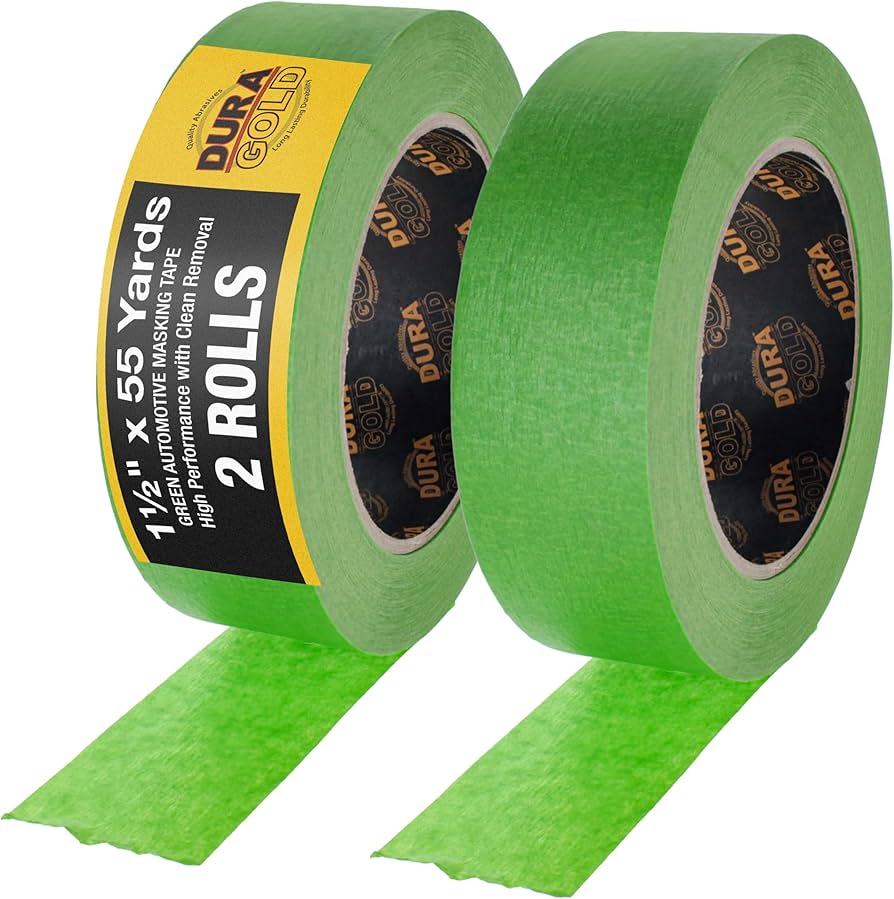
A stock image related to Automotive masking tape.
3 Common User Pain Points for ‘Automotive masking tape’ & Their Solutions
Scenario 1: How Do You Prevent Masking Tape Failure During High-Temperature Paint Booth Cycles?
問題だ:
In professional collision centers from Riyadh to Munich, masking tape frequently fails during force-drying cycles that reach 80°C–120°C (176°F–248°F). When procurement teams source general-purpose crepe tapes rather than automotive-grade formulations, the adhesive softens and bleeds under baking lamps, causing edge lifting and paint seepage that requires costly rework. This challenge intensifies when importing through equatorial ports—container temperatures during transit can exceed 70°C, pre-curing standard adhesives before the tape even reaches the shop floor. The result is compromised paint lines, contaminated clear coats, and rejected insurance claims that impact cycle time metrics.
解決策
Specify high-performance green masking tapes explicitly rated for sustained temperatures above 100°C (212°F) and 30-minute bake cycles, ensuring compatibility
Strategic Material Selection Guide for Automotive masking tape
Procurement teams operating across diverse climates—from the humidity of São Paulo to the extreme heat of Riyadh—must prioritize material composition when specifying automotive masking solutions for collision repair centers and OEM facilities. The substrate determines not only temperature resistance during bake cycles but also conformability to complex vehicle contours and critical clean-removal characteristics. Selecting inappropriate materials risks adhesive residue, paint bleed-through, or costly rework that disrupts production schedules in high-throughput environments.
Which Backing Material Delivers Optimal Conformability for Complex Automotive Curves?
Crepe paper remains the industry standard for general-purpose automotive masking, utilizing a crinkled texture that stretches to accommodate compound curves, panel edges, and irregular surfaces common in modern vehicle architectures. Premium grades, such as high-temperature green variants, withstand convection bake cycles up to 121°C (250°F) without adhesive transfer or edge curling, making them suitable for base coat and clear coat applications. The material’s inherent breathability allows solvents to escape during curing, preventing bubbling or fisheye defects under paint films. However, standard crepe paper exhibits limited moisture resistance in humid conditions and may not deliver the razor-sharp paint lines required for intricate graphic applications or two-tone designs where precision is paramount.
When Is Foam Masking Essential for Professional Feathered Edge Finishes?
Polyethylene foam tapes address specific technical challenges in door jambs, fuel filler openings, and hood edges where traditional flat tapes create visible hard paint lines upon removal. The compressible cellular structure creates a gradual transition zone between masked and painted surfaces, effectively eliminating the “step” effect that becomes apparent under direct lighting conditions. These materials excel at preventing overspray accumulation in panel gaps where doors meet frames, particularly crucial for maintaining luxury vehicle refinishing standards. While foam solutions command premium pricing compared to paper alternatives, they significantly reduce labor-intensive wet-sanding requirements and improve overall throughput in high-volume collision repair shops.
Why Specify Vinyl Composition for High-Precision Trim Masking Applications?
Polyvinyl chloride (PVC) backing provides superior dimensional stability for multi-day projects and complex trim work where tape must remain in place through extended cure cycles and environmental exposure. Unlike paper substrates, vinyl resists moisture absorption and maintains consistent adhesion in high-humidity conditions common in coastal African markets or tropical South American regions. The material’s exceptional flexibility allows tight wrapping around emblems, rubber seals, and complex three-dimensional contours without edge lifting or adhesive failure. Procurement managers should note that vinyl tapes require careful application technique—excessive stretching during placement can cause lifting or “bridge” effects—and may trap solvents if used over large surface areas, potentially affecting final paint adhesion and gloss levels.
How Do Polyester Film Tapes Perform in High-Temperature Bake Cycles?
For OEM-level precision and critical edge masking in premium automotive finishing, polyester film backing offers the highest temperature resistance, often exceeding 150°C (302°F) in modern convection bake environments. The non-fibrous, smooth structure prevents paint absorption and fiber lift entirely, delivering the crisp, laser-sharp lines necessary for racing stripes, accent panels, and luxury two-tone finishes where aesthetic perfection is non-negotiable. These tapes exhibit minimal elongation under tension, ensuring pattern consistency across long production runs and preventing the “wandering” lines common with flexible substrates. The primary trade-off involves reduced conformability on deep compound curves and significantly higher unit costs, positioning polyester solutions for specialized applications rather than general body shop consumption.
| 素材 | Typical Use Case for Automotive masking tape | 主な利点 | 主な欠点/制限 | 相対コスト |
|---|---|---|---|---|
| Crepe Paper | General purpose masking, large surface areas, standard refinish | High conformability, breathable, easy hand-tear | Limited moisture resistance, potential for paint bleed on low-grade versions | Low to Medium |
| Foam (Polyethylene) | Door jambs, hood edges, fuel fillers, soft edge requirements | Eliminates hard paint lines, creates feathered edges | Specific application only, limited temperature resistance | Medium to High |
| Vinyl (PVC) | Trim masking, emblems, multi-day projects, humid environments | Moisture resistant, flexible for 3 |
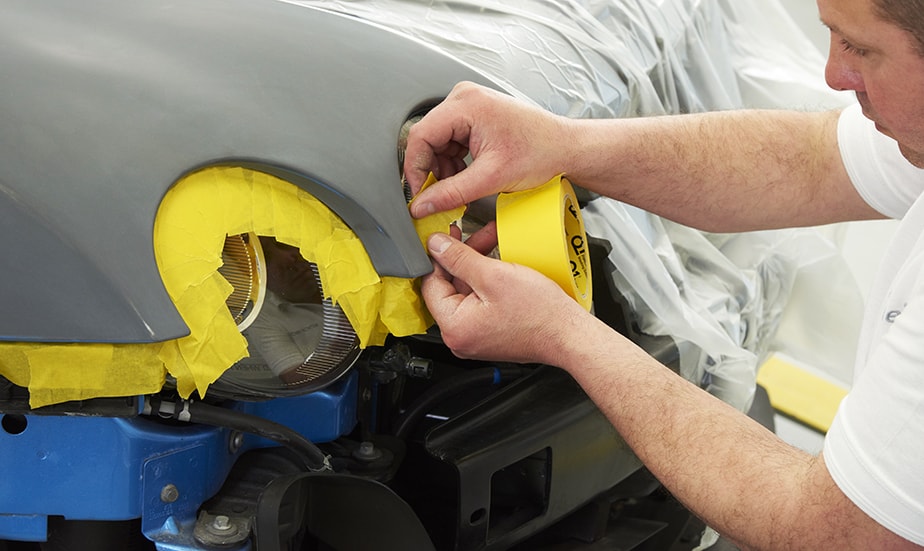
A stock image related to Automotive masking tape.
In-depth Look: Manufacturing Processes and Quality Assurance for Automotive masking tape
Automotive masking tape production represents a sophisticated intersection of material science and precision engineering. Unlike general-purpose masking products, automotive-grade tapes must withstand aggressive solvent exposure, high-temperature bake cycles exceeding 120°C, and rapid removal without adhesive transfer. For procurement teams sourcing from international markets, understanding these manufacturing nuances provides critical leverage in supplier evaluation, enabling the distinction between commodity-grade imports and premium solutions suitable for collision repair centers and OEM paint shops.
What Raw Materials Determine the Performance of Automotive Masking Tapes?
The foundation of any automotive masking tape lies in its backing material and adhesive formulation. Premium products typically utilize saturated crepe paper—natural kraft paper that has been impregnated with latex or synthetic polymers to create a moisture-resistant, conformable substrate. This saturation process distinguishes automotive-grade tapes from construction masking products, providing the tensile strength necessary for clean, single-piece removal while maintaining flexibility around complex vehicle contours.
Adhesive selection follows application-specific requirements. Rubber-based hot melt adhesives dominate general automotive masking due to their aggressive initial tack and cost-effectiveness, though they typically service temperatures below 100°C. For high-temperature bake applications common in European and Middle Eastern refinishing markets, silicone or modified acrylic adhesives become essential, offering thermal stability up to 150°C while preventing adhesive transfer onto fresh clear coats. Specialized variants such as foam masking tapes utilize polyurethane or PVC foam backings laminated with pressure-sensitive adhesives, engineered specifically for door jamb and edge masking where paint build-up creates hard lines.
How Are Multi-Layer Coatings Applied in Precision Manufacturing?
The manufacturing process begins with base paper saturation, where crepe paper undergoes immersion in latex baths followed by controlled drying to achieve specific elongation properties—typically 8-15% stretch for automotive applications. This saturated backing then receives a primer coating to ensure adhesive anchorage, followed by precision adhesive application via hot melt extrusion or solvent coating methods depending on the polymer system.
Calendaring processes emboss the backing with specific textures that enhance conformability around automotive trim and molding. For specialized products like vinyl masking tapes or smooth transition tapes, manufacturers employ extrusion and calendaring of PVC or polyethylene films, creating backings that resist solvent penetration from aggressive automotive paints. The coating phase requires climate-controlled environments maintaining 45-55% relative humidity to prevent premature adhesive curing or moisture contamination that could compromise shelf life during international shipping.
What Quality Control Protocols Validate Heat Resistance and Adhesion Stability?
Rigorous testing protocols separate automotive-grade manufacturers from commodity suppliers. Shear adhesion testing measures a tape’s ability to resist slippage when loaded vertically at elevated temperatures—critical for preventing tape flagging during bake cycles. Standard automotive specifications require minimum 30-minute shear resistance at 80°C, with premium products exceeding 60 minutes at 120°C.
Clean removal testing constitutes perhaps the most critical quality assurance phase. Samples undergo simulated bake cycles (typically 30 minutes at 120°C or per OEM specifications) followed by immediate removal and 24-hour adhesive residue assessment. High-performance tapes used in German automotive refinishing must demonstrate zero adhesive transfer under these conditions. Additionally, humidity resistance testing exposes products to 90% relative humidity at 40°C for 72 hours to simulate tropical storage conditions relevant to African and South American markets, ensuring the backing does not delaminate or the adhesive bleed.
Which International Certifications and OEM Specifications Should Buyers Demand?
B2B buyers should verify compliance with ISO 9001:2015 quality management systems as a baseline requirement, ensuring consistent batch-to-batch performance. For European markets, REACH compliance regarding chemical substances and RoHS directives for hazardous material restrictions are non-negotiable. Middle Eastern buyers particularly should request GCC (Gulf Cooperation Council) conformity certificates where applicable.
Automotive-specific certifications carry significant weight. OEM approvals from manufacturers like BMW, Mercedes-Benz, or Volkswagen indicate that products have passed stringent laboratory testing for paint compatibility and bake resistance. In North American contexts, I-CAR recognition or compliance with ASTM D6123 standards for masking tape provides additional assurance. For buyers in Saudi Arabia and similar climates, requesting test data for UV resistance (ASTM D4329) proves essential, as storage in high-heat environments can degrade uncertified adhesives before application.
How Do Manufacturing Processes Differ for Specialized Automotive Variants?
Beyond standard crepe paper tapes, specialized automotive masking requires distinct manufacturing approaches. Foam masking tapes—essential for preventing hard paint edges in door jambs—begin with open-cell polyurethane foam production, followed by precision slitting to thicknesses between 3mm and 13mm. The adhesive application must penetrate the foam cells sufficiently to prevent delamination during removal while avoiding bleed-through that could contact vehicle surfaces.
Vinyl masking tapes undergo calendaring of plasticized PVC films to precise thicknesses of 0.1-0.15mm, followed by solvent-based adhesive coating that provides the chemical resistance necessary for aggressive automotive solvents. Perforated trim masking tapes require rotary die-cutting capabilities to create precise hole patterns that allow paint penetration while protecting underlying rubber seals—manufacturing tolerances here often measure within ±0.1mm to ensure proper alignment during automated application.
What Supply Chain Considerations Affect Product Integrity for International Buyers?
Manufacturing excellence extends beyond the factory floor to packaging and logistics. Automotive masking tapes require moisture-barrier packaging with polyethylene liners or sealed plastic cores to prevent humidity ingress during ocean freight to tropical destinations. Natural rubber adhesives, common in cost-effective products, undergo oxidative degradation accelerated by heat and UV exposure—buyers should verify that suppliers utilize UV-stabilized outer packaging and provide manufacturing dates within 90 days of shipment.
Storage recommendations from manufacturers typically specify 15-25°C environments with 40-60% relative humidity. For African and Middle Eastern buyers, confirming that suppliers utilize climate-controlled warehousing and provide lot traceability becomes crucial for inventory management. Additionally, verifying slitting precision (edge quality within ±0.5mm) prevents application issues in high-speed automated masking systems increasingly common in German and Saudi Arabian collision repair facilities.
Understanding these manufacturing variables empowers procurement professionals to move beyond price-per-roll comparisons toward total cost-of-ownership evaluations. Tapes manufactured with precision saturation, validated through high-temperature shear testing, and packaged for climatic resilience deliver measurable reductions in rework costs and paint shop downtime—critical metrics for automotive refinishing operations across diverse international markets.
Practical Sourcing Guide: A Step-by-Step Checklist for ‘Automotive masking tape’
This checklist provides procurement professionals with a systematic framework to evaluate automotive masking tape specifications, ensuring selected products meet the rigorous demands of collision repair centers and OEM manufacturing facilities across diverse climate zones. Whether sourcing for high-temperature operations in Riyadh or humidity-controlled facilities in São Paulo, these criteria minimize rework costs while ensuring regulatory compliance.
1. What Temperature Resistance Specifications Are Critical for Your Paint Process?
Begin by mapping your thermal requirements against specific tape technologies. High-performance green masking tapes, such as those rated for 250°F+ bake cycles, prove essential for facilities using high-temperature curing systems. For jambs and apertures, specify soft foam masking tapes that prevent hard paint lines while withstanding oven temperatures. General-purpose crepe paper tapes suffice for air-dry applications, but verify specific heat thresholds—typically ranging from 150°F to 325°F—to prevent adhesive transfer during curing cycles.
2. How Do You Match Tape Chemistry to Substrate Compatibility?
Analyze your facility’s typical vehicle surfaces to prevent costly adhesive damage. Premium automotive masking tapes must demonstrate clean removal from fresh clear coats, rubber seals, and plastic trim without residue transfer. For luxury vehicle repairs, specify low-tack precision tapes for sensitive areas, while heavy-duty vinyl tapes suit wheel masking and underhood applications. Request technical data sheets confirming compatibility with waterborne and solvent-based paint systems prevalent in your region.
3. Which Compliance Certifications Validate Quality for International Markets?
Verify that suppliers maintain ISO 9001 quality management systems and automotive-specific IATF 16949 certifications. European buyers must ensure REACH compliance regarding chemical substances, while Middle Eastern importers should request SASO conformity certificates. For South American and African markets, confirm that products meet local automotive OEM specifications to guarantee insurance-approved repair quality. Additionally, verify that manufacturers provide batch-specific test reports translated into local languages.
4. What Packaging Protocols Protect Adhesive Integrity During Transit?
Automotive masking tape requires climate-controlled packaging to prevent degradation during sea freight. Specify moisture-barrier wrapping and pallet configurations that minimize compression damage—critical for tropical climates where humidity exceeds 80%. Verify shelf-life documentation; crepe paper tapes typically maintain 12-month viability. Calculate container utilization rates to optimize shipping costs, and insist on vertical stacking limits to prevent deformation of foam tape profiles.
5. How Do You Calculate True Cost Per Application Beyond Roll Price?
Evaluate total cost of ownership by analyzing labor efficiency metrics. Inferior tapes that allow paint bleed-through or leave residue can increase labor costs by 15-20% through rework time. Compare unwind characteristics and hand-tearability that affect technician speed. For high-volume facilities, negotiate blanket purchase agreements that balance MOQ requirements against storage capacity, factoring in currency fluctuation protections for international transactions.
6. What Pre-Procurement Testing Validates Performance Claims?
Establish sample evaluation protocols before committing to bulk orders. Conduct peel adhesion tests on your facility’s specific substrates, followed by bake-cycle simulations using your actual paint line parameters. Test foam tapes for compression set resistance and verify that perforated trim tapes align with common vehicle profiles. Document these benchmarks to create supplier scorecards, and include UV stability testing if tapes will be stored in facilities with high sun exposure.
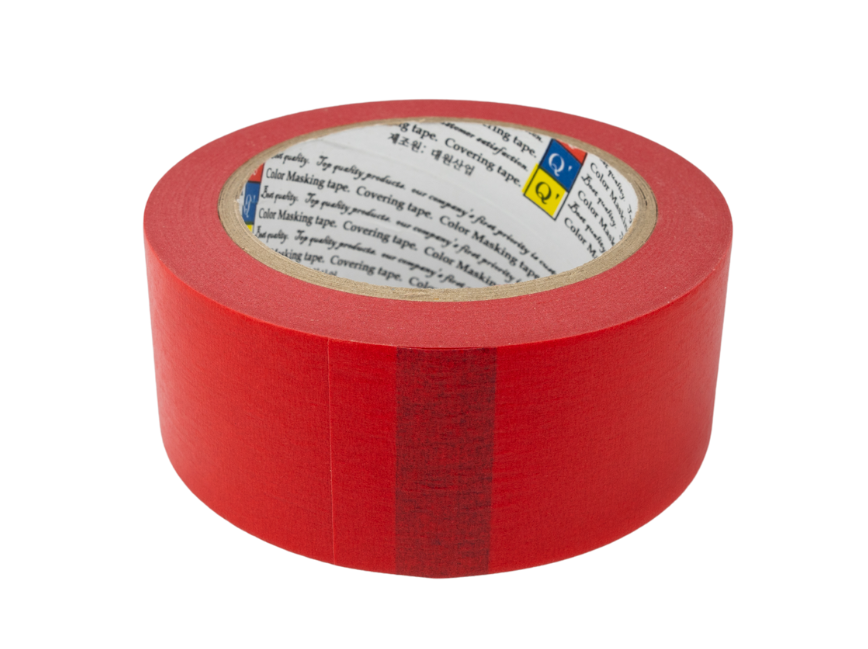
A stock image related to Automotive masking tape.
Comprehensive Cost and Pricing Analysis for Automotive masking tape Sourcing
When evaluating automotive masking tape procurement, savvy B2B buyers recognize that unit price represents only a fraction of the total cost equation. Whether sourcing high-temperature crepe paper for collision repair centers in Germany or foam masking solutions for emerging automotive markets in Africa and South America, your analysis must encompass material specifications, logistics complexity, and application-specific performance requirements. The transition from standard yellow masking tape to specialized green high-performance variants or vinyl contour tapes can increase material costs by 40–60%, yet deliver measurable savings through reduced rework and faster application times.
How Do Volume Commitments and MOQs Impact Unit Pricing?
Automotive masking tape pricing operates on aggressive volume tiers, with manufacturers typically offering significant breaks at full pallet (480–720 rolls) and full container load (FCL) quantities. For buyers in Saudi Arabia or Nigeria, consolidating orders to achieve 20-foot container minimums—rather than purchasing LCL (less than container load) shipments—can reduce landed costs by 15–25% per roll. However, be vigilant about shelf-life limitations; pressure-sensitive adhesives degrade after 12–18 months in humid climates, making bulk procurement advantageous only when paired with climate-controlled warehousing or rapid inventory turnover protocols.
What Hidden Costs Exist Beyond the Per-Roll Price?
International buyers must calculate total landed costs including HS code classifications, import duties, and regional compliance certifications. European markets like Germany require REACH compliance documentation, while Middle Eastern imports often need SASO (Saudi Standards, Metrology and Quality Organization) certification—adding $0.02–$0.05 per roll in administrative and testing fees. Additionally, specialized products such as soft-edge foam masking tape or perforated trim masking tapes incur higher dimensional weight shipping charges due to their bulk-to-length ratio, impacting freight calculations differently than standard flat paper tapes.
How Does Tape Specification Affect Total Cost of Ownership?
The specification spectrum—from basic 60°C paper tapes to premium 3M 233+ green tape rated for 110°C bake cycles—creates distinct cost-performance profiles. While economy tapes suit quick detailing work, using under-specified products for high-temperature OEM refinishing generates hidden costs through adhesive residue cleanup and paint correction labor. For complex applications like windshield masking or jamb protection, investing in foam transition tapes or precision vinyl tapes reduces material waste through better conformability, effectively lowering the cost per vehicle completed despite higher initial procurement prices.
What Pricing Strategies Optimize Procurement for Emerging Markets?
Buyers in Africa and South America should negotiate quarterly price-lock agreements to mitigate currency fluctuation risks, particularly when sourcing from Asian or North American manufacturers. Consider hybrid sourcing strategies: maintaining inventory of high-volume standard tapes (18mm and 24mm widths) while ordering specialty items—such as 6mm precision masking or smooth transition tapes—on project-specific bases. Finally, evaluate supplier financing options; many distributors offer 60–90 day payment terms for established collision repair chains, improving cash flow while securing container-level pricing discounts.
Alternatives Analysis: Comparing Automotive masking tape With Other Solutions
As automotive refinishing operations across Saudi Arabia, Germany, and emerging markets in Africa and South America face mounting pressure to reduce cycle times and environmental impact, procurement teams are evaluating alternatives to traditional automotive masking tape. While pressure-sensitive tapes remain ubiquitous in collision repair, alternative methodologies—including sprayable liquid masks and reusable silicone systems—offer distinct advantages for specific production environments. Understanding the operational trade-offs between these solutions enables B2B buyers to optimize masking strategies based on climate conditions, production volume, and substrate complexity.
Which Masking Solutions Offer the Best Alternative to Traditional Automotive Tape?
| 比較の側面 | Automotive Masking Tape | Liquid Peelable Masking Coatings | Reusable Silicone Masking Systems |
|---|---|---|---|
| Initial Investment | Low (minimal equipment) | Moderate to High (spray systems required) | High (capital-intensive inventory) |
| 労働効率 | Moderate (manual application/removal) | High (spray application, peel removal) | High (quick placement, no residue cleaning) |
| Complex Geometry Adaptability | Limited (wrinkling on compound curves) | Excellent (conforms to any topography) | Limited (requires pre-formed sizes) |
| High-Temperature Resistance | Up to 120°C–150°C (premium grades) | Up to 80°C–100°C (chemistry dependent) | Up to 250°C+ (silicone grade dependent) |
| 環境への影響 | High (single-use waste generation) | Low (liquid waste only) | Minimal (reusable 100+ cycles) |
| Best Application | Precision edge masking, trim protection | Underbody, engine bays, intricate castings | Threaded holes, studs, cylindrical components |
How Do Liquid Peelable Coatings Compare to Traditional Tape?
Liquid peelable masking coatings function as spray-applied temporary barriers that air-dry into elastomeric films, offering superior conformity for complex underbody geometries and engine bay components where traditional tape struggles with bridging or wrinkling. For facilities in humid climates like coastal Brazil or the Gulf region, these solutions eliminate adhesive failure risks during high-temperature bake cycles, though they require controlled drying environments to prevent coating contamination. B2B buyers must evaluate the total cost of ownership, factoring in specialized spray equipment and longer flash-off times—typically 15–30 minutes—that may bottleneck high-throughput collision centers. However, for OEM manufacturers processing commercial vehicle chassis or intricate aluminum castings, the elimination of tape line read-through and reduced labor in masking complex curves often justifies the transition, particularly when processing waterborne basecoats where tape bleed remains problematic.
Can Reusable Silicone Masking Systems Replace Tape in High-Temperature Applications?
Reusable silicone masking systems—com
Essential Technical Properties and Trade Terminology for Automotive masking tape
Selecting automotive masking tape for international supply chains requires evaluating specifications beyond basic adhesion. B2B procurement teams must assess thermal performance, mechanical properties, and industry-specific terminology to ensure compatibility with collision repair centers, OEM paint shops, and aftermarket facilities operating across diverse climates and regulatory environments.
What Temperature Resistance Specifications Matter for Global Automotive Operations?
Automotive refinishing exposes tapes to sustained heat during curing cycles that can compromise inferior products. High-performance crepe paper tapes must withstand temperatures between 100°C and 120°C (212°F–248°F) for 30–60 minutes without adhesive transfer or backing embrittlement. In regions like the Middle East or South America, where ambient shop temperatures already challenge material stability, specifying “oven-proof” ratings becomes critical. This connects directly to paint bake cycles—the industry term describing the number of heating exposures a tape can endure before degradation. Premium grades support multiple bake cycles, essential for complex multi-stage paint jobs common in European luxury automotive markets.
How Do Caliper and Tensile Strength Impact Application Quality?
Caliper, measured in mils (thousandths of an inch), determines tape conformability and paint edge build. Standard automotive grades range from 5.5 to 7.5 mils; thicker profiles provide better solvent resistance but reduced flexibility. Complementing this, tensile strength (typically 20–35 N/cm) indicates resistance to breakage during high-tension straight-line masking. Equally important is elongation at break (5–12%), which measures how much the backing stretches before snapping—critical for curved panels where rigid tapes would lift or tear during application.
What Is Clean Removal Technology and Adhesion Build?
The adhesion level, quantified in Newtons per centimeter or ounces per inch, indicates initial tack strength. However, B2B buyers must understand adhesion build—the phenomenon where tack increases over 24–72 hours of surface contact. Quality automotive tapes feature saturated crepe paper backings and specialized rubber or acrylic adhesives formulated for clean removal, leaving no residue for up to three days after bake cycles. This prevents costly rework in high-volume shops where tape may remain applied for extended periods before painting.
How Do Bleed-Through and Edge Lifting Affect Finish Quality?
Bleed-through refers to paint seeping beneath tape edges, caused by insufficient adhesion or porous backing materials that allow solvent penetration. Conversely, edge lifting (also called “flagging”) occurs when tape edges detach from the substrate, creating raised flaps that catch overspray and produce jagged paint lines. These defects particularly impact facilities in humid climates—common in African and South American markets—where atmospheric moisture compromises adhesive performance. Specifying tapes with high-edge adhesion and moisture-resistant backings mitigates these risks.
What Is Conformability in Complex Masking Applications?
適合性 describes a tape’s ability to maintain complete contact across compound curves, door jambs, and irregular trim without wrinkling or tenting. This property depends on backing flexibility and elongation capabilities. For contrast, structural masking applications require rigid, high-tensile tapes that resist stretching to ensure perfectly straight lines on hoods and roof panels. Understanding this distinction helps buyers stock appropriate inventories for diverse repair scenarios—from intricate European luxury vehicles requiring precision curves to robust commercial fleets demanding durable, straight-edge masking.
Navigating Market Dynamics and Sourcing Trends in the Automotive masking tape Sector
The automotive masking tape sector is experiencing significant transformation as collision repair volumes grow across emerging markets and OEM standards tighten in established economies. For procurement teams operating across diverse regulatory environments—from Germany’s stringent VOC regulations to Saudi Arabia’s extreme climate conditions—understanding regional market dynamics is essential for optimizing inventory costs while maintaining repair quality standards.
How Is the Global Automotive Masking Tape Market Evolving for B2B Buyers?
The market is shifting toward high-performance specialty tapes that address specific repair challenges beyond basic masking. Products such as foam-based edge-sealing tapes and high-temperature resistant formulations (capable of withstanding bake cycles up to 120°C) are gaining traction in professional collision repair centers. In Europe, particularly Germany, demand is driven by OEM certification requirements that mandate clean-release adhesives to prevent paint flaking and substrate damage. Meanwhile, markets in Africa and South America are experiencing rapid growth in aftermarket auto body repair, creating opportunities for suppliers who can balance cost-efficiency with tropical climate adaptability—where humidity-resistant adhesives prevent edge lifting during monsoon seasons.
What Supply Chain Factors Should International Buyers Consider?
Sourcing strategies must account for the adhesive sensitivity inherent in automotive masking products. Temperature fluctuations during shipping can compromise tape integrity, making climate-controlled logistics critical for long-haul imports from Asian manufacturing hubs to Middle Eastern or African destinations. Buyers in Saudi Arabia and similar high-heat environments should prioritize suppliers offering UV-stable formulations that resist adhesive transfer during outdoor vehicle preparation. Additionally, regional warehousing strategies help mitigate currency volatility and import tariff complexities, particularly for South American markets where automotive protectionism policies frequently shift.
Why Does Sustainability Now Drive Procurement Decisions?
Environmental compliance is reshaping supplier selection criteria, especially for European buyers subject to REACH regulations and Germany’s Blue Angel certification standards. Leading manufacturers are transitioning to solvent-free acrylic adhesives and paper backing materials sourced from FSC-certified forests. For B2B buyers, this shift necessitates verification of chain-of-custody documentation and VOC emission test reports. The business case extends beyond compliance—workshops using eco-certified masking tapes increasingly qualify for preferred vendor status with sustainability-conscious fleet operators and insurance-backed repair networks.
How Can Buyers Ensure Ethical Sourcing and Quality Authenticity?
The proliferation of counterfeit automotive tapes in emerging markets poses significant liability risks, as inferior products can cause paint bleed-through or adhesive residue that requires costly rework. Procurement teams should mandate ISO 9001:2015 certification and automotive-specific IATF 16949 compliance from suppliers. For African and Middle Eastern markets, establishing direct relationships with authorized distributors—rather than gray-market intermediaries—ensures access to genuine high-performance products like precision-line vinyl tapes and perforated trim masking solutions. Requesting batch-specific technical data sheets and conducting adhesion tests upon receipt protects against substitution fraud while ensuring compatibility with automated paint booth processes.
By aligning sourcing strategies with regional climate demands, regulatory frameworks, and ethical manufacturing standards, international buyers can secure reliable supply chains that support both operational efficiency and brand reputation in the competitive automotive refinishing sector.
Frequently Asked Questions (FAQs) for B2B Buyers of Automotive masking tape
How do I prevent adhesive residue transfer during extended automotive masking applications?
1. How do I prevent adhesive residue transfer during extended automotive masking applications?
Premium automotive masking tapes utilize heat-resistant synthetic rubber adhesives formulated for clean removal up to 7 days after application. For extended projects exceeding 72 hours, specify UV-resistant crepe paper tapes rated for automotive OEM bake cycles to prevent adhesive migration into clear coat layers. Always conduct substrate-specific adhesion tests on aged paint or plastic trim before prolonged masking periods, particularly in high-temperature climates where adhesive activation accelerates.
How do I select automotive masking tape that withstands high-temperature paint booth baking cycles?
2. How do I select automotive masking tape that withstands high-temperature paint booth baking cycles?
Specify tapes rated for continuous exposure to 121°C (250°F) for 30-60 minute bake cycles common in collision repair facilities. High-performance green masking tapes typically feature saturated crepe paper backings with thermal-stabilized adhesives that resist edge lifting during infrared or convection baking. Verify temperature ratings exceed your facility’s maximum operating parameters by 10-15% to account for hot spots in older paint booths or regional ambient temperature variations.
How do I distinguish between crepe paper and flatback automotive masking tape for collision repair?
3. How do I distinguish between crepe paper and flatback automotive masking tape for collision repair?
Crepe paper tapes provide conformability for curved body lines and irregular surfaces, making them ideal for jambs and complex contours, while flatback (smooth paper) tapes offer superior straight-line breaking and are preferred for two-tone masking and sharp edge creation. Flatback variants typically demonstrate higher tensile strength for large surface masking but require more skill to apply without wrinkles on compound curves. For collision centers handling diverse repairs, maintain inventory of both types: crepe for general masking and flatback for precision line work and color separation.
How do I verify that automotive masking tape meets OEM specifications for certified collision centers?
4. How do I verify that automotive masking tape meets OEM specifications for certified collision centers?
Request technical data sheets confirming compliance with OEM standards such as GM 6400M, Ford WSB-M15G23-A, or Toyota TSH 1552G, which specify adhesion strength, temperature resistance, and clean removal properties. Certified collision centers must demonstrate use of OEM-approved consumables to maintain warranty repair authorization and I-CAR compliance. Establish supplier partnerships that provide batch-specific certification documentation and consistent formulation continuity to avoid audit failures in European markets like Germany or regulatory checks in the Middle East.
How do I ensure masking tape adhesion across diverse automotive substrates including aluminum and plastic?
5. How do I ensure masking tape adhesion across diverse automotive substrates including aluminum and plastic?
Select tapes with medium-tack synthetic rubber adhesives specifically formulated for low-energy surfaces common in modern vehicle construction, including polypropylene bumpers and aluminum panels. Pre-clean surfaces with silicone-free degreasers to eliminate mold release agents or oxidation that compromise adhesion on composite materials. For galvanized or bare metal substrates prevalent in African and South American repair markets, utilize corrosion-inhibiting tape variants that prevent moisture trapping and white rust formation during humid curing periods.
How do I maintain masking tape adhesive integrity in high-humidity storage environments?
6. How do I maintain masking tape adhesive integrity in high-humidity storage environments?
Store inventory in climate-controlled conditions between 15-27°C (60-80°F) with relative humidity below 60% to prevent adhesive degradation and paper backing delamination common in tropical climates. Implement first-in-first-out inventory rotation systems to minimize exposure to seasonal humidity fluctuations that can cause “sticking” or adhesive ooze. For facilities in high-humidity regions like coastal Middle East or Southeast Asia, specify moisture-resistant polypropylene-backed tapes rather than standard paper products to ensure consistent unwind characteristics.
How do I calculate total cost of ownership when procuring automotive masking tape in bulk?
7. How do I calculate total cost of ownership when procuring automotive masking tape in bulk?
Calculate total cost of ownership by factoring in labor time savings from clean removal versus rework costs associated with budget tapes that leave residue or bleed paint. High-performance tapes may cost 30-40% more per roll but reduce material waste through better tear resistance and reduced need for touch-ups in professional paint booths. Negotiate volume pricing for OEM-grade products while establishing consignment inventory agreements to reduce capital tie-up without compromising quality standards required by insurance partners and vehicle manufacturers.
How do I navigate international regulatory requirements for automotive masking tape imports?
8. How do I navigate international regulatory requirements for automotive masking tape imports?
Verify that products comply with regional environmental directives such as EU REACH regulations regarding SVHC substances, Saudi Arabian SASO technical regulations, or South American Mercosur standards for chemical imports. Request Safety Data Sheets (SDS) in multiple languages and confirm that adhesives are free from restricted solvents like toluene or xylene that face import restrictions in environmentally stringent markets. Partner with suppliers holding ISO 9001 certification and regional compliance documentation to expedite customs clearance in Germany, Saudi Arabia, and emerging African markets while avoiding costly shipment detentions.
重要な免責事項および利用規約
⚠️ 重要な免責事項
メーカー、技術仕様、市場分析に関する内容を含め、本ガイドラインで提供される情報は、情報提供と教育目的のみのものです。専門的な調達アドバイス、財務アドバイス、または法的アドバイスを提供するものではありません。.
B2Bバイヤーは、独自の徹底的なデューデリジェンスを行う必要がある。 をご覧の上、ご購入をお決めください。本ガイドに記載された情報を信頼した場合のリスクは、読者が単独で負うものとします。.
Top 2 Automotive Masking Tape Manufacturers & Suppliers List
1. Tape Suppliers – Masking Tape

ドメイン tapesuppliers.com
登録:2007年(19年)
はじめに Masking tape is a pressure-sensitive adhesive tape designed for temporarily concealing surfaces during finishing processes. Key characteristics include: easy tear and dispensing capabilities; residue-free removal that won’t damage newly painted surfaces; pressure-sensitive adhesive formulation. Primary applications include surface protection during soldering, blasting, spraying, coating, plating, …
2. PPM Industries – Automotive Masking Tapes
ドメイン ppmindustries.com
Registered: 2011 (15 years)
はじめに Manufacturer: PPM Industries. Target Market: Automotive refinishing, body shops, professionals. Product Categories: 1) Standard Automotive Masking Tapes: PPM 3008 (utility grade, 60°C for 1 hour), PPM 3009 (medium grade, 80°C for 1 hour), PPM 3010 (high grade, 90°C for 1 hour or 110°C for 30 minutes). 2) Waterproof Automotive Masking Tapes: PPM 3610 AquaColor (moisture/water resistant, waterproof,…
Strategic Sourcing Conclusion and Outlook for Automotive masking tape
How Should International Buyers Optimize Their Automotive Masking Tape Procurement Strategy?
Sourcing automotive masking tape in today’s fragmented global market requires balancing rigorous performance specifications with regional supply chain realities. Procurement teams across Saudi Arabia, Germany, and emerging markets in Africa and South America must prioritize suppliers offering diversified portfolios—from high-temperature green performance tapes for collision centers to specialized foam solutions for complex vehicle geometries and vinyl masking for sharp edge detailing.
What Supply Chain Considerations Will Define Success in 2024 and Beyond?
Forward-thinking buyers are moving beyond single-source dependencies, instead cultivating relationships with manufacturers capable of delivering consistent adhesion technologies across extreme climate variations. As electric vehicle production accelerates globally, demand for precision masking solutions that protect sensitive battery compartments and lightweight substrates will intensify. Establishing partnerships with suppliers who demonstrate robust quality certifications and localized distribution networks ensures operational continuity while mitigating currency fluctuation risks. The future belongs to procurement strategies that treat automotive masking tape not as a commodity input, but as a critical variable in finish quality, production efficiency, and regional market competitiveness.