Introduction: Navigating the Global Market for High temperature masking tape
Sourcing high-temperature masking tape for demanding industrial applications requires navigating a complex landscape of material specifications, thermal performance ratings, and supplier reliability. For procurement teams across Africa, South America, the Middle East, and Europe—including major industrial hubs like Saudi Arabia and Nigeria—securing consistent, high-performance masking solutions means balancing stringent application requirements against supply chain realities. Whether masking critical aerospace components, automotive fascias, or industrial pipes subjected to 300°F bake cycles, the wrong tape selection can result in adhesive residue, paint bleed, or catastrophic masking failure that halts production lines.
Why do procurement teams struggle with high-temperature masking tape specifications?
The global market offers diverse formulations—from crepe paper tapes rated for 150°C automotive painting to fiberglass cloth solutions engineered for 500°F plasma spray operations—each demanding specific substrate compatibility and clean-release properties. This guide demystifies the selection process by examining tape construction fundamentals, silicone adhesive technologies, and application-specific requirements including HVOF thermal spray masking and abrasive coating protection.
What critical factors should international buyers evaluate when sourcing industrial masking solutions?
Beyond temperature thresholds, successful procurement requires understanding ASTM certification standards, supplier vetting protocols for cross-border logistics, and total cost of ownership across emerging markets. We provide actionable frameworks for assessing backing materials, adhesion profiles, and removal characteristics while addressing region-specific challenges including import regulations, currency fluctuations, and quality consistency in Saudi Arabian and Nigerian industrial sectors.
By synthesizing technical specifications with strategic sourcing intelligence, this comprehensive resource examines tape types including polyester, Kapton®, and aluminum foil variants; explores applications spanning automotive OEM, aerospace maintenance, and heavy industrial coating; and provides supplier evaluation frameworks. This guide empowers B2B buyers to make informed decisions that optimize production efficiency, minimize rework costs, and establish resilient supply chains for high-temperature masking tape procurement across international markets.
Understanding High temperature masking tape Types and Variations
| タイプ名 | 主な特徴 | 主なB2Bアプリケーション | バイヤーのための簡単な長所と短所 |
|---|---|---|---|
| High-Temperature Crepe Paper Tape | Crepe paper backing; rubber/silicone adhesive; highly conformable; clean removal up to 150°C–180°C | Automotive painting, industrial baking, fascia masking, pipe coating | Pros: Cost-effective, hand-tearable, excellent for curves. Cons: Limited heat range; unsuitable for abrasive blasting. |
| Fiberglass Cloth Masking Tape | Woven fiberglass substrate; silicone adhesive; 260°C (500°F) rating; high tensile strength | Abrasive blasting, metalizing, plasma flame spray, thermal coating | Pros: Abrasion resistant, durable, high heat tolerance. Cons: Less flexible than paper; higher material cost. |
| Polyimide (Kapton) Film Tape | Amber polyimide film; thin profile; silicone adhesive; >260°C rating; high dielectric strength | Electronics masking, PCB protection, aerospace components, powder coating | Pros: Ultra-thin precision, chemical resistant, excellent insulation. Cons: Low conformability on complex curves; premium pricing. |
| Aluminum Foil Masking Tape | Dead-soft aluminum backing; acrylic or silicone adhesive; heat reflective; moisture barrier | Threaded hole masking, fastener protection, heat shielding, dust barriers | Pros: Reflects radiant heat, moisture-proof, conforms to irregular shapes. Cons: Prone to tearing if mishandled; electrically conductive. |
| Silicone-Coated Glass Tape | Fiberglass cloth + silicone rubber coating; optional foil lamination; extreme abrasion resistance | HVOF thermal spray, severe coating applications, turbine component masking | Pros: Maximum cut-through protection; superior heat deflection. Cons: Specialized use only; highest cost category; limited suppliers. |
Which Crepe Paper Masking Tapes Deliver Clean Lines in High-Heat Industrial Painting?
Characterized by a textured crepe paper backing and specialized rubber or silicone adhesives, these tapes withstand surface temperatures up to 150°C–180°C during extended paint baking cycles. They offer superior conformability for masking curved automotive fascias, industrial pipes, and irregular metal surfaces without edge lifting. B2B buyers in automotive and specialty vehicle manufacturing should prioritize specifications regarding clean removal time windows, ASTM D-6123 compliance, and verified adhesion to metal, rubber, and plastic substrates to prevent costly residue on finished goods or damage to delicate clear coats.
How Does Fiberglass Cloth Masking Tape Protect Surfaces During Abrasive Blasting and Metalizing?
Constructed from woven fiberglass fibers impregnated with high-temperature silicone adhesive, this type provides essential cut-through protection during metalizing, plasma flame spray, and
Key Industrial Applications of High temperature masking tape
| 業界/セクター | Specific Application of High temperature masking tape | ビジネスにとっての価値/利益 | このアプリケーションにおける主な調達上の考慮事項 |
|---|---|---|---|
| Automotive & Transportation Manufacturing | High-temperature paint baking and two-tone masking for commercial vehicles, buses, and rail car assembly | Prevents overspray contamination, ensures sharp paint lines on complex geometries, reduces rework costs, and withstands multiple bake cycles up to 150°C without adhesive transfer | Verify clean-removal properties within specific time windows; confirm crepe-paper backing conformability for curved surfaces; ensure compatibility with local paint systems (waterborne vs. solvent-based) prevalent in regional manufacturing hubs |
| Aerospace & Specialty Vehicle Production | Critical masking for fascia painting, exterior liveries, and safety markings on aircraft, ambulances, and fire trucks | Achieves precision lines required for regulatory compliance markings while protecting sensitive aluminum and composite substrates from adhesive residue damage, reducing surface preparation time | Require low-residue silicone adhesive formulations; specify color-contrasted options for visibility during inspection; verify compliance with ASTM D-6123 or equivalent aviation industry standards |
| Metal Fabrication & Thermal Spray Processing | Masking for plasma flame spray, HVOF coating, and abrasive blasting on industrial components, turbines, and heavy equipment | Fiberglass cloth construction provides cut-through protection up to 260°C+, preventing coating deposition on bearing surfaces and threaded holes, eliminating expensive post-process machining | Specify woven fiberglass density for abrasion resistance; confirm silicone adhesive temperature rating (minimum 500°F/260°C); assess availability of custom die-cut shapes for metric and imperial component specifications |
| Energy & Pipeline Infrastructure | Pipe coating protection during high-temperature anti-corrosion treatments, field joint coating, and fusion-bonded epoxy applications | Conforms to irregular pipe surfaces and weld seams to prevent coating overspray, ensuring cathodic protection integrity and reducing coating failure risks in harsh environments | Evaluate UV and moisture resistance for outdoor storage in tropical climates; verify width availability for large-diameter transmission pipelines; ensure compatibility with fusion-bonded epoxy and polyethylene coatings |
| Electronics Manufacturing & Powder Coating | Masking PCBs, electrical enclosures, and metal housings during powder coating cure cycles and e-coating processes | Prevents coating buildup on electrical contact points and threaded inserts, ensuring conductivity and precise assembly fit without labor-intensive post-process cleaning or scraping | Require low-outgassing silicone adhesives that won’t contaminate sensitive components; verify static-dissipative properties for electronics; confirm availability of precision die-cuts for high-volume automated application lines |
How is high temperature masking tape used in automotive paint baking applications?
In automotive and commercial vehicle manufacturing, high temperature masking tape is essential during paint baking cycles for trucks, buses, and rail systems, where oven temperatures reach up to 150°C. The tape adheres securely to metal, rubber, and glass substrates while maintaining its structural integrity through multiple bake cycles. This prevents costly overspray contamination during two-tone color applications and eliminates adhesive residue that would require solvent cleaning. For international buyers in Nigeria’s expanding commercial vehicle assembly sector and Saudi Arabia’s growing automotive initiatives, selecting tapes with humidity-resistant adhesion is critical, as these regions often operate high-volume paint booths in challenging climates where edge lifting and moisture-induced adhesion failure must be avoided to maintain production line efficiency.
What are the critical masking requirements for aerospace and specialty vehicle manufacturing?
Aerospace and specialty vehicle production demands precision masking for aircraft exteriors, ambulance liveries, and fire truck safety markings where surface temperatures reach curing thresholds during coating processes. High temperature masking tape must achieve the sharp definition required for regulatory compliance markings while protecting sensitive composite and aluminum substrates from adhesive damage during removal. The tape’s conformability allows it to navigate complex fascia contours without bleed-through. For Middle Eastern aviation hubs and European aerospace manufacturers, sourcing considerations include low-residue silicone formulations that meet stringent aviation standards, color-coded backing for visual inspection protocols, and certifications that ensure compatibility with high-value asset protection requirements.
Why do metal fabrication and thermal spray operations require specialized high temperature masking?
In metal fabrication, particularly for plasma flame spray and High-Velocity Oxygen Fuel (HVOF) coating applications, specialized fiberglass cloth masking tapes withstand abrasive particle streams and temperatures exceeding 500°F (260°C). These tapes act as sacrificial barriers that prevent coating deposition on critical bearing surfaces, threaded holes, and precision-machined areas that would otherwise require expensive post-process grinding or machining. For buyers serving South American mining operations and African heavy equipment sectors, sourcing must prioritize premium-grade woven fiberglass with closely packed fibers for enhanced abrasion resistance. Additionally, procurement teams should verify suppliers’ capabilities to provide custom die-cut shapes that match both imperial and metric component specifications common in international heavy industry supply chains.
How does high temperature masking tape protect pipeline infrastructure during coating applications?
Pipeline construction and maintenance operations utilize high temperature masking tape to protect pipe sections during fusion-bonded epoxy coating and field joint applications, where curing temperatures and outdoor environmental exposure create dual challenges. The tape conforms to irregular weld seams and flange faces, preventing coating overspray that would compromise cathodic protection systems and joint integrity. For energy sector buyers managing Nigerian oil field infrastructure and Middle Eastern transmission pipeline projects, UV stability becomes a critical sourcing factor, as tapes must withstand prolonged outdoor storage in extreme heat without adhesive degradation. Width versatility, including jumbo rolls up to 24 inches, accommodates the large-diameter transmission pipelines common in these regions.
What role does high temperature masking tape play in electronics and powder coating industries?
Electronics manufacturing and industrial powder coating operations rely on high temperature masking tape to protect printed circuit boards, electrical enclosures, and threaded inserts during cure cycles reaching 200°C. The tape prevents powder coating buildup on electrical contact points and grounding surfaces, ensuring conductivity and precise assembly fit without labor-intensive post-process scraping. For European electronics manufacturers and emerging African appliance production facilities, sourcing considerations focus on low-outgassing silicone adhesive formulations that prevent contamination of sensitive components during heat cycles. Buyers should also verify the availability of precision die-cut configurations compatible with automated application equipment to support high-volume manufacturing lines.
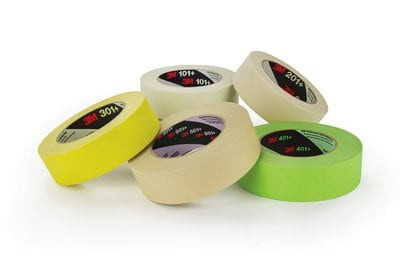
A stock image related to High temperature masking tape.
3 Common User Pain Points for ‘High temperature masking tape’ & Their Solutions
Scenario 1: How to Prevent Adhesive Residue After High-Temperature Baking Cycles?
問題だ: In automotive refinishing and industrial coating operations across the Middle East and Africa, manufacturers frequently encounter masking tape that leaves stubborn adhesive residue after exposure to paint baking ovens. When standard rubber-based adhesive tapes are subjected to temperatures exceeding 120°C, the adhesive bakes onto metal, glass, or plastic substrates, requiring labor-intensive solvent cleaning or mechanical scraping that risks surface damage. This residue issue extends production timelines and increases defect rates in critical applications such as two-tone vehicle painting or fascia coating.
解決策 Specify high temperature masking tapes featuring silicone adhesive formulations engineered for clean release properties. Unlike natural rubber adhesives, silicone-based systems withstand sustained exposure up to 150°C–260°C, removing in one piece without ghosting or sticky remnants. For B2B procurement, verify the tape’s temperature rating exceeds your maximum oven cure cycle by at least 10%, and conduct adhesion tests on specific substrate materials. Premium crepe paper tapes with proprietary silicone adhesives eliminate post-mask cleaning solvents, reducing labor costs and environmental compliance burdens.
Scenario 2: Why Does Masking Tape Fail During Powder Coating Applications?
問題だ: Industrial fabricators in sectors ranging from Nigerian agricultural equipment to Saudi Arabian pipe coating often experience tape failure during powder coating processes. Standard masking tapes cannot withstand the 180°C–220°C curing temperatures typical of powder coating ovens, resulting in charring, adhesive transfer, and “slivering”—where the backing fragments into small pieces upon removal. This contamination forces costly rework, particularly when masking threaded holes or complex geometries where complete removal is essential for part functionality.
解決策 Implement specialized high temperature crepe paper tapes rated for minimum 150°C continuous exposure, or transition to fiberglass cloth tapes for applications exceeding 260°C. For powder coating, select tapes with high tensile strength backings that resist tearing and silicone adhesives formulated for thermal stability. In severe applications involving High-Velocity Oxygen Fuel (HVOF) thermal spray, specify silicone-coated fiberglass tapes or aluminum foil discs that provide cut-through protection. Ensure the tape’s specified temperature rating matches peak process temperatures, accounting for heat spikes near oven walls.
Scenario 3: How to Eliminate Paint Bleed-Through on Irregular Surfaces?
問題だ: Achieving crisp paint lines on curved automotive panels, contoured industrial pipes, or irregular equipment surfaces presents significant challenges for European and South American manufacturers. Low-quality masking tapes lack the conformability to seal tightly around corners, allowing overspray to seep beneath edges—known as paint bleed-through. This defect is particularly costly in specialty vehicle manufacturing or pipeline coating operations where corrosion protection depends on clean boundary definitions and precision masking is non-negotiable.
解決策 Procure high temperature masking tapes with high-strength, flexible crepe paper backings that conform to irregular surfaces without wrinkling. The crepe texture allows the tape to stretch and mold around complex geometries while maintaining edge seal integrity. For critical applications, apply firm pressure along edges using plastic squeegees to activate the adhesive fully, and remove the tape at a 45-degree angle immediately after cooling. Specify tapes that resist bleed-through from industrial paint systems and provide sufficient backing thickness to prevent strike-through during multiple bake cycles.
Strategic Material Selection Guide for High temperature masking tape
Selecting the optimal substrate for high-temperature masking requires balancing thermal resistance, surface conformity, and removal characteristics against specific operational demands. For procurement teams across industrial sectors—from Saudi Arabian automotive assembly to Nigerian oil and gas maintenance—understanding material-specific performance profiles ensures cost-efficiency and process reliability. Different manufacturing environments present unique challenges: abrasive coating operations demand cut-through protection, while precision electronics require thermal stability without residue contamination. The following analysis examines four primary substrate categories commonly specified in high-temperature masking applications, providing actionable selection criteria for B2B buyers managing complex international supply chains.
What Crepe Paper Backing Options Work Best for Industrial Paint Baking Applications?
Crepe paper remains the dominant choice for paint masking operations where temperatures reach up to 150°C (300°F), particularly prevalent in European automotive manufacturing and Middle Eastern industrial coating facilities. This embossed cellulose substrate delivers exceptional conformability around complex automotive fascias, industrial pipe contours, and irregular equipment surfaces. The crinkled texture creates micro-ventilation channels that resist bleed-through from solvent-based coatings while maintaining structural integrity during bake cycles. For buyers sourcing for automotive refurbishment or industrial coating facilities, crepe paper offers the critical advantage of clean, one-piece removal without adhesive residue, minimizing rework costs and labor time. However, its cellulose composition limits exposure duration at peak temperatures, making it unsuitable for extended thermal processing beyond 30-minute cycles or applications involving direct flame exposure.
When Should Buyers Choose Woven Fiberglass Cloth for Abrasive Coating Protection?
Woven fiberglass cloth tapes address aggressive manufacturing environments where standard substrates fail, particularly in plasma flame spray, HVOF thermal spray, and metalizing operations common in South American mining equipment maintenance and Saudi Arabian petrochemical infrastructure. The silica-based woven structure provides cut-through resistance against high-velocity particulate streams while silicone adhesive systems maintain tack at continuous temperatures up to 260°C (500°F). Premium-grade variants feature tightly woven fiber densities that enhance durability during severe masking applications common in aerospace component manufacturing and heavy equipment refurbishment. Procurement teams should note that while fiberglass offers superior mechanical protection against abrasive media, its inherent rigidity limits conformability on compound curves, and frayed edges may require additional post-process cleanup, potentially impacting production timelines.
Why Select Polyimide Film for Extreme Temperature Electronics Masking?
Polyimide film, commonly recognized by the trade name Kapton®, serves critical masking functions in electronics manufacturing and precision engineering where temperatures exceed 260°C. This aromatic polymer substrate maintains dimensional stability and electrical insulation properties at temperatures reaching 400°C, making it essential for PCB soldering, wave masking, and semiconductor processing in telecommunications hubs across Africa and Europe. The thin-profile construction enables precise masking of delicate circuit traces without adding thermal mass that could affect heat dissipation. B2B buyers in automotive electronics and renewable energy sectors value its solvent resistance and minimal outgassing characteristics in cleanroom environments. The primary limitation involves cost positioning—polyimide commands premium pricing significantly above cellulose or fiberglass alternatives, restricting its deployment to high-value component protection rather than general surface masking or large-area applications.
How Does Aluminum Foil Laminate Perform in Thermal Spray and Sealing Applications?
Aluminum foil tapes provide specialized solutions for targeted masking of threaded holes, fasteners, and small surface areas during thermal spray operations and industrial coating processes. The metallic substrate offers exceptional heat deflection properties while creating impermeable barriers against moisture, dust, and chemical ingress critical for offshore oil platforms and desert climate operations. When laminated with glass cloth or coated with high-temperature silicone adhesives, these tapes withstand the radiant heat conditions present in heavy industrial facilities. The material excels as a disposable protective medium for critical connection points, though its lack of conformability on complex geometries and tendency to tear under mechanical stress limits broader application as primary surface masking for large components.
| 素材 | Typical Use Case for High temperature masking tape | 主な利点 | 主な欠点/制限 | 相対コスト |
|---|---|---|---|---|
| Crepe Paper | Industrial paint baking, automotive fascia masking, two-tone color applications | Clean removal without residue; excellent conformability | Temperature ceiling of 150°C; limited duration exposure | 低い |
| Woven Fiberglass Cloth | Plasma flame spray, HVOF thermal spray, abrasive coating protection | Cut-through resistance; withstands 260°C+ | Limited flexibility; potential fiber fraying | ミディアム |
| Polyimide Film | Electronics soldering, PCB masking, semiconductor processing | Extreme temperature stability (400°C); dimensional precision | High material cost; limited mechanical abrasion resistance | 高い |
| Aluminum Foil | Fastener hole masking, moisture barriers, thermal spray spot protection | Superior heat deflection; chemical/moisture barrier | Poor conformability; tears under mechanical stress | ミディアム |
A stock image related to High temperature masking tape.
In-depth Look: Manufacturing Processes and Quality Assurance for High temperature masking tape
High-temperature masking tape production demands precision engineering that balances thermal resilience with clean removability. For procurement teams operating in demanding industrial sectors—whether managing automotive paint shops in Nigeria, petrochemical maintenance in Saudi Arabia, or aerospace manufacturing in Europe—understanding how these specialized adhesives are fabricated provides critical insight into supplier evaluation and quality verification.
What Raw Materials Determine Performance in Extreme Heat Applications?
The manufacturing process begins with substrate selection, which fundamentally dictates the tape’s thermal ceiling and mechanical properties. Crepe paper backings, utilized in applications up to 150°C, undergo creping processes that create micro-folds, enabling conformability around complex geometries while maintaining tensile strength. For more aggressive thermal environments exceeding 200°C—common in thermal spray coating or HVOF (High-Velocity Oxygen Fuel) applications—manufacturers employ woven fiberglass cloth, polyimide films (Kapton®), or silicone-coated glass composites. These substrates resist charring and maintain structural integrity when exposed to molten metal particles or sustained baking cycles.
The adhesive layer presents equally critical engineering challenges. High-temperature masking tapes universally utilize silicone-based pressure-sensitive adhesives (PSA) rather than rubber or acrylic formulations. Silicone chemistry provides the essential combination of high-temperature resistance (up to 260°C for standard formulations, 300°C+ for specialized blends) and clean release characteristics. During manufacturing, these adhesives are solvent-coated or hot-melt applied onto the substrate in controlled environments, with thickness tolerances typically maintained within ±0.02mm to ensure consistent peel strength across the roll.
How Is High-Temperature Masking Tape Manufactured to Ensure Thermal Stability?
The coating process represents the most technically demanding phase of production. Advanced manufacturers employ reverse-roll coating or knife-over-roll techniques to apply silicone adhesive uniformly across the substrate surface. Immediately following application, the material enters continuous drying ovens where temperature ramps are carefully controlled—typically starting at 80°C and progressing to 120°C—to drive off solvents without blistering the adhesive or compromising the backing’s dimensional stability.
For multi-layer constructions, such as silicone-coated fiberglass tapes designed for abrasive blasting protection, lamination occurs in-line with coating. The backing material passes through precision calendering stations where silicone rubber layers are bonded to woven fiberglass, sometimes incorporating aluminum foil interlayers for enhanced heat deflection. Following coating and lamination, the master rolls undergo conditioning in climate-controlled environments (typically 23°C ± 2°C and 50% ± 5% relative humidity) for 24-72 hours to stabilize adhesive properties before slitting.
Slitting operations utilize razor, shear, or score-cutting technologies depending on substrate thickness and hardness. For crepe paper tapes common in automotive painting, razor slitting prevents fiber tear-out that could compromise edge sealing. Conversely, fiberglass-reinforced tapes require shear slitting to prevent fraying. Quality-conscious manufacturers implement automated tension control systems during winding to prevent telescoping or adhesive oozing—critical considerations for buyers in high-humidity climates like coastal West Africa or Southeast Asia where improper winding can cause blocking.
What Quality Assurance Protocols Validate Tape Performance for Industrial Buyers?
Rigorous testing protocols separate commodity masking tapes from industrial-grade solutions suitable for critical applications. Reputable manufacturers subject production lots to ASTM D-6123 testing (replacing obsolete PPP-T-42C standards), which evaluates adhesion strength, backing strength, and resistance to bleeding under specified temperature and humidity conditions.
Thermal validation involves exposing tape samples to target temperatures for specified durations—often 30 minutes at 150°C for automotive paint masking, or continuous exposure at 260°C for powder coating applications—followed by clean-removal testing on standardized steel panels. Adhesive residue analysis utilizes Fourier-transform infrared spectroscopy (FTIR) in advanced facilities to verify silicone purity and cross-linking consistency, ensuring no low-molecular-weight components remain that could cause gumming or surface contamination.
Peel adhesion testing measures the force required to remove tape at 180 degrees, typically targeting 3.5-6.0 N/cm for high-temperature formulations. Shear resistance testing evaluates the tape’s ability to resist slippage under load at elevated temperatures—crucial for vertical masking applications in industrial painting. Additionally, conformability testing around standardized mandrels ensures the tape maintains adhesion when stretched over complex curves without lifting or tenting.
Which Manufacturing Certifications Should B2B Buyers Prioritize When Sourcing from Global Suppliers?
When evaluating suppliers across diverse regions—from emerging manufacturing hubs in South America to established European producers—certification portfolios indicate quality system maturity. ISO 9001:2015 certification provides baseline assurance of documented quality management systems, while IATF 16949 certification specifically validates automotive-grade production controls essential for OEM supply chains.
For buyers in the Middle East and Africa, verifying compliance with REACH regulations (for European suppliers) or RoHS directives indicates material safety and environmental responsibility. In regions with challenging logistics infrastructure, such as remote mining operations in West Africa or offshore platforms in the Gulf of Mexico, requesting batch-specific Certificate of Analysis (CoA) documents ensures each shipment meets specified adhesion, thickness, and temperature resistance parameters regardless of storage conditions during transit.
How Do Production Methods Impact Tape Consistency Across Different Climate Zones?
Manufacturing environmental controls directly influence product stability in varied global climates. Facilities maintaining strict humidity controls (40-60% RH) during coating and slitting produce tapes with more consistent tack levels, preventing the “wet” or “dry” adhesion variations that plague lower-grade products. For buyers operating in high-temperature, high-humidity environments—common in Nigerian manufacturing or Brazilian coastal facilities—specifying tapes manufactured with moisture-resistant primers between the backing and adhesive layer prevents humidity-induced adhesion degradation during storage.
Packaging specifications also warrant scrutiny. Vacuum-sealed packaging with UV-resistant outer wraps protects silicone adhesives from oxidation and humidity ingress during ocean freight—critical for maintaining shelf life when shipping to landlocked destinations in South America or Africa. Leading manufacturers utilize automated vision inspection systems during final roll packaging to detect edge defects, wrinkles, or contamination that could cause application failures in automated masking systems.
Understanding these manufacturing nuances enables procurement professionals to move beyond price-based purchasing toward specification-based sourcing that aligns with operational reliability requirements. By verifying substrate compatibility, adhesive chemistry, quality protocols, and regional certification standards, buyers ensure their high-temperature masking solutions perform consistently from the first process cycle to the final quality inspection.
Practical Sourcing Guide: A Step-by-Step Checklist for ‘High temperature masking tape’
Procuring high-temperature masking tape for industrial applications requires more than selecting a heat-resistant adhesive. B2B buyers must balance thermal performance, substrate compatibility, and clean removal properties against specific process requirements ranging from automotive paint baking to thermal spray coating. This checklist provides a systematic framework to evaluate technical specifications and supplier capabilities, ensuring your procurement decisions align with operational demands across automotive, aerospace, and heavy industrial sectors in diverse climatic conditions.
Step 1: What Temperature Range and Duration Should Your Masking Application Require?
Begin by documenting the maximum surface temperature your process generates, but crucially, specify the duration of exposure and thermal cycling frequency. Standard crepe paper tapes typically withstand 150°C (300°F) for short bake cycles, while fiberglass-reinforced options endure 260°C (500°F) or higher during extended thermal spray processes. Consider heat deflection requirements—applications involving HVOF (High-Velocity Oxygen Fuel) coating demand silicone-coated glass tapes with foil layers for enhanced protection, whereas automotive two-tone paint baking may only require high-grade crepe paper with proprietary adhesive systems.
Step 2: Which Backing Material Is Best for Abrasive Coating vs. Paint Baking Applications?
Select substrate materials based on mechanical stress and coating type. For abrasive applications like sand blasting or plasma flame spraying, woven fiberglass cloth provides essential cut-through protection and durability. Premium-grade fiberglass with closely woven fibers offers superior strength for severe masking environments. Conversely, for precision paint lines on vehicles, buses, or fascia components, conformable crepe paper tapes allow easy masking around corners and irregular contours without slivering or tearing during removal.
Step 3: How Do You Ensure Clean Removal Without Adhesive Residue on Critical Surfaces?
Verify that your specification requires silicone-based adhesives, as these formulations maintain tack at elevated temperatures while enabling clean, one-piece removal. Request technical data sheets confirming residue-free removal intervals—critical for applications involving sensitive substrates like polished metals, glass, or plastics. The tape should resist bleed-through from industrial paint systems and remove cleanly even after multiple bake cycles, preventing costly rework or surface damage on high-value components.
Step 4: What Surface Materials and Geometries Will the Tape Contact?
Evaluate adhesion compatibility with your specific substrate materials, whether metal, rubber, glass, or engineered plastics. High-temperature masking must conform to irregular surfaces and sharp edges without lifting or bridging. For masking threaded holes or small fasteners during coating processes, consider supplementing roll tape with aluminum foil discs, which provide targeted protection and moisture barriers in confined areas where traditional tape widths prove impractical.
Step 5: Which Industry Certifications Should High-Temperature Masking Tape Meet?
Require suppliers to provide certification against recognized standards such as ASTM D-6123 (replacing obsolete PPP-T-42C specifications) for industrial masking applications. For aerospace or automotive sectors, verify additional OEM approvals or process-specific qualifications. Documentation should include thermal performance testing, tensile strength ratings, and compatibility data with common industrial paint systems or thermal spray coatings relevant to your operational standards.
Step 6: How Do You Evaluate Supplier Reliability for International Procurement?
For operations in Africa, the Middle East, or South America, assess suppliers’ logistics capabilities, including humidity-controlled shipping conditions and regional warehousing to prevent adhesive degradation. Silicone adhesives can lose efficacy under improper storage in tropical climates. Confirm minimum order quantities, lead times for custom widths (commonly ranging from 6mm to 100mm), and technical support availability in your time zone. Establish contingency
A stock image related to High temperature masking tape.
Comprehensive Cost and Pricing Analysis for High temperature masking tape Sourcing
What Factors Drive High Temperature Masking Tape Pricing in Global Markets?
The cost structure of high temperature masking tape is fundamentally tied to substrate selection and adhesive chemistry. Silicone-based adhesives, essential for withstanding temperatures exceeding 300°F (150°C) and up to 500°F (260°C) in industrial applications, represent a significant portion of material costs. These adhesives are derived from specialized silicone polymers that fluctuate with petrochemical market volatility. Furthermore, the backing material—whether crepe paper for general automotive painting or woven fiberglass cloth for abrasive coating applications—creates distinct pricing tiers. Premium grades featuring closely woven fiberglass fibers or silicone rubber coatings command 40-60% higher unit costs than standard paper-backed alternatives due to enhanced durability and heat deflection properties required for High-Velocity Oxygen Fuel (HVOF) thermal spray operations.
素材仕様が調達予算に与える影響とは?
B2B buyers must evaluate the total cost implications of performance specifications beyond the per-roll price. Tapes rated for extreme temperatures, such as silicone-coated glass tapes or polyimide (Kapton®) films, require specialized manufacturing processes that increase production costs. Width customization also significantly affects pricing; while standard widths (12mm–48mm) benefit from economies of scale, jumbo rolls (up to 609.6mm) or precision die-cut configurations—such as aluminum foil discs for threaded hole masking—incorporate additional converting charges. The adhesive formulation further differentiates cost structures: high-tack silicone systems designed for clean, one-piece removal from metal, rubber, and plastic surfaces without residue typically carry a 15-25% premium over standard formulations, yet they reduce labor costs associated with rework and surface cleaning in critical paint masking applications.
What Are the Hidden Costs in International Tape Procurement?
For procurement teams operating across Africa, the Middle East, South America, and Europe, logistics and compliance costs often exceed material expenses. Import duties on adhesive products vary significantly by region, with some jurisdictions classifying specialty industrial tapes under high-tariff chemical or polymer categories—particularly relevant for Saudi Arabian industrial zones and Nigerian manufacturing hubs. Shipping crepe paper tapes requires climate-controlled storage to prevent adhesive degradation and humidity-induced curling, adding warehousing complexity for importers in tropical climates. Currency fluctuation risks between USD-denominated raw materials and local currencies (such as the Brazilian Real or South African Rand) necessitate hedging strategies or long-term supply agreements. Buyers should also factor in ASTM D-6123 certification costs, as uncertified alternatives may face rejection at customs or fail to meet automotive industry quality mandates, resulting in costly production delays.
How Can Buyers Optimize Costs Without Compromising Heat Resistance?
Strategic sourcing involves balancing unit economics with total cost of ownership (TCO). While premium fiberglass cloth tapes offer superior cut-through protection for plasma flame spray applications, over-specifying tape ratings for lower-temperature paint baking (300°F/150°C) wastes budget. Implementing volume-based procurement strategies—consolidating orders to meet manufacturer MOQs rather than purchasing through distributors—can reduce unit costs by 20-30%. Negotiating annual contracts with fixed pricing clauses protects against silicone adhesive market volatility. For African and Middle Eastern buyers, establishing regional distribution hubs minimizes freight costs and lead times. Finally, evaluating supplier technical support capabilities proves cost-effective; suppliers providing application engineering support help minimize waste through proper tape selection, ensuring that high-temperature performance requirements align precisely with process parameters rather than arbitrary safety margins.
Alternatives Analysis: Comparing High temperature masking tape With Other Solutions
While high-temperature crepe paper masking tape remains the industry standard for automotive painting and industrial coating applications up to 150°C, procurement teams and operations managers must evaluate whether alternative substrates or masking methodologies better serve specific production environments. Factors such as abrasive exposure, extreme thermal cycles, and complex component geometries may necessitate solutions beyond traditional paper-backed adhesives, particularly in high-volume manufacturing sectors across the Middle East, Africa, and South America where process efficiency directly impacts margins.
How Do High-Temperature Masking Options Compare Across Critical Parameters?
| 比較の側面 | High Temperature Crepe Paper Tape | Fiberglass Cloth Tape | Peelable Liquid Masking Compounds |
|---|---|---|---|
| Maximum Temperature Resistance | Up to 150°C (300°F) | Up to 260°C (500°F) | Up to 200°C–315°C (varies by chemistry) |
| Substrate Material | Crepe paper with rubber/resin adhesive | Woven fiberglass with silicone adhesive | Synthetic polymer emulsion (air dries) |
| 表面適合性 | Excellent (hand-tearable, flexible) | Moderate (rigid weave requires cutting) | Excellent (liquid application fills any geometry) |
| Abrasion Resistance | Low (susceptible to tearing) | High (cut-through protection for spray coatings) | High (forms durable protective film) |
| Removal Characteristics | Clean peel, one-piece removal | Clean peel, minimal fiber residue | Dissolves or peels as solid sheet |
| コスト効率 | Low material cost, moderate labor | Higher material cost, low labor | Low material cost, high labor/setup |
| 実施しやすさ | Immediate application, tool-free | Requires precision cutting tools | Requires curing time (30–60 min) and skilled application |
| Best Use Cases | Paint baking, two-tone automotive, fascia painting | Thermal spray, HVOF coating, plasma applications | Threaded holes, deep cavities, batch masking of irregular parts |
Is Fiberglass Cloth Tape the Superior Choice for Extreme Thermal Applications?
Fiberglass cloth tape represents the logical upgrade path when surface temperatures consistently exceed the 150°C threshold of standard crepe paper products or when operations involve abrasive blasting and thermal spray coating. Constructed from woven silica fibers impregnated with high-grade silicone adhesive, this alternative withstands sustained temperatures up to 260°C (500°F) while providing critical cut-through resistance during metalizing processes. Procurement teams in Saudi Arabia’s petrochemical sector and Nigeria’s emerging automotive coating industries should note that while fiberglass tape commands a 40–60% price premium over paper alternatives, its ability to survive High-Velocity Oxygen Fuel (HVOF) applications and plasma spray environments eliminates the risk of tape failure during critical coating cycles. The trade-off lies in conformability; fiberglass lacks the hand-tearable flexibility of crepe paper, requiring precision cutting for complex curves and potentially slowing application time on irregular surfaces like vehicle fascias or industrial piping networks.
Can Peelable Liquid Masking Compounds Replace Tape for Complex Geometries?
For operations involving threaded fasteners, deep cavities, or batch processing of highly irregular components, peelable liquid masking compounds offer a compelling process alternative that eliminates adhesive residue concerns entirely. These air-drying synthetic polymers brush or dip onto surfaces, curing into flexible films that withstand powder coating and moderate bake cycles up to 315°C depending on chemical formulation. European aerospace manufacturers and South American agricultural equipment producers increasingly favor this method for protecting critical threaded holes and internal channels where tape application proves labor-intensive or geometrically impossible. However, B2B buyers must calculate the total cost of ownership carefully: while liquid masking eliminates roll stock inventory and adapts to any geometry without sizing limitations, it requires significant curing time, skilled application labor, and solvent-based removal processes that may complicate environmental compliance in regions with strict VOC regulations like the EU or Middle Eastern industrial zones.
Essential Technical Properties and Trade Terminology for High temperature masking tape
When procuring high-temperature masking tape for automotive refinishing, industrial coating, or aerospace applications, international buyers must evaluate specifications beyond basic adhesion ratings. Understanding the interplay between substrate materials, adhesive chemistry, and thermal thresholds ensures compatibility with specific manufacturing environments—from Saudi Arabian pipeline coating facilities to Nigerian automotive assembly plants.
What Are the Critical Temperature Specifications Buyers Must Verify?
Temperature resistance represents the primary differentiator, with industrial grades typically rated from 150°C (300°F) for paint baking cycles up to 260°C (500°F) for continuous thermal exposure. Distinguish between intermittent peak ratings—often specified for 30-minute durations—and continuous operating temperatures. For extreme processes like High-Velocity Oxygen Fuel (HVOF) spraying, fiberglass-backed tapes withstand sustained 500°F exposure, whereas crepe paper variants suit lower-temperature paint curing applications.
Which Backing Materials and Adhesives Determine High-Heat Suitability?
Substrate selection dictates chemical and mechanical performance. Crepe paper provides conformability for automotive fascias but degrades above 150°C. Woven fiberglass cloth offers abrasion resistance for plasma spray masking, while polyimide (Kapton) films excel in electronics manufacturing. Aluminum foil serves as moisture barriers and heat deflectors. Critically, verify silicone-based pressure-sensitive adhesives (PSA)—rubber adhesives fail under thermal stress, whereas silicone ensures clean release without substrate contamination.
What Mechanical Properties Ensure Clean Removal and Durability?
Evaluate tensile strength to prevent tearing during high-speed application and removal, particularly for bundling or lane-marking operations. Elongation percentage indicates conformability—the ability to mask curved surfaces without wrinkling. Thickness (caliper) affects edge sealing and paint line definition. Additionally, verify “slivering” resistance, which indicates the tape’s structural integrity; premium products remove in one piece without fragmenting, minimizing labor costs for cleanup.
What Is “Bleed-Through” and How Does It Affect Paint Line Quality?
Bleed-through describes paint or coating seepage beneath tape edges, causing fuzzy lines requiring expensive rework. This phenomenon occurs when backings lack saturation or edge-sealing properties. High-quality masking tapes utilize densely saturated crepe paper or coated fiberglass to prevent solvent penetration, ensuring sharp definition critical for two-tone automotive applications and decorative industrial finishing.
Understanding HVOF, Plasma Spray, and Thermal Barrier Terminology
High-Velocity Oxygen Fuel (HVOF) and plasma spray masking involve extreme particle velocities and temperatures requiring “sacrificial” protection. These applications utilize premium fiberglass cloth tapes with silicone coatings that withstand abrasive impact while protecting underlying substrates. Thermal barrier masking refers to protecting sensitive areas during heat-intensive processes, often employing aluminum foil composites to deflect radiant heat.
What Does “Conformability” Mean for Complex Industrial Masking?
Conformability describes a tape’s ability to adhere to irregular surfaces, compound curves, and corners without lifting or bridging. Crepe
Navigating Market Dynamics and Sourcing Trends in the High temperature masking tape Sector
What Are the Current Global Demand Drivers for High-Temperature Masking Solutions?
The high-temperature masking tape sector is experiencing robust expansion driven by industrial diversification across emerging markets. In regions like Saudi Arabia and Nigeria, massive infrastructure investments and automotive manufacturing localization are fueling demand for specialty tapes capable of withstanding 150°C to 260°C+ surface temperatures during powder coating, plasma spray, and bake cycles. Beyond traditional automotive refinishing, sectors such as aerospace maintenance, oil & gas pipeline coating, and electronics manufacturing are creating segmented demand for substrate-specific solutions—from crepe paper for general industrial painting to fiberglass cloth and polyimide films for extreme thermal spray applications.
How Is Material Innovation Reshaping Performance Standards?
Market dynamics are shifting toward engineered substrates that exceed conventional crepe paper limitations. While paper-backed tapes remain dominant for 150°C automotive paint masking, industrial buyers increasingly specify silicone-coated fiberglass cloth for abrasive coating processes like High-Velocity Oxygen Fuel (HVOF) thermal spraying, where temperatures exceed 500°F (260°C). Aluminum foil tapes are gaining traction for fastener masking and moisture barrier applications in harsh Middle Eastern climates. This diversification requires procurement teams to move beyond generic “high-temp” classifications toward precise temperature ratings, adhesive chemistry specifications (silicone vs. acrylic), and ASTM D-6123 compliance to ensure compatibility with automated production lines.
Which Supply Chain Strategies Mitigate Regional Sourcing Risks?
For buyers in Africa, South America, and the Middle East, supply chain resilience has become as critical as product performance. The market is witnessing a strategic pivot toward regional distribution hubs and localized converting operations to reduce lead times and currency fluctuation risks. European buyers are increasingly auditing suppliers for REACH compliance and carbon footprint transparency, while Middle Eastern and African markets prioritize suppliers offering technical documentation in multiple languages and localized application support. Smart procurement now involves qualifying manufacturers who maintain dual production facilities across continents, ensuring continuity during geopolitical disruptions or raw material shortages in silicone adhesive markets.
How Can B2B Buyers Evaluate Sustainability in High-Temperature Tape Procurement?
Sustainability in industrial masking has evolved beyond basic recyclability to encompass clean-release technology that minimizes rework waste. Tapes engineered for one-piece removal without adhesive residue—such as those used in critical fascia painting and two-tone automotive applications—directly reduce solvent usage and surface refinishing requirements, lowering overall VOC emissions. Procurement officers should prioritize suppliers utilizing solvent-free silicone adhesive coatings and crepe paper backings sourced from certified sustainable forestry operations.
What Constitutes Ethical Sourcing in the Specialty Tape Sector?
Ethical sourcing now extends to raw material traceability and manufacturing labor standards, particularly critical for European and Middle Eastern buyers subject to stringent import regulations. Leading manufacturers are implementing closed-loop recycling programs for polyester and fiberglass backing materials, while transparent supply chain auditing ensures silicone adhesive components are sourced without conflict minerals. For markets like Saudi Arabia and Nigeria, where rapid industrialization meets environmental scrutiny, partnering with tape converters who provide Environmental Product Declarations (EPDs) and ISO 14001-certified production facilities offers competitive advantage in government tenders and multinational supply chain qualifications.
How Does Clean Removal Technology Support Circular Economy Goals?
Advanced high-temperature masking tapes that maintain structural integrity through multiple bake cycles while releasing cleanly support circular economy principles by reducing substrate damage and material waste. This is particularly relevant for expensive substrates in aerospace and specialty vehicle manufacturing prevalent in European and Middle Eastern markets. Buyers should assess total cost of ownership metrics that account for reduced defect rates and elimination of post-masking cleaning processes, rather than focusing solely on per-roll pricing, to truly capture sustainability value in high-volume industrial applications.
Frequently Asked Questions (FAQs) for B2B Buyers of High temperature masking tape
1. What are the primary industrial applications for high temperature masking tape in automotive and heavy equipment manufacturing?
High temperature masking tape serves critical functions in paint baking, fascia painting, and pipe coating operations where surface temperatures reach 150°C (300°F) during cure cycles. In automotive production, it enables precise two-tone color applications on commercial vehicles, buses, trailers, and emergency response fleets while protecting adjacent surfaces from overspray and bleed-through. Industrial manufacturers also utilize these tapes for thermal spray coating, metalizing, and masking during extended high-heat processes where standard masking tapes would degrade or leave residue.
2. What temperature ranges can high temperature masking tape withstand for industrial paint baking and thermal processing?
Standard crepe paper high temperature masking tapes typically withstand continuous exposure up to 150°C (300°F) for 30 minutes, while specialized fiberglass cloth variants endure temperatures up to 260°C (500°F) in abrasive coating applications. Silicone-coated glass tapes and polyimide (Kapton) options extend protection to extreme thermal spray processes including HVOF (High-Velocity Oxygen Fuel) applications. Always verify the specific temperature rating against your process requirements, as exceeding rated thresholds causes adhesive degradation, backing embrittlement, and potential surface damage.
3. How do I select the right backing material for abrasive blasting versus precision paint masking applications?
Crepe paper backings conform excellently to irregular surfaces and curved automotive panels, making them ideal for general industrial painting and bake cycles where clean paint lines are essential. For abrasive applications like sand blasting, plasma spray, or metalizing, woven fiberglass cloth tapes provide cut-through resistance and structural integrity under high-velocity particle bombardment. Premium-grade silicone-coated fiberglass or aluminum foil composites offer maximum protection for severe HVOF thermal spray environments where both abrasion resistance and heat deflection are critical performance factors.
4. Is high temperature masking tape suitable for powder coating, plasma spray, and HVOF thermal spray applications?
Yes, specialized high temperature masking tapes are specifically engineered for powder coating and thermal spray processes, though material selection must match the application intensity. Silicone adhesive systems are mandatory for these applications because they maintain tack at elevated temperatures and release cleanly without residue, unlike rubber or acrylic adhesives. For HVOF and plasma spray operations, specify silicone-coated fiberglass tapes or aluminum foil/glass composites that withstand both extreme heat and high-velocity particle impact without tearing or adhesive transfer to substrate surfaces.
5. How do I ensure clean removal of high temperature masking tape without adhesive residue after baking cycles?
Clean removal requires selecting tapes with silicone-based adhesives specifically formulated for high-temperature clean release properties, ensuring they remove in one piece without slivering or shredding. Remove the tape immediately after the surface cools to approximately 40°C (104°F) but remains slightly warm, as complete cooling can cause adhesive brittleness and bonding to substrates. For critical automotive finishes and aerospace applications, specify tapes qualified to ASTM D-6123 standards, which certify clean removal characteristics and compatibility with industrial paint systems.
6. What certifications and quality standards should I verify when importing high temperature masking tape for industrial use?
Verify compliance with ASTM D-6123 (replacing obsolete PPP-T-42C and CID-A-A-883B specifications) for industrial masking applications requiring clean removal and solvent resistance. For automotive OEM supply chains, confirm tapes meet specific manufacturer paint shop specifications regarding residue-free removal and compatibility with both waterborne and solvent-based paint systems. Request batch-specific test reports documenting temperature resistance, tensile strength, and adhesion values to ensure consistency across international shipments and warehousing periods.
7. What width specifications and thicknesses optimize masking efficiency for large-scale industrial projects versus detailed automotive refinishing?
For large-scale industrial masking such as pipe coating and heavy equipment painting, widths of 48mm to 72mm (2-3 inches) maximize coverage efficiency and reduce application labor time on straight runs. Precision automotive work requires narrower widths (12mm-24mm) for sharp paint lines and intricate masking around emblems, door handles, and body contours. Thickness matters for conformability—standard crepe paper provides excellent contour adaptation for curved surfaces, while thicker fiberglass cloths offer superior protection but require careful application to avoid edge lifting on complex geometries.
8. How should high temperature masking tape be stored and handled to maintain adhesive performance in hot climates during international shipping?
Store tape in climate-controlled environments between 15°C and 27°C (60°F-80°F) with 40-60% relative humidity to prevent silicone adhesive degradation and backing embrittlement before application. Avoid direct sunlight exposure during warehousing and transport, particularly in hot climates common to Middle Eastern and African regions, as UV radiation and heat can cause premature aging, tack loss, and discoloration of crepe paper backings. Ensure pallets are protected from moisture and condensation during sea freight, as humidity fluctuations can cause water staining and compromise adhesive uniformity across the roll.
重要な免責事項および利用規約
⚠️ 重要な免責事項
メーカー、技術仕様、市場分析に関する内容を含め、本ガイドラインで提供される情報は、情報提供と教育目的のみのものです。専門的な調達アドバイス、財務アドバイス、または法的アドバイスを提供するものではありません。.
B2Bバイヤーは、独自の徹底的なデューデリジェンスを行う必要がある。 をご覧の上、ご購入をお決めください。本ガイドに記載された情報を信頼した場合のリスクは、読者が単独で負うものとします。.
Top 1 High Temperature Masking Tape Manufacturers & Suppliers List
1. Tape Suppliers – High-Temperature Tape

ドメイン tapesuppliers.com
登録:2007年(19年)
はじめに High-temperature tape is designed for thermal applications largely involving cables or pipes, capable of withstanding extremely high operating temperatures without failing while providing dependable performance. Also known as flame-resistant tape, these products are manufactured from heat-resistant materials including fiberglass, basalt, aluminum, PTFE, glass cloth, rubber, polyamide, and various …
Strategic Sourcing Conclusion and Outlook for High temperature masking tape
As industrial manufacturing across Africa, the Middle East, and South America diversifies into automotive finishing, thermal spray coating, and electronics assembly, sourcing high-temperature masking tape requires a shift from commodity purchasing to technical specification management. The convergence of extreme process temperatures—often exceeding 150°C in paint bake cycles or 260°C in plasma spray applications—with stringent quality standards demands that procurement teams evaluate substrate compatibility and adhesive chemistry as rigorously as unit cost.
How Can Buyers Balance Performance Requirements with Supply Chain Resilience?
Moving forward, strategic sourcing will prioritize tapes offering silicone-adhesive systems and multi-substrate versatility—ranging from crepe paper for general industrial painting to fiberglass cloth and polyimide films for abrasive coating processes. Buyers should establish partnerships with suppliers capable of providing ASTM-qualified products and localized technical support, ensuring compliance with international standards while mitigating logistics risks in emerging markets. Clean-removal capabilities and residue-free performance will remain non-negotiable to minimize costly rework in high-value manufacturing environments.
What Is the Future Outlook for High-Temperature Masking Innovation?
The next generation of masking solutions will likely emphasize enhanced conformability for complex geometries and improved sustainability profiles without sacrificing thermal resistance. Organizations that integrate application-specific material selection—whether aluminum foil discs for threaded hole masking or silicone-coated glass for HVOF processes—into their procurement frameworks will achieve superior operational efficiency and surface finish quality across global production facilities.