Introduction: Navigating the Global Market for Nano wall tape
Sourcing high-performance nano wall tape for large-scale commercial projects presents unique procurement challenges for buyers navigating diverse regulatory environments and supply chain complexities across Africa, South America, the Middle East, and Southeast Asia. Whether you are outfitting retail spaces in Lagos, managing construction logistics in Ho Chi Minh City, or sourcing industrial mounting solutions for European manufacturing facilities, the gap between product specifications and real-world performance can significantly impact your operational efficiency and project timelines.
This comprehensive guide addresses the critical pain points international B2B buyers face when evaluating reusable adhesive technologies in volatile markets. We examine technical specifications including load-bearing capacities, surface compatibility matrices, and climate resilience factors essential for tropical humidity and temperate applications. Beyond product features, we provide actionable frameworks for rigorous supplier vetting, quality assurance protocols, and total cost-of-ownership analysis that transcend basic unit pricing to reveal true long-term procurement value.
From understanding the nuanced differences between nano gel formulations and traditional acrylic mounting systems to negotiating favorable MOQs, navigating complex import documentation, and establishing quality control checkpoints, this resource equips procurement teams with strategic insights necessary to mitigate supply chain risks. By synthesizing technical performance data with regional market intelligence specific to emerging economies, we empower you to establish reliable vendor partnerships that ensure consistent product availability, authentic quality verification, and optimal adhesion performance across diverse operational environments.
How Can Buyers Verify Authentic Nano Adhesive Performance Before Committing to Bulk Orders?
The global marketplace for traceless mounting solutions is saturated with varying quality tiers and counterfeit alternatives, making pre-purchase verification protocols essential for protecting your capital investment and maintaining critical project timelines in competitive sectors.
Understanding Nano wall tape Types and Variations
| タイプ名 | 主な特徴 | 主なB2Bアプリケーション | バイヤーのための簡単な長所と短所 |
|---|---|---|---|
| Standard Double-Sided Nano Gel Tape | Transparent, washable, reusable, medium adhesion (1-2 kg/cm²), optimal for smooth surfaces | Office organization, retail displays, temporary signage, interior decor mounting | Pros: Cost-effective for bulk orders, versatile across industries, leaves no residue. Cons: Limited load capacity, requires smooth substrates, adhesion degrades in high-dust environments without regular cleaning. |
| Heavy-Duty Industrial Grade Nano Tape | Thicker gel layer (1-2mm), high tensile strength, load capacity 5kg+, weather-resistant backing | Construction fixtures, industrial tool mounting, heavy mirror hanging, warehouse organization | Pros: Superior holding power, compensates for minor surface texture, durable under stress. Cons: Higher per-meter cost, requires surface priming on porous materials, longer curing time before full load bearing. |
| Clear Aesthetic Mounting Nano Tape | Crystal clear, UV-resistant, non-yellowing formula, ultra-thin profile (0.5-1mm) | Museum exhibitions, luxury retail displays, glass installations, high-end hospitality signage | Pros: Virtually invisible mounting, maintains clarity under lighting, professional finish. Cons: Premium pricing tier, sensitive to installation technique, limited repositionability after initial contact. |
| Weatherproof Exterior Nano Tape | Temperature stable (-20°C to 80°C), UV stabilized, moisture-resistant, aggressive initial tack | Outdoor advertising, automotive attachments, exterior building maintenance, marine applications | Pros: Withstands environmental stress, resists thermal cycling, suitable for humid climates. Cons: Requires clean dry application, often higher MOQs, critical surface preparation needed for porous exterior walls. |
What Are the Best Applications for Standard Double-Sided Nano Gel Tape in Commercial Settings?
This entry-level variant offers balanced adhesion ideal for general-purpose mounting across office and retail environments. Its transparent composition ensures minimal visual disruption when securing lightweight items like cable organizers, small signage, and temporary decorative elements. B2B buyers should verify gel density specifications, as lower-density formulas may sag under moderate loads in warm climates common in African and Southeast Asian markets. This cost-effective solution suits facility management companies seeking bulk procurement of residue-free alternatives to permanent fasteners for temporary installations and seasonal displays.
How Does Heavy-Duty Industrial Nano Tape Support High-Load B2B Requirements?
Engineered with denser acrylic gel matrices, this variation supports substantial weights without traditional mechanical fasteners, making it essential for construction, manufacturing, and warehousing sectors. The increased thickness compensates for minor surface irregularities while maintaining superior shear resistance under dynamic loads. Procurement teams must assess specific weight ratings per square centimeter and confirm substrate compatibility, as industrial variants often require longer curing times to achieve maximum bond strength. This type proves particularly valuable for mounting heavy mirrors, industrial tool boards, and fixtures in commercial renovation projects.
Why Should Premium Retailers Choose Clear Aesthetic Nano Tape for Display Mounting?
Designed specifically for visibility-critical applications, this ultra-transparent variant eliminates visual clutter in high-end retail, museum exhibitions, and luxury hospitality spaces. The non-yellowing formulation ensures long-term clarity under artificial lighting conditions common in commercial galleries and showrooms. B2B purchasers should prioritize products with UV stabilization certifications when specifying for permanent installations, as standard nano tapes may develop amber tones over extended exposure to fluorescent or natural light. This premium option delivers professional mounting solutions where brand presentation and aesthetic perfection directly influence customer perception.
What Makes Weatherproof Exterior Nano Tape Suitable for Outdoor B2B Applications?
This specialized category features advanced thermal stability and moisture barriers essential for outdoor advertising, automotive trim attachment, and exterior building maintenance across diverse climates. Unlike indoor variants, these tapes maintain consistent adhesion through extreme temperature fluctuations and humidity cycles prevalent in Middle Eastern and South American markets. Buyers must ensure suppliers provide comprehensive weathering test data and verify that performance claims align with local environmental conditions, particularly regarding UV exposure indices and rainfall patterns. Proper surface preparation becomes critical for successful deployment in challenging exterior environments.
Key Industrial Applications of Nano wall tape
| 業界/セクター | Specific Application of Nano wall tape | ビジネスにとっての価値/利益 | このアプリケーションにおける主な調達上の考慮事項 |
|---|---|---|---|
| Commercial Construction & Interior Fit-Out | Temporary mounting of architectural samples, protective films, and signage on finished walls during punch list and final inspection phases | Eliminates surface damage to expensive finishes (glass, polished concrete, specialty coatings); enables rapid repositioning without repair costs; reusable across multiple site visits reducing material waste | UV-resistant formulations for tropical climates (Africa, Southeast Asia); compatibility with high-moisture local paints and cement substrates; bulk roll formats for large-scale contractor deployment |
| Retail & Exhibition Services | Mounting lightweight shelving, promotional graphics, and LED lighting fixtures in pop-up stores, mall kiosks, and trade show booths | Avoids lease violation penalties and security deposit deductions for wall damage; supports same-day setup and breakdown for time-sensitive exhibitions; sustainable reusability across multiple event locations | Documented shear strength ratings for vertical retail loads; humidity-stable adhesives for unconditioned venues in South America and the Middle East; clear/translucent aesthetic options for premium brand compliance |
| Electronics & Data Center Infrastructure | Securing cable management trays, IoT sensors, Wi-Fi access points, and environmental monitors to server room walls without drilling | Maintains landlord compliance in leased commercial real estate; prevents concrete dust contamination in clean environments; supports agile reconfiguration of tech infrastructure as needs evolve | ESD-safe (electrostatic discharge) ratings for sensitive equipment; CE compliance and workplace safety certifications for European markets; high shear strength for industrial IoT hardware weight |
| Hospitality & Property Management | Temporary art mounting, seasonal decorative installations, and protective barrier placement during renovations in luxury hotels and serviced apartments | Preserves delicate wallpaper, textured finishes, and premium paintwork between tenant turnovers; enables rapid room customization without visible mounting hardware; reduces maintenance capital expenditure | Mold-resistant formulations for high-humidity climates (Nigeria, Vietnam); residue-free guarantee compatibility with traditional regional wall finishes; narrow width precision options for detailed hospitality applications |
| Automotive Assembly & Dealership Operations | Mounting interior trim components during vehicle assembly and securing promotional displays, signage, and temporary fixtures in showroom environments | Prevents adhesive residue buildup requiring costly cleaning between production cycles; supports rapid showroom reconfiguration for new model launches; protects pristine vehicle and facility surfaces from mounting damage | Solvent-free REACH-compliant formulations for strict European environmental standards; temperature stability for extreme climates (Middle Eastern deserts, tropical assembly plants); compatibility with automotive-grade paints and glass |
How Can Construction Teams Utilize Nano Wall Tape for Temporary Surface Protection?
During commercial construction and interior fit-out projects, nano wall tape serves as a versatile temporary mounting solution for architectural samples, protective films, and preliminary signage on finished vertical surfaces. It enables contractors to secure materials without permanent fasteners that compromise expensive finishes like glass, polished concrete, or specialty wall coverings. This eliminates costly repairs during the punch list phase and allows rapid repositioning of fixtures without surface damage. For buyers in emerging markets like Nigeria and Vietnam, prioritize UV-resistant formulations capable of withstanding intense tropical sunlight during construction delays, and verify adhesion compatibility with locally sourced paints that may exhibit higher ambient moisture content or alkaline cement substrates.
What Are the Best Practices for Retail Display Mounting with Nano Adhesive Solutions?
In retail and exhibition services, nano wall tape facilitates rapid attachment of lightweight shelving, promotional graphics, and LED fixtures to rented venue walls without violating lease agreements regarding surface alterations. This avoids security deposit deductions for wall damage while enabling same-day setup and breakdown for time-sensitive pop-up stores and trade shows. The reusability supports sustainable event practices across multiple locations, reducing long-term operational costs. International buyers should source tapes with documented shear strength ratings for vertical retail loads and humidity-stable adhesives critical for operations in South American and Middle Eastern climates where exhibition halls may lack consistent climate control.
Why Should Data Center Managers Choose Nano Tape for Cable Infrastructure?
For electronics and data center infrastructure, nano wall tape mounts cable management channels, Wi-Fi access points, and environmental sensors to server room walls without drilling into leased infrastructure. This maintains landlord compliance in commercial real estate while preventing concrete dust contamination in clean environments, supporting agile workspace reconfigurations as technology needs
A stock image related to Nano wall tape.
3 Common User Pain Points for ‘Nano wall tape’ & Their Solutions
Scenario 1: How Can Property Managers Mount Office Decor Without Violating Lease Agreements?
問題だ: Commercial tenants in leased office spaces across Nigeria, Vietnam, and European markets frequently face strict no-drill clauses in their rental contracts. Traditional mounting methods requiring screws, nails, or permanent adhesives create liability risks, potential wall damage, and security deposit forfeitures. Facilities managers struggle to create functional, branded environments while ensuring complete traceless removal during lease termination or renovation cycles, particularly in high-turnover co-working spaces where wall integrity directly impacts operational costs and tenant transition timelines.
解決策 Industrial-grade nano wall tape offers a lease-compliant mounting alternative that eliminates surface penetration entirely. Select transparent, heavy-duty nano gel tapes specifically rated for commercial drywall and painted surfaces common in Middle Eastern and African commercial developments. Implement a surface preparation protocol using isopropyl alcohol cleaning to ensure optimal adhesion on textured or semi-porous office walls. For large-format signage or decorative elements, distribute weight across multiple tape strips rather than single points to prevent shear failure. Document the removal process for property handovers—simply peel horizontally and roll off any microscopic residue with clean fingers, leaving zero evidence of previous installations and preserving full deposit returns while eliminating spackling and repainting expenses.
Scenario 2: What Weight Capacity Solutions Work for Industrial Equipment Mounting?
問題だ: Operations managers in manufacturing and logistics facilities across South America and Europe hesitate to replace mechanical fasteners with adhesive solutions due to load-bearing uncertainties. Heavy industrial applications—such as mounting sensor brackets, lightweight tooling organizers, or cable management systems—demand reliable holding power that won’t fail under vibration, humidity, or temperature fluctuations common in non-climate-controlled warehouses. The fear of equipment falling and causing safety incidents or production downtime makes procurement teams reluctant to move away from proven drilling and bracketing systems, despite the labor costs and surface damage associated with traditional hardware.
解決策 Specify nano wall tapes with documented shear strength ratings exceeding 1.5 kg/cm² for industrial applications. Prioritize double-sided nano gel formulations with acrylic foam cores that absorb vibration while maintaining adhesion on metal racking, concrete pillars, and powder-coated surfaces prevalent in emerging market industrial zones. For dynamic loads, implement a hybrid mounting strategy using nano tape as the primary holder with mechanical safety backups for items exceeding 5 kilograms. Conduct adhesion tests on actual facility surfaces before full deployment, as industrial dust and oil residues common in Nigerian or Vietnamese manufacturing environments can compromise bonding. Washable nano tapes allow for repositioning during layout optimization without losing adhesive properties, reducing long-term hardware costs and enabling rapid production line reconfigurations.
Scenario 3: How Do You Prevent Adhesive Residue on High-Value Glass and Acrylic Partitions?
問題だ: Corporate interior designers and office fit-out contractors face catastrophic surface damage risks when mounting privacy films, branding elements, or protective barriers on expensive glass partitions and acrylic dividers. Traditional foam tapes leave ghosting residues that require aggressive chemical solvents, permanently etching or clouding transparent surfaces that represent significant capital investments in modern office designs across Middle Eastern commercial towers and European co-working spaces. The cost of replacing damaged glass panels often exceeds thousands of dollars, creating unacceptable risk profiles for temporary or seasonal installations where flexibility is paramount.
解決策 Deploy optically clear nano wall tape formulations specifically engineered for glass and acrylic substrates found in premium commercial developments. These specialized nano adhesives utilize micro-suction technology rather than chemical bonding, creating vacuum seals that release completely without leaving oily residues or surface hazing. Apply tape in climate-controlled conditions when possible, as extreme heat in African or South American installations can temporarily soften adhesive properties. For large glass wall applications, use continuous strip application rather than dot patterns to prevent air pockets that weaken hold. When removal is required, lift corners slowly at 180 degrees rather than pulling perpendicular to the surface, preserving the pristine transparency required for high-end commercial interiors and avoiding costly panel replacements while maintaining the aesthetic standards of luxury office environments.
Strategic Material Selection Guide for Nano wall tape
B2B procurement of nano wall tape requires understanding that “nano” denotes micro-structural adhesion technology rather than a uniform material standard. The polymer base—whether acrylic, polyurethane, or silicone—fundamentally determines load-bearing capacity, environmental resilience, and reusability cycles. For international buyers sourcing from manufacturing hubs to distribution networks across Africa, South America, and Southeast Asia, material selection directly impacts freight costs, storage requirements, and installation failure rates in diverse climatic conditions.
What Makes Acrylic Copolymer Gel the Preferred Choice for Standard Commercial Applications?
Acrylic-based nano tapes dominate B2B procurement volumes due to their exceptional balance of shear strength and cost efficiency. These polyacrylate formulations create viscoelastic bonds that adhere aggressively to glass, metal, and painted drywall while maintaining washability for 100+ reuse cycles. For construction and retail fixture installations across humid climates like Nigeria or Vietnam, acrylic gel offers superior moisture resistance compared to traditional foam tapes, preventing edge-lift in monsoon conditions. However, procurement teams should note that standard acrylic formulations struggle with heavily textured surfaces or substrates exceeding 80°C, potentially limiting outdoor applications in Middle Eastern summer conditions where surface temperatures can exceed safe operating thresholds.
When Should Procurement Teams Specify Polyurethane Gel for Irregular Surfaces?
Polyurethane (PU) gel compositions provide enhanced conformability for B2B applications involving uneven substrates such as textured concrete, exposed brick, or curved architectural elements common in European renovation and South American construction projects. The softer durometer of PU allows the tape to fill microscopic surface irregularities, creating mechanical adhesion beyond chemical bonding. While offering 20-30% lower shear strength than acrylic alternatives, PU nano tapes excel in temporary mounting scenarios where substrate preservation is critical, such as leased commercial spaces or heritage building installations. Procurement officers must weigh the 15-25% higher material cost against reduced labor expenses from faster installation on difficult substrates, though UV exposure can degrade PU polymers over extended outdoor use, necessitating climate-specific inventory management.
Is Silicone-Based Nano Tape Essential for High-Temperature Industrial Environments?
Silicone gel nano tapes command premium pricing but deliver unmatched thermal stability for industrial B2B sectors requiring adhesion across extreme temperature fluctuations. With operational ranges spanning -40°C to 200°C, these formulations suit automotive interior assembly, electronics manufacturing, and outdoor signage in desert climates prevalent across the Middle East and North Africa. The inert silicone chemistry ensures clean removal from delicate surfaces like polished marble, automotive paint, or high-end veneers without ghosting or adhesive transfer. Despite excellent weatherability, silicone nano tapes exhibit lower initial tack and require 24-hour curing periods to achieve maximum holding power, potentially complicating rapid-installation workflows and requiring project timeline adjustments.
How Does Micro-Suction Acrylic Foam Technology Enhance Reusability in Precision Industries?
Advanced nano-porous acrylic foam utilizes micro-suction cup structures combined with pressure-sensitive adhesion, creating dual-mechanism bonding ideal for pharmaceutical clean rooms, electronics assembly lines, and premium retail environments. This material allows for immediate repositioning without adhesive transfer, supporting lean manufacturing protocols where fixture flexibility is critical. While offering exceptional washability and optical transparency for aesthetic mounting applications, micro-suction tapes demand pristine, smooth surfaces and fail catastrophically on porous materials like unpainted concrete or rough timber. The specialized manufacturing process positions this material at the highest price point, typically reserved for precision industries rather than general construction, though bulk procurement can mitigate per-unit costs for multinational distributors.
| 素材 | Typical Use Case for Nano wall tape | 主な利点 | 主な欠点/制限 | 相対コスト |
|---|---|---|---|---|
| Acrylic Copolymer Gel | Standard commercial mounting on glass, metal, painted drywall | High shear strength with moisture resistance | Poor adhesion on rough/textured surfaces; degrades above 80°C | Low-Medium |
| Polyurethane (PU) Gel | Temporary fixtures on uneven surfaces like brick or textured concrete | Superior conformability to irregular substrates | Lower shear strength; UV degradation over time | ミディアム |
| Silicone Gel | High-temp industrial applications, automotive assembly, delicate surfaces | Extreme temperature range (-40°C to 200°C); residue-free removal | Extended curing time; lower initial tack | 高い |
| Micro-Suction Acrylic Foam | Clean room equipment mounting, reusable retail displays | Immediate repositioning; highest washability cycles | Requires perfectly smooth surfaces; dust-sensitive | ミディアム-ハイ |
A stock image related to Nano wall tape.
In-depth Look: Manufacturing Processes and Quality Assurance for Nano wall tape
Nano wall tape manufacturing requires precision engineering to balance aggressive initial tack with clean removability. For B2B buyers sourcing from international suppliers—particularly those distributing across humid tropical climates or arid desert regions—understanding the production workflow and quality benchmarks is essential for ensuring consistent performance and minimizing costly returns.
What Raw Material Specifications Define Premium Nano Wall Tape?
The foundation of high-performance nano wall tape lies in its acrylic copolymer gel matrix, typically formulated with nano-scale silica additives that create microscopic suction cups for adhesion. Reputable manufacturers utilize medical-grade polyurethane (PU) or polyethylene terephthalate (PET) films as carriers, ranging from 0.5mm to 2.0mm in thickness depending on load-bearing requirements. The gel composition must maintain viscoelastic properties across temperature extremes, particularly critical for buyers in Nigeria or the Middle East where ambient temperatures frequently exceed 40°C. Premium formulations exclude plasticizers that migrate over time, ensuring the tape remains residue-free during removal even after extended bonding periods.
How Is the Nano Gel Coating Applied During Production?
Manufacturing begins in ISO Class 7 or 8 cleanroom environments to prevent dust particle contamination that would compromise the tape’s transparent appearance and adhesive uniformity. Advanced suppliers employ slot-die coating technology rather than traditional comma coating, allowing precise control of gel thickness within ±5-micron tolerances. The coating process involves applying the nano-gel formulation onto silicone-coated release liners, followed by UV or thermal curing at 60-80°C to cross-link polymer chains. This curing phase determines the tape’s final cohesion strength and washability characteristics. Continuous web tension control prevents stretching or deformation of the carrier film, ensuring consistent thickness across master rolls up to 1,000 meters in length.
What Quality Control Tests Validate Adhesion Performance?
Rigorous testing protocols separate commodity-grade products from industrial-quality nano tape suitable for B2B distribution. Manufacturers should conduct peel adhesion tests per PSTC-101 or ASTM D3330 standards, measuring the force required to remove tape from stainless steel surfaces at 180-degree angles. For wall-mounted applications, shear strength testing (ASTM D3654) determines how long the tape can support static loads before slipping—critical for signage and fixture mounting. Dynamic testing includes temperature cycling between -20°C and 80°C to simulate shipping conditions and seasonal climate variations. Reputable factories implement Statistical Process Control (SPC) during coating operations, with inline vision systems detecting coating defects at speeds exceeding 100 meters per minute.
How Do Manufacturers Ensure Washability and Reusability Standards?
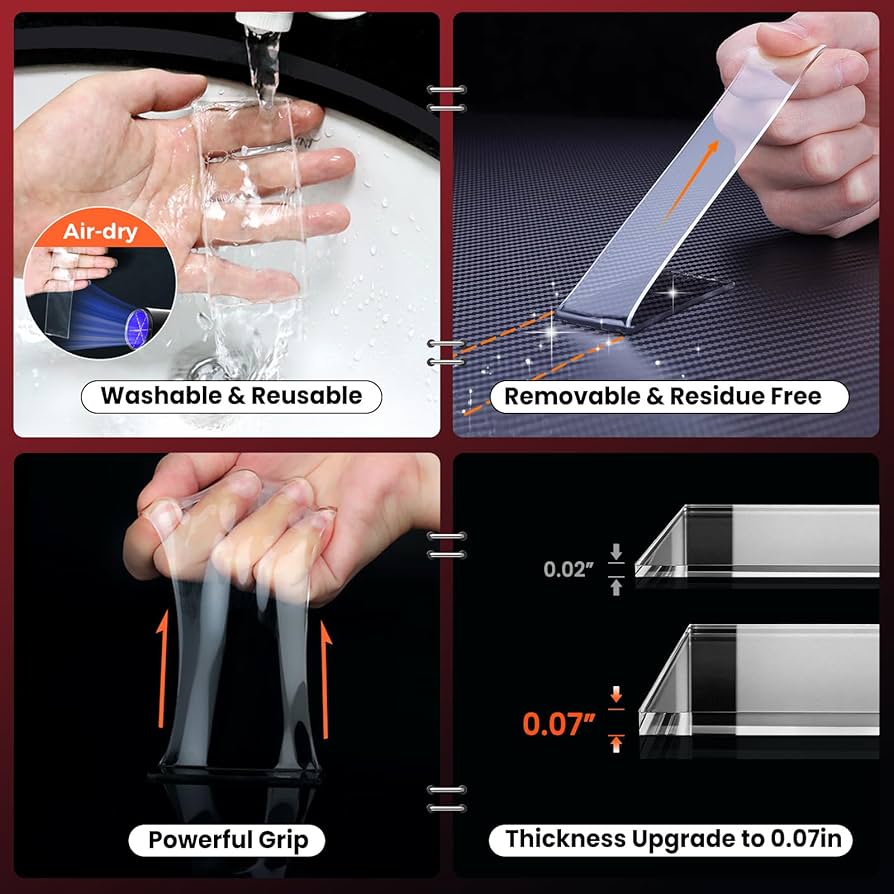
The defining characteristic of nano wall tape—its ability to regenerate adhesion after washing—requires specific quality assurance protocols. Production facilities should conduct wash cycle testing using deionized water and mild detergents, followed by controlled air-drying at 23°C. Post-wash adhesion retention should exceed 80% of original values after ten wash cycles. Quality inspectors verify that the gel surface remains structurally intact without delamination from the carrier film. For B2B buyers, requesting batch-specific wash-test reports ensures the product will perform reliably in consumer applications where reusability is a primary selling point.
What Certifications Should International Buyers Verify?
Compliance documentation protects distributors from regulatory complications in target markets. Essential certifications include RoHS (Restriction of Hazardous Substances) for electronics-adjacent applications, and REACH compliance for European Union distribution, confirming the absence of SVHCs (Substances of Very High Concern). For Middle Eastern markets, SASO (Saudi Standards, Metrology and Quality Organization) compliance may be required. ISO 9001:2015 certification indicates standardized quality management systems, while ISO 14001 demonstrates environmental responsibility in manufacturing processes. Requesting SGS or Intertek test reports provides third-party verification of adhesion strength, flammability ratings, and chemical composition.
How Does Packaging Engineering Protect Product Integrity During Export?
International shipping presents unique challenges for nano tape’s sensitive adhesive properties. Quality-focused manufacturers utilize aluminum-laminated moisture barrier bags with desiccant packs, preventing humidity ingress that could prematurely activate adhesion or cause liner separation. Master cartons should specify temperature ranges of 15-25°C for storage, with humidity controls below 60% RH. Roll cores must utilize high-density cardboard or plastic to prevent collapse under stacking pressure during container shipping. For buyers in Vietnam or South American ports with high humidity, vacuum-sealed packaging with humidity indicator cards provides additional protection against moisture damage during transit.
Understanding these manufacturing and quality assurance parameters enables B2B buyers to conduct informed supplier audits, negotiate specifications with precision, and establish quality agreements that protect their market reputation. When evaluating potential manufacturing partners, prioritize facilities that offer transparent access to production floor protocols and maintain comprehensive batch traceability systems.
Practical Sourcing Guide: A Step-by-Step Checklist for ‘Nano wall tape’
Navigating the procurement of nano wall tape requires balancing technical precision with supply chain reliability. This checklist equips international buyers with actionable steps to evaluate suppliers, validate product performance, and secure favorable commercial terms when sourcing reusable, washable mounting solutions for diverse markets across Africa, South America, the Middle East, and Europe.
1. What Technical Specifications Should You Define Before Contacting Suppliers?
Begin by documenting your target market’s specific application requirements and environmental conditions. Determine the required thickness (typically 1mm to 2mm), width specifications, and load-bearing capacity needed for common substrates like painted drywall, glass, or textured tiles prevalent in your region. Clarify temperature resistance ranges, whether you need UV-resistant formulations for outdoor markets in tropical climates, or transparent variants for aesthetic-sensitive European applications, as these variables significantly impact unit pricing and minimum order quantities.
2. How Do You Verify Manufacturer Credentials for International Trade?
Validate potential partners through comprehensive third-party audits and export history verification. Request current ISO 9001 quality management certifications and documented evidence of successful shipments to your specific regions—particularly experience with humid climates like Southeast Asia or high-temperature environments in the Middle East and West Africa. Verify their production capacity for B2B volumes, their capability to provide private labeling, and compliance with regional chemical safety standards such as REACH, RoHS, or relevant national import regulations.
3. Why Is Sample Testing Critical for Nano Tape Procurement?
Never commit to bulk orders without conducting rigorous substrate-specific adhesion tests under local conditions. Request samples to evaluate washability cycles—premium nano tape should maintain 90% adhesion after 5+ washing cycles—and test residue-free removal on locally common surfaces like lime-washed walls, PVC panels, or painted cinder block. Document shear strength when supporting actual weighted objects under your destination’s typical temperature and humidity levels to ensure the acrylic gel formula performs reliably.
4. What Customization Options Maximize Market Value?
Negotiate value-added modifications that differentiate your inventory in competitive markets. Discuss custom roll lengths, individual dispenser packaging for retail segments, or bulk industrial spools for construction sector clients. Inquire about multilingual instruction inserts for diverse linguistic markets, moisture-barrier inner packaging for tropical destinations, and confirm whether the supplier offers printed branding on the tape backing or outer cartons to strengthen your distribution presence.
5. How Should You Structure Logistics for Cross-Border Delivery?
Address shipping vulnerabilities specific to pressure-sensitive adhesive products. Specify humidity-controlled container shipping or silica gel desiccants to prevent premature degradation of the nano gel during ocean transit, and confirm appropriate HS code classification (typically 3919.10) for smooth customs clearance. Clarify Incoterms responsibilities—whether FOB or CIF—and verify palletizing standards that protect rolls from compression damage, particularly for long-haul transit to ports like Lagos, Ho Chi Minh City, Jeddah, or Rotterdam.
6. What Quality Assurance Safeguards Protect Your Investment?
Establish clear inspection protocols and documentation requirements before final payment. Define acceptable defect rates for air bubbles, uneven coating thickness, or protective film separation, and mandate third-party pre-shipment inspection (PSI) for initial orders. Structure payment terms to mitigate cross-border risk—consider 30% telegraphic transfer (TT) advance with 70% against bill of lading or letter of credit (LC)—and secure written warranties covering adhesion retention, washability performance, and shelf-life guarantees.
A stock image related to Nano wall tape.
Comprehensive Cost and Pricing Analysis for Nano wall tape Sourcing
When sourcing nano wall tape at scale, understanding the granular cost structure prevents margin erosion and ensures competitive positioning in price-sensitive markets like Nigeria, Vietnam, and broader African and South American territories. Unlike consumer retail pricing, which focuses on per-roll convenience, B2B procurement requires analyzing material specifications, volume thresholds, and total landed costs including regional import duties and currency fluctuation risks.
What Material Specifications Drive Nano Tape Manufacturing Costs?
The primary cost determinant lies in the polyurethane gel density and thickness calibration. Standard 1mm-thick nano tape offers entry-level pricing suitable for light-duty applications, while industrial-grade 2mm-3mm variants with enhanced nano-grip technology command 40-60% higher unit costs but deliver superior shear strength and reusability cycles. Transparent optical-grade films, essential for premium decorative applications, incur additional processing costs compared to translucent industrial grades. Width variations also impact pricing significantly; common 3cm and 5cm widths offer economies of scale, while custom narrow slitting for specialized electronics mounting requires dedicated tooling fees ranging from $200-$500 per SKU.
How Do Volume Tiers and MOQ Structures Affect Unit Economics?
Chinese and Southeast Asian manufacturers typically structure pricing around MOQs of 1,000-5,000 rolls, with significant breakpoints at full container load (FCL) quantities of 20-foot and 40-foot equivalents. For Middle Eastern and African buyers, consolidating orders to fill 20-foot containers reduces per-unit freight costs by 25-35% compared to LCL (Less than Container Load) shipments. Seasonal pricing fluctuations also affect costs, with Q4 manufacturing typically incurring 10-15% premiums due to holiday production constraints. Custom OEM packaging—whether bulk carton packing for B2B redistribution or individual blister packs for retail—can swing unit costs by $0.15-$0.40 per roll depending on printing complexity and protective film requirements.
What Hidden Logistics Costs Impact Total Landed Pricing in Emerging Markets?
Beyond FOB pricing, buyers must calculate customs duties under HS code 3919 (self-adhesive plates, sheets, and film), which vary significantly across target regions. Nigerian imports face approximately 5-20% duty rates plus 7.5% VAT, while Vietnam offers favorable ASEAN trade agreement rates for Chinese-sourced goods, often reducing duties to 0-5%. Additionally, currency fluctuation hedging, marine insurance, and inland transportation from port to warehouse—particularly challenging in landlocked African markets or regions with poor infrastructure—can cumulatively add 15-22% to the initial product cost. Port congestion fees in major African hubs like Lagos or Durban frequently add unexpected surcharges that must be factored into annual procurement budgets.
How Should Buyers Evaluate Cost-Per-Use Versus Upfront Investment?
The reusable nature of nano gel tape fundamentally disrupts traditional adhesive cost calculations. While premium washable nano tape may cost 3x more than conventional foam mounting tape initially, its ability to maintain adhesion through 500+ wash cycles reduces the effective cost-per-application by 60-80%. For B2B buyers supplying construction, automotive, or rental property maintenance sectors, emphasizing this TCO (Total Cost of Ownership) metric justifies higher procurement budgets and supports premium pricing to end-users. Furthermore, the elimination of surface damage and cleaning costs associated with residue removal from traditional adhesives provides additional value proposition leverage in commercial real estate and hospitality markets.
What Negotiation Levers Can Optimize Your Sourcing Terms?
Experienced buyers leverage payment term structures—negotiating 30% deposit/70% against B/L rather than 100% advance—to improve cash flow and mitigate quality risks. Requesting RoHS and REACH compliance certifications upfront prevents costly delays at customs, particularly for European markets with stringent environmental regulations. Additionally, negotiating for master roll formats (jumbo rolls for local slitting) versus finished goods can reduce costs by 20-30% for buyers with converting capabilities in-market, particularly viable for European distributors or large Nigerian trading companies with established slitting and repackaging operations. Long-term supply agreements with quarterly price adjustment clauses based on raw material indices provide stability against acrylic acid and PU resin market volatility.
Given the technical nature of nano-adhesive manufacturing, partnering with suppliers offering transparent cost breakdowns and flexible MOQ scaling ensures sustainable margin protection across diverse regional markets.
Alternatives Analysis: Comparing Nano wall tape With Other Solutions
When evaluating mounting solutions for commercial interiors, retail displays, or temporary exhibitions, procurement teams must weigh the trade-offs between permanence, flexibility, and surface integrity. While nano wall tape offers a unique value proposition through its reusable, traceless adhesion derived from nano-grip technology, understanding how it stacks against conventional methods ensures optimal specification for diverse project requirements and budget cycles. This analysis examines nano wall tape against two prevalent alternatives—mechanical fastening systems (screws and anchors) and traditional foam mounting tapes—focusing on the operational, economic, and logistical factors critical to international B2B procurement in regions with varying labor costs, facility management standards, and sustainability mandates.
How Does Nano Wall Tape Compare to Mechanical Fastening and Foam Adhesives?
| 比較の側面 | Nano Wall Tape | Mechanical Fastening (Screws/Anchors) | Traditional Foam Mounting Tape |
|---|---|---|---|
| Initial Installation Cost | Low (no tools required) | Moderate to High (requires drills, skilled labor) | Low to Moderate |
| Holding Strength | Up to 1-2 kg/cm² (varies by surface) | High (structural load bearing) | Moderate to High (permanent bond) |
| Surface Impact | Zero damage; traceless removal | Permanent holes; structural damage | Residue likely; surface damage common |
| Reusability | High (washable, multi-use for 500+ cycles) | Low (single-use hardware) | Low (single-use application) |
| 実施スピード | Immediate (seconds per application) | Slow (requires drilling, curing, cleanup) | Fast (immediate bond) |
| Substrate Compatibility | Smooth surfaces (glass, metal, tile, painted drywall) | Masonry, wood, concrete, drywall | Most porous and non-porous surfaces |
| Environmental Resistance | Moderate (indoor/temporary outdoor) | High (weatherproof permanent) | High (permanent weatherproof options) |
| Labor Skill Requirement | Unskilled labor | Skilled labor (drilling, alignment) | Unskilled to semi-skilled |
When Should Procurement Teams Specify Mechanical Fastening Instead of Nano Tape?
Mechanical fastening systems—encompassing screws, wall anchors, and mounting brackets—remain the industry standard for heavy-duty, permanent installations exceeding 5kg loads, such as industrial shelving, heavy signage, or HVAC equipment mounting. While these systems provide unmatched structural integrity and weather resistance for exterior applications, they introduce significant labor costs through drilling requirements, dust containment, and skilled installation time. For B2B buyers managing facility maintenance across multiple properties in Nigeria, Vietnam, or the Middle East, the permanent nature of mechanical fastening limits layout flexibility and creates liability for surface damage, particularly in leased commercial spaces where lease agreements strictly prohibit alterations to walls. Additionally, in emerging markets where specialized labor costs are rising and tool availability varies, the tool-free application of nano tape offers substantial project acceleration for non-structural mounting needs. However, mechanical solutions remain essential for safety-critical loads and environments subject to vibration, temperature extremes, or regulatory requirements demanding physical anchoring.
Is Traditional Foam Mounting Tape a Viable Alternative for Permanent B2B Applications?
Traditional foam and acrylic mounting tapes represent the middle ground between permanent mechanical solutions and reusable nano technology, offering strong immediate adhesion suitable for semi-permanent signage, mirror installation, and automotive trim applications. These products utilize viscoelastic acrylic adhesives that provide excellent shear strength but create permanent chemical bonds that typically damage painted surfaces, drywall, and decorative veneers upon removal, generating refurbishment costs that often negate initial material savings. Unlike nano tape’s washable reusability, foam tapes require complete surface replacement if misaligned during installation, increasing material waste and project timelines significantly while contributing to landfill waste. For procurement teams sourcing for retail environments, corporate offices, or exhibition spaces requiring frequent rebranding, seasonal display rotations, or agile workspace reconfigurations, the single-use nature of foam adhesives results in higher total cost
Essential Technical Properties and Trade Terminology for Nano wall tape
What Technical Specifications Determine Nano Tape Performance in Commercial Applications?
When evaluating nano wall tape for bulk procurement, understanding quantitative specifications ensures product suitability for regional climate conditions and substrate types prevalent in African, Middle Eastern, and Southeast Asian markets.
Peel Adhesion Strength (N/cm): This measures the force required to remove tape from stainless steel at a 180-degree angle. Premium nano tapes offer 1.5–2.5 N/cm peel strength, providing sufficient holding power for decorative frames and cable management while maintaining clean removability. Specifications below 1.0 N/cm indicate insufficient grip for vertical loads in humid environments common in Nigeria or Vietnam.
Thickness (mm/mils): Standard nano tapes range from 0.5mm to 2.0mm (20–80 mils). Thicker variants provide better gap-filling capabilities on textured walls or uneven ceramic tiles prevalent in Middle Eastern construction, while thinner profiles suit precision mounting on glass or acrylic displays.
Temperature Resistance Range: Quality nano tapes maintain adhesion between -20°C to 80°C (-4°F to 176°F). For buyers in regions with extreme heat (Gulf Cooperation Council countries) or cold (Eastern Europe), verify thermal stability to prevent adhesive flow or embrittlement during seasonal fluctuations.
洗濯可能サイクル: This indicates how many cleaning cycles the micro-suction layer withstands before degradation. Industrial-grade tapes support 50–100 wash cycles with water, essential for rental property management and temporary exhibition installations where reuse maximizes ROI.
Optical Clarity: Measured as light transmission percentage, high-clarity nano tapes (transparency >90%) remain invisible on glass partitions and acrylic signage, crucial for modern office fit-outs and retail displays where aesthetic integrity is paramount.
Substrate Surface Energy Compatibility: Nano tapes perform optimally on high-surface-energy materials (glass, metal, glazed ceramics) but require verification for low-surface-energy plastics (polypropylene, polyethylene) common in manufacturing components across South America and Africa.
What Industry Terminology Should Procurement Teams Master When Sourcing Nano Adhesive Solutions?
Familiarity with trade-specific language facilitates clearer communication with manufacturers and prevents costly specification mismatches during international sourcing negotiations.
Nano-Grip Technology: Originally proprietary but now genericized, this refers to the micro-suction mechanism utilizing thousands of gel-based acrylic pockets that create vacuum adhesion rather than chemical bonding. Understanding this helps buyers distinguish authentic nano tapes from conventional double-sided foam products.
跡形もない除去: In B2B contexts, this guarantees zero adhesive residue transfer and no substrate damage upon removal, distinct from “low-residue” alternatives. Essential for leased commercial properties and temporary event installations where surface integrity deposits are contractually required.
Shear Strength (Static/Dynamic): Measured in kilograms per square centimeter (kg/cm²), this indicates resistance to downward sliding forces. Static shear tests evaluate holding power under constant load, while dynamic shear assesses performance during vibration—critical for automotive interior applications and machinery mounting in industrial settings.
Repositionable Tack: Describes the adhesive’s initial bond strength that allows adjustment within the first 5–10 minutes of application without losing ultimate adhesion. This property reduces material waste during large-scale installation projects by enabling alignment corrections before permanent bonding.
Gel-Based Acrylic Formulation: The chemical composition distinguishing nano tapes from rubber or silicone alternatives. This formulation provides the unique combination of high initial tack, washability, and UV stability required for outdoor signage and bathroom fixture mounting in tropical climates.
Surface Energy Compatibility: A technical parameter indicating whether the tape adheres to high-energy surfaces (metals, glass) or requires priming for low-energy plastics (polypropylene, Teflon). B2B buyers must verify compatibility with local building materials, particularly when sourcing for diverse construction markets across Africa and Latin America.
Navigating Market Dynamics and Sourcing Trends in the Nano wall tape Sector
What Are the Emerging Global Trends Shaping the Nano Wall Tape Market?
The nano wall tape sector is experiencing accelerated growth driven by the global shift toward damage-free mounting solutions in both residential and commercial construction. Unlike traditional adhesive systems that compromise surface integrity, nano gel technology offers traceless removal and reusability—features particularly valuable in emerging markets like Nigeria and Vietnam where rapid urbanization demands flexible interior solutions. B2B buyers across Africa, South America, and the Middle East are increasingly sourcing these products to support booming retail fit-out sectors, temporary exhibition infrastructures, and modular office configurations where modification flexibility is paramount.
Regional demand patterns reveal distinct procurement priorities that inform sourcing strategies. European markets emphasize compliance with REACH regulations and eco-design directives, driving demand for solvent-free acrylic nano formulations with documented chemical safety data and batch consistency. Conversely, buyers in Nigeria and Vietnam prioritize cost-effective bulk sourcing with enhanced moisture-resistant properties suited to tropical climates and monsoon seasons, while Middle Eastern importers focus on heat-stable variants capable of maintaining adhesion in high-temperature environments exceeding 40°C. The diversification of application scopes—from securing carpets in hospitality venues to cable management in industrial settings, glass façade installations, and anti-slip safety applications—has expanded the addressable market beyond traditional DIY sectors into professional construction supply chains and facility management services.
E-commerce penetration has fundamentally altered distribution dynamics, with B2B purchasers now expecting direct manufacturer relationships that bypass traditional import intermediaries. This disintermediation trend enables buyers to customize specifications—such as thickness gradients for heavy-duty industrial use versus ultra-thin variants for glass mounting—while securing competitive MOQs (Minimum Order Quantities) tailored to regional market sizes. Quality differentiation has emerged as a critical market dynamic, with premium nano tapes utilizing advanced acrylic nano-grip technology commanding higher margins in European markets, while commodity-grade silicone alternatives compete on price in price-sensitive African and South American sectors. Supply chain resilience considerations now necessitate multi-source procurement strategies, particularly given fluctuations in raw material availability for specialized nano gel polymers and shipping volatility affecting Asian manufacturing hubs.
How Can B2B Buyers Navigate Sustainability and Ethical Sourcing in Nano Tape Procurement?
Sustainability in nano wall tape sourcing extends beyond the product’s inherent reusability to encompass comprehensive manufacturing ethics and lifecycle impact assessment. While the washable, multi-use nature of nano gel tapes inherently supports circular economy principles—potentially reducing construction waste from traditional drilling and permanent adhesives by up to 60% in renovation projects—B2B buyers must scrutinize upstream production practices. Ethical sourcing requires verifying that suppliers utilize non-toxic acrylic formulations free from heavy metals, phthalates, and volatile organic compounds (VOCs), particularly critical for indoor air quality standards in European commercial buildings and Middle Eastern hospitality projects where ventilation systems may be less robust or regulatory enforcement varies.
Production ethics represent another critical evaluation dimension often overlooked in commodity procurement. Responsible buyers should audit manufacturing facilities for ISO 14001 environmental management and SA8000 social accountability certifications, ensuring that the “reusable” benefit at the consumer level does not mask exploitative labor conditions or unregulated chemical waste disposal at the production stage. Packaging sustainability offers immediate procurement leverage; specifying FSC-certified recycled cardboard cores, biodegradable film wraps, and consolidated shipping configurations significantly reduces the carbon footprint of international logistics to African and South American markets where local waste infrastructure may be limited or informal.
Strategic sourcing partnerships should prioritize suppliers demonstrating closed-loop manufacturing capabilities, including water recycling systems in the nano gel purification process and solar or wind energy integration in coating facilities. For buyers in Nigeria and Vietnam, where rapid infrastructure development coincides with increasing environmental scrutiny and green building certification adoption, selecting nano tape partners with verified sustainability credentials provides competitive differentiation in government and corporate tenders. Establishing long-term supplier relationships based on transparent material traceability—from raw acrylic polymer sourcing to final gel coating—ensures consistent quality while mitigating risks associated with regulatory shifts toward extended producer responsibility frameworks and potential carbon border adjustments in key export markets like the European Union. Additionally, buyers should evaluate end-of-life takeback programs where manufacturers accept returned
Frequently Asked Questions (FAQs) for B2B Buyers of Nano wall tape
What is nano wall tape and how does it work for commercial mounting applications?
Nano wall tape utilizes advanced nano-grip technology comprising microscopic suction cups or high-density acrylic gel matrices that create vacuum adhesion with surfaces at the molecular level. Unlike conventional adhesives that rely on chemical curing, this transparent mounting solution forms immediate physical bonds with substrates including glass, metal, wood, ceramic, and painted drywall without surface penetration. For commercial environments, this translates to instant load-bearing capacity and rapid deployment capabilities, enabling facilities teams to install signage, cable management systems, and lightweight fixtures during business hours without disrupting operations or generating construction dust.
How does nano adhesive tape compare to traditional mounting hardware for office installations?
Traditional mounting hardware requires drilling, wall anchors, and permanent surface modifications that violate commercial lease agreements and necessitate skilled trades labor. Nano adhesive tape eliminates structural damage while supporting comparable static loads for items under 2-5 kg per square inch, depending on the specific commercial grade utilized. B2B procurement teams benefit from significant cost reductions in both installation—requiring no specialized tools—and end-of-lease remediation, as the tape removes without spackling or repainting, which typically costs $15-50 per linear meter in commercial real estate make-good clauses.
What weight capacity specifications should B2B buyers expect from industrial-grade nano wall tape?
Commercial-grade nano tape typically supports 0.5-2.0 kg per 2.5cm x 2.5cm segment under optimal conditions, with heavy-duty variants rated for 5-10 kg when applied to non-porous surfaces like glass or powder-coated metal. However, weight capacity varies significantly based on surface texture, ambient temperature, and humidity levels prevalent in regions like Southeast Asia or the Middle East. For B2B applications involving permanent fixtures or safety-critical mounting, buyers should request technical data sheets specifying shear strength (N/cm²) and dynamic load limits, while implementing mechanical redundancy for items exceeding 1 kg in high-traffic commercial areas.
Can nano wall tape be removed without damaging walls in leased commercial spaces?
Yes, nano tape’s traceless removal properties make it ideal for tenant improvement projects where lease agreements mandate the restoration of original wall conditions. When properly removed by pulling the tape parallel to the surface rather than perpendicular, the acrylic gel composition releases cleanly without leaving residue, paint damage, or substrate deformation. This characteristic proves particularly valuable for temporary retail installations, exhibition booths in convention centers, and corporate relocations, effectively eliminating the repair costs and downtime associated with traditional anchor systems.
How can businesses restore adhesion after multiple uses in high-dust industrial environments?
Nano tape’s reusability depends on maintaining clean gel surfaces free from particulate contamination common in manufacturing facilities, warehouse operations, and outdoor construction sites across Africa and the Middle East. When adhesion degrades due to dust accumulation, washing the tape with warm water and mild detergent removes oils and particulates, restoring 90-95% of original bonding strength after complete air drying. For B2B buyers operating in dusty climates, specifying anti-static packaging and implementing quarterly cleaning protocols extends product lifecycle significantly compared to single-use foam tapes or permanent adhesives.
What surface preparation protocols ensure optimal bonding for large-scale commercial deployments?
Successful nano tape application requires rigorous substrate cleaning with isopropyl alcohol to remove silicone residues, dust, and oxidation that compromise vacuum adhesion on painted walls or metal surfaces. For B2B projects involving extensive tape application—such as hotel fit-outs, hospital wayfinding systems, or retail chain rollouts—procurement teams should specify surface energy testing (dyne level testing) for powder-coated metals or low-energy plastics. High-quality commercial installations may require primer application on porous surfaces to achieve the 200+ gram/inch peel strength necessary for long-term durability in professional environments.
How should international B2B buyers evaluate quality differences between consumer and commercial-grade nano tape?
Commercial-grade nano tape features higher acrylic gel density (typically 1.0-1.2 mm thickness versus 0.5-0.8 mm consumer variants) and UV-stabilized polymers that prevent yellowing in sunlit atriums or storefronts exposed to intense tropical sunlight. Buyers should request samples for 72-hour shear testing at 40°C/75% humidity to simulate climatic conditions common in Vietnam, Nigeria, or Brazil. Additionally, verify compliance with REACH and RoHS standards for chemical safety, particularly when sourcing for healthcare facilities or educational institutions where off-gassing regulations and indoor air quality standards are stringent.
What are the cost-benefit considerations for bulk procurement of nano wall tape across multi-site deployments?
While unit costs for nano tape exceed traditional foam mounting tapes by 3-5x, total cost of ownership calculations favor nano technology when factoring in labor savings (no drilling or curing time), reusability (5-10 application cycles), and elimination of wall repair expenses. For multi-national corporations managing facilities across Europe and South America, standardizing on nano tape reduces SKU complexity and simplifies inventory management. B2B buyers should negotiate volume pricing for master rolls (50m+) with custom slitting services to minimize waste, while establishing MOQ (Minimum Order Quantity) thresholds that justify sea freight versus air cargo for cost-effective international logistics.
重要な免責事項および利用規約
⚠️ 重要な免責事項
メーカー、技術仕様、市場分析に関する内容を含め、本ガイドラインで提供される情報は、情報提供と教育目的のみのものです。専門的な調達アドバイス、財務アドバイス、または法的アドバイスを提供するものではありません。.
B2Bバイヤーは、独自の徹底的なデューデリジェンスを行う必要がある。 をご覧の上、ご購入をお決めください。本ガイドに記載された情報を信頼した場合のリスクは、読者が単独で負うものとします。.
Top 1 Nano Wall Tape Manufacturers & Suppliers List
1. ADH – Industrial Tapes
ドメイン adhtapes.com
Registered: 2018 (8 years)
はじめに This company, ADH – Industrial Tapes, is a notable entity in the market.
Strategic Sourcing Conclusion and Outlook for Nano wall tape
How Can B2B Buyers Future-Proof Their Adhesive Product Portfolio?
The nano tape market represents a decisive shift from permanent, surface-damaging fasteners to reusable, residue-free mounting solutions. For procurement teams across Nigeria, Vietnam, and emerging European markets, this transition offers significant margin opportunities alongside sustainability credentials that increasingly influence institutional purchasing decisions. As commercial sectors pivot toward damage-free installation methods, distributors who establish reliable supply chains now will capture first-mover advantages in rapidly urbanizing regions.
What Quality Indicators Should Drive Your Sourcing Strategy?
When evaluating manufacturers, prioritize gel-based acrylic formulations that maintain adhesion through 50+ wash cycles, as this indicates industrial-grade reusability. Verify weatherproof ratings specifically for tropical climates common in African and Southeast Asian markets, ensuring products withstand humidity fluctuations without delamination. Request comprehensive material safety data sheets (MSDS) and RoHS compliance documentation to navigate varying regional import regulations seamlessly.
Is Nano Tape Positioned for Long-Term Market Dominance?
Industry trajectory suggests nano adhesive technology will expand beyond consumer DIY into commercial construction and automotive interior sectors. Smart sourcing involves securing volume commitments with factories offering customization capabilities—private labeling and thickness variations—to differentiate your regional distribution network. The convergence of reusability trends and mounting convenience positions nano tape as a staple category rather than a novelty, warranting serious inventory investment for forward-thinking procurement professionals.