Introduction: Navigating the Global Market for Fragile sticker tape
When managing high-volume export operations from Lagos to São Paulo or Dubai to Berlin, sourcing reliable fragile sticker tape for international shipping represents more than a packaging formality—it is a critical risk mitigation strategy. For procurement teams across Africa, South America, the Middle East, and Europe, the challenge extends beyond simply acquiring adhesive labels; it involves securing consistent quality standards that withstand diverse climate conditions, varying handling protocols, and complex customs requirements while maintaining cost efficiency at scale. The global marketplace offers myriad options, yet navigating supplier reliability, material specifications, and regional compliance standards requires strategic insight to prevent costly cargo damage and supply chain disruptions.
Why Is Selecting the Right Fragile Tape Critical for Cross-Border Logistics?
This guide examines the technical distinctions between polypropylene, PVC, and paper-based fragile tapes, analyzing their performance across humidity extremes and temperature fluctuations common in transcontinental shipping routes. We explore application-specific requirements for electronics, glassware, and pharmaceutical exports, ensuring your protective labeling meets industry-specific handling standards. Understanding these material variances enables procurement managers to specification-match products with their unique cargo profiles and destination market regulations.
How Can Emerging Market Buyers Vet Suppliers and Optimize Procurement Costs?
Beyond product specifications, we address the operational complexities facing buyers in Nigeria, Brazil, and similar markets—evaluating supplier certification protocols, minimum order quantities, and freight consolidation strategies that reduce landed costs. You will discover frameworks for assessing adhesive durability standards, print quality consistency, and compliance with international shipping markings. By the conclusion of this guide, you will possess actionable criteria for negotiating favorable terms, establishing quality assurance checkpoints, and building resilient supplier relationships that safeguard your high-value shipments across global trade corridors.
Understanding Fragile sticker tape Types and Variations
| タイプ名 | 主な特徴 | 主なB2Bアプリケーション | バイヤーのための簡単な長所と短所 |
|---|---|---|---|
| Standard BOPP Printed Tape | Polypropylene substrate with high-contrast “FRAGILE” printing (typically red/white); acrylic adhesive; compatible with manual and automated dispensers | High-volume e-commerce fulfillment; general warehouse carton sealing; cost-sensitive logistics operations in emerging markets | Pros: Lowest cost-per-meter, fast application speed, universally recognized warning symbols. Cons: Limited durability on recycled or dusty cardboard; adhesive can degrade in extreme tropical humidity. |
| Heavy-Duty Vinyl Fragile Tape | Thick PVC or reinforced polypropylene construction; solvent-based or hot-melt adhesive; UV-resistant inks; weatherproof backing | Export shipping; long-haul maritime transit; heavy palletized goods; outdoor storage in Middle Eastern or South American climates | Pros: Superior adhesion in temperature extremes; resists tearing during rough handling; maintains legibility after exposure to moisture. Cons: Higher material cost; requires heavier-duty tape dispensers; excess thickness may trigger dimensional weight pricing. |
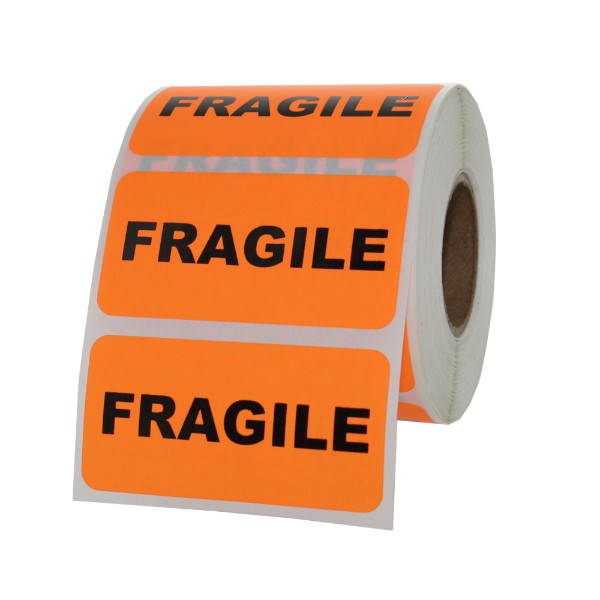
| Pre-Cut Label Rolls (Die-Cut) | Individual 2″x3″ or custom-sized stickers on release liner; permanent or removable adhesive options; compatible with thermal and inkjet printers | Small-to-medium enterprises handling irregular packaging; agricultural or handicraft exports common in African markets; mixed inventory requiring selective labeling | Pros: Strategic placement on non-box shapes; reduces waste vs. continuous tape; supports multi-language printing. Cons: Slower manual application; higher per-unit cost; risk of liner jams in high-speed automated lines. |
| Custom Branded Fragile Tape | Full-color custom printing integrating logos with warning text; available in BOPP or vinyl substrates; low MOQ options for digital printing | Luxury retail logistics; corporate gifting sectors prevalent in Europe; brand-conscious unboxing experiences; anti-counterfeiting measures | Pros: Combines security with marketing; increases brand recall; deters pilferage through unique identification. Cons: Extended lead times for plate setup; higher minimum order quantities for flexographic printing; color matching challenges across batches. |
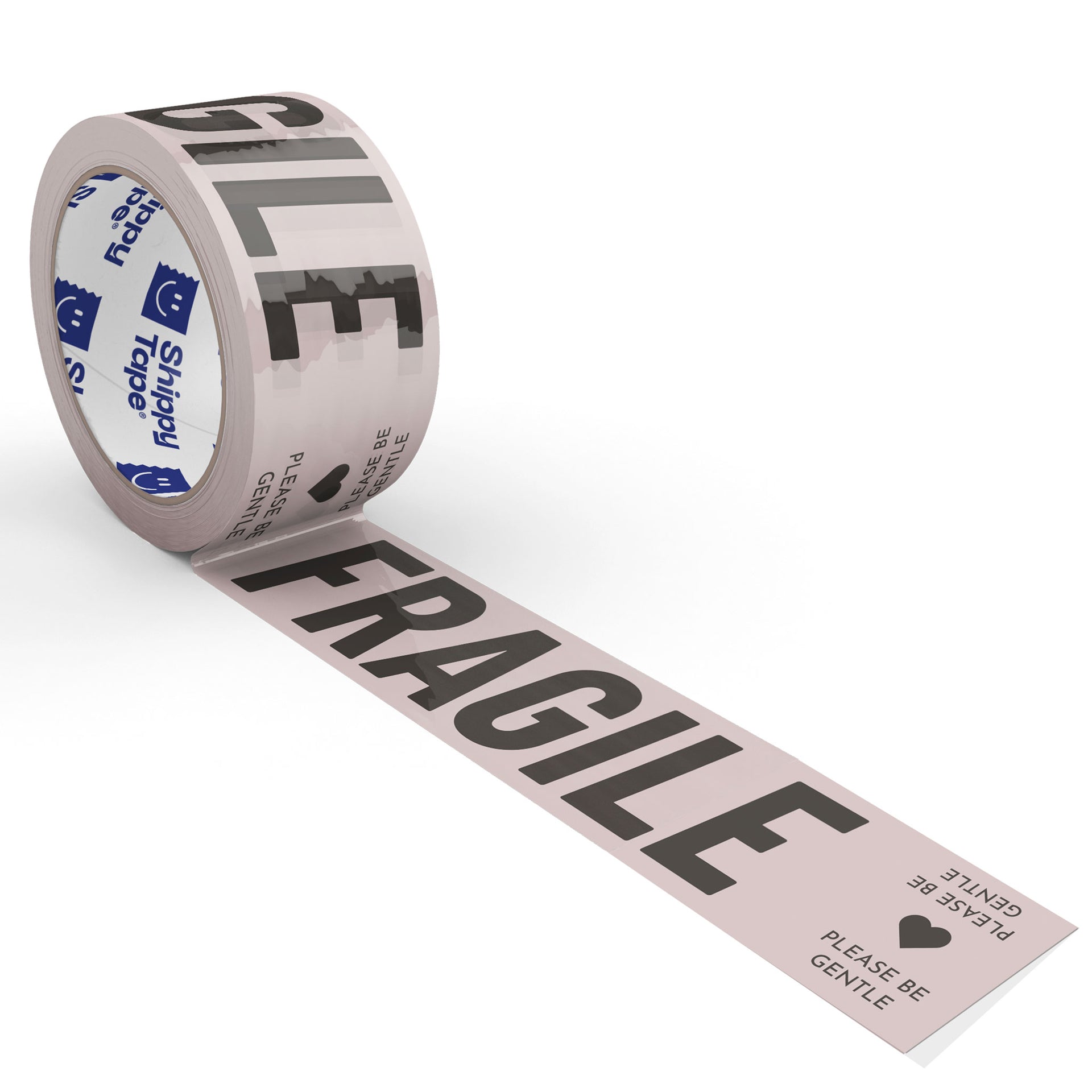
| Color-Coded Category Tape | Non-standard colorways (pink, orange, teal, lavender) with “FRAGILE” messaging; departmental or product-category specific coding | Pharmaceutical distribution; cosmetic supply chains; multi-warehouse operations requiring instant visual sorting without language dependency | Pros: Immediate visual categorization; reduces language barrier errors in diverse workforces; supports internal SOP compliance. Cons: Lack of universal color standards requires staff training; may confuse third-party logistics providers unfamiliar with proprietary codes. |
Which fragile tape specification works best for high-volume fulfillment operations?
Standard BOPP printed tape serves as the workhorse for distribution centers managing cost-sensitive supply chains across Nigeria and Brazil. Manufactured from biaxially oriented polypropylene, it delivers excellent print clarity for warning messages while maintaining the tensile strength required for standard corrugated boxes. When sourcing, procurement teams should verify the acrylic adhesive’s temperature tolerance, as tropical climates can degrade low-quality adhesives, causing tape lift during transit. This specification offers the optimal balance of visibility and cost-efficiency for high-throughput environments where every centimeter of material affects margins.
What are the advantages of heavy-duty vinyl fragile tape for export logistics?
Engineered for the rigors of international trade routes, heavy-duty vinyl tape utilizes PVC or reinforced substrates with solvent-based adhesives that perform reliably in the humidity extremes common at Middle Eastern ports or during South American monsoon seasons. Its superior shear resistance prevents “flagging”—where tape edges lift on dusty or recycled cardboard surfaces—ensuring cartons remain sealed through customs inspections. B2B buyers should prioritize formulations with UV-resistant inks when goods undergo outdoor storage, as warning visibility must remain intact even after prolonged sun exposure in open-air container yards.
When should B2B buyers choose pre-cut fragile label rolls over continuous tape?
Pre-cut label rolls bridge the gap between continuous tape and individual stickers, offering the precision of die-cut labels with the efficiency of roll-fed application. For African SMEs handling diverse export mixes including irregularly shaped agricultural
Key Industrial Applications of Fragile sticker tape
| 業界/セクター | Specific Application of Fragile sticker tape | ビジネスにとっての価値/利益 | このアプリケーションにおける主な調達上の考慮事項 |
|---|---|---|---|
| Electronics Manufacturing & High-Tech Components | Sealing export cartons containing semiconductors, circuit boards, and consumer electronics for international shipment | Reduces transit damage claims by 40-60%, protects high-value inventory margins, and maintains brand reputation in competitive global markets | UV-resistant adhesive for tropical port exposure, tamper-evident features, high-visibility fluorescent colors for low-light warehouses |
| Agricultural Export & Food Processing | Labeling glass containers for wines, olive oils, and specialty preserves; securing delicate produce packaging for overseas markets | Minimizes breakage of glass packaging, ensures compliance with food safety transport regulations, reduces spoilage from mishandling | Moisture-resistant backing for humid climates, food-safe adhesive certifications, bilingual labeling capabilities for diverse export destinations |
| Pharmaceutical & Medical Equipment Distribution | Marking temperature-sensitive vaccine shipments, diagnostic equipment crates, and glass medical ampoules | Protects high-value medical devices from calibration errors, ensures cold chain integrity alerts, meets stringent health authority compliance standards | Cold-chain compatible adhesives (effective at 2-8°C), sterile packaging compatibility, distinct color coding to differentiate hazard classes |
| Eコマースとサードパーティロジスティクス(3PL) | High-volume application on mixed freight pallets and individual parcels containing diverse fragile consumer goods | Streamlines automated warehouse sorting processes, reduces insurance claim ratios, improves customer satisfaction scores and repeat purchase rates | High-tack acrylic adhesive for recycled corrugated surfaces, bulk roll pricing for cost efficiency, compatibility with automated tape dispensers |
How Does Fragile Tape Secure High-Value Electronics Exports from Nigeria and Brazil?
Electronics manufacturers in emerging markets like Nigeria and Brazil face unique logistics challenges when exporting semiconductors, smartphones, and circuit boards. Fragile sticker tape serves as a critical visual safeguard during multi-modal transit, where packages may encounter varying handling standards across international borders. For B2B buyers, selecting UV-resistant adhesives prevents tape degradation during extended exposure to tropical sunlight at ports, while high-visibility fluorescent options ensure handlers immediately recognize high-value contents requiring gentle handling, significantly reducing costly damage claims and protecting slim profit margins in competitive tech markets.
What Role Does Fragile Tape Play in Agricultural Export Integrity?
Agricultural exporters shipping wine, olive oil, and specialty preserves from South America and the Middle East rely on fragile tape to protect glass containers throughout complex supply chains. The tape acts as a universal language alerting handlers to delicate contents, crucial when shipping to diverse international markets with varying language requirements. B2B buyers should prioritize moisture-resistant backings that withstand humid port conditions and temperature fluctuations, ensuring labels remain legible from warehouse to final destination. This protection is essential for maintaining product integrity and meeting strict import standards in European markets.
Why Do Pharmaceutical Distributors Require Specialized Fragile Labeling?
Pharmaceutical and medical equipment distributors across Europe and the Middle East depend on fragile tape to safeguard temperature-sensitive biologics, diagnostic machines, and glass ampoules during cold chain logistics. Unlike standard shipments, medical cargo requires distinct visual hierarchy to prevent rough handling that could compromise sterility or calibration. B2B buyers must source tapes with cold-chain compatible adhesives that maintain tack in refrigerated environments, while ensuring compliance with health authority regulations. The right tape prevents catastrophic financial losses from compromised medications and maintains critical supply chain reliability for healthcare providers.
How Can E-commerce 3PL Providers Optimize Damage Prevention?
Third-party logistics providers supporting rapid e-commerce growth in Africa and South America utilize fragile tape to manage high-volume, mixed freight operations where automated sorting systems and manual handling intersect. For B2B buyers managing diverse client inventories, color-coded fragile tapes enable rapid warehouse identification, reducing misclassification errors and subsequent damage claims. Sourcing high-tack acrylic formulations ensures adhesion to recycled corrugated materials common in cost-conscious emerging markets, while bulk procurement options support the high-throughput demands of modern fulfillment centers competing on delivery reliability and customer satisfaction metrics.
A stock image related to Fragile sticker tape.
3 Common User Pain Points for ‘Fragile sticker tape’ & Their Solutions
Scenario 1: Automated Carton Sealing Compatibility Issues
問題だ: Industrial buyers sourcing fragile tape for high-volume operations frequently encounter production line disruptions when tape specifications mismatch automated carton sealing equipment. Standard fragile sticker tape often features irregular caliper thicknesses, non-standard core sizes (such as 2-inch instead of industrial 3-inch), or inconsistent unwind tension that causes misalignment in pneumatic dispensers. This results in frequent jams, tape breakage, and inconsistent application pressure—particularly costly for manufacturers in Brazil and Nigeria scaling export operations. Additionally, procurement teams sometimes confuse fragile sticker tape with discrete fragile shipping labels, attempting to feed individual stickers through continuous tape dispensers, which damages machine heads and halts packaging workflows.
解決策 Verify automation compatibility by specifying machine-grade fragile tape with standardized 3-inch cardboard cores and uniform thickness (1.8–2.2 mil) designed specifically for high-speed carton sealers. Request technical datasheets confirming unwind force specifications match your dispenser models, and conduct trial runs with sample rolls before committing to bulk orders. For facilities using hybrid packing methods, establish clear procurement protocols: reserve continuous fragile tape for automated lines and pre-cut fragile labels for manual stations. This segregation prevents cross-utilization errors and maintains throughput efficiency for B2B shipments destined for European and Middle Eastern distribution centers.
Scenario 2: Climate-Induced Adhesive Failure in Tropical Supply Chains
問題だ: B2B buyers operating in high-humidity regions like West Africa or coastal South America consistently report fragile tape peeling from corrugated surfaces during extended transit. Standard rubber-based adhesives soften and lose tack when exposed to extreme heat exceeding 35°C (95°F)—common in Middle Eastern logistics hubs and tropical warehouses—causing warning labels to detach before final delivery. This exposes delicate cargo to mishandling risks, generating insurance claims and damaging client relationships. The problem intensifies when tape is applied to dusty carton surfaces prevalent in emerging market warehouses, where airborne particulates create barrier layers that compromise bonding integrity.
解決策 Specify fragile sticker tape formulated with high-tack acrylic adhesives rated for temperature ranges of 0°C to 60°C and 90% humidity tolerance. Select UV-resistant polypropylene or PVC film bases that resist degradation during outdoor storage—a critical consideration for African and South American exporters. Implement warehouse protocols requiring surface preparation: have staff wipe carton sealing edges with isopropyl alcohol wipes before application to remove dust and oils. For extreme climate conditions, choose reinforced fragile tape containing fiberglass strands that maintain structural warning visibility even if adhesive edges partially lift, ensuring handling instructions remain legible throughout international supply chains.
Scenario 3: Brand Differentiation Versus Regulatory Compliance Conflicts
問題だ: International buyers frequently struggle to balance custom branding requirements with mandatory fragile handling warnings, creating confusion between procurement options. Many sourcing managers question whether to invest in custom printed fragile tape featuring corporate logos or utilize generic fragile tape supplemented with separate branded stickers. This indecision leads to inconsistent packaging aesthetics, diluted brand recognition in competitive European markets, and potential customs complications when handling instructions lack immediate visibility. Additionally, SMEs often over-purchase discrete fragile labels when continuous tape would provide superior cost-efficiency for bulk export shipments to Nigeria or Brazil.
解決策 Implement custom printed fragile tape that integrates “FRAGILE” warning text with corporate branding, utilizing flexographic printing that maintains ISO 780 symbol legibility while displaying logos or QR codes. This approach resolves the tape-versus-label dilemma by serving dual functions: securing cartons and reinforcing brand identity. For high-volume operations, calculate total cost of ownership—continuous fragile tape typically reduces per-package costs by 30–40% compared to individual labels for monthly volumes exceeding 5,000 units. Ensure custom designs incorporate universal handling symbols alongside text to overcome language barriers in diverse Middle Eastern and African distribution networks, while maintaining compliance with international shipping regulations.
Strategic Material Selection Guide for Fragile sticker tape
Selecting the optimal substrate for fragile warning tape directly correlates with supply chain integrity and damage claim reduction. For procurement teams managing diverse climatic challenges—from the humidity of Lagos to the temperature fluctuations of São Paulo—material composition determines not only print legibility but also adhesive performance during multi-modal transit. Understanding the distinct mechanical properties of each polymer and paper substrate enables data-driven sourcing decisions that balance unit economics with protective functionality across emerging and established markets.
Which Polymer Offers the Best Balance of Cost and Performance for Fragile Tape?
Biaxially Oriented Polypropylene (BOPP) film represents the dominant substrate in global fragile tape procurement, particularly for high-volume e-commerce operations across Nigeria and Brazil. Its molecular structure provides exceptional tensile strength and moisture resistance, critical for maintaining “FRAGILE” print clarity during monsoon seasons or humid port conditions. The material’s dimensional stability prevents shrinkage on corrugated surfaces, while its compatibility with hot-melt and acrylic adhesives offers versatility across various carton grades. BOPP also supports high-resolution flexographic printing, ensuring warning messages remain legible despite abrasion during automated sorting. However, BOPP exhibits reduced flexibility in sub-zero temperatures, potentially compromising adhesion during refrigerated transport to European distribution centers.
Is PVC Fragile Tape Essential for Cold Chain and Heavy-Duty Export Logistics?
Polyvinyl Chloride (PVC) fragile tape addresses the limitations of polypropylene in demanding cold-chain applications prevalent in pharmaceutical exports to the Middle East and perishable goods leaving South American ports. The material’s superior conformability allows it to adhere to irregular carton surfaces and maintain flexibility in freezing conditions where BOPP would become brittle. Its thicker caliper—typically 35-50 microns versus BOPP’s 28-40 microns—provides additional cushioning against impact during rough handling in developing infrastructure environments. PVC also offers quieter unwind properties, reducing noise pollution in high-volume packing stations. Procurement teams must weigh these performance benefits against higher material costs and increasing regulatory scrutiny regarding chlorine-based polymers in European sustainability frameworks.
When Should Sustainable Paper-Based Fragile Tape Replace Plastic Alternatives?
Reinforced Kraft paper fragile tape serves the growing demand for circular economy compliance, particularly among EU-based importers and premium brands targeting environmentally conscious Middle Eastern markets. Unlike plastic substrates, paper tape creates a tamper-evident seal that bonds mechanically with corrugated fibers, becoming inseparable from the box and eliminating separation issues during recycling streams. The material supports water-activated adhesives that penetrate carton surfaces, offering superior security for high-value electronics. While ideal for dry-climate shipping and premium unboxing experiences, procurement teams should note its vulnerability to moisture degradation during tropical rainy seasons or high-humidity transits through West African ports, potentially compromising the warning message’s visibility.
How Does Polyester Fragile Tape Perform Under Extreme Supply Chain Stress?
Polyethylene Terephthalate (PET) fragile tape targets industrial B2B shipments involving heavy machinery, glass manufacturing exports, or palletized goods requiring maximum tensile strength. The substrate resists UV degradation and chemical solvents during extended outdoor storage in Middle Eastern logistics hubs or African cross-docking facilities where covered warehousing is limited. PET’s rigidity prevents “flagging” or edge lifting on high-shrinkage loads, though this stiffness requires automated or precise manual application. Operating effectively across extreme temperature ranges from -20°C to 150°C, it maintains adhesion where standard films fail. While cost-prohibitive for standard consumer goods, the material proves cost-effective for high-value industrial cargo where single-item damage costs exceed tape expenditure by orders of magnitude.
| 素材 | Typical Use Case for Fragile sticker tape | 主な利点 | 主な欠点/制限 | 相対コスト |
|---|---|---|---|---|
| BOPP (Polypropylene) | High-volume e-commerce, general merchandise | Excellent moisture resistance, cost scalability | Brittleness in freezing temperatures | 低い |
| PVC(ビニール) | Cold chain, refrigerated exports, rough handling | Superior low-temp flexibility, conformability | Higher cost, environmental compliance concerns | ミディアム-ハイ |
| Kraft Paper | Premium unboxing, EU sustainability mandates | Recyclable with boxes, tamper-evident | Poor moisture resistance in tropical climates | ミディアム |
| ポリエステル(PET) | Heavy machinery, industrial glass, outdoor storage | Maximum tensile strength, UV/chemical resistance | High unit cost, requires precise application | 高い |
A stock image related to Fragile sticker tape.
In-depth Look: Manufacturing Processes and Quality Assurance for Fragile sticker tape
For B2B procurement teams sourcing fragile warning tape for high-volume logistics operations, understanding the manufacturing pipeline is essential for risk mitigation. The difference between commodity-grade and industrial-grade fragile tape lies not merely in the printed message, but in substrate engineering, adhesive chemistry, and quality assurance protocols that determine performance across diverse climatic conditions—from the humid ports of Lagos to the temperature-fluctuating warehouses of São Paulo. Whether sourcing continuous roll tape for automated case sealers or pre-cut fragile stickers for manual application, manufacturing excellence follows specific technical parameters that directly impact supply chain integrity.
What substrate specifications ensure durability in tropical climates?
The foundation of reliable fragile sticker tape begins with film substrate selection. Premium manufacturers utilize biaxially oriented polypropylene (BOPP) films ranging from 28 to 35 microns in thickness
Practical Sourcing Guide: A Step-by-Step Checklist for ‘Fragile sticker tape’
Procuring fragile sticker tape for international supply chains requires balancing material durability, regulatory compliance, and cost efficiency across diverse logistical environments. This practical checklist equips procurement teams with actionable steps to evaluate suppliers, specify technical requirements, and mitigate risks when sourcing high-volume orders for markets in Africa, South America, the Middle East, and Europe.
1. How Do You Define Material Specifications for Extreme Climate Conditions?
Specify adhesive chemistry—hot-melt rubber, acrylic, or solvent-based—based on your destination markets’ humidity and temperature ranges. For tropical regions like Nigeria or Brazil, prioritize moisture-resistant acrylic adhesives that maintain tack in 80%+ humidity without delaminating. Determine substrate compatibility across your packaging mix, whether sealing corrugated cardboard, poly mailers, or wooden crates, and require tensile strength ratings exceeding 25 lbs/inch to withstand rough handling during international transit.
2. What Visibility Standards Ensure Handler Compliance Across Borders?
Verify that tape colors meet ISO 780 contrast ratios for high-visibility warning labels in warehouse environments. Specify fluorescent red, orange, or custom Pantone shades that remain vivid after exposure to UV radiation during outdoor storage. Ensure “FRAGILE” typography exceeds 12mm in height for forklift operator visibility, and confirm multilingual printing capabilities if shipping to regions with diverse linguistic requirements like the Middle East or European Union markets.
3. How Should You Calculate Volume Requirements and Shelf-Life Constraints?
Audit your current packaging throughput to determine accurate monthly consumption rates, then negotiate minimum order quantities (MOQs) that align with 3-6 month inventory cycles without overstocking. Account for adhesive shelf life—typically 12-18 months for pressure-sensitive tapes—and ensure supplier packaging includes UV-protective wrapping and climate-controlled container options for bulk shipments to prevent premature aging during extended ocean freight.
4. Which Supplier Certifications Indicate Reliable Export Capabilities?
Verify ISO 9001 quality management systems and ISO 14001 environmental compliance standards. Request documentation of specific export experience to your target regions, including familiarity with local customs labeling requirements and import documentation. For African and South American markets, prioritize suppliers with established freight forwarding partnerships, experience navigating port congestion protocols, and established track records with regional customs authorities.
5. Why Is Pre-Shipment Sample Testing Non-Negotiable for B2B Procurement?
Request production-grade samples applied to your actual packaging substrates for 72-hour adhesion testing under local temperature and humidity conditions. Simulate realistic supply chain stress tests—including vibration tables, drop testing from 1.2 meters, and 24-hour water exposure—to validate that printed warnings remain legible and adhesive bonds strengthen over time rather than degrading during transit.
6. How Do You Structure Logistics Terms for Just-in-Time Delivery?
Negotiate Incoterms that appropriately balance cost with risk exposure—consider CIF (Cost, Insurance, Freight) for initial trial orders transitioning to FOB (Free On Board) once supplier reliability is established. Build in 15-20% buffer stock clauses for emergency replenishment, confirm supplier capacity to scale production during peak seasons without quality degradation, and establish clear communication protocols for shipment tracking.
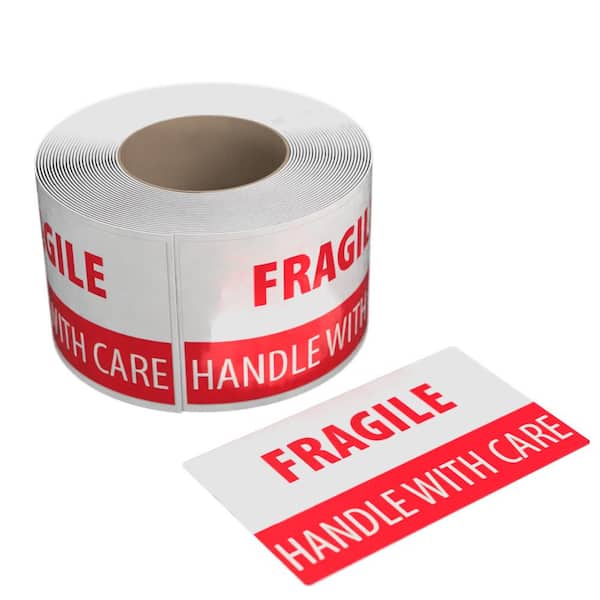
A stock image related to Fragile sticker tape.
Comprehensive Cost and Pricing Analysis for Fragile sticker tape Sourcing
B2B procurement of fragile sticker tape requires understanding cost structures beyond simple unit pricing. For buyers operating in Nigeria, Brazil, or the UAE, material specifications, volume thresholds, and cross-border logistics create complex pricing dynamics that significantly impact total landed costs and profit margins.
What Factors Drive Fragile Sticker Tape Pricing in Global Markets?
Material composition serves as the primary cost determinant. Polypropylene-based tapes with standard acrylic adhesives typically range from $0.02 to $0.08 per meter at wholesale volumes, while premium vinyl alternatives command 40–60% price premiums for enhanced durability. Colorfast inks required for high-visibility red/white warning schemes or custom aesthetic colors (lavender, teal, pink) add 15–25% to base production costs. Additionally, adhesive strength ratings measured in ounces per inch width directly correlate with price tiers—industrial-grade tapes rated 45+ oz for heavy-duty applications cost substantially more than standard 25 oz variants suitable for lightweight e-commerce packaging.
How Do Volume Tiers and MOQs Impact Your Unit Costs?
Manufacturers typically structure B2B pricing across three distinct thresholds: trial orders (500–1,000 rolls), container loads (20,000+ rolls), and annual contract commitments. At volumes below 5,000 rolls, buyers should expect 20–35% price premiums compared to full-container procurement. For African and South American markets, negotiating consolidated shipping arrangements proves critical, as minimum order quantities of 10,000+ rolls often unlock not only preferential pricing ($0.015–$0.025 per meter) but also value-added services like custom printing included within unit costs.
Should You Choose Standard or Custom-Printed Fragile Tape for Cost Efficiency?
Standard “FRAGILE” printed tape offers the lowest entry point at $1.20–$2.50 per roll FOB, while custom branding requires $300–$800 in plate and setup fees plus 10–15% unit premiums. However, for Middle Eastern and European markets requiring multilingual warnings (Arabic/English/French), custom printing eliminates secondary labeling costs and labor expenses. The break-even point typically occurs at 3,000–5,000 rolls, where customization becomes cost-neutral compared to standard tape plus manual labeling operations.
What Hidden Logistics Costs Affect International Tape Sourcing?
Fragile tape’s volumetric weight disadvantage significantly impacts sea freight economics. While a 20-foot container theoretically holds 300,000 standard rolls (48mm x 66m), dimensional weight charges often apply due to the bulky nature of adhesive products. Import duties vary substantially by region—Brazil imposes 12–18% tariffs on adhesive tapes under NCM 3919, while Nigeria’s 5–7% duty rate favors ASEAN suppliers over European sources. Buyers must also factor 8–12% for inland distribution from port to warehouse, particularly critical for landlocked regions in West Africa or South America.
How Can Regional Buyers Optimize Procurement Costs Across Supply Chains?
Strategic sourcing involves balancing quality grades with specific handling requirements. For high-value electronics shipping from Dubai or São Paulo, industrial-grade tear-resistant tapes reduce damage claims despite 30% higher upfront costs. Brazilian buyers benefit from Mercosur trade agreements with Argentine manufacturers, while Nigerian importers should evaluate Chinese suppliers against rising Vietnamese alternatives offering competitive freight advantages. Establishing annual contracts with 90-day payment terms typically yields 8–12% savings over spot purchasing while ensuring supply continuity during peak shipping seasons.
Alternatives Analysis: Comparing Fragile sticker tape With Other Solutions
While fragile sticker tape remains the dominant solution for marking delicate shipments, savvy procurement teams must assess whether alternative methods better align with their operational scale, cash flow cycles, and regional logistics challenges. For B2B buyers across Africa, South America, the Middle East, and Europe, two primary alternatives warrant consideration: pre-printed corrugated shipping boxes with integrated fragile warnings, and discrete fragile handling labels applied independently of sealing tape. Each approach presents distinct trade-offs in supply chain agility, total cost of ownership, and visibility during multi-modal transit.
Comparative Performance Matrix: Tape vs. Alternative Solutions
| 比較の側面 | Fragile Sticker Tape | Pre-Printed Corrugated Boxes | Discrete Fragile Labels |
|---|---|---|---|
| Visibility & Performance | High-contrast continuous strip; seals and warns simultaneously across seams | Fixed print location; visibility depends on box orientation during handling | High-contrast but discrete; multiple labels required for 360° visibility |
| Cost Structure (per 1,000 units) | $20–$50 (material only) | $150–$400 (box premium over standard) | $10–$30 (material only) |
| Implementation Complexity | Low; integrates with existing tape dispensers and protocols | High; requires SKU-specific inventory management and forecasting | Medium; separate application step and placement training required |
| Operational Throughput | Fast (single-pass sealing and marking) | Fastest (pre-applied at box manufacturing) | Slow (additional 3–5 seconds per package handling) |
| Supply Chain Flexibility | High; universal application across variable box sizes and types | Low; committed to specific dimensions and high MOQs (1,000–5,000 units) | Medium; adaptable but requires parallel label inventory management |
| Durability in Transit | Excellent; tamper-evident bond resistant to humidity and abrasion | Good; permanent print but limited to panel surface area | Moderate; risk of edge-lifting in high-humidity climates |
Are Pre-Printed Corrugated Boxes Right for Your Operation?
Sourcing boxes with “FRAGILE” pre-printed directly onto the corrugated material eliminates application labor and ensures consistent branding across shipments. For high-volume exporters in Brazil or Nigeria managing standardized SKU dimensions, this approach streamlines warehouse throughput by removing the taping step entirely. However, the model demands significant capital commitment, with manufacturers typically requiring minimum order quantities that strain working capital in volatile currency environments. Furthermore, pre-printed stock offers zero flexibility; if a shipment contains non-fragile items, the warning becomes redundant, or requires expensive over-labeling. In regions with diverse humidity levels, such as coastal Middle Eastern or West African logistics corridors, the printed ink may also fade or rub off during extended transit, unlike the embedded pigment in quality tape.
When Should You Choose Discrete Fragile Labels Over Tape?
Individual adhesive labels—typically 2×3 inches—allow strategic placement on multiple box faces for maximum visibility during automated sorting processes. Popular among European boutique manufacturers and Middle Eastern e-commerce aggregators, these labels offer lower per-unit material costs than tape and enable vibrant, brand-aligned designs without committing to full box print runs. However, the operational reality involves a separate application step post-sealing, reducing packing station throughput by 15–20% compared to integrated tape solutions—a significant labor cost consideration in markets where manual handling dominates. Additionally, discrete labels face adhesion challenges in the high-humidity environments common to South American and Southeast Asian shipping lanes, where edge-lifting can render warnings invisible to handlers. Procurement teams must also manage dual inventories (tape + labels), complicating just-in-time logistics for growing enterprises.
Essential Technical Properties and Trade Terminology for Fragile sticker tape
When sourcing fragile warning tapes for cross-border logistics, understanding material specifications and commercial terminology ensures compliance with regional shipping standards while optimizing procurement costs across diverse climates. Buyers operating in high-humidity regions like West Africa or the Middle East require specific performance benchmarks that differ from standard European specifications, particularly regarding adhesive stability and weather resistance.
What Material Specifications Ensure Durability in Extreme Shipping Conditions?
Adhesive Shear Strength measures a tape’s resistance to sliding or peeling under constant load, typically tested at 0.5–2.0 N/cm². For tropical climates with high humidity common in Nigerian or Brazilian ports, acrylic-based adhesives with elevated shear resistance prevent premature detachment during extended transit periods where condensation occurs inside containers.
Substrate Caliper refers to the tape’s thickness, measured in microns (μm) or mils. Industrial-grade fragile tapes typically range from 45–65 microns for BOPP (Biaxially Oriented Polypropylene) substrates, providing optimal tear resistance without excessive bulk that increases dimensional weight freight costs during air shipping to landlocked destinations.
UV Stabilization indicates the tape’s resistance to ultraviolet degradation during outdoor storage or cross-desert shipping routes. Premium grades offer 6–12 months UV resistance, ensuring warning text remains legible after prolonged sun exposure in Middle Eastern logistics hubs or during last-mile delivery in open-bed trucks.
引張強度, measured in Newtons per 25mm width (N/25mm), determines resistance to breakage during rough handling. High-performance fragile tapes achieve 30–50 N/25mm, preventing splitting when packages are dragged across concrete warehouse floors or conveyor systems in busy European distribution centers.
Print Opacity quantifies the visibility of warning text against substrate backgrounds, measured as contrast ratio. Industrial standards require minimum 80% opacity to ensure “FRAGILE” messaging remains readable under fluorescent warehouse lighting or when applied over colored corrugated cartons.
ライナーリリース力 specifies the ease of separating the tape from its silicone-coated backing paper, typically 10–30 g/cm. Consistent release properties prevent application delays in high-speed packaging operations and reduce worker fatigue during large-volume fulfillment cycles.
Which Trade Terms Define International Procurement Agreements for Warning Labels?
MOQ (Minimum Order Quantity) represents the smallest production run manufacturers will accept, typically 1,000–5,000 rolls for custom-printed fragile tapes. Negotiating flexible MOQs helps emerging market buyers manage cash flow while securing volume discounts for container-load shipments.
FOB (Free On Board) vs. CIF (Cost, Insurance, Freight) are critical Incoterms determining liability transfer points. FOB places shipping responsibility on the buyer once goods leave the factory, while CIF includes freight and insurance to the destination port—essential for buyers in developing logistics markets unfamiliar with international freight forwarding complexities.
OEM/ODM Capabilities indicate whether suppliers offer Original Equipment Manufacturing (custom branding) or Original Design Manufacturing (custom shapes/sizes). African and South American retailers increasingly require localized language variants (Portuguese, Arabic, French) beyond standard English text to comply with local consumer protection regulations.
Die-Cut Specifications refer to custom cutting shapes beyond standard continuous rolls—individual stickers, perforated sheets, or dispenser-ready formats. Understanding die-cut tooling costs (typically $200–500 per shape) helps buyers evaluate true per-unit pricing versus standard roll formats.
Master Carton CTN Specifications detail how tape rolls are packaged for ocean freight—typically 36–72 rolls per carton with specific weight limits (under 25kg for manual handling compliance in EU warehouses and to prevent injury claims in Brazilian labor environments).
Certificate of Conformity (CoC) documentation proves compliance with destination market regulations, such as EU REACH chemical standards or specific Middle Eastern customs requirements (SASO for Saudi Arabia), preventing costly port delays and unexpected demurrage charges.
Navigating Market Dynamics and Sourcing Trends in the Fragile sticker tape Sector
The fragile tape sector is undergoing significant transformation as global supply chains balance cost efficiency with escalating demands for brand differentiation and regulatory compliance. For procurement teams spanning Nigeria’s burgeoning logistics corridors, Brazil’s e-commerce fulfillment networks, and European export channels, understanding these shifting dynamics is essential for securing competitive advantage. Today’s market extends beyond basic protective labeling, encompassing customizable branding solutions and sustainable material innovations that address diverse climatic and regulatory requirements across international trade routes. As regional markets mature, buyers must navigate increasingly sophisticated sourcing landscapes where quality assurance and environmental accountability determine long-term partnership viability.
How Is the Global Fragile Tape Market Evolving for B2B Procurement?
The global fragile tape market is experiencing steady growth driven by exponential e-commerce expansion and increasingly complex international shipping protocols. Procurement officers are witnessing a decisive shift from generic red-and-white warning tapes toward high-visibility, customizable solutions that serve dual functions: protective handling instructions and brand reinforcement. Advanced material technologies now dominate premium segments, featuring tamper-evident properties and water-resistant acrylic adhesives specifically engineered for high-humidity climates prevalent in regions like West Africa and Southeast Asia. The aesthetic evolution of fragile labeling—moving beyond utilitarian designs to incorporate corporate color schemes and multilingual warnings—reflects growing recognition that packaging serves as a critical customer touchpoint. Additionally, supply chain regionalization trends are prompting manufacturers to establish localized production facilities, reducing lead times for buyers in South America and the Middle East while mitigating currency fluctuation risks associated with long-distance procurement.
What Regional Supply Chain Considerations Impact Fragile Tape Sourcing?
International buyers must navigate distinct logistical challenges when sourcing fragile tape across fragmented global markets. Raw material volatility—particularly fluctuations in polypropylene and PVC resin prices—significantly impacts pricing stability for bulk orders, necessitating flexible contract structures or hedging strategies for high-volume buyers. Procurement teams in emerging markets should prioritize suppliers offering consistent quality certifications (ISO 9001, ASTM standards) to ensure adhesive integrity across varying temperature ranges during transit. Understanding regional port infrastructure limitations proves crucial for inventory planning; buyers in Nigeria or Brazil may benefit from moisture-resistant tape formulations that withstand extended storage periods in humid coastal conditions, while European importers require strict adherence to Packaging and Packaging Waste Regulation (PPWR) compliance documentation to avoid customs delays.
Why Are Sustainability and Ethical Sourcing Becoming Non-Negotiable in B2B Fragile Tape Procurement?
Sustainability has transitioned from peripheral concern to core procurement criterion, particularly for buyers supplying European markets or multinational corporations with ESG mandates. The shift toward recyclable paper-based fragile tapes and biodegradable adhesives reflects growing regulatory pressure, with the EU’s Packaging and Packaging Waste Regulation mandating recyclability for packaging materials. Beyond environmental compliance, ethical sourcing encompasses labor standards and manufacturing transparency—factors increasingly scrutinized by corporate social responsibility auditors and end consumers alike. The transition to water-based adhesives and recycled content substrates addresses both regulatory requirements and growing B2B demand for circular economy solutions. Buyers must now verify comprehensive supplier certifications including FSC (Forest Stewardship Council) for paper-based alternatives and ISO 14001 environmental management standards to ensure supply chain integrity aligns with international sustainability frameworks and client-specific ESG reporting requirements.
How Can B2B Buyers Balance Cost Efficiency with Environmental Compliance?
Balancing sustainability objectives with budget constraints requires strategic evaluation of total cost of ownership rather than unit pricing alone. While eco-friendly fragile tapes may command premium upfront costs, they often reduce long-term expenditures through improved brand reputation, reduced waste disposal fees, and compliance risk mitigation. Buyers should explore bulk purchasing agreements with certified manufacturers to achieve economies of scale without compromising environmental standards, particularly when procuring for multi-regional distribution networks. Additionally, regional sourcing strategies—partnering with suppliers in Turkey for Middle Eastern markets or Colombia for South American distribution—can significantly reduce carbon footprints associated with transportation while supporting local economies and ensuring faster response to market demands. Implementing rigorous supplier vetting processes that assess both material sustainability and ethical labor practices ensures procurement decisions deliver value beyond immediate cost savings, fostering resilient supply chains capable of withstanding increasing regulatory scrutiny.
Frequently Asked Questions (FAQs) for B2B Buyers of Fragile sticker tape
What is the difference between fragile sticker tape and fragile shipping labels?
Fragile sticker tape functions as both a sealing mechanism and a warning system, whereas fragile shipping labels serve solely as adhesive notifications. The tape format provides continuous coverage along box edges and seams, creating highly visible barriers that withstand the rigors of conveyor systems and manual handling common in busy ports across Lagos or São Paulo. Labels, while cost-effective for small parcels, lack the structural reinforcement that industrial-grade fragile tape offers for heavy export cartons. For B2B operations managing high-volume shipments through Middle Eastern logistics hubs, tape eliminates the risk of labels peeling off during extended transit times.
Can you order custom printed fragile tape with company branding for bulk shipments?
Yes, industrial suppliers offer full customization for fragile tape with minimum order quantities typically starting at 50-100 rolls depending on width specifications. You can incorporate corporate logos, QR codes linking to handling instructions, or multilingual warnings in Portuguese, Arabic, or French to accommodate diverse regional workforces. Custom printing typically utilizes flexographic or digital processes that maintain visibility against standard red-and-white backgrounds while ensuring adhesive integrity. For buyers in Nigeria and Brazil, branded fragile tape also serves as a theft-deterrent mechanism, as marked cartons receive heightened scrutiny throughout supply chain checkpoints.
What are the standard dimensions and materials for fragile sticker tape in industrial packaging?
Standard industrial widths range from 48mm to 72mm (2-3 inches), with 50mm being the most common for carton sealing applications in European markets. Materials typically include BOPP (Biaxially Oriented Polypropylene) for general use, PVC for enhanced conformability on irregular surfaces, and heavy-duty vinyl for extreme weather conditions encountered in outdoor African storage facilities. Thickness specifications generally fall between 35-50 microns for hand-application and up to 65 microns for machine-grade durability. The backing utilizes silicone-coated paper cores sized at 76mm (3 inches) to fit standard dispensers and automated sealing equipment prevalent in modern distribution centers.
Is fragile sticker tape compatible with automated carton sealing machines?
Industrial fragile tape is fully compatible with automated carton sealers provided you specify machine-grade specifications during procurement. Look for tapes with consistent unwind tension and hot-melt adhesive formulations that perform reliably at high speeds without flagging or tearing. For operations in Brazil and the Middle East where ambient temperatures fluctuate significantly, select tapes with temperature-resistant adhesives rated from -10°C to 60°C to prevent machine jams. Ensure your supplier provides consistent roll diameter tolerances (typically 150mm outer diameter) to prevent misfeeds in pneumatic sealing heads common in high-volume European warehouses.
How do I select adhesive specifications for high-humidity climates like West Africa or Southeast Asia?
Select acrylic-based adhesives rather than natural rubber formulations when shipping through tropical regions with humidity levels exceeding 70%. Acrylic adhesives resist moisture infiltration and maintain tack integrity during monsoon seasons or when stored in non-climate-controlled port facilities common in Nigerian and Brazilian coastal cities. Hot-melt synthetic rubber adhesives offer a middle-ground solution for mixed climates, providing immediate tack while resisting humidity better than standard rubber options. Always request humidity-testing certifications from suppliers, particularly for sea freight containers where condensation cycles can compromise tape adhesion during transatlantic voyages.
What quantity calculations should B2B buyers use when planning warehouse inventory for fragile tape?
Calculate requirements based on linear meters consumed per carton multiplied by daily throughput, factoring in 15-20% additional stock for peak seasons and supply chain delays. A standard 66-meter roll of 48mm tape typically seals 40-50 medium-sized cartons when applied with standard “H-pattern” sealing (top, bottom, and two side strips). For operations shipping 1000 units daily, monthly requirements approximate 600-700 rolls, though bulk purchasing quarterly reduces per-unit costs significantly. Consider shelf-life limitations—most industrial adhesives maintain optimal performance for 12-18 months when stored in cool, dry conditions away from direct sunlight, critical for buyers managing inventory in hot climates.
How does fragile sticker tape impact customs clearance and insurance claims for international shipments?
Properly applied fragile tape demonstrates due diligence in packaging standards, often expediting customs inspections in strict regulatory environments like the EU and Gulf Cooperation Council countries. For insurance purposes, photographic evidence showing intact fragile tape upon departure creates documentation that handlers were adequately warned of contents sensitivity, strengthening claims for damaged goods. Some carriers specifically require visible fragile markings on all four sides of export cartons to qualify for full liability coverage. Ensure your tape meets ISO 780 standards for handling symbols if shipping to European destinations, as non-compliant markings may result in customs holds or reduced insurance settlements.
What storage and handling protocols prevent adhesive degradation in extreme temperatures?
Store fragile tape in climate-controlled environments between 15°C and 25°C with relative humidity below 60% to prevent premature adhesive curing or backing separation. For buyers in the Middle East or equatorial Africa where warehouse temperatures regularly exceed 35°C, implement rotation systems using first-in-first-out (FIFO) methods to minimize heat exposure duration. Never store tape near diesel generators or chemical storage areas, as petroleum vapors can degrade adhesive polymers. When applying tape in hot conditions, ensure carton surfaces are free from condensation—wipe boxes with dry cloths before sealing to prevent adhesion failure during the first 24-hour curing period critical for bond strength.
重要な免責事項および利用規約
⚠️ 重要な免責事項
メーカー、技術仕様、市場分析に関する内容を含め、本ガイドラインで提供される情報は、情報提供と教育目的のみのものです。専門的な調達アドバイス、財務アドバイス、または法的アドバイスを提供するものではありません。.
B2Bバイヤーは、独自の徹底的なデューデリジェンスを行う必要がある。 をご覧の上、ご購入をお決めください。本ガイドに記載された情報を信頼した場合のリスクは、読者が単独で負うものとします。.
Top 1 Fragile Sticker Tape Manufacturers & Suppliers List
1. FindTape – Fragile Labels
ドメイン findtape.com
Registered: 2003 (23 years)
はじめに FindTape Fragile Labels are manufactured in the USA (printed and converted in New Jersey) and designed for use on fragile and delicate boxes containing glass, liquid goods, or other breakable materials. Available text options include ‘FRAGILE’, ‘FRAGILE HANDLE WITH CARE’, and ‘GLASS’ in bright red and white classic design. Features powerful adhesive that sticks to virtually any surface for permane…
Strategic Sourcing Conclusion and Outlook for Fragile sticker tape
How Can B2B Buyers Future-Proof Their Fragile Tape Procurement Strategy?
Sourcing decisions for fragile sticker tape must extend beyond unit cost to encompass supply chain resilience and regional compliance standards. For buyers operating across Brazil, Nigeria, and diverse European markets, establishing relationships with manufacturers offering consistent adhesive performance across humidity and temperature variations proves critical. Bulk procurement agreements should specify tensile strength benchmarks and UV-resistant inks to ensure visibility throughout extended transit cycles.
What Emerging Trends Will Shape Protective Packaging?
The evolution from purely functional red-and-white warnings to branded, color-coded fragile indicators represents a significant opportunity for B2B enterprises. Custom-printed tape solutions now serve dual purposes: physical protection and marketing amplification, particularly valuable for e-commerce exporters targeting socially conscious consumers. Additionally, biodegradable adhesive formulations are gaining traction in Middle Eastern and European markets where sustainability mandates increasingly influence procurement specifications.
Final Recommendations for Strategic Sourcing Success
Ultimately, strategic fragile tape procurement requires balancing immediate protection needs with long-term brand positioning. Prioritize suppliers demonstrating robust quality control systems, flexible minimum order quantities for diverse market testing, and documentation supporting international shipping standards. By treating fragile tape not merely as a consumable but as a critical node in your customer experience strategy, organizations can reduce damage-related returns while reinforcing professional brand identity across global supply chains.