Introduction: Navigating the Global Market for Cloth tape for carpet fixing
Sourcing cloth tape for carpet fixing across international markets requires navigating complex quality standards, climate adaptability challenges, and supplier reliability concerns that can make or break large-scale flooring projects. Whether you’re procuring materials for convention centers in São Paulo, exhibition halls in Dubai, or commercial developments across Lagos and London, substandard adhesive solutions expose your operations to costly delays, safety liabilities, and premature product failure. This comprehensive guide cuts through market noise to deliver actionable intelligence specifically tailored for B2B buyers operating in Africa, South America, the Middle East, and Europe.
What specifications determine cloth tape performance in diverse environments?
Understanding the technical distinctions between removable double-sided cloth tapes, heavy-duty construction-grade options, and climate-resistant formulations is essential for matching products to specific applications—from temporary event flooring in ballrooms to permanent installations in high-traffic commercial spaces. This guide examines adhesive technologies, substrate compatibility, and durability standards that directly impact project outcomes across varying humidity levels and temperature extremes.
How can buyers vet suppliers while optimizing procurement costs?
Beyond product specifications, successful global sourcing demands rigorous supplier evaluation frameworks, Incoterms navigation, and cost-analysis strategies that account for regional import regulations and logistics complexities. We provide targeted insights for markets including Brazil, Saudi Arabia, and emerging African economies, empowering you to secure consistent quality while managing total landed costs and mitigating supply chain risks.
By integrating technical expertise with regional market intelligence, this resource transforms your carpet tape procurement from a transactional necessity into a strategic competitive advantage.
Understanding Cloth tape for carpet fixing Types and Variations
| 유형 이름 | 주요 차별화 기능 | 주요 B2B 애플리케이션 | 구매자를 위한 간략한 장단점 |
|---|---|---|---|
| Double-Sided Removable Event Grade | Low-tack adhesive, clean removal, flexible cloth carrier, repositionable | Convention centers, exhibition halls, temporary hospitality installations | Pros: No residue, surface-safe, fast removal. Cons: Lower shear strength, not for permanent installation |
| Heavy-Duty Permanent Installation | High-shear synthetic rubber adhesive, reinforced backing, high rolling load resistance | Airports, hotel lobbies, corporate offices, long-term commercial facilities | Pros: Permanent hold, heavy traffic durability. Cons: Difficult removal, potential subfloor damage if repositioned |
| Flame-Retardant Safety Compliant | Self-extinguishing properties, meets ASTM E-84/EN 13501-1, thermal stress resistant | Healthcare facilities, transportation hubs, public buildings, Saudi/EU commercial projects | Pros: Regulatory compliance, safety certified. Cons: Higher cost, limited color options, specific storage requirements |
| Outdoor/Weather-Resistant | UV-stabilized adhesive, moisture-resistant backing, -20°C to +80°C range | Outdoor events, construction site offices, tropical climate installations | Pros: Weather durability, concrete adhesion. Cons: UV degradation over time, higher price point, limited flexibility in extreme cold |
| Multi-Surface Compatible Hybrid | Universal substrate adhesion, balanced peel strength, no primer required | Rental companies, multi-venue facility managers, diverse flooring contractors | Pros: Inventory reduction, versatile application. Cons: Moderate performance on specialized surfaces, premium pricing |
What is the best cloth tape for temporary carpet installation at trade shows?
Characteristics include low-tack adhesive formulations that bond securely yet release cleanly without surface damage or adhesive transfer. This variation features flexible cloth carriers that conform to uneven subfloors while maintaining repositionability during installation. Suitable for convention centers, exhibition halls, and hospitality venues requiring rapid setup and teardown. Key B2B purchasing considerations involve verifying residue-free guarantees to protect venue deposit agreements, assessing compatibility with sensitive flooring surfaces common in European historic venues, and evaluating jumbo roll formats to minimize changeover time during large-scale event installations.
How does heavy-duty permanent cloth tape perform in high-traffic commercial environments?
Characteristics encompass high-shear synthetic rubber adhesives laminated to reinforced woven cloth backings, engineered for permanent bonding in high-traffic commercial environments. This type offers superior resistance to rolling loads, making it ideal for airports, hotel lobbies, and corporate headquarters. Key B2B purchasing considerations include confirming compatibility with underfloor heating systems prevalent in Middle Eastern and European commercial buildings, evaluating moisture barrier properties for humid climates like Brazil, and verifying bulk packaging efficiencies to optimize logistics costs for large-scale facility management contracts.
Which flame-retardant cloth tape specifications ensure compliance with international safety standards?
Characteristics feature self-extinguishing adhesive systems and backings treated to meet international fire safety standards such as ASTM E-84 or EN 13501-1, maintaining adhesion even under thermal stress. Essential for healthcare facilities, transportation hubs, and public assembly buildings where regulatory compliance is non-negotiable. Key B2B purchasing considerations require requesting current certification documentation aligned with local fire codes in Saudi Arabia and Europe, verifying that flame-retardant additives don’t compromise initial tack or long-term holding power, and ensuring the product performs reliably in high-temperature Middle Eastern environments without adhesive degradation.
What are the critical factors when selecting weather-resistant cloth tape for outdoor carpet applications?
Characteristics incorporate UV-stabilized adhesives and moisture-resistant cloth carriers designed to withstand temperature fluctuations from -20°C to +80°C and high humidity exposure. This variation maintains bonding integrity on concrete, plywood, and composite surfaces exposed to rain or intense sunlight. Ideal for outdoor event infrastructure, construction site offices, and temporary structures in tropical climates. Key B2B purchasing considerations focus on assessing humidity resistance for South American and African tropical environments, verifying UV stability duration for extended Saudi Arabian outdoor projects, and confirming adhesion performance on rough concrete substrates common in industrial zones.
How can multi-surface compatible cloth tape optimize inventory management for rental companies?
Characteristics combine aggressive initial tack with compatibility across carpet, vinyl, wood, and concrete substrates without requiring primer. Features include balanced peel adhesion that works on both smooth ballroom floors and rough industrial concrete. Suitable for rental companies and facility managers handling diverse venue types. Key B2B purchasing considerations involve verifying universal substrate compatibility to reduce inventory SKUs, assessing liner release characteristics for fast application in time-sensitive event setups, and confirming shelf stability in varying storage conditions typical of international shipping to African and South American markets.
Key Industrial Applications of Cloth tape for carpet fixing
| 산업/섹터 | Specific Application of Cloth tape for carpet fixing | 비즈니스를 위한 가치/혜택 | 이 애플리케이션의 주요 소싱 고려 사항 |
|---|---|---|---|
| 이벤트 관리 및 전시 서비스 | Temporary carpet installation in convention centers, trade shows, and ballrooms for short-term events (1–7 days) | Enables rapid venue transformation without residue damage; reduces installation labor costs by up to 60%; supports reusable flooring investments | Removable adhesive rated for high-temperature climates (50°C+); compatibility with marble and polished concrete common in GCC and Brazilian venues; bulk roll logistics for large-scale events |
| Construction & Renovation Contracting | Securing temporary floor protection during abatement, remodeling, or high-traffic construction phases | Prevents costly substrate damage and trip hazards; withstands heavy equipment and foot traffic; eliminates need for permanent adhesives during temporary project phases | Heavy-duty tensile strength (>30 lbs/in); UV and moisture resistance for outdoor Middle Eastern and tropical South American sites; compliance with local safety and environmental regulations |
| Hospitality & Venue Management | Temporary carpeting for weddings, corporate events, and seasonal décor in hotels and conference centers | Preserves expensive marble and tile flooring warranties; allows same-day turnaround between events; reduces dependency on specialized installation crews | Low-residue formulation safe for luxury stone substrates; fire-retardant certifications (EN 13501-1, ASTM E84) required for European and Middle Eastern hospitality; humidity resistance for coastal African regions |
| Commercial Retail & Pop-Up Operations | Quick-deployment flooring for pop-up stores, seasonal markets, and temporary retail in non-traditional spaces | Facilitates rapid market entry in urban centers; minimizes leasehold improvement costs; enables easy relocation without property damage penalties | Double-sided application for quick lay-down; compatibility with diverse subfloors (concrete, asphalt, tile); cost-effective bulk purchasing for short-term use cycles |
| Industrial Facilities & Warehousing | Securing anti-fatigue mats, aisle runners, and temporary pathway carpeting in manufacturing and logistics hubs | Improves worker safety by preventing mat slippage; reduces maintenance downtime; withstands forklift and heavy machinery traffic | Aggressive adhesive for dusty/rough industrial floors; high shear strength; temperature stability for non-climate-controlled warehouses in Africa and the Middle East |
How Does Event Management Industry Utilize Removable Cloth Carpet Tape?
In high-growth exhibition markets like the UAE, Saudi Arabia, and Brazil, event planners rely on cloth carpet tape to secure temporary flooring in convention centers and outdoor exhibition spaces. The tape’s removable nature allows for rapid installation and strike-down of carpet runs without damaging expensive venue substrates like marble or polished concrete—critical in Middle Eastern ballrooms and Brazilian event halls. Buyers should prioritize heat-resistant formulations that maintain adhesion in 40°C+ outdoor conditions while ensuring clean removal during tight turnaround schedules between trade show sessions.
What Are the Critical Applications in Construction and Abatement Projects?
Construction contractors across Africa’s rapidly urbanizing cities and the Middle East’s mega-projects use heavy-duty cloth carpet tape to secure temporary floor protection during renovation and asbestos abatement work. The tape must withstand intense foot traffic, construction equipment, and exposure to outdoor elements on high-rise projects. For international buyers, sourcing tapes with UV-stable adhesives and high tensile strength is essential to prevent delamination in tropical climates, while ensuring compliance with local safety regulations regarding residue-free removal upon project completion.
Why Is Cloth Carpet Tape Essential for Hospitality and Commercial Real Estate?
Luxury hospitality venues in Dubai, Riyadh, and European capitals utilize cloth carpet tape for temporary event carpeting in ballrooms and conference facilities. This application protects high-value marble and tile installations while enabling hotels to reconfigure spaces for weddings and corporate events within hours. B2B buyers must specify low-residue adhesives compatible with polished stone substrates and verify fire-retardant certifications meeting EN 13501-1 or local Middle Eastern standards, ensuring compliance with strict hospitality safety codes while preserving flooring warranties.
How Can Retail and Pop-Up Commerce Benefit from Temporary Carpet Fixing Solutions?
The booming pop-up retail sector in São Paulo, Lagos, and urban European centers depends on cloth carpet tape to establish branded environments in non-traditional retail spaces without permanent modifications. This flexibility allows retailers to activate warehouses, parking lots, and plaza spaces quickly while avoiding leasehold improvement penalties. International buyers should seek double-sided options compatible with diverse subfloors—including asphalt, concrete, and tile—and consider bulk sourcing strategies to support rapid deployment cycles across multiple temporary locations.
What Role Does Cloth Tape Play in Industrial Facilities and Warehousing?
Industrial operations across Africa and the Middle East deploy cloth carpet tape to secure anti-fatigue mats and safety runners in warehouses exposed to extreme temperatures and heavy forklift traffic. Unlike permanent adhesives, cloth tape allows facilities managers to reconfigure workflow layouts without damaging concrete floors. Buyers sourcing for industrial applications must prioritize high-shear strength adhesives that resist dust contamination common in non-climate-controlled African warehouses, while ensuring the backing withstands temperature fluctuations between hot days and cool nights in desert climates.
A stock image related to Cloth tape for carpet fixing.
3 Common User Pain Points for ‘Cloth tape for carpet fixing’ & Their Solutions
Scenario 1: Adhesive Residue Liability on High-Value Hard Flooring
문제:
Commercial contractors and event planners operating in premium venues across Europe and the Middle East frequently encounter disputes over adhesive residue left on polished concrete, terrazzo, or marble subfloors after carpet removal. Standard cloth tapes with aggressive natural rubber adhesives can chemically bond with floor sealants or penetrate porous concrete surfaces, creating a sticky film that requires costly chemical stripping or grinding to remove. This issue is particularly acute in luxury hotels, exhibition centers, and corporate facilities in Saudi Arabia and the UAE, where lease agreements often include strict clauses regarding floor condition restoration, and where delayed cleanup can result in forfeited security deposits or penalty fees.
솔루션:
Specify double-sided cloth tapes featuring synthetic rubber or clean-removal acrylic adhesives specifically engineered for temporary carpet fixing on sensitive hard surfaces. Prioritize products with a 14-day or 30-day clean removal rating, ensuring the adhesive maintains structural integrity during use but releases without transfer when pulled at a 45-degree angle. For concrete subfloors, implement mandatory surface preparation: clean the area with industrial degreasers to remove dust and curing compounds, then apply the tape only after the surface is completely dry. In high-stakes European and Middle Eastern commercial environments, conduct 48-hour adhesion tests on sample floor tiles to verify residue-free removal before committing to large-scale installation. Consider using tape with a colored carrier (such as blue or red) that provides visual confirmation of complete removal during post-event cleanup.
Scenario 2: Structural Failure Under Heavy Dynamic Loads in Exhibition Halls
문제:
Event management companies and exhibition contractors in Brazil, South Africa, and the Gulf region face catastrophic carpet failure when cloth tape cannot withstand the combined stress of high foot traffic (often exceeding thousands of attendees daily), rolling exhibition equipment, and temperature fluctuations between air-conditioned halls and loading docks. Standard cloth tapes typically suffer from shear failure—where the adhesive slides laterally under load—causing visible seam separation, dangerous buckling, and trip hazards that violate safety regulations in commercial venues. This results in emergency repair costs, potential liability for attendee injuries, and damage to client relationships in the competitive MICE (Meetings, Incentives, Conferences, and Exhibitions) industry.
솔루션:
Deploy industrial-grade double-sided cloth tape with high shear resistance ratings (exceeding 1000+ minutes in PSTC-106 testing) and heavy-duty cloth carriers rated for 30+ lbs tensile strength. For high-traffic commercial carpet installation, abandon perimeter-only application in favor of a comprehensive grid system: lay tape strips in 24-inch intervals across the entire subfloor area, not just edges, to distribute dynamic load stress evenly. Select products with thick adhesive coatings (10-12 mils) that can conform to textured carpet backings like Action Bac or polyurethane while maintaining grip under rolling load. In hot climates prevalent in Middle Eastern and African markets, specify solvent-based acrylic adhesives rated for continuous exposure up to 80°C, and apply tape at least 24 hours before heavy traffic to allow full adhesive wet-out. For outdoor exhibition spaces in Brazil or Saudi Arabia, utilize flame-retardant certified cloth tapes that meet local safety codes while providing the aggressive initial tack necessary for synthetic carpet installations.
Scenario 3: Climate-Induced Bond Degradation in Extreme Environments
문제:
B2B buyers sourcing for projects across tropical African nations, humid Brazilian coastal regions, or desert climates in the Middle East encounter adhesive failure modes that temperate-climate installers rarely face. In high heat (40°C+
Strategic Material Selection Guide for Cloth tape for carpet fixing
Selecting the optimal cloth tape for carpet fixing requires careful evaluation of the backing material composition, as this determines tensile strength, moisture resistance, and conformability to carpet textures. For B2B procurement teams operating across diverse climates—from the humid tropics of Brazil to the arid regions of the Middle East—understanding material specifications ensures specification compliance and installation longevity. Material selection directly impacts project costs, with incorrect specifications leading to premature adhesive failure, carpet buckling, or labor-intensive reinstallation. The following analysis examines four primary backing substrates, offering actionable criteria for material selection based on environmental exposure, traffic load, and project duration requirements.
What Are the Best Backing Materials for High-Humidity Carpet Installations?
Natural cotton woven fabric represents the traditional standard for carpet fixing tape, offering exceptional conformability that molds seamlessly to carpet pile and subfloor irregularities. This breathable substrate minimizes condensation buildup beneath carpets in climate-controlled indoor environments, making it ideal for temporary exhibition installations in Saudi Arabian convention centers or Nigerian hotel ballrooms. However, cotton’s hygroscopic nature causes dimensional instability when exposed to moisture, leading to edge curling and adhesive degradation in tropical climates. Procurement teams should specify cotton-backed tapes exclusively for short-term indoor applications with controlled atmospheric conditions, particularly where low-cost solutions for events under 30 days are prioritized.
How Does Synthetic Polyester Cloth Tape Perform in Outdoor Environments?
Woven polyester (PET) fabric backing delivers superior hydrophobic properties and UV resistance essential for outdoor carpet installations and high-traffic commercial spaces. Unlike natural fibers, polyester maintains structural integrity when exposed to rainfall or humidity fluctuations common in South American coastal regions, preventing the tape from delaminating or losing dimensional stability. The material’s high tensile strength supports heavy foot traffic at construction sites and outdoor event venues, though its reduced flexibility compared to cotton requires more precise surface preparation and subfloor cleaning. B2B buyers should prioritize PET-backed tapes for semi-permanent outdoor flooring solutions where moisture exposure is inevitable and installation longevity exceeds three months.
Is Poly-Cotton Blend the Optimal Choice for Multi-Surface Carpet Fixing?
Poly-cotton blended fabric combines the flexibility of natural fibers with synthetic durability, creating a versatile substrate suitable for mixed-environment applications. This hybrid material offers improved moisture resistance over pure cotton while maintaining sufficient conformability to adhere to textured carpet backings and concrete subfloors alike. For distributors serving diverse markets across Africa and Europe, poly-cotton tapes provide inventory efficiency, handling both indoor hotel renovations and temporary outdoor exhibition setups without material switching costs. The compromise lies in extreme performance thresholds; neither as breathable as pure cotton nor as moisture-resistant as full synthetic options, requiring careful assessment of specific climate exposure duration and intermediate traffic loads.
When Should You Specify Fiberglass-Reinforced Cloth Tape for Heavy-Duty Applications?
Scrim-reinforced cloth tape incorporating fiberglass or high-tensile polyester mesh delivers exceptional dimensional stability
A stock image related to Cloth tape for carpet fixing.
In-depth Look: Manufacturing Processes and Quality Assurance for Cloth tape for carpet fixing
Understanding the manufacturing pipeline behind cloth tape for carpet fixing empowers procurement teams to assess supplier capabilities, predict performance in regional climates, and mitigate supply chain risks. For buyers operating across diverse markets—from the humid trade show venues of São Paulo to the high-temperature exhibition halls of Riyadh—manufacturing quality directly correlates with installation success and brand reputation.
What Raw Materials Determine the Performance of Carpet Fixing Cloth Tape?
The foundation of industrial-grade carpet tape begins with the woven fabric carrier, typically constructed from cotton, polyester, or blended synthetic fibers. High-tensile polyester backings offer dimensional stability essential for heavy foot traffic, while cotton variants provide conformability for irregular subfloors. The adhesive system—usually formulated from synthetic rubber resins, hot-melt polymers, or acrylic emulsions—determines the balance between initial tack and clean removability. For double-sided configurations, manufacturers apply distinct adhesive layers: a high-tack permanent adhesive for subfloor contact and a lighter, removable formulation for carpet interface. Release liners, often silicone-coated kraft paper or poly-coated films, must withstand rolling and unrolling without tearing during automated application processes.
How Is the Fabric Backing Engineered for Durability and Conformability?
Before coating, the woven cloth undergoes scouring to remove oils and impurities that could compromise adhesion. Heat-setting processes stabilize the weave pattern, preventing shrinkage when exposed to the elevated temperatures common in Middle Eastern logistics chains or South American sun exposure. Manufacturers calibrate thread count and weave density specifically for carpet installation—typically 35–50 threads per square centimeter—to achieve the optimal balance between tensile strength (often exceeding 50 N/cm) and the flexibility needed to conform to carpet backing textures. Anti-fray treatments are applied to cut edges to prevent unraveling during high-speed slitting operations.
What Are the Critical Steps in the Precision Coating Process?
Adhesive application occurs through reverse-roll or knife-over-roll coating systems capable of maintaining ±2 micron thickness tolerance. For carpet fixing applications requiring double-sided adhesion, manufacturers utilize tandem coating lines where the first adhesive layer is applied, dried in convection ovens at 80–120°C, and laminated with a release liner before the second coating station applies the opposing adhesive. Solvent-based adhesives offer superior bonding to rough concrete substrates but require extended drying tunnels and VOC recovery systems to meet European REACH regulations. Hot-melt coating systems, increasingly preferred for eco-conscious procurement, extrude molten polymers directly onto the fabric, eliminating solvent emissions while providing immediate green strength for fast-turnaround event installations.
Which Quality Control Protocols Validate Performance Under Regional Stress Conditions?
Reputable manufacturers implement ASTM D3330 peel adhesion testing to verify that tapes achieve 4–8 N/cm bonding strength on standard carpet backing materials while maintaining clean removability within specified timeframes. Dynamic shear testing (ASTM D3654) simulates lateral forces from pedestrian traffic, critical for buyers supplying convention centers in Brazil or hospitality venues in Saudi Arabia. Environmental chambers replicate regional conditions—45°C/90% humidity for Southeast Asian markets and 50°C dry heat for Gulf Cooperation Council regions—to verify that adhesives resist oozing or edge lifting. Flame retardancy testing per NFPA 130 or ASTM E84 becomes essential for buyers serving commercial construction sectors where fire safety regulations mandate certified materials.
How Do Manufacturers Ensure Dimensional Consistency for Automated Installation?
Post-coating, master rolls undergo precision slitting using razor or shear-cut blades set to tolerances of ±0.5mm width variance. Tension control systems prevent telescoping or edge curling that could jam dispensers during large-scale carpet laying operations. Core materials—typically 76mm diameter cardboard or plastic—must withstand stacking pressures during ocean freight to Africa or South America without collapse. Roll length consistency (typically 25m, 50m, or custom lengths) is verified through optical counting systems, ensuring that contractors receive exact quantities for project budgeting. Edge alignment inspection prevents adhesive bleed that could contaminate carpet fibers during installation.
What Certifications and Documentation Should International Buyers Verify?
Beyond ISO 9001 quality management systems, buyers should demand REACH compliance documentation for European markets and RoHS certifications ensuring restricted substance compliance. For Middle Eastern procurement, SASO (Saudi Standards, Metrology and Quality Organization) conformity certificates streamline customs clearance. Flame retardancy certifications should specify testing standards relevant to the end-use jurisdiction—whether European EN 13501-1 classifications or North American ASTM E84 ratings. Manufacturers utilizing sustainable processes may provide ISO 14001 environmental management certifications, increasingly valued by corporate clients in European Union markets. Batch-specific COAs (Certificates of Analysis) documenting adhesion values, thickness measurements, and shelf-life data (typically 12–18 months for rubber adhesives, 24+ months for acrylics) enable traceability and warranty claims.
By scrutinizing these manufacturing parameters—from fiber selection through final inspection—B2B buyers can distinguish commodity-grade products from engineered solutions capable of performing across the climatic and regulatory diversity of global markets.
Practical Sourcing Guide: A Step-by-Step Checklist for ‘Cloth tape for carpet fixing’
Procuring cloth tape for carpet fixing requires balancing adhesion performance with surface compatibility, particularly when managing large-scale installations across diverse climates and regulatory environments. This practical checklist equips international procurement teams with actionable criteria to evaluate technical specifications, supplier capabilities, and logistics strategies for bulk orders destined for commercial venues, construction projects, or hospitality developments.
1. Define Application Parameters and Traffic Load
How do you determine the right adhesive strength for carpet fixing applications?
Begin by mapping the specific operational context—whether securing exhibition flooring for temporary events or permanent installation in high-traffic hotel lobbies and convention centers. Removable double-sided cloth tapes suit temporary trade show installations requiring clean removal without residue, while heavy-duty permanent adhesives withstand constant foot traffic in commercial spaces. Document surface types (concrete, wood, tile, or marble) and environmental exposure to moisture, dust, or UV radiation, as these variables dictate whether you need outdoor-rated weather resistance or climate-controlled indoor solutions.
2. Evaluate Substrate Compatibility and Residue Profile
What surface preparation ensures optimal carpet tape adhesion across different flooring materials?
Verify that the tape’s adhesive chemistry bonds effectively with both the carpet backing (jute, synthetic, or foam rubber) and the subfloor without leaving sticky residue upon removal. Request technical data sheets demonstrating shear strength and peel adhesion values specific to your substrate combination. For markets like Saudi Arabia or Brazil where extreme temperatures affect adhesive performance, prioritize tapes laboratory-tested for high-heat resistance and low-temperature flexibility to prevent edge lifting, glue transfer, or premature bond failure during seasonal variations.
3. Verify Regional Compliance and Safety Certifications
What certifications ensure compliance with international safety and environmental standards?
Different regions enforce varying fire safety classifications and chemical emission regulations. Ensure products carry relevant certifications—such as EN 13501-1 for European fire classification, or ASTM E84 for North American projects. For Middle Eastern markets, verify SASO/SABER compliance, while Brazilian buyers should confirm INMETRO requirements. Low-VOC and formaldehyde-free formulations are increasingly mandatory for indoor air quality regulations across European hospitality sectors and green building certifications.
4. Assess Supplier Capabilities and MOQ Flexibility
How can you verify supplier reliability for international cloth tape procurement and export documentation?
Evaluate manufacturers’ production capacities against your volume requirements, particularly for full container-load orders requiring consistent roll dimensions. Confirm their experience with international export documentation, including MSDS sheets, certificates of origin, and bilingual labeling for customs clearance. Reliable suppliers should offer flexible MOQs that accommodate phased project-based purchasing without excessive inventory carrying costs, plus provide complimentary sample rolls for adhesion testing on your specific carpet materials before committing to bulk sea shipments.
5. Calculate Total Cost of Ownership and Logistics Optimization
How do you optimize shipping costs and storage conditions for bulk cloth tape orders?
Beyond unit pricing, analyze roll dimensions affecting container space utilization—wider rolls may reduce per-meter costs but require specialized handling equipment. Account for climate-controlled storage needs in tropical or desert climates to prevent adhesive oxidation or backing degradation. Clarify Incoterms responsibilities and customs clearance support, especially when importing to regions with complex tariff structures like Brazil or Saudi Arabia, where proper HS code classification (typically 3919.10 for adhesive tapes) prevents costly clearance delays and demurrage charges.
6. Implement Pre-Shipment Quality Verification Protocols
What testing protocols validate carpet tape performance before authorizing bulk production?
Establish clear acceptance criteria including roll-to-roll consistency, adhesive coating uniformity, and core integrity suitable for automated dispensers. Require third-party inspection reports or pre-shipment samples extracted from the actual production batch to verify that tensile strength, elongation, and adhesion values match technical specifications. This verification step is crucial for preventing costly installation failures and rework in remote project locations where replacement materials are difficult to source quickly.
A stock image related to Cloth tape for carpet fixing.
Comprehensive Cost and Pricing Analysis for Cloth tape for carpet fixing Sourcing
Sourcing cloth tape for carpet fixing at competitive B2B pricing requires understanding beyond per-roll quotes. The global supply chain for double-sided cloth tapes involves complex variables—from adhesive formulation costs to regional manufacturing capabilities—that directly impact your procurement budget. For buyers in markets like Brazil, Saudi Arabia, or Nigeria, strategic cost analysis must account for material specifications, volume scalability, and logistics infrastructure to avoid margin erosion.
What Factors Drive Bulk Pricing for Carpet Fixing Cloth Tape?
Material composition represents 60-70% of manufacturing costs. Natural cotton backings command premium pricing over synthetic polyester blends, while specialized rubber-based adhesives cost significantly more than standard acrylic formulations. Flame-retardant certifications, essential for commercial venues in the Middle East and Europe, add 15-25% to base pricing due to chemical additives and testing requirements. Additionally, tape thickness and peel adhesion ratings directly correlate with raw material consumption, creating tiered pricing structures based on performance specifications.
How Do Volume Tiers Impact Your Total Landed Cost?
Manufacturers typically structure pricing around 20-foot versus 40-foot container volumes, with per-roll costs dropping 12-18% when upgrading from LCL (Less than Container Load) to FCL (Full Container Load) shipments. For African and South American buyers, consolidating orders to achieve 5,000+ roll quantities unlocks direct factory pricing rather than distributor markups. However, consider storage costs in humid climates—excessive inventory of pressure-sensitive adhesive tapes can degrade product efficacy, potentially negating bulk savings through spoilage.
Are There Regional Cost Advantages for Sourcing Double-Sided Cloth Tape?
While Chinese manufacturers offer the most competitive base unit costs (often 20-30% below European counterparts), regional sourcing from Turkey, UAE, or Mexico may reduce total landed costs for specific markets. Saudi Arabian buyers benefit from GCC trade agreements with Turkish suppliers, avoiding import duties common on Asian goods. Brazilian importers should evaluate Mercosur sourcing options to circumvent high tariffs on adhesive products, potentially balancing higher unit costs against reduced customs expenses and shorter lead times.
What Hidden Costs Should Buyers Budget Beyond Unit Price?
Beyond FOB pricing, budget for customs classifications—cloth tapes often fall under HS Code 5907, carrying varying duty rates across jurisdictions. Fire safety certifications (EN 13501-1 for Europe, NFPA 701 for the US) require third-party testing costing $2,000-$5,000 per SKU, amortized across your order volume. Additionally, specialized packaging for tropical climates (moisture-barrier wrapping) adds $0.02-$0.04 per roll but prevents adhesive degradation during maritime shipping to African or South American ports.
How Can Buyers Optimize Cost Without Sacrificing Adhesion Performance?
Value engineering involves matching tape specifications to actual application requirements rather than over-specifying. For temporary event flooring in convention centers, removable-grade cloth tapes provide adequate adhesion at 30-40% lower cost than permanent construction-grade alternatives. Negotiate master supply agreements that lock resin prices quarterly, protecting against petroleum-based adhesive cost volatility. Finally, specify jumbo roll formats (48-inch widths) for local slitting, reducing shipping volume by 60% compared to pre-cut rolls while supporting regional value-added operations.
Alternatives Analysis: Comparing Cloth tape for carpet fixing With Other Solutions
When evaluating carpet fixation methodologies for commercial venues, exhibition halls, or hospitality projects across diverse climates—from the humid coastlines of West Africa to the arid environments of the Middle East—procurement teams must weigh immediate installation agility against long-term performance requirements and substrate preservation. While double-sided cloth tape offers distinct advantages in temporary and repositionable applications, mechanical fastening systems utilizing tack strips and liquid latex adhesive solutions represent the primary alternative methodologies employed in large-scale flooring projects throughout Europe, South America, and emerging African markets. Each approach presents unique implications for substrate compatibility, labor specialization requirements, and renovation lifecycle costs that directly impact total project economics and facility management flexibility.
What Are the Primary Alternatives to Cloth Tape for Commercial Carpet Installation?
| 비교 측면 | Cloth Tape For Carpet Fixing | Mechanical Tack Strips | Liquid Latex Adhesives |
|---|---|---|---|
| 설치 속도 | Immediate adhesion; no curing required | Slow; requires drilling, nailing, and stretching | Moderate; 24–48 hour curing period required |
| 표면 호환성 | High versatility; adheres to concrete, tile, wood, marble | Limited; requires penetrable substrates (wood) or masonry anchors | Requires clean, porous, level surfaces; problematic on glossy tile |
| 이동성 | Clean removal with minimal residue | Permanent damage to substrates; requires patching | Permanent bond; removal requires grinding or solvents |
| 기후 저항 | Moderate; adhesive may soften in extreme heat (>60°C) | High; unaffected by temperature/humidity fluctuations | High once cured; vulnerable to moisture during application |
| 초기 비용 | Low material cost; minimal labor expense | Moderate material cost; high skilled labor expense | Low material cost; moderate labor with preparation costs |
| 필요한 기술 수준 | Low; unskilled labor applicable | High; requires carpet fitting expertise | Medium; requires even trowel application technique |
| 모범 사용 사례 | Exhibitions, event spaces, temporary retail | Permanent hospitality/residential wall-to-wall | Healthcare, airports, permanent corporate facilities |
How Do Mechanical Fastening Systems Compare to Cloth Tape for High-Traffic Installations?
Mechanical fastening utilizing tack strips or gripper rods remains the traditional standard for permanent carpet installations in hospitality and residential developments throughout Europe and South America. This method involves securing wooden or metal strips around room perimeters, stretching carpet over protruding pins, and tucking edges to create tension. While offering superior longevity for high-traffic areas such as hotel corridors or office buildings, the installation demands skilled carpentry labor and creates permanent substrate damage—an significant consideration for B2B buyers managing rental properties, exhibition halls, or pop-up retail spaces in markets like Saudi Arabia or Brazil where facility flexibility and lease-end restoration requirements are paramount. Additionally, concrete and polished stone substrates common in Middle Eastern commercial construction often resist nailing, limiting applicability without specialized drilling equipment and masonry anchors that increase both material costs and installation timelines.
When Should Liquid Latex Adhesives Be Considered Over Cloth Tape Solutions?
Liquid adhesive application provides a seamless, permanent bond ideal for broadloom carpet installations in healthcare facilities, airports, and corporate headquarters across Africa and Europe where hygiene standards and trip-hazard elimination are critical operational concerns. These water-based or low-VOC compounds create molecular bonds with both carpet backing and subfloors, offering excellent resistance to the thermal expansion and contraction issues prevalent in climates with extreme diurnal temperature variations, such as desert regions or high-altitude South American locations. However, the extended curing periods—often 24 to 48 hours before foot traffic is permitted—can disrupt revenue-generating operations in retail or hospitality environments where downtime translates directly to lost income. Procurement teams must also factor in rigorous surface preparation requirements; porous concrete, residual moisture, or uneven tile surfaces common in rapidly developing African and South American markets may require extensive priming, moisture barriers, or self-leveling compounds prior to adhesive application, adding substantial hidden costs and project complexity to initial material estimates.
Essential Technical Properties and Trade Terminology for Cloth tape for carpet fixing
What Technical Specifications Should B2B Buyers Prioritize for Carpet Fixing Applications?
When sourcing cloth tape for international commercial projects, understanding measurable performance metrics ensures compliance with regional flooring standards and prevents costly installation failures across diverse climates and substrates.
Peel Adhesion Strength and Tack Levels
Peel adhesion quantifies the bonding force in ounces per inch (oz/in) or Newtons per 25mm, determining how aggressively the tape grips carpet backing and subfloors. For heavy-duty installations in high-traffic Middle Eastern hotel lobbies or European convention centers, specify tapes exceeding 60 oz/in (66 N/25mm). Temporary event setups in Brazilian ballrooms require lower tack levels (30-40 oz/in) to enable residue-free removal within 14 days.
Scrim Reinforcement Thread Count
Scrim reinforcement refers to the woven fiberglass or polyester mesh laminated within the cloth carrier, typically measured in denier or threads per square inch. Higher density scrims (70-100 denier) prevent elongation when stretching tape across large exhibition halls, while maintaining dimensional stability under humid African climates or Saudi Arabian heat. This specification directly correlates with the tape’s tensile strength, which should exceed 30 lbs/in for commercial-grade applications.
서비스 온도 범위
This critical parameter defines the operational limits, usually spanning -10°C to 60°C (14°F to 140°F) for standard formulations. Buyers sourcing for outdoor venues in South America or the Middle East must request high-temperature variants rated up to 80°C (176°F) to prevent adhesive softening and subfloor staining on marble or terrazzo surfaces common in these regions.
Thickness and Conformability
Total caliper thickness, measured in mils (thousandths of an inch) or millimeters, affects the tape’s ability to conform to irregular surfaces. Thicker tapes (12-15 mils) provide cushioning over concrete subfloors prevalent in African construction, while thinner variants (8-10 mils) suit smooth, finished surfaces in European venues.
What Industry Terminology Defines Carpet Tape Quality and Application?
이중 코팅 구조
Unlike single-sided tapes, double-coated cloth tape features adhesive layers on both sides of the scrim carrier, enabling simultaneous bonding to carpet backing and flooring substrates. This construction distinguishes professional carpet fixing products from consumer-grade alternatives and ensures dimensional stability during heavy foot traffic.
Clean Removal Window
This term specifies the timeframe during which tape can be removed without leaving adhesive residue or damaging floor finishes. Standard windows range from immediate removal to 30 days, with “extended clean removal” formulations offering up to 6 months for long-term temporary installations in rental properties or seasonal event spaces.
Flame Retardant (FR) Rating
FR-rated tapes meet specific combustion standards (such as ASTM E84 or EN 13501-1) required for public venues, hotels, and exhibition spaces across Europe and the Middle East. This certification ensures the tape does not accelerate fire spread beneath carpet installations, a critical requirement for insurance compliance in commercial buildings.
Adhesive Coating Weight
Expressed in grams per square meter (gsm), coating weight indicates the amount of adhesive applied to the carrier. Higher weights (150-200 gsm) provide aggressive bonding for rough concrete, while lighter coatings (100-120 gsm) suit smooth surfaces and delicate floor finishes found in premium hospitality environments.
Carrier Delamination Strength
This refers to the force required to separate the scrim backing from the adhesive layers during application. High delamination strength prevents the tape from splitting when pulled from the roll, ensuring efficient installation by flooring contractors working on large-scale projects without wasting material due to tearing.
Navigating Market Dynamics and Sourcing Trends in the Cloth tape for carpet fixing Sector
What Are the Key Market Drivers Reshaping Carpet Tape Procurement Globally?
The global market for cloth tape in carpet fixing is undergoing significant transformation, driven by resurgent commercial activity and infrastructure modernization across emerging economies. In regions such as the Middle East—particularly Saudi Arabia with its Vision 2030 initiatives—and rapidly urbanizing centers in Brazil and Nigeria, demand is surging for professional-grade flooring solutions that accommodate both permanent installations and temporary event configurations. B2B procurement teams are increasingly prioritizing double-sided cloth tapes that deliver aggressive adhesion capable of withstanding heavy foot traffic while enabling residue-free removal, essential for exhibition centers, hospitality venues, and retail spaces requiring frequent layout modifications.
Product innovation is increasingly segmented by climatic resilience and application specificity. For Middle Eastern and African markets, manufacturers are developing formulations with enhanced heat resistance and UV stability to combat extreme temperatures, whereas South American buyers emphasize humidity tolerance and mold resistance for tropical environments. Concurrently, the European market is driving demand for low-emission, low-VOC products that comply with stringent REACH regulations. The construction sector further diversifies demand, utilizing heavy-duty cloth tapes for dust containment barriers and temporary surface protection during renovation projects, requiring tapes that balance tensile strength with clean removability from diverse substrates including concrete, wood, and existing carpeting.
How Are Application Requirements Evolving in High-Traffic Commercial Environments?
The events industry represents a particularly dynamic growth vector, with temporary carpet fixing solutions becoming indispensable for convention centers, pop-up retail, and corporate installations. Unlike permanent adhesives, modern cloth carpet tapes must facilitate rapid deployment and breakdown without damaging expensive flooring materials or leaving adhesive residue that requires costly cleaning. This shift toward “temporary infrastructure permanence”—where installations remain secure for months but remove cleanly—influences procurement specifications toward specialized cotton-cloth carriers with synthetic rubber adhesives that offer immediate bond strength yet release cleanly upon disassembly. Additionally, flame-retardant certifications are becoming mandatory for public venue applications, particularly in European and Middle Eastern markets where safety regulations strictly govern temporary installations in hotels, exhibition halls, and government buildings.
Why Is Sustainable Sourcing Becoming Non-Negotiable for International B2B Buyers?
Sustainability has evolved from a marketing differentiator to a core procurement criterion, particularly for buyers supplying European markets and multinational corporations with rigorous ESG mandates. Forward-thinking suppliers are transitioning away from PVC-based backings toward natural fiber cloth carriers—such as cotton, rayon, or recycled textile blends—that significantly reduce environmental impact while maintaining the structural integrity required for heavy-duty carpet fixing. Additionally, water-based acrylic adhesive systems are increasingly replacing solvent-based formulations, eliminating volatile organic compound (VOC) emissions during application and improving indoor air quality for end-users in hotels, offices, and exhibition halls.
Circular economy principles are now influencing product design, with manufacturers developing cloth tapes using biodegradable adhesives and recyclable release liners to minimize landfill waste. For B2B buyers managing large-scale facility maintenance or event production companies, partnering with suppliers offering take-back programs for used tape materials demonstrates corporate responsibility while potentially reducing waste disposal costs. As regulatory frameworks tighten globally—from the EU’s Circular Economy Action Plan to emerging environmental standards in the GCC—procurement teams that prioritize sustainable cloth tape solutions position themselves as preferred vendors for environmentally conscious clients while mitigating future compliance risks.
What Ethical Manufacturing Standards Should Buyers Prioritize When Evaluating Global Suppliers?
Ethical sourcing extends beyond material composition to encompass comprehensive supply chain transparency and labor accountability. International buyers should verify that manufacturing partners maintain ISO 14001 environmental management certifications and SA8000 social accountability standards, ensuring responsible labor practices throughout production facilities. For public infrastructure projects in Saudi Arabia, Brazil, and South Africa—where government tenders increasingly incorporate sustainability scoring—documentation of ethical sourcing, carbon footprint data, and recyclable end-of-life options can determine competitive advantage.
Furthermore, buyers should scrutinize claims of “green” products to avoid greenwashing, demanding third-party certifications such as GreenGuard Gold or OEKO-TEX Standard 100 that validate low chemical emissions and safe material composition. Due diligence should include auditing subcontractor networks to ensure compliance with local labor laws and fair wage standards, particularly when sourcing from regions with variable regulatory enforcement. By establishing stringent ethical criteria early in the supplier selection process, B2B buyers not only ensure regulatory compliance but also build resilient supply chains capable of withstanding increasing scrutiny from end clients and governmental bodies across diverse international markets.
Frequently Asked Questions (FAQs) for B2B Buyers of Cloth tape for carpet fixing
1. How do I select the optimal cloth tape specifications for heavy-duty commercial carpet installations?
For commercial environments such as exhibition halls and hotel ballrooms, prioritize double-sided cloth tapes with a woven cotton or polyester carrier weighing between 180-250 GSM for dimensional stability. Specify differential adhesives—permanent rubber-based adhesive for the substrate side and removable synthetic rubber for the carpet side—to allow repositioning without compromising initial tack. Verify peel adhesion ratings of 40-60 oz/inch width to ensure the tape withstands rolling loads and edge curling under continuous foot traffic.
2. How can I secure carpet to concrete floors without leaving adhesive residue during removal?
Ensure concrete substrates are fully cured (minimum 28 days), pH-neutral, and moisture-tested below 4% before application to prevent alkaline degradation of adhesives. Select cloth tapes specifically formulated with “clean removal” technology, typically featuring synthetic rubber adhesives designed to release within 30-day installation windows without leaving ghosting or sticky residues. For porous concrete common in Middle Eastern and African construction, apply a primer coat or select tapes with high
중요 고지 사항 및 이용 약관
⚠️ 중요 고지 사항
제조업체, 기술 사양 및 시장 분석에 관한 내용을 포함하여 이 가이드에서 제공하는 정보는 정보 제공 및 교육 목적으로만 사용됩니다. 전문적인 조달 자문, 재무 자문 또는 법률 자문으로 간주되지 않습니다.
B2B 구매자는 독립적이고 철저한 실사를 수행해야 합니다. 구매 결정을 내리기 전에 반드시 확인하시기 바랍니다. 이 가이드의 정보에 의존하는 데 따른 위험은 전적으로 독자가 부담합니다.
Top 5 Cloth Tape For Carpet Fixing Manufacturers & Suppliers List
1. IQS Directory – Carpet Tape Manufacturers
도메인: iqsdirectory.com
등록: 2004년(22년)
소개: Carpet tape manufacturers provide custom design, engineering, and manufacturing of cloth tape to customer specifications and application needs. Products include pressure-sensitive adhesive tapes, foil tape, masking tape, foam tape, 3M tape, PTFE tapes (supported and unsupported), Kapton film tapes, adhesive coated papers and films, and cohesive tapes. Applications span bonding, protecting, sealing…
2. Tape Suppliers – Cloth Tape
도메인: tapesuppliers.com
등록: 2007년(19년)
소개: Cloth tape (also called fabric tape) is a strong, durable adhesive tape with a cloth backing or core that resembles classic duct tape and gaffer tape. Key characteristics include high tensile strength, resilience, and flexible construction due to its fabric composition. It is particularly strong and encourages flexibility, making it suitable for a wide range of safety, repair, and emergency repair…
3. KG Supplies – Carpet & Cloth Tape
도메인: kgsupplies.com
등록: 2017년(9년)
소개: This company, KG Supplies – Carpet & Cloth Tape, is a notable entity in the market.
4. Egret – Industrial Tapes
도메인: egretmfg.com
등록: 2017년(9년)
소개: This company, Egret – Industrial Tapes, is a notable entity in the market.
5. Elite Tape – Cloth & Duct Tapes
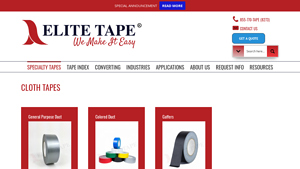
도메인: elitetape.com
등록: 2014년(12년)
소개: Elite Tape offers cloth tapes including: #615 (7.0 mil general purpose cloth duct tape for bundling/sealing/wrapping), #620 (industrial cloth tape), #670 (premium duct tape), #620C (colored duct tape/cloth tape in 11 vibrant colors), #650 (economical Gaffer’s Tape), #665 (premium Gaffer’s Tape), and 506BL (11.0 mil white double-coated cloth tape for carpets). Products feature cloth backings (cotto…
Strategic Sourcing Conclusion and Outlook for Cloth tape for carpet fixing
As global construction and event infrastructure markets expand across Africa, South America, and the Middle East, strategic procurement of cloth tape for carpet fixing demands a shift from commodity purchasing to performance-based sourcing. Buyers must prioritize suppliers offering climate-resistant adhesive formulations capable of withstanding extreme humidity and temperature fluctuations common in tropical and desert environments, while ensuring products meet both temporary event and permanent installation requirements.
How Can Procurement Teams Optimize Specifications for High-Traffic Commercial Applications?
Focus on double-sided cloth tapes with heavy-duty adhesion ratings specifically engineered for convention centers, exhibition halls, and construction abatement projects. Evaluate removability characteristics to ensure clean removal without substrate damage, particularly for rental carpet applications in hospitality and trade show sectors. Establishing technical specifications around tensile strength, outdoor UV resistance, and flame-retardant properties prevents costly installation failures in high-foot-traffic environments.
What Supply Chain Factors Should Influence Long-Term Partnership Decisions?
Beyond unit pricing, assess manufacturers’ raw material traceability and regional distribution capabilities to mitigate logistics disruptions across emerging markets. Leading suppliers now offer customizable roll dimensions and private-label options, enabling bulk procurement strategies that align with large-scale infrastructure timelines while reducing inventory carrying costs.
The outlook points toward sustainable adhesive technologies and enhanced biodegradable backing materials meeting stricter environmental codes. Forward-thinking procurement teams will secure partnerships with innovators capable of delivering both performance reliability and regulatory compliance flexibility as safety standards evolve across international markets.