Introduction: Navigating the Global Market for Crepe paper masking tape
Sourcing crepe paper masking tape for demanding industrial applications presents unique complexities for procurement teams navigating today’s fragmented global supply chains. Whether you’re securing inventory for automotive refinishing operations in Nigeria or construction projects in Brazil, inconsistent product quality and unreliable supplier communication can derail production schedules and inflate operational costs. The challenge intensifies when balancing stringent technical specifications—such as temperature resistance and clean removal properties—with cost-efficiency across international shipping logistics.
What critical factors should buyers evaluate when vetting international suppliers?
This comprehensive guide addresses the specific pain points facing B2B buyers in Africa, South America, the Middle East, and Europe. We examine essential technical distinctions between general-purpose and high-temperature crepe paper formulations, explore application-specific requirements from automotive masking to industrial bundling, and provide actionable frameworks for supplier verification. You’ll discover how to assess adhesive compatibility, backing durability, and compliance with regional import standards.
How does strategic procurement drive operational success?
Beyond product specifications, we analyze total cost of ownership considerations, including volume pricing strategies, freight optimization, and payment terms that protect your cash flow. By the conclusion of this guide, procurement professionals will possess the technical knowledge and evaluation criteria necessary to forge reliable supplier partnerships, mitigate supply chain risks, and secure crepe paper masking tape solutions that deliver consistent performance across diverse operational environments.
Understanding Crepe paper masking tape Types and Variations
| 유형 이름 | 주요 차별화 기능 | 주요 B2B 애플리케이션 | 구매자를 위한 간략한 장단점 |
|---|---|---|---|
| Standard General-Purpose Crepe Paper Tape | Crinkled texture, moderate adhesion, easy hand-tear, economical pricing | Interior painting, light bundling, temporary labeling, general packaging | Pros: Cost-effective, versatile, no tools needed Cons: Limited temp resistance, not for rough exterior |
| High-Temperature Automotive Crepe Paper Tape | Silicone/rubber adhesive, heat resistance (80°C-120°C), clean removal | Automotive refinishing, powder coating, industrial baking, spray booths | Pros: Withstands oven cycles, no residue Cons: Higher cost, specific surface prep required |
| Waterproof/Moisture-Resistant Crepe Paper Tape | Saturated backing, moisture-resistant adhesive, UV stability | Exterior construction, marine applications, humid climate painting, stucco work | Pros: Performs in wet/humid conditions Cons: Premium pricing, longer curing time |
| Colored/Identification Crepe Paper Tape | Pigmented backing, printable surface, high-visibility options | Inventory coding, safety marking, theatrical design, automotive color-coding | Pros: Instant visual ID, branding potential Cons: Color bleeding risk if low quality, UV fade potential |
What distinguishes standard crepe paper tape from specialized industrial grades?
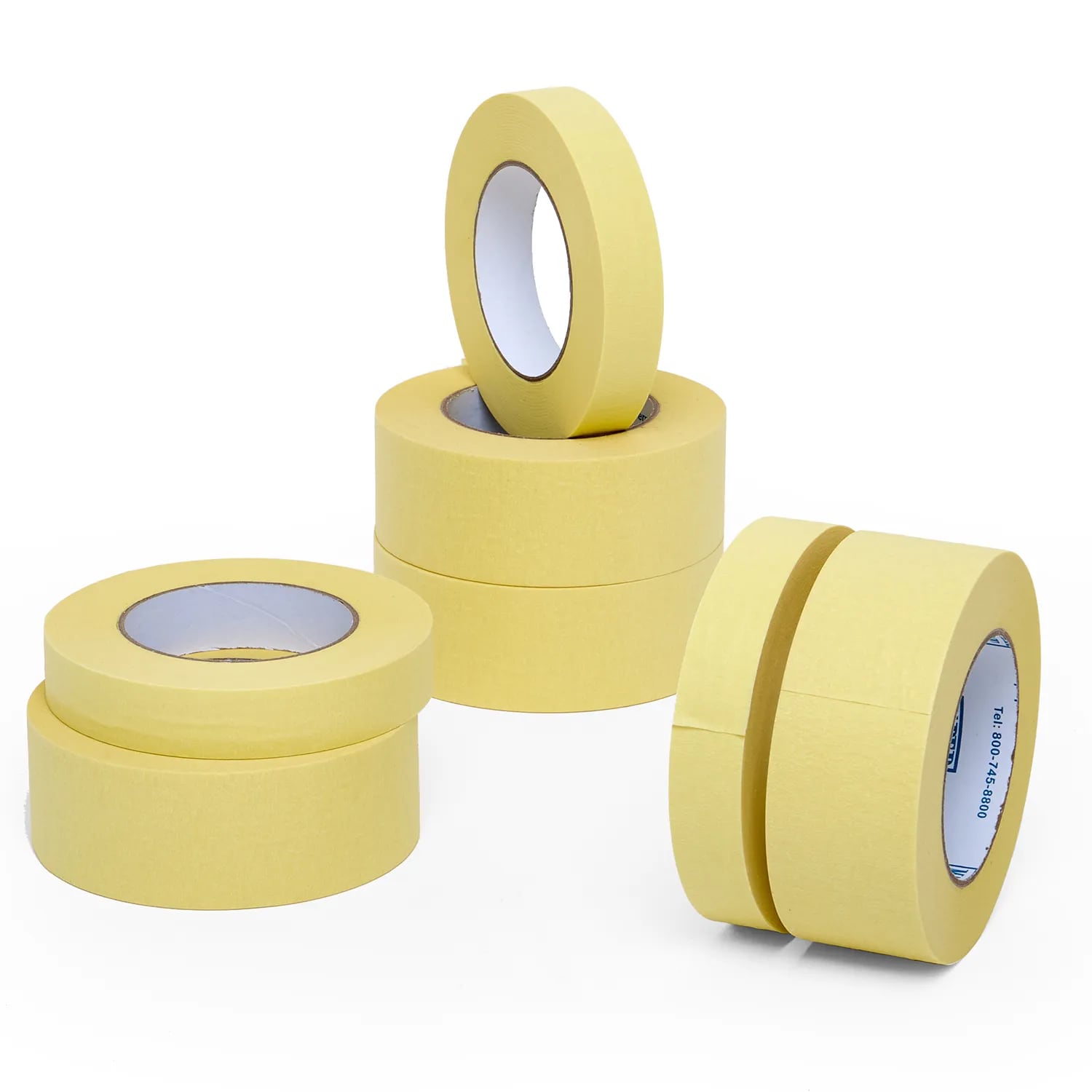
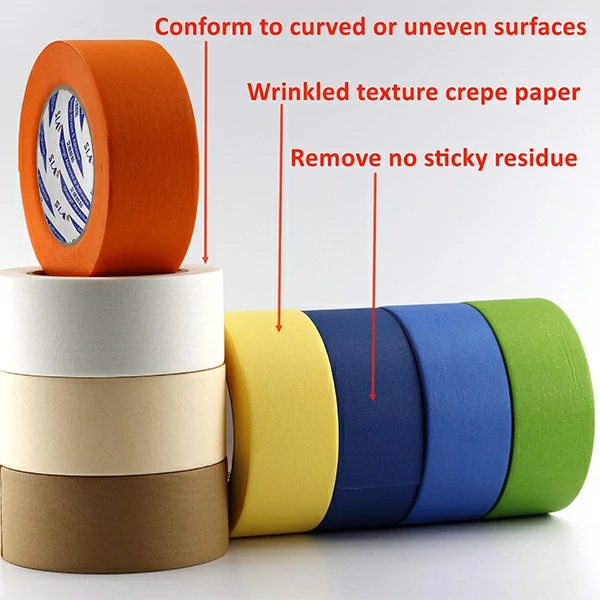
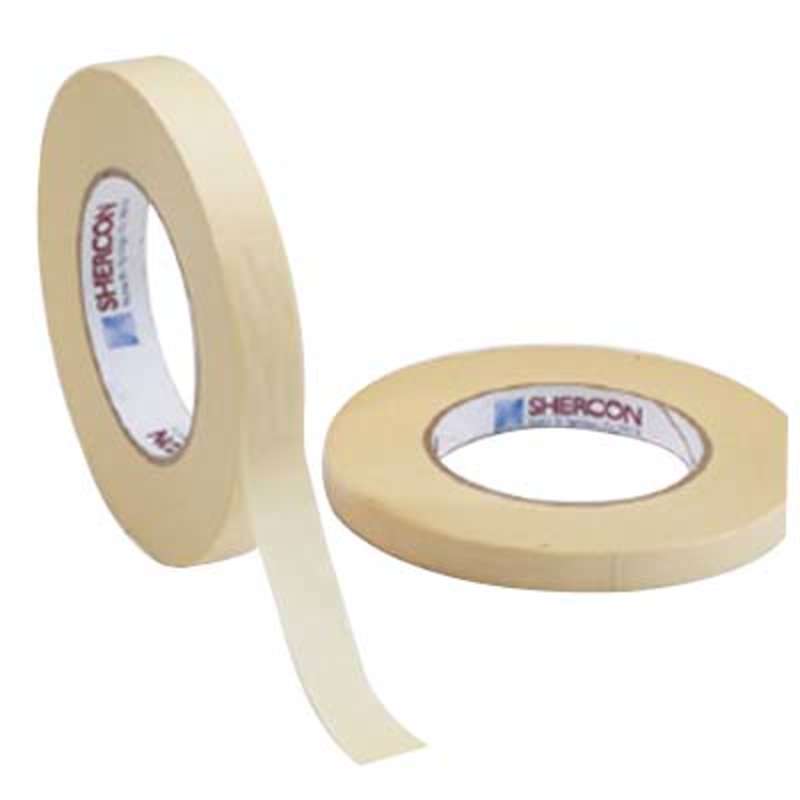
Standard general-purpose crepe paper tape serves as the economical workhorse for interior painting and light industrial bundling across emerging markets. Its crinkled backing conforms to irregular surfaces while maintaining sufficient tensile strength for clean hand-tearing. B2B buyers should evaluate adhesive formulations carefully—natural rubber offers superior tack for porous surfaces like unfinished concrete, while acrylic adhesives provide cleaner removal from delicate painted finishes. This type suits construction sectors in price-sensitive regions where versatility outweighs extreme performance requirements.
When should procurement teams specify high-temperature automotive crepe paper tape?
High-temperature automotive crepe paper tape features silicone or specialized rubber adhesives engineered to withstand baking cycles up to 120°C without residue transfer or edge lifting. This variation is essential for automotive refinishing, powder coating, and industrial applications requiring thermal stability during curing processes. Procurement teams must verify specific temperature ratings against oven parameters, as standard tapes will adhesive-bake onto substrates causing costly rework. While commanding higher per-roll pricing, the ROI manifests through reduced labor costs and elimination of surface damage during tape removal.
How does waterproof crepe paper tape support exterior construction projects?
Waterproof crepe paper tape utilizes saturated paper backings and moisture-resistant adhesives to maintain adhesion in humid climates and light precipitation common in tropical regions like Nigeria or Brazil. Critical for exterior construction, marine maintenance, and stucco application, this variation prevents edge lifting when exposed to morning dew or intermittent rain. Buyers should assess UV stability certifications alongside water resistance ratings, as inferior grades may delaminate under prolonged moisture exposure, compromising paint lines and requiring expensive remediation work.
Why consider colored crepe paper tape for inventory management and safety protocols?
Colored crepe paper tape extends beyond aesthetic applications into functional inventory coding and hazard marking systems for warehouses and logistics hubs. Available in high-visibility hues and custom printable options, this variation enables rapid identification of packaged goods, theatrical equipment zones, or automotive assembly stages without additional labeling costs. B2B purchasers should confirm colorfastness properties—premium grades resist bleeding under solvent exposure or UV degradation. While carrying slight premiums over neutral variants, the operational efficiency gains in supply chain management justify the investment for large-scale distributors.
Key Industrial Applications of Crepe paper masking tape
| 산업/섹터 | Specific Application of Crepe paper masking tape | 비즈니스를 위한 가치/혜택 | 이 애플리케이션의 주요 소싱 고려 사항 |
|---|---|---|---|
| Automotive Manufacturing & Collision Repair | Precision masking during spray painting, two-tone designs, and clear coat applications; protecting trim, glass, and rubber seals during refinishing | Prevents costly rework by ensuring sharp paint lines; reduces labor time in preparation and cleanup; withstands bake cycles up to 120°C without adhesive transfer | Temperature resistance ratings compatible with local paint booth conditions; residue-free removal on various automotive substrates; UV resistance for outdoor storage in tropical climates |
| 건설 및 인프라 개발 | Masking walls, ceilings, and fixtures during interior/exterior painting; protecting surfaces during concrete sealing, waterproofing, and renovation projects | Enables efficient multi-zone painting strategies; protects high-value fixtures from overspray and damage; hand-tear application reduces tool dependency on remote job sites | Adhesion compatibility with local paint types (latex, enamel, oil-based); weather resistance for humid/monsoon climates; bulk packaging options for large-scale infrastructure projects |
| Electronics & Electrical Equipment Manufacturing | Masking circuit boards during conformal coating and wave soldering; securing components during assembly; temporary insulation of sensitive areas | Prevents contamination of sensitive electronic components; anti-static variants reduce ESD damage risk; provides clean removal without conductive residue | Anti-static properties for PCB handling; compatibility with lead-free soldering temperatures (up to 150°C); RoHS compliance and clean room certifications |
| Industrial Painting & Powder Coating | Masking machined surfaces, threads, and mating surfaces during powder coating, sandblasting, and industrial wet painting on metal fabrication | Ensures professional finish quality on metal substrates; withstands high-temperature curing cycles up to 180°C; reduces masking labor costs versus film alternatives | High-temperature resistance for powder coating ovens; adhesion strength on oily or galvanized metal surfaces; thickness consistency for clean edge definition |
How Does Crepe Paper Masking Tape Support Automotive Manufacturing and Collision Repair?
In automotive assembly and refinishing operations across Nigeria, Brazil, and Eastern Europe, crepe paper masking tape serves as a critical consumable for precision paint application and surface protection. The tape’s crinkled backing conforms to complex vehicle contours—from curved bumpers to intricate grille patterns—while providing clean removal without adhesive transfer that could require costly rework. For collision repair shops and OEM facilities, selecting temperature-resistant grades ensures the tape withstands paint booth bake cycles up to 120°C without lifting or leaving residue. This capability reduces rework rates and protects high-value trim components during two-tone and clear coat applications, directly impacting production efficiency and finish quality in growing automotive markets where labor optimization remains crucial.
What Role Does Crepe Paper Masking Tape Play in Construction and Infrastructure Development?
Construction firms throughout the Middle East, Africa, and South America rely on crepe paper masking tape for large-scale painting, waterproofing, and surface protection during infrastructure development. The tape’s hand-tear convenience proves invaluable on remote job sites where cutting tools may be limited, while its conformability adapts to textured concrete, irregular masonry, and curved architectural elements common in tropical climates. For B2B buyers, sourcing UV-resistant formulations prevents adhesive degradation and edge lifting during extended outdoor exposure—a critical factor in regions with intense solar conditions. The tape effectively protects fixtures, windows, and flooring during multi-phase construction projects, enabling efficient project sequencing without surface damage or labor-intensive cleanup operations.
Why Is Crepe Paper Masking Tape Essential for Electronics Manufacturing?
Electronics assembly operations in emerging markets like Brazil and South Africa utilize specialized crepe paper masking tape for conformal coating masking and temporary component securing during PCB manufacturing and repair. The tape’s anti-static variants prevent electrostatic discharge damage to sensitive semiconductors, while its clean-removal adhesive system eliminates conductive residue that could cause latent circuit failures. Unlike plastic masking alternatives, the crepe backing conforms to irregular board topography and component leads, ensuring precise masking during wave soldering and spray coating processes. Buyers should prioritize tapes compatible with lead-free soldering temperatures and RoHS compliance to meet modern environmental standards while maintaining production yields.
How Does Crepe Paper Masking Tape Facilitate Industrial Powder Coating and Metal Finishing?
Metal fabrication facilities across Europe and the Middle East employ high-temperature crepe paper masking tape to protect machined surfaces, threads, and mating surfaces during powder coating, sandblasting, and industrial wet painting. Premium grades withstand curing oven temperatures up to 180°C without adhesive failure, paper embrittlement, or residue transfer, ensuring clean peel-off after thermal processing. This application proves particularly valuable for agricultural equipment manufacturing, oil and gas infrastructure, and industrial machinery production—key sectors in South American and African economies—where durable metal finishes require precise masking to maintain functional tolerances on threaded holes, bearing surfaces, and hydraulic fittings.
A stock image related to Crepe paper masking tape.
3 Common User Pain Points for ‘Crepe paper masking tape’ & Their Solutions
Scenario 1: High-Temperature Adhesion Failure in Automotive Refinishing
문제: In automotive manufacturing across the Middle East and Africa, standard crepe paper tape frequently fails during high-temperature baking cycles. When exposed to paint booth temperatures exceeding 80°C, low-grade tape shrinks, adhesive oozes, and edges lift—resulting in paint bleed-through and costly rework. Buyers often procure general-purpose masking tape for automotive applications without verifying temperature resistance ratings, leading to compromised paint lines and production delays.
솔루션: Specify automotive-grade crepe paper with explicit temperature resistance ratings of 80°C to 120°C for baking cycles. Select products featuring high-tack rubber adhesives that maintain structural integrity under heat, specifically engineered for thermal spray applications. For procurement teams in hot climates, request technical data sheets verifying temperature performance, and consider washi paper tape for precision lines on smooth surfaces while reserving high-temperature crepe paper for curved automotive panels.
Scenario 2: Grade Selection Confusion Causing Material Waste
문제: Industrial buyers struggle to distinguish between decorative and industrial-grade crepe paper tape, resulting in procurement mismatches. Using lightweight decorative tape for heavy manufacturing leads to tearing and poor adhesion, while deploying heavy industrial grades for simple labeling creates unnecessary costs. This confusion stems from inadequate specification standards regarding tensile strength, causing inventory inefficiencies across construction and electronics sectors.
솔루션: Implement a grade-selection framework based on application requirements. For industrial masking and automotive work, specify high-tensile crepe paper (50-70 micron thickness) with strong adhesion. For decorative painting and light bundling, select standard-grade (30-40 micron) offering easy tear and clean removal. Establish clear procurement categories distinguishing “Industrial High-Temperature,” “General Purpose,” and “Decorative/Light Duty” to ensure cost-appropriate material deployment and prevent cross-contamination of inventory.
Scenario 3: Adhesion Residue in Humid Manufacturing Environments
문제: In tropical environments common to Brazil and Nigeria, crepe paper tape often leaves adhesive residue or damages delicate substrates upon removal due to humidity-induced migration. Buyers face surface compatibility challenges—tape adhering well to metal may fail on painted drywall, while aggressive adhesives leave residue on finished goods. This creates quality control issues when masking sensitive electronics or pre-painted surfaces where clean removal is critical.
솔루션: Match adhesive formulation to substrate and climate conditions. For humid environments, specify UV-resistant crepe paper with stabilized rubber adhesives that resist humidity-induced bleed. Use low-tack formulations for delicate painted walls, medium-tack for general metal and glass, and high-tack only for rough construction surfaces. Implement climate-controlled storage (15-25°C, 40-60% humidity) to prevent degradation, and request “clean removal” guarantees with defined time limits before bulk procurement to validate residue-free performance in your specific conditions.
Strategic Material Selection Guide for Crepe paper masking tape
When evaluating crepe paper masking tape for international procurement, the substrate composition directly impacts performance across diverse climatic and industrial conditions. B2B buyers must assess fiber density, crepe ratio, and coating technologies to match material specifications with end-use requirements, particularly when supplying to automotive refinishing, construction, or electronics sectors in regions with extreme temperature variations or high humidity environments.
What crepe paper material withstands automotive baking temperatures?
High-temperature resistant crepe paper utilizes saturated wood pulp fibers cross-linked with phenolic resins, enabling endurance of 100°C to 120°C for 30-60 minutes during automotive paint baking cycles.
A stock image related to Crepe paper masking tape.
In-depth Look: Manufacturing Processes and Quality Assurance for Crepe paper masking tape
Understanding the manufacturing intricacies behind crepe paper masking tape empowers procurement teams to evaluate suppliers effectively, ensure specification compliance, and mitigate supply chain risks. For buyers operating in diverse climates—from the humidity of Lagos to the temperature fluctuations of São Paulo—manufacturing consistency directly translates to application reliability and reduced waste on production lines.
How Is Crepe Paper Backing Engineered for Flexibility and Strength?
The foundation of high-performance masking tape begins with specialized crepe paper production. Manufacturers start with kraft wood pulp that undergoes chemical pre-treatment to enhance fiber bonding and elasticity. The critical transformation occurs during the creping process, where the paper is scraped off a drying cylinder while still moist, creating the characteristic crinkled texture that provides 15-30% elongation capacity.
Industrial-grade crepe paper for masking applications typically ranges from 110gsm to 160gsm (grams per square meter), with higher basis weights offering greater tensile strength for automotive and construction uses. The creping ratio—measuring the degree of shrinkage from flat sheet to finished crepe—determines conformability. Premium automotive masking tapes utilize higher creping ratios (40-60%) to navigate complex curves and sharp body lines without tearing or lifting, while general-purpose grades maintain moderate ratios (20-35%) for standard paint masking.
What Adhesive Formulations Deliver Optimal Performance for Regional Climates?
Adhesive selection represents the primary differentiator between commodity and industrial-grade crepe tape. Natural rubber-based adhesives dominate high-tack applications, offering aggressive initial grab and compatibility with varied substrates common in African and Middle Eastern construction markets. However, synthetic rubber (SBR) and acrylic formulations provide superior UV resistance and aging stability—critical for Brazilian and European buyers facing intense sun exposure or long-term storage requirements.
The coating process involves either hot-melt extrusion or solvent-based application. Hot-melt systems deposit adhesive at 160-180°C, creating immediate bonds suitable for high-speed production but requiring precise temperature control to prevent adhesive penetration through the porous crepe backing. Solvent-based coating allows deeper saturation for heavy-duty applications but necessitates extended drying tunnels and VOC recovery systems. Leading manufacturers apply 25-45 microns of adhesive coating, calibrated to specific adhesion levels: low-tack (1.5-2.5 N/cm) for delicate surfaces, medium-tack (2.5-4.0 N/cm) for general masking, and high-tack (4.0-6.0 N/cm) for textured industrial substrates.
배치 간 일관성을 보장하는 품질 관리 프로토콜은 무엇인가요?
Robust quality assurance separates reliable suppliers from inconsistent sources. Incoming raw material inspection verifies crepe paper moisture content (typically 6-8%) to prevent dimensional instability during coating. In-process monitoring employs online vision systems to detect coating voids, wrinkles, or contamination at speeds exceeding 300 meters per minute.
Finished product testing encompasses peel adhesion tests (ASTM D3330) conducted on standardized steel and painted panels, tensile strength verification (ASTM D3759) ensuring 20-40 N/cm resistance, and elongation measurements confirming the backing stretches 8-15% before breaking. For buyers in tropical regions, accelerated humidity testing (40°C/90% RH for 72 hours) validates that adhesives won’t ooze or lose tack in high-moisture environments. Temperature resistance testing subjects samples to 80-120°C bake cycles, simulating automotive paint booth conditions prevalent in Middle Eastern manufacturing facilities.
How Do Manufacturers Optimize Products for Extreme Environmental Conditions?
Climate adaptability requires specific manufacturing adjustments. For markets like Nigeria and Brazil, where ambient humidity frequently exceeds 80%, manufacturers incorporate moisture-barrier packaging and apply specialized anti-humidity primers to the crepe paper backing to prevent fiber swelling. UV stabilizers in adhesive formulations prevent brittleness in high-sunlight regions, while low-temperature flexibility additives ensure tapes remain pliable during European winter construction seasons.
Storage stability testing involves aging rolls at 50°C for two weeks to simulate six-month warehouse conditions, ensuring that adhesives maintain consistent unwind force and don’t transfer to the backing’s reverse side. This proves particularly vital for international buyers managing extended shipping times through varied climate zones.
What Certifications Should B2B Buyers Demand for Regulatory Compliance?
Procurement teams must verify compliance documentation aligned with regional regulations. European buyers should require REACH and RoHS certifications confirming the absence of restricted heavy metals and phthalates. Automotive industry suppliers need ISO 9001:2015 quality management certification plus specific OEM approvals (such as Ford ESB-M3G123-B or GM 6400M specifications).
For Middle Eastern markets, SASO (Saudi Standards, Metrology and Quality Organization) compliance ensures product suitability for local industrial applications. Environmental certifications including FSC (Forest Stewardship Council) for paper sourcing increasingly influence purchasing decisions in environmentally conscious European markets, while African buyers often prioritize SGS or Bureau Veritas inspection reports verifying stated technical specifications.
How Does Precision Slitting Impact Application Efficiency?
The final manufacturing stage—slitting and winding—significantly affects end-user productivity. Precision slitting to widths of 12mm, 18mm, 24mm, 36mm, and 48mm requires razor-sharp blades maintained within ±0.1mm tolerance to prevent edge fraying that causes tape to tear unpredictably during application. Winding tension control prevents telescoping during transport, particularly crucial for sea freight to South American or African ports where temperature fluctuations cause expansion and contraction.
Core quality matters for automated dispensing systems common in automotive plants; cardboard cores must maintain 76mm internal diameter with crush resistance exceeding 200N. Leading manufacturers implement 100% roll inspection using automated cameras to detect edge defects, ensuring that buyers receive uniform product that feeds consistently through masking machines and hand dispensers alike.
By scrutinizing these manufacturing parameters and quality benchmarks, B2B buyers can establish supplier qualification criteria that ensure consistent product performance across diverse operational environments, ultimately reducing production downtime and improving finish quality in painting, automotive, and industrial applications.
Practical Sourcing Guide: A Step-by-Step Checklist for ‘Crepe paper masking tape’
Procuring crepe paper masking tape for industrial-scale applications requires balancing precise performance specifications with supply chain reliability across international borders. Whether sourcing for automotive refinishing operations in São Paulo, construction projects in Lagos, or manufacturing facilities in Dubai, this practical checklist guides procurement teams through critical technical evaluations and logistics considerations to ensure your shipment meets operational demands from factory floor to final application.
1. How Do You Match Temperature Ratings to Your Application Environment?
Crepe paper masking tape varies significantly in thermal endurance, with general-purpose grades handling 60°C while high-temperature automotive refinishing tapes withstand 120°C+ during paint bake cycles. Specify your maximum exposure temperature and duration—particularly critical for powder coating or industrial baking processes common in manufacturing hubs. Request heat resistance certifications showing adhesive stability thresholds to prevent bleeding, seepage, or backing failure during cure cycles that could damage finished surfaces.
2. What Backing Texture and Conformability Specifications Ensure Proper Masking?
Verify the crepe paper’s elongation percentage and crinkle pattern density before committing to bulk orders. High-conformability grades featuring 15-20% stretch capability adapt seamlessly to complex curves, rivets, and irregular surfaces prevalent in automotive bodywork or construction applications. Request technical data sheets demonstrating the balance between tensile strength and flexibility, ensuring the tape won’t tear during application yet conforms without wrinkling on challenging geometries.
3. How Should You Evaluate Adhesive Formulations for Surface Compatibility?
Different substrate materials demand specific adhesive chemistries to prevent surface damage or residue issues. Natural rubber adhesives offer aggressive tack ideal for metal and glass but may leave residue on delicate finishes or fresh paint within 24 hours. Synthetic acrylic formulations provide cleaner removal from plastics, vinyl, and painted drywall even after extended application. Specify your primary substrate materials, required residue-free removal timeframe, and whether the tape must withstand solvent exposure during wet sanding processes.
4. Which Quality Certifications Validate Export-Ready Manufacturing Standards?
For international procurement across African, South American, and Middle Eastern markets, verify ISO 9001 quality management systems and RoHS compliance for adhesive safety standards. Automotive industry buyers should specifically demand tapes meeting OEM specifications like ASTM D6123, JIS Z 1541, or equivalent regional automotive standards. Request comprehensive batch testing documentation and certificates of analysis to ensure consistency across container shipments, particularly when sourcing from new manufacturing partners.
5. How Do You Optimize Dimensions and Packaging for Cost Efficiency?
Standard widths range from 12mm to 100mm, but custom slitting reduces material waste in high-volume operations. Calculate linear meter requirements against product shelf-life limitations—typically 6-12 months in tropical climates with high humidity. Specify core sizes compatible with your existing dispensers and automated application equipment. Discuss palletization requirements and inner carton quantities that maximize container loading efficiency while protecting rolls from compression damage during ocean freight transit to ports like Lagos, Santos, or Jebel Ali.
6. What Pre-Shipment Testing Protocols Confirm Performance Claims?
Before finalizing bulk purchase agreements, implement rigorous sample testing protocols measuring adhesion strength (ASTM D3330), holding power (ASTM D3654), and temperature resistance under your specific ambient conditions. Conduct humidity stability tests simulating tropical storage environments prevalent in Nigeria, Brazil, or Gulf regions, where excessive moisture can compromise paper backing integrity. Establish acceptance criteria for bleed-through resistance and clean removal properties before authorizing mass production runs.
A stock image related to Crepe paper masking tape.
Comprehensive Cost and Pricing Analysis for Crepe paper masking tape Sourcing
Sourcing crepe paper masking tape at competitive B2B rates requires understanding how material specifications, order volumes, and regional logistics intersect to determine final landed costs. Unlike commodity packaging tapes, crepe paper masking tape pricing varies significantly based on temperature resistance, backing elasticity, and width configurations, with specialized automotive grades commanding substantial premiums over general-purpose variants. For procurement teams in Nigeria, Brazil, and across the Middle East, strategic cost analysis must extend beyond per-roll pricing to encompass volume commitments, technical requirements, and supply chain resilience factors.
How Do Volume Tiers and MOQs Affect Unit Economics?
B2B procurement typically follows distinct volume brackets that can reduce unit costs by 30-40% when scaling from trial orders to container quantities. For general-purpose grades, expect price breaks at 1-5 roll increments for distributor-level purchasing, with substantial discounts activating at 12+ roll thresholds or full pallet commitments. Direct manufacturer engagement usually requires minimum order quantities (MOQs) of 5,000-10,000 square meters, suitable for large-scale construction or automotive refinishing operations, while regional distributors offer flexibility for smaller batches at slightly elevated per-unit costs. Payment terms further influence pricing, with Letter of Credit arrangements typically adding 2-3% compared to Telegraphic Transfer prepayments, a critical consideration for cash-flow-conscious buyers in emerging markets.
Which Technical Specifications Drive Price Variations?
Width dimensions significantly impact pricing, with narrow 12mm tapes costing considerably less per meter than industrial 144mm variants due to material yield and slitting complexity. Temperature resistance represents the primary cost differentiator: standard grades suitable for ambient painting applications cost substantially less than high-temperature automotive masking tapes rated for 80°C-120°C bake cycles. Additionally, precision-line variants with calibrated crepe paper backing and specialized rubber adhesives command 25-35% premiums over general masking grades, while acrylic adhesive formulations—preferred for UV-resistant outdoor applications in Middle Eastern climates—typically cost 15-20% more than standard rubber-based alternatives.
What Regional Factors Influence Total Landed Costs for International Buyers?
For buyers sourcing from Asian manufacturing hubs into Africa, South America, or the Middle East, freight and duty structures often exceed base material costs. Sea freight consolidation becomes critical for landlocked destinations like Nigeria or interior Brazilian states, where inland transportation can add 15-20% to total costs. Import classification under HS Code 3919.10 attracts varying duty rates across regions, with Middle Eastern markets generally offering favorable tariff treatments for industrial adhesives compared to South American Mercosur regulations that may impose 12-18% import duties. Currency hedging strategies prove essential when contracting with Chinese suppliers to mitigate Yuan fluctuation risks over 90-120 day production cycles, while local certification requirements (such as INMETRO for Brazil) may necessitate additional testing budgets of $2,000-5,000 per product line.
구매자는 어떻게 단가를 넘어 총 소유 비용을 최적화할 수 있을까요?
Intelligent sourcing decisions must account for storage requirements and application efficiency to prevent hidden waste. Crepe paper tapes require climate-controlled warehousing (humidity below 60%) to prevent adhesive degradation and backing embrittlement—factors particularly critical in tropical African or humid Brazilian environments where improper storage can render 10-15% of inventory unusable. Packaging configurations also matter; opting for larger 3-inch cores versus standard 1-inch cores reduces shipping volume by approximately 30% for equivalent tape lengths, generating significant freight savings on ocean shipments. Furthermore, selecting appropriate temperature ratings prevents costly rework; using general-purpose tape in high-temperature automotive applications leads to adhesive residue and labor-intensive cleanup, negating initial savings through increased labor costs and surface damage risks that can exceed $50 per vehicle in refinishing operations.
Alternatives Analysis: Comparing Crepe paper masking tape With Other Solutions
While crepe paper masking tape remains the industry standard for general-purpose surface protection, procurement teams must evaluate application-specific requirements against viable substitutes. For B2B buyers operating in diverse climates—from the humidity of Lagos to the temperature fluctuations of São Paulo—selecting the optimal masking method impacts both finish quality and total project economics. Two alternatives warrant particular consideration: Washi paper tape for precision applications on delicate surfaces, and polyethylene masking film for large-area industrial coverage.
| 비교 측면 | Crepe Paper Masking Tape | 와시 페이퍼 마스킹 테이프 | Polyethylene Masking Film with Adhesive Edge |
|---|---|---|---|
| Surface Conformity | Excellent on curves, irregular textures, and complex geometries | Limited; optimal for smooth, flat surfaces only | Poor; requires flat or gently curved areas |
| Adhesion Strength | Medium; removable without residue on cured surfaces | Low to medium; ultra-gentle for delicate substrates | High on perimeter tape; film provides barrier only |
| Precision Line Quality | Good for general masking; slight texture may allow minor bleed | Superior sharp edges; prevents paint seepage | Poor; designed for area coverage, not edge definition |
| 비용 효율성 | Moderate (economical for high-volume use) | Premium (30–50% higher unit cost) | Low material cost; high coverage per roll |
| 기후 저항 | Good heat resistance (60–80°C); vulnerable to high humidity | Sensitive to moisture; adhesive degrades in humidity | Excellent moisture barrier; UV-resistant variants available |
| 애플리케이션 속도 | Moderate (hand-tearable, requires precise placement) | Moderate (hand-tearable, requires careful alignment) | High (rapid deployment over large surfaces) |
| 모범 사용 사례 | Automotive refinishing, general construction, textured substrates | Luxury residential, decorative painting, wallpaper protection | Construction dust protection, automotive overspray booths |
When Should You Choose Washi Paper Tape Over Crepe Paper Solutions?
Washi paper tape utilizes traditional Japanese rice paper backing, offering a distinctly smoother surface than crepe paper alternatives. This composition delivers superior edge sharpness critical for decorative painting and high-end automotive detailing—particularly on smooth substrates like glass or polished metal where paint bleed-through is unacceptable. For B2B buyers sourcing for luxury residential developments or premium vehicle refinishing in markets like the UAE or Brazil, Washi provides the precision necessary for multi-color schemes and intricate patterns. However, procurement teams should note that Washi lacks the tensile strength and conformability of crepe paper, making it unsuitable for rough concrete or complex curved geometries common in industrial infrastructure projects across Nigeria. The higher unit cost—typically 30–50% above standard crepe tape—positions Washi as a specialty solution for premium finishes rather than high-volume construction, though its ultra-clean removal properties reduce rework costs on delicate substrates.
Is Polyethylene Masking Film More Cost-Effective for Large-Scale Projects?
Polyethylene masking film with integrated adhesive edges serves as a strategic alternative when protecting large surface areas from overspray or construction dust. Unlike crepe paper tape, which requires laborious strip-by-strip application, masking film unfolds to cover expansive sections rapidly—reducing labor time by up to 60% in automotive spray booths or building renovations spanning thousands of square meters. While the film offers minimal conformability to intricate shapes, its moisture-resistant properties make it ideal for humid climates like coastal Brazil or West Africa, where paper-based tapes may lose adhesion. Procurement teams should evaluate total project economics: though film requires higher initial investment, the reduced labor hours and superior dust protection often yield lower total costs for jobs exceeding 500 square meters. Static-cling variants additionally prevent overspray migration beneath the film, a common failure point with traditional tape in high-wind environments.
Essential Technical Properties and Trade Terminology for Crepe paper masking tape
When sourcing crepe paper masking tape for industrial procurement, understanding the technical specifications and industry nomenclature ensures you select products that match your operational environment—from high-temperature automotive refinishing to humidity-resistant construction sealing in tropical climates.
What Tensile Strength and Elongation Rates Should B2B Buyers Specify?
Tensile strength measures the force required to break the tape, typically expressed in N/25mm or lbs/inch. For industrial applications, look for values between 25–50 N/25mm to ensure the backing withstands pulling during application. Elongation percentage (usually 5–15%) indicates flexibility—critical for conforming to curved automotive panels or irregular construction surfaces without tearing or lifting at the edges.
How Does Temperature Resistance Affect Masking Tape Performance in Baking Cycles?
Temperature resistance distinguishes general-purpose from industrial-grade crepe tape. Standard grades withstand 60–80°C, while automotive “high bake” variants tolerate 120–150°C for 30–60 minutes without adhesive transfer. For procurement in regions with extreme ambient heat (Middle East, Brazil, Nigeria), specify tapes with thermal stability to prevent backing embrittlement or adhesive residue baking onto substrates during outdoor curing.
What Adhesion Values Indicate Proper Holding Power Without Surface Damage?
Adhesion is quantified in N/25mm or oz/in, with typical ranges from 3.5–8.0 N/25mm for crepe paper varieties. “Clean removal” specifications indicate low-residue formulations essential for delicate substrates like fresh automotive clear coats or wall paints. Request shear resistance data (holding power measured in hours) for vertical masking applications where gravity stress occurs, particularly important for construction sites with vibration or wind exposure.
Why Does Backing Thickness (Caliper) Matter for Bulk Procurement?
Total thickness (measured in microns or mils) combines crepe paper backing (typically 100–180 microns) with adhesive coating (25–50 microns). Thicker backings (140+ microns) offer better solvent resistance and edge tear resistance during high-volume industrial applications, reducing waste in automated dispensers. Thinner variants suit precision work but require careful handling to prevent shredding during removal.
What Is the Difference Between “Painter’s Tape” and General Masking Tape?
While often used interchangeably, “painter’s tape” denotes premium crepe paper with specialized adhesive formulations for 14-day clean removal and UV resistance. General masking tape may use lower-grade paper and rubber adhesives suitable for 3-day applications. Clarify this distinction when tendering to avoid specification mismatches that could result in residue damage or project delays.
What Does “High Bake” or “Automotive Grade” Mean in Masking Specifications?
These terms indicate tapes engineered for e-coat and bake oven cycles (120–150°C). They feature saturated crepe paper backings that resist paint solvent penetration and thermal degradation. For African and South American automotive markets, verify compatibility with local paint booth temperatures and solvent types, as “automotive grade” standards vary between 80°C general purpose and 150°C premium refinish grades.
What Is “Paint Bleed” and How Do Specifications Prevent It?
Paint bleed refers to seepage under tape edges, causing ragged lines. “Edge tear resistance” and “conformability” specifications counter this. “Feathered edge” describes tapes with micro-creping that creates better surface contact. Request “sharp line” or “precision line” designations for critical automotive finishing where OEM standards require exact color boundaries.
What Are “Jumbo Rolls” and Why Do They Matter for Import Logistics?
Jumbo rolls (1000m–2000m lengths) reduce per-meter costs and packaging waste but require slitting capabilities. “Log rolls” refer to master rolls before conversion. Understanding these bulk packaging terms helps calculate landed costs and determine whether to import finished rolls or convert locally in Nigeria or Brazil, impacting import duties and inventory strategies.
What Do “Natural Rubber” vs. “Acrylic” Adhesive Terms Indicate?
Natural rubber adhesives offer aggressive initial tack and conformability for irregular surfaces but may oxidize and leave residue if overheated. Acrylic adhesives provide UV stability and longer clean-removal windows (up to 30 days) but lower initial tack. Match chemistry to climate—acrylics perform better in high-humidity African or Brazilian environments, while natural rubber suits temporary holding in controlled European workshops.
Navigating Market Dynamics and Sourcing Trends in the Crepe paper masking tape Sector
How Is the Global Crepe Paper Masking Tape Market Evolving for B2B Buyers?
The global crepe paper masking tape market is experiencing significant regional diversification as manufacturing capacity expands beyond traditional Asia-Pacific hubs into Turkey, Eastern Europe, and Latin America. For buyers in Nigeria, Brazil, and the Middle East, this geographic shift presents both cost optimization opportunities and complex procurement challenges regarding supply chain resilience and quality consistency. Raw material costs, specifically wood pulp and rubber-based adhesives, continue to fluctuate due to climate-related supply constraints, energy price instability, and currency volatility, directly impacting bulk procurement budgets for distributors operating on thin margins. Additionally, the post-pandemic logistics landscape has forced many B2B buyers to reconsider inventory strategies, with just-in-time models giving way to strategic stockholding and multi-sourcing approaches to mitigate extended lead times from primary Asian manufacturers. Digital procurement platforms are increasingly facilitating direct relationships between end-users and factories, bypassing traditional import layers but requiring enhanced technical specification knowledge from buyers to ensure product suitability for local applications.
What Regional Demand Patterns Should Procurement Teams Prioritize?
Emerging markets in Africa and South America are driving demand for specialized grades that withstand extreme climatic conditions, from high humidity in Lagos to intense UV exposure and temperature cycling in São Paulo and Dubai. The automotive refinishing sector across Brazil, Mexico, and South Africa particularly favors high-temperature resistant crepe paper tapes that maintain clean removal properties during baking cycles up to 120°C without adhesive transfer or fiber tear. Meanwhile, European buyers increasingly prioritize precision-line washi paper variants for decorative applications, creating a bifurcated market where commodity-grade crepe tapes serve booming construction sectors while premium grades dominate automotive OEM and industrial maintenance markets. Infrastructure development across the Gulf Cooperation Council (GCC) countries has spurred demand for heavy-duty masking solutions compatible with abrasive blasting and high-build coating applications, specifications that differ substantially from standard painting-grade products. Understanding these regional performance requirements is crucial for distributors serving multiple territories, as backing thickness, tensile strength, and temperature resistance specifications vary significantly between general construction and specialized industrial applications.
Why Does Sustainable Sourcing Matter in Crepe Paper Tape Procurement?
Sustainability has transitioned from a marketing differentiator to a core procurement mandate, particularly for European buyers navigating the EU’s Circular Economy Action Plan, REACH chemical regulations, and extended producer responsibility schemes. Crepe paper masking tape offers inherent environmental advantages over PVC alternatives due to its biodegradable paper backing, though the adhesive composition—whether natural rubber, synthetic hot-melt, or acrylic—critically determines true recyclability and end-of-life environmental impact. Forward-thinking procurement teams are now requesting Forest Stewardship Council (FSC) or Programme for the Endorsement of Forest Certification (PEFC) chain-of-custody documentation for paper backings, alongside investigating repulpable tape options specifically engineered to dissolve during paper recycling processes without contaminating pulp streams. For buyers in environmentally regulated markets, verifying that suppliers use water-based rather than solvent-based adhesives has become essential for compliance with volatile organic compound (VOC) emission standards and workplace safety regulations. Carbon footprint considerations are also driving interest in regional sourcing strategies that reduce shipping distances, despite potentially higher unit costs compared to Asian imports.
How Can Buyers Ensure Ethical Manufacturing in Global Supply Chains?
Ethical sourcing requires moving beyond unit price comparisons to evaluate manufacturing conditions, chemical safety protocols, and material provenance transparency, particularly when sourcing from high-volume producers concentrated in China’s coastal provinces and Southeast Asia. Comprehensive supplier audits should verify compliance with ILO labor standards, appropriate age verification systems, safe chemical handling practices, and proper waste water treatment for adhesive production facilities that historically generated significant industrial pollution. B2B buyers should demand full material disclosure regarding Substances of Very High Concern (SVHC) under REACH regulations, even when importing to African or South American markets, as these stringent standards increasingly influence global manufacturing norms and product availability. Establishing direct factory relationships rather than relying solely on trading companies enables better traceability of raw materials, from sustainably harvested pulp to ethically sourced natural rubber adhesives, while allowing for unannounced social compliance audits. Implementing vendor qualification programs that assess environmental management systems (ISO 14001) and occupational health and safety certifications (ISO 45001) provides institutional safeguards against reputational risks associated with labor violations or environmental contamination in complex, multi-tiered supply chains.
Frequently Asked Questions (FAQs) for B2B Buyers of Crepe paper masking tape
1. What Temperature Resistance Should Crepe Paper Masking Tape Have for Automotive Painting Applications?
For automotive refinishing and OEM painting, specify crepe paper masking tape rated for 80°C to 120°C for standard spray booth cycles, and up to 150°C for high-bake applications involving infrared drying or powder coating. General purpose masking tape typically withstands only 60°C, which risks adhesive transfer and paint bleed-through during industrial baking processes. Request technical data sheets specifying temperature thresholds and duration limits from your supplier, as automotive-grade tapes must maintain structural integrity during extended heating cycles without leaving residue on clear coats or base layers.
2. How Do You Select the Right Grade of Crepe Paper Masking Tape for Industrial vs Decorative Use?
Industrial applications demand high-tensile crepe paper (0.15–0.18mm thickness) with solvent-resistant adhesives that withstand overspray from urethanes and industrial coatings without edge lifting. Decorative and craft-oriented markets prioritize easy hand-tearability and lower adhesion levels suitable for delicate wall surfaces and temporary holding applications. For B2B procurement in construction and manufacturing sectors, specify “automotive grade” or “industrial grade” classifications rather than “general purpose” to ensure adequate holding power on metal, plastic, and glass substrates under demanding production conditions.
3. What Surfaces Are Compatible with Crepe Paper Masking Tape for Clean Removal in Manufacturing Settings?
Crepe paper masking tape adheres excellently to painted drywall, steel, aluminum, glass, and ABS plastics, providing clean removal within 14 days for standard formulations and up to 30 days for premium automotive grades. Avoid application on silicone-treated surfaces, Teflon-coated materials, or freshly painted substrates less than 24–48 hours old, as these compromise adhesion or cause substrate damage upon removal. In humid manufacturing environments common in Brazil and Nigeria, ensure surfaces are clean, dry, and free of mold release agents or cutting oils before application to prevent edge lifting during masking operations.
4. What Are the Bulk Packaging and Storage Requirements for Crepe Paper Masking Tape in Commercial Procurement?
Store crepe paper masking tape in climate-controlled environments maintaining 15°C to 25°C with 40–60% relative humidity to preserve adhesive integrity and prevent paper backing degradation. Bulk shipments typically arrive in corrugated cartons containing 24–72 rolls, palletized for container transport, with shelf lives ranging from 12 to 24 months depending on adhesive formulation. Implement FIFO (First In, First Out) inventory rotation, and for tropical regions with high maritime humidity during shipping, request moisture-barrier packaging or silica gel desiccants to prevent adhesive degradation before the product reaches your warehouse.
5. How Does Crepe Paper Masking Tape Compare to Washi Paper Tape for B2B Industrial Applications?
Crepe paper tape features a crinkled, textured backing that conforms to irregular curves and automotive body lines, making it superior for complex masking geometries in industrial painting and construction. Washi paper tape offers a smooth, flat surface ideal for achieving razor-sharp straight lines on smooth substrates but lacks the conformability needed for compound curves or textured surfaces. For B2B buyers managing automotive refinishing or heavy equipment manufacturing, crepe paper provides better tensile strength and temperature resistance
중요 고지 사항 및 이용 약관
⚠️ 중요 고지 사항
제조업체, 기술 사양 및 시장 분석에 관한 내용을 포함하여 이 가이드에서 제공하는 정보는 정보 제공 및 교육 목적으로만 사용됩니다. 전문적인 조달 자문, 재무 자문 또는 법률 자문으로 간주되지 않습니다.
B2B 구매자는 독립적이고 철저한 실사를 수행해야 합니다. 구매 결정을 내리기 전에 반드시 확인하시기 바랍니다. 이 가이드의 정보에 의존하는 데 따른 위험은 전적으로 독자가 부담합니다.
Top 2 Crepe Paper Masking Tape Manufacturers & Suppliers List
1. Naikos – Crepe Paper Tape
도메인: naikos-adhesive-tapes.com
등록: 2020 (6년)
소개: Crepe paper tape consists of a crepe paper backing coated with rubber adhesive. Key features include easy hand-tearability, UV resistance (ranging from 14 to 90 days depending on specific variant), high temperature and heat resistance, residue-free removal, good paint anchorage with bleed-through resistance, water and solvent/chemical resistance, anti-aging and anti-corrosion properties, long shel…
2. Twin Rivers Paper – Specialty Tape Base Papers
도메인: twinriverspaper.com
등록: 2010년(16년)
소개: Twin Rivers Paper Company offers a highly engineered line of specialty tape base papers including Crepe Base, Kraft Flat Back Base, Reinforced Gummed Base, and Tissue Base. Technical specifications: Crepe Masking Tape Base (22-35 LB / 35-57 GSM), Kraft Flat Back Tape Base (22-35 LB / 35-57 GSM), Reinforced Gummed Tape (15-60 LB / 24-98 GSM), Tissue Tape Base (10 LB / 16 GSM). Key capabilities incl…
Strategic Sourcing Conclusion and Outlook for Crepe paper masking tape
As global supply chains evolve, crepe paper masking tape remains an indispensable consumable across automotive refinishing, construction, and industrial manufacturing sectors. For procurement teams operating in high-growth regions such as Nigeria, Brazil, and the broader Middle East, strategic sourcing decisions must balance immediate cost efficiencies with long-term performance reliability. The material’s inherent flexibility for curved surfaces and temperature-resistant properties make it particularly valuable in diverse climatic conditions, from humid tropical environments to arid industrial sites.
How Should Emerging Market Buyers Evaluate Supplier Capabilities Beyond Unit Pricing?
When vetting potential partners, B2B purchasers should prioritize manufacturers offering consistent crepe paper quality with verified tensile strength and clean-removal adhesive formulations. Requesting technical data sheets that demonstrate performance across varying humidity and temperature ranges ensures compatibility with local industrial applications, particularly in automotive painting and heavy-duty masking where residue-free removal prevents costly rework.
What Future Innovations Should Procurement Teams Anticipate in Crepe Paper Adhesive Technology?
The market is shifting toward enhanced sustainability profiles, with bio-based adhesives and recyclable crepe paper backings gaining traction among environmentally conscious industrial buyers. Additionally, specialized formulations offering extended UV resistance and waterproof characteristics are becoming essential for outdoor construction projects in regions with intense sun exposure or monsoon seasons.
Establishing partnerships with suppliers who provide customizable width specifications and bulk logistics optimization will secure competitive advantages. By prioritizing technical compliance and supply chain resilience over lowest-bid procurement, buyers ensure operational continuity while meeting evolving industry standards for quality and environmental responsibility.