Introduction: Navigating the Global Market for Fire Resistant Foil Tape
When sourcing fire resistant foil tape for critical infrastructure projects across diverse regulatory environments, procurement professionals face the dual challenge of verifying authentic fire safety certifications while navigating complex international supply chains. From Nigeria’s expanding oil and gas sectors to Vietnam’s rapidly industrializing manufacturing corridors, the demand for high-performance flame retardant solutions that meet stringent UL 723 and BS476 standards has never been greater—yet the risk of encountering substandard materials or incompatible specifications remains a costly concern for international buyers.
What challenges do international buyers face when procuring fire resistant foil tape?
The global marketplace for fire resistant aluminum foil tape presents unique complexities for B2B purchasers in emerging markets. Variations in fire rating classifications between regions, inconsistent adhesive performance in extreme climates, and the technical distinctions between glass cloth reinforced tapes versus standard HVAC-grade alternatives create significant procurement hurdles. Buyers must distinguish between Class O rated materials suitable for high-risk electrical applications and basic flame-retardant products, while ensuring suppliers can provide consistent quality across jumbo roll, log roll, and finish roll configurations.
How does this guide empower informed purchasing decisions?
This comprehensive resource addresses these critical pain points by examining technical specifications including service temperature ranges (-30℃ to +120℃), tensile strength requirements, and conductive versus non-conductive adhesive properties. We analyze application-specific requirements for thermal insulation, EMI shielding, and duct sealing across industrial sectors prevalent in Africa, South America, and the Middle East. Additionally, the guide provides actionable frameworks for supplier vetting, cost optimization strategies for bulk procurement, and compliance verification methods—equipping procurement teams with the expertise to secure reliable, certified fire resistant foil tape solutions that meet both local safety standards and international quality benchmarks.
Understanding Fire Resistant Foil Tape Types and Variations
| 유형 이름 | 주요 차별화 기능 | 주요 B2B 애플리케이션 | 구매자를 위한 간략한 장단점 |
|---|---|---|---|
| Glass Cloth Reinforced Aluminum Foil Tape | Aluminum foil laminated to woven glass cloth backing; Class O & 25/50 fire rating (BS476/UL 723); high tensile strength (~255 N/25mm); service temperature -30°C to +120°C | Industrial pipe insulation, automotive heat shielding, electrical cable wrapping, aerospace thermal protection, petrochemical facility maintenance | Pros: Superior mechanical strength, excellent fire resistance, durable in extreme conditions, prevents tearing during installation. Cons: Higher cost than standard foil, less flexible than dead-soft variants, heavier weight increases shipping costs. |
| Foil-Scrim-Kraft (FSK) Fire-Retardant Tape | Tri-directional fiberglass scrim sandwiched between aluminum foil and kraft paper; reinforced structure; moisture barrier properties; typically 120-150 micron total thickness | HVAC duct sealing, building insulation facing, vapor barrier sealing, commercial construction projects, large-scale industrial insulation | Pros: Excellent tear resistance, easy handling for rapid application, good moisture barrier, cost-effective for bulk procurement. Cons: Limited electrical conductivity, bulkier than pure foil, kraft paper layer vulnerable to prolonged moisture exposure without proper sealing. |
| Dead-Soft Aluminum Foil Tape (Flame Retardant) | Pure annealed aluminum foil (30-50 micron); dead-soft conformability; UL 723 flame spread rated; solvent-based acrylic adhesive; immediate tack properties | HVAC system sealing, refrigerator lining repair, thermal insulation joining, appliance manufacturing, emergency repair patching | Pros: Superior conformability to irregular surfaces, excellent heat reflection, widely available globally, compliant with international building codes. Cons: Lower mechanical strength than reinforced types, limited puncture resistance, adhesive may degrade in sustained temperatures above 150°C. |
| Copper Foil Tape with Fire-Retardant Properties | Electrolytic copper backing (35-50 micron); conductive or non-conductive adhesive options; flame retardant additive in adhesive layer; solderable surface | EMI/RFI shielding in electronics, electrical grounding systems, circuit board repair, telecommunications infrastructure, automotive electronics | Pros: Excellent electrical conductivity, effective electromagnetic shielding, solderable for permanent connections, superior corrosion resistance. Cons: Significantly higher cost than aluminum alternatives, oxidation issues in high-humidity climates (e.g., Southeast Asia, coastal Africa), requires conductive adhesive for effective grounding. |
What Makes Glass Cloth Reinforced Aluminum Foil Tape Ideal for High-Temperature Industrial Applications?
Glass cloth reinforced aluminum foil tape combines the reflective properties of aluminum with woven fiberglass strength, creating a hybrid solution for extreme environments. This type features a total thickness of approximately 170 microns with a Class O fire rating under BS476 standards, making it suitable for industrial facilities in Nigeria and the Middle East where high ambient temperatures are common. The glass cloth backing provides exceptional tensile strength up to 255 N/25mm, preventing tearing during installation around pipe insulation. B2B buyers should verify the glass cloth weave density and adhesive service temperature range, as these determine performance in automotive exhaust wrapping and petrochemical insulation projects where mechanical stress is significant.
How Does Foil-Scrim-Kraft (FSK) Tape Compare to Pure Aluminum Solutions for HVAC Systems?
FSK tape integrates a fiberglass scrim reinforcement between aluminum foil and kraft paper backing, offering enhanced tear resistance while maintaining flexibility for complex duct geometries. This construction proves particularly valuable for large-scale HVAC installations across commercial buildings in Vietnam and Europe, where installers require tapes that resist tearing during rapid application. The tri-directional scrim pattern distributes stress evenly, preventing catastrophic failure at seams. When sourcing FSK tape, procurement teams should prioritize products with UV-resistant adhesives for outdoor ductwork applications and confirm that the kraft paper layer meets local fire safety codes, as untreated kraft can compromise fire ratings in high-rise buildings and industrial facilities.
Why Choose Dead-Soft Aluminum Foil Tape for Critical Sealing Applications?
Dead-soft aluminum foil tape provides exceptional conformability to irregular surfaces due to its annealed, pure aluminum construction without reinforcement fibers. This variant typically achieves UL 723 flame spread ratings, making it compliant for HVAC sealing in Middle Eastern and European construction markets where building codes require certified flame retardant materials. The dead-soft property allows the tape to mold around corrugated ductwork and uneven insulation surfaces without lifting or wrinkling. B2B buyers should assess the adhesive’s cold-weather performance, particularly for projects in varying climates, and verify that the tape maintains adhesion at sub-zero temperatures common in high-altitude African installations or European winters, ensuring year-round application capability.
Is Copper Foil Tape with Fire-Retardant Properties Worth the Investment for Electronics Manufacturing?
Copper foil tape with fire-retardant adhesive serves specialized B2B sectors requiring both electromagnetic interference shielding and flame resistance, such as telecommunications infrastructure and automotive electronics in South America and Southeast Asia. While significantly more expensive than aluminum alternatives, copper offers superior conductivity and solderability for grounding applications in circuit boards and shielded enclosures. The fire-retardant adhesive prevents flame propagation along cable runs in data centers. Buyers should specify whether they require conductive or non-conductive adhesive variants, as this determines effectiveness for EMI shielding versus electrical insulation, and verify the tape’s compatibility with automated assembly processes common in high-volume electronics manufacturing.
Key Industrial Applications of Fire Resistant Foil Tape
| 산업/섹터 | Specific Application of Fire Resistant Foil Tape | 비즈니스를 위한 가치/혜택 | 이 애플리케이션의 주요 소싱 고려 사항 |
|---|---|---|---|
| HVAC & Building Infrastructure | Sealing and insulating commercial ductwork, thermal bridging prevention, and vapor barrier creation in high-rise developments | Reduces HVAC energy consumption by 15–30%, ensures compliance with strict fire codes (Class O/UL 723), and prevents moisture ingress that degrades insulation | Verify UL 723 or BS476 Part 6/7 fire ratings; confirm adhesive stability in high-humidity tropical climates; prioritize jumbo roll formats (1200mm x 900m) to reduce installation labor on large projects |
| Electrical & Data Centers | Cable jacketing for high-density wire harnesses, EMI/RFI shielding for control panels, and fireproofing of electrical enclosures in critical infrastructure | Prevents fire propagation along cable runs, protects sensitive electronics from electromagnetic interference, and ensures operational continuity in facilities where downtime costs exceed equipment replacement | Specify conductive adhesive variants for grounding applications; verify compliance with IEC 60332 flame retardancy standards; ensure backing tensile strength exceeds 250 N/25mm for heavy-duty bundling |
| Automotive & EV Manufacturing | Battery pack thermal barriers, high-voltage cable wrapping, and under-hood heat shielding for electric and combustion vehicles | Delays thermal runaway in lithium-ion batteries, protects components from radiant heat damage, and extends vehicle service life while meeting stringent safety regulations | Source glass cloth-reinforced variants for abrasion resistance; verify service temperature range covers -30°C to +120°C; confirm automotive-grade adhesives meet UN ECE R100 standards for EV safety |
| Oil, Gas & Petrochemical | Pipeline insulation wrapping, flange protection, and fireproofing of equipment enclosures in refineries and offshore platforms | Mitigates catastrophic fire risks in hazardous environments, maintains process temperature stability, and reduces insurance liabilities through Class O fire-rated protection | Prioritize tapes with ATEX/IECEx component certifications for hazardous areas; ensure chemical resistance to hydrocarbons and salt air; validate supplier capability for bulk orders to support large-scale infrastructure |
| Renewable Energy & Power Generation | Solar panel junction box sealing, wind turbine nacelle cable protection, and generator insulation in remote installations | Enhances fire safety in unmanned facilities, withstands intense UV exposure and thermal cycling, and reduces maintenance frequency in difficult-to-access locations | Confirm UV resistance ratings (ASTM G154) for tropical rooftop installations; check elongation properties (5%+) to accommodate thermal expansion; ensure supply chain reliability for long-term O&M contracts |
How does fire resistant foil tape enhance commercial HVAC safety in extreme climates?
In regions like Nigeria and the Middle East, HVAC systems operate under intense thermal stress where standard sealing tapes degrade rapidly. Fire resistant foil tape creates vapor-tight seals on galvanized ductwork, reflecting radiant heat while preventing conditioned air loss. The glass cloth reinforcement withstands thermal expansion cycles common in metal ducts, solving the dual challenge of energy efficiency and fire code compliance (BS476/UL 723). For B2B buyers managing high-rise commercial developments, this application is critical for preventing fire propagation through ventilation shafts while reducing cooling loads in tropical environments.
What role does fire resistant foil tape play in protecting critical electrical infrastructure?
Data centers and industrial facilities across Europe and Vietnam require robust cable management solutions that address both fire safety and electromagnetic interference. This tape wraps high-density wire harnesses and switchgear enclosures, creating fire barriers that prevent short-circuit propagation between critical systems. The aluminum backing provides essential EMI shielding for sensitive control electronics, while the flame-retardant adhesive maintains bond integrity during electrical faults. Procurement teams should specify conductive adhesive variants for grounding applications and verify compatibility with IEC 60332 standards to ensure operational continuity where downtime costs can exceed millions.
Why is fire resistant foil tape critical for electric vehicle battery protection?
As EV manufacturing accelerates in South America and Southeast Asia, thermal management of lithium-ion battery packs has become paramount for vehicle safety. The tape applies directly to battery module enclosures and high-voltage busbars, creating fire-resistant barriers that delay thermal runaway during fault conditions. Its service temperature range of -30°C to +120°C accommodates both cold-start conditions and high-load operating temperatures typical of tropical traffic. International buyers must prioritize glass cloth-reinforced variants that resist abrasion from road debris while maintaining adhesion under constant vibration, essential for meeting UN ECE R100 safety regulations in export markets.
How can fire resistant foil tape mitigate risks in hazardous oil and gas environments?
Offshore platforms and downstream refineries in the Middle East and Africa face extreme fire hazards where hydrocarbon exposure creates catastrophic risks. The tape wraps exposed pipelines, flanges, and vessel insulation, providing Class O fire-rated protection that prevents flame spread during pool fires. Its chemical resistance protects against salt air corrosion and process contaminants that degrade standard adhesives. For international buyers, sourcing tapes with ATEX/IECEx component certifications ensures compliance with hazardous area directives, while jumbo roll formats (1200mm x 50m) reduce installation labor costs on large-scale infrastructure projects common in these regions.
What are the applications of fire resistant foil tape in solar and wind energy systems?
Solar farms and wind installations in remote regions of Africa and Latin America require fire-safe cable management that withstands decades of environmental exposure. The tape seals solar junction boxes and protects wind turbine nacelle wiring from UV degradation, thermal cycling, and moisture ingress. Its moisture barrier properties prevent galvanic corrosion in humid tropical climates like Vietnam or coastal Nigeria, while the reflective backing reduces heat absorption in rooftop solar arrays. Buyers should verify UV stability ratings (ASTM G154) and ensure the silicone or acrylic adhesive maintains tack in high-temperature rooftop environments, solving long-term reliability challenges for unmanned renewable assets.
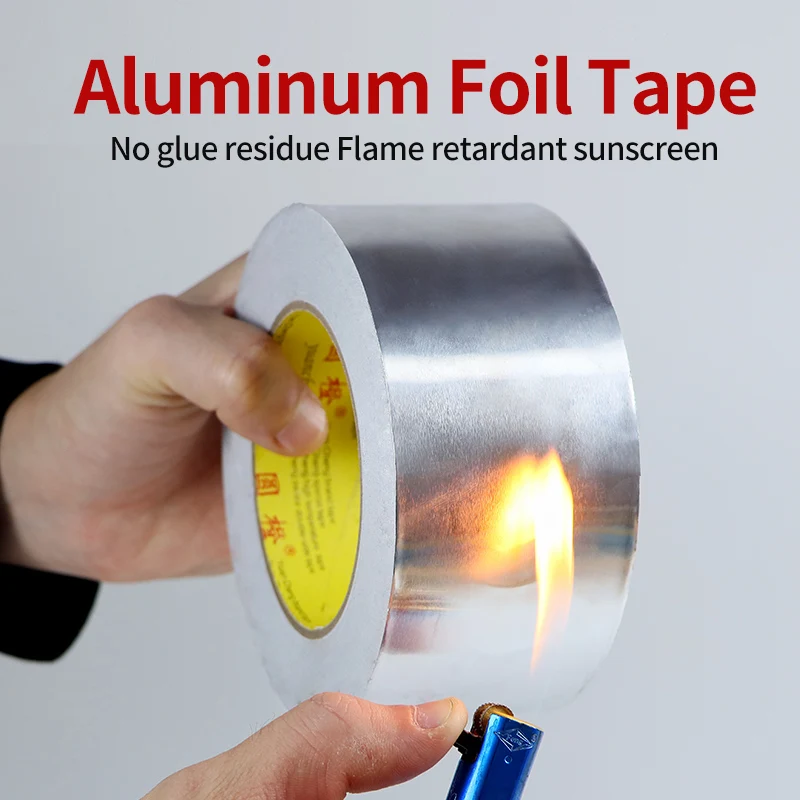
A stock image related to Fire Resistant Foil Tape.
3 Common User Pain Points for ‘Fire Resistant Foil Tape’ & Their Solutions
Scenario 1: Navigating Multi-Jurisdictional Fire Safety Codes and UL Certification Requirements
문제: B2B buyers managing construction or MEP projects across regions like Nigeria, Vietnam, or the UAE frequently encounter conflicting fire safety standards and certification requirements. A tape certified for UL 723 in the United States may not satisfy local requirements for Class O fire ratings under BS 476 Part 6 & 7, or specific plenum ratings required in European commercial buildings. This regulatory fragmentation creates significant procurement risks—shipments can be rejected at customs due to missing documentation, or worse, fail mandatory post-installation inspections, leading to project delays, penalty clauses, and potential liability issues for non-compliant fire barriers.
솔루션: Prioritize suppliers who provide comprehensive, multi-jurisdictional fire rating documentation. Request test reports verifying Class O (BS 476) and Class A (UL 723/ASTM E84) surface spread of flame ratings before placing bulk orders. For HVAC plenum applications specifically, confirm the tape meets 25/50 flame spread and smoke development indices. Establish a pre-shipment verification protocol where the supplier provides mill test certificates, fire rating compliance letters, and third-party inspection reports to expedite customs clearance in emerging markets and satisfy local authority having jurisdiction (AHJ) requirements.
Scenario 2: Adhesive Degradation Under Extreme Thermal Cycling and High Humidity
문제: In industrial environments across the Middle East, Africa, and Southeast Asia, fire resistant foil tape faces aggressive thermal cycling and humidity levels that exceed standard product specifications. Standard acrylic adhesives can soften and lose tack above 80°C ambient temperatures, while sustained high humidity compromises the bond between aluminum backing and glass cloth substrates. This leads to tape peeling, creating dangerous gaps in fire barriers and thermal insulation systems that compromise both safety and energy efficiency, particularly in unconditioned mechanical rooms and exterior ductwork applications.
솔루션: Specify tapes utilizing silicone-based or high-temperature acrylic adhesives rated for continuous service temperatures up to 120°C or higher, with glass cloth reinforcement providing dimensional stability under thermal stress. Verify the product’s performance in tropical climate conditions by requesting humidity resistance test data (typically 85% RH/85°C testing). For critical applications, conduct on-site adhesion testing on substrate samples before full deployment, ensuring the tape maintains its specified 18N/25mm adhesion strength to steel even after repeated thermal cycling between -30°C and +120°C.
Scenario 3: Procurement Confusion Between Standard HVAC Tape and Fire-Resistant Barriers
문제: Procurement teams frequently conflate standard aluminum foil HVAC tape with fire-resistant glass cloth reinforced variants, resulting in costly specification failures and compliance gaps. Standard aluminum tape lacks the fiberglass cloth backing and fire-retardant adhesives required for plenum-rated ductwork and fire stop applications. When installed in commercial buildings, these incorrect materials fail to meet the 25/50 flame spread requirements or Class O surface ratings, necessitating expensive removal, rework, and potential project delays that disrupt cash flow and damage contractor relationships.
솔루션: Implement technical specification checkpoints that clearly distinguish between commodity HVAC tape and fire-resistant solutions. Verify the backing composition includes glass cloth reinforcement (typically 120 micron backing thickness with 170 micron total thickness) rather than plain aluminum. Confirm the adhesive is specifically rated as fire-retardant, not just pressure-sensitive. For B2B procurement, request material safety data sheets (MSDS) and Declaration of Performance (DoP) documents showing compliance with BS 476 Part 6 & 7 or UL 723, and specify jumbo roll dimensions (1200mm x 900m) with proper core labeling to prevent warehouse misidentification during distribution to job sites.
Strategic Material Selection Guide for Fire Resistant Foil Tape
Selecting the optimal substrate for fire-resistant foil tape requires balancing thermal performance, mechanical durability, and regional compliance standards. For procurement teams operating across diverse climates—from the humid tropics of Nigeria and Vietnam to the arid heat of the Middle East—understanding material composition directly impacts long-term asset protection and regulatory adherence. The following analysis examines four primary substrate configurations, evaluating their suitability for industrial HVAC, electrical shielding, and automotive applications where fire ratings and tensile strength are non-negotiable.
What Makes Glass Cloth Reinforced Aluminum Foil Tape Ideal for Critical Fire Protection?
Glass cloth reinforced aluminum foil represents the premium standard for high-risk fire protection applications, featuring a composite structure that bonds 120-micron aluminum foil to woven fiberglass fabric. This configuration achieves Class O fire ratings under BS476 Part 6 & 7 and UL 723 standards, indicating zero flame spread and minimal smoke development—critical for European commercial buildings and Middle Eastern oil and gas facilities. With tensile strength reaching 255 N/25mm and elongation limited to 5%, the material resists tearing during installation on irregular industrial surfaces while maintaining adhesion between -30°C and +120°C. B2B buyers should specify this material for automotive engine compartments, electrical cable splicing, and aerospace insulation where mechanical stress and thermal cycling occur simultaneously.
How Does Standard Aluminum Foil Compare for Cost-Effective HVAC Applications?
Dead-soft aluminum foil tapes utilizing fire-retardant acrylic or silicone adhesives provide economical alternatives for large-scale HVAC duct sealing and vapor barrier installation. While these unreinforced tapes typically achieve UL 723 Class A surface burning ratings suitable for European and North American building codes, they lack the structural integrity of reinforced variants, with tensile strengths generally below 100 N/25mm. The material excels in moisture resistance and conforms easily to corrugated ductwork, making it ideal for climate control systems in humid African markets like Nigeria. However, procurement teams should note limitations in high-vibration environments where puncture resistance proves insufficient, and service temperatures rarely exceed 120°C without adhesive degradation.
When Should B2B Buyers Specify Copper Foil for High-Temperature EMI Applications?
Copper foil tapes with conductive acrylic or silicone adhesives serve specialized niches requiring simultaneous electromagnetic interference (EMI) shielding and fire resistance. Unlike aluminum alternatives, copper maintains electrical conductivity through overlapping seams and withstands continuous temperatures up to 180°C, essential for telecommunications infrastructure and precision electronics manufacturing in Vietnam’s growing tech sector. The material’s superior thermal mass provides inherent flame resistance, though oxidation in humid climates necessitates immediate application or climate-controlled storage. Procurement teams must weigh the 300-400% cost premium against performance benefits, reserving copper for grounding applications and PCB repair rather than general construction fire-stopping where aluminum suffices.
Which Hybrid Reinforcement Works Best for Extreme Climate Durability?
Foil-scrim-kraft (FSK) and aluminum-fiberglass cloth composites offer intermediate solutions balancing cost with mechanical durability. The scrim reinforcement—a bidirectional fiberglass mesh laminated between foil layers—provides dimensional stability during thermal expansion cycles common in Middle Eastern desert environments where daily temperature swings exceed 40°C. These materials typically service temperatures up to 150°C while offering superior tear initiation resistance compared to pure foil, though they generally achieve Class 25/50 fire ratings rather than Class O. For B2B buyers managing infrastructure projects across South America and Africa, this configuration provides optimal value for ductwork insulation and pipe wrapping where moderate fire resistance and high puncture strength are required.
| 재료 | Typical Use Case for Fire Resistant Foil Tape | 주요 이점 | 주요 단점/제한 사항 | 상대적 비용 |
|---|---|---|---|---|
| 유리 섬유 강화 알루미늄 | Critical fire protection, automotive, aerospace, electrical splicing | Class O fire rating, 255 N/25mm tensile strength | Limited conformability to complex curves, higher material weight | 높음 |
| Pure Aluminum Foil (Dead Soft) | HVAC duct sealing, vapor barriers, general insulation | Cost-effective, excellent moisture resistance, easy application | Low puncture resistance, limited to 120°C service temp | 낮음 |
| Copper Foil with Conductive Adhesive | EMI shielding, grounding, precision electronics | Superior conductivity, 180°C temperature tolerance | Oxidation in humid climates, premium pricing | 매우 높음 |
| Foil-Scrim-Kraft (FSK) Composite | Industrial ductwork, pipe insulation, Middle East infrastructure | Tear resistance, thermal expansion stability | Lower fire rating (Class 25/50), moderate rigidity | Medium |
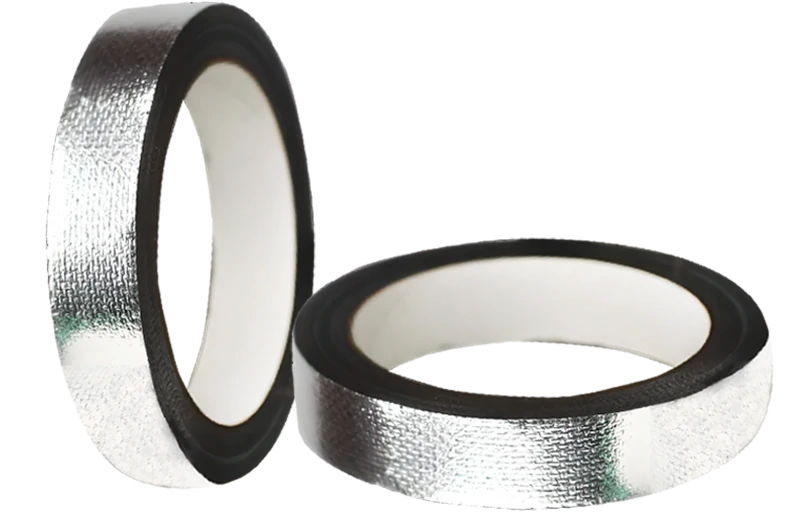
A stock image related to Fire Resistant Foil Tape.
In-depth Look: Manufacturing Processes and Quality Assurance for Fire Resistant Foil Tape
Sourcing fire-resistant foil tape for critical infrastructure projects requires understanding the manufacturing rigor behind the product. For procurement teams operating in Nigeria, Vietnam, or across the Middle East, where extreme temperatures and strict safety codes converge, manufacturing transparency separates commodity suppliers from strategic partners. The production of high-performance fire-resistant foil tape involves precision lamination, specialized adhesive formulation, and rigorous testing protocols that directly impact field performance and regulatory compliance.
How Is Fire Resistant Foil Tape Manufactured Through Multi-Layer Lamination?
The manufacturing process begins with material selection that balances reflectivity with structural integrity. Premium manufacturers utilize aluminum foil layers ranging from 7 to 50 microns, laminated to reinforced glass cloth backings typically measuring 120 microns or greater. This lamination occurs through either solvent-based adhesive bonding or thermal calendering, depending on the required fire rating. The glass cloth reinforcement, often woven fiberglass scrim, provides the tensile strength (255 N/25mm or higher) necessary to prevent tearing during application while maintaining flexibility for irregular surfaces. Quality-focused facilities monitor bond strength between layers continuously, ensuring no delamination occurs when exposed to service temperatures ranging from -30°C to +120°C or higher.
What Fire-Retardant Adhesive Technologies Ensure Code Compliance?
The adhesive layer represents the critical differentiator between standard HVAC tape and true fire-resistant solutions. Manufacturers employ modified acrylic or silicone adhesives infused with halogen-free fire retardant compounds, achieving total tape thicknesses around 170 microns while maintaining adhesion to steel of 18N/25mm or greater. The coating process utilizes precision slot-die or comma coating techniques to ensure uniform adhesive distribution across the web, with coating weights strictly controlled to achieve specified thickness without excess bulk. Curing ovens then activate cross-linking agents within the adhesive, creating thermoset bonds that resist softening under heat rather than thermoplastic alternatives that might flow or lose tack at elevated temperatures. For B2B buyers sourcing for electrical applications, suppliers must distinguish between conductive and non-conductive adhesive variants—conductive formulations containing metallic fillers enable EMI/RFI shielding and grounding continuity, while non-conductive versions prioritize insulation and vapor sealing for ductwork applications.
How Do Manufacturers Validate Thermal Performance and Fire Ratings?
Quality assurance laboratories conduct standardized burn testing to verify Class O (non-combustible) and Class 25/50 surface burning characteristics per UL 723 and BS476 Parts 6 & 7. These tests measure flame spread indices and smoke development values under controlled combustion conditions, with Class 25/50 indicating maximum flame spread of 25 and smoke developed index of 50—critical metrics for plenum spaces and high-occupancy buildings. Beyond static ratings, dynamic thermal cycling tests simulate real-world expansion and contraction across the service temperature range, verifying that adhesive integrity remains intact after repeated temperature shocks. For Middle Eastern and African markets where ambient temperatures frequently exceed 40°C, manufacturers should provide accelerated aging data demonstrating performance retention after 1,000+ hours at elevated temperatures.
What Mechanical Testing Ensures Durability in Harsh Environments?
Mechanical validation follows ASTM and PSTC protocols to ensure field reliability across diverse climates. Tensile strength testing per ASTM D3759 confirms the tape withstands 58 lb/in or greater without snapping, while elongation tests verify the 5% flexibility threshold necessary for wrapping curved ductwork. Adhesion testing utilizes ASTM D3330 methods, measuring peel strength against stainless steel substrates to ensure immediate bond formation and long-term holding power. The rolling ball tack test (ASTM D3121) quantifies initial grab characteristics—critical for overhead applications where tape must adhere instantly before full cure occurs. For buyers in humid regions like Southeast Asia or coastal South America, additional testing should include 85°C/85% relative humidity exposure to verify adhesive stability in moisture-laden environments.
How Does Quality Control Address Roll Consistency and Dimensional Accuracy?
Precision slitting operations convert master logs (1200mm x 900m jumbo rolls) into finish rolls (50mm or 75mm widths) with tight tolerances (±0.5mm). Automated vision systems inspect for edge fraying, wrinkles, or adhesive voids during winding, while tension control systems maintain consistent roll hardness to prevent telescoping during ocean freight to South American or Southeast Asian ports. Automated length verification ensures 50-meter or 55-yard rolls meet stated dimensions within ±1% tolerance. Humidity-controlled packaging (typically moisture-barrier film with desiccants) prevents adhesive degradation during transit through tropical climates, while lot coding enables full traceability from raw material batch to finished goods.
What Certifications Should B2B Buyers Demand From International Suppliers?
Procurement teams should verify UL 181A-P and UL 181B-FX listings for mechanical closure systems, alongside BS476 certifications for Commonwealth markets. European buyers require REACH and RoHS compliance documentation, while ISO 9001:2015 certification indicates standardized quality management systems. For Nigerian or Vietnamese infrastructure projects, suppliers should provide third-party test reports from accredited laboratories (SGS, Intertek, or Bureau Veritas) rather than internal certificates. Requesting production sample retention policies—where manufacturers store reference samples from each batch for 12+ months—provides recourse for quality disputes and ensures consistency across multi-phase construction projects.
Understanding these manufacturing and quality assurance parameters enables procurement professionals to conduct supplier audits with technical precision. By verifying lamination integrity, demanding specific fire rating certifications, and confirming mechanical test data, buyers mitigate supply chain risks while ensuring their fire protection systems perform when lives depend on them.
Practical Sourcing Guide: A Step-by-Step Checklist for ‘Fire Resistant Foil Tape’
Procuring fire-resistant foil tape for industrial applications requires balancing technical specifications with supply chain reliability. This checklist equips procurement teams—particularly those operating in diverse regulatory environments across Africa, the Middle East, and Southeast Asia—with actionable criteria to evaluate suppliers, ensure compliance with local fire safety standards, and optimize bulk purchasing decisions for manufacturing or distribution.
1. What Fire Safety Certifications Are Required for Your Regional Market?
Verify that products carry recognized fire ratings such as Class O (BS476 Part 6) or UL 723 (25/50 rating) for surface burning characteristics. European projects typically demand CE marking under EN 13501-1, while Middle Eastern markets may require additional Civil Defense approvals. Request test certificates rather than marketing claims, as regulatory acceptance varies significantly between Nigeria’s FMN standards and Vietnam’s QCVN building codes.
2. How Do You Validate Temperature Resistance and Mechanical Strength?
Examine technical datasheets for service temperature ranges (typically -30°C to +120°C for fire-resistant acrylic adhesives) and tensile strength metrics (minimum 250 N/25mm for glass-cloth reinforced variants). Confirm adhesion values to steel substrates exceed 15 N/25mm to ensure bonding integrity in high-vibration automotive or HVAC applications. Demand PSTC or ASTM test method documentation to guarantee standardized measurement protocols.
3. Which Backing Composition Matches Your Operational Environment?
Select aluminum-glass cloth composite backings (120-170 micron total thickness) for applications requiring puncture resistance and thermal reflection. Pure aluminum suits general duct sealing, while reinforced fiberglass cloth tapes withstand abrasion in aerospace or automotive engine compartments. Clarify whether conductive adhesive is required for EMI shielding or if non-conductive formulations better serve moisture-barrier applications.
4. Should You Procure Jumbo Rolls or Custom-Finished Dimensions?
Evaluate your converting capabilities. Jumbo rolls (1200mm x 900m) minimize unit costs for large-scale manufacturers with slitting equipment, while finish rolls (50mm x 50m) suit immediate distribution needs. Confirm supplier capabilities regarding custom widths and private labeling, particularly important for regional distributors serving fragmented construction markets in South America or Africa.
5. How Do You Mitigate Supply Chain Risks in International Sourcing?
Request samples for independent flame-retardancy testing before bulk orders. Verify supplier ISO 9001 certification and quality control processes for adhesive consistency. For tropical climates (Nigeria, Vietnam), ensure packaging includes moisture-barrier wrapping to prevent adhesive degradation during sea freight. Establish clear Incoterms regarding customs documentation for chemical product imports.
6. What Documentation Ensures Smooth Customs Clearance and After-Sales Support?
Request Material Safety Data Sheets (MSDS) and Certificate of Origin for import compliance. Verify that technical datasheets specify PSTC/ASTM test methods to avoid disputes over quality claims. Establish warranty terms for adhesive performance degradation and confirm supplier technical support availability across time zones for urgent application guidance.
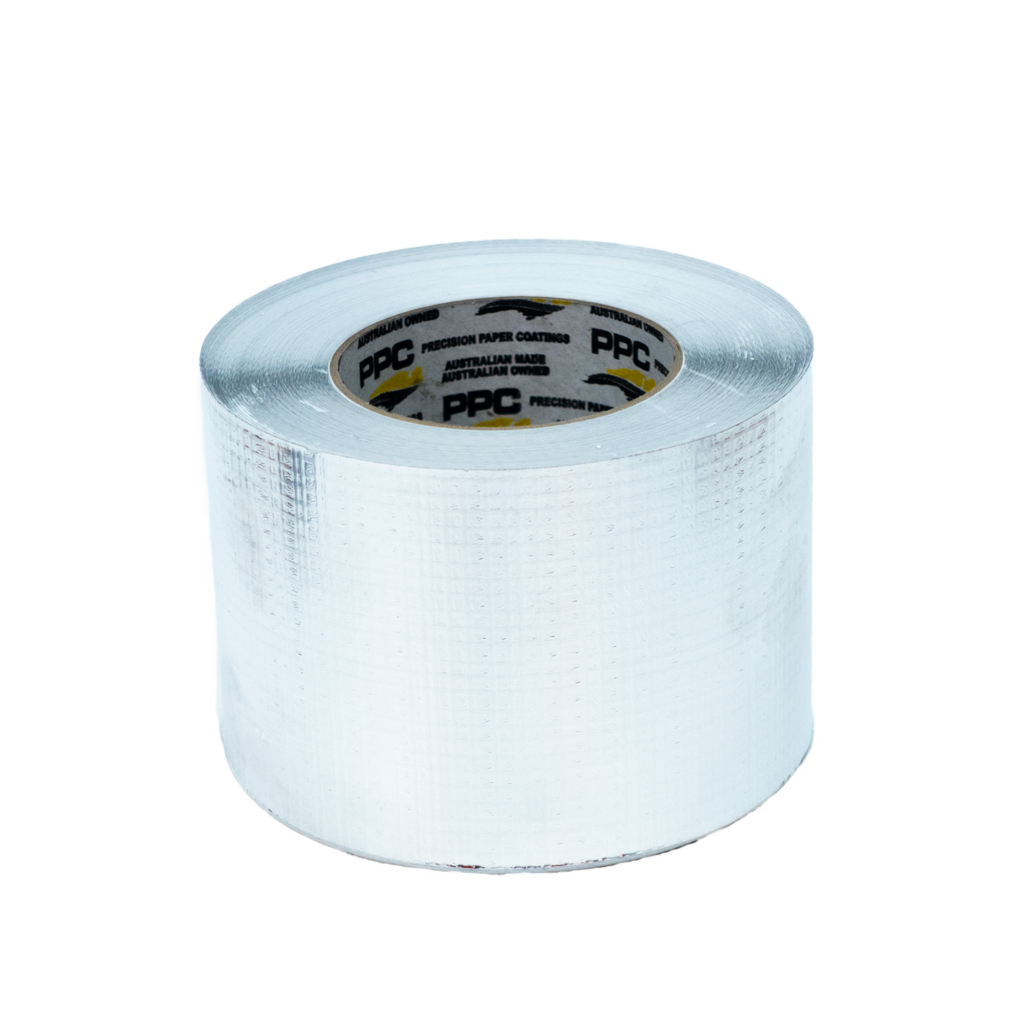
A stock image related to Fire Resistant Foil Tape.
Comprehensive Cost and Pricing Analysis for Fire Resistant Foil Tape Sourcing
What Factors Drive Fire Resistant Foil Tape Pricing in Global Markets?
The cost structure of fire-resistant foil tape hinges on three primary variables: metallurgical raw materials, reinforcement substrates, and adhesive chemistry. Aluminum foil backing prices fluctuate with London Metal Exchange (LME) rates, while glass cloth-reinforced variants command 15-25% premiums over standard aluminum tapes due to enhanced tensile strength (255 N/25mm) and dimensional stability. Fire-resistant acrylic or silicone adhesives, necessary for Class O and UL 723 compliance, significantly exceed standard rubber-based adhesive costs. For high-precision EMI shielding applications, copper foil tapes with conductive adhesives can cost 3-4 times aluminum equivalents. Buyers in Nigeria and Vietnam should note that currency volatility against USD-denominated raw material contracts necessitates flexible pricing agreements or quarterly price adjustments to manage landed costs effectively.
How Do Roll Specifications Impact Your Total Cost of Ownership?
Procurement economics shift dramatically based on roll dimensions and conversion requirements. Jumbo rolls (1200mm x 900m) offer the lowest per-meter pricing for converters with slitting capabilities, while finish rolls (50mm x 50m) carry conversion premiums of 30-40% but eliminate capital equipment needs. Log rolls (1200mm x 50m) serve as a middle ground for medium-volume processors. Middle Eastern and African buyers should evaluate logistics carefully: jumbo rolls maximize container utilization (reducing shipping costs per square meter) but require climate-controlled storage to prevent adhesive degradation in high-humidity environments. Service temperature ranges (-30°C to +120°C) also influence pricing, with high-temperature silicone adhesives adding 18-22% to base costs compared to acrylic formulations.
Are Fire Safety Certifications Worth the Investment for Industrial Applications?
Certification costs represent a hidden pricing layer that separates commodity HVAC tape from industrial fire-resistant solutions. UL 723 (ASTM E84) and BS476 Part 6&7 testing incur initial validation costs and ongoing audit fees, typically adding $0.02-0.05 per linear meter to production costs. However, for European and Middle Eastern markets with stringent building codes, uncertified alternatives risk project rejection and liability exposure. When sourcing from Chinese manufacturers, verify that fire ratings apply to your specific width and thickness (170 micron total thickness for glass cloth variants), as certifications sometimes cover only standard SKUs. Third-party factory audits for ISO 9001 compliance add upfront costs but reduce long-term quality variance risks.
What Volume-Based Pricing Strategies Work Best for Emerging Market Procurement?
Successful negotiation strategies vary by region. African buyers often benefit from consolidated container shipments (mixed SKU containers) to achieve MOQs without overstocking single SKUs. Vietnamese manufacturers increasingly offer tiered pricing at 5,000m², 20,000m², and 100,000m²+ breakpoints. For fire-resistant grades, expect 20-30% price premiums over standard aluminum foil tapes, with conductive adhesive variants commanding additional 10-15% uplifts. Payment terms significantly impact final costs—Chinese suppliers typically require 30% T/T deposits for custom specifications, while stock items may offer 60-day LC terms for established European buyers. Always factor in Incoterms: DAP pricing to Lagos or Dubai includes freight and duty prepayment, while FOB Qingdao requires careful logistics cost modeling but offers greater supply chain control and potential freight savings through forwarder consolidation.
Alternatives Analysis: Comparing Fire Resistant Foil Tape With Other Solutions
When specifying passive fire protection for HVAC infrastructure, electrical cable management, or industrial insulation systems, procurement teams must evaluate whether fire resistant foil tape represents the optimal solution or if alternative materials better address specific operational constraints. While foil-backed glass cloth composites deliver Class O fire ratings, thermal reflectivity, and immediate adhesion suitable for temperatures up to 120°C, they operate within defined mechanical and thermal thresholds. Understanding how these tapes compare against high-temperature ceramic textiles and reactive intumescent compounds enables B2B buyers across Africa, the Middle East, and Southeast Asia to balance installation efficiency, long-term durability, and regulatory compliance for projects ranging from commercial high-rises to petrochemical facilities.
| 비교 측면 | Fire Resistant Foil Tape | Ceramic Fiber Tape | Fire-Rated Intumescent Sealant |
|---|---|---|---|
| Max Operating Temp | Up to 120°C ( |
Essential Technical Properties and Trade Terminology for Fire Resistant Foil Tape
When procuring fire resistant foil tape for industrial HVAC, electrical insulation, or aerospace applications, understanding precise technical specifications and trade terminology ensures compliance with regional safety standards and optimizes supply chain efficiency. Buyers must distinguish between performance metrics that indicate fire safety versus physical durability to avoid costly specification mismatches in high-temperature environments.
What Are the Critical Fire Safety and Performance Specifications?
Fire Rating Classification (Class O & 25/50): This designation indicates compliance with British Standard BS476 Parts 6&7 or UL 723 testing protocols, measuring flame spread and smoke development characteristics. Class O designates materials with the lowest fire propagation risk, while the 25/50 rating specifies a maximum flame spread index of 25 and smoke developed index of 50—thresholds critical for building code compliance in European, Middle Eastern, and African markets.
서비스 온도 범위: Typically spanning -30°C to +120°C (-22°F to +248°F), this metric defines operational limits where the adhesive maintains bonding integrity without thermal degradation. For heavy-duty applications such as engine compartments or industrial ovens, buyers must verify whether ratings indicate continuous service temperature or short-term peak resistance to prevent adhesive failure.
인장 강도 및 연신율: Measured in Newtons per 25mm (N/25mm) or pounds per inch (Lb/In), tensile strength quantifies resistance to tearing under mechanical stress. Elongation percentage—typically around 5% for reinforced foil tapes—indicates flexibility essential for conforming to irregular ductwork surfaces without cracking or delamination during thermal expansion cycles.
강철에 대한 접착력: Quantified in N/25mm or ounces per inch (Oz/In), this specification measures immediate bond strength to metallic substrates. Values exceeding 18N/25mm ensure reliable sealing in HVAC systems subject to vibration, pressure differentials, and thermal cycling common in industrial installations.
What Trade Terminology Should Buyers Understand for Efficient Procurement?
Jumbo, Log, and Finish Rolls: These terms denote standard procurement formats that impact minimum order quantities and shipping logistics. Jumbo rolls (typically 1200mm x 900m) suit manufacturers with slitting capabilities; Log rolls (1200mm x 50m) serve regional distributors requiring intermediate processing; while Finish rolls (e.g., 50mm x 50m) represent retail-ready dimensions for immediate field application.
Conductive vs. Non-Conductive Adhesive: This distinction determines electrical functionality. Conductive adhesive allows current flow through the tape layer for EMI/RFI shielding and grounding applications, while non-conductive variants provide electrical isolation suitable for thermal sealing where conductivity risks short circuits.
Glass Cloth Reinforcement: Refers to aluminum foil tapes laminated with woven fiberglass backing, providing enhanced tear resistance and dimensional stability compared to plain foil constructions. This composite structure is essential for heavy-duty industrial applications requiring mechanical durability alongside fire resistance.
PSTC and ASTM Standards: Pressure Sensitive Tape Council (PSTC) and American Society for Testing and Materials (ASTM) methodologies—such as PSTC-133 for thickness measurement and ASTM D3330 for adhesion testing—provide universal benchmarking protocols for quality verification during incoming inspection processes.
Flame Spread Index: Specifically referencing the numerical values in fire ratings (e.g., 25/50), this index quantifies how quickly flame spreads across the material surface and the density of smoke developed, enabling architects and safety engineers to specify appropriate materials for commercial construction projects.
Navigating Market Dynamics and Sourcing Trends in the Fire Resistant Foil Tape Sector
How Is the Global Fire Resistant Foil Tape Market Evolving for Industrial Buyers?
The fire resistant foil tape sector is experiencing robust expansion driven by stringent building safety codes and infrastructure modernization across emerging economies. In regions such as Sub-Saharan Africa, Southeast Asia, and the Middle East, rapid urbanization is accelerating demand for HVAC systems and electrical insulation solutions that comply with international fire safety standards. B2B buyers are increasingly prioritizing products that meet dual certification benchmarks, specifically BS476 Part 6 & 7 and UL 723, which denote Class O surface spread of flame and 25/50 fire-smoke indices. These certifications are becoming non-negotiable entry requirements for commercial construction projects and industrial facilities in markets like Nigeria and Vietnam.
Material innovation is shifting procurement preferences toward glass-cloth reinforced aluminum foil tapes, which offer superior tensile strength (exceeding 250 N/25mm) and thermal stability from -30°C to +120°C. Unlike standard HVAC tapes, these hybrid solutions withstand extreme mechanical stress and thermal cycling, making them essential for automotive underhood applications, petrochemical insulation, and high-temperature ductwork. Buyers are also noting the divergence between conductive and non-conductive adhesive systems, with conductive variants gaining traction in electronics manufacturing for EMI/RFI shielding, while non-conductive formulations dominate thermal insulation sectors.
What Should B2B Buyers Prioritize When Evaluating International Suppliers?
When sourcing from global manufacturers—particularly those based in East Asia—procurement teams must verify jumbo roll customization capabilities and consistent dimensional accuracy. Industrial buyers typically require bulk formats (1200mm x 900m) for automated fabrication processes, whereas regional distributors need pre-cut finish rolls (50mm x 50m) for immediate field application. Establishing supplier partnerships that offer both log roll and jumbo configurations reduces inventory complexity and improves cost efficiency for large-scale infrastructure projects.
Logistics and technical documentation represent critical friction points in cross-border procurement. Buyers in South America and Africa should prioritize suppliers providing multi-language compliance certificates and region-specific fire rating documentation to expedite customs clearance and local regulatory approval. Additionally, evaluate the adhesive chemistry specifications—acrylic-based systems offering 18N/25mm adhesion to steel ensure reliable bonding in high-humidity climates common in coastal African and Southeast Asian markets. Requesting batch-specific test data for tack rolling ball (approximately 15cm) and elongation percentages (5%) helps validate performance consistency before committing to volume orders.
How Can Procurement Teams Ensure Sustainable and Ethical Sourcing?
Sustainability in the fire resistant foil tape sector extends beyond material composition to encompass lifecycle durability and manufacturing ethics. Forward-thinking buyers are scrutinizing adhesive formulations for low-VOC (volatile organic compound) content and solvent-free manufacturing processes. Aluminum-backed tapes inherently support circular economy principles due to the metal’s infinite recyclability, though procurement teams should verify that glass cloth backings are produced using energy-efficient weaving processes and formaldehyde-free binders.
Ethical sourcing requires auditing manufacturing facilities for labor compliance and environmental management systems (ISO 14001). Given that these tapes often serve critical safety functions in power generation and aerospace sectors, supply chain transparency becomes a risk management imperative. Buyers should seek suppliers demonstrating consistent Class O fire rating performance across production batches, as quality variance in fire-resistant adhesives can compromise entire safety systems. Furthermore, selecting products with extended service lifespans—capable of maintaining adhesion and fire resistance for 10+ years in harsh environments—reduces material waste and supports corporate sustainability targets while ensuring long-term project integrity.
Frequently Asked Questions (FAQs) for B2B Buyers of Fire Resistant Foil Tape
-
What is the difference between fire resistant foil tape and standard aluminum foil tape?
Fire resistant foil tape utilizes a hybrid construction that laminates aluminum foil with a woven glass cloth backing, whereas standard aluminum foil tape relies solely on dead-soft aluminum without reinforcement. This glass cloth layer provides critical tensile strength (exceeding 255 N/25mm) and prevents the tape from disintegrating under direct flame exposure, allowing it to maintain barrier integrity at temperatures where standard tapes melt or lose adhesion. For B2B procurement in oil and gas facilities or commercial HVAC systems across Africa and the Middle East, this reinforced structure ensures compliance with Class O fire ratings under BS476 Part 6 & 7, while standard HVAC-grade tapes typically fail to meet these stringent safety requirements.
-
What UL rating is required for fire resistant foil tape in HVAC plenum applications?
HVAC plenum installations require fire resistant foil tape certified to UL 723 (ASTM E84) with a flame spread index of 25 or less and smoke developed index of 50 or less, designated as “25/50 rated” or Class A. Additionally, tapes must achieve a Class O rating under BS476 Part 6 & 7 to ensure zero surface spread of flame in air handling spaces. When specifying for international projects in Nigeria, Vietnam, or European markets, verify that your supplier provides third-party test certificates confirming both UL 723 and local fire safety compliance, as dual certification streamlines approval processes across multiple regulatory jurisdictions.
-
What is the maximum temperature fire resistant foil tape can withstand?
High-performance fire resistant foil tape maintains structural integrity across service temperatures ranging from -30°C to +120°C (-22°F to +248°F), with specialized silicone-adhesive formulations extending resistance up to 150°C–180°C for intermittent exposure. The glass cloth reinforcement prevents thermal degradation of the aluminum layer and supports the adhesive system under thermal cycling, unlike standard acrylic tapes that soften above 80°C. For industrial buyers operating in hot climates like the Middle East or South America, specify tapes with service temperatures exceeding your peak operational conditions by at least 20°C to account for solar gain and equipment heat spikes.
-
Is fire resistant foil tape code compliant for commercial ductwork sealing?
Yes, fire resistant foil tape meets international building codes for commercial ductwork when it carries appropriate fire ratings (UL 723 Class A or BS476 Class O) and is applied to clean, dry surfaces according to manufacturer specifications for seam sealing. However, compliance varies by jurisdiction—European projects typically require CE marking and BS476 certification, while North American and Middle Eastern markets prioritize UL 723 and NFPA 90A compliance. B2B buyers should request batch-specific
중요 고지 사항 및 이용 약관
⚠️ 중요 고지 사항
제조업체, 기술 사양 및 시장 분석에 관한 내용을 포함하여 이 가이드에서 제공하는 정보는 정보 제공 및 교육 목적으로만 사용됩니다. 전문적인 조달 자문, 재무 자문 또는 법률 자문으로 간주되지 않습니다.
B2B 구매자는 독립적이고 철저한 실사를 수행해야 합니다. 구매 결정을 내리기 전에 반드시 확인하시기 바랍니다. 이 가이드의 정보에 의존하는 데 따른 위험은 전적으로 독자가 부담합니다.
Top 3 Fire Resistant Foil Tape Manufacturers & Suppliers List
1. MarketsandMarkets – Fire-Resistant Tapes
Registered: 2009 (17 years)
소개: Fire-resistant tapes are specialized adhesive tapes designed to provide protection against fire hazards, made from materials including acetate cloth, Nomex, PPS, glass cloth, PVC, and polyimide that can withstand high temperatures and resist ignition. They are inherently flame resistant, self-extinguish rapidly, and provide insulation. Available in single coated and double coated variants. Major e…
2. 테이프 공급업체 - 호일 테이프
도메인: tapesuppliers.com
등록: 2007년(19년)
소개: Foil tape, also known as aluminum tape or aluminum foil tape, is a versatile adhesive product featuring pressure-sensitive adhesive backing. Key properties include chemical resistance, light reflectance, weatherability, flame resistance, moisture resistance, and electrical/thermal conductivity. Primary applications span electrical, HVAC, construction, and other industries requiring thermal or elec…
3. ADHES – Glass Fiber Aluminum Foil Tape
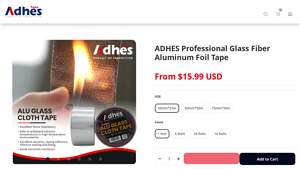
도메인: store.adhestech.com
등록: 2022년(4년)
소개: Product Name: ADHES Professional Glass Fiber Aluminum Foil Tape. Price: From $15.99 USD. Available Sizes: 50mm×25m, 50mm×50m, 75mm×50m. Quantity Options: 1 Roll, 6 Rolls, 16 Rolls, 24 Rolls. Temperature Resistance: Withstands extreme temperatures from -80°C to 100°C. Material Composition: High-quality glass fiber cloth and aluminum foil with high-performance special adhesive. Key Features: Profess…
Strategic Sourcing Conclusion and Outlook for Fire Resistant Foil Tape
As global infrastructure projects accelerate across Africa, Southeast Asia, and the Middle East, fire resistant foil tape has evolved from a commodity consumable to a critical safety component. Procurement teams must now balance stringent fire safety mandates with supply chain resilience, particularly as local regulations in markets like Nigeria and Vietnam increasingly align with international BS476 and UL standards. The strategic imperative extends beyond immediate application needs to encompass long-term availability, technical documentation, and compliance traceability.
How Should Buyers Evaluate Long-Term Supplier Partnerships?
Moving beyond unit pricing, strategic sourcing requires assessing manufacturers’ capacity to deliver consistent Class O & 25/50 certified products across jumbo and finish roll formats. Reliable partners should demonstrate technical expertise in hybrid aluminum-glass cloth constructions and provide comprehensive documentation traceability for high-stakes applications in HVAC, oil & gas, and electrical shielding sectors.
What Market Trends Will Shape Fire Tape Procurement Through 2025?
The convergence of sustainability mandates and stricter building codes is driving demand for halogen-free, high-temperature resistant adhesives capable of withstanding -30°C to +120°C service ranges. Buyers should anticipate increased customization requirements—particularly for conductive versus non-conductive variants—while securing volume commitments to mitigate raw material volatility in aluminum and specialty adhesive markets.
Final Recommendations for Emerging Market Procurement
For B2B buyers in rapidly developing economies, establishing direct relationships with ISO-certified manufacturers ensures competitive pricing, technical support, and compliance with evolving local fire safety regulations. Prioritize suppliers offering comprehensive ASTM/BS testing data, flexible MOQs, and regional logistics capabilities to accommodate both large-scale infrastructure projects and specialized maintenance operations.