Introduction: Navigating the Global Market for Blue painters tape
In the competitive landscape of international construction and renovation procurement, securing consistent, high-quality surface protection materials represents a critical operational challenge that directly impacts project profitability and client satisfaction. Sourcing blue painters tape for large-scale commercial developments requires navigating complex manufacturer specifications, regional compliance standards, and supply chain reliability issues that extend far beyond simple product selection. Whether you’re outfitting high-rise projects in Lagos, managing renovation contracts across São Paulo, or coordinating fit-outs in Dubai and European markets, understanding the nuanced differences between medium-tack and high-tack formulations, UV resistance ratings, and clean removal timeframes becomes essential for preventing costly surface damage, paint bleed, and labor-intensive rework.
Why Does Blue Painters Tape Quality Vary Across Global Supply Chains?
The international marketplace for masking solutions presents unique hurdles for B2B purchasers, including inconsistent adhesive performance in humid tropical climates, counterfeit products that damage premium surfaces, and suppliers lacking capacity for proper bulk export documentation and customs clearance. This comprehensive guide addresses these critical pain points by examining technical specifications essential for diverse environmental conditions—from the moisture resistance required in Brazilian coastal projects and Nigerian infrastructure developments to the heat tolerance necessary for Middle Eastern exterior applications.
How Can Procurement Teams Optimize Their International Bulk Purchasing Strategy?
Throughout the following sections, we analyze tape width standardization for industrial applications, surface compatibility matrices, rigorous vetting protocols for overseas manufacturers, cost-optimization strategies for container shipments, and quality assurance checkpoints specific to professional painting contractors. By leveraging these actionable insights, procurement professionals across Africa, South America, Europe, and the Middle East will gain the technical knowledge and strategic frameworks necessary to evaluate supplier credentials, negotiate favorable long-term terms, and ensure consistent product availability that meets rigorous international construction standards while optimizing project budgets.
Understanding Blue painters tape Types and Variations
| 유형 이름 | 주요 차별화 기능 | 주요 B2B 애플리케이션 | 구매자를 위한 간략한 장단점 |
|---|---|---|---|
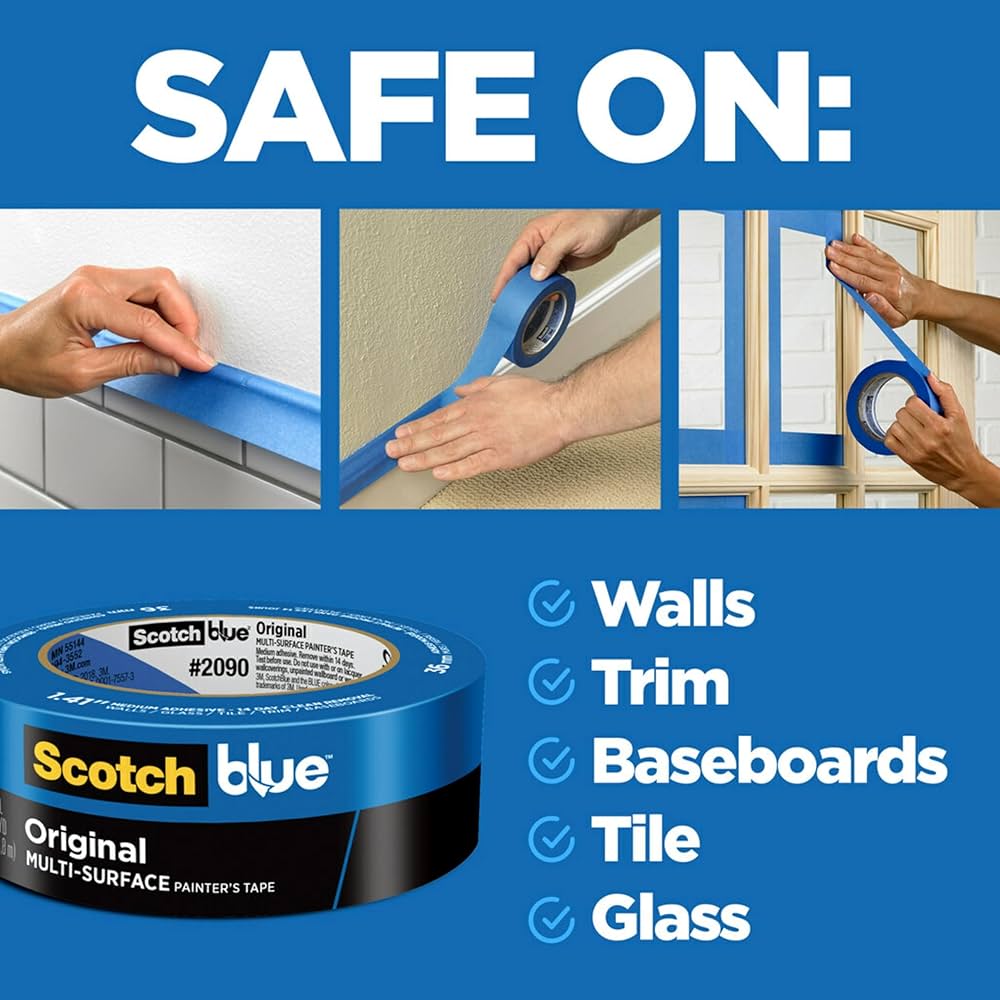
| Standard Multi-Surface | Medium adhesion, 14-day clean removal, UV/moisture resistant backing | General painting, renovation, property maintenance, standard drywall and trim | Pros: Versatile, cost-effective for bulk |
Key Industrial Applications of Blue painters tape
| 산업/섹터 | Specific Application of Blue painters tape | 비즈니스를 위한 가치/혜택 | 이 애플리케이션의 주요 소싱 고려 사항 |
|---|---|---|---|
| 건설 및 토목 공학 | Surface protection and precision masking during interior/exterior painting, drywall finishing, and facade sealing on large-scale builds | Prevents costly rework from paint bleed on trim and windows; enables sharp line demarcation for multi-color schemes; protects flooring during high-traffic phases without residue damage | UV resistance for tropical climates (e.g., Nigeria, Brazil); 14-21 day clean removal window to accommodate project delays; bulk case quantities for high-volume sites; compatibility with porous concrete and plaster surfaces |
| Automotive Manufacturing & Refinishing | Masking vehicle trim, glass, and rubber seals during OEM painting and collision repair; creating two-tone paint boundaries and preventing overspray | Ensures OEM-quality finish without adhesive residue on delicate automotive plastics; reduces taping time with high visibility; prevents contamination that requires costly reworking | Compatibility with waterborne and solvent-based automotive coatings; clean removal after high-temperature bake cycles; consistent roll quality to prevent breaks in automated dispensers; resistance to garage humidity |
| Marine & Offshore Maintenance | Masking hulls and superstructures during anti-fouling and topcoat applications; temporary labeling of rigging and safety zones in shipyards | Moisture resistance for humid port environments; prevents corrosion-inducing residue on gelcoat and metal surfaces; high visibility aids safety marking and precision boot-top lines | Saltwater-resistant adhesive formulation; UV stability for prolonged outdoor exposure; width variety (2-4 inches) for efficient large-area coverage; 14-day clean removal guarantee to avoid re-sanding |
| Electronics & Additive Manufacturing | Bed adhesion for FDM 3D printers; masking PCBs during conformal coating; temporary component fixation and labeling in assembly lines | Clean release from build plates without damaging printed parts; prevents solder mask bleeding on circuit boards; residue-free removal protects sensitive electronics and optical components | Low-tack variants for delicate substrates; anti-static properties to prevent ESD damage; availability of extra-wide rolls (3-4 inch) for large-format printers; consistent caliper thickness for automated dispensing |
How Does Blue Painter’s Tape Ensure Precision in High-Volume Construction Across Diverse Climates?
In rapidly developing markets like Nigeria and Brazil, where large-scale residential and commercial projects face unpredictable tropical weather and tight construction deadlines, blue painter’s tape serves as a critical quality control tool for general contractors. Construction teams utilize it to mask window frames, baseboards, and flooring during multi-phase painting, preventing costly bleed-through on porous cured concrete and fresh plaster surfaces. The tape’s UV-resistant properties prove essential for exterior applications, allowing masking to remain in place for up to 21 days without adhesive degradation or difficult removal. For procurement teams, sourcing bulk case quantities with consistent roll adhesion ensures uninterrupted workflow across sprawling job sites while minimizing material waste from premature sticking or labor-intensive residue removal on delicate
A stock image related to Blue painters tape.
3 Common User Pain Points for ‘Blue painters tape’ & Their Solutions
Scenario 1: Extended Masking Periods in High-Temperature Climates
문제: Commercial painting contractors across Nigeria, the Middle East, and Brazil frequently encounter project delays due to logistics coordination or weather interruptions. When blue painter’s tape remains applied to trim, drywall, or exterior surfaces beyond 14 days—especially in ambient temperatures exceeding 35°C (95°F)—the adhesive can thermally bond to substrates. This creates a residue removal nightmare that requires solvent-based cleaners or scraping, damaging delicate finishes and inflating labor costs by 30-40% on renovation budgets.
솔루션: Procure blue painter’s tape specifically rated for 21-day clean removal with UV-resistant crepe paper backing. Unlike standard 14-day tapes, these formulations resist thermal degradation and maintain consistent adhesion without curing to the surface. For exterior commercial projects in tropical climates, specify tapes with moisture-resistant adhesives that withstand humidity fluctuations common in coastal Brazilian or West African environments. Implement inventory rotation protocols to ensure tape stock hasn’t exceeded six months shelf life, as aged adhesive becomes increasingly prone to high-temperature failure. Consider color-coded application schedules where different tape colors indicate application dates, ensuring removal happens within manufacturer specifications.
Scenario 2: Paint Bleed on Textured Concrete and Stucco Finishes
문제: Architectural preferences in Mediterranean Europe and Latin America often feature heavily textured stucco, popcorn ceilings, or rough-cast concrete that challenge standard masking protocols. When B2B buyers supply generic blue painter’s tape designed for smooth surfaces, paint bleeds beneath the tape edges into the texture valleys, creating fuzzy lines that require manual touch-ups. This issue compounds when contractors confuse blue and green tape applications—using medium-adhesion blue tape on heavy textures where high-tack green variants would perform better, or vice versa on delicate surfaces.
솔루션: Match tape adhesion to surface texture profiles. For light-to-moderate textures (common in commercial drywall), specify premium blue painter’s tape with advanced edge-sealing technology that conforms to surface irregularities up to 0.5mm depth. For heavy stucco or concrete textures prevalent in Middle Eastern and South American construction, transition to specialized high-tack blue variants or employ a “base-coat sealing” technique where the tape edge is painted with the underlying wall color first, creating a seal before applying contrasting colors. Train application teams to use plastic putty knives for edge burnishing rather than fingers, ensuring 100% surface contact. When sourcing, request tape samples to test against your region’s common substrate textures before bulk procurement.
Scenario 3: Temperature Extremes and Freshly Coated Surface Compatibility
문제: Facility maintenance teams managing commercial properties face critical timing decisions when protecting newly painted drywall or plaster in multi-phase renovation cycles. Standard blue painter’s tape applied to surfaces with less than 30-day cure times—particularly low-VOC or fast-drying acrylic paints common in European commercial buildings—risks adhesive imprinting or complete coating removal upon detachment. Additionally, exterior commercial painting in regions with wide temperature swings (desert climates or high-altitude South American cities) causes tape adhesives to become either too aggressive in heat or non-tacky in cold, compromising mask integrity.
솔루션: Specify low-adhesion “fresh paint safe” blue tapes rated for application on surfaces cured just 24-72 hours, utilizing silicone-based or synthetic rubber adhesives that release cleanly without surface damage. For exterior projects, verify the tape’s operational temperature range—quality commercial blue tapes function between 10°C to 50°C (50°F to 122°F), accommodating early morning application in desert climates or cooler seasons in European markets. Implement a “test strip protocol” where 24-hour adhesion tests are conducted on actual project surfaces before full-scale masking. For B2B procurement consistency, establish specifications requiring UV-stable backings and adhesives that maintain consistent tack across the temperature ranges specific to your operational regions, whether humid coastal areas or arid inland zones.
Strategic Material Selection Guide for Blue painters tape
Procurement teams managing multi-site developments across Nigeria, Brazil, or the UAE face unique material challenges. Humidity fluctuations, intense UV exposure, and diverse substrate textures—from smooth Gulf glass to rough São Paulo concrete—demand strategic tape selection. Understanding the substrate-adhesive matrix ensures clean removal, reduces rework costs, and prevents project delays. The following material configurations address specific environmental and surface challenges prevalent in emerging market construction.
What Backing Material Works Best for Standard Interior Developments?
Standard crepe paper with synthetic rubber adhesive dominates bulk procurement for residential and commercial interiors. The creped texture provides approximately 15% elongation, allowing the tape to navigate curved architraves and rounded corners common in modern Brazilian and Nigerian architecture. This material offers excellent cost-efficiency for high-volume masking across thousands of linear meters. However, procurement managers must consider storage conditions; crepe paper hygroscopically absorbs atmospheric moisture, causing adhesive softening and edge curling in humid port cities like Lagos or Recife. Climate-controlled warehousing extends shelf life, but once deployed, removal should occur within 14 days to prevent fiber bonding to substrates.
When Should You Specify Washi Paper for High-Finish Applications?
Washi paper backing, paired with low-tack acrylic adhesive, serves premium hospitality and residential projects where surface integrity is paramount. In Middle Eastern luxury developments or high-end São Paulo condominiums, this material protects delicate finishes, fresh low-VOC paints, and wood veneers without adhesive transfer or ghosting. The fiber-based construction allows 60-day indoor removal windows—critical for phased construction where tape must remain through multiple trade cycles. While unit costs run 40-60% higher than standard crepe, the elimination of touch-up labor and damage claims often yields net savings on high-value contracts. Limitations include poor performance on roughcast concrete or textured stucco prevalent in exterior African construction, where the low-tack formulation fails to achieve initial grab.
Which Material Configuration Withstands Extreme Exterior Environments?
Polyethylene film backing with UV-stabilized acrylic adhesive addresses the solar intensity and thermal cycling of Gulf Cooperation Council (GCC) countries and subtropical zones. Unlike paper substrates that embrittle under UV exposure, polyethylene maintains flexibility through 50°C+ surface temperatures on exterior metal and concrete. This configuration resists moisture penetration during unexpected rainfall in monsoon regions, preventing adhesive washout and edge lifting. The material excels on infrastructure projects—bridges, pipelines, and exterior cladding—where masking duration extends beyond three weeks. However, the film’s rigidity limits application on intricate decorative molding or heavily textured surfaces, requiring careful specification for traditional Mediterranean or Arabic architectural details.
How Do High-Tack Flatback Materials Address Rough Substrate Challenges?
Flatback paper with high-tack synthetic rubber adhesive solves adhesion challenges on porous, unfinished surfaces common in industrial African and South American construction. The smooth, dense paper structure provides superior tensile strength for single-piece removal from rough concrete block, brick, and hewn stone without shredding or leaving fibrous residue. This aggressive adhesion performs reliably in dusty environments where standard tapes fail, such as active mining facilities or desert-adjacent developments near Cairo or Dubai. The material supports custom printing for contractor branding and safety marking. The critical limitation involves removal windows; the aggressive bond requires stripping within 7-10 days to prevent substrate damage or ghosting on painted drywall, making it unsuitable for long-term protection during extended construction phases.
For B2B buyers, material selection must balance immediate project requirements against regional climate realities. While crepe paper offers economic advantages for
A stock image related to Blue painters tape.
In-depth Look: Manufacturing Processes and Quality Assurance for Blue painters tape
Understanding the production pipeline behind blue painter’s tape empowers procurement teams to assess supplier capabilities and mitigate quality risks before shipment. For buyers sourcing from international markets—including rapidly growing construction sectors in Nigeria, Brazil, and the UAE—knowledge of manufacturing standards ensures consistent project outcomes across diverse climate conditions and regulatory environments.
What Raw Materials Define Premium Blue Painter’s Tape Quality?
The foundation of high-performance blue painter’s tape begins with crepe paper backing engineered to specific tensile strength specifications. Premium manufacturers utilize saturated crepe paper—typically 120-150 micrometers thick—that undergoes impregnation with latex or rubber-based solutions to prevent paint bleed-through while maintaining flexibility. The distinctive cyan-blue coloration isn’t merely aesthetic; it requires UV-stable pigments that resist fading during 14-to-21-day outdoor exposure cycles, ensuring visibility for contractors working in high-sunlight environments common in Middle Eastern and South American markets.
Adhesive formulation represents the critical differentiator between commodity masking tape and professional-grade painter’s tape. Quality manufacturers employ synthetic acrylic emulsions rather than natural rubber adhesives, balancing medium-tack adhesion (measured in ounces per inch width) with clean-release properties. These formulations incorporate specialized cross-linking agents that prevent adhesive transfer onto delicate surfaces like freshly painted drywall or varnished trim, a crucial consideration for B2B buyers supplying high-end residential developments.
How Is the Pressure-Sensitive Adhesive Engineered for Multi-Surface Compatibility?
Modern manufacturing facilities utilize precision coating lines where adhesive emulsions are applied to the saturated crepe backing through reverse-roll or knife-over-roll coating methods. The coating weight—typically measured in grams per square meter—determines the tape’s tack level and must remain consistent within ±5% across production batches to ensure uniform performance. For international buyers, this consistency prevents field failures where tape might adhere too aggressively to textured stucco or insufficiently to glass surfaces in humid tropical climates.
Following coating, the adhesive layer undergoes controlled thermal curing in multi-zone ovens, activating cross-linking polymers that provide the “14-day clean removal” capability specified by leading brands. This curing process requires precise temperature calibration between 60°C and 85°C; insufficient curing results in residue transfer, while excessive curing compromises adhesion strength. Advanced manufacturers implement inline spectroscopic monitoring to verify adhesive cure rates in real-time, ensuring every batch meets specifications for clean removal without surface damage.
What Manufacturing Processes Ensure Consistent Roll Quality?
After saturation and coating, the master jumbo rolls—often spanning one-meter widths and hundreds of meters in length—undergo precision slitting operations. Computer-controlled slitting heads convert these jumbos into standard widths (ranging from 24mm to 100mm) with tolerance controls of ±0.5mm. For B2B buyers managing large-scale construction projects, this dimensional precision prevents application inconsistencies where uneven edges might allow paint seepage or require additional labor for touch-ups.
The winding process presents critical quality control checkpoints. Tension-controlled winding prevents telescoping (lateral shifting of tape layers) and ensures uniform roll hardness. Excessive tension can cause adhesive cold flow, where the tape sticks to itself within the roll, while insufficient tension creates loose edges susceptible to contamination. Premium manufacturers utilize automated vision systems that detect defects such as wrinkles, adhesive voids, or color variations at speeds exceeding 300 meters per minute, rejecting non-conforming sections before final packaging.
Which Quality Control Protocols Validate Export Standards?
Rigorous laboratory testing accompanies production runs intended for international distribution. Peel adhesion testing—measured via ASTM D3330 standards—verifies that tape adheres with 20-30 ounces per inch width to stainless steel panels while releasing cleanly without residue. For buyers in humid regions like coastal Brazil or West Africa, manufacturers conduct accelerated aging tests at 85% relative humidity and 40°C to simulate tropical storage conditions, ensuring the adhesive maintains stable tack levels despite moisture exposure.
UV resistance testing utilizes xenon arc weatherometers that simulate 500 hours of sunlight exposure—equivalent to several weeks of outdoor construction site conditions. Quality tape must maintain structural integrity and colorfastness without adhesive degradation or backing embrittlement. Additionally, tensile strength testing (ASTM D3759) ensures the crepe backing withstands at least 25 pounds per inch width, preventing tearing during removal from rough surfaces like concrete or textured plaster common in European renovation projects.
How Does Packaging Engineering Protect Product Integrity During International Transit?
For shipments traversing multiple climate zones via ocean freight, packaging specifications become as critical as the tape formulation itself. Export-ready blue painter’s tape requires moisture-barrier packaging utilizing polyethylene film wraps or laminated foil pouches that maintain relative humidity below 60% within the carton. This protection prevents adhesive degradation through hydrolysis, particularly crucial for buyers importing into regions with monsoon seasons or high humidity.
Palletization standards for international logistics typically involve shrink-wrapped pallets with corner boards and stretch film tension optimized to prevent carton crushing without damaging roll cores. Manufacturers serving global B2B markets often utilize six-month shelf-life dating from production rather than standard twelve-month domestic dating, accounting for extended transit times and customs clearance periods. Temperature-controlled containers (maintaining 15-25°C) are recommended for acrylic adhesive tapes during transoceanic shipping to prevent thermal degradation of the polymer structure.
글로벌 바이어가 확인해야 하는 인증 및 규정 준수 표준은 무엇인가요?
Procurement teams should verify that manufacturers maintain ISO 9001:2015 quality management certifications, ensuring documented process controls and traceability from raw material receipt through finished goods shipment. For European markets, REACH compliance regarding Substances of Very High Concern (SVHC) is mandatory, while buyers in the Middle East should request SASO (Saudi Standards, Metrology and Quality Organization) conformity certificates where applicable.
Environmental certifications increasingly influence B2B purchasing decisions. Look for water-based adhesive formulations with low VOC (Volatile Organic Compound) content—typically below 50 grams per liter—meeting LEED v4 requirements for green building projects. Some manufacturers provide FSC-certified paper backing for sustainability-focused construction firms. Additionally, verify that colorants meet FDA 21 CFR 175.105 standards for indirect food contact if the tape will be used in facilities handling food packaging or processing environments.
By scrutinizing these manufacturing and quality assurance parameters, international buyers can establish supplier partnerships that deliver consistent, specification-compliant blue painter’s tape capable of performing across the diverse environmental and regulatory landscapes of global construction markets.
Practical Sourcing Guide: A Step-by-Step Checklist for ‘Blue painters tape’
Procuring blue painters tape for international commercial projects requires balancing technical performance specifications with complex logistics considerations. Whether sourcing for construction crews in Nigeria, painting contractors in Brazil, or facility maintenance across Europe and the Middle East, this checklist guides procurement teams through critical evaluation criteria—from adhesive chemistry to climate-appropriate storage—ensuring consistent quality upon delivery.
1. How Do You Match Adhesive Strength to Surface Requirements and Climate Conditions?
Begin by auditing your typical application surfaces. Medium-tack formulations adhere securely to smooth drywall, glass, and lightly textured walls common in European interiors, while high-tack variants bond effectively to rough concrete, stucco, or brick prevalent in African and Middle Eastern construction. Consider regional climate factors: high-humidity environments like coastal Brazil require moisture-resistant adhesives that maintain tack despite atmospheric moisture. Request technical data sheets specifying shear adhesion strength measured in ounces per inch width, and verify performance testing across temperature ranges relevant to your operating regions.
2. What Width Configurations and Roll Lengths Maximize Crew Productivity?
Standard commercial widths range from 1-inch for intricate trim work to 4-inch for masking large surface areas and protecting floors. For high-volume operations, calculate linear footage requirements per project phase to determine optimal roll lengths—typically 60-yard rolls for standard use versus bulk 180-foot options for extensive exterior projects. Wider configurations reduce labor hours on large facades but require careful handling to prevent waste. Specify core diameters compatible with your existing tape dispensers to ensure seamless workflow integration.
3. How Do You Validate UV Stability and Weather Resistance for Outdoor Applications?
For projects in high-sun regions like the Middle East, North Africa, or tropical South America, UV resistance prevents adhesive degradation, edge curling, and difficult removal. Specify tapes rated for 14 to 21-day clean outdoor exposure without leaving residue or requiring razor-scraping. Verify backing materials resist moisture infiltration during monsoon seasons or humid sea freight. Premium formulations maintain structural integrity across temperature fluctuations from desert heat to European winter storage conditions.
4. What Clean Removal Timeframes Protect Delicate Substrates and Reduce Rework?
Confirm manufacturer guarantees regarding residue-free removal windows—standard grades typically offer 14-day removal, while professional formulations extend to 21 days. This specification proves critical for protecting painted drywall, finished hardwood, or decorative tiles where surface repair costs exponentially exceed tape expenses. Test samples on local substrate materials common in your region, as paint formulations and surface porosity vary between North American and international construction standards.
5. How Should You Structure Bulk Procurement and International Logistics?
Evaluate suppliers offering tiered quantity discounts on case quantities (typically 24 to 36 rolls per case) with palletized shipping options for container freight. Verify packaging specifications: moisture-barrier wrapping prevents adhesive activation during humid sea transit to African or South American ports. Confirm compliance with regional chemical regulations, including VOC emissions standards and customs documentation requirements for pressure-sensitive adhesive products. Establish incoterms that clarify responsibility for climate-controlled storage during transit.
6. How Do You Calculate Total Cost of Ownership Beyond Per-Roll Pricing?
Factor in application efficiency metrics—premium edge-sealing technology reduces paint bleed and subsequent touch-up labor costs. Calculate waste reduction from selecting appropriate widths and ensuring clean removal prevents surface damage requiring expensive remediation. Include landed cost analysis: shipping fees, import duties, currency fluctuation buffers, and climate-controlled warehousing expenses necessary for maintaining adhesive integrity in tropical or desert storage environments.
A stock image related to Blue painters tape.
Comprehensive Cost and Pricing Analysis for Blue painters tape Sourcing
When sourcing blue painters tape for commercial-scale projects, procurement teams must look beyond sticker prices to understand the complete cost architecture. For international buyers operating across diverse markets—from Lagos to São Paulo—pricing volatility often stems less from the tape itself and more from freight logistics, import duties, and minimum order quantity (MOQ) thresholds that favor high-volume commitments. Strategic sourcing requires balancing immediate unit costs against long-term project efficiency and supply chain reliability.
How Do Volume Commitments Impact Unit Economics?
B2B pricing for blue painters tape typically follows aggressive tiered structures where per-roll costs drop significantly at case, pallet, and container-load quantities. Domestic suppliers frequently offer complimentary freight within the United States, but international procurement requires negotiating FOB (Free On Board) or CIF (Cost, Insurance, Freight) terms that dramatically affect final calculations. Buyers should evaluate whether suppliers accommodate mixed-SKU pallets to optimize container utilization, as shipping air is often more expensive than the product itself. Establishing annual volume agreements rather than spot-buying can secure an additional 8–12% discount while ensuring supply continuity during peak construction seasons.
What Specifications Drive Price Variations Between Grades?
Material specifications create substantial price deltas across the product spectrum. Standard 14-day removal tapes suit general interior contracting, while extended 21-day UV-resistant variants command premiums of 15–25% but prevent adhesive transfer on exterior projects exposed to harsh sunlight. Width diversity—from 1-inch precision lines to 4-inch bulk masking—also affects pricing; wider rolls often deliver better per-meter value but require higher absolute investment. Additionally, American-made products typically carry quality premiums compared to Asian-manufactured alternatives, though the latter may incur higher defect rates and inconsistent adhesion that offset initial savings through rework expenses.
How Should Buyers Calculate Total Landed Costs Across Borders?
For African and South American markets, comprehensive landed cost analysis must incorporate HS code classifications (typically 3919.10 for adhesive plastic tapes), import VAT, and port handling fees that can add 30–40% to ex-factory prices. Currency fluctuation hedging becomes critical when purchasing USD-denominated inventory from North American suppliers. Smart buyers negotiate quarterly price locks and establish regional warehousing partnerships to mitigate demurrage charges at congested ports like Apapa or Santos. Consolidating shipments with other construction materials reduces per-unit freight burdens and simplifies customs clearance processes.
When Does Premium Tape Reduce Total Project Expenditure?
High-adhesion, clean-release formulations like those found in professional-grade industrial tapes reduce labor costs by eliminating touch-up work and surface damage. While premium rolls may cost 20% more upfront, they prevent expensive rework on delicate substrates such as freshly cured drywall or stained woodwork—delivering negative total cost of ownership when skilled labor rates exceed $15 per hour. For developing markets facing skilled labor shortages, this calculation strongly favors quality over commodity pricing, as the cost of correcting bleed-through or adhesive residue often exceeds the initial material savings by factors of three to five.
Alternatives Analysis: Comparing Blue painters tape With Other Solutions
When evaluating masking solutions for international commercial projects, procurement teams must balance adhesion requirements, surface compatibility, and total cost of ownership against specific environmental conditions. While blue painter’s tape remains the gold standard for delicate interior finishes, alternative solutions offer distinct advantages for rough substrates, exterior applications, and budget-constrained operations common in emerging markets. The following analysis compares standard blue painter’s tape against high-t
Essential Technical Properties and Trade Terminology for Blue painters tape
When procuring blue painters tape for large-scale construction, automotive, or industrial finishing projects, understanding precise technical specifications and industry nomenclature ensures compliance with international quality standards while preventing costly application failures. For buyers operating in diverse climates—from humid coastal regions in Nigeria to high-UV environments in Brazil—material specifications directly impact performance outcomes and project profitability.
What Technical Specifications Should B2B Buyers Verify When Sourcing Blue Painters Tape?
Adhesive Tack Classification determines surface compatibility and removal characteristics. Medium-tack formulations suit smooth drywall, glass, and finished wood common in European interiors, while high-tack variants accommodate textured stucco and masonry prevalent in Middle Eastern construction. Verify whether the adhesive is synthetic rubber-based or acrylic, as this affects temperature stability during international shipping and storage.
Clean Removal Window specifies the maximum duration tape can remain adhered without leaving residue. Standard commercial grades offer 14-day removal, while premium industrial formulations extend to 21 days—critical for phased construction projects where masking may precede painting by weeks. Exceeding this window results in adhesive failure modes requiring chemical solvents and labor-intensive cleanup.
UV and Moisture Resistance Ratings indicate suitability for outdoor applications. Tapes rated for UV exposure prevent adhesive degradation and backing embrittlement during extended outdoor masking in tropical climates. Look for IP ratings or ASTM D-5486 compliance when specifying materials for exterior scaffolding or facade work in high-sun regions.
Backing Caliper measures substrate thickness in mils (thousandths of an inch), typically ranging from 4.5 to 6.5 mils for crepe paper backings. Thicker backings provide enhanced structural integrity for automated dispensers but require higher tensile strength to prevent tearing during manual removal.
Temperature Application Range defines minimum and maximum surface temperatures for proper adhesion. Most professional grades require application between 50°F and 100°F (10°C to 38°C), with specialized high-temperature variants available for industrial coating processes common in manufacturing sectors.
What Trade Terminology Defines Professional Masking Tape Performance Standards?
페인트 번짐 refers to seepage beneath tape edges causing irregular lines—a primary quality failure metric in professional contracts. This occurs when inadequate edge seal technology or improper application pressure allows paint capillary action along the backing substrate.
Adhesive Transfer describes residual sticky material left on substrates after tape removal, often resulting from excessive heat exposure or delayed removal beyond the clean window. This defect requires additional surface preparation and compromises finish quality.
적합성 describes the tape’s ability to maintain continuous contact across irregular surfaces, textured drywall, or curved architectural trim without bridging or tenting. High conformability requires flexible crepe paper backings with proper saturation levels.
압정 레벨 distinguishes between initial grab (finger tack) and long-term holding power (shear strength). 전단 저항 specifically measures the tape’s ability to prevent slippage on vertical surfaces during high-temperature curing cycles or in humid conditions.
Cure Time in masking contexts refers to the paint drying period before tape removal. “Pulling to cure” describes techniques where tape is removed at specific paint viscosity stages to prevent bridging—where wet paint film tears between the tape edge and wall surface.
Backing Saturation indicates the degree of latex or polymer impregnation in crepe paper, determining moisture resistance and preventing tape from becoming pulpous or losing structural integrity when exposed to humidity, dew, or wet paint applications.
Navigating Market Dynamics and Sourcing Trends in the Blue painters tape Sector
The blue painters tape market is undergoing significant transformation as global construction activity rebounds and professional contractors demand higher performance standards. For B2B buyers sourcing from international markets, understanding regional specification requirements and supply chain resilience has become critical to procurement success. The sector is moving beyond commodity-grade products toward specialized solutions that address climate-specific challenges and sustainability mandates.
What Are the Current Global Market Trends Shaping Blue Painters Tape Demand?
The global masking tape market is witnessing robust growth driven by infrastructure development across Africa, South America, and the Middle East. B2B buyers are increasingly prioritizing suppliers offering multi-width inventories—from 1-inch precision lines to 4-inch bulk applications—to accommodate diverse project scales ranging from residential renovations to commercial construction. Regional preferences are diverging: while European markets emphasize eco-friendly formulations and extended UV resistance for outdoor applications, emerging economies in Nigeria and Brazil prioritize cost-effective bulk procurement with reliable adhesion on textured surfaces common in tropical climates. Additionally, the shift toward “just-in-case” inventory management post-pandemic has elevated the importance of suppliers maintaining consistent stock levels and flexible minimum order quantities.
How Do Climate and Surface Conditions Impact Sourcing Decisions Across Different Regions?
Procurement strategies must account for environmental factors that affect tape performance in diverse geographic markets. In high-humidity regions like coastal Brazil or tropical Nigeria, moisture-resistant acrylic adhesives with 14-21 day clean removal capabilities prevent residue issues that plague standard formulations. Middle Eastern buyers sourcing for exterior construction projects require enhanced UV-stable products that maintain adhesion under intense solar exposure without leaving ghosting on delicate trim. European importers increasingly demand compliance with REACH regulations and low-VOC certifications, reflecting stricter environmental standards. Smart buyers are vetting manufacturers for surface compatibility testing, particularly regarding adhesion to lightly textured walls and glass surfaces prevalent in modern architectural designs across these regions.
Why Is Sustainable Sourcing Becoming a Competitive Advantage in B2B Tape Procurement?
Environmental responsibility is transitioning from a marketing differentiator to a procurement requirement, particularly for buyers serving EU markets and multinational construction firms. Forward-thinking suppliers now offer solvent-free adhesive formulations and recyclable paper backings that reduce landfill impact without compromising the 14-day clean removal performance professional painters expect. Ethical sourcing extends to manufacturing transparency—buyers should verify that production facilities maintain ISO 14001 environmental management standards and fair labor practices. Packaging optimization represents another sustainability frontier, with bulk case configurations minimizing cardboard waste while reducing per-unit shipping costs for international freight. For African and South American distributors, partnering with manufacturers demonstrating carbon footprint reduction can unlock preferential terms with environmentally conscious end-users and government contracts requiring green procurement compliance.
What Quality Benchmarks Should International Buyers Verify Beyond Basic Specifications?
Discerning B2B purchasers look beyond color consistency to performance metrics that ensure project success across diverse applications. Critical specifications include UV resistance ratings for outdoor use, tensile strength for automated application systems, and temperature stability ranges that accommodate both air-conditioned interiors and hot exterior surfaces. The distinction between 14-day and 21-day clean removal windows significantly impacts inventory decisions for long-term construction projects. Buyers should request batch-specific test data regarding paint bleed prevention on smooth versus lightly textured surfaces, as well as adhesion strength consistency across temperature variations. For high-volume importers, verifying American-made or ISO-certified manufacturing processes ensures supply chain reliability and consistent product availability that commodity-grade alternatives from unverified sources cannot guarantee.
Frequently Asked Questions (FAQs) for B2B Buyers of Blue painters tape
1. What is the difference between blue and green painters tape for professional contractors?
Blue painters tape utilizes medium-tack adhesive specifically engineered for smooth or lightly textured interior surfaces such as drywall, glass, metal trim, and freshly cured painted walls, delivering clean removal without residue for up to 14–21 days. Green painters tape typically features higher-tack formulations designed for rough, uneven, or exterior substrates like brick, concrete, and stucco where aggressive adhesion prevents paint bleed on porous surfaces. For B2B procurement teams managing diverse project portfolios, blue tape serves high-end interior commercial finishing and delicate surface applications, while green variants handle heavy-duty industrial and exterior masonry work; selecting the incorrect grade results in either adhesion failure on rough substrates or costly surface damage on delicate finishes.
2. How long can blue painters tape be left on trim without leaving residue?
Premium blue painters tape maintains clean removal properties for 14 to 21 days on most trim surfaces, though this duration varies based on environmental humidity, substrate porosity, and UV exposure levels. In high-humidity climates characteristic of regions like Brazil or Nigeria, removal timelines should shorten to 7–10 days to prevent adhesive transfer and fiber tear, particularly on oil-based painted wood or varnished surfaces. B2B buyers should specify UV-resistant formulations for exterior trim applications, as prolonged sun exposure can bake standard adhesives into surfaces, creating residue that requires chemical solvents or scraping for removal.
3. What temperature range is blue painters tape rated for exterior commercial painting?
Standard blue painters tape performs optimally when applied at surface temperatures between 50°F to 100°F (10°C to 38°C), with service ratings typically extending from -40°F to 200°F (-40°C to 93°C) for exterior commercial projects. For Middle Eastern markets or tropical South American regions where surface temperatures exceed 120°F (49°C), specify high-temperature blue tape variants rated for 250°F (121°C) to prevent adhesive softening, edge bleed, and tape displacement. Always verify that the product’s UV resistance rating matches your project’s sun exposure duration, as standard grades may degrade under intense ultraviolet radiation common in African and Middle Eastern construction environments.
4. Is blue painters tape safe to use on freshly painted drywall surfaces?
Blue painters tape is not recommended for application on freshly painted drywall until the paint has fully cured, typically requiring 30 days for latex formulations and up to 60 days for oil-based paints. Premature application risks pulling the fresh paint film upon removal, creating costly rework and touch-up labor for commercial contractors managing tight project timelines. For B2B buyers supplying renovation markets where speed is essential, recommend low-tack “delicate surface” tape variants specifically engineered for 24-hour fresh paint applications, or implement waiting period protocols based on paint manufacturer cure time specifications.
5. How do I select optimal tape widths for large-scale commercial painting projects?
Width selection depends on application precision and surface protection requirements, with 1-inch widths ideal for sharp edge lines and detailed trim work, while 2-inch to 4-inch widths provide superior protection for broad surfaces like baseboards, window frames, and door casings. For industrial projects requiring masking of large areas, 3-inch and 4-inch bulk rolls reduce labor time by covering more surface area per application, improving crew efficiency by up to 40% compared to standard widths. B2B procurement teams should maintain inventory across multiple widths to accommodate diverse subcontractor needs, ensuring compatibility
중요 고지 사항 및 이용 약관
⚠️ 중요 고지 사항
제조업체, 기술 사양 및 시장 분석에 관한 내용을 포함하여 이 가이드에서 제공하는 정보는 정보 제공 및 교육 목적으로만 사용됩니다. 전문적인 조달 자문, 재무 자문 또는 법률 자문으로 간주되지 않습니다.
B2B 구매자는 독립적이고 철저한 실사를 수행해야 합니다. 구매 결정을 내리기 전에 반드시 확인하시기 바랍니다. 이 가이드의 정보에 의존하는 데 따른 위험은 전적으로 독자가 부담합니다.
Strategic Sourcing Conclusion and Outlook for Blue painters tape
How Can B2B Buyers Secure Reliable Blue Painters Tape Supply Chains Across Diverse Markets?
Sourcing high-performance blue painters tape for international construction and renovation projects requires balancing adhesive technology with logistical resilience. Buyers operating across Africa, South America, the Middle East, and Europe must prioritize UV-resistant formulations and clean-release adhesives—ranging from 14 to 21 days—to accommodate varying project timelines and climate conditions. Establishing partnerships with manufacturers offering consistent width availability (from 1-inch precision work to 4-inch bulk applications) and volume pricing structures ensures operational continuity while managing import complexities.
What Strategic Factors Will Define Tomorrow’s Masking Tape Procurement?
The evolution of multi-surface compatibility and moisture-resistant backing signals a shift toward versatile inventory solutions that reduce SKU complexity. Forward-thinking procurement teams should evaluate suppliers based on their ability to deliver consistent quality standards with flexible shipping terms, particularly for emerging markets like Brazil and Nigeria where infrastructure demands intersect with strict project deadlines. By prioritizing medium-tack adhesives suitable for both smooth interior finishes and textured exterior surfaces, B2B buyers can standardize their masking solutions while maintaining the professional results required across diverse regional applications.