Introduction: Navigating the Global Market for Wall painting masking tape
Sourcing high-performance wall painting masking tape for flawless finishes presents a complex challenge for international procurement teams navigating an oversaturated global market. The distinction between standard masking tape and specialized painter’s tape—critical for preventing surface damage and paint bleeding—is often obscured by inconsistent labeling and varying regional standards. For contractors and distributors operating across diverse climates and surface types, selecting the wrong adhesive specification can result in costly rework, damaged reputations, and compromised project timelines.
Why do professional contractors face tape failure on critical projects?
Despite appearing interchangeable, masking tapes vary dramatically in adhesive formulation, backing material, and removal characteristics. Standard utility-grade tapes may leave residue on delicate surfaces or pull fresh paint during removal, while premium painter’s tapes offer anti-bleed technology and clean removal windows essential for professional results. Understanding these technical distinctions becomes particularly vital when supplying to regions with extreme humidity variations or specialized coating requirements.
How can international buyers evaluate suppliers beyond price points?
This comprehensive guide equips procurement professionals with actionable intelligence spanning tape categorization (crepe paper vs. flatback), surface-specific applications, and regional compliance standards. We examine supplier vetting protocols for manufacturing consistency, analyze total cost of ownership across logistics chains, and address procurement strategies tailored for emerging markets in Africa, South America, the Middle East—including Saudi Arabia—and European sectors, alongside manufacturing hubs like Vietnam. By decoding technical specifications and quality benchmarks, buyers will gain the strategic framework necessary to secure reliable supply chains that protect both project margins and client satisfaction.
Understanding Wall painting masking tape Types and Variations
| Type Name | Key Distinguishing Features | Primary B2B Applications | Brief Pros & Cons for Buyers |
|---|---|---|---|
| General Purpose Crepe Paper Tape | Beige/cream color; rubber-based adhesive; high tack; economical crepe paper backing | Construction dust containment; temporary surface protection; holding protective sheeting | Cost-effective for large-scale projects; risk of residue and surface damage on delicate finishes, limited precision |
| Multi-Surface Painter’s Tape (Medium Tack) | Blue/green coloration; UV-resistant short-term; 14-day clean removal; anti-bleed edges | Interior wall dividing; trim work on cured painted surfaces; glass and metal protection; geometric designs | Versatile across common substrates; higher unit cost than general tape, unsuitable for fresh paint (<24hrs) |
| Delicate Surface Low-Tack Tape | Yellow/purple coloration; low-tack acrylic adhesive; washi or thin crepe paper; 60-day removal | Freshly painted walls (<30 days); coated wallpaper; faux finishes; painted drywall; veneer surfaces | Prevents surface damage and paint peeling; poor adhesion on rough/uncoated surfaces, premium pricing |
| Exterior Grade High-Tack Tape | Weather-resistant backing; strong adhesion for rough textures; UV stable 7-14 days; moisture resistant | Outdoor stucco; concrete; brick masking; exterior trim painting; high-humidity environments | Performs in challenging climates; aggressive adhesive may damage delicate substrates, requires clean removal timing |
| Premium Washi Paper Painter’s Tape | Thin washi paper backing; ultra-low bleed technology; easy hand-tear; 7-21 day removal | High-end residential; hospitality projects; decorative painting; faux finishes; intricate accent walls | Exceptional edge quality and conformability; highest cost per meter, requires dry storage conditions |
What distinguishes general purpose crepe paper tape in bulk procurement?
Characteristics: This beige, rubber-adhesive tape offers high conformability to irregular surfaces but lacks precision edge technology, making it unsuitable for decorative finishing. Suitability: Ideal for construction sites requiring dust containment, temporary surface protection, and holding protective sheeting rather than creating paint lines. B2B considerations: Buyers should verify temperature resistance for warehouse storage in hot climates (Africa/Middle East) as rubber adhesive can degrade, causing “gumming
Key Industrial Applications of Wall painting masking tape
| Industry/Sector | Specific Application of Wall painting masking tape | Value/Benefit for the Business | Key Sourcing Considerations for this Application |
|---|---|---|---|
| Commercial Construction & Contracting | Masking drywall joints, trim, and window frames during large-scale interior finishing | Prevents costly rework from bleed-through; ensures crisp lines for client handover; reduces labor time on touch-ups | UV-resistant formulations for sun-exposed sites; bulk roll lengths to minimize waste; adhesion stability in high humidity (Middle East/Southeast Asia climates) |
| Hospitality & Tourism Infrastructure | Protecting decorative surfaces, wallpaper, and custom millwork during renovation cycles | Enables rapid room turnover; prevents damage to high-value finishes; supports color-blocking designs for branding | Low-tack options for delicate surfaces (fresh paint <24hrs); color-coded rolls for different surface types; residue-free removal to avoid guest complaints |
| Residential Real Estate Development | Masking off units in multi-family housing for standardized painting workflows | Maintains consistent quality across hundreds of units; protects fixtures during spray application; speeds up project timelines | Cost-effective bulk purchasing; compatibility with textured concrete walls (common in Africa/South America); easy tear by hand for quick application |
| Industrial Facility Maintenance | Demarcation masking for safety zones, machinery enclosures, and floor-to-wall transitions | Creates sharp visual boundaries; withstands heavy-duty industrial paint; allows maintenance without production shutdowns | Heavy-duty adhesive for dusty/concrete surfaces; chemical resistance if exposed to solvents; high visibility tape colors for safety alignment |
How does wall painting masking tape improve efficiency in large-scale commercial construction projects?
In commercial construction across the Middle East and Europe, contractors utilize high-tack masking tape to protect drywall joints, aluminum window frames, and skirting boards during spray and roller applications. This prevents paint bleed on sensitive substrates, eliminating the labor-intensive rework that delays project handovers and inflates budgets. For buyers sourcing from Vietnam or Saudi Arabia, selecting tapes with humidity-stable adhesives and UV-resistant backings is critical, as intense sun exposure and fluctuating climates on job sites can cause premature bonding or edge curling, compromising the crisp lines required for premium office and retail finishes that define modern commercial spaces.
What are the best masking tape applications for hospitality renovation projects in high-growth markets?
Hospitality developers in Africa and South America rely on delicate-surface masking tapes to protect freshly painted walls and imported wallpapers during rapid renovation cycles in hotels and resorts. These specialized tapes enable intricate color-blocking and accent wall techniques that align with international brand standards while preventing surface damage that could delay room availability and revenue generation. Procurement teams should prioritize low-residue formulations that release cleanly after extended 14-day applications, ensuring that high-traffic lobbies and guest rooms maintain pristine aesthetics without adhesive ghosting on expensive finishes, particularly critical in tropical climates where humidity affects adhesion.
Why is specialized masking tape critical for residential development in emerging economies?
Residential developers managing multi-unit housing projects in emerging markets require masking tapes that adhere reliably to textured concrete and cinder block walls common in African and South American urban construction. By precisely masking electrical outlets, baseboards, and ceiling edges during standardized painting workflows, developers ensure uniform quality across hundreds of units while minimizing paint waste and material costs. Sourcing considerations include bulk pricing structures for cost control and hand-tearable crepe paper backings that allow unskilled labor to apply protection quickly without additional cutting tools, significantly accelerating project timelines in fast-growing residential sectors.
How can industrial facilities use wall painting masking tape for safety compliance and maintenance?
Industrial maintenance teams in European manufacturing hubs and Middle Eastern processing plants use heavy-duty masking tape to create sharp demarcation lines for safety zones, chemical storage areas, and machinery boundaries on walls and floors. These applications require tapes that bond aggressively to dusty concrete and resist industrial paint solvents while maintaining position during curing. For B2B buyers, sourcing tapes with high-visibility color coding supports OSHA and local safety compliance standards, while clean removal properties allow maintenance crews to update floor-to-wall markings during scheduled shutdowns without damaging existing epoxy coatings or requiring extensive surface preparation.
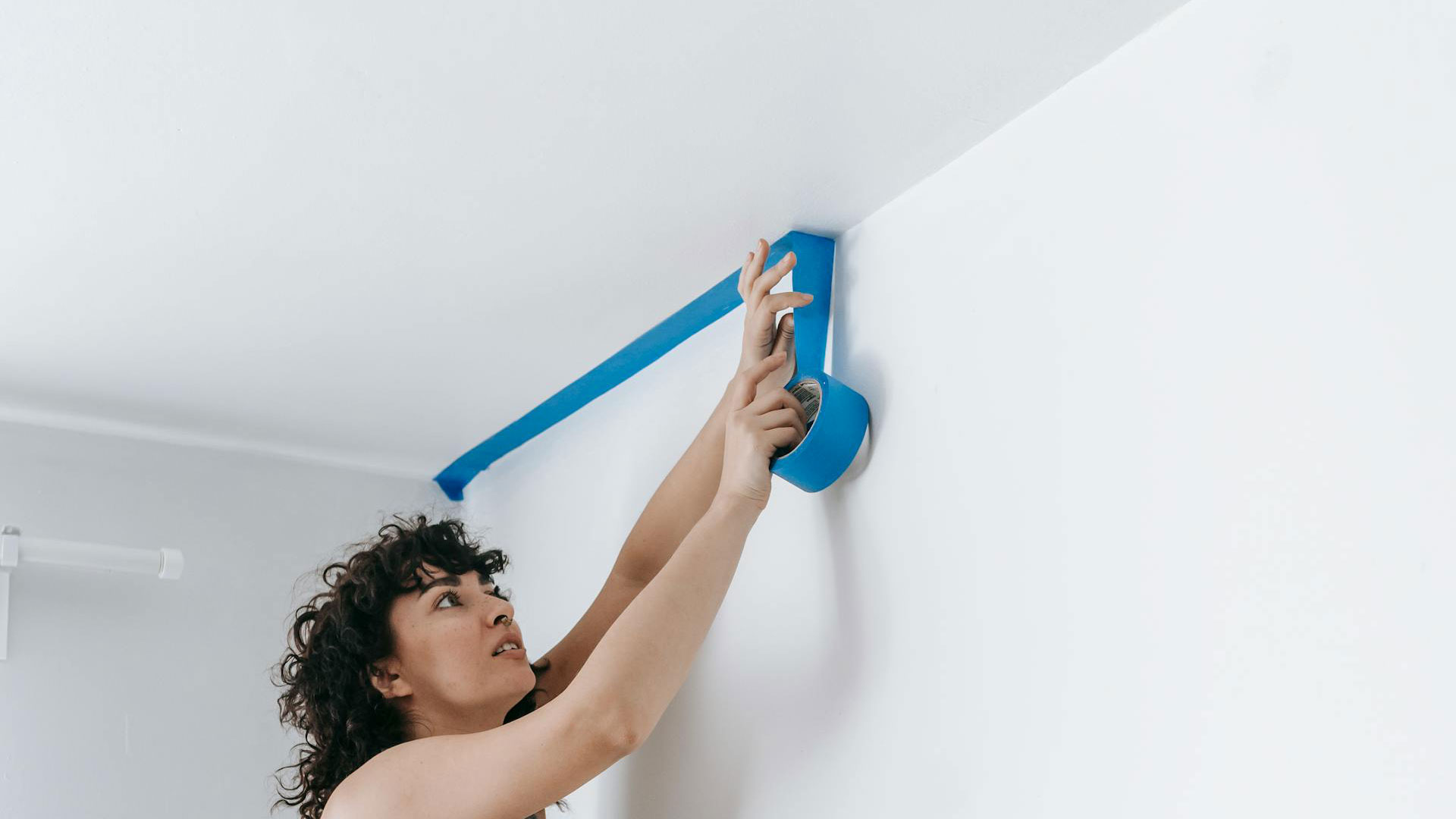
A stock image related to Wall painting masking tape.
3 Common User Pain Points for ‘Wall painting masking tape’ & Their Solutions
Scenario 1: Adhesive Residue and Surface Damage on Delicate or Freshly Coated Substrates
The Problem: In commercial renovation projects across humid climates like Vietnam or Saudi Arabia, contractors frequently encounter adhesive transfer and substrate damage when utilizing high-tack general masking tape on freshly painted drywall, coated wallpaper, or cured decorative finishes. Standard masking tapes employ aggressive natural rubber adhesives engineered for industrial holding power rather than temporary surface protection. When removed after standard 24-48 hour curing periods, these tapes can pull away underlying paint layers or leave sticky residues requiring chemical solvents and additional labor hours to remediate. This results in direct margin erosion, project delays, and potential contract penalties when working with high-value interior finishes in hospitality or corporate sectors.
The Solution: Specify crepe paper painter’s tapes formulated with low-tack, synthetic adhesives explicitly rated for “delicate surfaces” (typically color-coded yellow in premium international brands). Ensure painted substrates cure for minimum 24 hours before tape application, extending to 48 hours in high-humidity tropical environments. Conduct adhesion tests on inconspicuous areas prior to full-scale application. For bulk procurement across international markets, request technical data sheets specifying adhesion strength (measured in oz/inch width) and clean removal time windows—professional painter’s tapes typically offer 3-7 day removal windows versus 24-hour limits on standard masking products.
Scenario 2: Paint Bleeding and Edge Definition Failures in Precision Commercial Applications
The Problem: When executing color-blocking schemes, geometric patterns, or accent walls in hospitality and corporate environments, B2B buyers frequently encounter paint seepage beneath tape edges, resulting in jagged lines that necessitate costly manual touch-up work. Standard masking tape lacks the anti-bleed backing or specialized saturated crepe paper construction found in professional-grade painter’s tapes. This issue compounds in hot climates common across Middle Eastern and South American markets, where paint viscosity changes and thermal expansion create capillary action that draws pigment under improperly sealed edges. The resulting aesthetic failures compromise the crisp, architectural finishes required for high-end commercial spaces and luxury residential developments.
The Solution: Implement multi-surface painter’s tapes featuring polymer-based anti-bleed technology and apply using the “seal and lock” methodology: after positioning tape strips, run a flexible putty knife or finger firmly along edges to eliminate air pockets and ensure complete contact. Apply a thin layer of the existing wall color (or clear acrylic sealant) along the tape edge first; once this seal coat dries, apply the new color. This creates a mechanical barrier preventing new pigment from bleeding underneath. For exterior projects or areas with high solar exposure, specify UV-resistant variants that maintain edge seal integrity and adhesive stability under intense thermal cycling.
Scenario 3: Coordination Challenges with Tape Removal Timing in Multi-Phase Construction
The Problem: On large infrastructure and commercial projects across Africa, Southeast Asia, or South America where painting crews work across multiple zones simultaneously, tape removal logistics become a critical path item. Leaving tape in place beyond recommended windows—often due to unexpected drying delays, humidity fluctuations, or scheduling conflicts between trades—results in aggressive adhesive bonding that requires scraping and chemical intervention, risking permanent substrate damage. Conversely, premature removal in high-traffic commercial areas causes paint smudging and edge lifting. Standard masking tapes offer narrow removal windows (typically 24 hours), creating unacceptable rigidity in project timelines that fails to accommodate complex construction phasing or multi-shift operations common in international development projects.
The Solution: Specify extended-release painter’s tapes explicitly rated for 7-14 day clean removal without residue transfer, providing flexibility across phased construction schedules and unpredictable weather patterns. Establish standardized protocols for removal when paint is “dry to touch” (typically 30-60 minutes in ambient conditions) rather than fully cured, pulling slowly at consistent 45-degree angles away from the painted edge to prevent lifting. For procurement efficiency across diverse markets, source tapes with color-coded widths (24mm, 36mm, 48mm) and surface-specific formulations to standardize application training across international subcontractor crews, reducing technical errors and ensuring consistent finish quality across diverse labor markets.
Strategic Material Selection Guide for Wall painting masking tape
Material composition directly determines adhesion reliability, clean removal characteristics, and resistance to paint bleed—critical factors for B2B procurement teams managing large-scale projects across diverse climates. Understanding the substrate distinctions between standard crepe paper, premium washi formulations, and synthetic alternatives enables buyers to align tape specifications with surface requirements, environmental conditions, and budget constraints prevalent in regions from Southeast Asia to the Middle East.
What Are the Limitations of Standard Crepe Paper Masking Tape in Professional Painting?
Crepe paper remains the most widely procured material for general-purpose masking, characterized by its crinkled texture that provides moderate conformability to irregular edges and corners. Composed of saturated paper with natural rubber-based adhesives, this material serves primarily as surface protection for bulk covering applications and temporary fixture securing rather than precision edge masking. While cost-effective for high-volume purchases common in developing markets, crepe paper exhibits significant limitations in humid climates prevalent in Vietnam or coastal African regions, where moisture absorption can compromise adhesive integrity and increase residue transfer risks. The high-tack formulation necessary for grip on rough surfaces often results in paint pull-up upon removal, particularly on poorly cured surfaces or in high-temperature Middle Eastern environments where adhesive softening and aggressive bonding occur.
Why Does Washi Paper Deliver Superior Results for Delicate Interior Surfaces?
Washi paper, derived from renewable plant fibers including bamboo and hemp, represents the premium tier for interior wall applications requiring extended adhesion without surface damage or customer callbacks. This material features a low-tack synthetic adhesive system that maintains consistent holding power for 14–21 days while enabling clean removal from fresh paint, coated wallpaper, and delicate trim—essential characteristics for hospitality and healthcare projects where rework costs are prohibitive and surface integrity is paramount. The thin yet durable construction allows for sharp paint lines with minimal bleed-through, though procurement teams should note that washi-based tapes command significantly higher per-unit costs and may lack the tensile strength required for exterior applications or heavily textured substrates common in South American construction markets.
When Should B2B Buyers Specify PVC Film Masking Tape for Exterior Applications?
Polyvinyl chloride (PVC) film backing provides the durability necessary for exterior wall painting, stucco work, and masonry applications where paper-based alternatives deteriorate rapidly. This synthetic material resists moisture penetration and UV degradation, maintaining adhesive stability through the temperature extremes and sand exposure experienced in Saudi Arabian summers or tropical South American climates. The material’s superior conformability to rough, uneven surfaces makes it ideal for concrete and brickwork, though buyers must balance these performance benefits against environmental disposal considerations and substantially higher procurement costs. PVC tapes require careful monitoring of removal timing, as extended exposure beyond manufacturer specifications can result in adhesive transfer that necessitates solvent cleaning and additional labor costs.
How Does Flatback Paper Balance Performance and Cost for Multi-Surface Projects?
Flatback paper offers a strategic middle-ground solution for contractors, featuring a smooth, non-creped surface that delivers excellent paint line definition on cured painted walls, glass, and metal trim. Unlike textured crepe paper, flatback formulations minimize paint bleed through dense fiber construction and specialized edge-sealing adhesives, making them suitable for geometric patterns and color-blocking techniques popular in European commercial interiors and retail environments. While more expensive than standard crepe, flatback remains cost-competitive for professional painting contractors requiring reliable performance without the premium associated with washi-based products, though limited flexibility restricts application on curved architectural elements and ornate moldings.
| Material | Typical Use Case for Wall painting masking tape | Key Advantage | Key Disadvantage/Limitation | Relative Cost |
|---|---|---|---|---|
| Crepe Paper | Bulk surface protection, dust sheet securing, non-precision masking | Lowest unit cost; high availability | Risk of residue/adhesive transfer; poor humidity resistance | Low |
| Washi Paper | Delicate surfaces, fresh paint (< 30 days), high-end interiors | Clean removal; no surface damage; extended adhesion window | Premium pricing; limited exterior durability | High |
| PVC Film | Exterior masonry, stucco, rough concrete, humid climates | Weatherproof; conforms to uneven textures; UV stable | Environmental disposal concerns; adhesive transfer risk if overexposed | Medium-High |
| Flatback Paper | Sharp edge lines on cured surfaces, geometric designs | Anti-bleed performance; cost-effective precision | Inflexible on curves; moderate temperature sensitivity | Medium |
A stock image related to Wall painting masking tape.
In-depth Look: Manufacturing Processes and Quality Assurance for Wall painting masking tape
Understanding the manufacturing intricacies behind wall painting masking tape empowers B2B procurement teams to assess supplier capabilities beyond marketing claims. For distributors serving construction markets in Saudi Arabia, Vietnam, or Brazil, manufacturing quality directly correlates with product performance in extreme humidity, temperature fluctuations, and varied surface preparations. This section examines the production workflows and quality assurance protocols that separate commodity-grade masking tape from professional painter’s tape suitable for high-value commercial projects.
What Raw Materials Determine Masking Tape Performance for Professional Painting?
The foundation of superior masking tape lies in the substrate-adhesive combination selected during formulation. Crepe paper remains the industry standard for painter’s tape due to its conformability around curved moldings and textured surfaces, though flatback paper variants offer higher tensile strength for straight-line applications. Adhesive chemistry presents the critical differentiator: natural rubber-based adhesives provide aggressive initial tack ideal for unfinished wood and masonry common in African and South American construction, while acrylic emulsion adhesives offer cleaner removal and UV stability essential for Middle Eastern exterior painting projects. Release coatings applied to the backing’s reverse side prevent adhesive transfer during unwinding, with silicone-based treatments providing smoother application than polyethylene alternatives. Premium manufacturers utilize saturated crepe paper that resists moisture penetration during water-based paint applications, preventing the structural breakdown that causes tape failure and edge bleeding.
How Is Masking Tape Manufactured from Substrate to Finished Roll?
Production begins with jumbo rolls of paper substrate undergoing corona discharge treatment to increase surface energy for optimal adhesive bonding. Coating lines apply adhesive either through hot-melt extrusion for rubber-based formulations or solvent/water-based coating stations for acrylics, followed by precision drying ovens that cure the adhesive without degrading the paper backing. Temperature control during curing proves critical; insufficient heat leaves residual solvents that cause adhesive migration and paint bleed, while excessive heat embrittles the crepe paper. After cooling, the master rolls undergo calendering to ensure uniform thickness before slitting into retail widths. High-volume facilities employ automated vision inspection systems during slitting to detect adhesive voids, wrinkles, or contamination that compromise edge sealing. Final winding tension must balance secure roll formation against ease of unwinding, particularly important for tapes shipped to humid climates where excessive tightness causes blocking and adhesive transfer.
Which Quality Control Tests Ensure Consistent Adhesion and Clean Removal?
Reputable manufacturers implement multi-stage testing protocols that simulate real-world application scenarios. Peel adhesion testing measures the force required to remove tape from standardized steel panels after 24-hour dwell time, with professional-grade painter’s tape typically ranging between 3-5 N/cm for balanced holding power and clean removal. Loop tack testing evaluates initial grab strength, crucial for vertical masking applications where immediate adhesion prevents sagging on walls. Tensile strength and elongation tests ensure the tape withstands removal without tearing, particularly important for multi-day projects where tape remains applied for extended periods. Paint bleed resistance testing involves applying tape to gypsum board or cured painted surfaces, then roller-applying contrasting paint colors to verify edge definition. Accelerated aging chambers subject samples to 60°C heat and 90% humidity for 72 hours to simulate tropical storage conditions, checking for adhesive oozing or backing degradation that indicates poor formulation stability.
Why Do Manufacturing Standards Vary for Different Climate Conditions?
Regional climate variations necessitate specialized manufacturing adjustments that B2B buyers must verify when sourcing internationally. For Middle Eastern and African markets where exterior painting occurs in 40°C+ temperatures, manufacturers formulate adhesives with higher heat resistance to prevent adhesive residue transfer onto fresh paintwork. Southeast Asian and South American distributors should request tapes with enhanced moisture resistance in both adhesive and backing to prevent adhesion failure during monsoon season humidity. European markets increasingly demand low-VOC (Volatile Organic Compound) manufacturing processes compliant with REACH regulations, requiring water-based adhesive systems and solvent-free release coatings. UV-stable formulations prevent adhesive degradation during extended exposure to sunlight, critical for exterior masking tape used in construction sites without temporary weather protection. Manufacturers serving global markets typically produce climate-specific SKUs rather than universal products, allowing distributors to stock formulations optimized for local environmental stressors.
How Can B2B Buyers Verify Supplier Quality Assurance Protocols?
Procurement teams should request documentation of ISO 9001:2015 quality management systems and specific industry certifications such as ASTM D6123 for masking tape performance standards. Batch consistency documentation, including Certificate of Analysis (CoA) for each production lot, ensures adhesion values and tensile strength remain within specified tolerances across large-volume orders. For European distribution, verify REACH and RoHS compliance declarations regarding restricted substances in adhesives and backings. Request samples for independent testing including 90-degree peel tests on local substrate materials and 14-day heat aging trials to validate storage stability during ocean freight. Evaluate the manufacturer’s raw material traceability systems; vertically integrated facilities controlling crepe paper production typically offer more consistent quality than converters purchasing substrates from multiple sources. Finally, assess packaging specifications, as moisture-barrier polywrap and UV-resistant cartons prevent quality degradation during the extended transit times common in emerging market supply chains.
Practical Sourcing Guide: A Step-by-Step Checklist for ‘Wall painting masking tape’
Procuring wall painting masking tape for international distribution requires moving beyond generic commodity purchasing to performance-based specification. For B2B buyers serving contractors across humid Southeast Asian job sites, arid Middle Eastern developments, and European precision-painting markets, selecting tape that balances aggressive adhesion with clean removal prevents costly callback claims. This checklist provides procurement criteria to evaluate technical specifications, supplier capabilities, and logistics for bulk industrial orders.
How do you match tape specifications to diverse substrate requirements?
Map your inventory to surface compatibility categories rather than purchasing generic masking tape. Specify low-tack silicone adhesives for delicate surfaces—freshly cured low-VOC paints and coated wallpapers common in European renovations—versus medium-tack synthetic rubber formulations for cured painted surfaces, glass, and metal trim. Request technical data sheets quantifying adhesion strength in N/cm and backing thickness (typically 110-140 microns). Implement color-coded inventory systems (blue for multi-surface, yellow for delicate) to prevent jobsite misapplication that leads to surface damage or paint pull-off.
What edge-sealing technologies prevent paint bleeding in humid climates?
For decorative geometric patterns and color-blocking work popular in modern Saudi and Vietnamese architecture, specify painter’s tapes with polymer-based edge barriers or “paint block” technologies that gel upon contact with moisture in latex paints. Standard crepe paper allows seepage in high-humidity application environments. Verify suppliers provide anti-bleed performance data specific to water-based versus solvent-based coatings, ensuring crisp lines without touch-up labor costs on large commercial facades.
How do extreme temperatures affect adhesive stability during transit?
When sourcing for tropical climates or desert environments, specify UV-stable acrylic adhesives rated for 60°C+ container shipping temperatures and direct sun exposure on job sites. Standard rubber adhesives can degrade, causing “legging” (adhesive stringing) or permanent bonding to substrates. Request heat-aging test reports and specify storage requirements below 35°C upon delivery. This prevents inventory loss and ensures the tape releases cleanly even when applied to sun-warmed exterior walls in Middle Eastern construction phases.
What removal specifications prevent surface damage on premium finishes?
Specify “14-day clean removal” for standard projects or “60-day UV-resistant removal” for extended construction timelines common in large-scale developments. Request residue-testing documentation on local paint types—low-VOC latex popular in Europe cures differently than traditional alkyd coatings in South America. Procure tapes that support the 45-degree slow-pull removal technique without tearing, ensuring contractors can achieve professional results without damaging expensive textured finishes or faux-paint applications.
Which certifications validate consistent industrial-grade quality?
Verify ISO 9001:2015 certification and request batch-specific test reports for tensile strength (30-50 N/25mm) and elongation rates. For European and Middle Eastern markets, ensure REACH compliance and low-VOC adhesive formulations. Audit manufacturing capabilities for dust-free coating rooms and automated roll-winding tension controls that prevent “telescoping” (layer shifting) during application. Consistent adhesive coating weight—measured in grams per square meter—ensures uniform performance across thousands of linear meters.
How should bulk packaging accommodate diverse regional distribution?
Configure orders with climate-specific moisture barriers—individual shrink-wrapped rolls for humid ports, reinforced cartons for rough handling. Specify pallet patterns maximizing container cube utilization (typically 36-48 cartons per pallet). Require multilingual labeling indicating temperature sensitivity, surface compatibility icons, and removal time limits. For distributors serving multiple climate zones, negotiate SKU splits allowing regional customization rather than monolithic orders that underperform in specific environmental conditions.
A stock image related to Wall painting masking tape.
Comprehensive Cost and Pricing Analysis for Wall painting masking tape Sourcing
B2B procurement of wall painting masking tape requires understanding that unit cost rarely reflects total project expenditure. While standard crepe paper masking tape offers the lowest per-roll price point, bulk buyers must evaluate adhesive formulation, backing material durability, and surface-specific performance to avoid costly rework and labor inefficiencies. For construction and painting contractors operating across diverse climates—from humid Vietnamese job sites to arid Middle Eastern developments—selecting the appropriate grade directly impacts material waste ratios and labor hours.
How Do Material Specifications Influence Bulk Masking Tape Pricing?
Standard general-purpose masking tape utilizes rubber-based adhesives on crepe paper backing, typically costing 30-40% less than specialized painter’s grades. However, premium painter’s tape featuring flatback paper substrates and acrylic adhesives command higher prices due to superior clean-removal properties and anti-bleed edges. For B2B buyers sourcing for large-scale residential developments in Saudi Arabia or commercial projects in Brazil, the price differential between economy and professional grades often determines whether crews achieve crisp lines without touch-up labor or face expensive remediation costs.
What Volume-Based Pricing Structures Should International Buyers Expect?
Manufacturers typically structure MOQs (Minimum Order Quantities) around container loads for export markets, with 20-foot containers accommodating approximately 30,000-35,000 standard rolls. Unit prices generally drop significantly at thresholds of 5,000+ rolls, particularly for Middle Eastern and African markets where distributors consolidate shipments. Buyers should negotiate tiered pricing that accounts for seasonal raw material fluctuations—crepe paper and adhesive costs vary quarterly—and request locked-in rates for 6-12 month contracts to hedge against petrochemical price volatility affecting synthetic rubber adhesives.
Why Do Surface-Specific Tape Grades Create Cost Variations in Global Supply Chains?
Color-coded specialization—green for multi-surface, yellow for delicate surfaces, orange for gloss finishes—represents distinct manufacturing processes that impact bulk pricing. Delicate surface tapes requiring low-tack acrylic formulations typically cost 15-25% more than standard blue painter’s tape due to specialized adhesive R&D and lower production volumes. For European contractors working on heritage restoration or Vietnamese developers finishing high-end residential interiors, sourcing these premium grades from Chinese manufacturers versus regional European suppliers can mean differences of $0.40-$0.80 per roll, excluding import duties and VAT considerations.
How Can Regional Logistics and Tariffs Impact Your Total Landed Cost?
Shipping masking tape efficiently requires understanding dimensional weight versus actual weight economics. While the product is relatively lightweight, bulky rolls consume container space, making LCL (Less than Container Load) shipments from Asia to South America or Africa disproportionately expensive due to cubic meter pricing. Additionally, Middle Eastern markets often impose specific import tariffs on adhesive products classified under HS Code 3919, ranging from 5-15% depending on country-specific trade agreements. Smart buyers factor in these landed costs when comparing ex-factory prices from Chinese manufacturers against regional European or Middle Eastern suppliers who may offer duty-free advantages under specific trade blocs.
Alternatives Analysis: Comparing Wall painting masking tape With Other Solutions
For B2B procurement teams managing large-scale painting contracts, selecting the right surface protection method directly impacts project timelines, labor costs, and final finish quality. While general-purpose wall painting masking tape offers an accessible entry point for basic coverage, specialized alternatives often deliver superior ROI through reduced rework and material efficiency. This analysis examines how standard masking tape compares against two primary alternatives: premium multi-surface painter’s tapes and liquid masking compounds, helping buyers optimize sourcing decisions for diverse operational environments ranging from humid Southeast Asian climates to dust-prone Middle Eastern construction sites.
Comparison Table: Wall Painting Masking Tape vs. Alternative Solutions
| Comparison Aspect | Wall Painting Masking Tape | Specialized Painter’s Tape | Liquid Masking Compounds |
|---|---|---|---|
| Adhesive Technology | High-tack rubber-based; aggressive bonding | Low-to-medium tack synthetic; calibrated release | N/A (forms chemical film barrier) |
| Edge Precision | Prone to paint bleed; requires manual sealing | Anti-bleed edges; crisp lines without additional sealing | Perfect edges; zero bleed potential |
| Surface Compatibility | Uncured painted surfaces, wood, metal (risk of damage) | Delicate surfaces, cured paint, glass, textured drywall | Irregular surfaces, intricate moldings, curved glass |
| Application Speed | Fast manual application | Fast manual application | Slow (requires coating and drying time) |
| Labor Cost Impact | Moderate (risk of rework from bleeding/residue) | Low (reduces touch-ups and cleaning) | High (labor-intensive application and removal) |
| Material Cost Index | $ (Baseline) | $$ (20-40% premium over standard) | $$$ (Significantly higher per square meter) |
| Removal Characteristics | Peel at 45°; risk of residue and paint lifting | Peel at 45°; residue-free within 14 days | Peel or wash off; zero substrate damage |
| Climate Suitability | Moderate humidity resistance; edge curling in heat | High humidity/UV resistance; stable in extreme temperatures | Excellent for all climates; unaffected by humidity |
When should B2B buyers choose specialized painter’s tape over general masking tape?
Specialized painter’s tape—often identified by its blue, green, or yellow coloring—represents the most strategic upgrade from standard masking tape for professional contracting teams managing high-visibility projects. Unlike general-purpose masking tape that utilizes high-tack rubber adhesives potentially damaging to fresh paint or delicate wallpapers, these engineered solutions feature synthetic adhesive formulations specifically calibrated for clean removal within 14-day windows without surface marring. For procurement managers in markets like Saudi Arabia or Vietnam where high humidity accelerates adhesive degradation, multi-surface painter’s tapes offer UV-stable crepe paper backing that prevents edge curling during extended outdoor exposure. While unit costs run 20-40% higher than basic masking tape, the elimination of rework costs from paint bleed and surface damage typically yields net savings on commercial projects exceeding 5,000 square meters, particularly when contracting decorative color-blocking or working with surfaces painted within the previous 24 hours.
Are liquid masking compounds cost-effective alternatives for industrial painting projects?
Liquid masking compounds—brushable or sprayable latex-based coatings that dry into peelable films—serve as the optimal alternative when adhesive tapes fail to conform to complex geometries or delicate historical substrates. In industrial facilities across Africa and South America, these solutions prove invaluable for protecting intricate window grids, curved architectural elements, or textured stucco where tape adhesion proves inconsistent and risks substrate damage upon removal. The application requires significantly higher labor investment, as surfaces must be coated, allowed to dry (typically 30-60 minutes), and then carefully peeled, making them cost-prohibitive for simple linear masking applications. However, for B2B buyers managing heritage restoration projects or automotive painting facilities where zero-residue removal is non-negotiable, liquid maskants eliminate the risk of paint lifting entirely. Procurement teams should reserve these compounds for specialized subcontractor use rather than standard wall painting operations, purchasing in bulk 5-liter containers to reduce per-project material costs while ensuring compatibility with local environmental regulations regarding volatile organic compounds (VOCs).
Essential Technical Properties and Trade Terminology for Wall painting masking tape
For B2B procurement teams and painting contractors sourcing across diverse climates—from Saudi Arabia’s extreme heat to Vietnam’s tropical humidity—understanding material specifications ensures project success and minimizes costly callbacks. The following technical properties and trade terminology provide the necessary framework for evaluating supplier specifications and ensuring compatibility with regional application demands.
What Are the Critical Technical Specifications for Wall Painting Masking Tape?
Adhesion Level (Tack): Measured in ounces per inch, this determines surface compatibility and removal characteristics. High-tack formulations (typically 25–35 oz/inch) suit cured painted surfaces and wood trim, while low-tack variants (15–20 oz/inch) prevent damage on delicate surfaces like fresh paint or coated wallpaper. For Middle Eastern markets where ambient temperatures increase adhesive flow, specifying moderate-to-high tack prevents edge lifting while ensuring residue-free removal within the specified timeframe.
Temperature Resistance: Critical for storage integrity and application performance in hot climates. Premium masking tapes withstand application temperatures from 60°C to 80°C (140°F–176°F) without adhesive transfer or backing degradation. This specification prevents tape failure during exterior painting projects in regions where direct sun exposure elevates surface temperatures beyond standard tape tolerances.
UV Resistance: Defines the duration tape can remain exposed to sunlight without adhesive degradation or backing embrittlement. Standard grades offer 3-day UV resistance, while premium exterior grades provide 14-day clean removal even after prolonged sun exposure. This prevents the “stuck tape” scenario requiring razor-blade removal and substrate damage.
Backing Material Caliper: Measured in mils (thousandths of an inch), crepe paper thickness ranges from 4.5 to 7.0 mils. Thicker backings provide better conformability for textured walls and prevent paint bleed through tape edges, while thinner profiles offer precision on glass and metal surfaces common in modern architectural finishes.
Elongation Percentage: Indicates flexibility for curved architectural elements. Professional grades offer 5–10% elongation, allowing the tape to follow crown molding contours and architraves without wrinkling or lifting at edges, ensuring continuous protection against paint seepage.
What Industry Terminology Should B2B Buyers Know When Sourcing Masking Tape?
Paint Bleed: Refers to paint seeping beneath tape edges, causing ragged lines and touch-up work. Anti-bleed technologies include edge-sealing adhesives or polymer backings that create micro-barriers against liquid paint penetration, essential for achieving crisp lines in color-blocking applications.
Clean Removal Time: The maximum duration tape can remain adhered before leaving residue or damaging substrates. Interior grades typically allow 3-day removal windows, while exterior grades extend to 14 days. Exceeding this window results in adhesive transfer requiring solvent cleanup and potential surface damage.
Delicate Surface Specification: Industry classification for low-tack adhesives designed for surfaces painted within 24 hours or coated wallpaper. Using standard-tack tape on these surfaces causes “pull-off,” where substrate material removes with the tape, necessitating costly repainting.
Creped Paper Backing: The wrinkled texture that provides conformability to irregular surfaces. “Flatback” alternatives offer smoother profiles for laser-sharp lines on glass and metal but provide less flexibility on textured drywall or stucco finishes.
Solvent Resistance: The tape’s ability to withstand contact with paint thinners, mineral spirits, and modern low-VOC solvents without adhesive breakdown. Critical for faux finishing and multi-step coating processes where tape must remain in place through various chemical applications.
Wet Peel Strength: Measures adhesion integrity when exposed to humidity or wet paint environments. High wet peel strength prevents edge lifting in tropical climates or during water-based paint applications, ensuring protection remains intact throughout the coating process.
Navigating Market Dynamics and Sourcing Trends in the Wall painting masking tape Sector
What Are the Emerging Trends Shaping the Wall Painting Masking Tape Market?
The global wall painting masking tape sector is undergoing significant specialization, moving beyond generic utility tapes toward engineered solutions designed for specific surface interactions. B2B buyers across Africa, South America, the Middle East, and Europe are increasingly transitioning from traditional high-tack masking tape to specialized painter’s tape formulations that prevent substrate damage and paint bleed-through. This shift is particularly pronounced in rapidly developing markets like Vietnam and Saudi Arabia, where large-scale infrastructure and real estate projects demand consistent, professional-grade line definition across diverse substrates including cured painted surfaces, glass, metal trim, and delicate wallpaper.
Regional climate variations are driving demand for tapes with enhanced adhesive stability. In high-humidity environments typical of Southeast Asia, moisture-resistant acrylic adhesives prevent edge lifting during extended paint curing periods, while Middle Eastern buyers require UV-stable formulations that withstand intense heat without leaving residue on exterior trim. Manufacturers are responding with color-coded categorization systems—green for multi-surface applications, yellow for delicate freshly painted walls, and orange for gloss and satin finishes—that simplify inventory management for distributors serving multiple market segments simultaneously.
Technological innovation in edge-sealing represents another critical market trend. Advanced painter’s tapes now incorporate polymer technologies that react with latex paint to form micro-barriers, eliminating the need for manual edge-sealing techniques while ensuring crisp lines on textured surfaces. For B2B buyers, this translates to reduced labor costs and improved project timelines, particularly valuable in commercial painting contracts where efficiency directly impacts profitability. Procurement teams are increasingly specifying these high-performance variants for large-scale developments, recognizing that superior adhesion control and clean removal properties minimize costly rework and surface remediation.
Procurement patterns are simultaneously shifting toward bulk consolidation strategies. International buyers are recognizing that while premium painter’s tape commands higher unit costs than commodity masking tape, the total cost of ownership decreases significantly when accounting for reduced rework, faster application times, and elimination of surface damage repairs. Professional contractors are adopting standardized application protocols that maximize tape efficiency: utilizing short strip techniques for irregular edges, ensuring surface preparation with microfiber cleaning, and removing tape at 45-degree angles while paint remains tacky to prevent bridging and chipping.
How Is Sustainability Transforming B2B Sourcing Strategies for Masking Tapes?
Sustainability has evolved from a marketing differentiator to a fundamental procurement requirement in the B2B masking tape sector. European buyers now mandate compliance with REACH regulations and low-VOC (Volatile Organic Compound) certifications, while markets across Africa and South America increasingly prioritize suppliers demonstrating sustainable forestry practices for natural rubber adhesives and recycled content in paper backings. This environmental accountability extends beyond product composition to encompass packaging reduction and carbon-neutral logistics options, with leading distributors offering bulk packaging solutions that minimize plastic waste compared to individual retail packaging.
Ethical sourcing considerations now encompass the entire value chain, from raw material extraction to manufacturing facility standards. B2B purchasers should verify suppliers’ adherence to SA8000 or equivalent social accountability standards, ensuring fair labor practices in tape conversion facilities. For buyers in the Middle East and North Africa, where large government contracts dominate the construction sector, Environmental Product Declarations (EPDs) are becoming prerequisite documentation for bid eligibility, particularly for projects seeking LEED or Estidama sustainability certifications. Digital traceability tools, including blockchain-verified supply chains, are emerging as valuable due diligence instruments for verifying claims regarding renewable content and ethical labor practices.
Waste reduction strategies are gaining prominence in B2B procurement specifications. Forward-thinking buyers are requesting take-back programs for used tape backing materials, supporting circular economy initiatives that convert post-industrial crepe paper waste into secondary raw materials. Additionally, the shift toward water-based adhesives from solvent-based systems reduces hazardous waste generation at project sites, addressing increasingly stringent environmental regulations in urban centers across Europe and the Middle East.
The economic calculus of sustainable procurement has shifted favorably for bulk buyers. While eco-friendly painter’s tapes utilizing solvent-free adhesives and recyclable crepe paper historically commanded significant premiums, economies of scale in manufacturing have narrowed this gap. Furthermore, the risk mitigation value of sustainable sourcing—protecting against supply disruptions from environmental regulatory changes and meeting corporate ESG
Frequently Asked Questions (FAQs) for B2B Buyers of Wall painting masking tape
What is the difference between masking tape and painter’s tape for professional wall painting?
Painter’s tape is engineered specifically for clean paint line applications, featuring low-tack adhesive formulations that prevent surface damage and anti-bleed edges that create crisp boundaries. Standard masking tape utilizes rubber-based adhesives designed for general holding power rather than clean removal, often leaving residue or pulling fresh paint when stripped. For commercial contractors, painter’s tape reduces rework costs and labor time, while masking tape suits only preliminary protection tasks like securing drop cloths rather than edge masking.
How long can masking tape stay on walls before leaving residue?
Standard masking tape should not remain on painted surfaces longer than 24 hours in temperate conditions, while professional painter’s tapes can typically stay adhered for 14 to 30 days without adhesive transfer. In hot climates common across the Middle East and South America, heat accelerates adhesive bonding, requiring removal within 8 to 12 hours for masking tape and 7 to 14 days for painter’s variants. B2B buyers should specify UV-resistant formulations for exterior projects, as sun exposure degrades backing integrity and increases residue risks exponentially.
What width masking tape do contractors use for commercial wall painting?
Commercial contractors typically stock 24mm, 36mm, and 48mm widths for standard interior work, with 72mm and 100mm rolls reserved for floor protection and skirting board masking. Narrow 12mm widths serve detailed trim work and geometric patterning, while jumbo rolls of 50mm+ reduce changeover frequency on large-scale developments. When sourcing for diverse project portfolios, buyers should verify that suppliers offer consistent adhesive formulations across all widths to prevent compatibility issues when tapes overlap.
Is masking tape or painter’s tape better for protecting walls in large-scale painting projects?
Painter’s tape delivers superior ROI for large-scale projects despite higher per-roll costs, as it eliminates the labor expenses associated with touch-ups and residue removal that plague masking tape applications. Masking tape may suffice for rough protection during construction phases, but for final coat precision—particularly with premium paints and delicate surfaces—specialized painter’s tape prevents costly callbacks. B2B procurement teams should calculate total project cost including potential rework rather than comparing unit prices alone.
How do I select the right adhesive strength for different wall surfaces in commercial projects?
Match adhesive strength to surface porosity and paint cure time: low-tack (often color-coded yellow or pink) for freshly painted walls within 24 hours of curing, medium-tack (blue or green) for cured painted drywall and wood trim, and high-tack (orange or red variants) for textured concrete, brick, or exterior masonry. Delicate surfaces like coated wallpaper or fresh plaster require specialized low-adhesion formulations to prevent substrate damage. Request sample rolls for adhesion testing on your specific surface portfolio before committing to bulk orders.
What temperature and humidity specifications should I verify for masking tape in hot climates?
Specify tapes rated for application temperatures between 5°C and 60°C with high-tack variants capable of withstanding surface temperatures up to 80°C for exterior Middle Eastern or tropical applications. Humidity resistance proves critical in Southeast Asian and South American markets—seek moisture-resistant crepe paper backings that prevent adhesive degradation in 80%+ relative humidity. Verify that the manufacturer provides technical data sheets confirming performance across your target regions’ climate extremes rather than standard temperate zone ratings.
How should bulk shipments of masking tape be stored to maintain adhesive quality during international transport?
Store masking tape horizontally in climate-controlled environments between 15°C and 25°C with relative humidity below 60% to prevent adhesive migration and backing deformation. Avoid stacking pallets above 1.5 meters to prevent edge crushing that causes “telescoping” rolls and application jams. For sea freight shipments to humid ports, require moisture-barrier packaging with desiccant packs, and implement first-in-first-out inventory rotation to utilize stock within 18 months of manufacture while adhesive remains optimal.
What certifications or standards should B2B buyers look for when sourcing painter’s tape for export markets?
Prioritize suppliers holding ISO 9001 quality management certifications and REACH compliance for European markets, with additional VOC emission certifications (such as French A+ or German Blue Angel) for environmentally sensitive projects. For Middle Eastern exports, verify SASO conformity for adhesive products, while African markets often require SONCAP or equivalent standards compliance. Request batch consistency guarantees and adhesive composition transparency to ensure every container matches sample specifications, preventing project delays from quality variance.
Important Disclaimer & Terms of Use
⚠️ Important Disclaimer
The information provided in this guide, including content regarding manufacturers, technical specifications, and market analysis, is for informational and educational purposes only. It does not constitute professional procurement advice, financial advice, or legal advice.
B2B buyers must conduct their own independent and thorough due diligence before making any purchasing decisions. The risk of relying on any information in this guide is borne solely by the reader.
Top 3 Wall Painting Masking Tape Manufacturers & Suppliers List
1. 3M – Painting Masking Tapes

Domain: researchandmarkets.com
Registered: 2002 (24 years)
Introduction: Key product details extracted from the analysis include: 3M Company offers painting masking tapes with clean-line removal, dimensional stability, and compatibility with conventional and low-VOC coatings for automotive, industrial, and construction applications. Nitto Denko Corporation specializes in biodegradable and low-emission adhesive technologies with superior conformability and high-temperat…
2. iTape – Consumer Masking Tapes
Domain: itape.com
Registered: 1998 (28 years)
Introduction: PG21 Consumer: High Temp Lacquer-Resistant Masking Tape; beige fine crepe paper; pressure-sensitive rubber/resin adhesive; clean removal after oven temperatures up to 325°F (163°C) for 30 minutes; performs well in wet strip applications. PG29 Consumer: Low Tack Masking Tape; beige fine crepe paper; low tack synthetic rubber/resin adhesive; non-printable release coat; resists paint flaking; clean p…
3. Tape Suppliers – Masking Tape
Domain: tapesuppliers.com
Registered: 2007 (19 years)
Introduction: Masking tape is a pressure-sensitive adhesive tape invented in 1925 for the automotive industry to paint two-toned cars. It temporarily conceals and protects surfaces during finishing processes including soldering, blasting, spraying, coating, plating, and polishing. Key characteristics include easy tear and dispense properties, clean removal without residue, and surface-safe adhesion that doesn’t…
Strategic Sourcing Conclusion and Outlook for Wall painting masking tape
How Can B2B Buyers Optimize Long-Term Value in Masking Tape Procurement?
The shift from commodity masking tape to specialized painter’s tapes—featuring anti-bleed technology and surface-specific formulations—represents a critical evolution in procurement strategy. For international buyers operating across diverse climates, from Southeast Asian humidity to Middle Eastern heat extremes, selecting tapes with climate-resistant adhesives prevents costly substrate damage and rework. While premium products command higher unit costs, their ability to deliver crisp lines on delicate surfaces and clean removal without residue significantly reduces total project costs and labor time.
What Regional and Sustainability Factors Should Guide Future Sourcing?
Looking ahead, successful sourcing strategies must account for regional application standards and environmental conditions. Suppliers offering bulk procurement options with technical guidance on proper edge-sealing techniques—such as brushing underlying paint colors along tape borders—maximize efficiency and minimize waste. Additionally, partnering with manufacturers committed to sustainable production and consistent cross-regional quality ensures that construction teams from Saudi Arabia to Vietnam can execute flawless finishes while meeting increasingly stringent environmental compliance standards.