Introduction: Navigating the Global Market for Craft masking tape
Sourcing craft masking tape for bulk creative manufacturing presents unique procurement challenges that extend far beyond simple adhesive selection. For international buyers operating in emerging markets—from Vietnam’s bustling craft export hubs to Brazil’s expanding DIY retail sectors—navigating supplier reliability, material consistency, and cost-efficiency requires strategic insight. The global craft tape market offers diverse solutions ranging from premium washi paper backings to industrial-grade crepe paper varieties, yet quality disparities and logistical complexities often hinder optimal purchasing decisions.
What challenges do global buyers face when sourcing craft masking tape supplies?
International procurement teams across Africa, South America, and the Middle East frequently encounter inconsistent product specifications, temperature resistance failures, and adhesive residue issues that disrupt manufacturing workflows. Whether supplying automotive refinishing operations in Europe or artisan craft workshops in São Paulo, understanding the distinction between rubber-based, acrylic, and silicone adhesives becomes critical for preventing costly production delays and ensuring clean removal properties on diverse substrates.
How does this guide optimize your international craft masking tape procurement?
This comprehensive resource examines material specifications including crepe paper flexibility versus washi tape precision, evaluates supplier vetting protocols for cross-border transactions, and analyzes cost structures affecting bulk orders from Asian manufacturing centers to Latin American distribution networks. By addressing region-specific compliance requirements, shipping logistics, and quality assurance methodologies, we equip buyers with actionable frameworks to secure reliable supply chains, negotiate favorable terms, and select technically appropriate masking solutions for applications ranging from precision painting to decorative crafting.
Understanding Craft masking tape Types and Variations
| Type Name | Key Distinguishing Features | Primary B2B Applications | Brief Pros & Cons for Buyers |
|---|---|---|---|
| Standard Crepe Paper Masking Tape | Crinkled paper backing, rubber-based adhesive, easy hand-tearability, beige/natural color | General crafting, temporary holding, surface protection in workshops, bundling lightweight materials | Pros: Cost-effective, versatile, strong initial tack. Cons: Potential residue on delicate surfaces, limited UV resistance |
| Washi Paper Masking Tape | Flat, thin rice paper backing, low-tack acrylic adhesive, repositionable, often decorative | Premium scrapbooking, artist supplies, clean-edge painting, temporary décor adhesion | Pros: Clean removal, conforms to curves, minimal bleed-through. Cons: Higher unit cost, lower adhesion on rough surfaces |
| Colored Masking Tape (Craft Grade) | Pigmented crepe or flat paper backing, vibrant color options, writable surface | Educational supplies, color-coding systems, retail packaging accents, event decoration | Pros: Visual organization, brand customization, instant recognition. Cons: Color fading in sunlight, adhesive quality varies by manufacturer |
| High-Temperature Resistant Masking Tape | Silicone or specialized acrylic adhesive, crepe or polyimide backing, heat stability up to 150°C+ | Industrial crafting, thermal spray masking, embossing processes, automotive touch-up crafts | Pros: Withstands heat guns, no adhesive transfer under heat. Cons: Premium pricing, overkill for room-temp applications |
What distinguishes standard crepe paper masking tape for bulk craft manufacturing?
Standard crepe paper masking tape remains the backbone of craft supply chains due to its crinkled texture that conforms to irregular surfaces while maintaining structural integrity. The rubber-based adhesive provides immediate tack suitable for temporary bonding of paper, cardboard, and lightweight wood substrates. For B2B buyers sourcing for educational institutions or general craft distributors, this type offers optimal cost-efficiency in high-volume orders. However, procurement teams should verify adhesive aging properties, as lower-grade formulations may harden and become difficult to remove in tropical storage conditions common in African and Southeast Asian markets. Bulk purchasers should also evaluate the tape’s tensile strength, as insufficient durability leads to tearing during automated unwinding processes, causing production delays in high-volume craft kit manufacturing.
Why choose washi paper masking tape for premium artistic applications?
Washi paper masking tape utilizes traditional Japanese paper-making techniques to create an exceptionally thin yet durable backing that leaves zero residue upon removal. Its acrylic adhesive system allows for multiple repositionings without surface damage, making it ideal for fine art suppliers and scrapbooking manufacturers serving discerning European and Middle Eastern markets. B2B purchasers should prioritize suppliers offering consistent roll lengths and adhesive coating uniformity, as these factors directly impact automated dispensing efficiency in craft kit assembly lines. The premium positioning of washi tape commands higher margins but requires climate-controlled warehousing to prevent humidity-induced curling. Additionally, washi tape’s compatibility with solvent-based inks makes it suitable for custom printing operations, allowing distributors to offer private-label decorative tape lines with minimal equipment investment.
How does colored masking tape support visual merchandising and educational sectors?
Colored masking tape transforms functional adhesive products into organizational and decorative tools through pigmented backings that accept ink and resist fading under indoor lighting. This variation serves B2B niches including school supply distributors, workshop organizers, and retail display manufacturers requiring color-coding capabilities without permanent commitment. When sourcing bulk quantities, buyers must request batch consistency reports to ensure color uniformity across large orders, particularly critical for Brazilian and Vietnamese manufacturing clients producing coordinated craft collections. The writable surface adds value for inventory management applications beyond traditional crafting uses. Sourcing from manufacturers with ISO 9001 certification ensures that pigment dispersion remains consistent across production runs, preventing the patchy appearance that damages brand reputation in competitive craft markets.
When should B2B buyers specify high-temperature resistant masking tape for craft applications?
High-temperature resistant masking tape incorporates silicone or specialized acrylic adhesives that maintain structural integrity when exposed to heat guns, embossing tools, or accelerated drying processes up to 150°C. This specification proves essential for craft manufacturers producing mixed-media art supplies or automotive craft kits where thermal processing occurs. Middle Eastern and European industrial craft sectors particularly demand this variant for powder-coating adjacent operations and thermal spray masking. Procurement specialists should verify temperature ratings through independent testing, as substandard products may leave adhesive residue or backing fiber contamination when subjected to sustained heat, compromising finished product quality. Buyers should also confirm the backing material’s anti-static properties, as electrostatic buildup in dry climates can cause tape to cling to machinery, reducing packaging efficiency in automated fulfillment centers.
Key Industrial Applications of Craft masking tape
| Industry/Sector | Specific Application of Craft masking tape | Value/Benefit for the Business | Key Sourcing Considerations for this Application |
|---|---|---|---|
| Furniture Manufacturing & Restoration | Creating faux wood grain finishes on metal/plastic substrates; protecting delicate inlays during staining and refinishing | Enables cost-effective upcycling of materials; eliminates need for expensive wood veneers; provides reversible customization for rental furniture markets | Low-residue adhesive essential for temporary applications; tearability for organic patterns; compatibility with water-based and oil-based stains |
| Automotive Customization & Refinishing | Masking intricate curves for two-tone paint schemes; protecting chrome trim during detail work; creating custom graphic stencils | Reduces labor costs in custom paint shops; allows complex designs without permanent commitment; protects high-value vehicle components from overspray | High-temperature resistance for baking cycles; clean removal without ghosting; conformability to compound curves |
| Premium Packaging & Gift Manufacturing | Temporary bonding for handmade box assembly; decorative accent lines on luxury packaging; sealing prototype designs | Accelerates prototyping cycles; enables low-volume custom packaging without die-cutting equipment; enhances perceived value through handcrafted details | Writable surface for batch coding; repositionable adhesive for alignment adjustments; acid-free composition for archival storage |
| Construction & Decorative Finishing | Masking for faux finish techniques (sponging, rag rolling); protecting hardware during renovation; creating geometric accent walls | Reduces skilled labor time by 30-40% for decorative painters; prevents costly damage to fixtures; enables complex multi-color schemes | UV resistance for extended outdoor exposure; compatibility with latex and acrylic paints; easy hand-tearability for field applications |
| Arts & Crafts Production | Kit assembly alignment; temporary holding during adhesive curing; resist patterns for textile and paper dyeing | Prevents damage to delicate craft materials; supports diverse creative techniques; reduces material waste in high-volume manufacturing | Acid-free composition for archival safety; consistent roll-to-roll quality; bulk packaging for cost efficiency |
How Does Craft Masking Tape Enable Cost-Effective Faux Wood Finishing in Furniture Manufacturing?
In furniture manufacturing and restoration operations across Vietnam and Brazil, craft masking tape serves as a cost-effective medium for creating convincing faux wood grain finishes on metal, plastic, or composite substrates. By layering torn tape pieces and applying stains or paints, manufacturers can simulate expensive hardwood veneers without material costs or permanent alteration, making it ideal for upcycling operations and rental furniture markets where reversibility is commercially valuable. Buyers must prioritize low-tack, residue-free formulations that withstand water-based and oil-based staining processes while protecting delicate refurbished surfaces from adhesive damage during removal.
What Role Does Craft Masking Tape Play in Automotive Customization and Refinishing?
Automotive customization workshops throughout the Middle East and Europe rely on craft masking tape for intricate two-tone paint schemes, chrome trim protection, and custom graphic stenciling on luxury and commercial vehicles. The tape’s superior conformability to compound curves and clean-release properties prevent ghosting and edge bleed on high-gloss finishes, significantly reducing costly rework in premium paint shops. For B2B buyers, selecting tapes with high-temperature resistance becomes critical when protecting components during baking cycles, while ensuring compatibility with aggressive solvents used in automotive refinishing processes maintains workflow efficiency.
Why Do Premium Packaging Manufacturers Choose Craft Masking Tape for Prototype Development?
Premium packaging manufacturers in emerging African and South American markets utilize craft masking tape for rapid prototyping of luxury gift boxes, temporary bonding during handmade assembly, and creating decorative accent lines on limited-edition packaging. The writable paper surface enables efficient batch coding and quality control during small production runs, while repositionable adhesives allow precise alignment without damaging expensive decorative papers. This capability eliminates capital investment in die-cutting equipment, enabling businesses to offer bespoke packaging solutions and artisanal gift wrapping services that command premium pricing in competitive export sectors.
How Can Construction Contractors Leverage Craft Masking Tape for Decorative Finishing?
Construction and renovation contractors across diverse climates employ craft masking tape for advanced decorative finishing techniques including sponging, rag rolling, and geometric accent walls in commercial hospitality and residential projects. The tape’s hand-tearability facilitates quick field application without specialized cutting tools, while UV-resistant formulations prevent adhesive degradation during extended outdoor exposure common in Middle Eastern and South American environments. This application reduces skilled labor requirements by enabling consistent, professional-grade decorative finishes while protecting fixtures, hardware, and adjacent surfaces from costly damage during intensive multi-phase renovation cycles.
What Are the Industrial Applications of Craft Masking Tape in Arts and Crafts Production?
Large-scale arts and crafts producers supplying DIY markets utilize craft masking tape for kit assembly, temporary holding during gluing processes, and creating resist patterns in textile and paper manufacturing. The tape’s clean removal properties prevent damage to delicate craft materials, while its compatibility with various paints and mediums supports diverse creative applications. For international buyers, sourcing tapes with consistent roll-to-roll quality and acid-free compositions ensures archival safety for scrapbooking and memory-keeping products, while bulk packaging options reduce per-unit costs for high-volume craft supply distributors serving educational and hobby markets.
A stock image related to Craft masking tape.
3 Common User Pain Points for ‘Craft masking tape’ & Their Solutions
Scenario 1: Navigating High Minimum Order Quantities for Regional Distribution
The Problem: Mid-sized distributors in emerging markets like Vietnam or Brazil often face prohibitive minimum order quantities (MOQs) when sourcing craft masking tape directly from manufacturers. This creates significant cash flow constraints and warehouse storage challenges, particularly for businesses testing new product lines or serving niche crafting segments. Buyers frequently encounter rigid bulk requirements that don’t align with regional demand fluctuations, forcing them to either overstock inventory or pay premium prices through intermediaries.
The Solution: Partner with manufacturers offering flexible MOQ structures starting at mixed-container levels rather than full-container loads. Negotiate consolidated shipping arrangements that combine craft masking tape with complementary adhesive products to optimize freight costs. Establish quarterly purchasing agreements that allow for smaller, frequent shipments rather than bulk annual orders, enabling better inventory turnover while maintaining competitive unit pricing.
Scenario 2: Achieving Brand Differentiation Through Custom Printing Limitations
The Problem: Retail chains and private-label brands struggle to source craft masking tape with high-quality custom printing for logo placement and decorative patterns. Standard crepe paper backings often produce blurred results with traditional flexographic printing, while washi paper options capable of sharp detail come with excessive minimums that exclude mid-tier buyers. This limits market differentiation in competitive stationery and DIY retail sectors where branded craft supplies command premium shelf positioning.
The Solution: Specify washi paper backing materials for custom-branded craft tape lines, as their smooth surface accepts digital and screen printing with superior color fidelity compared to textured crepe alternatives. Work with converters offering low-volume digital printing capabilities (starting at 500-1000 rolls) for initial market testing. For industrial-scale orders, request pre-printed jumbo rolls that can be converted to retail widths locally, reducing shipping volumes and enabling just-in-time branding for seasonal craft collections.
Scenario 3: Temperature Resistance Failures in Mixed-Environment Applications
The Problem: Procurement teams frequently specify craft masking tape for applications spanning both room-temperature crafting and light industrial use, only to experience adhesive failure, residue transfer, or edge lifting when exposed to warehouse heat or shipping container temperature variations. This confusion stems from treating general-purpose craft tape interchangeably with painter’s tape or industrial masking products, resulting in product returns and damaged surface finishes during manufacturing processes.
The Solution: Specify acrylic-based adhesive formulations for craft masking tape intended for multi-environment use, as they maintain tack across temperature ranges from -10°C to 80°C without the yellowing associated with rubber-based alternatives. For applications involving brief heat exposure (such as powder coating adjacent areas or labeling near heat sources), upgrade to silicone-adhesive craft tape variants. Always request technical data sheets distinguishing between decorative craft grades and industrial masking specifications to ensure proper application matching and avoid cross-contamination in mixed-use facilities.
Strategic Material Selection Guide for Craft masking tape
When sourcing craft masking tape for international distribution, material selection directly impacts your product portfolio’s performance characteristics and market positioning across diverse climatic conditions and craft traditions. Understanding the distinct properties of each backing material enables procurement teams to align inventory with regional craft industry demands, from DIY hobbyist markets in Brazil to professional artistic supply chains in Vietnam. The substrate determines not only application performance but also storage requirements, customization capabilities, and price elasticity in competitive markets. The following analysis examines the three primary substrate options that dominate B2B craft tape procurement, evaluating their technical specifications and commercial viability for diverse market segments.
What Are the Strategic Benefits of Crepe Paper Backing for Volume Craft Applications?
Crepe paper remains the industry standard for general-purpose craft masking tape, characterized by its crinkled, creped texture that provides exceptional conformability to irregular surfaces. This material offers superior hand-tearability without requiring cutting tools, making it ideal for educational institutions and DIY markets across Africa and South America where convenience and accessibility drive purchasing decisions. The micro-creping process creates thousands of miniature folds that allow the tape to stretch and curve around cylindrical containers or textured objects—a critical feature for upcycling projects and decorative crafts popular in environmentally conscious European markets. From a supply chain perspective, crepe paper accepts various rubber-based and acrylic adhesives, allowing manufacturers to customize temperature resistance based on regional climate needs. However, the textured surface can create slight paint bleed-through during precision applications, and the material exhibits moderate temperature sensitivity that may limit its use in heated crafting techniques or tropical storage conditions without proper climate control.
Why Do Premium Craft Markets Demand Washi Paper Masking Solutions?
Washi paper, derived from traditional Japanese manufacturing using mulberry tree fibers, represents the premium tier of craft masking tape substrates increasingly sought by Middle Eastern and European distributors. Unlike standard crepe paper, washi features a flat, thin profile with exceptional tensile strength despite its delicate appearance, enabling clean removal without adhesive residue even after extended application periods. This material excels in precision crafting scenarios such as scrapbooking, journal decoration, and detailed geometric wall art where sharp paint lines and repositionability are paramount for end-user satisfaction. The smooth surface accepts solvent-based and UV printing exceptionally well, supporting private-label branding opportunities and custom pattern development for boutique craft retailers. The primary limitation involves significant moisture sensitivity and higher unit costs, which necessitate climate-controlled warehousing and position the product in higher price brackets that may limit penetration in developing markets. For B2B buyers serving upscale segments, washi paper commands superior margins and customer loyalty despite requiring more sophisticated inventory management protocols.
When Should B2B Buyers Specify Flatback Paper for Specialized Craft Industrial Use?
Flatback paper provides a smooth, non-creped alternative that bridges the gap between general craft and light industrial applications, offering dimensional stability that crepe paper cannot match in professional environments. This substrate eliminates the texture variations found in creped materials, creating an ideal surface for detailed labeling, stencil creation, and masking applications requiring consistent adhesive contact across the entire tape width. Flatback constructions demonstrate superior resistance to edge curling during extended storage
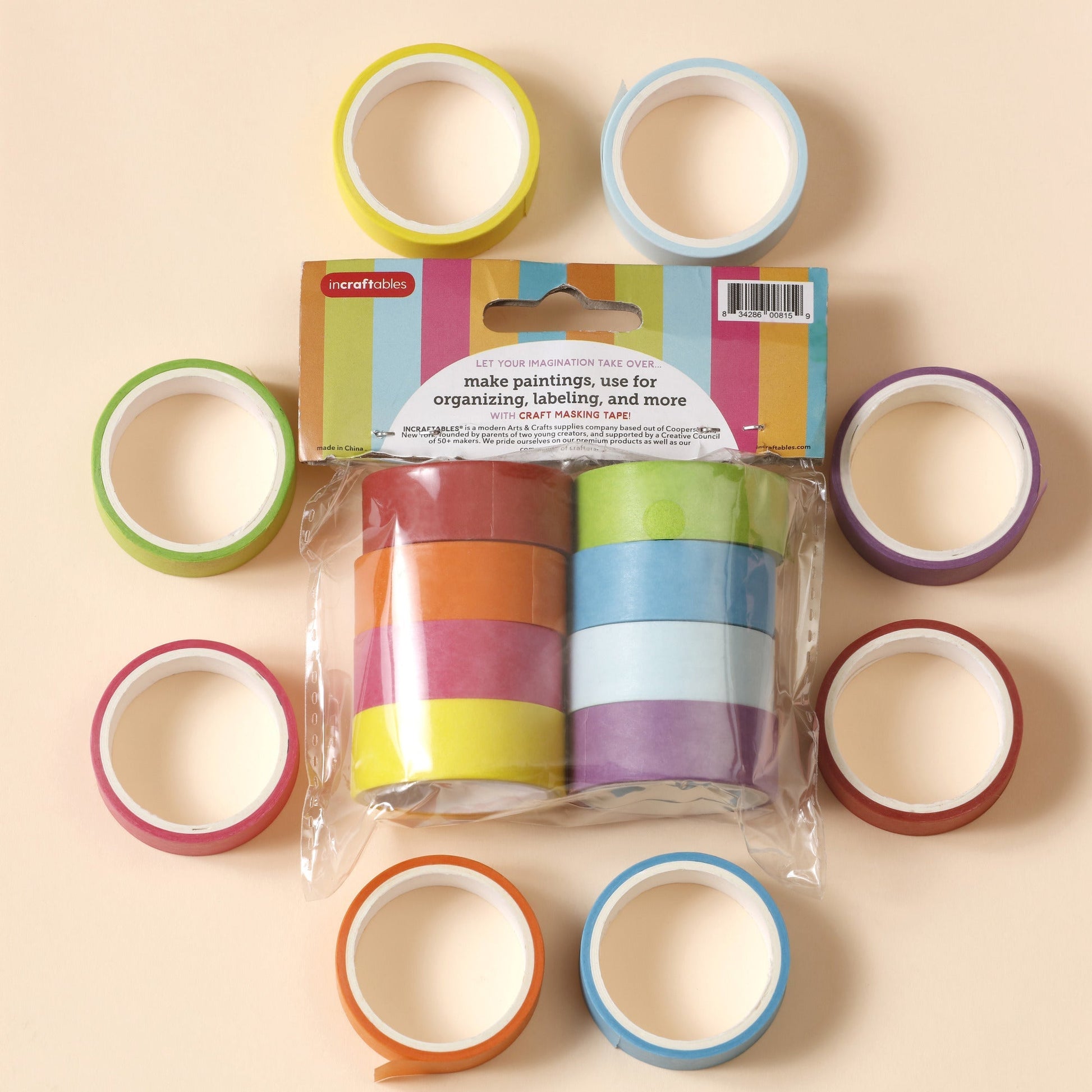
A stock image related to Craft masking tape.
In-depth Look: Manufacturing Processes and Quality Assurance for Craft masking tape
Craft masking tape serves a unique niche requiring manufacturing tolerances distinct from industrial grades. While automotive masking tapes prioritize high-temperature resistance and chemical stability, craft variants demand superior conformability, clean removability, and compatibility with water-based paints and delicate surfaces. For procurement teams sourcing from international markets, understanding these production nuances enables effective supplier assessment beyond basic specification sheets.
What Raw Materials Define Premium Craft Masking Tape?
The foundation of quality craft masking tape lies in strategic material selection for the backing substrate. Manufacturers typically choose between saturated crepe paper and washi paper, with each offering distinct performance profiles for artistic applications. Crepe paper provides excellent conformability around curved surfaces and irregular shapes, essential for three-dimensional craft projects. Washi paper, derived from natural fibers, offers superior tear resistance and creates exceptionally sharp paint lines with minimal bleeding.
Adhesive formulation represents the second critical decision point. Rubber-based adhesives dominate the craft segment due to their high initial tack and clean removal characteristics from paper, wood, and canvas surfaces. However, premium manufacturers increasingly utilize modified acrylic formulations that resist humidity-induced degradation—a crucial consideration for buyers in tropical climates across Southeast Asia, Africa, and South America. These formulations prevent the yellowing and adhesive transfer issues that compromise reversible craft projects.
How Is the Crepe Paper Backing Engineered for Craft Applications?
The manufacturing process begins with base paper saturation, where manufacturers impregnate kraft paper with latex or resin solutions to enhance moisture resistance and tensile strength. For craft-specific tapes, this saturation level typically ranges between 25-35% solids content, striking a balance between flexibility and structural integrity.
Following saturation, the paper undergoes mechanical creping, where specialized drums compress the material to create the characteristic wrinkled texture. This creping ratio—typically 15-25% elongation for craft grades—determines the tape’s ability to stretch around corners without tearing. Advanced manufacturers employ micro-creping techniques that create finer corrugations, resulting in smoother unwinding and better conformability for intricate detailing work.
The adhesive application stage utilizes either hot-melt coating or solvent-based systems. Hot-melt processing offers environmental advantages and consistent coating weights, while solvent systems provide deeper penetration into the paper fibers for enhanced anchorage. For craft applications requiring paint absorption and texture creation, manufacturers may apply patterned coatings that leave specific areas of the backing exposed.
Which Quality Control Checkpoints Ensure Consistent Performance?
Systematic quality assurance begins with incoming raw material verification. Reputable suppliers test every batch of base paper for basis weight, tensile strength, and moisture content before saturation. During coating operations, automated vision systems monitor adhesive application uniformity, ensuring coating weights remain within ±5% of specifications to prevent issues like edge bleeding or insufficient tack.
Post-coating, the material undergoes thermal curing and conditioning in climate-controlled environments. This stabilization period, typically 24-72 hours, allows adhesive cross-linking to complete and prevents subsequent oozing or edge flagging. Slitting operations require particular attention for craft widths, as narrow rolls (6mm-12mm) common in scrapbooking and detailing applications demand precision cutting to prevent telescoping and ensure clean unwinding.
How Do Manufacturers Test for Paint Bleed and Edge Definition?
Specialized testing protocols distinguish craft-grade masking tape from general-purpose alternatives. The paint bleed test involves applying tape to standardized substrates, overpainting with high-pigment acrylics or watercolors, then removing the tape after specific cure times. Quality manufacturers specify bleed resistance ratings based on paint viscosity and application pressure, typically testing with both student-grade and professional heavy-body paints.
Removability testing extends beyond the standard 24-hour removal window. For craft applications, manufacturers conduct 7-day and 14-day adhesion tests to simulate long-term project timelines, ensuring adhesive releases cleanly without fiber tear or ghosting on sensitive papers and finished wood. UV resistance testing becomes critical for tapes intended for outdoor craft applications or window display work, preventing adhesive degradation during extended exposure.
What Customization Options Should Bulk Buyers Request?
B2B procurement teams should evaluate manufacturers’ flexibility regarding specifications tailored to regional market preferences. Width customization represents a primary consideration, as craft markets show significant regional variation—Asian markets often prefer metric widths (6mm, 12mm, 18mm), while European and American buyers frequently request imperial equivalents (¼-inch, ½-inch, ¾-inch).
Color matching capabilities enable private-label opportunities, with Pantone-matched backings supporting brand differentiation in the competitive craft supply sector. Core customization options include printed cores for retail visibility, extended cores for dispenser compatibility, or eco-friendly cardboard alternatives addressing sustainability mandates in European markets. Additionally, request samples with varying adhesive coat weights to match specific climate conditions, as high-humidity environments require more aggressive tack formulations than arid regions.
How Can International Buyers Verify Manufacturing Standards?
When sourcing from overseas suppliers, verification of quality management systems provides essential risk mitigation. ISO 9001:2015 certification indicates systematic process control, while specific adhesive certifications (REACH compliance for European markets, RoHS for electronics-adjacent applications) ensure regulatory adherence. Request documentation of batch testing protocols and insist on pre-shipment inspection clauses covering adhesion retention, unwind force, and dimensional stability.
For buyers in tropical climates, specifically verify humidity resistance specifications and storage recommendations. Adhesives optimized for Southeast Asian manufacturing conditions may perform differently in Middle Eastern dry heat or South American high-altitude environments. Establishing clear acceptance criteria for temperature tolerance ranges and shelf-life guarantees prevents inventory degradation during international shipping cycles.
Practical Sourcing Guide: A Step-by-Step Checklist for ‘Craft masking tape’
Navigating the procurement of craft-grade masking tape requires balancing artistic performance with supply chain reliability. Whether sourcing washi paper variants for boutique scrapbooking brands or crepe paper solutions for educational supply chains, buyers must verify specifications that ensure clean removal and consistent adhesion across diverse climate conditions.
What specifications define premium craft masking tape?
Distinguish between crepe paper and washi paper backings based on your target applications. Washi paper provides superior paint line definition and repositionability for intricate stencil work, while crepe paper offers conformability for curved surfaces and textured layering techniques. Specify thickness parameters (typically 0.10mm–0.15mm), tensile strength, and temperature resistance to prevent adhesive bleed-through during tropical storage or container shipping.
How do you evaluate adhesive performance for delicate materials?
Request technical data sheets comparing rubber-based versus acrylic adhesives. For craft applications involving paper, fabric, or finished wood, prioritize low-to-medium tack formulations that release cleanly without fiber tear or surface damage. Verify UV resistance if products will face retail display lighting in Middle Eastern or South American markets, and confirm the tape maintains zero residue for 48-hour to 7-day application windows typical of DIY projects.
Which customization options enhance market differentiation?
Assess suppliers’ capabilities for private labeling, custom core printing, and specialized widths ranging from 6mm for detailed work to 50mm for surface protection. Consider washi tape variants with decorative patterns or printable surfaces for premium craft markets. Evaluate minimum order quantities for custom color matching, ensuring the factory can maintain adhesive consistency and backing alignment across production lots.
What compliance standards matter for international distribution?
Verify EN 71-3 toy safety compliance for markets involving children’s crafts, and confirm REACH certification for European distribution. For African and Middle Eastern markets, request heavy metal content reports and humidity stability documentation. Ensure adhesives meet FDA 21 CFR 175.105 standards if applications include food-contact decorative packaging or kitchen crafting supplies.
How should packaging accommodate tropical and variable climates?
Specify moisture-barrier shrink wrapping and silica gel inserts for shipments to humid regions like Vietnam or Brazil. Request carton specifications that prevent crushing during long-haul container shipping, and verify core integrity standards to prevent tape deformation under stacking pressure. Consider individual retail blister packs versus bulk industrial rolls based on your distribution channel requirements.
How do you structure effective sample testing protocols?
Implement a three-phase testing regimen: initial adhesion tests on multiple substrates (glass, painted drywall, unfinished wood), accelerated aging tests at 40°C/75% humidity for 72 hours to simulate tropical storage, and clean-removal testing after 3-day and 7-day adhesion periods. Document edge bleed, backing strength, and adhesive transfer under high-humidity conditions before confirming bulk purchase orders.

A stock image related to Craft masking tape.
Comprehensive Cost and Pricing Analysis for Craft masking tape Sourcing
Craft masking tape procurement requires distinct cost considerations compared to industrial-grade alternatives, particularly when sourcing for decorative and DIY markets across diverse climatic zones. While automotive masking tapes command premium pricing for temperature resistance, craft-grade products prioritize clean removability and decorative finish—factors that significantly alter the cost-to-performance equation for B2B buyers in Africa, South America, the Middle East, and Europe. Understanding the granular cost drivers enables procurement teams to avoid over-specification while securing competitive landed pricing.
What Raw Material Specifications Drive Price Differentiation?
The primary cost determinants lie in backing material and adhesive chemistry. Standard crepe paper backings offer the most economical entry point, suitable for general crafting and temporary labeling, while washi paper variants command 40-60% premiums due to superior tear resistance and clean edge definition. For adhesives, natural rubber-based formulations provide cost-effective tack for room-temperature applications typical in craft use, whereas acrylic adhesives—though 15-25% more expensive—offer better humidity resistance critical for buyers in tropical markets like Vietnam and Brazil. Silicone-based adhesives, while optimal for high-heat industrial applications, represent unnecessary expenditure for craft sourcing unless specific thermal crafting techniques are involved.
How Do Volume Thresholds and Customization Impact Unit Economics?
Manufacturing economies of scale dramatically affect pricing structures. Standard widths (12mm, 18mm, 24mm) typically require minimum order quantities (MOQs) of 5,000-10,000 rolls for direct factory pricing, with 20-foot container loads (approximately 300-400 cartons) triggering 12-18% price reductions compared to LCL (Less than Container Load) shipments. Customization introduces step-costs: printed logos or patterns require cylinder engraving fees ($800-$1,200 per color) and typically double MOQ requirements to 20,000+ rolls. For emerging market distributors, negotiating “mixed container” agreements—combining multiple widths or colors—optimizes inventory diversity while maintaining bulk pricing advantages.
What Hidden Logistics and Compliance Costs Affect Total Landed Pricing?
International buyers must account for beyond-FOB expenses that vary significantly by destination region. Adhesive products often face specific import tariff classifications; craft masking tape typically falls under HTS 4811.41 or 3919.10, with duties ranging from 5-15% in Mercosur countries to 8-12% in select African markets. European buyers must factor in REACH compliance certification costs (approximately $300-$500 per product variant) and potential FSC certification premiums for sustainably sourced paper backings. Packaging optimization proves critical—standard export cartons containing 72 rolls can be reconfigured to maximize container cube utilization, potentially reducing per-unit freight costs by 8-10%. Additionally, climate-specific packaging (moisture-barrier wrapping for humid destinations) adds $0.02-$0.04 per roll but prevents adhesive degradation during transit through tropical ports.
How Can Buyers Optimize Specifications Without Overpaying?
Over-specification represents the most common procurement pitfall. Buyers sourcing for general craft applications should avoid automotive-grade specifications that inflate costs by 30-50% without adding functional value. Instead, specify “medium tack” rubber adhesives for standard applications, reserving acrylic formulations only for high-humidity climates or long-term storage applications. Requesting mill certificates for paper backing density (typically 140-160g/m² for craft grades) ensures adequate quality while avoiding premium paid for industrial-weight backings designed for automotive masking. Establishing quarterly price reviews tied to paper pulp index pricing helps mitigate volatility, while negotiating 30% prepayment/70% against B/L terms balances risk for new supplier relationships in emerging markets.
Alternatives Analysis: Comparing Craft masking tape With Other Solutions
When evaluating adhesive solutions for decorative and light industrial applications, procurement teams must balance material performance against project-specific requirements including climate resilience, substrate sensitivity, and total cost of ownership. While craft masking tape remains a staple for temporary bonding and surface transformation, alternative solutions may offer superior value depending on operational environments. Understanding the distinct material properties of these alternatives enables buyers to optimize inventory costs while ensuring application success across diverse climates and surface types prevalent in emerging markets.
| Comparison Aspect | Craft Masking Tape | Washi Paper Tape | Precision Painter’s Tape |
|---|---|---|---|
| Performance | Moderate adhesion, textured finish visible, 1-2 repositionings | Low-tack acrylic, ultra-clean removal, 10-15 repositionings | High-tack, UV resistant, 14-day clean removal, heat resistant to 120°C |
| Cost Efficiency | $ (Economical bulk pricing) | $$ (Premium decorative grade, 40-60% higher) | $$ (Industrial grade, 25-35% premium) |
| Ease of Implementation | Hand-tearable, high conformability to curves | Hand-tearable, requires delicate handling | Less conformable to complex curves, requires surface prep |
| Environmental Resistance | Moderate humidity tolerance, degrades after 3-5 days outdoor | Superior humidity/dimensional stability | Excellent UV and temperature resistance |
| Best Applications | Temporary crafting, upcycling, short-term masking | Delicate substrates, premium packaging, fine art | Automotive refinishing, construction, powder coating |
Is Washi Paper Tape the Right Choice for High-Value Decorative Applications and Sensitive Substrates?
Washi paper tape differentiates itself from standard craft masking tape through its distinctive rice paper composition and low-tack acrylic adhesive system, offering distinct advantages for B2B operations involving premium packaging, artisanal manufacturing, and fine art production. Unlike the crinkled crepe paper backing of craft masking tape—which can imprint texture onto delicate surfaces and leave moderate adhesive residue—washi tape provides an ultra-smooth, flat application ideal for handmade papers, finished woods, and temperature-sensitive plastics prevalent in boutique furniture and gift packaging industries. Procurement teams should recognize that washi tape permits repositionability up to 10-15 times without substrate degradation or adhesive transfer, whereas craft masking tape typically allows only 1-2 adjustments before compromising surface integrity. However, this performance advantage comes with logistical considerations: washi tape’s lower tensile strength demands gentler handling during automated or high-speed application processes, and its premium pricing requires strategic bulk purchasing to maintain competitive margins. For operations in Southeast Asian, South American, or Middle Eastern markets characterized by high humidity, washi tape demonstrates superior dimensional stability, resisting the edge-curling and adhesive failure that often plague standard crepe paper tapes during monsoon seasons or inconsistent warehouse climate control.
When Should Procurement Teams Specify Precision Painter’s Tape Instead of Craft Masking Tape?
Precision painter’s tape—commonly identified by blue, green, or yellow colorations—represents an engineered evolution of masking technology, featuring specialized crepe paper backings with UV-stable acrylic adhesives designed for extended outdoor exposure and high-temperature industrial processes. While craft masking tape generally tolerates temperatures up to 60°C and begins adhesive degradation after 3-5 days of environmental exposure, industrial-grade painter’s tape maintains clean removal properties for up to 14 days outdoors and withstands temperatures approaching 120°C, making it critical for automotive refinishing, powder coating, and construction applications across African and Middle Eastern markets with extreme thermal amplitudes. The material exhibits less conformability to complex curves compared to hand-tearable craft masking tape, potentially increasing labor time for intricate masking patterns, but compensates through superior edge-sealing capabilities that prevent paint bleed in critical applications. From a procurement perspective, painter’s tape commands higher unit costs than craft alternatives, yet delivers measurable total cost of ownership benefits through reduced material waste, elimination of rework costs from clean removal, and compatibility with automated tape dispensers that standard craft tapes often jam due to inconsistent roll tension. For
Essential Technical Properties and Trade Terminology for Craft masking tape
When evaluating craft masking tape for B2B procurement, technical specifications directly impact end-user satisfaction across diverse applications—from classroom art supplies to professional mixed-media studios. Unlike industrial masking tapes designed for automotive or construction environments, craft variants require specialized properties that balance adhesion precision with delicate surface compatibility.
What Technical Specifications Determine Craft Masking Tape Performance?
Backing Material Weight and Texture: Measured in grams per square meter (GSM) or microns (μm), the crepe paper density typically ranges from 140μm to 180μm for craft applications. This specific weight range provides the “hand-tearable” quality essential for organic, feathered edges in decorative projects while maintaining sufficient tensile strength (usually 25-40 N/cm) to prevent breakage during application on curved surfaces like glass jars or cylindrical containers.
Adhesion Level (Peel Strength): Expressed in Newtons per 25mm width (N/25mm), craft masking tape typically exhibits 3.5-6.0 N/25mm adhesion. This moderate tack ensures secure holding for stenciling and layering techniques without damaging sensitive substrates like watercolor paper, fresh acrylic paint, or fabric when removed within the specified timeframe.
Temperature Resistance Threshold: Standard craft grades withstand 60°C to 80°C, sufficient for heat embossing and drying lamp exposure. High-temperature craft variants resist up to 120°C, critical for mixed-media applications involving heat guns or powder coating techniques without adhesive melting or backing embrittlement.
Elongation Percentage: The backing’s stretchability (typically 8-15% elongation at break) determines conformability to irregular surfaces. Higher elongation allows the tape to curve around complex geometries without bridging gaps or lifting at edges, essential for faux wood grain techniques and 3D object masking.
Residue-Free Removal Window: Quality craft tapes offer a 3-day to 14-day clean removal window on porous surfaces, with “clean removal” defined as zero adhesive transfer or substrate fiber lifting. This property is particularly crucial for temporary decorative applications and reversible upcycling projects.
Which Trade Terms Are Essential for International Craft Tape Procurement?
“Hand-Tearable Crepe” vs. “Flatback”: “Hand-tearable” refers to crepe paper backings that fracture cleanly in both directions without scissors, creating the ragged, organic edges prized in artistic applications. “Flatback” describes smooth paper tapes (often washi-based) that provide ultra-sharp paint lines but require cutting tools.
“Low-Tack Artist Grade”: Industry classification indicating reduced adhesion strength (typically <4 N/25mm) specifically formulated for delicate surfaces, preventing “gouging” or fiber tear when removed from handmade papers, canvas, or cured paint layers.
“Bleed-Through Resistance”: Technical jargon describing the tape’s edge-sealing capability against liquid media. High bleed-through resistance relies on saturated crepe paper and pressure-sensitive adhesive that flows slightly into surface micro-voids, creating a paint barrier critical for geometric pattern work.
“Jumbo Log” Specifications: Refers to master rolls (standard widths: 980mm, 1280mm, or 1620mm) supplied to converters. Understanding “slitting tolerance” (typically ±0.5mm) and “log length” (1000m-4000m) impacts MOQ calculations and freight optimization for regional distributors.
“Silicone-Release Coating”: A treatment applied to the backing’s non-adhesive side preventing “blocking” (unwanted adhesion between tape layers) in humid climates. Essential for tropical storage conditions common in Southeast Asian and South American markets.
“Conformability Rating”: Qualitative assessment of the tape’s ability to maintain surface contact across compound curves without “tenting” or bridging. High-conformability craft tapes utilize highly creped, flexible backings that mold to textured surfaces like rough wood or fabric.
Navigating Market Dynamics and Sourcing Trends in the Craft masking tape Sector
What Are the Emerging Demand Patterns for Craft Masking Tape in Global B2B Markets?
The global craft masking tape sector is experiencing a paradigm shift as creative industries across Africa, South America, and Southeast Asia pivot toward specialized adhesive solutions that bridge functionality with aesthetic expression. Unlike industrial-grade alternatives optimized for automotive or construction applications, craft masking tape serves the burgeoning DIY, stationery, and upcycling markets where clean removal, writability, and conformability to curved surfaces take precedence over temperature resistance. B2B buyers in emerging economies like Vietnam and Brazil are witnessing particularly robust growth, driven by expanding middle-class demographics and the proliferation of social media-driven craft trends that demand high-quality, photogenic tape solutions capable of creating textured finishes and sharp paint lines.
Regional market dynamics reveal distinct procurement preferences that savvy international buyers must navigate to optimize inventory turnover. European markets increasingly prioritize premium washi paper tapes with intricate digital print capabilities, superior repositionability, and bleed-resistant properties for detailed mixed-media artistic applications. Conversely, buyers across the Middle East and African markets demonstrate strong demand for cost-effective crepe paper variants that balance decorative functionality with competitive unit economics, particularly for educational and institutional bulk purchasing. This divergence necessitates flexible sourcing strategies, with distributors benefiting from suppliers capable of offering both commodity-grade volumes and specialized boutique product lines featuring metallic foils, neon pigments, or vintage distressed textures. The rise of private-label craft brands further complicates the landscape, requiring manufacturers to provide extensive OEM customization options including bespoke widths, custom printed patterns, and branded core labels that align with local aesthetic preferences.
Digital transformation within the creative sector has fundamentally altered inventory planning and demand forecasting for B2B procurement teams. The viral nature of craft tutorials and DIY aesthetics on visual platforms creates sudden, unpredictable demand spikes for specific color palettes, washi textures, or eco-friendly formulations. Forward-thinking buyers are mitigating supply chain volatility by partnering with manufacturers offering agile minimum order quantity (MOQ) structures and rapid tooling changeover capabilities that accommodate seasonal fluctuations, particularly the back-to-school and holiday crafting surges. Additionally, the integration of craft masking tape into educational curricula, corporate team-building kits, and therapeutic art programs has opened institutional procurement channels, expanding the traditional B2B customer base beyond retail craft stores into educational suppliers, hospital gift shops, and corporate gifting sectors seeking bulk decorative solutions.
How Can B2B Buyers Ensure Sustainable and Ethical Sourcing of Craft Masking Tape?
Sustainability has transitioned from a value-added feature to a non-negotiable procurement criterion within the craft adhesive sector, particularly for buyers serving environmentally conscious European and North American end markets where regulatory scrutiny intensifies annually. The composition of craft masking tape presents unique ecological considerations distinct from industrial tapes; washi paper derived from natural mulberry, bamboo, or hemp fibers offers biodegradable advantages and renewable sourcing, while traditional crepe paper backings often rely on virgin wood pulp requiring responsible forestry certification and chlorine-free processing. Astute B2B buyers should prioritize suppliers demonstrating FSC-certified paper sourcing, water-based acrylic adhesives that eliminate volatile organic compound (VOC) emissions, and solvent-free coating processes that protect both manufacturing workers and end-users in enclosed crafting environments.
Ethical sourcing extends beyond material composition to encompass labor practices, manufacturing transparency, and community impact—critical considerations when sourcing from major production hubs across Asia. Buyers targeting markets in the Middle East and Latin America must implement rigorous supplier auditing protocols to ensure compliance with international labor standards, particularly regarding worker safety in adhesive coating facilities, fair wage structures within rural paper processing communities, and the elimination of child labor in traditional washi paper production regions. The craft sector’s emphasis on artisanal quality and handmade aesthetics creates additional complexity, as smaller production batches may involve cottage industry subcontractors requiring traceability mechanisms and third-party ethical certifications to verify production claims and prevent greenwashing.
Packaging innovation and circular economy principles represent increasingly important vectors for B2B procurement decisions in the craft sector. Bulk buyers should evaluate suppliers offering plastic-free packaging alternatives, such as corrugated cardboard dispensers, paper-wrapped master cartons, or biodegradable film shrink-wrap, which resonate strongly with end consumers and support retail sustainability mandates. Furthermore, optimizing container utilization through consolidated shipping schedules and regional warehousing strategies reduces the carbon footprint associated with transoceanic freight—particularly relevant for African and South American importers facing extended supply chains and port congestion. Leading suppliers now provide comprehensive Environmental Product Declarations (EPDs), chemical compliance documentation exceeding REACH and California Proposition 65 standards, and carbon footprint analytics, enabling B2B buyers to satisfy corporate sustainability mandates, meet evolving extended producer responsibility regulations, and appeal to the growing demographic of eco-conscious crafters demanding transparency in their creative materials.
Frequently Asked Questions (FAQs) for B2B Buyers of Craft masking tape
1. What is the minimum order quantity for wholesale craft masking tape when sourcing from international suppliers?
Answer: Standard MOQs typically range from 1,000 to 5,000 rolls per SKU for customized specifications, though stock items may start at 500 rolls. For container-load efficiencies when shipping to ports in Brazil, Vietnam, or the Middle East, manufacturers often require 20-foot container minimums (approximately 10,000–15,000 rolls depending on core size and width). Negotiating flexible MOQs is possible for initial trial orders, particularly when consolidating shipments with other adhesive products from the same factory. Always confirm whether the MOQ applies per size/color or as a total order value to optimize your procurement cash flow.
2. Can craft masking tape be custom printed with company logos for retail branding?
Answer: Yes, most manufacturers offer flexographic or gravure printing capabilities supporting up to six colors for logos, barcodes, or decorative patterns. Custom printing typically requires minimum orders
Important Disclaimer & Terms of Use
⚠️ Important Disclaimer
The information provided in this guide, including content regarding manufacturers, technical specifications, and market analysis, is for informational and educational purposes only. It does not constitute professional procurement advice, financial advice, or legal advice.
B2B buyers must conduct their own independent and thorough due diligence before making any purchasing decisions. The risk of relying on any information in this guide is borne solely by the reader.
Top 2 Craft Masking Tape Manufacturers & Suppliers List
1. Research and Markets – Adhesive Tape Features
Domain: researchandmarkets.com
Registered: 2002 (24 years)
Introduction: Key product features across leading manufacturers include: clean-line removal and dimensional stability (3M); biodegradable/low-emission adhesives with high-temperature resistance and superior conformability (Nitto Denko); reliable adhesion with residue-free removal and eco-friendly formulations (tesa); advanced acrylic and rubber adhesive systems (Intertape Polymer Group); plastic-based, moisture…
2. Tape Suppliers – Masking Tape
Domain: tapesuppliers.com
Registered: 2007 (19 years)
Introduction: Masking tape is a pressure-sensitive adhesive tape designed to temporarily conceal and protect surfaces during finishing processes including soldering, blasting, spraying, coating, plating, polishing, and painting. Key characteristics include: easily torn and dispensed construction; adhesive formulated to leave no residue and prevent damage to newly painted surfaces; temporary protection capabilit…
Strategic Sourcing Conclusion and Outlook for Craft masking tape
As global craft markets pivot toward sustainable, customizable solutions, craft masking tape has emerged as a strategic procurement category extending far beyond basic adhesive applications. Buyers targeting the DIY, upcycling, and creative education sectors across Africa, South America, and Southeast Asia must evaluate suppliers based on material innovation, adhesive versatility, and regional compliance standards to capture growing consumer segments.
How Can Procurement Teams Leverage Eco-Friendly Craft Trends?
The accelerating shift toward green crafting and container upcycling presents significant B2B opportunities for distributors and retailers. Washi paper and premium crepe paper variants offering residue-free removal and superior paint compatibility are increasingly preferred for eco-conscious manufacturing workflows. Sourcing partners who provide acrylic-based adhesives with enhanced temperature stability ensure product performance longevity across diverse climates—from humid Vietnamese workshops to arid Middle Eastern distribution centers.
What Technical Specifications Drive Value in Cross-Border Sourcing?
Strategic buyers should prioritize tapes with silicone or advanced acrylic formulations for high-temperature crafting applications and industrial art projects, while cost-effective rubber-based options serve bulk education markets. Evaluating backing flexibility and tear resistance ensures compatibility with curved surfaces and irregular substrates common in artisan woodworking, decorative container upcycling, and textured craft applications.
Which Supply Chain Factors Ensure Competitive Advantage in Emerging Markets?
Establishing direct relationships with manufacturers capable of customizing widths, adhesion levels, and FSC-certified eco-backings provides crucial differentiation in price-sensitive regions. As demand accelerates in Brazil, Nigeria, and Eastern European manufacturing hubs, securing consistent quality across seasonal humidity variations and fluctuating import regulations becomes critical for maintaining brand reputation and margin stability.
Forward-looking procurement strategies that balance material innovation with robust regional logistics capabilities will ultimately define market leadership in the expanding global craft adhesive sector.