Introduction: Navigating the Global Market for Quiet carton sealing tape
In high-volume packaging environments across São Paulo, Lagos, and Ho Chi Minh City, the relentless screech of traditional adhesive tape isn’t merely an annoyance—it represents a measurable drain on productivity and worker wellbeing. As international procurement teams increasingly prioritize workplace ergonomics and noise compliance standards, sourcing quiet carton sealing tape has evolved from a niche preference to a strategic operational imperative. This shift reflects a broader transformation in global supply chain management, where acoustic comfort directly correlates with employee retention and facility efficiency in densely populated industrial zones.
Why Are Global Buyers Prioritizing Low-Noise Packaging Solutions?
This comprehensive guide equips B2B buyers from Brazil to Vietnam with actionable intelligence on navigating the complex landscape of low-noise packaging solutions. We examine the acoustic engineering behind quiet tape formulations, dissect application-specific requirements for e-commerce fulfillment and industrial logistics, and provide rigorous frameworks for vetting international suppliers. From analyzing total cost of ownership across different adhesive technologies to understanding regional compliance variations in the Middle East and Europe, this resource demystifies the procurement process. Whether you’re retrofitting existing packaging lines or establishing new facilities in emerging markets, these insights empower you to make specification decisions that balance acoustic performance with durability, ensuring your operations meet both local regulatory standards and global sustainability benchmarks.
Understanding Quiet carton sealing tape Types and Variations
| Type Name | Key Distinguishing Features | Primary B2B Applications | Brief Pros & Cons for Buyers |
|---|---|---|---|
| Low-Noise Acrylic Carton Sealing Tape | Water-based acrylic adhesive on 45-50 micron BOPP film; UV stabilized; operates effectively from -10°C to 60°C; reduces unwinding noise by 15-20 dB compared to standard tape | General warehousing, e-commerce fulfillment centers, retail distribution networks, office environments | Pros: Long shelf stability, crystal-clear appearance for professional presentation, cost-effective for high-volume operations. Cons: Lower initial tack in cold/damp conditions, requires adequate pressure application for full adhesion |
| Heavy-Duty Silent Hot Melt Tape | Synthetic rubber adhesive with 50-65 micron film thickness; aggressive immediate tack; compatible with recycled corrugated fibers; fiber-reinforced options available | Heavy machinery parts, construction materials, export shipping containers, agricultural product bundling | Pros: Superior adhesion to dusty or rough surfaces, performs reliably in fluctuating humidity, immediate bond strength reduces rework. Cons: Higher per-roll cost than acrylic alternatives, potential for adhesive bleed-through in extreme heat storage |
| Eco-Friendly Low-Decibel Packaging Tape | 30-50% post-consumer recycled PET or bio-based cellulose film; natural rubber adhesive; solvent-free coating; maintains noise reduction properties | Sustainable consumer brands, organic food exporters, green-certified logistics hubs, ESG-focused enterprises | Pros: Supports corporate sustainability reporting, appeals to environmentally conscious end markets, maintains comparable shear strength. Cons: Premium pricing structure 15-20% above conventional, limited color availability, higher minimum order quantities for customization |
| Custom-Printed Quiet Security Tape | Flexographic printing up to 3 colors; integrated tamper-evident messaging or sequential numbering; maintains low-noise unwind characteristics | High-value electronics distribution, pharmaceutical supply chains, luxury consumer goods, confidential document shipping | Pros: Combines brand visibility with theft deterrence, eliminates need for separate branding labels, maintains warehouse acoustic standards. Cons: Plate setup costs and longer lead times, minimum volume commitments required, ink compatibility must be verified to preserve adhesive performance |
| Temperature-Stable Quiet Freezer Tape | Specialized pressure-sensitive adhesive formulated for sub-zero conditions; remains flexible and quiet at -30°C; moisture-resistant backing prevents frost delamination | Frozen food exports, pharmaceutical cold chain logistics, refrigerated warehouse operations, seafood processing | Pros: Prevents seal failure during climate transitions, maintains quiet application in cold rooms, reliable on frosted corrugated surfaces. Cons: Limited applicability outside cold environments, requires specific storage conditions before application, specialized pricing tiers |
What Are the Operational Benefits of Low-Noise Acrylic Carton Sealing Tape?
Low-noise acrylic tape utilizes water-based adhesive formulations that significantly reduce the high-frequency screech associated with standard BOPP tape unwinding. Ideal for facilities operating near residential areas or running 24-hour shifts in urban centers like São Paulo or Ho Chi Minh City, this variation maintains strong holding power on corrugated fibers while allowing workers to communicate without acoustic interference. B2B buyers should verify the decibel rating and ensure compatibility with automated dispensers to prevent jamming during high-speed application in large-scale distribution centers.
How Does Heavy-Duty Silent Hot Melt Tape Address Extreme Shipping Conditions?
Heavy-duty silent hot melt tape combines synthetic rubber adhesives with thick polypropylene films to deliver aggressive tack without acoustic disruption. This variation excels in challenging environments common in Middle Eastern and African markets—such as dusty manufacturing facilities or high-humidity ports—where acrylic adhesives often fail, providing immediate fiber-tearing bond strength. Procurement teams should evaluate film thickness specifications and consider that while the initial investment exceeds standard options, the reduction in damaged goods claims during rough transit often yields positive ROI within high-volume export operations.
Why Should Sustainability-Focused Enterprises Invest in Eco-Friendly Low-Decibel Tape?
Eco-friendly low-decibel tape incorporates post-consumer recycled content or bio-based films with natural rubber adhesives, maintaining noise-reduction properties while supporting circular economy initiatives. Particularly relevant for European markets with stringent packaging regulations and growing environmental consciousness in Brazil, this type offers comparable performance to petroleum-based alternatives. Buyers must assess certification authenticity such as FSC or Cradle to Cradle and understand that while unit costs run higher, the tape supports corporate ESG reporting and appeals to environmentally conscious consumers in premium market segments.
What Security Advantages Does Custom-Printed Quiet Tape Offer High-Value Supply Chains?
Custom-printed quiet tape integrates tamper-evident messaging or brand logos directly into the low-noise film substrate, creating a security seal that discourages pilferage while maintaining warehouse acoustic standards. Essential for pharmaceutical and electronics distributors handling sensitive cargo across international borders, this variation requires pre-press setup but eliminates the need for separate branding labels. Procurement managers should negotiate plate cost amortization across large volume commitments and verify that printing inks do not compromise the adhesive’s quiet-release properties or long-term cohesion during extended storage.
How Does Temperature-Stable Quiet Freezer Tape Maintain Performance in Cold Chain Logistics?
Temperature-stable quiet freezer tape employs specialized pressure-sensitive adhesives that retain flexibility and tack in sub-zero environments while eliminating the brittleness and noise of standard tapes exposed to cold. Critical for frozen food exporters and pharmaceutical cold chain operations throughout diverse climates, this variation prevents carton seal failure during transit through varying temperatures. B2B buyers should confirm the operational temperature range and verify that the quiet-release coating remains stable when stored in refrigerated conditions prior to application, ensuring consistent unwind characteristics across seasonal demand fluctuations.
Key Industrial Applications of Quiet carton sealing tape
| Industry/Sector | Specific Application of Quiet carton sealing tape | Value/Benefit for the Business | Key Sourcing Considerations for this Application |
|---|---|---|---|
| E-commerce Fulfillment & Retail Distribution | High-volume carton sealing in urban fulfillment centers and 3PL facilities operating during night shifts or within mixed-use developments | Enables 24/7 compliance with noise ordinances in dense urban areas (e.g., São Paulo, Lagos), reduces worker acoustic fatigue, prevents community complaints that disrupt operations | High-tack acrylic adhesive suitable for humid subtropical climates (Brazil, Vietnam), compatibility with automated case sealers, bulk pricing for high-volume consumption |
| Food & Beverage Processing and Distribution | Secondary packaging of ambient and chilled goods in distribution centers requiring early morning or late-night operations near residential zones | Maintains noise ordinance compliance for extended operating hours, eliminates hygiene risks from dropped tape equipment, supports HACCP-aligned clean environments | Food-contact safe adhesive certifications, moisture resistance for high-humidity port regions (Middle East, Southeast Asia), temperature stability from -20°C cold storage to ambient |
| Electronics Manufacturing & Assembly | Cleanroom packaging of sensitive components, semiconductors, and consumer electronics in precision assembly facilities | Prevents acoustic distraction in concentration-critical environments, reduces particulate contamination from tape snap-back, supports ESD-sensitive workflows | Low-outgassing adhesive formulas, anti-static properties, consistent caliper for automated cleanroom equipment, residue-free removal for rework scenarios |
| Healthcare & Pharmaceutical Logistics | Hospital supply chain packaging and temperature-sensitive pharmaceutical distribution in clinical proximity zones | Allows packing near patient care without noise disruption, supports cGMP/GDP compliance, reduces staff fatigue in high-volume medical kit assembly | Tamper-evident variants, batch traceability coding, sterilization-compatible storage, compliance with EU GDP or local pharmaceutical standards |
| Hospitality & Retail Back-of-House Operations | Stock replenishment, amenity packaging, and duty-free warehouse operations during guest-facing hours | Enables daytime logistics without customer experience degradation, reduces hearing strain in confined back-of-house spaces, supports luxury brand positioning | UV-resistant formulations for outdoor/rooftop storage (Middle East), neutral aesthetics for branded packaging, handheld dispenser compatibility |
How Does Quiet Carton Sealing Tape Support 24/7 E-commerce Operations in Urban Hubs?
In densely populated logistics corridors from São Paulo to Lagos, fulfillment centers face strict noise ordinances that threaten overnight operations. Quiet carton sealing tape eliminates the high-frequency snap associated with standard acrylic tapes, enabling continuous packing workflows without disturbing nearby residential communities. For buyers managing high-velocity automated lines, this technology reduces acoustic fatigue among warehouse staff while maintaining the aggressive tack strength required for humid tropical climates. The low-decibel unwind proves essential when retrofitting existing facilities in mixed-use urban zones where noise complaints can trigger operational restrictions.
What Role Does Silent Sealing Play in Food Distribution Compliance?
Food and beverage distributors across the Middle East and Europe often operate packing facilities adjacent to residential areas or within mixed-use developments subject to stringent noise regulations. Quiet sealing tape allows early morning inventory preparation and late-night dispatch without violating local sound ordinances. Beyond noise reduction, the smooth unwind mechanism minimizes the risk of dropped tape guns—a critical hygiene factor in HACCP-aligned environments. For international buyers sourcing temperature-stable packaging solutions, these tapes maintain adhesion integrity from cold storage (-20°C) to ambient desert conditions while supporting cleanroom-grade sanitation protocols.
Why Are Electronics Manufacturers Adopting Low-Noise Packaging Solutions?
Precision electronics assembly in Vietnam and Brazil requires environments where acoustic distractions compromise quality control and delicate component handling. Quiet carton sealing tape addresses this by eliminating the sharp “snap” that occurs during standard tape application, reducing particulate generation that could contaminate cleanrooms. The controlled unwind force prevents static buildup critical for ESD-sensitive semiconductors. When sourcing for automated SMT (Surface-Mount Technology) packaging lines, buyers should prioritize tapes with consistent thickness tolerance to prevent jamming in robotic sealers while ensuring the adhesive formulation remains residue-free during tropical humidity exposure.
How Can Healthcare Logistics Maintain Patient-Centric Environments?
Pharmaceutical distribution centers serving hospital networks in Europe and the Middle East must balance operational efficiency with proximity to patient care zones. Quiet sealing tape enables packing stations within hospital logistics basements or adjacent clinical facilities without generating disruptive acoustic pollution. This proves vital for temperature-sensitive biologics requiring immediate packaging upon receipt. Buyers should verify tamper-evident quiet tape variants that maintain seal integrity through temperature fluctuations while supporting GDP (Good Distribution Practice) compliance, particularly for cross-border shipments navigating varied climate zones from Gulf humidity to Northern European cold chains.
What Advantages Does Quiet Tape Offer Hospitality and Retail Back-of-House Operations?
Luxury hotels and high-end retail operations from Dubai to Rio de Janeiro require silent back-of-house logistics to preserve guest experiences. Quiet carton sealing tape facilitates daytime stock replenishment and package handling in service corridors adjacent to guest rooms or retail floors. The ergonomic
A stock image related to Quiet carton sealing tape.
3 Common User Pain Points for ‘Quiet carton sealing tape’ & Their Solutions
Scenario 1: Night Shift Operations in Noise-Sensitive Urban Zones
The Problem:
Warehouses and fulfillment centers in densely populated urban areas—common in São Paulo, Ho Chi Minh City, and European logistics hubs—increasingly face strict municipal noise ordinances. When operations extend into evening or early morning hours to meet global shipping deadlines, the high-pitched screech of standard polypropylene tape unwinding can trigger noise complaints from nearby residential buildings. This acoustic pollution creates operational restrictions, potential fines, and strained community relations, often forcing facilities to compress packing schedules into less efficient daytime windows or risk shutdown orders.
The Solution:
Implement low-noise carton sealing tape specifically engineered with modified adhesive layers and film compositions that reduce unwinding noise by up to 50% compared to standard acrylic tapes. Combine this with noise-dampening tape dispensers and establish designated “quiet zones” in packing areas closest to residential boundaries. When sourcing from international suppliers, verify decibel reduction ratings and request climate-specific samples to test with your dispensers, ensuring the tape maintains the tensile strength required for humid tropical conditions while keeping facility noise below local regulatory thresholds.
Scenario 2: High-Volume Packing Stations and Operator Acoustic Fatigue
The Problem:
In high-throughput e-commerce and export packing facilities, operators may seal hundreds of cartons per shift. The constant, sharp crackling of traditional BOPP tape creates cumulative acoustic stress, leading to operator fatigue, reduced concentration, and communication difficulties between team members. In busy facilities across Brazil, Nigeria, or Vietnam, this noise pollution contributes to higher error rates in order fulfillment and potential workplace safety incidents when workers cannot hear warning signals or colleague alerts over the ambient packaging noise.
The Solution:
Transition to specialized low-noise formulations that utilize rubber-based or modified synthetic adhesives which unwind smoothly without the characteristic “snap.” When evaluating suppliers, request adhesion strength data specific to dusty or humid climates to ensure the quiet variant matches or exceeds your current tape’s holding power. Additionally, invest in ergonomic handheld dispensers designed for low-tension unwinding, which further reduces noise while minimizing wrist strain. Track productivity metrics before and after implementation—many facilities report significant efficiency gains simply from improved team communication and reduced worker fatigue during extended shifts.
Scenario 3: Misconceptions About Durability and Cost in Export Logistics
The Problem:
Procurement managers often dismiss quiet carton sealing tape as a “soft” premium product unsuitable for the rigors of international freight, particularly for heavy exports to African or Middle Eastern markets where boxes endure rough handling, extreme temperature fluctuations, and multi-modal transport. There is a persistent assumption that noise reduction compromises adhesive aggression or that per-roll costs are prohibitively high for bulk operations, leading buyers to stick with noisy standard acrylics despite the operational drawbacks and potential hidden costs of worker discomfort.
The Solution:
Source modern industrial-grade quiet tapes that utilize hot melt synthetic rubber adhesives offering superior initial tack and shear strength compared to conventional acrylics, particularly in challenging climates. Conduct side-by-side adhesion tests using your actual carton stock and simulated shipping conditions. For cost management, negotiate bulk contracts directly with manufacturers serving emerging markets—many quiet tape variants now price competitively with premium standard tapes when purchased in pallet quantities. Calculate total cost of ownership including reduced worker compensation claims, faster packing speeds, and the ability to operate during off-peak electricity rate hours without noise violations, which often reveals quiet tape as the more economical choice for 24/7 operations.
Strategic Material Selection Guide for Quiet carton sealing tape
Selecting the optimal substrate for quiet carton sealing requires balancing acoustic performance with environmental resilience and cost efficiency. For procurement teams operating across diverse climates—from the humidity of Southeast Asia to the temperature fluctuations of the Middle East—understanding material properties ensures compliance with both operational standards and regional regulatory frameworks.
Which Polypropylene Formulation Works Best for Noise-Sensitive Warehouses?
Low-noise biaxially oriented polypropylene (BOPP) film dominates the industrial market through specialized surface treatments that dampen the “snap” characteristic of standard acrylic tapes. This modified substrate incorporates micro-embossing or specialized release coatings that reduce friction during unwind, typically achieving 10-15 decibel reduction compared to conventional grades. For Brazilian and Vietnamese manufacturing hubs running 24/7 operations, this material offers excellent tensile strength for automated application while maintaining compatibility with recycled corrugated content. However, performance degrades in extreme cold below 5°C, requiring climate-controlled storage in European winter distribution centers or high-altitude African facilities.
Is Polyvinyl Chloride Tape Still the Gold Standard for Silent Operations?
Polyvinyl chloride (PVC) film remains the premium choice for absolute noise reduction, offering inherent flexibility that eliminates the “crackling” sound of polypropylene. This synthetic rubber-based material conforms exceptionally well to irregular carton surfaces, making it ideal for Middle Eastern export operations handling varied box qualities. PVC maintains adhesive stability across broader temperature ranges (-20°C to 60°C), crucial for transcontinental shipping routes. Nevertheless, procurement teams must weigh significant cost premiums—typically 40-60% higher than polypropylene—and increasing environmental regulations, particularly within EU markets where plastic taxation policies favor alternative substrates.
How Does Polyethylene Film Perform in High-Humidity Distribution Centers?
Polyethylene (PE) film represents an emerging middle-ground solution, combining the quiet unwind characteristics of PVC with improved sustainability profiles. This material demonstrates superior moisture resistance compared to paper alternatives, preventing edge-lifting in tropical climates prevalent across West Africa and Southeast Asia. PE tapes generate minimal static electricity, reducing dust attraction in pharmaceutical or electronics packaging facilities. While offering moderate noise reduction (between standard PP and PVC), the material exhibits lower tensile strength, requiring careful calibration of automated dispensing equipment to prevent stretching during application.
When Should Operations Switch to Paper-Based Quiet Sealing Solutions?
Reinforced kraft paper tapes provide the only truly biodegradable quiet sealing option, utilizing pressure-sensitive or water-activated adhesives that operate silently. This material addresses stringent EU Single-Use Plastics Directive compliance while meeting corporate sustainability mandates increasingly common in European and Brazilian markets. The fibrous structure naturally dampens application noise, though it requires specific dispenser technologies incompatible with standard tape guns. Procurement teams must account for moisture vulnerability; while suitable for climate-controlled European logistics, paper tapes risk delamination in monsoon seasons or uncontrolled warehouse environments typical of emerging markets.
| Material | Typical Use Case for Quiet carton sealing tape | Key Advantage | Key Disadvantage/Limitation | Relative Cost |
|---|---|---|---|---|
| Low-Noise BOPP | High-speed automated lines in climate-controlled facilities | Cost-effective noise reduction; compatible with recycled content | Brittle below 5°C; moderate noise levels remain | Low |
| PVC Film | Export logistics with temperature fluctuations; irregular surfaces | Superior temperature stability; minimal unwind noise | High environmental impact; subject to plastic taxes | High |
| PE Film | Humid climate operations; electronics/pharmaceutical dust-sensitive areas | Moisture resistant; anti-static properties | Lower tensile strength; requires equipment calibration | Medium |
| Reinforced Kraft | EU regulatory compliance; corporate sustainability programs | Biodegradable; silent application | Moisture vulnerability; specialized dispenser required | Medium-High |
A stock image related to Quiet carton sealing tape.
In-depth Look: Manufacturing Processes and Quality Assurance for Quiet carton sealing tape
Understanding the manufacturing intricacies behind quiet carton sealing tape empowers procurement teams to evaluate suppliers beyond surface-level specifications. Unlike standard packaging tapes that generate high-frequency screeching during unwind, quiet variants require precision-engineered adhesive systems and specialized film treatments that minimize friction-induced noise without compromising tensile strength or tack levels. For international buyers managing cross-border supply chains, grasping these technical fundamentals ensures consistent product performance across diverse climatic conditions and regulatory environments, from humid Southeast Asian ports to temperature-controlled European distribution centers.
What Makes Carton Sealing Tape “Quiet”? The Science Behind Low-Noise Adhesives
The acoustic profile of sealing tape stems primarily from the interaction between the adhesive layer and the release coating during unwind. Manufacturers achieve noise reduction through modified hot-melt or water-based acrylic formulations that incorporate specialized polymers—often styrene-isoprene-styrene (SIS) block copolymers or hydrogenated resins—reducing the “stick-slip” phenomenon that generates audible frequencies. These adhesives undergo molecular weight optimization to maintain aggressive tack while exhibiting lower modulus elasticity during rapid unwinding. Additionally, premium quiet tapes utilize micro-embossed BOPP (Biaxially Oriented Polypropylene) films or specially formulated silicone-based release agents that create microscopic air channels, effectively dampening vibration frequencies between 2,000-4,000 Hz that translate to screeching in conventional tapes. The balance requires precise formulation; excessive noise reduction can compromise initial tack, necessitating laboratory-controlled rheology testing during batch production.
How Is Quiet Tape Manufactured? From Extrusion to Precision Slitting
Production begins with BOPP film extrusion, where polypropylene resin is biaxially stretched in machine and transverse directions to achieve optimal mechanical strength and dimensional stability. The critical noise-reduction phase occurs during adhesive coating, where automated slot-die or comma-bar coating systems apply precisely calibrated adhesive layers—typically 20-35 microns thick—onto the corona-treated film surface to ensure molecular-level bonding. Temperature-controlled drying tunnels cure water-based adhesives at 80-100°C, while hot-melt systems utilize direct thermal application at 150-170°C followed by rapid cooling drums to prevent oxidation. The winding process demands particular sophistication; tension control systems maintain consistent roll hardness (measured in Pounds per Inch)
Practical Sourcing Guide: A Step-by-Step Checklist for ‘Quiet carton sealing tape’
Procuring quiet carton sealing tape requires moving beyond standard specifications to address acoustic performance, climate adaptability, and supply chain reliability. For buyers operating across diverse regions—from the humidity of São Paulo to the logistics hubs of Dubai—selecting the right supplier involves verifying technical specifications against real-world operational conditions. This checklist provides a systematic framework to evaluate suppliers, ensuring your investment delivers both noise reduction and operational efficiency.
1. What Noise Reduction Specifications Should You Specify When Sourcing Quiet Carton Sealing Tape?
Begin by requesting decibel comparison data from suppliers, specifically asking for side-by-side acoustic testing against standard BOPP tapes. Quality quiet tapes typically reduce noise by 50-70% during unwinding, but specifications vary by backing material—polypropylene films generally offer better dampening than PVC alternatives. Ensure the supplier provides documented test results rather than marketing claims, and clarify whether the noise reduction applies to both manual application and automated dispenser use.
2. How Do You Evaluate Adhesive Formulations for Regional Climate Compatibility?
For operations in high-humidity regions like Southeast Asia or coastal Brazil, verify that the acrylic adhesive maintains tack strength above 85% relative humidity. Hot-climate operations in the Middle East or North Africa require adhesives with temperature resistance up to 60°C to prevent softening and edge-lifting. Request technical data sheets showing shear adhesion tests conducted at various temperatures, and confirm the tape performs on recycled corrugated materials common in sustainable packaging initiatives.
3. Which Dispenser Systems Work Best With Low-Noise Packaging Tape?
Compatibility issues between quiet tapes and standard dispensers can negate noise-reduction benefits. Verify whether your existing dispensers feature adjustable tension brakes, as quiet tapes often require lighter unwinding tension to prevent adhesive transfer or splitting. For high-volume operations, consider suppliers offering matched dispenser systems designed specifically for low-noise films, ensuring the tape roll core dimensions align with your current equipment to avoid retrofitting costs.
4. What Certifications Indicate Reliable Quality for International Shipments?
Prioritize suppliers holding ISO 9001 quality management certifications and ASTM D3654 compliance for pressure-sensitive adhesive standards. For European markets, ensure REACH compliance regarding chemical substances, while buyers in the Middle East should verify SASO or GCC conformity marks. Request batch testing documentation and certificate of analysis (COA) availability for every shipment, particularly when sourcing from new manufacturers in emerging markets where quality consistency may vary.
5. How Can You Optimize Total Landed Costs and MOQ Flexibility?
Calculate costs beyond unit pricing by factoring in palletization efficiency—quiet tapes often come in specialized cores that affect shipping density. Negotiate minimum order quantities (MOQs) based on your consumption rates, seeking suppliers willing to offer mixed-container loads combining various tape widths with other packaging materials. For African and South American markets, confirm the supplier’s experience with port-specific documentation and their ability to provide DDP (Delivered Duty Paid) terms to mitigate customs clearance risks.
6. Why Should You Conduct Field Testing Before Finalizing Bulk Orders?
Request sufficient sample quantities—typically 10-15 rolls—to test across different shift patterns and seasonal conditions. Evaluate not just the noise reduction, but also the tape’s performance during the “quiet hours” when ambient noise is lowest and squeaking is most noticeable. Document application speed, hand fatigue during extended use, and any residue left on corrugated surfaces after 24-48 hours, creating an internal scoring matrix before committing to container-load quantities.
A stock image related to Quiet carton sealing tape.
Comprehensive Cost and Pricing Analysis for Quiet carton sealing tape Sourcing
Quiet carton sealing tape commands a pricing premium over standard acrylic or hot melt varieties due to specialized film formulations and noise-dampening adhesive layers. For international procurement teams evaluating suppliers across Asia, Europe, and the Americas, understanding the nuanced cost structure ensures competitive unit economics without sacrificing acoustic performance standards. Strategic sourcing requires analyzing material specifications, volume commitments, and regional logistics networks to optimize landed costs in diverse markets from São Paulo to Ho Chi Minh City.
What Factors Drive the Cost of Low-Noise Carton Sealing Tape?
The primary cost differentiator lies in the film manufacturing process. Quiet tape typically utilizes oriented polypropylene (OPP) films with specialized surface treatments that reduce the “snap” noise during unwind, requiring tighter production tolerances than standard 45-micron tapes. Adhesive formulations also impact pricing; water-based acrylics optimized for noise reduction often cost 15-20% more than conventional hot melts, though they offer superior temperature stability for Middle Eastern and South American climates. Additionally, roll geometry affects pricing—machine-length rolls (1000m+) reduce per-meter costs but require higher initial capital investment in compatible dispensers.
How Do Volume Tiers and MOQs Impact Unit Pricing?
Minimum order quantities (MOQs) typically range from 500 rolls for stock specifications to full-container loads (20,000+ rolls) for customized widths or printed variants. Buyers should negotiate price breaks at 5,000 and 10,000-roll thresholds, where per-unit costs often drop by 8-12%. For African and European markets where warehousing costs are high, consider “just-in-sequence” contracts that balance MOQ flexibility with quarterly price locks. Mixed-container arrangements—combining quiet tape with standard BOPP or masking tape—can help smaller Brazilian or Vietnamese distributors meet factory minimums while diversifying inventory risk.
Are There Regional Price Variations for Silent Packaging Tape Across Emerging Markets?
Manufacturing concentration in East Asia creates baseline FOB pricing advantages, but landed costs vary significantly by destination. Import duties on adhesive tapes range from 5% in GCC countries to 18-25% in Brazil, necessitating local conversion partnerships or free-trade-zone warehousing. European buyers face additional REACH compliance costs, while African markets often incur higher freight premiums due to inland logistics challenges. Currency volatility hedging becomes critical when sourcing from China for South American operations, with many procurement teams opting for USD-denominated contracts or regional supplier diversification to mitigate forex exposure.
How Can Buyers Calculate Total Cost of Ownership Beyond the Price Per Roll?
True cost analysis must incorporate application efficiency and workplace productivity gains. Quiet tape’s consistent unwind tension reduces operator fatigue and application time by approximately 15%, translating to measurable labor cost savings in high-volume fulfillment centers. The technology’s compatibility with thinner film gauges (40-micron equivalents performing like 50-micron standard tapes) reduces material consumption and shipping cube utilization. Factor in defect rates—premium quiet formulations typically exhibit <0.5% unwind failures compared to 2-3% for economy grades—and reduced customer complaints in noise-sensitive environments like hospitals or luxury retail.
What Negotiation Strategies Work Best for International Quiet Tape Procurement?
Successful B2B negotiations focus on specification flexibility rather than pure price reduction. Accepting ±1mm width tolerances or neutral core prints can yield 5-7% savings without compromising performance. Structure payment terms to improve cash flow—60-day LC terms versus advance T/T—particularly when establishing new supplier relationships in Vietnam or Turkey. Request value-added services such as vendor-managed inventory (VMI) or consignment stocking for high-volume European operations. Finally, secure multi-year agreements with built-in price adjustment clauses tied to polypropylene resin indices, protecting both parties from raw material volatility while ensuring supply continuity.
Alternatives Analysis: Comparing Quiet carton sealing tape With Other Solutions
When evaluating packaging workflows, procurement teams must weigh the operational benefits of low-noise acrylic formulations against established alternatives that may offer lower unit costs or enhanced security features. While quiet carton sealing tape addresses specific workplace compliance and employee welfare concerns, traditional solutions remain prevalent in high-volume environments across emerging markets. Understanding the trade-offs between acoustic performance, material expenses, and regional climate resilience is critical for facilities balancing budget constraints with productivity targets in diverse geographic conditions.
Comparative Performance Analysis: Quiet Tape vs. Traditional Methods
| Comparison Aspect | Quiet Carton Sealing Tape | Standard Industrial Acrylic Tape | Water-Activated Reinforced Tape |
|---|---|---|---|
| Acoustic Profile | 60–65 dB (low-noise unwind) | 75–85 dB (high-pitch screech) | 65–70 dB (paper tear noise) |
| Adhesion Performance | Excellent immediate tack on recycled corrugated | Good tack; may require pressure | Superior fiber-bonding; permanent seal |
| Cost per Meter | Premium (+15–25% over standard) | Baseline (most economical) | High (2–3× standard tape cost) |
| Application Speed | High (compatible with manual/electric dispensers) | High | Moderate (requires wetting mechanism) |
| Climate Resilience | Stable in high humidity/dust (Middle East/Africa) | Standard performance | Risk of premature activation in humidity |
| Security Features | Standard tamper evidence | Easy to reseal undetected | Destructive removal; cannot be resealed |
When Is Standard Noisy Carton Sealing Tape the Better Economic Choice?
Conventional noisy carton sealing tape continues to dominate high-volume operations across Africa and South America due to its minimal unit cost and immediate availability through local distributors. This standard BOPP acrylic formulation requires no specialized equipment, allowing facilities to leverage existing handheld dispensers without capital investment. However, procurement teams must calculate the total cost of ownership, including reduced packing speeds during night shifts—when noise restrictions often apply—and potential compliance penalties in jurisdictions with strict occupational noise limits. For warehouses operating in dense urban centers or shared industrial parks, the acoustic disruption may also strain community relations, particularly in European markets where environmental, social, and governance reporting includes workplace noise impact.
Can Water-Activated Tape Replace Quiet Solutions in High-Humidity Markets?
Water-activated reinforced tape offers distinct advantages for Middle Eastern and European exporters handling high-value goods requiring tamper-evident security. Unlike pressure-sensitive alternatives, WAT creates a destructive bond with corrugated fibers that cannot be resealed covertly, satisfying pharmaceutical and luxury goods shipping protocols. Nevertheless, implementation presents logistical challenges in humid climates prevalent in Southeast Asia and coastal African regions, where moisture can prematurely activate adhesive or promote bacterial growth in dispenser reservoirs. While the biodegradable paper substrate aligns with EU circular economy directives, the requirement for electric dispensing units and slower application speeds typically limit WAT to specialized packing stations rather than high-velocity fulfillment lines where quiet acrylic tape maintains superior throughput.
Essential Technical Properties and Trade Terminology for Quiet carton sealing tape
What Are the Critical Technical Specifications for Low-Noise Carton Sealing?
Quiet carton sealing tape relies on specialized engineering to minimize acoustic disturbance while maintaining structural integrity during international transit. Understanding these core technical properties ensures procurement teams select products that meet both operational noise standards and demanding supply chain requirements.
Noise Reduction Coefficient and Unwind Decibel Levels
The primary differentiator for quiet tape is its measured sound output during unwinding, typically quantified in decibels (dB) or as a specific low-noise rating compared to standard polypropylene tapes. Premium quiet variants operate below 55 dB during high-speed dispensing, significantly reducing the sharp “screech” associated with conventional acrylic tapes. Buyers should request independent acoustic testing data rather than relying on marketing claims, particularly when specifying for noise-sensitive environments like hospitals, libraries, or residential delivery hubs in densely populated European or Middle Eastern markets.
Film Thickness and Micron Rating
Quiet tapes typically utilize biaxially oriented polypropylene (BOPP) films ranging from 40 to 50 microns (1.6–2.0 mils), balancing flexibility with structural integrity. Thinner films generally produce less friction noise during unwind, yet must maintain sufficient tensile strength—usually exceeding 25 N/cm—to prevent splitting under stress. For heavy-duty export shipments from manufacturing hubs in Vietnam or Brazil, specify 45-micron minimum thickness to ensure carton integrity without sacrificing acoustic benefits during palletization.
Adhesive Mass and Cohesion Technology
The adhesive layer, typically hot melt synthetic rubber or modified acrylic formulations, requires precise coating weights between 20–25 grams per square meter (gsm). Quiet tape adhesives incorporate specialized wetting agents that reduce the “tack noise” upon contact with corrugated surfaces while maintaining quick-stick properties essential for automated packaging lines operating in high-volume African distribution centers.
What Industry Terminology Should B2B Buyers Understand When Sourcing Quiet Tape?
Navigating supplier specifications requires fluency in trade-specific terminology that distinguishes commodity-grade products from engineered acoustic solutions.
Unwind Tension vs. Release Force
Unwind tension refers to the resistance encountered when pulling tape from the roll, directly correlating to noise generation. Release force measures the energy required to separate the tape from its silicone release coating. Quiet tapes feature optimized coatings that minimize the “zipper effect”—the high-frequency vibration causing screeching—while maintaining consistent unwind tension for dispenser compatibility across varied humidity conditions.
Initial Tack and Ultimate Adhesion
Initial tack describes the immediate bond strength upon application, critical for high-speed automated sealing. Ultimate adhesion refers to the bond strength developed after 24–72 hours of curing. Quiet tapes must balance low initial tack noise (the “snap” of contact) with strong ultimate adhesion to withstand tropical humidity common in Southeast Asian and South American logistics corridors.
Core Diameter and Slitting Tolerances
Standard industrial cores measure 3 inches (76 mm), though quiet tape specifications often include precision slitting tolerances of ±0.5 mm to prevent edge vibration during high-speed unwinding. Understanding these mechanical specifications ensures compatibility with existing dispenser fleets while maximizing noise reduction efficacy in high-volume operations.
Recycled Content Adhesion Rating
As corrugated packaging increasingly incorporates recycled fibers, particularly in EU markets with strict sustainability mandates, adhesion ratings indicate a tape’s ability to bond with low-surface-energy substrates. Quiet tapes with enhanced formulations ensure reliable seals on recycled board without requiring additional pressure or noise-generating friction during application.
Navigating Market Dynamics and Sourcing Trends in the Quiet carton sealing tape Sector
What Global Trends Are Accelerating Adoption of Quiet Carton Sealing Tape?
The rapid expansion of urban fulfillment centers is fundamentally reshaping procurement priorities for B2B buyers across emerging and established markets. As e-commerce operations migrate into densely populated areas—from São Paulo’s industrial zones to Dubai’s logistics corridors—noise pollution regulations are tightening, mandating decibel limits in warehouse environments that operate near residential districts. This regulatory pressure coincides with evolving workplace safety standards that recognize prolonged exposure to packaging noise as a legitimate occupational hazard, driving demand for specialized low-noise acrylic and hot-melt adhesive formulations that reduce screech by up to 80% compared to standard polypropylene tapes.
Simultaneously, the shift toward 24/7 fulfillment operations has eliminated traditional “noise windows” in many markets, compelling facilities to invest in sound-dampening materials that maintain productivity without disrupting surrounding communities. In Europe, stringent EN ISO 11201 workplace noise directives are pushing distributors to stock exclusively low-noise variants, while Middle Eastern luxury retail and pharmaceutical sectors increasingly specify silent sealing solutions to protect high-value goods and maintain premium brand environments. These converging trends indicate that quiet tape is transitioning from a niche comfort feature to a compliance-critical procurement category.
How Do Regional Market Dynamics Impact Sourcing Strategies for International Buyers?
Procurement teams operating across Africa, South America, and the Middle East must navigate distinct market maturities when sourcing noise-reducing sealing solutions. European buyers typically prioritize REACH-compliant formulations and EN-standard certifications, accepting premium pricing for guaranteed acoustic performance and chemical safety. Conversely, Brazilian and Vietnamese markets—experiencing rapid manufacturing growth—demand cost-optimized solutions that balance noise reduction with volume pricing, often favoring regional suppliers who can navigate complex import tariff structures while maintaining consistent mil-spec thickness standards.
African markets present unique logistical considerations, with rapid urbanization in Lagos, Nairobi, and Cairo creating noise-sensitive logistics hubs where traditional packaging operations face community backlash. Successful sourcing strategies here emphasize suppliers with established regional warehousing capabilities to mitigate extended lead times and currency fluctuation risks. For Middle Eastern buyers, the focus extends beyond decibel reduction to include heat-resistant adhesives capable of withstanding extreme warehouse temperatures without compromising silent unwinding properties. Understanding these regional nuances enables procurement teams to negotiate favorable Incoterms and establish buffer stock protocols that account for varying infrastructure reliability.
Why Is Sustainability Critical in the Quiet Tape Supply Chain?
The intersection of acoustic performance and environmental responsibility presents both challenges and opportunities for conscientious B2B buyers. While quiet tape formulations reduce noise pollution, traditional manufacturing processes for these specialized adhesives often rely on solvent-based chemistries that increase volatile organic compound (VOC) emissions. Forward-thinking suppliers are now pivoting toward water-based acrylic adhesives and bio-based film substrates that maintain low-noise characteristics while supporting circular economy objectives. Procurement teams should verify that “quiet” does not translate to “non-recyclable,” ensuring that tape cores utilize FSC-certified paper and that adhesive formulations allow for clean cardboard recycling without contamination.
Carbon footprint considerations extend to the manufacturing process itself, as the calendering and coating techniques required for noise reduction typically consume more energy than standard tape production. Buyers can mitigate this impact by consolidating bulk orders into optimized container loads, reducing per-unit shipping emissions while securing volume pricing advantages. Additionally, specifying tapes with reduced thickness—such as 1.8-mil versus 2.0-mil variants—maintains sealing integrity and noise reduction while minimizing petrochemical usage by approximately 10% per linear meter.
What Ethical Sourcing Criteria Ensure Supply Chain Resilience?
Responsible procurement of quiet carton sealing tape requires rigorous vetting of manufacturing partners beyond basic ISO 9001 certifications. Given that many low-noise tape formulations originate from specialized chemical facilities in Asia-Pacific regions serving global markets, buyers should demand SA8000 or equivalent labor standard certifications to ensure ethical working conditions in adhesive production facilities. Supply chain transparency becomes particularly critical when sourcing for European markets, where Extended Producer Responsibility (EPR) regulations may eventually classify tape as packaging waste requiring end-of-life accountability.
Effective due diligence includes verifying raw material traceability for petroleum-derived backings and assessing whether suppliers utilize post-industrial recycled content in film production without compromising acoustic properties. For buyers in Brazil and Africa, partnering with suppliers who maintain regional compliance teams familiar with local environmental regulations—such as Brazil’s CONAMA resolutions or South Africa’s National Environmental Management Act—reduces regulatory risk while ensuring consistent product availability. Establishing long-term partnerships with manufacturers who invest in closed-loop recycling programs for production waste further strengthens supply chain resilience against raw material shortages while aligning with corporate ESG mandates.
Frequently Asked Questions (FAQs) for B2B Buyers of Quiet carton sealing tape
What is quiet carton sealing tape and how does it reduce noise in packaging facilities?
Quiet carton sealing tape, commonly referred to as low-noise tape, is a specialized polypropylene packaging solution engineered to emit significantly less acoustic energy during unwinding and application compared to standard BOPP tapes. The noise reduction—typically achieving 50-80% lower decibel levels—is accomplished through advanced adhesive formulations and film surface treatments that dampen the high-frequency vibrations caused by tape separation from the roll. This acoustic engineering creates a more comfortable working environment in high-volume packing stations, particularly beneficial for facilities operating multiple shifts where cumulative noise exposure affects worker wellbeing.
What are the operational benefits of using low-noise carton sealing tape in warehouse environments?
Implementing low-noise sealing tape directly enhances workplace safety by reducing acoustic strain that can mask important auditory warnings or communication between team members in fast-paced logistics operations. In regions with strict occupational noise regulations—common throughout the European Union and urban centers in the Middle East—these tapes help facilities maintain compliance with decibel limits without expensive facility modifications. Additionally, reduced noise pollution improves employee satisfaction and retention rates in manual packing roles, while minimizing the need for personal hearing protection equipment that can impede communication and reduce packing efficiency.
How does quiet carton sealing tape compare to standard acrylic tape in adhesion strength and cost?
Modern quiet carton sealing tape utilizes modified hot melt or enhanced acrylic adhesives that deliver shear strength and immediate tack comparable to conventional standard tapes, typically achieving 20-24 ounces per inch of adhesion force. While the unit cost runs 15-25% higher than basic acrylic alternatives, the total cost of ownership often proves lower when accounting for reduced worker fatigue, fewer communication errors, and elimination of hearing conservation program expenses. B2B buyers should conduct substrate-specific testing, as premium quiet tapes frequently outperform standard acrylics in extreme temperature variations common to South American and African logistics corridors.
What should international buyers evaluate when sourcing bulk quiet carton sealing tape for industrial applications?
International procurement teams should prioritize suppliers with ISO 9001 certification and documented acoustic testing protocols verifying decibel reduction claims against industry baselines. Given the logistics costs associated with shipping to Brazil, Vietnam, or African markets, negotiate consolidated container loads and verify that adhesive formulations resist humidity degradation during extended ocean freight transit. Establishing direct manufacturer relationships rather than distributor channels ensures stable pricing in volatile currency markets, technical support for dispenser compatibility, and flexibility regarding minimum order quantities tailored to your warehouse consumption rates.
How can businesses ensure quiet carton sealing tape performs in high-humidity or extreme temperature climates?
For operations in tropical regions like Southeast Asia or coastal African markets, specify quiet tapes with synthetic rubber or hot melt adhesive bases rather than standard acrylic, as these maintain sealing integrity when ambient humidity exceeds 70% or temperatures fluctuate between 5°C and 40°C. Storage protocols require climate-controlled warehousing between 15-25°C to prevent adhesive migration that could compromise both noise-dampening properties and box sealing strength. Conducting accelerated aging tests under local environmental conditions before committing to large-volume contracts validates that acoustic properties remain stable throughout the product’s 12-18 month shelf life.
Is quiet carton sealing tape compatible with automated packaging machinery and standard tape dispensers?
Industrial-grade quiet carton sealing tapes are engineered to integrate with standard hand dispensers and semi-automatic case sealers, though buyers should verify that tape thickness—typically 1.8-2.5 mil—aligns with equipment specifications. For high-speed automated lines common in European distribution centers, confirm that the tape’s unwind force and core dimensions match your machinery’s tension settings to prevent misfeeds or excessive stretching. Some ultra-quiet formulations may require minor brake tension adjustments on manual dispensers to optimize noise reduction while maintaining application speed, but rarely necessitate capital equipment upgrades.
Can quiet carton sealing tape be customized with company branding without compromising noise reduction?
Yes, custom-printed quiet carton sealing tape is available using flexographic printing techniques that apply logos, handling instructions, or QR codes without significantly affecting the acoustic dampening properties of the tape surface. B2B buyers should specify that printing density remain below 40% surface coverage to maintain optimal noise reduction characteristics while achieving visible brand presence. This dual functionality proves particularly valuable for e-commerce companies and 3PL providers seeking to enhance unboxing experiences and security marking while maintaining warehouse noise compliance in mixed-use facilities or residential-adjacent logistics hubs.
What quality certifications and specifications should B2B buyers require for quiet carton sealing tape?
Require suppliers to provide RoHS compliance and REACH certification documentation for European markets, ensuring formulations contain no restricted phthalates or heavy metals that could contaminate packaged goods. For food, beverage, and pharmaceutical applications, demand FDA 21 CFR 175.105 compliance or equivalent local regulatory standards such as ANVISA (Brazil) or SFDA (Middle East). Additionally, request independent acoustic testing reports verifying at least 10-15 decibel reduction compared to standard BOPP tape, alongside shear adhesion test results performed at various temperatures relevant to your specific geographic operation and substrate types.
Important Disclaimer & Terms of Use
⚠️ Important Disclaimer
The information provided in this guide, including content regarding manufacturers, technical specifications, and market analysis, is for informational and educational purposes only. It does not constitute professional procurement advice, financial advice, or legal advice.
B2B buyers must conduct their own independent and thorough due diligence before making any purchasing decisions. The risk of relying on any information in this guide is borne solely by the reader.
Top 2 Quiet Carton Sealing Tape Manufacturers & Suppliers List
1. SupplyLand – Quiet Carton Sealing Tape P5830

Domain: supplyland.com
Registered: 1999 (27 years)
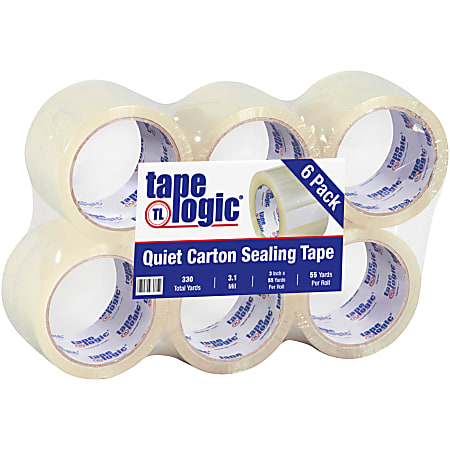
Introduction: Product Name: Quiet Carton Sealing Tape (Model No: P5830). Dimensions: 2″ width x 55 yards length, 3.1 mil thickness, Clear color. Material: High clarity polypropylene film with clear acrylic adhesive, latex free. Core size: 3″, Roll diameter: 4.1″. Physical Properties: Tensile strength 26 lbs/in, Performance temperature range 0° to 140° F. Packaging: Sold in packs of 6 rolls, 36 rolls per case. U…
2. Tape Suppliers – Sealing Tape
Domain: tapesuppliers.com
Registered: 2007 (19 years)
Introduction: Sealing tape is an adhesive product designed to prevent the passage of liquids, gases, dust, moisture, air, and noise through crevices, serving as a cushion and barrier against the elements. Also known as insulating tape, gasket tape, or weather tape, it ensures strong bonds when closing or sealing items and is essential for secondary packaging solutions to prevent shipping damage. Available in va…
Strategic Sourcing Conclusion and Outlook for Quiet carton sealing tape
As global logistics networks expand across diverse regulatory environments, quiet carton sealing tape has transitioned from a niche convenience to a strategic operational asset. For procurement teams navigating the complexities of international supply chains—particularly in high-growth regions across Africa, South America, and Southeast Asia—understanding the long-term value of noise-reduction packaging solutions is essential for maintaining competitive operational standards and workplace compliance.
How Can Emerging Markets Optimize Procurement of Quiet Carton Sealing Tape?
When sourcing for operations in Brazil, Vietnam, or the Middle East, prioritize suppliers offering consistent adhesive performance across humidity variants and temperature fluctuations common in tropical climates. Establish partnerships with manufacturers providing certified low-decibel formulations that comply with both international workplace safety standards and local noise ordinances, ensuring seamless facility operations without regulatory friction or productivity loss.
What Strategic Advantages Define the Future of Low-Noise Packaging?
Beyond immediate workplace comfort, quiet tape technologies demonstrably reduce operator fatigue and support higher velocity packing lines—critical factors as e-commerce fulfillment demands intensify globally. The convergence of acoustic innovation with recyclable substrates positions these solutions as dual-value investments, simultaneously addressing corporate sustainability mandates and operational efficiency targets while differentiating your packaging operations.
Is Quiet Carton Sealing Tape Becoming Essential for Modern Logistics?
Looking ahead, automation compatibility and smart warehouse integration will accelerate adoption across emerging markets. Forward-thinking procurement teams should secure long-term supply agreements immediately, anticipating that noise-reduction specifications will rapidly evolve from premium options to baseline procurement requirements within the next operational cycle.