Introduction: Navigating the Global Market for Self adhesive fragile tape
Sourcing high-performance self-adhesive fragile tape for international supply chains requires more than selecting a standard packing product; it demands strategic procurement insight that accounts for diverse regulatory environments and climatic challenges. When transporting delicate electronics, glassware, or ceramics across borders—from German manufacturing hubs to Saudi Arabian distribution centers, or from South American warehouses to African retail networks—visibility and adhesion reliability become critical factors in preventing costly damage and customs delays. Procurement teams must navigate varying quality standards, bulk pricing structures, and supplier reliability metrics that differ significantly across these emerging and established markets.
What critical factors should B2B buyers evaluate when procuring fragile tape for global logistics?
This section addresses the technical complexities buyers face, including adhesive performance in extreme temperatures common in Middle Eastern and African logistics corridors, compliance with international shipping regulations, and the balance between cost efficiency and damage prevention. Understanding these variables prevents supply chain disruptions and ensures consistent protection for high-value merchandise throughout multi-modal transportation routes.
How does strategic sourcing of self-adhesive fragile tape enhance cross-border operational efficiency?
This guide provides comprehensive analysis of tape specifications—including dimensions like 48mm width standards and 125m length rolls—material compositions suitable for humid South American or arid Middle Eastern climates, and application-specific recommendations for electronics versus ceramic goods. We examine supplier vetting protocols, volume discount structures, palletization quantities such as 36-roll configurations, and quality certification requirements essential for buyers operating across European, Middle Eastern, African, and South American markets.
By leveraging these insights, procurement professionals can establish resilient supply partnerships, optimize total cost of ownership, and ensure their fragile goods arrive intact across diverse international trade routes.
Understanding Self adhesive fragile tape Types and Variations
| Type Name | Key Distinguishing Features | Primary B2B Applications | Brief Pros & Cons for Buyers |
|---|---|---|---|
| Standard Polypropylene “FRAGILE” Tape | Water-based acrylic adhesive on OPP film; 45-50 micron thickness; 23-25g/m² adhesive coat; red/white or white/red print | E-commerce fulfillment, retail distribution, general warehouse packing | Pros: Cost-effective for high volumes, suitable for climate-controlled storage. Cons: Poor adhesion to recycled/rough cardboard; degrades in high humidity |
| High-Tack “VERY FRAGILE” Tape | Hot melt synthetic rubber adhesive; bold “VERY FRAGILE” messaging; 50+ micron thickness; 28-30g/m² adhesive mass; high-visibility colors | Electronics shipping, glassware manufacturing, pharmaceutical distribution | Pros: Superior initial tack on difficult surfaces; urgent handling cues reduce damage. Cons: 15-20% price premium; potential residue on removal |
| Heavy-Duty Vinyl Fragile Tape | Solvent-based adhesive on PVC backing; 60+ micron thickness; UV and moisture resistant; -20°C to +60°C performance range | Export shipping, Middle East/Africa logistics, cold chain distribution | Pros: Extreme temperature stability; abrasion-resistant for ocean freight. Cons: Premium pricing; heavier rolls increase shipping costs |
| Low-Noise Polypropylene Fragile Tape | Modified acrylic adhesive; specialized film formulation; <50dB unwind noise; standard fragile print | High-volume fulfillment centers, 24/7 operations, noise-sensitive urban logistics | Pros: Improves workplace ergonomics; complies with noise regulations. Cons: Limited supplier availability in some regions; compatibility checks required |
What Are the Critical Differences Between Industrial Fragile Tape Variants?
What specifications define standard fragile tape for general B2B use?
Standard polypropylene fragile tape utilizes water-based acrylic adhesive systems on oriented polypropylene (OPP) film, typically measuring 45-50 microns in thickness with 23-25g/m² adhesive coating. This configuration offers reliable adhesion for virgin cardboard in climate-controlled environments, making it economically advantageous for European manufacturing and South American retail distribution. Procurement teams should verify tape unwind consistency and print clarity under fluorescent warehouse lighting, as inferior grades may fade during transit. While suitable for high-volume purchasing, this type performs suboptimally on recycled corrugated surfaces or in high-humidity conditions prevalent during African monsoon seasons or Middle Eastern logistics.
Which fragile tape solution provides maximum handling visibility for delicate electronics?
High-tack “VERY FRAGILE” variants employ hot melt synthetic rubber adhesives delivering immediate bonding strength to challenging substrates, including dusty or high-recycled-content cardboard common in emerging markets. The amplified warning messaging—distinct from standard “FRAGILE” printing—creates psychological urgency among logistics handlers, critical for electronics, glassware, and pharmaceutical supply chains. B2B purchasers must evaluate adhesive mass and film tensile strength to ensure compatibility with automated case sealers. This type commands
Key Industrial Applications of Self adhesive fragile tape
| Industry/Sector | Specific Application of Self adhesive fragile tape | Value/Benefit for the Business | Key Sourcing Considerations for this Application |
|---|---|---|---|
| Electronics Manufacturing & Distribution | Sealing cartons containing smartphones, laptops, LED screens, and circuit boards; tamper-evident sealing for high-value devices | Reduces transit damage claims by 40-60%; provides visual deterrence against rough handling; streamlines customs inspections by clearly identifying delicate contents | High-tack acrylic adhesive for humid climates (Africa/Southeast Asia); anti-static properties; compatibility with recycled corrugated board |
| Glassware & Ceramics Export | Securing export crates of architectural glass, sanitary ware, artisan ceramics, and tableware; pallet edge marking for bulk shipments | Prevents costly breakage of high-value decorative and construction materials; ensures compliance with international shipping symbols; facilitates insurance claims documentation | UV-resistant ink for outdoor storage (Middle East); strong adhesion to dusty surfaces; high-visibility red/white contrast for low-light warehouses |
| Pharmaceutical & Medical Device Logistics | Sealing temperature-sensitive biologics, glass ampoules, diagnostic equipment, and precision surgical instruments | Maintains cold chain integrity by preventing box opening; identifies temperature-sensitive fragile contents for specialized handling; supports GDP (Good Distribution Practice) compliance | FDA/EU compliant adhesive formulations; low-noise unwinding for cleanroom environments; resistance to condensation in refrigerated transport |
| E-commerce & Third-Party Logistics (3PL) | High-volume sealing of mixed-fragility parcels in automated packing lines; manual application for oversized or irregular packages | Increases throughput in fulfillment centers; reduces customer return rates due to damage; minimizes repackaging costs through clear handling instructions | Bulk pallet pricing for cost efficiency; dispenser compatibility; multi-language “FRAGILE” printing for cross-border EU/Middle East trade |
How does fragile tape protect high-value electronics during international shipping?
In this sector, self-adhesive fragile tape serves dual purposes: securing anti-static inner boxes and providing immediate visual identification of sensitive semiconductor components. For German automotive electronics exporters and Nigerian mobile device distributors, the tape’s high-visibility red substrate ensures handlers recognize delicate contents even in poorly lit container yards. The acrylic adhesive formulation must maintain tack across temperature fluctuations common in Middle Eastern ports and humid African climates, preventing seal failure that could expose moisture-sensitive circuit boards to corrosive elements while reducing damage claims by up to 60% and supporting faster customs clearance through clear content identification.
What role does fragile tape play in protecting artisan and industrial ceramics during long-haul transport?
From Saudi Arabian construction glass exporters to Brazilian ceramic tile manufacturers, this application demands tape that adheres to dusty, recycled corrugated surfaces while withstanding extreme heat during outdoor storage in desert climates. The tape creates a psychological barrier against rough handling while physically reinforcing box corners prone to impact damage. For European fine china exporters shipping to emerging markets, the printed “FRAGILE” warning supports insurance documentation and reduces disputes over handling liability during multi-modal transport involving complex sea and road freight transitions across varying infrastructure quality, ultimately preserving brand reputation in competitive luxury goods markets.
Why is specialized fragile tape critical for temperature-controlled pharmaceutical supply chains?
Medical device manufacturers in South Africa and biotech distributors in the Middle East rely on this tape to seal cold-chain packaging containing glass vials, diagnostic instruments, and laboratory equipment. Unlike standard packing tape, pharmaceutical-grade fragile tape maintains adhesion in refrigerated environments and identifies packages requiring gentle handling during rapid vaccine distribution campaigns. The tape helps comply with Good Distribution Practice (GDP) guidelines by providing tamper-evident sealing that remains intact through condensation cycles and temperature fluctuations, ensuring sterile contents reach clinics and laboratories without compromise or contamination risks while meeting stringent regulatory requirements across international borders.
How can fragile tape optimize fulfillment operations for cross-border e-commerce?
Major logistics hubs in Europe and Latin America utilize high-speed compatible fragile tape on automated packing lines to process thousands of mixed-fragility parcels daily. The distinctive red and white pattern triggers optical recognition systems to route packages to specialized handling lanes, while manual application teams use dispenser-mounted rolls for oversized items. For businesses shipping consumer electronics and home décor from Asian manufacturing centers to African and South American markets, bulk-sourced fragile tape reduces per-unit packaging costs while significantly decreasing damage-related returns, customs inspection delays, and negative customer feedback ratings across diverse last-mile delivery networks with varying handling standards.
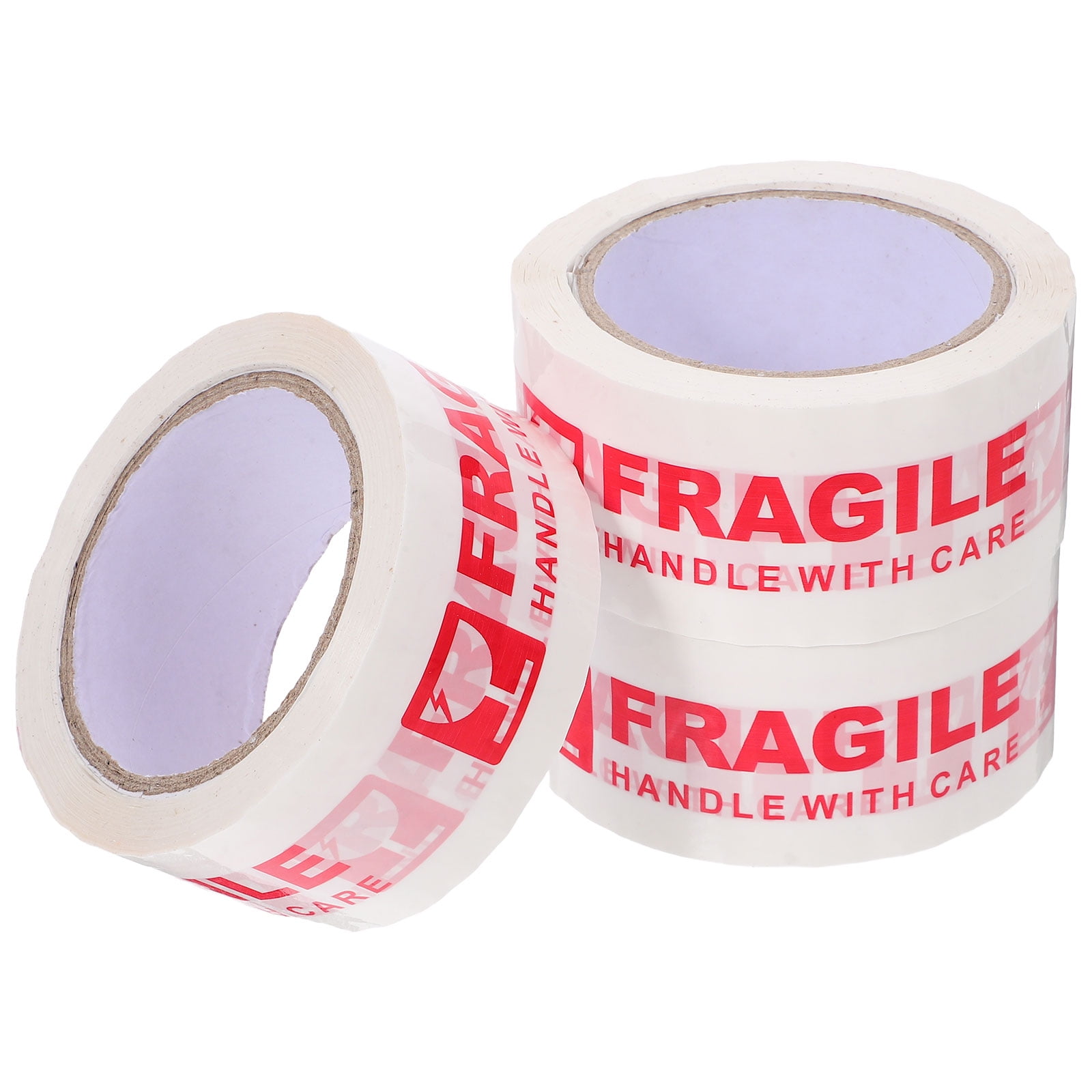
A stock image related to Self adhesive fragile tape.
3 Common User Pain Points for ‘Self adhesive fragile tape’ & Their Solutions
Scenario 1: Adhesive Failure in Cold Chain and Freezer Environments
The Problem:
B2B buyers shipping temperature-sensitive goods—such as pharmaceuticals, frozen foods, or laboratory specimens—frequently encounter adhesive degradation when using standard acrylic-based self adhesive fragile tape in sub-zero environments. When exposed to temperatures below 0°C, the adhesive film hardens and loses tack, causing the tape to lift at the edges or detach completely during transit. This failure not only removes critical “FRAGILE” warnings from packaging but also compromises carton integrity, leading to regulatory non-compliance and product damage claims. Procurement teams often discover this issue too late, after experiencing rejected shipments or temperature excursions that invalidate cold chain documentation.
The Solution:
Specify hot-melt rubber or solvent-based natural rubber adhesives specifically formulated for freezer-grade applications, which maintain bonding strength from -40°C to 60°C. Before placing wholesale orders, request technical data sheets verifying adhesive temperature ranges and conduct sample testing across your specific cold storage workflow. For pharmaceutical logistics, select tapes with FDA-compliant adhesive formulations that withstand condensation and frost accumulation. Additionally, verify that the tape backing remains flexible at low temperatures to prevent cracking during application, ensuring continuous protection throughout the distribution cycle.
Scenario 2: Brand Dilution from Generic Warning Labels
The Problem:
Companies investing in premium unboxing experiences often face a disconnect between their branded packaging and generic “FRAGILE” warnings that obscure logos or create visual clutter. Many procurement teams resort to purchasing separate pre-printed fragile labels alongside custom branded packing tape, doubling material costs and increasing application time while reducing packaging aesthetic cohesion. This redundancy becomes particularly problematic for e-commerce businesses targeting discerning markets in Germany or Saudi Arabia, where brand presentation significantly influences customer perception. Furthermore, standard red-and-white fragile tape rarely accommodates bilingual handling instructions required for multi-regional distribution across Europe and the Middle East.
The Solution:
Transition to custom printed self adhesive fragile tape that integrates high-visibility warning symbols with corporate branding, eliminating the need for secondary labels. Utilize flexographic or digital printing technologies to incorporate Pantone-matched brand colors, company logos, and multilingual handling instructions (e.g., Arabic/English or German/English) directly onto the tape substrate. Specify UV-resistant inks to prevent fading during long-haul shipping through high-sunlight regions such as Africa or the Middle East. By consolidating branding and protection into a single application, businesses reduce material costs by 30-40% while reinforcing brand recognition at every handling touchpoint.
Scenario 3: Inefficient Bulk Procurement and Regional Specification Mismatches
The Problem:
International buyers frequently struggle with cash flow constraints and inventory inefficiencies when navigating bulk pricing tiers for self adhesive fragile tape without accounting for regional packaging standards. A distributor serving both European and South American markets might standardize on 48mm width tape, only to discover that Brazilian corrugated standards require 50mm widths for heavy-duty cartons, resulting in inadequate sealing and wasted inventory. Additionally, rigid minimum order quantities (MOQs) often force smaller B2B buyers to overstock capital in slow-moving SKUs, creating warehouse congestion and liquidity issues critical for SMEs in emerging markets.
The Solution:
Negotiate flexible bulk pricing structures that allow mixed-SKU pallets combining different tape widths (48mm, 50mm, 72mm) and adhesive types to optimize container utilization and working capital. Request volume-based tier pricing that scales with quarterly rather than single-order commitments, improving cash flow predictability for buyers in Africa and South America. Partner with suppliers offering regional specification consultations to align tape dimensions with local corrugated board standards—ensuring 50mm compatibility for GCC markets or 48mm for EU specifications. This approach minimizes stock obsolescence while maximizing freight efficiency through optimized pallet configurations.
Strategic Material Selection Guide for Self adhesive fragile tape
Selecting the appropriate substrate for self-adhesive fragile tape directly impacts supply chain integrity, particularly when shipping across diverse climatic zones prevalent in Africa, the Middle East, and South America. B2B procurement teams must evaluate not only print clarity and adhesion but also tensile strength, moisture resistance, and compatibility with automated sealing equipment. Material composition determines whether “FRAGILE” warnings remain legible throughout the logistics journey or degrade during critical handling phases, exposing delicate electronics, glassware, and ceramics to unnecessary transit risks. Understanding substrate-specific performance characteristics enables strategic alignment between packaging costs and product protection requirements.
What film substrates offer optimal cost-efficiency for high-volume fragile tape procurement?
Biaxially Oriented Polypropylene (BOPP) dominates the global fragile tape market due to exceptional moisture resistance and mechanical stability. This thermoplastic polymer withstands high humidity common in West African and South American port environments without losing dimensional integrity, ensuring printed warnings remain visible throughout ocean freight journeys. BOPP tapes typically feature hot-melt or acrylic adhesive systems that bond aggressively to corrugated fiberboard, making them ideal for e-commerce fulfillment centers processing thousands of fragile shipments daily. Available in standard 48mm widths and extended 125-meter lengths, BOPP minimizes changeover frequency on automated sealing machines. While offering excellent tensile strength for standard weight boxes, BOPP can become brittle in sub-zero storage conditions prevalent in Central European winters, potentially compromising seal security during cold chain logistics operations.
How does PVC fragile tape enhance handling protocols in premium logistics environments?
Polyvinyl Chlor
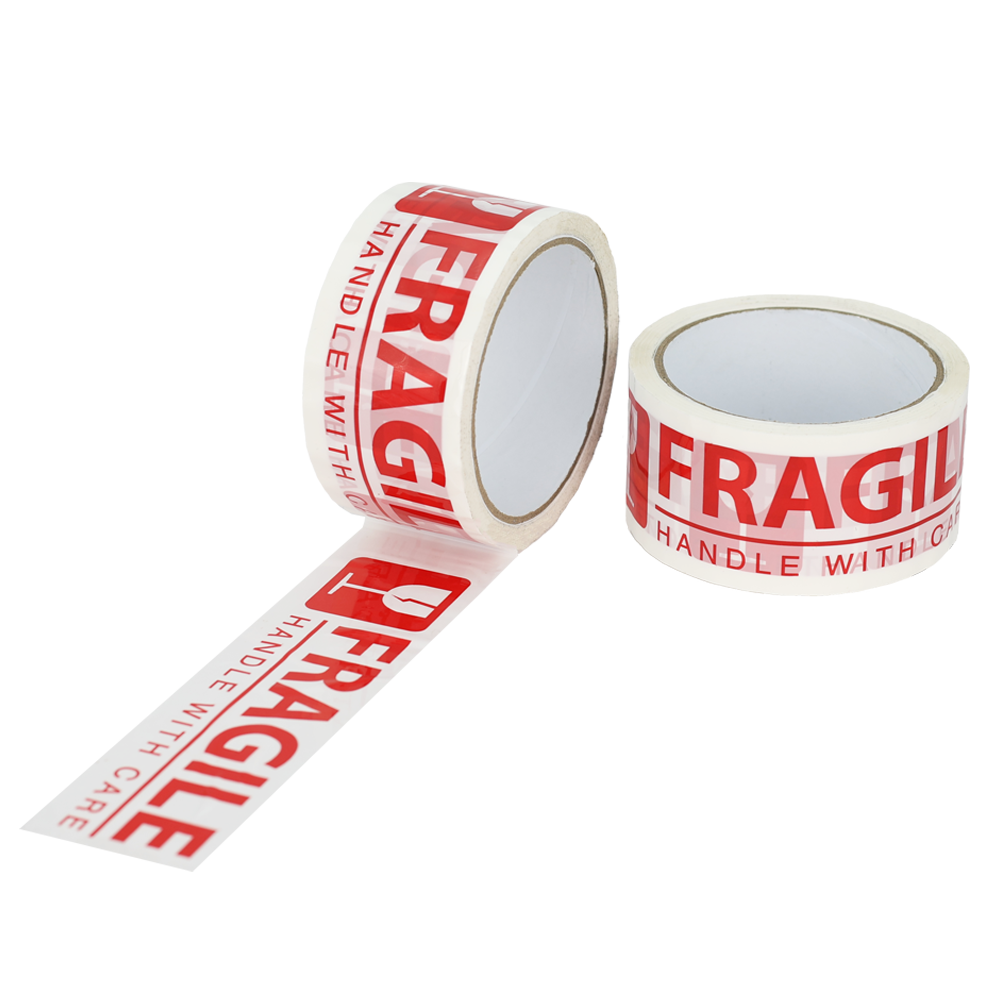
A stock image related to Self adhesive fragile tape.
In-depth Look: Manufacturing Processes and Quality Assurance for Self adhesive fragile tape
What raw materials determine the durability of self-adhesive fragile tape?
The foundation of high-performance fragile tape begins with substrate selection. Most industrial-grade variants utilize biaxially oriented polypropylene (BOPP) film, prized for its exceptional tensile strength and resistance to humidity—critical factors for buyers operating in diverse climates across Africa, the Middle East, and South America. Alternative substrates include PVC for heavy-duty applications requiring superior conformability, or reinforced paper for eco-conscious European markets like Germany where sustainability mandates increasingly influence procurement decisions.
The adhesive layer distinguishes premium fragile tape from commodity alternatives. Hot-melt synthetic rubber adhesives offer aggressive initial tack and perform reliably in ambient temperatures ranging from 5°C to 50°C, making them suitable for uncontrolled warehouse environments common in emerging markets. Acrylic adhesives, while curing slower, provide superior UV resistance and aging stability—essential for shipments facing prolonged sun exposure during transit through equatorial regions. Solvent-based adhesives remain the gold standard for extreme conditions, offering chemical resistance and adhesion to recycled corrugated surfaces that challenge standard formulations.
How is the high-visibility “Fragile” messaging applied during manufacturing?
The warning functionality depends entirely on print quality and legibility. Modern manufacturing employs flexographic printing using anilox rollers to transfer high-contrast pigments—typically white or black solvent-based inks—onto colored BOPP substrates. The process requires precise registration control to ensure “FRAGILE” text remains centered and legible across varying roll lengths, from standard 66-meter consumer rolls to industrial 125-meter bulk formats favored by high-volume e-commerce operations.
Color consistency presents a significant quality challenge. The iconic red background demands strict Pantone matching to ensure immediate visual recognition by logistics handlers. Advanced manufacturers utilize inline spectrophotometers during the coating phase to detect color deviations in real-time, preventing batches that might fail to meet corporate branding standards or safety visibility requirements. For buyers requiring multilingual warnings—such as Arabic-English combinations for Middle Eastern distribution or Portuguese-Spanish for South American trade routes—rotary screen printing enables crisp typographic detail without smearing during high-speed unwinding.
What quality control tests ensure adhesion reliability across climates?
B2B procurement teams must understand that fragile tape faces dual challenges: maintaining package integrity while communicating handling instructions. Quality assurance protocols begin with peel adhesion testing per ASTM D3330 standards, measuring the force required to remove tape from stainless steel and corrugated board surfaces. Premium manufacturers target 20-25 oz/in adhesion values for hot-melt formulations, ensuring boxes remain sealed through vibration-intensive air freight and humidity-exposed maritime containers.
Shear resistance testing determines how long tape withstands constant load before sliding. For heavy export shipments to Germany or Saudi Arabia, where boxes may stack five-high in containerized transport, static shear testing at 40°C for 72 hours simulates worst-case scenarios. Additionally, loop tack testing measures immediate bond strength—critical for high-speed automated packaging lines where dwell time between application and box closure measures mere seconds.
Climate-specific validation separates regional suppliers from global-capable manufacturers. Accelerated aging chambers subject tape samples to 85% relative humidity and 60°C temperatures, replicating tropical storage conditions prevalent in West African or Southeast Asian logistics hubs. Buyers should request test reports demonstrating less than 15% adhesion degradation after seven days of environmental stress.
How do manufacturers ensure consistent roll dimensions for automated packaging lines?
Dimensional precision directly impacts operational efficiency. Automated case sealers require exact width tolerances—typically 48mm or 50mm with ±0.5mm variance—to prevent jamming in dispenser heads. Slitting operations utilize razor or shear-cut technology depending on material thickness, with shear-cutting preferred for heavy-duty fragile tape to prevent edge fibrillation that could trigger sensor malfunctions in automated equipment.
Length consistency affects cost calculations and inventory management. While standard lengths range from 66 meters to 150 meters, bulk buyers should verify that manufacturers utilize encoder-controlled winding systems rather than mechanical counters, ensuring actual meterage matches specifications within 1% tolerance. Core dimensions—typically 76mm inner diameter—must maintain structural integrity to prevent collapse during high-speed unwinding in continuous operation environments.
What certifications should B2B buyers demand from fragile tape suppliers?
International trade compliance requires specific documentation. For European markets including Germany, REACH compliance certificates confirm the absence of restricted substances in adhesives and substrates. RoHS certification becomes essential when tape accompanies electronic shipments. Middle Eastern buyers should request SASO (Saudi Standards, Metrology and Quality Organization) conformity for imported packaging materials, while South American procurement teams benefit from ISO 9001:2015 quality management system verification.
Sustainability credentials increasingly influence B2B decisions. FSC-certified paper backing options appeal to Scandinavian and German markets, while carbon footprint documentation supports corporate ESG reporting requirements. For food-adjacent logistics—such as fragile glassware containing consumables—FDA 21 CFR 175.105 compliance for indirect food contact provides necessary regulatory assurance.
How does slitting technology affect tape performance at high speeds?
The final manufacturing stage determines field performance. Precision slitting utilizing carbide blades rather than standard steel reduces edge defects that cause splitting during rapid application. For buyers operating automated packaging lines exceeding 30 boxes per minute, manufacturers should offer “low-noise” unwind characteristics achieved through specific silicone release coating formulations on the backing film.
Winding tension control prevents telescoping—where layers shift creating uneven roll profiles—during ocean freight vibrations common in export scenarios. Master rolls undergo tension-calibrated slitting into finished widths, with immediate edge-sealing for PVC variants to prevent adhesive migration. Quality checkpoints include 100% visual inspection for print defects and random sampling for adhesion verification before palletization.
Understanding these manufacturing variables enables procurement professionals to specify requirements that align with operational environments, whether sealing electronics for Dubai’s humid ports or glassware for Germany’s automated distribution centers.
Practical Sourcing Guide: A Step-by-Step Checklist for ‘Self adhesive fragile tape’
For international B2B buyers procuring self-adhesive fragile tape, navigating technical specifications, climate-specific adhesive performance, and regional compliance requirements can be complex. This systematic checklist provides a framework to evaluate suppliers, optimize container logistics, and ensure your packaging meets operational demands across diverse markets from Germany to Saudi Arabia and Brazil to Nigeria.
What Technical Specifications Ensure Optimal Performance?
Verify tape dimensions align with your sealing equipment—standard widths range from 48mm to 75mm, with lengths between 66m and 150m per roll. Specify polypropylene for cost-effective general use or PVC for premium tensile strength in heavy-duty applications. Confirm core compatibility (typically 76mm) with your existing dispensers, and request roll weights (approximately 300g per standard unit) to calculate precise shipping volumes.
How Do You Match Adhesive Chemistry to Climate Conditions?
Select hot-melt adhesives for immediate bonding in temperate European warehouses, but specify solvent-based or acrylic formulations for humid African or Middle Eastern environments where temperatures exceed 30°C. Request shear-strength test data relevant to your destination markets to ensure “Fragile” warnings remain affixed during extended sea freight through tropical zones.
What Pallet Configurations Minimize International Shipping Costs?
Optimize container utilization by standardizing orders to full pallet quantities—typically 36 rolls per carton with 40-50 cartons per pallet. Calculate volumetric versus actual weight charges, as lightweight tape shipments often incur dimensional pricing penalties. Negotiate Incoterms that account for tape’s classification as non-hazardous cargo to simplify customs documentation across South American and African ports.
Which Compliance Standards Apply to Cross-Border Procurement?
Ensure printed warnings comply with ISO 780 standards for handling labels, mandatory in German logistics networks and increasingly adopted across the Middle East. Verify ink composition meets REACH regulations for European imports and Saudi Standards, Metrology and Quality Organization (SASO) requirements. Request multilingual printing options—English, Arabic, and Portuguese—to ensure handler comprehension across your distribution network.
How Do You Validate Supplier Quality Consistency?
Implement pre-shipment inspection protocols testing adhesion strength (ASTM D3654) and print durability against abrasion. Demand batch traceability codes for quality recalls and verify moisture-resistant packaging specifications to prevent adhesive degradation during tropical transit common in African and South American supply chains.
What Contract Terms Protect Long-Term Supply Chains?
Negotiate price-lock clauses for 12-month periods given petroleum-based raw material volatility. Establish dual-sourcing agreements with lead time guarantees under 45 days to mitigate port congestion risks. Include specifications for recycled content percentages to align with European sustainability mandates and emerging Middle Eastern environmental initiatives.
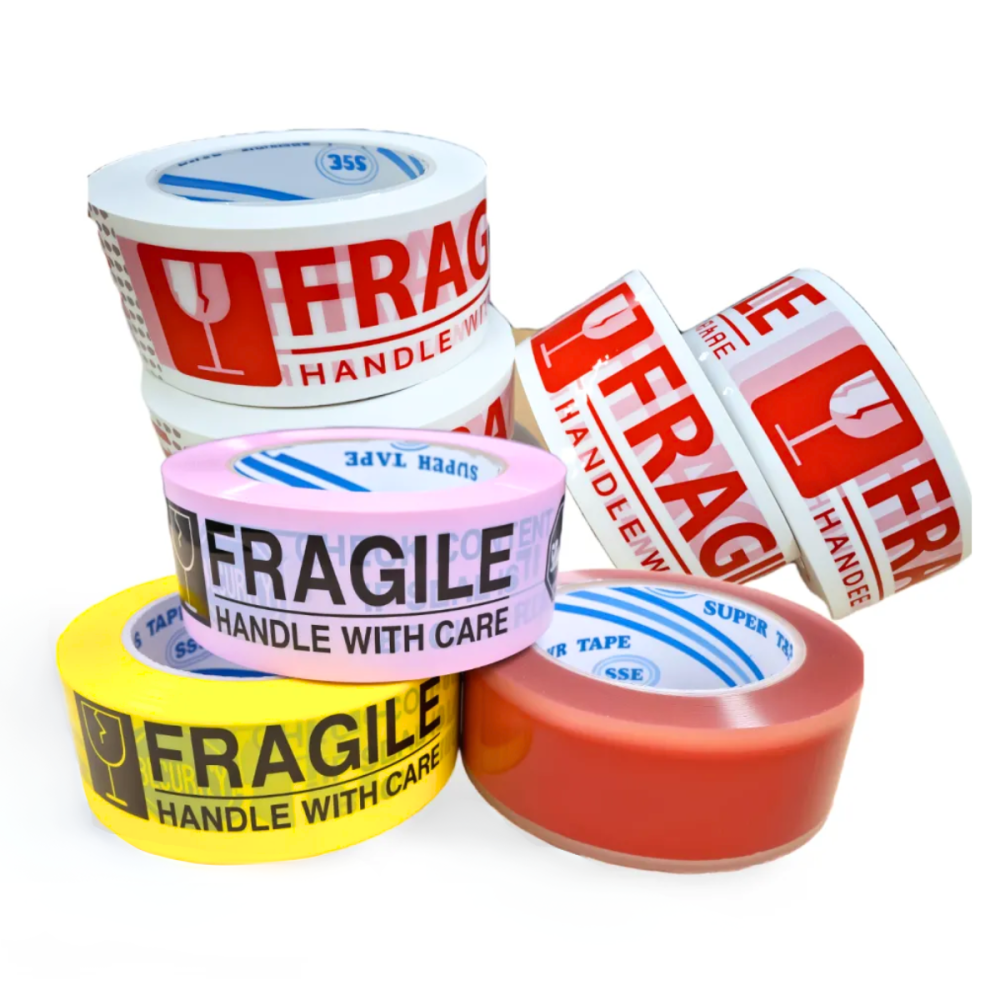
A stock image related to Self adhesive fragile tape.
Comprehensive Cost and Pricing Analysis for Self adhesive fragile tape Sourcing
When sourcing self-adhesive fragile tape for international distribution, understanding the granular cost structure prevents budget overruns and ensures competitive unit economics. Beyond the per-roll sticker price, B2B procurement involves complex variables including raw material volatility, dimensional standardization, and region-specific logistics requirements that significantly impact landed costs across African, South American, Middle Eastern, and European markets.
What Factors Drive the Base Pricing of Fragile Warning Tape?
Raw material composition—specifically BOPP (Biaxially Oriented Polypropylene) film thickness and acrylic adhesive density—constitutes 60-70% of manufacturing costs. Standard 48mm width tapes with 66-meter lengths offer optimal cost-efficiency for high-volume operations, while extended 125-meter rolls reduce per-meter costs by 15-20% but require compatible heavy-duty dispensers. Custom color schemes beyond standard red/white combinations typically incur plate charges of $200-$500 for initial setup, making stock color options more economical for orders under 5,000 rolls.
How Do Volume Tiers and MOQs Affect Your Procurement Strategy?
Manufacturers typically structure pricing around carton quantities of 36 rolls, with pallet configurations ranging from 48 to 72 cartons. For buyers in Africa and South America, negotiating Full Container Load (FCL) quantities—approximately 900-1,100 cartons per 40HQ container—unlocks 25-35% price reductions compared to Less than Container Load (LCL) shipments. Middle Eastern and European buyers should note that MOQs often vary by customization level: stock printed “FRAGILE” tapes may require only 100-roll commitments, while custom logo printing demands 5,000-roll minimums to justify cylinder setup costs.
What Hidden Costs Should Buyers Budget Beyond Unit Pricing?
Logistics represents 18-25% of total landed costs for intercontinental sourcing. While European suppliers often offer free delivery thresholds around €125-€150, importing to Saudi Arabia or Nigeria involves additional considerations: palletization fees ($15-$25 per pallet), customs duties ranging 5-15% depending on HS code classification (3919.10), and currency fluctuation hedging. Smart buyers negotiate DDP (Delivered Duty Paid) terms for initial orders to establish accurate cost baselines before transitioning to FOB arrangements for volume savings.
How Can You Optimize Cost Per Meter Without Compromising Quality?
Standardizing on 125-meter rolls rather than 66-meter variants reduces packaging waste and handling labor by 40% while lowering per-meter costs. Consolidating orders quarterly rather than monthly typically improves payment terms from 30 days to 60-90 days, enhancing cash flow. For German and Saudi Arabian markets specifically, verifying EU 94/62/EC or SASO packaging compliance during sourcing prevents costly retrofitting or rejection at port, effectively eliminating unexpected remediation expenses that erode margins.
Alternatives Analysis: Comparing Self adhesive fragile tape With Other Solutions
When evaluating protective packaging strategies for international supply chains, procurement teams must weigh specialized self-adhesive fragile tape against alternative marking methodologies that accommodate varying operational scales, regulatory environments, and budget constraints. While fragile tape offers the dual functionality of carton sealing and damage prevention messaging, discrete labeling, custom-printed packaging, and on-demand printing systems present distinct advantages for specific B2B scenarios—particularly when shipping to regions with diverse handling standards or when managing high-SKU product lines across African, European, Middle Eastern, and South American markets.
Which Fragile Marking Solution Delivers the Best Operational Efficiency?
| Comparison Aspect | Self Adhesive Fragile Tape | Discrete Fragile Labels/Stickers | Pre-Printed Corrugated Boxes | Hand-Held Inkjet Printing |
|---|---|---|---|---|
| Performance & Visibility | Excellent (high-contrast, tamper-evident seal) | Moderate (vulnerable to edge peeling) | Excellent (permanent, integrated design) | Good (dependent on substrate quality) |
| Cost Structure | Low per-unit; minimal capital investment | Very low material cost; high labor cost | High setup fees; economical at 50,000+ units | Moderate equipment cost; high consumable expenses |
| Implementation Complexity | Low (immediate deployment) | Low (no training required) | High (design lead times, MOQs) | Moderate (operator training, maintenance) |
| Application Speed | High (continuous roll dispensing) | Low (4-6 seconds per label) | N/A (pre-applied) | Low (8-10 seconds per box) |
| Supply Chain Flexibility | High (universal box compatibility) | High (easy design modifications) | Low (committed inventory, rigid specs) | Very High (on-demand customization) |
| Durability in Transit | High (resists humidity/temperature shifts) | Moderate (adhesive failure in humid climates) | High (permanent substrate integration) | Variable (ink smudging risk) |
How Do Individual Fragile Labels Compare to Continuous Tape Solutions?
Individual adhesive labels represent the most accessible alternative to continuous fragile tape, particularly attractive to e-commerce operations and small-to-medium enterprises across emerging markets. These discrete stickers offer lower per-unit material costs and enable rapid design modifications to accommodate multilingual shipping requirements—essential for businesses exporting from Germany to Saudi Arabia or distributing across diverse African territories. However, labels introduce significant labor inefficiencies; each requires precise manual placement, increasing packing station time by approximately 4-6 seconds per carton compared to tape dispenser systems. Moreover, discrete labels lack tamper-evident properties and demonstrate higher failure rates in high-humidity environments common in South American and Middle Eastern logistics corridors, where adhesive degradation may leave critical shipments unmarked upon arrival. The additional step of applying separate sealing tape further complicates workflow efficiency, making labels less suitable for high-volume fulfillment centers.
Is Pre-Printed Corrugated Packaging a Viable Alternative to Tape?
Custom-printed corrugated boxes integrate fragile warnings directly into the packaging substrate, eliminating field-application variability and ensuring consistent brand presentation for European and Middle Eastern retailers prioritizing unboxing experiences. This approach becomes economically viable for manufacturers shipping standardized product lines exceeding 50,000 units annually, as the per-unit printing cost amortizes across high volumes despite substantial upfront investment in flexographic printing plates. However, the solution demands significant warehouse space for inventory and creates rigid operational constraints—buyers cannot easily modify warning languages for different export markets or adjust box sizes for seasonal inventory fluctuations without incurring new setup fees and minimum order quantities typically exceeding 5,000 units. Additionally, pre-printed boxes still require sealing tape for closure, meaning this method supplements rather than replaces tape expenditure, while offering no protection against carton opening during transit.
Can On-Demand Inkjet Printing Replace Adhesive Fragile Tape?
Hand-held inkjet printing systems offer a flexible middle ground, allowing operators to print “Fragile” warnings directly onto carton surfaces immediately before shipping. This technology eliminates adhesive waste and enables real-time customization for specific export destinations—particularly valuable for African and South American distributors handling diverse product mixes with varying fragility requirements. However, the initial capital investment ranges from $500-$2,000 per unit, with ongoing ink costs significantly exceeding tape expenses. Print durability also varies by substrate; porous corrugated materials in humid climates may produce blurred text, while non-porous surfaces require specialized inks. The additional processing time—approximately 8-10 seconds per box for positioning and printing—creates bottlenecks in high-volume German or Saudi Arabian fulfillment operations, limiting adoption to low-to-medium volume shippers with high SKU variability.
Essential Technical Properties and Trade Terminology for Self adhesive fragile tape
When procuring self-adhesive fragile tape for international logistics operations, understanding precise technical specifications and standard trade nomenclature prevents costly specification mismatches. Buyers operating across diverse climates—from humid West African ports to arid Middle Eastern distribution centers—must verify performance metrics that ensure adhesive integrity and visual compliance throughout the supply chain.
What Technical Specifications Determine Performance in Extreme Climates?
Adhesive Coating Weight and Chemistry
Measured in grams per square meter (gsm), the adhesive layer typically ranges between 20–30gsm. Hot-melt adhesives provide aggressive initial tack ideal for recycled corrugated boards common in European markets, while acrylic formulations offer superior UV and aging resistance critical for prolonged exposure in Saudi Arabian or Brazilian storage facilities.
Backing Film Thickness and Tensile Strength
Polypropylene (PP) or PVC backing thickness, expressed in microns (μm), generally spans 25–50μm. Thicker films (45μm+) resist abrasion during rough handling in high-volume distribution hubs. Tensile strength, measured in Newtons per 25mm width, should exceed 40N to prevent snapping during automated carton sealing in German manufacturing environments.
Temperature Resistance Spectrum
Standard tapes withstand 0°C to 60°C, but premium grades tolerate -10°C to 80°C. This range proves essential for Saudi Arabian warehouse storage and European winter transit, preventing adhesive failure or backing embrittlement.
Core Dimensions and Roll Length Optimization
Standard 76mm (3-inch) cardboard cores ensure compatibility with industrial hand dispensers and automated sealing machines. Lengths of 125m–150m balance changeover frequency against freight cube efficiency, with 48mm width serving as the global standard for carton sealing.
What Trade Terminology Governs International Fragile Tape Procurement?
Slit Width versus Master Roll Specifications
Manufacturers produce “master rolls” (980mm–1280mm wide) subsequently “slit” into standard 48mm or 72mm widths. Clarifying whether pricing refers to slit rolls or master rolls significantly affects freight calculations and requires distinct cutting fees.
Incoterms and Logistics Liability
FOB (Free On Board) suits buyers with established freight forwarders in Lagos or São Paulo, while CIF (Cost, Insurance, Freight) or DDP (Delivered Duty Paid) provide turnkey solutions for emerging market importers lacking customs clearance infrastructure.
MOQ and Palletization Standards
Minimum Order Quantities often correlate to 20ft FCL (Full Container Load) volumes—typically 36 rolls per carton, 30–50 cartons per pallet. Confirming Euro-pallet (1200×800mm) versus standard pallet (1200×1000mm) compatibility prevents container loading inefficiencies when shipping to Germany or the Middle East.
Print Registration and Color Fastness
For pre-printed “FRAGILE” warnings, “print registration” tolerance (±1mm) ensures legibility across the roll, while “color fastness” ratings indicate resistance to fading under UV exposure during outdoor staging at African ports.
Shelf Life and Storage Protocols
“Shelf life” (typically 12–24 months from manufacture) and mandated “storage conditions” (15–25°C, 50% relative humidity) must align with local warehouse capabilities in target markets to prevent adhesive degradation before application.
Understanding these parameters enables buyers to draft precise RFQs that eliminate ambiguity, ensuring consignments arrive intact whether traversing the Atlantic to West Africa or clearing customs in Jeddah.
Navigating Market Dynamics and Sourcing Trends in the Self adhesive fragile tape Sector
The self-adhesive fragile tape sector is experiencing steady growth driven by e-commerce expansion and heightened awareness of damage prevention in global supply chains. For B2B buyers across Africa, South America, the Middle East, and Europe, understanding current market dynamics and evolving sourcing trends is essential for optimizing procurement strategies and ensuring product integrity during transit.
What Are the Emerging Trends in Global Fragile Tape Markets?
The global demand for fragile tape is increasingly tied to the expansion of cross-border e-commerce and the need for clear handling instructions in multilingual logistics environments. Buyers in Germany and Saudi Arabia prioritize high-visibility printing and tamper-evident properties to protect high-value electronics and luxury goods, while emerging markets in Africa and South America focus on cost-efficiency combined with durability for challenging transport infrastructure. Standard specifications such as 48mm width and 125-meter lengths have become industry norms, facilitating compatibility with automated dispensing systems in high-volume warehouses and distribution centers.
Regional temperature variations significantly influence product selection, with Middle Eastern buyers requiring adhesives that maintain integrity in extreme heat, whereas European markets emphasize cold-chain compatibility for pharmaceutical and food shipments. The shift from generic fragile labeling toward application-specific solutions—such as tapes designed specifically for glassware, ceramics, or sensitive electronics—reflects a broader trend toward specialized supply chain risk management.
How Are Supply Chain Strategies Evolving for B2B Procurement?
Supply chain resilience has emerged as a critical concern, with buyers shifting from spot purchasing to strategic partnerships that guarantee consistent availability across continents. The trend toward consolidated procurement—sourcing 36-roll pallets or larger volumes with tiered pricing structures—allows businesses to reduce per-unit costs while securing inventory buffers against international shipping delays. Digital procurement platforms are increasingly facilitating direct manufacturer relationships, enabling real-time inventory tracking and customized production runs that accommodate multilingual printing requirements for diverse export markets.
Why Is Sustainable Sourcing Becoming Critical for Fragile Tape Procurement?
Environmental regulations in the European Union and Gulf Cooperation Council (GCC) countries are driving demand for eco-friendly alternatives to traditional PVC-based tapes. Forward-thinking suppliers now offer solvent-free acrylic adhesives and recyclable polypropylene films that maintain superior adhesion strength while supporting circular economy initiatives. For German buyers and increasingly for Saudi Arabian importers under Vision 2030 sustainability mandates, compliance with Extended Producer Responsibility (EPR) frameworks necessitates comprehensive documentation of recyclable content, biodegradability certifications, and carbon footprint data across the supply chain.
How Can International Buyers Verify Ethical Manufacturing Practices?
Ethical sourcing extends beyond material composition to encompass manufacturing transparency, labor practices, and waste management protocols. B2B buyers should verify supplier certifications such as ISO 14001 for environmental management and SA8000 for social accountability, particularly when sourcing from regions with varying regulatory standards. Establishing direct relationships with manufacturers—rather than relying solely on distributors—enables better oversight of production conditions, ensures alignment with corporate Environmental, Social, and Governance (ESG) criteria, and often reveals opportunities for custom branding that enhances package security while reinforcing corporate sustainability messaging.
Frequently Asked Questions (FAQs) for B2B Buyers of Self adhesive fragile tape
What is the difference between self adhesive fragile tape and pre-printed fragile labels for B2B packaging operations?
Self-adhesive fragile tape serves a dual function as both a security seal and a visual warning system, eliminating the need for separate packaging steps. Unlike pre-printed labels that merely indicate fragility, this tape creates a tamper-evident barrier that must be broken to access contents, providing chain-of-custody assurance crucial for international freight. Labels require additional application time and can be obscured or removed during transit, whereas tape integrates the warning message directly into the package closure. For high-volume exporters in Africa and South America, tape reduces labor costs by combining sealing and labeling into a single automated or manual process.
Can self adhesive fragile tape be customized with company logos and specific handling instructions for international markets?
Yes, B2B manufacturers offer full customization including corporate branding, multi-language fragility warnings, and industry-specific handling symbols such as “This Side Up” or “Keep Dry.” Custom printing typically requires minimum order quantities starting at 1,000-5,000 rolls depending on width and color complexity, with plate charges amortized across larger volumes. For markets in the Middle East and Germany, dual-language printing (e.g., Arabic/English or German/English) ensures compliance with local handling protocols while reinforcing brand presence. Advanced options include UV-resistant inks for tropical climates and color-coding systems to distinguish between fragile glassware, electronics, and pharmaceutical shipments.
What adhesive formulations are available for self adhesive fragile tape used in cold storage and extreme climate shipping?
Standard acrylic adhesives perform poorly below 10°C, necessitating hot-melt rubber or solvent-based acrylic formulations for cold chain logistics. Hot-melt adhesives provide aggressive initial tack suitable for freezer-grade applications down to -20°C, while solvent acrylics offer superior long-term adhesion for humid environments common in African and South American ports. For Saudi Arabian and Middle Eastern exporters, high-temperature resistant adhesives prevent tape failure during container transshipment where internal temperatures can exceed 60°C. Always verify temperature range specifications (-40°C to +60°C) and surface compatibility with corrugated cardboard, plastic totes, or wooden crates.
How do bulk pricing tiers and MOQs work for wholesale orders of self adhesive fragile tape?
Wholesale pricing typically follows a tiered structure: LCL (Less than Container Load) quantities (500-1,000 rolls), FCL 20-foot containers (approximately 2,000-3,000 rolls), and FCL 40-foot high-cube containers (5,000+ rolls). Unit costs can decrease by 15-35% when moving from pallet quantities (36-72 rolls) to full container loads, with additional discounts for annual supply agreements. Many suppliers offer 30-90 day credit terms for established B2B buyers with verified trade references, particularly for European and Middle Eastern markets. Volume commitments should align with inventory turnover rates, as adhesive tapes generally maintain optimal performance for 12-18 months when stored properly.
Which material specifications ensure self adhesive fragile tape withstands tropical humidity and desert heat during international transit?
For shipments through high-humidity regions (West Africa, Southeast Asia) or extreme heat (Middle East), select tapes with solvent acrylic adhesives and polypropylene or PVC backing rated for 50-80 micron thickness. UV-resistant printing prevents “Fragile” messaging from fading during extended port delays or outdoor storage, while moisture-resistant adhesives prevent delamination during monsoon seasons or ocean freight condensation. Biaxially oriented polypropylene (BOPP) films provide superior tensile strength for heavy export cartons, resisting splitting when packages are stacked or dragged across rough surfaces.
How should self adhesive fragile tape be applied to meet automated packaging line requirements and manual sealing standards?
Automated case sealers require specific tape unwind tension (typically 2.5-4.0 N) and roll diameter compatibility (75mm or 150mm cores) to prevent machine jams and ensure consistent application pressure. For manual operations, pistol-grip dispensers with adjustable brake mechanisms reduce wrist strain while ensuring 50mm overlap on box seams for tamper evidence. Surface preparation is critical: cartons should be sealed within 30 minutes of filling to prevent dust accumulation, and application pressure of 15-20 psi ensures full adhesive contact with corrugated fibers. Double-sealing the bottom “H” pattern provides additional security for items exceeding 20kg.
What regulatory compliance standards should B2B buyers verify for self adhesive fragile tape in cross-border trade?
Ensure tapes meet ISO 9001 quality management and ISO 14001 environmental standards, with RoHS compliance for electronics shipments entering European Union markets. For air freight, verify that adhesive formulations contain no hazardous materials restricted under IATA Dangerous Goods Regulations. Food-grade tapes compliant with FDA 21 CFR 175.105 or EU 10/2011 regulations are essential for agricultural exports to Germany or pharmaceutical shipments to Saudi Arabia. Additionally, confirm that backing materials are recyclable or biodegradable to meet emerging Extended Producer Responsibility (EPR) regulations in European markets.
What are the optimal storage conditions for maintaining adhesive performance in bulk inventories of fragile tape?
Store rolls in climate-controlled environments between 15-25°C with relative humidity below 70% to prevent adhesive degradation and backing paper curling. Avoid direct sunlight exposure through warehouse windows, as UV radiation can prematurely activate adhesive edges and cause “flagging” during application. Stack pallets no higher than 3 meters to prevent core compression damage, and implement FIFO (First In, First Out) inventory rotation to ensure usage within 12 months of manufacture. For buyers in regions with seasonal humidity variations (South America, coastal Africa), consider moisture-barrier pallet wrapping during extended storage periods.
Important Disclaimer & Terms of Use
⚠️ Important Disclaimer
The information provided in this guide, including content regarding manufacturers, technical specifications, and market analysis, is for informational and educational purposes only. It does not constitute professional procurement advice, financial advice, or legal advice.
B2B buyers must conduct their own independent and thorough due diligence before making any purchasing decisions. The risk of relying on any information in this guide is borne solely by the reader.
Top 1 Self Adhesive Fragile Tape Manufacturers & Suppliers List
1. Topever – Packing Tape
Domain: topevertape.com
Registered: 2022 (4 years)
Introduction: Core products include Fragile Tape, BOPP Adhesive Packing Tape, Self Adhesive Shim Tape, Pink Fragile Tape, and Printed Carton Sealing Tape. Available formats include jumbo rolls and custom logo printed options. Product range extends to BOPP Film Jumbo Rolls, Duct Tape, High Quality PE Stretch Film, General Purpose Masking Tape Jumbo Rolls, and Water-Based Adhesive Glue. Materials used include BOP…
Strategic Sourcing Conclusion and Outlook for Self adhesive fragile tape
As global supply chains navigate increasing complexity, self-adhesive fragile tape has evolved from a simple packaging accessory to a critical risk-mitigation tool. For procurement teams operating across diverse regulatory environments—from German manufacturing hubs to emerging e-commerce markets in Africa and the Middle East—strategic sourcing decisions directly impact damage reduction rates and logistics efficiency.
How Can B2B Buyers Optimize Fragile Tape Procurement Across Global Markets?
Successful procurement requires standardizing specifications such as 48mm width and high-tack adhesive formulations suitable for varying climate conditions, from humid South American ports to arid Middle Eastern logistics centers. Leveraging palletized quantities—typically 36 rolls per standard unit—enables significant volume pricing advantages while ensuring consistent supply across distributed warehouse networks. Buyers should prioritize suppliers offering multilingual printing capabilities and compliance with regional packaging standards to ensure immediate handler recognition across language barriers.
What Are the Next Innovations in Fragile Tape Technology?
The sector is advancing toward eco-friendly hotmelt adhesives and recyclable polypropylene backings that maintain structural integrity during temperature fluctuations. Smart packaging integration, including QR-coded tapes linking to digital handling instructions, represents the next frontier for reducing freight damage in high-value electronics and ceramics sectors.
Investing in premium fragile tape protocols creates a universal visual language that transcends borders, significantly reducing damage claims while reinforcing brand professionalism in competitive international markets.