Introduction: Navigating the Global Market for Double sided nano tape
Sourcing double-sided nano tape for industrial mounting applications presents unique procurement challenges in today’s fragmented global supply chain. As businesses across Nigeria, Germany, and emerging markets seek reliable bonding solutions that deliver gel-acrylic adhesion strength without surface damage, navigating supplier reliability and specification consistency becomes critical for operational success. This introduction addresses the key obstacles international buyers face when securing high-performance adhesive technologies across diverse regulatory environments.
What challenges do B2B buyers face when sourcing nano adhesive tapes globally?
The international marketplace offers varying quality standards, from premium polymer-based formulations supporting 18 PSI holding capacity to substandard alternatives. Buyers must verify traceless removal capabilities, washability for reusable applications, and compliance with regional environmental regulations while managing cross-border logistics and tariff complexities. For procurement teams in Africa, South America, the Middle East, and Europe, distinguishing between industrial-grade gel tapes and consumer variants requires technical expertise to avoid costly specification mismatches.
How does this guide empower international procurement decisions?
This comprehensive resource examines technical specifications including dimensional variations, acrylic adhesive densities, and load-bearing capacities essential for industrial applications. We analyze supplier vetting protocols for Middle Eastern and South American markets, cost-optimization strategies for African importers, and quality assurance frameworks meeting European standards. From understanding gel-tape recyclability to negotiating bulk pricing structures, this guide provides actionable intelligence for procurement professionals seeking damage-free mounting solutions. Whether securing electronics manufacturing contracts in Germany or retail distribution partnerships in Nigeria, this guide equips decision-makers with the technical knowledge and market insights necessary to source high-performance double-sided nano tape confidently across diverse regulatory environments.
Understanding Double sided nano tape Types and Variations
| Type Name | Key Distinguishing Features | Primary B2B Applications | Brief Pros & Cons for Buyers |
|---|---|---|---|
| Standard Gel-Acrylic Nano Tape | 1–2mm thickness, transparent finish, immediate tack strength up to 8 kg/m, residue-free removal | Retail display mounting, office organization, temporary signage, carpet and mat fixation | Pros: Cost-effective for bulk procurement, surface-safe for leased properties, versatile across climates. Cons: Limited load capacity for industrial machinery, reduced efficacy on rough or porous surfaces |
| Heavy-Duty Industrial Grade | 3–5mm thickness, enhanced polymer density, 15–20 lbs/sq.in holding power, UV and moisture resistant | Manufacturing fixture mounting, warehouse tool organization, heavy equipment padding, outdoor installations | Pros: Superior shear strength, durable in high-traffic areas, withstands temperature fluctuations. Cons: Premium pricing per meter, requires clean surface preparation, may leave slight ghosting on low-quality paint |
| Ultra-Thin Precision Tape | 0.5–1mm thickness, micro-width options (6–12mm), near-invisible appearance, specialized for smooth substrates | Electronics assembly, museum exhibitions, glass partition mounting, acrylic display cases | Pros: Aesthetic discretion, excellent for sensitive surfaces, minimal material waste. Cons: Lower shear resistance, requires pristine application conditions, limited reusability compared to thicker variants |
| Washable/Reusable Commercial Grade | Hydrophobic gel formulation, 500+ wash cycles, maintains 90% adhesion post-cleaning, recyclable materials | Rental property management, temporary exhibition setups, reusable packaging solutions, pop-up retail | Pros: Long-term TCO reduction, aligns with sustainability mandates, ideal for cyclical deployments. Cons: Higher initial investment, requires drying protocols to prevent contamination, performance degrades with improper washing |
What are the specifications of standard gel-acrylic nano tape for general B2B use?
Standard gel-acrylic nano tape typically measures 1–2mm in thickness and offers transparent, residue-free adhesion suitable for smooth surfaces like glass, metal, and painted drywall. For B2B buyers managing office fit-outs or retail environments across diverse climates—from humid Nigerian markets to temperate German offices—this type provides reliable performance for loads up to 5–8 kg per meter. When sourcing, verify the acrylic gel density and ensure suppliers provide batch consistency certificates, as variations in polymer quality significantly impact adhesion longevity in high-temperature environments. This variety suits businesses requiring immediate bonding without surface damage during lease-end restoration.
How does heavy-duty industrial nano tape differ from standard varieties?
Heavy-duty industrial variants feature denser polymer matrices (3–5mm thickness) engineered to withstand 15–20 pounds per square inch, making them essential for manufacturing facilities and warehouse applications. Unlike standard versions, these tapes often incorporate UV stabilizers and moisture barriers critical for Middle Eastern outdoor installations or South American industrial settings with high humidity. B2B procurement teams should prioritize tapes with ISO 9001 certification and conduct shear-strength testing samples before bulk orders, as substrate compatibility varies significantly between concrete, powder-coated metal, and composite materials. These tapes excel in permanent fixture mounting where mechanical fasteners would compromise surface integrity.
When should buyers choose ultra-thin precision nano tape for commercial applications?
Ultra-thin precision tapes (0.5–1mm thickness) serve specialized B2B sectors including electronics manufacturing, museum exhibitions, and high-end retail where aesthetic discretion is paramount. These micro-width options minimize visible edges on glass partitions, acrylic displays, and delicate wall coverings without compromising immediate tack strength. Buyers should note that while ideal for cleanroom environments and temperature-controlled European galleries, these tapes require pristine surface preparation and offer reduced performance on textured surfaces common in African concrete or unfinished Middle Eastern masonry. The specialized formulation commands premium pricing but delivers unmatched versatility for sensitive mounting scenarios.
What are the cost-benefit considerations of washable reusable nano tape for businesses?
Washable reusable nano tape represents a strategic investment for rental property management companies, exhibition contractors, and circular economy-focused enterprises, offering 500+ adhesion cycles when properly maintained. Though unit costs exceed single-use alternatives by 40–60%, the total cost of ownership decreases significantly for temporary installations common in European trade shows or Nigerian pop-up retail. Procurement officers must establish clear usage protocols with end-users regarding washing procedures (distilled water recommended) and drying times to prevent mold issues in humid climates, ensuring the tape’s hydrophobic properties remain intact across multiple deployment cycles. This variety aligns with corporate sustainability mandates while reducing material waste.
Key Industrial Applications of Double sided nano tape
| Industry/Sector | Specific Application of Double sided nano tape | Value/Benefit for the Business | Key Sourcing Considerations for this Application |
|---|---|---|---|
| Electronics Manufacturing & Assembly | Temporary fixation of SMT components during PCB assembly and cable management in device housings | Eliminates production downtime from cleaning residues, enables component repositioning during quality checks, reduces solvent usage costs | Anti-static properties, compatibility with automated dispensers, temperature resistance up to 80°C for reflow processes |
| Automotive Interior & Trim Assembly | Mounting interior trim panels, securing wiring harnesses, and temporary alignment of dashboard components | Prevents surface damage on vehicle panels, reduces assembly time by eliminating mechanical fasteners, allows easy rework during quality inspections | UV resistance ratings, automotive OEM approval certifications, non-conductive formulations for EV battery assembly |
| Retail Display & Exhibition Construction | Temporary mounting of promotional signage, glass showcase installation, and reusable fixture attachment for trade shows | Enables rapid store layout changes without lease violations, maintains aesthetic transparency for high-end displays, supports reuse across multiple campaigns | Residue-free removal guarantees on painted surfaces, customizable die-cut shapes for branding, humidity resistance for tropical climates |
| Healthcare & Medical Equipment | Mounting patient monitoring devices, IV system cable management, and temporary equipment fixation in clean rooms | Maintains sterile surface integrity by eliminating drill holes, supports rapid equipment repositioning for emergency protocols, resists medical disinfectants | ISO 10993 biocompatibility certification, batch traceability documentation, anti-bacterial surface properties |
| Commercial Construction & Interior Fit-Out | Temporary protective film mounting on glass facades, modular wall system installation, and template holding for precision cutting | Reduces material waste through reusability, eliminates surface damage on finished substrates, enables fast-track project completion without curing times | Shear strength ratings for vertical applications, adhesion performance on dusty concrete, temperature stability during shipping |
How does double sided nano tape streamline precision electronics manufacturing?
In high-volume electronics facilities across Germany and Nigeria, nano tape functions as a temporary fixation medium for surface-mount components during wave soldering and PCB assembly processes. The gel-acrylic formulation withstands brief exposure to reflow temperatures while enabling residue-free removal during final inspection stages. Unlike traditional adhesives that require chemical cleaning agents, this tape eliminates production line downtime associated with degreasing operations. Procurement teams should prioritize anti-static formulations and specify roll widths compatible with automated dispensing systems to maximize throughput in clean room environments.
What cost efficiencies does removable nano tape create for automotive assembly operations?
Automotive manufacturers throughout Brazil and the Middle East leverage nano tape for interior trim alignment during pre-assembly phases, eliminating mechanical fasteners that damage delicate dashboard substrates. With holding strength exceeding 18 PSI, the tape secures wiring harnesses while accommodating thermal expansion between dissimilar materials. This proves valuable for electric vehicle assembly, where non-conductive temporary bonding prevents short circuits. Buyers must verify UV stabilization ratings and OEM approval certifications to ensure performance under extreme cabin temperatures ranging from desert heat to European winter conditions.
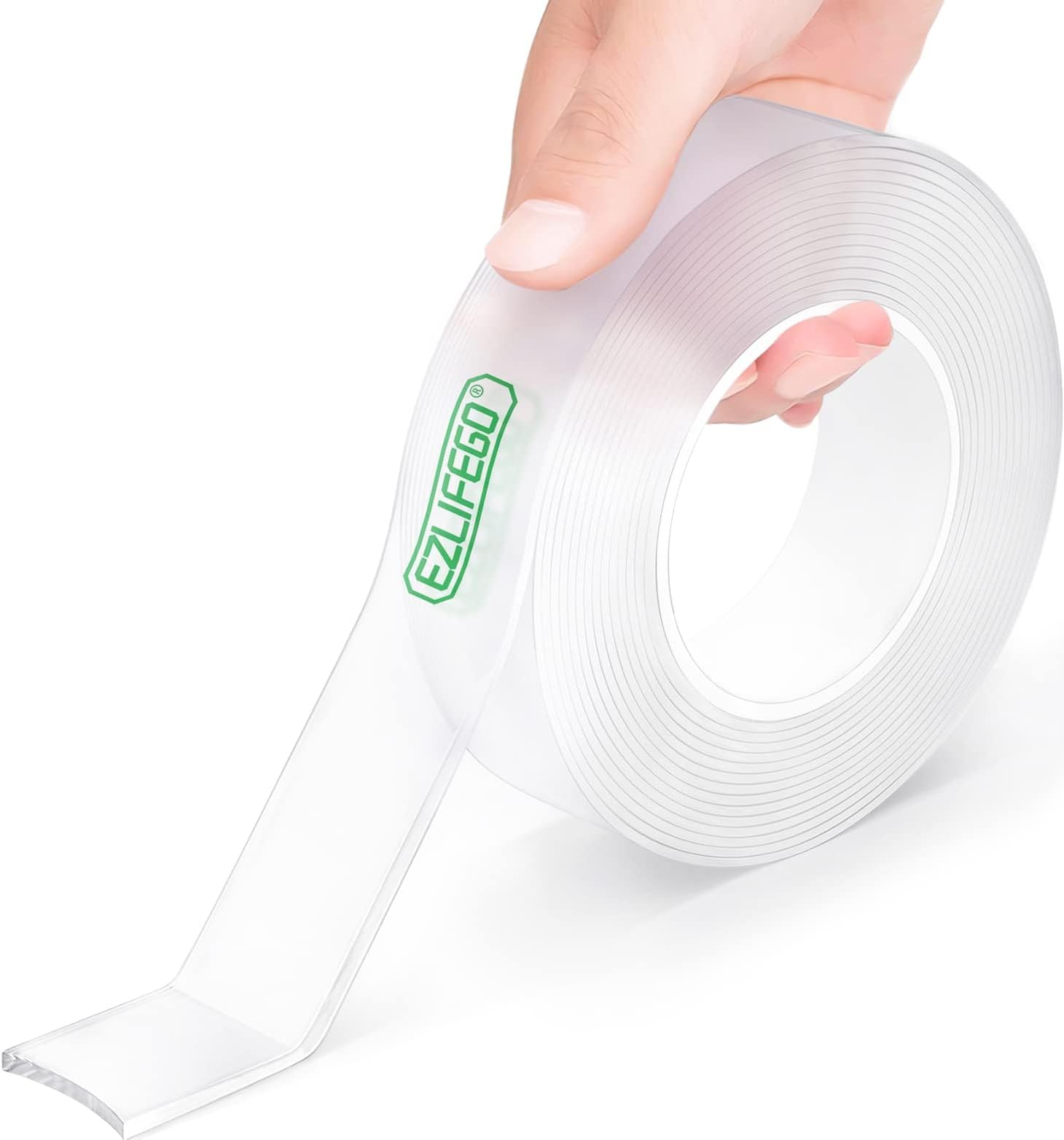
A stock image related to Double sided nano tape.
3 Common User Pain Points for ‘Double sided nano tape’ & Their Solutions
Scenario 1: How to Prevent Load-Bearing Failures When Mounting on Rough Industrial Surfaces?
The Problem:
B2B procurement teams in manufacturing and facilities management frequently encounter mounting failures when deploying standard nano tape on textured substrates common in industrial environments across Africa and South America. While marketing materials highlight impressive weight capacities, the reality on rough concrete, oxidized metal, or powder-coated surfaces reveals a different story—the gel-acrylic adhesive cannot form complete vacuum seals on porous or uneven topography. This results in catastrophic detachment of cable management systems, lightweight signage, or temporary tooling fixtures, creating safety liabilities and production downtime. Buyers struggle to reconcile the tape’s promised versatility with real-world substrate variability, particularly when mechanical fastening is prohibited to preserve surface warranties.
The Solution:
Specify nano tape formulations with enhanced viscosity gel matrices (minimum 1.5mm thickness) specifically engineered for irregular surfaces. Implement a two-phase application protocol: first, pre-treat porous substrates with compatible sealants to create uniform bonding planes, then apply tape using 30-second pressure activation techniques. For heavy industrial loads, adopt hybrid mounting strategies where nano tape serves as immediate-positioning technology while structural adhesives cure, or specify nano tape with 18+ PSI shear ratings validated on your specific substrate samples. Request batch-specific tensile testing certificates from suppliers to ensure compliance with German engineering standards or local building codes, eliminating guesswork from procurement decisions.
Scenario 2: How to Ensure Nano Tape Adhesion in High-Temperature Outdoor Manufacturing Environments?
The Problem:
Procurement managers for outdoor infrastructure and manufacturing facilities in the Middle East and tropical regions consistently report adhesive creep and complete bond failure when nano tape encounters operational temperatures exceeding 50°C. Standard formulations soften under thermal stress, causing mounted solar panel junction boxes, temporary construction signage, or manufacturing line sensors to shift or detach. UV radiation compounds this degradation, breaking down the acrylic polymer chains and leaving gummy residues that contradict the “traceless removal” value proposition. This creates maintenance nightmares for buyers who selected nano tape specifically for its clean removal characteristics in leased facilities or temporary installations.
The Solution:
Source nano tape manufactured with high-temperature resistant acrylic gel formulations rated for continuous exposure up to 80°C and intermittent peaks to 100°C. Verify UV stabilization additives in the polymer matrix to prevent chain degradation during outdoor use. Leverage the tape’s washable reusability as a maintenance strategy—establish monthly inspection protocols where tape is removed, washed with distilled water to restore original adhesive properties, and reapplied, effectively resetting the thermal aging clock. For critical applications, specify nano tape as a secondary retention system alongside mechanical anchors, providing redundancy while maintaining residue-free removal capabilities for equipment upgrade cycles, particularly valuable in European rental markets where surface damage deposits are strictly enforced.
Scenario 3: How to Navigate MOQ Restrictions and Regional Compliance for Bulk Nano Tape Procurement?
The Problem:
International distributors and procurement teams face significant inventory risk when navigating rigid minimum order quantities that don’t align with regional demand patterns across Nigeria, Germany, and South American markets. Standard nano tape offerings often lack the dimensional variety required by diverse applications—retail channels need narrow widths for consumer craft markets, while industrial buyers require thick, heavy-duty formulations for carpet installation and machinery mounting. Additionally, generic packaging prevents brand differentiation in competitive B2B channels, and lack of regional compliance documentation (REACH, SONCAP, SASO) creates customs clearance delays and regulatory rejection risks that strain buyer-supplier relationships.
The Solution:
Engage manufacturers offering modular MOQ structures starting at 500-roll thresholds with mix-and-match SKU capabilities, allowing buyers to test market demand across multiple thicknesses (0.5mm to 3mm) and widths (12mm to 50mm) without excessive inventory commitment. Negotiate OEM customization including private labeling, localized instruction languages, and region-specific compliance pre-certification to streamline import processes. For German markets, ensure full REACH and RoHS documentation; for Nigeria, verify SONCAP certification readiness. Implement vendor-managed inventory agreements for high-turnover specifications while maintaining air-freight accessibility for specialized industrial formulations, creating agile supply chains that adapt to seasonal construction cycles and regional economic fluctuations without capital tie-up.
Strategic Material Selection Guide for Double sided nano tape
For B2B procurement teams sourcing double-sided nano tape, understanding the substrate material chemistry is critical to matching product specifications with end-use environments. While marketed generically as “nano tape,” these adhesives vary significantly in polymer composition, directly impacting shear strength, temperature resistance, and surface compatibility across diverse climates from Nigeria’s humidity to Germany’s temperature fluctuations. This analysis examines four primary material formulations to guide strategic material selection for commercial applications ranging from electronics assembly to heavy-duty industrial mounting.
Which Acrylic Gel Matrix Specifications Ensure Optimal Adhesion for Industrial Applications?
Acrylic copolymer gel represents the industry standard for double-sided nano tape, utilizing cross-linked acrylic esters to create a transparent, viscoelastic solid with triple the sticking power of conventional adhesives. This material delivers exceptional initial tack and optical clarity, making it ideal for retail display mounting, glass surface applications, and cable management in modern office environments where aesthetics are paramount. B2B buyers should specify gel densities between 0.8-1.2 g/cm³ for optimal performance, as lower densities compromise shear strength while higher densities reduce conformability on textured substrates. The material excels in climate-controlled environments and offers washable reusability, but exhibits reduced adhesion above 80°C and potential yellowing under prolonged UV exposure, limiting outdoor architectural applications in equatorial African and Middle Eastern markets without additional UV stabilizers.
How Does Polyurethane (PU) Gel Compare for Delicate Surface Applications?
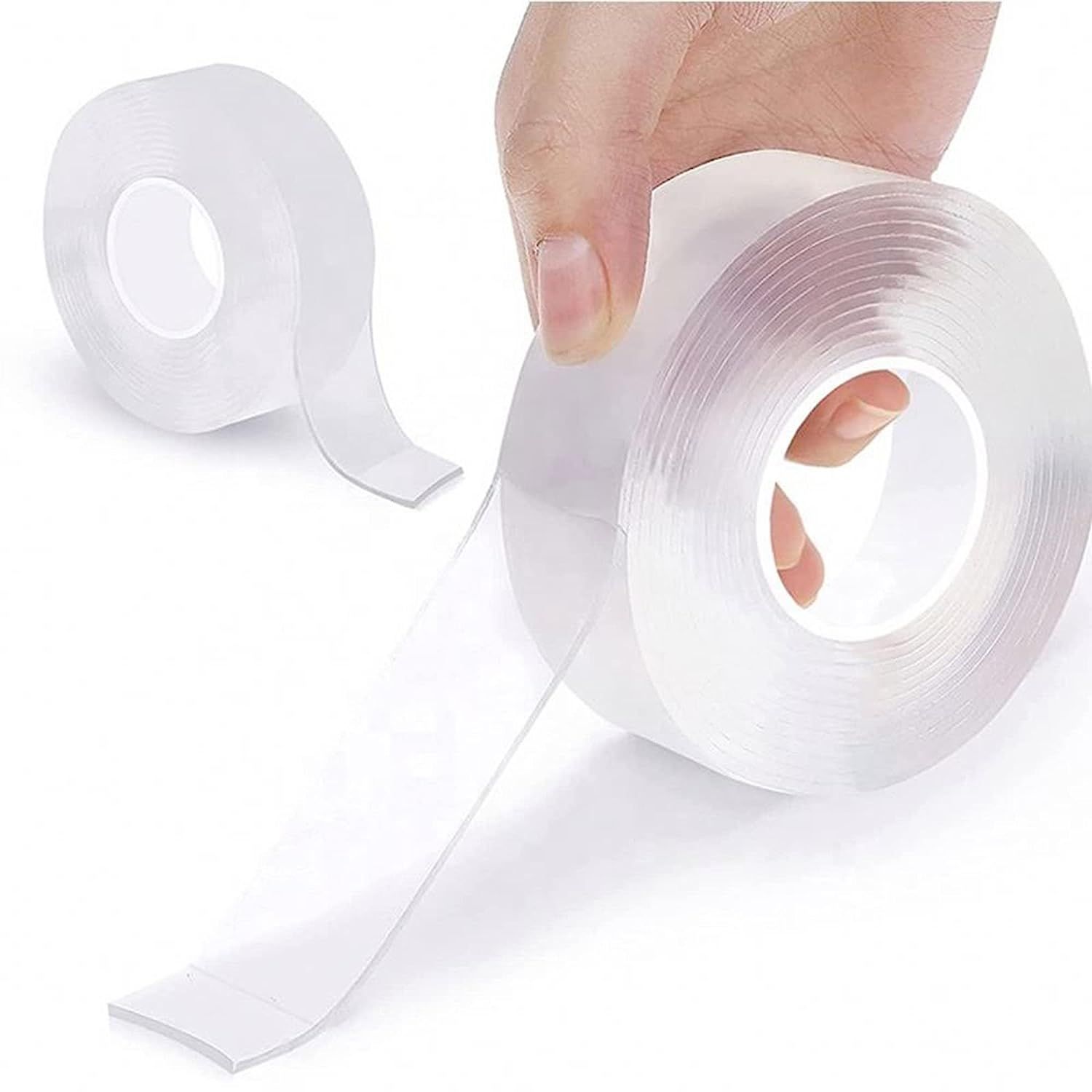
A stock image related to Double sided nano tape.
In-depth Look: Manufacturing Processes and Quality Assurance for Double sided nano tape
Understanding the manufacturing intricacies behind double-sided nano tape empowers B2B procurement teams to distinguish between commodity-grade adhesives and premium industrial solutions. For buyers sourcing from international markets—whether distributing to Nigeria’s construction sector, Germany’s precision engineering firms, or retail channels across South America and the Middle East—knowledge of production standards ensures consistent product performance across diverse climates and regulatory environments. This technical overview examines the critical manufacturing phases and quality assurance protocols that define reliable nano tape supply chains.
What Raw Material Specifications Define Premium Nano Tape Production?
The foundation of high-performance double-sided nano tape lies in its gel-acrylic polymer matrix, distinct from conventional foam or rubber adhesives. Premium manufacturers utilize medical-grade acrylic polymers suspended in nano-scale gel structures, creating the characteristic “triple adhesion” effect referenced in advanced product specifications. The raw material composition must balance immediate tack strength with long-term cohesion, typically requiring a solids content between 45-60% to achieve the optimal viscosity for coating processes.
Thickness consistency represents another critical material specification, with industrial standards ranging from 0.5mm (approximately 1/24 inch) to 2mm (1/12 inch) depending on load-bearing requirements. B2B buyers should verify that suppliers source virgin acrylic resins rather than recycled polymers, as reprocessed materials compromise the tape’s washability and reusability features. Additionally, transparency ratings exceeding 90% light transmission indicate high-purity gel formulations essential for aesthetic applications in retail displays and architectural mounting.
How Is the Gel-Acrylic Adhesive Layer Engineered for Reusability?
The manufacturing process employs precision slot-die coating or comma coating techniques to apply the gel-acrylic layer onto PET (polyethylene terephthalate) film substrates. This process occurs in climate-controlled environments maintaining 45-55% humidity and 20-25°C temperature to prevent premature curing. The coating thickness tolerance must remain within ±5 microns to ensure uniform adhesion across the entire roll surface.
Critical to the tape’s reusability is the incorporation of micro-void structures within the adhesive gel. During production, controlled foaming agents create these microscopic pockets that allow the tape to “breathe” during washing, preventing moisture retention that would degrade adhesion. Manufacturers achieve this through dual-stage curing: initial UV crosslinking establishes structural integrity, while thermal treatment (typically 80-100°C for 3-5 minutes) activates the pressure-sensitive adhesive properties without compromising the gel’s elastic recovery characteristics.
Which Quality Control Metrics Ensure Consistent Adhesion Performance?
Rigorous testing protocols separate industrial-grade nano tape from consumer novelty products. B2B buyers should insist on suppliers providing adhesion test data measured in accordance with ASTM D3330 (peel adhesion) and ASTM D3654 (shear adhesion) standards. Premium nano tapes demonstrate peel strengths of 18-25 N/cm and dynamic shear resistance capable of holding 1.2-1.5 kg/cm², correlating to the “18 pounds per square inch” performance benchmark cited in industry specifications.
In-process quality control includes 100% visual inspection for coating defects using automated optical scanning systems, alongside destructive testing of batch samples. Manufacturers should conduct loop tack testing to verify immediate bond formation and 90-degree peel tests after 24-hour dwell time to assess adhesion build. For B2B procurement, requesting Certificate of Analysis (CoA) documents for each production lot ensures traceability and confirms that tensile strength, elongation at break, and adhesion values meet specified tolerances.
What Environmental and Safety Certifications Should B2B Buyers Verify?
For markets in the European Union, particularly Germany, compliance with REACH regulations and RoHS directives regarding hazardous substance restrictions is non-negotiable. The gel-acrylic formulation must contain less than 0.1% restricted phthalates and heavy metals. Additionally, ISO 9001:2015 certification for quality management systems and ISO 14001 for environmental management indicate manufacturer commitment to consistent production standards.
Climate-specific testing becomes crucial for African and Middle Eastern distribution channels. Quality assurance should include accelerated aging tests at 70°C/90% RH (relative humidity) for 72 hours to simulate tropical storage conditions, ensuring the adhesive does not ooze or degrade. For the South American market, UV resistance testing (ASTM G154) verifies that transparency and adhesion remain stable under high-altitude solar exposure, preventing yellowing or embrittlement that compromises the tape’s aesthetic and functional properties.
How Do Manufacturers Ensure Residue-Free Removal and Surface Compatibility?
The “traceless” removal characteristic requires sophisticated surface energy engineering during manufacturing. Quality assurance teams test the tape against various substrates—including painted drywall, glass, powder-coated metal, and varnished wood—using standardized surface preparation protocols. The gel-acrylic formulation must achieve a balance where cohesive strength exceeds adhesive strength upon removal, preventing substrate damage while maintaining structural integrity during use.
Manufacturers conduct residue analysis using Fourier-transform infrared spectroscopy (FTIR) to detect adhesive transfer after 30-day mounting periods. For B2B applications involving temporary signage or rental property fixtures, buyers should verify that suppliers perform 500-cycle repositioning tests, ensuring the tape maintains 80% of initial adhesion strength after multiple applications. This testing protocol directly correlates with the product’s washability claims, confirming that gentle cleaning with water restores adhesive properties without chemical degradation.
What Packaging and Storage Standards Preserve Nano Tape Efficacy During Shipping?
International shipping presents unique challenges for pressure-sensitive adhesives. Quality-conscious manufacturers package nano tape in moisture-barrier bags with silica gel desiccants, maintaining relative humidity below 40% during ocean freight. Individual rolls require release liners made from PE-coated paper or fluorosilicone-treated films that prevent adhesive migration while allowing clean unwinding.
Temperature monitoring during transit is essential, particularly for shipments to regions with extreme climates. Premium suppliers utilize vacuum-sealed packaging with temperature indicators that alert recipients to exposure above 35°C, which could initiate premature crosslinking. For B2B buyers, verifying that suppliers utilize automated winding tension controls prevents edge compression or telescoping during transport, ensuring that rolls arrive ready for immediate slitting and distribution without deformation or adhesive bleed.
When evaluating potential suppliers, request documentation of their incoming raw material inspection protocols, in-process statistical process control (SPC) data, and finished goods retention sampling procedures. This manufacturing transparency ensures that your nano tape inventory delivers the promised combination of strength, reusability, and surface safety that distinguishes premium products in competitive international markets.
Practical Sourcing Guide: A Step-by-Step Checklist for ‘Double sided nano tape’
Navigating the procurement of double-sided nano tape requires balancing innovative adhesive technology with practical supply chain considerations. This checklist equips international buyers with actionable steps to evaluate gel-acrylic tape specifications, verify performance claims, and establish reliable supplier partnerships across diverse markets from Lagos to Berlin.
What Technical Specifications Should B2B Buyers Define for Double-Sided Nano Tape?
Begin by specifying gel-acrylic adhesive composition and dimensional requirements, including thickness (typically 1/12″ or 1/24″), width variations (0.5″ to 2″), and roll lengths suitable for your application scale. Request detailed load-bearing specifications—quality nano tape should support approximately 18 pounds per square inch for secure mounting of items ranging from carpet mats and photo frames to electronic devices. Clarify transparency levels and whether you require pre-cut segments or continuous rolls for automated dispensing systems.
How to Verify Adhesive Performance and Washability Claims?
Demand comprehensive testing data demonstrating residue-free removal from painted drywall, glass, metal, and wood substrates common in both residential and commercial environments. Verify reusability specifications by requesting documented washability cycle counts—premium tapes maintain adhesion after multiple rinses with water and air-drying. Conduct independent shear-strength testing to confirm triple-sticking-power claims, and request video documentation of the 30-second pressure application technique to ensure optimal bonding strength during your team’s installation training.
What Compliance Certifications Are Essential for International Markets?
For European distribution, particularly in Germany, require REACH and RoHS compliance documentation to verify absence of restricted substances. Request ISO 9001 quality management certification from manufacturers to ensure consistent production standards. If marketing eco-friendly attributes, demand verification of recyclable materials and gel-acrylic biodegradability claims. For African and Middle Eastern markets, additionally verify heat-resistance certifications for climates exceeding 40°C to prevent adhesive degradation during warehouse storage or transit.
How to Assess Supplier Capabilities and Customization Options?
Evaluate manufacturing capacity against your projected order volumes, confirming ability to scale from initial test batches to full container-load quantities without quality degradation. Discuss OEM branding possibilities, including custom core labels, barcoding, and retail packaging design for resale markets. Verify precision cutting capabilities beyond standard widths—can the supplier accommodate specialized dimensions for cable management or craft applications? Confirm their experience with B2B bulk packaging versus consumer retail configurations to optimize shipping densities.
What Logistics Considerations Apply to Nano Tape Procurement?
Address temperature-controlled shipping requirements, as prolonged exposure to extreme heat during maritime transit can compromise gel-acrylic adhesive properties. Clarify shelf-life specifications—typically 12-24 months when stored in cool, dry conditions—and humidity-resistant packaging for tropical climates. Determine whether suppliers offer consolidated shipping options for mixed container loads, particularly valuable for distributors sourcing multiple organizing accessories alongside nano tape for comprehensive office or construction supply catalogs.
How to Conduct Rigorous Sample Testing Protocols?
Before committing to bulk orders, implement a three-phase testing protocol: initial adhesion testing on representative regional surfaces (painted concrete common in Nigeria, tile, treated wood), washability verification through five cleaning cycles with local water types, and climate simulation testing for hot storage conditions. Test samples from multiple production batches to ensure consistency. For B2B resale markets, evaluate the tape’s performance with heavier commercial mounting applications versus typical household use, ensuring it meets professional-grade standards for your target sectors.
How to Negotiate Terms and Quality Guarantees?
Establish clear defect-rate thresholds—typically sub-2% for premium suppliers—and document replacement policies for adhesion failures or dimensional inconsistencies. Structure payment terms using secure international trade mechanisms, withholding 10-30% final payment until customs clearance and initial quality inspection are completed. Require technical data sheets and safety documentation in appropriate languages—English, German, Arabic, or Portuguese—ensuring compliance paperwork accompanies every shipment for smooth import processing and distribution across your target regions.

A stock image related to Double sided nano tape.
Comprehensive Cost and Pricing Analysis for Double sided nano tape Sourcing
When sourcing double-sided nano tape at volume, understanding the cost architecture beyond retail benchmarks is essential for procurement teams. While consumer-facing prices for premium gel-acrylic variants typically range between $0.40–$0.80 per linear foot depending on width and thickness, B2B buyers accessing factory-direct channels can secure rates 40–60% lower when meeting minimum order thresholds. The pricing matrix fluctuates significantly based on acrylic adhesive density, substrate thickness (measured in mil), and whether the product includes value-added features like UV resistance or enhanced washability cycles.
What Factors Determine Bulk Pricing for Nano Tape Orders?
Material specifications drive the primary cost differentiation in nano tape manufacturing. Standard 1mm thickness gel tapes command lower per-unit costs than heavy-duty 2mm variants engineered for industrial load-bearing applications exceeding 18 PSI. Width dimensions also scale pricing non-linearly; tapes wider than 50mm require specialized coating equipment, increasing production costs by 15–25% compared to standard 12–25mm formats. Additionally, certifications such as RoHS compliance or REACH registration for European markets add $0.02–$0.05 per meter but are essential for regulatory adherence in Germany and other EU jurisdictions.
How Do MOQ Requirements Impact Your Total Procurement Cost?
Chinese manufacturers typically structure pricing in tiered volumes: 1,000–5,000 rolls (baseline), 5,000–20,000 rolls (preferential), and 20,000+ rolls (contract manufacturing rates). For Nigerian or Brazilian importers, consolidating orders to hit the 5,000-roll threshold reduces landed costs significantly, often including free OEM branding and customized core printing. However, smaller Middle Eastern distributors should negotiate mixed-SKU containers—combining various widths in a single shipment—to access bulk rates without overcommitting to single-specification inventory that may stagnate in regional markets with diverse application needs.
Are There Regional Price Variations for African and European Markets?
Logistics complexity creates distinct pricing corridors. European buyers benefit from established rail-sea intermodal routes that keep freight costs to 8–12% of product value, whereas African importers face higher insurance premiums and inland transportation variables that can add 18–25% to base pricing. German procurement teams often prioritize ISO-certified facilities, accepting 10–15% premiums for documented quality assurance, while Nigerian buyers frequently optimize for maximum quantity per container to amortize customs clearance fees across larger volumes.
How Can Buyers Calculate True Cost-Per-Use Value?
Unlike traditional foam tapes, nano tape’s reusability after washing creates a unique total-cost-of-ownership calculation. A single 10-foot roll capable of 600+ adhesion cycles effectively delivers utility equivalent to 30–40 conventional tape rolls. When evaluating quotes, divide the unit price by estimated reuse cycles rather than linear footage. Premium variants priced 20% higher but offering enhanced washability typically yield superior ROI for commercial installation companies serving the hospitality and exhibition sectors across South America and the Middle East.
What Hidden Costs Should Importers Budget Beyond Unit Price?
Beyond FOB pricing, buyers must account for anti-dumping duties in certain European markets, specialized packaging for humidity-sensitive gel adhesives during sea freight (desiccant inserts add $0.50–$1.20 per carton), and currency hedging for multi-month production cycles. For African markets, pre-shipment inspection certificates (SGS/BV) represent fixed costs that dilute value on small orders but become negligible when amortized across full container loads. Smart procurement involves negotiating Incoterms that shift insurance liability only after successful port clearance in Lagos or São Paulo.
Alternatives Analysis: Comparing Double sided nano tape With Other Solutions
When evaluating mounting and bonding solutions for commercial applications, procurement teams must weigh immediate adhesive performance against long-term operational flexibility. While double sided nano tape offers a unique combination of reusability and traceless removal, traditional methods remain viable for specific industrial contexts. This analysis examines how nano tape stacks against mechanical fastening systems and conventional foam adhesives—the two most common alternatives in B2B facility management and retail operations—to determine optimal use cases for different regional market conditions and asset management strategies.
| Comparison Aspect | Double Sided Nano Tape | Mechanical Fasteners (Screws/Brackets) | Traditional Double-Sided Foam Tape |
|---|---|---|---|
| Performance/Holding Strength | Up to 18 PSI; ideal for lightweight fixtures, signage, and cable management | 50+ PSI; suitable for heavy machinery and structural loads | 5-10 PSI; adequate for paper, photos, and temporary lightweight displays |
| Cost per Application | Moderate initial cost; high ROI through reusability (100+ cycles) | Low material cost; high labor/installation expenses | Low initial cost; requires complete replacement for repositioning |
| Ease of Implementation | Tool-free application; immediate bond; no curing time | Requires drilling equipment, skilled labor, and surface preparation | Simple peel-and-stick application; limited repositioning capability |
| Surface Damage Risk | Zero damage; traceless removal protects asset value | Permanent holes and structural damage; repair costs required | Moderate residue risk; potential paint damage during removal |
| Reusability | Fully washable and reusable; maintains adhesion after cleaning | Single installation; removal destroys fastener | Single-use; loses effectiveness after initial removal |
| Environmental Resistance | Excellent humidity resistance; performs in 0-60°C range | Extreme durability across all climates | Degrades in high humidity; adhesive softens in heat (common in Nigeria/Brazil) |
| Aesthetic Impact | Crystal clear; invisible on glass, acrylic, and painted surfaces | Visible hardware; industrial appearance | Visible foam substrate; may yellow over time |
When Should B2B Buyers Choose Mechanical Fasteners Over Nano Tape?
Mechanical fastening systems—including screws, wall anchors, and metal brackets—deliver superior load-bearing capacity for permanent industrial installations exceeding 18 PSI, making them indispensable for heavy machinery mounting or structural shelving in warehouse environments across Germany and Nigeria. However, these systems require specialized labor, drilling equipment, and create permanent surface damage that complicates lease agreements and reduces asset resale values—particularly critical considerations for European commercial real estate markets and rapidly expanding African retail sectors where facility flexibility drives profitability. While material costs remain low, the total cost of ownership escalates when factoring in installation time, potential surface repair upon removal, and the inability to reconfigure layouts without additional capital expenditure. For B2B buyers managing multiple retail locations or temporary exhibition spaces, the rigidity of mechanical solutions often outweighs their strength advantages, especially when nano tape provides sufficient holding power for signage, cable management, and lightweight fixtures without compromising wall integrity.
How Do Traditional Foam Adhesives Impact Total Cost of Ownership?
Conventional double-sided foam tapes present an attractive upfront cost advantage for single-use promotional displays and temporary signage, yet they introduce significant hidden costs through adhesive residue accumulation and limited reusability that contradicts circular economy initiatives increasingly prioritized in Middle Eastern and South American sustainability frameworks. These acrylic foam alternatives typically degrade under high humidity conditions—common in Nigerian or Brazilian commercial environments—leading to premature failure and potential liability issues if displays fall in customer-facing areas. Furthermore, the cleaning solvents required to remove residue often damage delicate surfaces like painted drywall or polished stone prevalent in European commercial interiors, creating additional maintenance expenses and downtime that nano tape’s washable, residue-free formulation eliminates entirely. Procurement teams must evaluate whether the initial savings of foam tape justify the replacement costs and surface remediation required when refreshing seasonal marketing materials or reconfiguring office layouts.
What Are the Limitations of Hook-and-Loop Systems for Commercial Applications?
Hook-and-loop fasteners offer the reusability that nano tape provides, yet they introduce bulk and visual clutter that undermine the aesthetic requirements of premium retail environments in European markets and high-end commercial spaces across the Middle East. While these systems allow for repeated attachment cycles, the mechanical engagement creates surface stress points and fabric degradation that limit their effectiveness on delicate materials or in dusty industrial conditions common in African manufacturing facilities. Additionally, the visible profile of hook-and-loop strips conflicts with modern minimalist design trends, and their tendency to accumulate dust and debris in humid climates—such as those found in South American coastal cities—necessitates frequent replacement, eroding their cost advantage over washable nano tape solutions that maintain optical clarity and adhesive strength through multiple cleaning cycles.
Essential Technical Properties and Trade Terminology for Double sided nano tape
When evaluating double-sided nano tape for commercial procurement, precise technical specifications and standardized industry terminology determine product suitability for specific applications. Understanding these parameters enables buyers to verify quality certifications, ensure regulatory compliance, and optimize inventory selection across diverse market requirements from European industrial standards to tropical climate specifications in African and South American regions.
What Are the Critical Technical Specifications for Double-Sided Nano Tape?
Peel Adhesion Strength measures the force required to remove tape perpendicular to the substrate surface, typically expressed in Newtons per centimeter (N/cm) or ounces per inch (oz/in). Industrial-grade nano tapes generally exhibit 1.5–3.0 N/cm peel strength, providing sufficient holding power for mounting applications while maintaining removability characteristics.
Caliper (Thickness) directly impacts conformability and load distribution, with standard nano tape ranging from 0.5mm to 2.0mm. Thicker formulations offer enhanced gap-filling capabilities for uneven industrial surfaces, while thinner variants provide invisible mounting solutions for glass and acrylic displays.
Static Shear Resistance indicates the tape’s ability to withstand constant load without sliding, measured in minutes or hours under standardized weight testing. High-performance nano tapes demonstrate 72+ hours shear resistance at 1kg load, critical for vertical mounting applications in warehousing and retail environments.
Temperature Operating Range defines functional limits, typically spanning -20°C to +80°C for standard formulations, with specialized industrial grades extending to 120°C. This specification proves essential for buyers in Middle Eastern and equatorial African markets where ambient temperatures affect adhesive performance.
Elongation at Break quantifies stretch capacity before failure, usually 300–800% for nano gel formulations. This property enables the tape to accommodate thermal expansion differentials between bonded materials without delamination.
Optical Clarity measures light transmission percentage, with premium grades offering 90%+ transparency for aesthetic mounting where visible adhesive lines are unacceptable.
What Industry Terminology Should B2B Buyers Understand When Sourcing Nano Tape?
Gel-Acrylic Hybrid Adhesive refers to the viscoelastic polymer matrix combining the flow characteristics of gel with acrylic pressure-sensitive adhesion. This technology distinguishes nano tape from conventional foam tapes, providing conformability to micro-surface irregularities while maintaining structural integrity.
Traceless Removal describes clean peel-away characteristics without substrate damage, paint lifting, or adhesive residue transfer. This property depends on cohesive failure within the adhesive layer rather than adhesive failure at the substrate interface.
Reusable Adhesion indicates the capacity to regenerate surface tack through washing with water and air-drying, typically allowing 5–10 reuse cycles. This terminology appears frequently in sustainability specifications for circular economy procurement initiatives.
Surface Energy Compatibility describes the correlation between adhesive formulation and substrate surface tension. High-energy surfaces (metals, glass) bond readily, while low-energy substrates (polypropylene, polyethylene) require specific nano tape formulations with modified surface wetting properties.
Initial Tack versus Ultimate Bond differentiates immediate grab strength from fully cured adhesion. Nano tapes exhibit high initial tack for instant positioning, reaching ultimate bond strength after 24–72 hours of dwell time.
Linerless Construction identifies tape manufactured without release paper or film backing, possible due to the non-tacky outer gel surface. This format reduces packaging waste and simplifies application in high-speed manufacturing environments.
Navigating Market Dynamics and Sourcing Trends in the Double sided nano tape Sector
The double-sided nano tape sector is undergoing rapid commercial transformation as industries pivot from permanent mechanical fasteners to flexible, damage-free adhesive solutions. For procurement teams operating across diverse economic landscapes—from Germany’s precision engineering markets to Nigeria’s burgeoning retail infrastructure and the Middle East’s construction boom—navigating supply chain complexities requires sophisticated market intelligence. Understanding regional demand patterns, climate-specific performance requirements, and evolving sustainability mandates has become essential for strategic inventory optimization and supplier selection.
What is driving the global demand for double-sided nano tape in commercial sectors?
Commercial adoption is accelerating beyond consumer DIY applications into industrial prototyping, automotive interior assembly, and temporary exhibition infrastructure. Market data indicates that B2B procurement officers increasingly specify gel-acrylic adhesive systems delivering up to 18 PSI holding strength while enabling residue-free removal. This shift reflects operational needs for agile workspace configurations in hybrid offices, rental-friendly retail displays, and reusable packaging systems. Manufacturers now offer expanded dimensional portfolios, from ultra-thin 1/24″ widths for electronics assembly to heavy-duty 2″ variants for construction applications, alongside custom die-cutting services for OEM integration. The technology’s ability to replace mechanical fasteners while supporting Industry 4.0 flexible manufacturing processes positions nano tape as a critical component in modern assembly line optimization.
How are regional market dynamics shaping sourcing strategies across Africa, Europe, and the Middle East?
Regional infrastructure and climatic variations significantly influence procurement specifications and logistics planning. European buyers, particularly in Germany and Scandinavia, prioritize REACH-compliant formulations and traceable supply chains meeting stringent workplace chemical safety standards, often requiring suppliers to provide full material safety data sheets in multiple languages. Conversely, West African markets including Nigeria demand humidity-resistant variants capable of maintaining adhesion in tropical climates without mold growth or surface degradation. Middle Eastern procurement teams are driving innovation in high-temperature resistant nano tapes suitable for outdoor installations exceeding 60°C. Successful B2B sourcing strategies now require suppliers with regional warehousing capabilities and climate-specific technical validation, ensuring products perform reliably from European manufacturing floors to outdoor African construction sites.
What customization trends should procurement teams anticipate in 2025?
The market is witnessing increased demand for private-label nano tape solutions featuring branded dispenser packaging and color-coded thickness indicators for industrial inventory management. B2B buyers are requesting specialized formulations including anti-static variants for electronics manufacturing facilities and UV-resistant tapes for outdoor signage applications. Additionally, bulk procurement contracts increasingly specify just-in-time delivery schedules with moisture-barrier packaging to accommodate long-haul shipping to South American and African markets. Suppliers offering technical consultation services for surface compatibility testing and application training are gaining competitive advantage in enterprise procurement tenders.
Why is washable nano tape becoming essential for circular economy initiatives?
The reusability factor—often supporting 50+ wash and reuse cycles without adhesive degradation—positions nano tape as a strategic component in corporate waste reduction and circular economy frameworks. Unlike traditional foam mounting tapes that contribute to construction and demolition waste streams, recyclable gel-acrylic variants align with the EU Circular Economy Action Plan and emerging Extended Producer Responsibility (EPR) regulations across South American markets. B2B procurement teams are calculating total cost of ownership benefits, where reusable tapes reduce material consumption by up to 80% compared to single-use alternatives in temporary installation scenarios. Furthermore, the elimination of surface damage during removal reduces renovation waste in commercial real estate, supporting LEED certification requirements and green building standards increasingly mandated in European and Middle Eastern development projects.
How can B2B buyers verify ethical sourcing and environmental compliance?
Due diligence requires verification beyond standard ISO 9001 certifications to encompass raw material traceability and manufacturing ethics. Procurement teams should demand transparency regarding acrylic polymer sourcing, specifically confirming the absence of volatile organic compounds (VOCs) and compliance with RoHS directives for electronics applications. For African and Middle Eastern markets, verifying alignment with both local import standards (such as SONCAP in Nigeria) and international chemical safety protocols prevents costly customs delays. Requesting third-party lifecycle assessments (LCAs), washability test reports, and carbon footprint documentation for shipping logistics provides empirical evidence of sustainability claims. Additionally, prioritizing suppliers utilizing renewable energy in polymer processing and offering plastic-free packaging options can significantly advance corporate Scope 3 emissions reduction targets while meeting the procurement standards of environmentally conscious European distributors.
As double-sided nano tape transitions from consumer novelty to industrial essential, B2B buyers who integrate regional climate intelligence with circular economy principles will secure supply chain resilience. The convergence of high-performance adhesion technology and verifiable environmental responsibility offers procurement teams a strategic pathway to reduce operational expenditures while advancing corporate sustainability objectives across diverse international markets.
Frequently Asked Questions (FAQs) for B2B Buyers of Double sided nano tape
When sourcing double-sided nano tape for industrial and commercial applications across diverse international markets, procurement teams must evaluate technical specifications, regulatory requirements, and total cost of ownership beyond standard consumer-grade metrics. The following addresses critical decision factors for bulk buyers operating in manufacturing, retail display, and facility management sectors.
How do I determine the load-bearing capacity of heavy-duty double-sided nano tape for industrial mounting applications?
Industrial-grade nano tape utilizes gel-acrylic adhesive matrices that typically support loads up to 18 pounds per square inch (PSI) under optimal conditions. To calculate specific weight capacity for your application, multiply the tape’s contact surface area (width × length) by the PSI rating, then apply a safety factor of 30-40% for dynamic loads or textured surfaces. For heavy industrial fixtures exceeding 5kg, we recommend using wider tape configurations (1″ to 2″ widths) or multiple strips to distribute shear forces effectively across the bonding surface.
How does double-sided nano tape compare to acrylic foam tape for permanent versus temporary industrial mounting?
While acrylic foam tape creates permanent, structural bonds suitable for automotive and construction applications, nano tape offers unique removability and traceless removal characteristics critical for temporary manufacturing setups and leased facility equipment. Nano tape’s gel-based composition allows for clean repositioning without surface damage, whereas foam tape requires solvent removal and often damages substrates. However, for high-vibration environments or loads exceeding 20kg permanently, foam tape remains superior, while nano tape excels in electronics mounting, temporary signage, and reusable fixture applications where surface integrity is paramount.
What are the standard MOQ and customization options for bulk double-sided nano tape orders in international procurement?
Standard minimum order quantities (MOQ) typically range from 500 to 2,000 rolls depending on thickness specifications (1/24″ to 1/12″ variants) and width requirements (1/2″ to 2″ standard). B2B buyers can request custom slitting to non-standard widths, private label packaging with multilingual instructions for regional markets (Arabic, German, Portuguese), and specialized core sizes for automated dispensers. Lead times for customized orders generally span 15-30 days for African, South American, and Middle Eastern destinations, with options for moisture-barrier packaging essential for humid climates.
Is double-sided nano tape suitable for high-temperature manufacturing environments and outdoor industrial applications?
Standard nano tape formulations operate effectively within -20°C to 80°C (-4°F to 176°F), making them suitable for most indoor manufacturing environments but potentially inadequate for high-temperature industrial processes exceeding these thresholds. For outdoor applications in Middle Eastern or tropical climates, verify UV-resistant grades specifically engineered with stabilized gel-acrylic compounds to prevent adhesive degradation. Standard nano tape performs optimally in climate-controlled warehouses and electronics assembly; for outdoor signage or high-heat machinery, specify industrial-grade nano tape with temperature ratings up to 120°C or consider hybrid mounting solutions.
How do I ensure proper surface preparation for maximum adhesion when deploying nano tape in manufacturing facilities?
Optimal adhesion requires thoroughly degreasing surfaces with isopropyl alcohol (70% concentration or higher) to remove machining oils, dust, and oxidation common in industrial environments. Apply firm pressure for 30-60 seconds after installation to activate the gel-acrylic bonding mechanism, particularly on painted metals, powder-coated surfaces, or textured plastics prevalent in factory settings. Avoid application on surfaces treated with silicone-based cleaners or mold-release agents, as these create barrier films that reduce bonding strength by up to 60%.
What certifications and regulatory compliance standards should I verify when sourcing double-sided nano tape for European and Middle Eastern markets?
For European Union destinations including Germany, verify REACH compliance and RoHS certification ensuring restricted substance limitations. Middle Eastern markets require SASO (Saudi Standards) or equivalent GCC conformity marks, while Nigerian imports need SONCAP certification. Additionally, request MSDS (Material Safety Data Sheets) documentation for customs clearance and workplace safety compliance. Food-contact applications require FDA or EU 10/2011 compliance for indirect food contact if used in packaging machinery or food processing equipment mounting.
What is the optimal storage protocol and shelf life expectancy for bulk nano tape inventory in humid climates?
Store nano tape in original moisture-barrier packaging at 15-25°C (59-77°F) with relative humidity below 60% to prevent premature adhesive activation. In tropical African or Southeast Asian climates, utilize climate-controlled warehousing or desiccant packets within shipping containers to prevent humidity-induced gel degradation. Unopened rolls maintain adhesive integrity for 18-24 months when stored properly; however, high-humidity exposure can reduce shelf life to 6-12 months. Rotate inventory using FIFO (First In, First Out) methods and inspect rolls for yellowing or edge lifting before deployment.
How do I calculate the total cost of ownership when replacing mechanical fasteners with double-sided nano tape in assembly operations?
Calculate TCO by factoring labor cost reductions (eliminating drilling, screwing, and tool changeover times), surface damage mitigation (avoiding wall repairs in leased facilities), and reusability factors—nano tape can be washed and repositioned 3-5 times before adhesive degradation. While initial material costs may exceed standard screws by 20-30%, assembly time reductions of 40-60% typically generate ROI within 3-6 months for high-volume electronics or display mounting operations. Include waste reduction credits, as nano tape eliminates metal fastener inventory and associated disposal costs.
Important Disclaimer & Terms of Use
⚠️ Important Disclaimer
The information provided in this guide, including content regarding manufacturers, technical specifications, and market analysis, is for informational and educational purposes only. It does not constitute professional procurement advice, financial advice, or legal advice.
B2B buyers must conduct their own independent and thorough due diligence before making any purchasing decisions. The risk of relying on any information in this guide is borne solely by the reader.
Top 5 Double Sided Nano Tape Manufacturers & Suppliers List
1. Naikos – Double Sided Nano Tape
Domain: naikos-adhesive-tapes.com
Registered: 2020 (6 years)
Introduction: Product Category: Double Sided Nano Tape (NKS Series/Magic Nano Tape). Material: Acrylic/Acrylic foam with nanotechnology and adaptable materials. Appearance: Clear/Transparent, durable. Adhesive: Acrylic, Pressure Sensitive, Double Sided. Key Features: Traceless (leaves no marks), washable and reusable, removable, waterproof, heat resistant, excellent adhesion and holding power, easy to cut and r…
2. Xiangyu – Heavy Duty Double Sided Nano Tape

Domain: cnxytape.com
Registered: 2022 (4 years)
Introduction: Nano Tape Heavy Duty Double Sided Mounting Tape supplied by Shenzhen Xiangyu New Material Co., Ltd. Heavy-duty double-sided adhesive tape designed for secure mounting and lasting bonds without the mess of traditional adhesives. Features strong hold and versatility suitable for both personal and industrial applications. Engineered to withstand various conditions ensuring durability and reliability….
3. JiaoTaoTao – Nano Tape
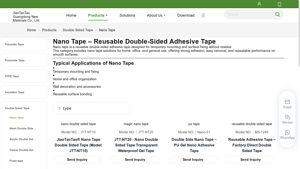
Domain: clothadhesive.com
Registered: 2025 (1 years)
Introduction: Nano Tape is a reusable double-sided adhesive tape manufactured by JiaoTaoTao Guangdong New Materials Co., Ltd. Designed for temporary mounting and surface fixing without residue, featuring strong adhesion, easy removal, and repeatable performance on smooth surfaces. Available models include JTT-NT10 (Nano Tape Double Sided), JTT-NT20 (Transparent Waterproof Gel Tape), Nano-01 (PU Gel Nano Adhesiv…
4. Nano Tape – Transparent Double Sided Nano Tape
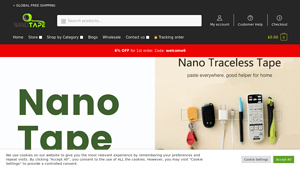
Domain: nano-tape.com
Registered: 2020 (6 years)
Introduction: Product: Transparent Double Sided Nano Tape. Key Features: Washable and reusable (rinse with water to restore adhesion), super strong gel formula holds ~9lbs (weight of 4 bricks), double-sided adhesive, transparent/clear appearance, easily removable without damaging surfaces or leaving glue marks/residue, strong elasticity, thin profile, high ductility. Compatible Surfaces: Walls, glass, mirrors, …
5. Duck Brand – Max Strength Nano-Grab Double-Sided Gel Tape
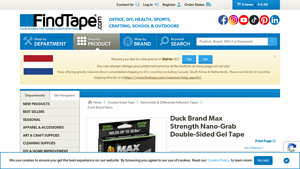
Domain: findtape.com
Registered: 2003 (23 years)
Introduction: Duck Brand Max Strength Nano-Grab Double-Sided Gel Tape (Item #287264, UPC 075353142042) is a clear, double-sided gel tape featuring microsphere adhesive particles for extreme holding power and long-lasting adhesion on painted drywall, wood, glass, tile, metal, stone, and brick. Suitable for temporary or permanent home and office projects, the tape is reusable and washable with warm, soapy water, …
Strategic Sourcing Conclusion and Outlook for Double sided nano tape
As global supply chains prioritize operational agility and sustainability, double-sided nano tape has evolved from a consumer novelty into a strategic procurement asset. For B2B buyers across manufacturing hubs in Germany, construction sectors in Nigeria, and emerging markets throughout South America and the Middle East, this gel-acrylic adhesive technology offers a rare convergence of load-bearing performance—capable of supporting 18 PSI—and environmental compliance that traditional mechanical fasteners cannot match.
How Can Procurement Teams Verify Industrial-Grade Nano Tape Quality?
When evaluating suppliers, prioritize specifications regarding gel-acrylic density and true reusability cycles post-washing. Request load-testing documentation for high-humidity environments typical of Middle Eastern and African markets, ensuring the adhesive maintains integrity across temperature fluctuations without surface degradation.
What Sustainability Advantages Are Driving B2B Adoption of Reusable Adhesives?
Beyond immediate cost efficiencies, nano tape aligns with circular economy mandates through its recyclable composition and residue-free removal. This reduces project-end cleanup expenditures and supports corporate ESG reporting requirements increasingly critical for European and Middle Eastern regulatory compliance.
How Should Buyers Position Nano Tape Within Future Category Strategies?
Forward-looking procurement should treat nano adhesives not as commodity substitutes but as infrastructure-flexibility enablers. As manufacturing localization accelerates across emerging markets, establishing supplier partnerships now ensures preferential access to customized thicknesses and climate-specific formulations.
By integrating these criteria into sourcing protocols today, procurement leaders secure competitive advantages through reduced material waste and enhanced workplace safety standards, positioning their organizations at the forefront of adhesive technology evolution.