Introduction: Navigating the Global Market for Nanotape
Sourcing high-performance nanotape for industrial mounting and electronic assembly presents complex procurement challenges in today’s fragmented global marketplace. Buyers across diverse sectors—from construction firms in Saudi Arabia to electronics manufacturers in Vietnam and automotive suppliers in Brazil—face mounting pressure to secure adhesive solutions that balance reusability, thermal stability, and traceless removal. Yet navigating international supply chains riddled with quality inconsistencies, counterfeit acrylic formulations, and inconsistent regulatory standards often leaves procurement teams vulnerable to costly production delays and surface damage liabilities.
How Can Procurement Teams Overcome Nanotape Quality Variability in Emerging Markets?
The rapid expansion of nanotape applications has significantly outpaced industry standardization, creating substantial risk for B2B buyers sourcing from multi-regional suppliers. Many procurement professionals encounter substandard polymer arrays that fail under high-temperature industrial conditions prevalent in Middle Eastern and South American climates, or leave permanent residues on sensitive electronic surfaces despite marketing claims of “traceless” removal. Without clear technical benchmarks for van der Waals force optimization, washability cycles, and acrylate purity grades, sourcing decisions frequently default to price-based compromises that jeopardize equipment integrity and long-term brand reputation.
What Comprehensive Solutions Does This Global Sourcing Guide Provide?
This authoritative guide dismantles these procurement barriers by delivering actionable intelligence on nanotape classifications, surface compatibility matrices, and rigorous supplier verification protocols specifically tailored to regional regulatory frameworks across Africa, South America, Europe, and the Middle East. We examine cost-optimization strategies for bulk acquisitions, analyze heat-resistant formulations essential for extreme weather environments, and provide detailed vetting checklists designed for OEM partnerships and industrial distributors. From understanding microscale adhesion mechanics to evaluating washable acrylic formulations for sustainable manufacturing cycles, this resource translates complex material science into actionable strategic frameworks.
By equipping international buyers with region-specific compliance insights, technical specification benchmarks, and risk mitigation strategies, this guide empowers data-driven purchasing decisions that align nanotape performance characteristics with long-term operational value, ensuring your adhesive investments deliver measurable ROI across construction, electronics, and automotive assembly applications.
Understanding Nanotape Types and Variations
| Type Name | Key Distinguishing Features | Primary B2B Applications | Brief Pros & Cons for Buyers |
|---|---|---|---|
| Standard Multi-Surface Nano Tape | 1-2mm acrylic gel thickness, transparent or white variants, washable up to 50+ cycles, immediate tack on smooth surfaces | Office fit-outs, retail displays, light fixture mounting, temporary event signage, cable management | Pros: Cost-effective for bulk orders, versatile across glass/metal/ceramic. Cons: Limited to 1-2kg loads, degrades on painted/porous walls common in older buildings |
| Heavy-Duty Industrial Nano Tape | 3-5mm dense gel matrix, reinforced structure for shear strength, extended washability (100+ cycles), vibration dampening | Industrial equipment mounting, automotive trim attachment, HVAC component fixing, warehouse organization systems | Pros: Supports 3-5kg loads, durable in high-traffic manufacturing environments. Cons: Premium pricing, requires perfectly smooth high-energy surfaces, may need primers on plastics |
| High-Temperature Resistant Nano Tape | Modified acrylic formulation, -20°C to 120°C operating range, thermal stability additives, prevents adhesive flow under heat | Electronics manufacturing, automotive interior assembly, LED lighting installation, solar panel mounting, engine bay applications | Pros: Maintains adhesion in extreme climates (Middle East, Southeast Asia). Cons: Requires specific curing time before heat exposure, higher MOQs from specialized manufacturers |
| Optical-Grade Clear Nano Tape | Ultra-transparent PET backing, nano-bubble free application, UV stabilized anti-yellowing properties, invisible when applied | Glass facade installation, digital signage mounting, museum exhibit fixing, luxury retail displays, corporate headquarters branding | Pros: Aesthetically invisible, preserves premium surface integrity. Cons: Strict cleanroom application required, dust-sensitive, significantly higher cost per meter |
What Are the Load-Bearing Specifications of Standard Multi-Surface Nano Tape?
Standard multi-surface nano tape typically features a 1-2mm acrylic gel layer optimized for smooth, non-porous substrates like glass, metal, and polished ceramics. This variation offers immediate tack
Key Industrial Applications of Nanotape
| Industry/Sector | Specific Application of Nanotape | Value/Benefit for the Business | Key Sourcing Considerations for this Application |
|---|---|---|---|
| Electronics Manufacturing & Assembly | Temporary PCB holding, component fixation during soldering, wire harness management | Reduces production line downtime, enables repositioning without residue, supports high-temp processes | Heat resistance ratings (up to 150°C+), clean room compatibility, bulk roll sizes for automated dispensing |
| Automotive & EV Assembly | Interior trim mounting, wire routing, battery pack insulation padding, vibration dampening | Eliminates mechanical fasteners, reduces vehicle weight, withstands engine bay temperatures | Automotive-grade certifications (IATF 16949), UV stability for exterior use, thickness consistency |
| Construction & Infrastructure (HVAC/Facade) | Temporary template fixation, HVAC duct sealing, mirror/glass panel mounting, cable management | Weather-resistant bonding, reusable positioning aids, drill-free installation preserving structural integrity | Extreme temperature performance (-20°C to 80°C+), dust-resistant adhesion, compliance with local building codes |
| Renewable Energy (Solar/Wind) | Solar panel junction box sealing, temporary inverter mounting, cable management on turbines | Rapid deployment without drilling, resistance to thermal cycling, reusable maintenance solutions | UV resistance for outdoor exposure, dielectric strength for electrical safety, humidity resistance for tropical climates |
| Industrial MRO & Heavy Equipment | Emergency equipment repair, conveyor belt patching, temporary sensor mounting, machinery cover sealing | Minimizes production downtime, enables rapid field repairs without tools, reusable for multiple maintenance cycles | Oil-resistant formulations, immediate stock availability for urgent repairs, compatibility with metal and composite surfaces |
How does nanotape streamline precision electronics assembly without compromising component integrity?
In high-volume manufacturing hubs like Vietnam and Eastern Europe, nanotape serves as a temporary fixture for PCBs during wave soldering and as a permanent solution for wire harness organization in consumer devices. Its traceless removal prevents costly substrate damage during rework, while heat-resistant formulations withstand reflow oven temperatures up to 150°C. Buyers should verify clean-room compatibility and ensure suppliers provide consistent caliper thickness for seamless integration with automated pick-and-place operations.
What makes nanotape ideal for lightweight automotive assembly in extreme climates?
From Saudi Arabian desert fleets to Brazilian manufacturing plants, nanotape replaces mechanical clips in interior trim attachment and EV battery pack insulation. Its vibration-dampening properties reduce rattling without adding significant weight, while high-temperature grades endure engine bay conditions exceeding 80°C. Procurement teams must prioritize UV-stable formulations for exterior applications and verify IATF 16949 certification to meet stringent OEM quality standards and warranty requirements.
Why are construction firms across Africa and the Middle East adopting nanotape for HVAC and facade installations?
The tape’s ability
A stock image related to Nanotape.
3 Common User Pain Points for ‘Nanotape’ & Their Solutions
Scenario 1: How Much Weight Can Nanotape Support in Industrial Mounting Applications?
The Problem:
Procurement teams and facilities managers frequently hesitate when specifying nanotape for mounting heavy signage, electrical enclosures, or production line components in manufacturing environments. The ambiguity surrounding standardized weight capacity ratings creates significant liability concerns, as adhesive failure could result in equipment damage or safety incidents in high-traffic facilities. Unlike mechanical fasteners with established load tables, consumer-grade nanotape specifications often lack clear industrial weight ratings, leaving buyers uncertain whether the reusable adhesive can reliably support metal fixtures without gradual creep or sudden detachment under dynamic operational loads.
The Solution:
Implement distributed stress engineering by calculating total load requirements and applying nanotape in multiple parallel strips across mounting surfaces, ensuring collective shear strength exceeds the object’s weight by a 3:1 safety factor. For critical applications exceeding 5 kg per mounting point, specify hybrid fastening systems where nanotape provides initial positioning and vibration damping while mechanical anchors handle primary structural loads. Conduct 48-hour static load testing on actual substrate samples before full deployment, and establish quarterly inspection protocols to detect edge lifting in industrial environments.
Scenario 2: Can Nanotape Adhere to Powder-Coated Metal and Textured Manufacturing Surfaces?
The Problem:
Manufacturing facilities utilizing powder-coated metal surfaces for corrosion resistance often discover that standard nanotape formulations struggle to achieve reliable bonds on these low-surface-energy substrates. This incompatibility extends to textured concrete, brushed aluminum, and molded plastics common in automotive and heavy machinery sectors, forcing costly installation delays and adhesive substitution that disrupts lean manufacturing schedules. Procurement teams face particular challenges in regions with high humidity or industrial dust, where surface contamination exacerbates adhesion failures on non-porous coated metals.
The Solution:
Address surface energy disparities through aggressive substrate preparation and advanced formulation selection. Degrease powder-coated surfaces with isopropyl alcohol and lightly abrade glossy finishes with fine-grit sandpaper to increase mechanical bonding sites without compromising coating integrity. Specify industrial nanotape variants containing acrylate copolymers engineered specifically for low-surface-energy adhesion, rather than consumer-grade alternatives. For highly textured substrates, apply compatible primer layers or select thicker gel formulations that fill surface irregularities. Validate adhesion through peel tests on actual production materials before committing to large-scale installations.
Scenario 3: What Temperature Range Can Nanotape Withstand in Outdoor Commercial Installations?
The Problem:
Infrastructure developers in extreme climates—from Middle Eastern desert heat to South American high-altitude UV exposure—face premature adhesive
Strategic Material Selection Guide for Nanotape
Selecting the optimal nanotape formulation requires understanding how polymer composition impacts performance across diverse industrial environments. For procurement teams sourcing adhesive solutions for markets ranging from Saudi Arabia’s extreme heat to Vietnam’s humid manufacturing corridors, material composition determines not only bonding strength but also long-term durability and cost-efficiency in high-volume applications.
Which Acrylate Polymer Composition Delivers Optimal Value for General-Purpose Industrial Mounting?
Standard acrylate-based nano tape utilizes cross-linked acrylic elastomers formulated with nano-scale surface structures to maximize van der Waals forces. This composition offers excellent optical clarity and immediate tack for smooth substrates like glass, polished metal, and ceramic tiles common in Middle Eastern construction and European retail displays. Withstanding temperatures up to 80°C, it suits climate-controlled facilities but may soften in non-air-conditioned warehouses during peak summer months in Africa or South America. The material excels in temporary fixture applications where clean removal is prioritized over permanent structural bonding. For B2B buyers, this represents the most economical entry point for trial implementations across diverse market sectors.
When Should Procurement Teams Specify Silicone-Based Formulations for Extreme Temperature Environments?
Silicone nano tape employs polydimethylsiloxane (PDMS) matrices engineered with micro-cavity structures, delivering superior thermal stability from -40°C to 200°C. This makes it indispensable for automotive assembly lines in Brazil and outdoor signage installations in Saudi Arabia where surface temperatures exceed 70°C. While offering lower initial adhesion compared to acrylics, silicone maintains consistent performance across thermal cycling and demonstrates excellent UV resistance essential for Middle Eastern infrastructure projects. However, the specialized polymerization process increases unit costs by 40-60% compared to standard acrylics, impacting bulk procurement budgets. Procurement teams should evaluate total cost of ownership, as reduced replacement frequency in extreme environments often offsets initial premiums.
Is Polyurethane (PU) Gel Nano Tape the Right Choice for Flexible Bonding in Automotive Applications?
PU-based nano tapes provide exceptional elasticity and conformability, making them ideal for curved automotive interior components and vibration-prone industrial machinery prevalent in African manufacturing sectors. The polyurethane matrix absorbs shear stress effectively, preventing delamination on surfaces that flex during
A stock image related to Nanotape.
In-depth Look: Manufacturing Processes and Quality Assurance for Nanotape
Understanding the production workflow behind nanotape is essential for procurement teams seeking reliable suppliers capable of meeting industrial-scale demands. While the consumer market focuses on convenience, B2B buyers must evaluate substrate compatibility, batch consistency, and compliance with regional safety standards. Below is a technical breakdown of how premium nanotape transitions from raw polymer to finished product, alongside the quality benchmarks that separate commodity-grade supplies from industrial-strength solutions.
What Raw Materials Define High-Performance Nanotape Manufacturing?
The foundation of industrial-grade nanotape lies in the selection of acrylate copolymers or polyurethane (PU) matrices, often enhanced with nano-silica particles to create micro-structured surfaces. Unlike conventional pressure-sensitive adhesives (PSAs), nanotape relies on a gel-like composition that maximizes van der Waals forces across thousands of microscopic contact points. Leading manufacturers utilize medical-grade or electronics-grade acrylate formulations to ensure low outgassing and minimal residue transfer, critical for electronics assembly and automotive trim applications.
Material sourcing transparency directly impacts performance consistency. Reputable suppliers maintain vertically integrated polymer mixing facilities or partner with certified chemical providers to ensure lot-to-lot viscosity stability. For buyers in humid climates such as Southeast Asia or the Gulf region, requesting formulations with enhanced hydrophobic additives prevents premature degradation during storage and application.
How Is the Nano-Scale Adhesion Structure Engineered During Production?
The manufacturing process centers on precision coating technology that creates the characteristic “nano-porous” or micro-suction surface structure. Advanced facilities employ slot-die coating or micro-gravure coating techniques to apply the adhesive layer onto PET or PE film backings at thicknesses ranging from 0.5mm to 2.0mm, depending on load-bearing requirements.
Critical to this stage is the controlled introduction of air pockets or micro-cavities within the adhesive matrix. These structures enable the reusable, washable properties that distinguish nanotape from permanent bonding solutions. Temperature-controlled coating environments (typically 20-25°C with humidity below 60%) prevent premature curing and ensure uniform bubble distribution. Buyers should verify that potential suppliers utilize automated vision inspection systems during coating to detect thickness variations exceeding ±5%, which could compromise adhesion strength on textured substrates common in construction applications.
What Curing Technologies Ensure Thermal Stability and Reusability?
Post-coating, the adhesive matrix undergoes cross-linking through either UV irradiation or thermal curing ovens. UV curing offers superior energy efficiency and faster production cycles, making it preferable for high-volume orders from industrial distributors. However, thermal curing (ranging from 80°C to 120°C) often produces stronger polymer chains, resulting in better heat resistance for automotive or outdoor applications in Middle Eastern and African markets.
The curing process directly impacts the tape’s washability—a key value proposition for B2B clients in facility management and rental housing sectors. Properly cross-linked polymers maintain their structural integrity after multiple washing cycles, whereas insufficient curing leads to material breakdown and reduced tackiness. Quality-focused manufacturers conduct accelerated aging tests during this phase, simulating six months of environmental exposure to validate reusability claims before packaging.
Which Quality Control Metrics Should B2B Buyers Verify Before Procurement?
Comprehensive quality assurance for nanotape extends beyond visual inspection to quantitative performance testing. Procurement teams should demand suppliers provide batch-specific test reports covering peel adhesion strength (measured in N/25mm or oz/in), shear resistance (holding power in hours), and tack (initial grip measured via rolling ball or probe tack methods).
For industrial applications, dynamic mechanical analysis (DMA) testing reveals how the adhesive performs under vibration and thermal cycling—essential for automotive and electronics manufacturing partnerships. Additionally, washability testing protocols should simulate real-world conditions: adhering standardized weights to various substrates, washing with mild detergents, air-drying, and re-testing adhesion retention rates. Premium-grade nanotape should maintain 80-90% of original tack after five wash cycles.
Surface energy testing ensures compatibility with low-energy substrates like polypropylene or powder-coated metals increasingly used in modern manufacturing. Buyers sourcing for construction or heavy-industry applications should specifically request testing data on concrete, painted drywall, and anodized aluminum to verify performance claims across diverse material portfolios.
What International Standards Validate Nanotape Durability and Safety?
Compliance certification serves as a non-negotiable filter when vetting suppliers for international distribution. ISO 9001:2015 certification indicates robust quality management systems, while ISO 14001 demonstrates environmental responsibility in manufacturing processes—particularly relevant for European markets with strict REACH regulations.
Product-specific standards include RoHS compliance for electronics applications, ensuring the absence of restricted heavy metals and phthalates. For automotive sector buyers, adherence to OEM specifications regarding fogging (windscreen condensation caused by outgassing) and flammability ratings (UL 94 or FMVSS 302) prevents costly recalls or safety violations. Suppliers serving food processing or medical equipment industries should provide FDA or EU 10/2011 compliance documentation confirming the tape is safe for indirect food contact or cleanroom environments.
How Can International Buyers Assess Manufacturing Consistency Across Regions?
When sourcing from manufacturing hubs in Asia for distribution to Africa, South America, or the Middle East, supply chain transparency becomes a risk management priority. Requesting documentation of raw material traceability systems (ideally barcode or RFID-tracked lots) ensures that formulation changes are documented and communicated before shipment.
Production capacity audits should verify cleanroom classifications (ISO Class 7 or better) for electronics-grade tape, and humidity-controlled storage facilities (30-50% RH) to prevent pre-application degradation during ocean freight. For buyers requiring customized die-cutting or private labeling, evaluating the supplier’s converting capabilities—including laser cutting precision and liner release consistency—prevents alignment issues during automated application processes.
Establishing quality agreements that define acceptable quality levels (AQL) for critical defects (adhesive voids, contamination, or dimensional variance) provides contractual protection. Reputable manufacturers will also offer certificate of analysis (CoA) documentation for each production lot, enabling traceability from raw polymer through final inspection.
By scrutinizing these manufacturing parameters and quality protocols, procurement professionals can identify suppliers capable of delivering nanotape solutions that meet the rigorous demands of industrial assembly, commercial construction, and OEM integration across diverse global markets.
Practical Sourcing Guide: A Step-by-Step Checklist for ‘Nanotape’
Procuring nanotape for commercial or industrial deployment requires moving beyond consumer-grade marketing claims to verify performance specifications that withstand diverse climatic conditions and rigorous usage cycles. This checklist equips procurement teams with actionable criteria to evaluate suppliers, validate product integrity, and ensure compliance with regional import standards across target markets.
How to Define Technical Specifications for Industrial Nanotape Applications?
Begin by specifying the acrylate-based composition thickness—typically 1mm to 3mm—and quantify adhesion strength requirements in kilograms per square centimeter relevant to your load-bearing needs. Determine temperature resistance parameters, particularly critical for buyers in Saudi Arabia or African markets where ambient heat can degrade standard adhesives; industrial-grade nanotape should maintain viscosity between -20°C and 120°C. Clarify reusability expectations, verifying the number of wash-and-reuse cycles the material must endure without adhesion degradation.
What Surface Compatibility Factors Should You Verify Before Bulk Ordering?
Assess your application substrates against the tape’s material limitations. While nanotape adheres effectively to glass, metal, plastics, and ceramic tiles, it fails on painted walls, brick, or uneven surfaces common in construction environments. Request surface energy specifications from suppliers to confirm compatibility with low-energy plastics or powder-coated metals prevalent in automotive and electronics manufacturing sectors.
How to Evaluate Supplier Credentials and Manufacturing Standards?
Verify ISO 9001 quality management certifications and OEM customization capabilities to ensure the supplier can modify dimensions, densities, or packaging for private-label requirements. Investigate their export experience specifically to your region—suppliers familiar with Middle Eastern or South American markets understand humidity-resistant packaging requirements and documentation nuances. Request factory audit reports or third-party inspection certificates to validate nanoscale material processing consistency.
Why Should You Implement a Rigorous Sample Testing Protocol?
Demand pre-production samples to conduct washability restoration tests—cleaning the tape with water and air-drying to verify stickiness recovery—and shear strength assessments under your specific weight loads. Test residue-free removal on your actual surface materials to confirm traceless performance claims. Evaluate heat resistance by exposing samples to simulated environmental conditions matching your local climate extremes before committing to volume orders.
What Packaging and Storage Requirements Ensure Product Integrity?
Specify moisture-barrier packaging with desiccant inserts, essential for preventing humidity degradation during ocean freight to tropical destinations like Vietnam or Brazil. Confirm roll dimensions optimize container space utilization while preventing edge deformation. Establish shelf-life parameters—typically 12 months when stored at 15-25°C—and require temperature-controlled storage certificates for transit through extreme climate zones.
How to Navigate Import Compliance and Documentation?
Ensure suppliers provide REACH and RoHS compliance certificates for electronics applications, plus material safety data sheets (MSDS) required by Middle Eastern and African customs authorities. Verify that product labeling includes country of origin markings and composition percentages in languages acceptable to your local regulatory bodies. Pre-confirm that the supplier can provide Certificate of Origin and commercial invoices formatted to your specific banking and customs requirements.
How to Calculate Total Cost of Ownership Beyond Unit Price?
Analyze cost-per-use rather than per-roll pricing, factoring in nanotape’s reusability advantage over traditional single-use adhesives. Incorporate shipping volumetrics—lightweight nanotape reduces freight costs compared to mechanical fasteners—while accounting for import duties specific to adhesive classifications in your country. Calculate waste reduction value and labor savings from elimination of surface damage repairs, particularly valuable for rental property management or temporary installation sectors.
A stock image related to Nanotape.
Comprehensive Cost and Pricing Analysis for Nanotape Sourcing
Nanotape procurement requires understanding the intersection of material science economics and global supply chain dynamics. While the product’s microstructure adhesive technology offers superior reusability compared to traditional foam tapes, this performance advantage translates into specific cost considerations that vary significantly across manufacturing regions and quality grades. International buyers must navigate complex pricing structures that extend far beyond per-roll unit costs to include certification requirements, volumetric shipping expenses, and application-specific performance specifications.
What Raw Material and Processing Costs Determine Nanotape Pricing?
The primary cost driver lies in the acrylate polymer substrates and nano-scale surface treatment processes required to create the micro-suction structure. Industrial-grade nanotape utilizing high-purity acrylate formulations commands premium pricing—typically 15–25% above consumer variants—but delivers consistent adhesion cycles exceeding 1,000 uses. Manufacturers employing advanced coating technologies for heat-resistant variants (withstanding up to 120°C) add further production complexity, impacting per-roll costs. Buyers should verify whether quoted prices reflect virgin material content versus recycled polymer blends, as this directly affects adhesive longevity and washability performance critical for B2B applications.
How Do Minimum Order Quantities and Volume Tiers Affect Procurement Economics?
B2B nanotape sourcing typically operates on sliding scale pricing structures where MOQs below 500 rolls incur 30–40% price premiums compared to container-load quantities. For buyers in emerging markets like Vietnam or Saudi Arabia, consolidating orders through regional distributors often proves more cost-effective than direct factory purchasing for volumes under 1,000 units. Custom die-cutting specifications for industrial applications—such as automotive trim mounting or electronics assembly—require specialized tooling costs ranging from $200–$800 per unique dimension, factors that must be amortized across production runs to achieve competitive per-unit economics.
What Hidden Costs Should International Buyers Anticipate Beyond Unit Pricing?
Cross-border nanotape procurement involves regulatory compliance expenses often excluded from initial quotations. REACH certification for European markets and SASO conformity for Middle Eastern destinations add $0.02–$0.05 per square meter in testing and documentation fees. Shipping considerations prove critical given the volumetric weight of acrylic foam tapes—sea freight from manufacturing hubs to African or South American ports typically represents 8–12% of total landed costs, while air freight for urgent industrial orders can exceed product value. Smart buyers negotiate Incoterms that place customs clearance and import duty responsibilities (ranging from 5–15% in target regions) with parties best positioned to manage local regulatory complexity.
How Can Buyers Optimize Total Cost of Ownership Through Specification Management?
Strategic procurement involves matching technical specifications to actual application requirements rather than overspecifying. While heavy-duty industrial nanotape (1mm+ thickness) offers superior load-bearing capacity for construction applications, standard 0.5–1mm grades suffice for electronics and home organization sectors at 40% lower price points. Evaluating suppliers based on washability certification standards prevents costly field failures that negate initial savings from lower-grade alternatives. Establishing long-term supply agreements with manufacturers offering OEM flexibility allows buyers to lock in resin prices quarterly, insulating against acrylate market volatility that typically fluctuates 3–5% monthly.
Alternatives Analysis: Comparing Nanotape With Other Solutions
When evaluating mounting solutions for commercial and industrial projects, procurement teams must weigh immediate adhesive solutions like nano tape against established alternatives that dominate heavy-duty applications. While nano tape offers unique reusability and traceless removal, traditional mechanical fastening and structural adhesive systems remain viable competitors depending on substrate conditions, load requirements, and project longevity. The following analysis examines how these three methodologies compare across critical B2B procurement criteria including total cost of ownership, installation efficiency, and performance under regional environmental conditions prevalent in Middle Eastern, African, and Southeast Asian markets.
| Comparison Aspect | Nano Tape | Mechanical Fastening Systems | Structural Acrylic Foam Tape (VHB) |
|---|---|---|---|
| Bond Performance | High shear strength on smooth surfaces; ideal for light-to-medium loads (up to |
Essential Technical Properties and Trade Terminology for Nanotape
When procuring nanotape for industrial distribution or OEM integration, understanding precise technical specifications and standardized industry nomenclature ensures compliance with regional safety standards and application requirements. The following parameters and definitions facilitate accurate supplier communication, quality verification, and risk mitigation across diverse international markets.
What Are the Critical Technical Specifications for Industrial Nanotape Applications?
Peel Adhesion Strength (N/cm or oz/in): This metric quantifies the force required to remove tape from standardized stainless steel at a 180° angle. For B2B applications, values exceeding 15 N/cm indicate suitability for medium-duty industrial mounting, while lower values suit temporary retail displays. Always verify testing standards (ASTM D3330 or PSTC-101) to ensure comparability between Asian manufacturers and European distributors.
Temperature Resistance Range (°C/°F): Formulations vary significantly in thermal stability. Standard acrylic gels withstand -20°C to 80°C, whereas industrial-grade variants tolerate up to 120°C for automotive interior applications. Buyers in high-temperature climates (Middle East, Africa) should specify minimum 85°C heat resistance to prevent adhesive creep and bond failure.
Elongation at Break (%): This measures the tape’s ability to stretch before snapping, critical for vibration damping and thermal expansion joints. High-quality nanotape exhibits 200-400% elongation, allowing conformability to irregular substrates without compromising structural integrity during shipping and handling.
Washability Cycles: Unlike permanent adhesives, nanotape’s value relies on reusability. Specifications must indicate verified wash-and-reuse cycles (typically 50-600 times) before adhesion degradation occurs, tested under ISO 29862 protocols. This metric directly impacts total cost of ownership calculations for facility management contracts.
Which Trade Terms Should Buyers Know When Sourcing Nanotape?
Gecko Tape: Industry shorthand referencing biomimetic micro-suction structures inspired by gecko foot hairs. While marketing uses “nano,” suppliers may label products as “gecko tape” to emphasize physical adhesion via van der Waals forces rather than chemical bonding.
Low Surface Energy (LSE) Compatibility: Refers to the tape’s ability to bond with polypropylene (PP), polyethylene (PE), or powder-coated metals without primers. B2B buyers should verify LSE ratings when sourcing for automotive trim or appliance manufacturing where traditional adhesives fail.
Die-Cutting Tolerance: Critical for OEM partnerships, this specifies precision of custom shapes (±0.1mm to ±0.5mm). Tight tolerances reduce material waste in automated assembly lines but increase unit costs, requiring clear specification in supply agreements.
Acrylic Gel Composition: Indicates the base polymer (acrylate esters) and cross-linking density. High-crosslink formulations offer superior solvent resistance for industrial MRO applications, while softer gels provide better conformability for uneven construction surfaces.
Traceless Removal: A quality guarantee indicating zero adhesive residue transfer and no substrate damage upon removal, typically verified via 72-hour dwell time testing on painted drywall or glass. This term often determines suitability for rental property management and exhibition stand construction.
Van der Waals Forces: The fundamental adhesion mechanism in nanotape. Understanding this distinguishes true micro-suction products from conventional pressure-sensitive adhesives (PSA), particularly important when specifying products for clean-room electronics or sensitive automotive paint applications.
Navigating Market Dynamics and Sourcing Trends in the Nanotape Sector
How Is the Global Nanotape Market Evolving for Industrial Procurement?
The nanotape sector is transitioning from consumer novelty to industrial-grade fastening solutions, driven by accelerating demand for drill-free installation methods across construction, electronics assembly, and automotive manufacturing verticals. For procurement teams operating in emerging markets—from Saudi Arabia’s giga-project developments to Vietnam’s expanding electronics manufacturing corridors—understanding the distinction between consumer-grade “gecko tape” and industrial-specification acrylic adhesive films is paramount for risk mitigation. Advanced industrial formulations now offer enhanced temperature resistance ranging from -20°C to 120°C and dynamic load-bearing capacities exceeding 1kg/cm², making them viable for semi-permanent fixture applications in commercial building management and automotive trim assembly.
Regional demand patterns reveal distinct procurement priorities that reflect local industrial conditions. Middle Eastern buyers, particularly in the UAE and Saudi Arabia, prioritize UV-stable and heat-resistant formulations capable of withstanding extreme desert climate conditions where surface temperatures regularly exceed 60°C. African infrastructure projects spanning Nigeria to Kenya increasingly emphasize cost-effective, reusable fastening solutions that reduce material waste on large-scale developments while accommodating varied substrate qualities common in rapidly urbanizing environments. European markets, governed by stringent Construction Products Regulation (CPR) standards and the EU Green Deal framework, increasingly mandate REACH compliance and full material disclosure, pushing suppliers to provide comprehensive toxicity assessments and performance certifications beyond basic adhesion metrics. Meanwhile, South American industrial buyers from Brazil to Chile focus on moisture-resistant variants with anti-fungal properties for tropical manufacturing environments and humidity-prone installation sites.
Supply chain dynamics continue to center on China’s manufacturing dominance, particularly in Guangdong and Zhejiang provinces where acrylic polymer processing capabilities are concentrated. However, sophisticated B2B buyers are implementing dual-sourcing strategies to mitigate geopolitical risks and shipping volatility affecting Red Sea and Panama Canal routes. Tier-1 suppliers now offer extensive OEM customization for specific industrial applications—such as precision die-cut solutions for smartphone assembly, specialized thicknesses for curtain wall glazing, or conductive formulations for electronics grounding—moving far beyond generic double-sided offerings. Procurement teams should evaluate potential partners based on nanostructure consistency verification, acrylic formulation transparency regarding volatile organic compound (VOC) content, and the capacity to provide batch-specific adhesion test reports and shear resistance data rather than generic marketing claims about “nano-scale” performance.
What Sustainability and Ethical Standards Should B2B Buyers Prioritize When Sourcing Nanotape?
Sustainability in nanotape procurement extends beyond the product’s inherent reusability to encompass ethical manufacturing practices, chemical transparency, and end-of-life accountability. B2B buyers should prioritize suppliers demonstrating ISO 14001 environmental management certification and ISO 9001 quality management systems, while requiring full material disclosure regarding acrylate polymer compositions and nano-structure manufacturing processes. For European markets, ensuring REACH compliance, RoHS certification for electronics applications, and alignment with the EU’s Circular Economy Action Plan is non-negotiable. Middle Eastern buyers increasingly align sourcing strategies with national sustainability frameworks such as Saudi Vision 2030 and UAE Net Zero 2050, which emphasize green building materials and waste reduction in construction sectors.
The circular economy value proposition positions washable, traceless nanotape as a strategic alternative to traditional mechanical fasteners and single-use adhesive foams in construction, facility management, and exhibition industries. However, ethical sourcing requires rigorous verification that manufacturing facilities—particularly in Asian production hubs—maintain fair labor standards, appropriate ventilation systems for chemical handling, and safe working conditions for workers processing acrylic nano-materials. Requesting third-party audit reports from recognized bodies such as SGS, Bureau Veritas, or TÜV Rheinland provides necessary due diligence assurance regarding social compliance and environmental impact.
Procurement teams should evaluate complete lifecycle impacts, including recyclable packaging, water usage in the washability restoration process, and end-of-life recyclability challenges associated with acrylic-based pressure-sensitive adhesives. For African and South American markets, where infrastructure projects face intense cost scrutiny and currency volatility, specifying industrial-grade reusable tapes with documented wash-cycle longevity (typically 500-1000 reuse cycles) reduces long-term material expenditure while supporting green building certification goals such as LEED or EDGE. When negotiating supply agreements, require suppliers to disclose country of origin for raw petrochemical inputs and confirm that “nano” terminology reflects actual microstructure surface engineering capabilities—utilizing electron microscopy verification where possible—rather than mere marketing positioning. This ensures procurement decisions align with both technical performance specifications and corporate ESG commitments, particularly regarding Scope 3 emissions reduction in supply chains.
Frequently Asked Questions (FAQs) for B2B Buyers of Nanotape
What is the weight capacity of nanotape for industrial mounting applications?
Standard acrylic nanotape typically supports 0.5–1.0 kg per square inch on smooth, clean substrates, while heavy-duty industrial formulations with enhanced gel matrices can handle up to 2–3 kg/cm² for medium-weight components like sensors, LED drivers, or cable trays. Load distribution is critical; increasing surface contact area through wider tape strips or multiple anchor points significantly improves shear resistance. For safety-critical or vibrating machinery exceeding 5 kg sustained loads, mechanical fasteners remain necessary, as nanotape’s micro-suction mechanism is designed for light-to-medium duty cycles rather than permanent structural bonding.
How does nanotape compare to 3M VHB tape for permanent bonding solutions?
While 3M VHB acrylic foam tape creates permanent, structural-grade bonds with superior shear resistance for automotive exterior trim and construction panels, nanotape offers repositionable adhesion ideal for temporary fixtures, electronics prototyping, and retail displays requiring frequent reconfiguration. Nanotape’s washability and reusability reduce material waste by 60–80% in iterative manufacturing environments, whereas VHB forms destructive bonds that damage powder-coated surfaces upon removal. For B2B procurement, specify VHB for permanent outdoor structural mounting and nanotape for adjustable production line setups, equipment requiring maintenance access, or leased facilities where surface integrity must be preserved.
Can nanotape adhere to powder-coated metal and textured surfaces in manufacturing environments?
Nanotape performs optimally on smooth, high-surface-energy substrates like glass, polished stainless steel, and glossy plastics, but faces significant adhesion challenges on powder-coated finishes and surfaces with texture depths exceeding 50 microns due to insufficient contact area for van der Waals forces. For mildly textured industrial substrates, increasing tape thickness to 2.0mm (versus standard 1.0mm) and applying firm roller pressure improves grip, though rough castings, brick, or heavily textured walls require hybrid fastening solutions. When bonding to low-surface-energy powder coatings (<38 dynes/cm) common in automotive and appliance manufacturing, specify corona-treated nanotape variants or surface primers to achieve reliable industrial-grade adhesion.
What temperature range can nanotape withstand in outdoor commercial installations?
Industrial-grade nanotape maintains stable adhesion between -20°C to 80°C (-4°F to 176°F), with high-temperature silicone-acrylic hybrids tolerating intermittent exposure up to 120°C (248°F) for automotive under-hood or Middle Eastern rooftop installations. Prolonged UV exposure and thermal cycling in tropical or desert climates degrade standard acrylate matrices within 6–12 months, causing embrittlement and tack loss. For permanent outdoor signage or solar equipment in harsh environments, specify UV-stabilized nano-gel formulations with added antioxidants, and establish 12-month replacement schedules to prevent adhesion failure during extreme heat events common in Saudi Arabian or Brazilian industrial zones.
How do I verify nanotape quality when sourcing from international manufacturers?
Request batch-specific test reports verifying peel adhesion strength (ASTM D3330), holding power shear resistance (ASTM D3654), and gel content percentages above 65% to ensure consistent polymer distribution critical for reusability. Conduct independent wash-cycle validation—premium nanotape should retain >80% initial tack after 50 rinse cycles when completely air-dried, as residual moisture permanently degrades micro-suction properties. Verify factory certifications including ISO 9001:2015, RoHS compliance for electronics applications, and REACH documentation for European imports to prevent customs delays and ensure regulatory alignment with regional environmental standards.
What are the optimal storage conditions for bulk nanotape inventory in high-humidity regions?
Store nanotape rolls in climate-controlled warehouses below 25°C and 60% relative humidity, sealed in moisture-barrier foil packaging with silica gel desiccants to prevent pre-activation of acrylic micro-layers. In tropical African or Southeast Asian facilities without HVAC, implement inventory rotation within 12 months and use dehumidified storage containers, as ambient humidity >70% causes gradual adhesion degradation even in unopened packaging. Avoid stacking pallets above 2 meters to prevent edge compression that compromises roll flatness, which is critical for automated die-cutting processes used in electronics manufacturing.
How do I calculate ROI when transitioning from mechanical fasteners to nanotape in assembly operations?
Factor labor cost reductions (nanotape application requires 40–60% less installation time than drilling and screwing), elimination of surface damage repair costs in leased industrial facilities, and reduced capital expenditure on pneumatic tools and drill bit maintenance. However, account for 15–20% higher per-unit material costs compared to metal fasteners and the training costs for proper surface preparation protocols (isopropyl alcohol cleaning is mandatory for oil-free bonding). Most manufacturers achieve break-even within 4–6 months when deploying nanotape for components under 2kg in high-mix, low-volume production environments where frequent line reconfiguration is necessary.
What certifications should I require for nanotape used in electronics and automotive manufacturing?
Require UL 969 certification for electronics labeling and component mounting, AEC-Q200 compliance for automotive passive components exposed to thermal stress, and IATF 16949 manufacturing standards for automotive supply chain integration. For European electronics markets, mandate RoHS 2.0 and REACH SVHC compliance to restrict hazardous substances, while specifying anti-static (ESD-safe) formulations with surface resistivity between 10^6 to 10^9 ohms for circuit board assembly. Aerospace and medical device applications should additionally require ISO 10993 biocompatibility testing and outgassing certifications per ASTM E595 to prevent contamination in sensitive environments.
Important Disclaimer & Terms of Use
⚠️ Important Disclaimer
The information provided in this guide, including content regarding manufacturers, technical specifications, and market analysis, is for informational and educational purposes only. It does not constitute professional procurement advice, financial advice, or legal advice.
B2B buyers must conduct their own independent and thorough due diligence before making any purchasing decisions. The risk of relying on any information in this guide is borne solely by the reader.
Top 2 Nanotape Manufacturers & Suppliers List
1. Yousan – Washable Traceless Nano Tape
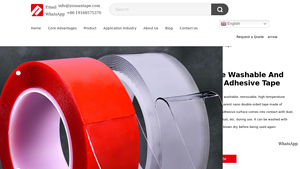
Domain: yousantape.com
Registered: 2016 (10 years)
Introduction: Product Name: Nano Tape Washable and Traceless Adhesive Tape. Material: Polymer material with acrylic adhesive. Key Features: Transparent, double-sided, reusable, washable (clean with water and dry), traceless removal (no residue or damage), high temperature resistance (operates -196°C to 260°C, long-term 120°C, short-term 160°C), corrosion resistant (except molten alkali metals), high electrical …
2. Nano-Tape – Transparent Double Sided Nano Tape

Domain: nano-tape.com
Registered: 2020 (6 years)
Introduction: Product: Nano Tape (Transparent Double Sided Nano Tape). Key Features: Washable and reusable (infinite uses), super strong gel formula, double-sided adhesive, easily removable without damaging walls or leaving glue marks, transparent, strong elasticity, thinness, high ductility. Weight Capacity: Can hold weight of 4 bricks (~9lbs/4kg). Compatible Surfaces: Walls, ground, doors, windows, glass, mir…
Strategic Sourcing Conclusion and Outlook for Nanotape
As global supply chains prioritize sustainable fastening solutions, nanotape presents a strategic procurement opportunity for B2B buyers across Africa, the Middle East, and emerging European markets. Its convergence of reusability, traceless adhesion, and cross-industrial versatility addresses both operational efficiency targets and tightening environmental compliance mandates. For procurement teams in Vietnam and Saudi Arabia, this technology offers a pathway to reduce installation labor costs while eliminating surface damage liabilities.
How Should Buyers Evaluate Nanotape Quality Beyond Marketing Claims?
While “nano” branding often reflects microscale adhesion physics rather than strict nanotechnology, quality verification remains critical. Procurement teams must demand technical datasheets specifying acrylate composition and shear strength thresholds. Conducting compatibility tests on regional substrates—such as textured concrete common in African construction or high-humidity environments in Southeast Asia—ensures reliable performance. Prioritizing suppliers with transparent specifications and washability certifications mitigates supply chain risks across diverse climatic conditions.
What Is the Industrial Procurement Outlook for Nanotape Through 2025?
Market trajectories indicate accelerating adoption into automotive assembly, renewable energy installations, and temporary construction fastening across South America and Middle Eastern industrial corridors. As formulations advance to handle heavier dynamic loads and temperature extremes, nanotape is positioned to displace mechanical fasteners in non-permanent installations. Strategic buyers should secure multi-year supply agreements now to hedge against acrylate raw material volatility while capitalizing on early-adopter advantages in rapidly developing manufacturing hubs.
Integrating nanotape into procurement portfolios aligns immediate cost-reduction objectives with long-term sustainability strategies, establishing competitive advantages in the evolving global adhesive market.