Introduction: Navigating the Global Market for Strong adhesive carton tape
Sourcing strong adhesive carton tape for demanding international supply chains presents a critical challenge for procurement teams navigating diverse climates, regulatory standards, and cost pressures. A failed seal in tropical humidity or freezing logistics hubs doesn’t just damage goods—it erodes client trust and operational efficiency. For B2B buyers spanning from São Paulo to Frankfurt, selecting the right sealing solution requires more than comparing price points; it demands technical precision and strategic supplier partnerships.
What Defines High-Performance Carton Sealing in Global Supply Chains?
This comprehensive guide examines the full spectrum of industrial-grade sealing technologies—from hot melt synthetic rubber formulations engineered for cold-chain logistics to UV-resistant acrylic systems suited for long-term storage in arid environments. We analyze application-specific requirements across heavy-duty industrial shipping, automated packaging lines, and temperature-sensitive distribution networks, while detailing rigorous protocols for supplier vetting and total cost of ownership analysis.
Whether you’re optimizing procurement for Brazilian manufacturing exports, ensuring compliance with German packaging standards, or securing reliable adhesion performance across Middle Eastern and African distribution corridors, this resource provides actionable frameworks to mitigate seal failure risks. By decoding technical specifications, regional market dynamics, and cost-optimization strategies, we equip procurement professionals to make informed decisions that secure supply chain integrity across continents.
Understanding Strong adhesive carton tape Types and Variations
| Type Name | Key Distinguishing Features | Primary B2B Applications | Brief Pros & Cons for Buyers |
|---|---|---|---|
| Hot Melt Synthetic Rubber Tape | Aggressive initial tack, quick bond formation, synthetic rubber adhesive, excellent low-temperature performance | High-speed automated carton sealing, cold storage distribution, export shipping to variable climates | Pros: Instant grab strength, cost-effective for volume, performs in refrigerated environments. Cons: Prone to yellowing over time, lower UV resistance than acrylic alternatives |
| Acrylic Pressure-Sensitive Tape | UV and oxidation resistant, stable across temperature extremes (-20°C to 60°C), non-yellowing clarity | Long-term warehousing, outdoor storage, retail-ready packaging requiring aesthetic preservation | Pros: Superior aging properties, long shelf life, maintains adhesion during prolonged storage. Cons: Slower initial tack development, higher per-roll cost, requires clean application surfaces |
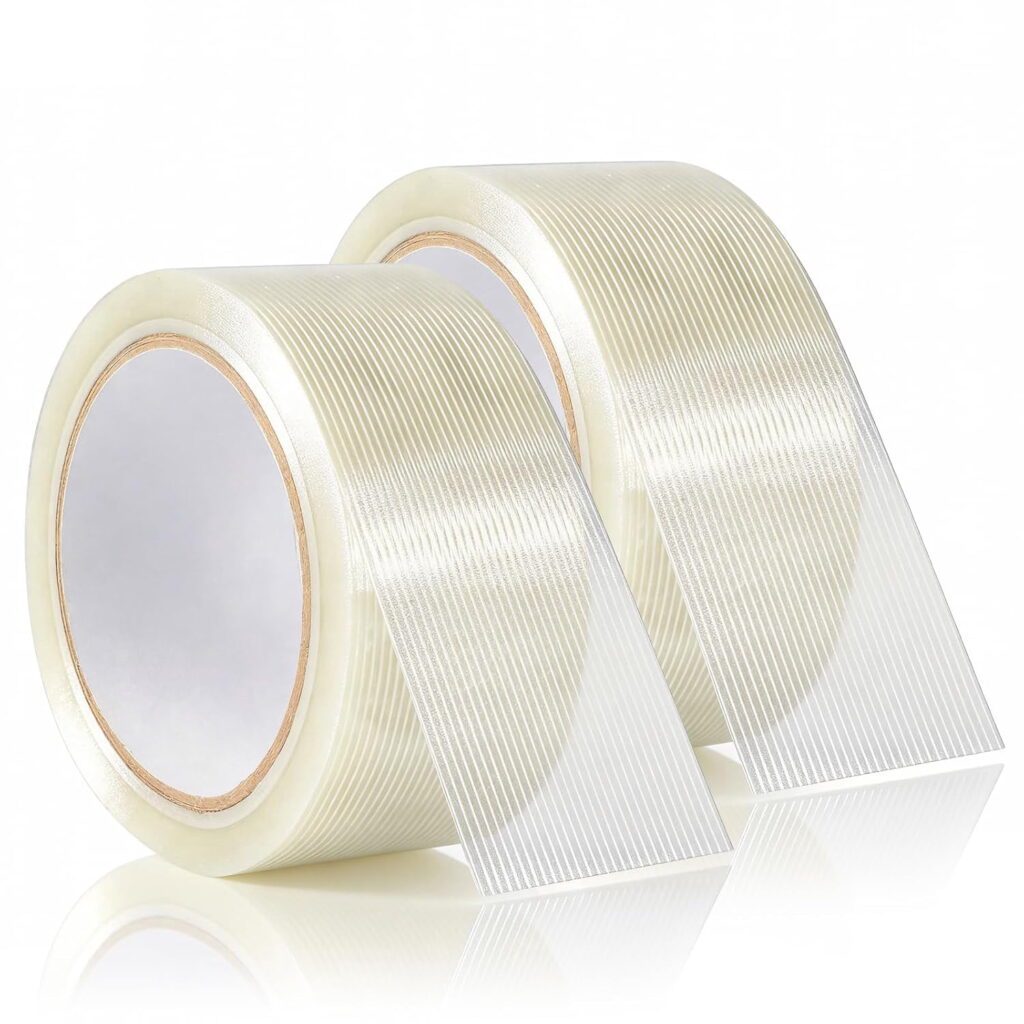
| Reinforced Filament Strapping Tape | Bidirectional fiberglass reinforcement, 100+ lbs/in tensile strength, split and tear resistance | Palletizing heavy machinery, bundling metal/wood products, securing agricultural equipment for ocean freight | Pros: Exceptional load containment, prevents shifting during transport, tamper-evident tear patterns. Cons: Premium material cost, requires specialized dispenser for clean application |
| Water-Activated Kraft Tape (WAT) | Starch-based adhesive activated by water, bonds mechanically with carton fibers, tamper-evident | E-commerce fulfillment of high-value goods, pharmaceutical distribution, eco-conscious packaging lines | Pros: Permanent seal recyclable with box, theft-deterrent, enhances box rigidity. Cons: Requires electric water dispenser, application limited by dust/humidity in warehouse environments |
| Cold Temperature Specialty Tape | Modified synthetic rubber adhesive, maintains pliability and tack in extreme freezing conditions | Frozen food exports, pharmaceutical cold chain, seafood distribution from South America/Africa to Europe | Pros: Reliable adhesion in -30°C environments, prevents carton pop-open in freezers. Cons: Specialized formulation costs, over-engineered for standard ambient shipping |
What makes hot melt synthetic rubber tape ideal for high-speed automation?
Hot melt synthetic rubber tape delivers aggressive initial tack and immediate fiber-pulling strength, making it indispensable for automated case sealers operating at speeds exceeding 30 cartons per minute. Its synthetic rubber adhesive maintains flexibility in cold chain logistics, performing reliably in refrigerated transport common in food and pharmaceutical exports to Middle Eastern and European markets. B2B buyers should prioritize mil thickness between 1.6-1.9 mils and verify synthetic rubber content percentages when evaluating suppliers, as these metrics directly correlate with shear strength and temperature resistance in demanding shipping environments.
When should buyers choose acrylic adhesive tape for long-term storage?
Acrylic formulations excel in extended storage scenarios and UV-exposed supply chains, offering superior oxidation resistance that prevents adhesive degradation over 12+ month warehousing periods. This characteristic proves particularly valuable for industrial manufacturers in Brazil and Germany managing seasonal inventory fluctuations and outdoor storage facilities. While acrylic tapes require longer dwell times to reach full adhesion strength, their non-yellowing clarity preserves retail presentation quality. Procurement teams should verify temperature range specifications, as premium industrial acrylics withstand extreme ambient conditions significantly better than economy grades.
Why is reinforced filament tape critical for heavy-duty industrial logistics?
Featuring bidirectional fiberglass reinforcement, these tapes provide 100+ lbs/in tensile strength to secure heavy machinery parts, metal bundles, and oversized agricultural equipment against shifting during rough ocean freight common in African mining and South American export sectors. The tape’s unique ability to “snap back” and maintain tension under load vibration distinguishes it from standard BOPP options. Procurement managers must assess filament density and adhesive mass—higher filament counts indicate superior edge-bleed resistance during rough handling, while natural rubber adhesives perform better than acrylics on corrugated surfaces under constant stress.
How does water-activated tape enhance B2B supply chain security?
Water-activated tape creates a permanent mechanical bond with carton fibers, effectively becoming part of the box structure and providing immediate tamper evidence upon removal attempts. This characteristic proves invaluable for electronics and pharmaceutical exporters targeting European markets with strict security requirements. The starch-based adhesive offers eco-friendly advantages, as the tape is recyclable with cardboard
Key Industrial Applications of Strong adhesive carton tape
| Industry/Sector | Specific Application of Strong adhesive carton tape | Value/Benefit for the Business | Key Sourcing Considerations for this Application |
|---|---|---|---|
| E-commerce & 3PL Fulfillment | High-speed automated carton sealing for outbound shipments | Prevents unsealing during sorting; reduces rework costs; maintains brand reputation | Hot melt synthetic rubber adhesive for quick tack; compatibility with automated dispensers; consistent roll quality |
| Food Processing & Cold Chain | Sealing frozen/refrigerated cartons and secondary packaging | Maintains seal integrity in sub-zero storage; prevents contamination; reduces spoilage claims | Cold-temperature grade acrylic or hot melt; moisture-resistant backing; FDA/EU food contact compliance |
| Heavy Manufacturing & Industrial Distribution | Bundling metal parts, securing heavy corrugated containers (up to 50kg+) | Eliminates strapping for lighter loads; prevents edge bleeding on rough cardboard; withstands vibration during transit | High shear strength hot melt or reinforced filament tape; UV resistance for outdoor storage; thickness 2.0+ mils |
| Agricultural Export & Commodities | Sealing jute bags and corrugated boxes for sea freight (coffee, cocoa, nuts) | Resists humidity in tropical ports; prevents pest infiltration; withstands stacking pressure in containers | UV and oxidation-resistant acrylic; natural rubber adhesive for dusty surfaces; compliance with phytosanitary standards |
| Pharmaceutical & Medical Distribution | Tamper-evident sealing for temperature-sensitive biologics and medical devices | Ensures chain-of-custody integrity; prevents moisture ingress in variable climates; supports regulatory compliance | Low-noise unwind for cleanroom environments; aging-resistant formulations; printable surfaces for lot codes |
How does strong adhesive carton tape optimize high-volume fulfillment operations?
In high-velocity fulfillment centers across Brazil and Germany, strong adhesive carton tape with hot melt synthetic rubber formulations enables automated case sealers to operate at peak efficiency without flagging or splitting. The aggressive initial tack bonds instantly to recycled corrugated fibers, preventing pop-opens during high-speed sortation and reducing the incidence of “lost” packages that damage client relationships. Buyers should prioritize tapes with consistent unwind force and thermal stability to accommodate climate-controlled warehouses and varying ambient humidity levels, minimizing unplanned downtime that directly impacts operational expenditure.
What cold chain requirements should food exporters consider for carton sealing?
For food exporters navigating the cold chain from Middle Eastern processing hubs to European supermarkets, specialized cold-temperature carton tape maintains adhesive performance in environments ranging from -20°C to +40°C transit conditions. Unlike standard acrylics that turn brittle, these formulations prevent carton flap lifting in blast freezers and refrigerated trucks, eliminating contamination risks and costly spoilage claims. Sourcing teams must verify compliance with EU 10/2011 or FDA food contact regulations while ensuring the tape performs reliably on frosted or moisture-laden surfaces, preserving brand presentation upon arrival at retail distribution centers.
Why is high-shear carton sealing critical for heavy manufacturing exports?
Heavy manufacturing sectors, particularly Germany’s automotive parts distributors and South American machinery exporters, require industrial-grade hot melt tapes that withstand extreme shear forces and vibration during overland and sea transport. When securing cartons containing metal components or dense aggregates exceeding 40 kilograms, reinforced or high-thickness BOPP tapes prevent edge-bleeding and seal failure that lead to workplace hazards and inventory loss. Procurement specialists should specify tapes with UV inhibitors for outdoor storage yards and high shear strength to resist dynamic loads, often utilizing these adhesives as a cost-effective alternative to plastic strapping for palletized goods.
How can agricultural commodity exporters prevent seal failure in tropical climates?
Agricultural commodity exporters in Africa and South America—shipping cocoa, coffee, and nuts through humid tropical ports to European destinations—face unique challenges with moisture-induced delamination and oxidation. High-tack acrylic or natural rubber-based carton tapes provide superior resistance to humidity and fiber-pulling strength on double-wall corrugated boxes subjected to container condensation and extended transit times. Buyers must prioritize UV-stable formulations that resist yellowing and adhesive degradation during prolonged outdoor storage at origin ports, ensuring phytosanitary seals remain intact through customs inspections while preventing insect infiltration.
What sealing standards apply to pharmaceutical distribution in emerging markets?
For pharmaceutical distributors operating between Middle Eastern manufacturing zones and African markets, strong adhesive carton tape serves as both a security seal and environmental barrier for temperature-sensitive biologics and medical devices. The tape must maintain adhesion through fluctuating desert heat and air-conditioned transport while providing tamper-evident properties that indicate unauthorized access. Buyers should seek tapes with low-noise unwind for cleanroom environments and formulations that resist aging during long shelf-life storage requirements typical of medical supply chains, ensuring product integrity from factory to clinic.
A stock image related to Strong adhesive carton tape.
3 Common User Pain Points for ‘Strong adhesive carton tape’ & Their Solutions
Scenario 1: Which Strong Adhesive Carton Tape Works Best for Cold Temperature Storage and Transit?
The Problem: B2B buyers managing refrigerated supply chains—such as Brazilian agricultural exporters, German pharmaceutical distributors, or Middle Eastern frozen food logistics providers—frequently encounter catastrophic seal failures when standard carton tape enters cold storage environments. Conventional acrylic and standard hot melt adhesives lose their tack and become brittle when temperatures drop below 10°C, causing cartons to pop open during frozen transit. This results in product contamination, temperature breaches, and compliance violations, particularly when shipments pass through multiple climate zones or sit in unheated airport cargo holds.
The Solution: Specify synthetic rubber-based cold temperature tapes engineered specifically for thermal shock resistance, such as grades with 1.6 mil thickness and specialized low-temperature formulations. These maintain adhesion in refrigerated environments and sub-zero conditions. For maximum security in extreme cold chains, implement water-activated tape (WAT) with fiberglass reinforcement; the starch-based adhesive creates a molecular bond with corrugated fibers rather than surface adhesion, providing tamper-evident sealing that strengthens as temperatures drop. Always verify temperature ratings match your specific cold chain parameters, from chilled transport (2-8°C) to deep frozen (-20°C).
Scenario 2: What Tensile Strength Is Required for Adhesive Tape in Heavy-Duty International Shipping?
The Problem: Industrial manufacturers shipping dense machinery components, automotive parts, or heavy bulk aggregates face pallet collapse and inventory loss when standard BOPP carton sealing tape encounters shear forces during ocean freight or rough handling in African and South American ports. Standard tapes lack the structural integrity to prevent edge-bleeding, splitting, or delamination under heavy weight, particularly when cartons are double-stacked in containers or exposed to high humidity that compromises adhesive performance.
The Solution: For loads exceeding 25kg or cartons subject to rough handling, transition to fiberglass-reinforced filament tape with minimum 100 lbs/inch tensile strength and 3.9+ mil total thickness. This prevents stretching and provides the rigidity needed for heavy-duty palletizing. For automated high-speed lines, specify industrial-grade hot melt tapes (1.8+ mil thickness) with high shear resistance and conformable backings that maintain adhesion on recycled corrugated. In high-humidity climates, combine with water-activated Kraft tape for hybrid reinforcement, ensuring your sealing system matches the load classification and transit duration while preventing the “carton creep” that leads to warehouse accidents.
Scenario 3: How Does Hot Melt Adhesive Compare to Acrylic for Strong Carton Sealing Across Diverse Climates?
The Problem: Procurement teams struggle to balance immediate tack requirements against long-term storage stability when shipping across hemispheres. Hot melt adhesives provide the quick bonding necessary for high-speed packaging lines but may degrade under UV exposure during extended warehousing or oxidize in hot, dusty conditions common in Middle Eastern and African logistics hubs. Conversely, standard acrylic tapes offer excellent clarity and aging resistance for long-term storage but lack the initial grab and cold-temperature performance needed for refrigerated German exports or high-speed Brazilian manufacturing facilities.
The Solution: Match adhesive chemistry to your supply chain velocity and climate exposure. Deploy premium-grade acrylic formulations with UV resistance and non-yellowing properties for inventory stored longer than six months or exposed to sunlight during cross-docking. Utilize hot melt synthetic rubber adhesives for high-throughput operations requiring instant bond strength and cold-chain compatibility. For multi-climate journeys—such as European manufacturing to South American distribution—specify industrial-grade acrylics rated for extreme temperature ranges (-20°C to 60°C) or consider dual-adhesive strategies that layer tamper-evident reinforcement over high-tack primary seals, ensuring adhesion integrity regardless of environmental fluctuations.
Strategic Material Selection Guide for Strong adhesive carton tape
Selecting the optimal material composition for strong adhesive carton tape requires balancing adhesion chemistry, backing durability, and environmental performance against your specific supply chain demands. For B2B buyers operating across diverse climates—from the humid conditions of Brazil to the temperature-controlled logistics of Germany—understanding material distinctions prevents costly seal failures and product damage during international transit. The following analysis examines four primary material configurations, evaluating their suitability for automated versus manual application, temperature resistance, and security requirements.
Which Adhesive Technology Delivers Superior Bond Strength for High-Speed Carton Sealing?
Biaxially Oriented Polypropylene (BOPP) Film with Hot Melt Synthetic Rubber Adhesive represents the industry standard for high-volume carton sealing operations. This configuration features a synthetic rubber-based hot melt adhesive coated onto oriented polypropylene film, delivering immediate surface tack and high shear strength that prevents flap pop-open during stacking. The material performs exceptionally well in high-speed automated packaging lines common in German manufacturing facilities, offering consistent unwind characteristics and reliable seals on recycled corrugated content. Its low-temperature flexibility makes it particularly suitable for cold chain logistics prevalent in food and pharmaceutical distribution across Europe and South America. However, this adhesive may become brittle under sustained high-heat exposure exceeding 50°C, potentially compromising seal integrity during extended storage in non-climate-controlled warehouses common in Middle Eastern or African regions during summer months.
How Does Acrylic-Based Carton Tape Perform in Extreme Temperature Fluctuations?
BOPP Film with Acrylic Adhesive offers superior longevity for long-term storage applications where temperature stability cannot be guaranteed throughout the supply chain. Acrylic adhesives resist oxidation and UV degradation, preventing the yellowing and adhesive transfer issues that plague rubber-based alternatives during extended warehouse storage in sun-exposed facilities. This material maintains consistent performance across broader temperature ranges, from sub-zero European winters to intense South American summer heat, though it requires longer dwell times—sometimes up to 24 hours—to achieve maximum bond strength. The slower initial tack makes it less suitable for high-speed automated lines but ideal for manual sealing operations where immediate repositioning is necessary. B2B buyers should note that while acrylic tapes command higher per-roll costs than hot melt alternatives, their resistance to aging often reduces total cost of ownership for inventory held longer
A stock image related to Strong adhesive carton tape.
In-depth Look: Manufacturing Processes and Quality Assurance for Strong adhesive carton tape
Strong adhesive carton tape performance begins long before the final seal is applied. For procurement teams managing international supply chains across diverse climates—from the humidity of São Paulo to the temperature-controlled logistics of Frankfurt—the manufacturing process and quality assurance protocols determine whether shipments arrive intact or compromised. Understanding these technical foundations enables buyers to specify products that align with their operational demands, automation speeds, and regional regulatory environments.
How Is Industrial-Grade Carton Tape Manufactured?
The production of high-performance carton sealing tape starts with biaxially oriented polypropylene (BOPP) film extrusion. Raw polypropylene resin is melted and extruded through a flat die, then stretched longitudinally (machine direction) and transversely using a tenter frame. This biaxial orientation creates a molecular structure that provides exceptional tensile strength while maintaining thin, lightweight profiles—typically ranging from 38 to 50 microns (1.5–2.0 mils) for standard grades, and up to 65 microns for heavy-duty applications.
Following orientation, the film undergoes corona treatment to increase surface energy, ensuring optimal adhesive wetting. The coating stage differentiates product categories: hot melt adhesives are applied via slot-die coating at elevated temperatures (120°C–160°C), creating a thick, aggressive adhesive layer ideal for high-tack applications. Acrylic adhesives utilize emulsion coating followed by thermal drying ovens, resulting in stable, oxidation-resistant bonds suitable for long-term storage. Precise tension control during slitting and winding ensures uniform roll dimensions critical for automated dispensing systems.
What Differentiates Hot Melt and Acrylic Adhesive Formulation?
Hot melt carton tapes utilize synthetic rubber-based thermoplastic block copolymers (typically SIS or SBS compounds) compounded with tackifying resins and plasticizers. These formulations provide immediate bond strength (quick tack) and excellent shear resistance, performing reliably in automated high-speed sealing operations exceeding 40 meters per minute. However, they may exhibit reduced performance in extreme heat or UV exposure without stabilizing additives.
Acrylic adhesives comprise cross-linked polymer emulsions that cure through moisture evaporation. They offer superior temperature resistance (withstanding -20°C to 80°C ranges), UV stability, and anti-aging properties, making them ideal for inventory stored in outdoor yards or transported through varying climates. Natural rubber solvent-based adhesives provide the highest initial grab and extreme cold flexibility (-30°C), though they carry higher material costs and solvent regulatory considerations for European REACH compliance.
Why Does Film Thickness and Orientation Impact Load Security?
BOPP film thickness directly correlates with puncture resistance and tensile strength. Standard economy tapes utilize 40–45 micron films suitable for cartons under 15kg, while industrial-grade heavy-duty tapes employ 50–65 micron films with reinforced edges to prevent splitting under 30kg+ loads. The biaxial orientation process creates anisotropic strength properties—higher tensile resistance in the machine direction (lengthwise) versus the transverse direction—which engineers must balance against the shear forces experienced during stacking and transport.
Fiber-tear adhesion—the phenomenon where adhesive removes cardboard fibers upon removal—indicates successful bonding with corrugated substrates. Quality manufacturers optimize adhesive penetration into the flute structure without excessive soak-in that would compromise holding power. This balance requires precise control of adhesive coat weights, typically ranging from 18–25 grams per square meter for standard applications and 28–35 gsm for reinforced heavy-duty grades.
Which Quality Control Tests Validate Tape Performance for International Logistics?
Reputable manufacturers subject tape batches to rigorous mechanical and environmental testing. Peel adhesion tests (ASTM D3330) measure the force required to remove tape from stainless steel and corrugated cardboard at 180-degree and 90-degree angles, ensuring consistency across production lots. Static shear testing (ASTM D3654) evaluates holding power by suspending weighted loads from vertically taped panels, with premium grades maintaining adhesion for 72+ hours under 1kg loads.
Dynamic testing includes temperature cycling (-20°C to 60°C) to simulate warehouse-to-container ship transitions, and QUV accelerated weathering exposure to validate UV resistance for tropical storage. Humidity resistance testing (85% relative humidity at 40°C) ensures adhesive integrity during monsoon seasons or ocean freight through high-humidity corridors. Automated vision inspection systems detect coating voids, gels, or thickness variations during production, while roll geometry checks verify unwind tension consistency critical for automated packaging lines.
What Certifications Ensure Compliance Across European, Middle Eastern, and Emerging Markets?
Global B2B buyers should verify manufacturer adherence to ISO 9001:2015 quality management systems and ISO 14001 environmental management standards. For European markets (Germany, EU), REACH compliance regarding SVHC (Substances of Very High Concern) and RoHS directives for electronic goods packaging are mandatory. Food contact applications require FDA 21 CFR 175.105 compliance (US) or EU Regulation 10/2011 for plastic materials in contact with food.
Middle Eastern markets often require SASO (Saudi Standards) or GCC conformity marks, while Brazilian importers should verify INMETRO regulations for industrial supplies. Environmental certifications such as FSC Chain of Custody for paper-based water-activated tapes or recycled content certifications for BOPP films increasingly influence procurement decisions in sustainability-focused markets.
How Do Manufacturers Engineer Tapes for Extreme Climate Conditions?
Climate-adaptive manufacturing involves additive packages tailored to regional logistics challenges. For cold chain applications prevalent in pharmaceutical and food exports to Europe and the Middle East, manufacturers incorporate cold-flow additives that maintain adhesive flexibility below -10°C, preventing “flagging” (tape lifting at edges) in refrigerated containers. Tropical formulations for African and South American markets include UV stabilizers and antioxidants that prevent adhesive degradation during outdoor storage in intense sunlight.
High-humidity formulations utilize cross-linked acrylic polymers resistant to moisture whitening and tack reduction. Dust-resistant variants feature aggressive initial tack that bonds before particulate contamination interferes, crucial for construction material packaging in arid Middle Eastern environments. These specialized formulations undergo accelerated aging protocols simulating six-month exposure periods to validate performance before market release.
When evaluating manufacturing partners, international buyers should request detailed technical data sheets specifying adhesive coat weights, film orientation parameters, and batch-specific test results. Understanding these manufacturing variables enables procurement teams to match tape specifications precisely to their supply chain stressors—whether automated high-speed sealing in German distribution centers or manual application under Brazilian tropical humidity—ensuring seal integrity from factory floor to final destination.
Practical Sourcing Guide: A Step-by-Step Checklist for ‘Strong adhesive carton tape’
Procuring high-performance carton sealing solutions requires moving beyond price-per-roll comparisons to evaluate adhesive chemistry, environmental resilience, and operational compatibility. This checklist provides a systematic framework for international procurement teams to specify tape solutions that prevent seal failure, reduce damage claims, and optimize packaging line efficiency across diverse climate zones and regulatory environments.
1. What Load Capacity and Adhesive Chemistry Matches Your Supply Chain?
Begin by calculating your maximum carton weight and stacking height during transit. For loads exceeding 25kg or double-stacked pallets, specify hot melt synthetic rubber adhesives or fiberglass-reinforced filament tapes offering 100+ lbs/inch tensile strength. Lightweight shipments under 15kg may utilize economy-grade acrylic formulations, though these require longer cure times and offer reduced shear resistance under heavy friction.
2. How Will Temperature Extremes Affect Adhesive Performance?
Map your complete cold chain and ambient storage conditions. Standard hot melt adhesives stiffen below 5°C, risking seal failure in refrigerated logistics or winter transits through Northern Europe. Specify cold-temperature formulations (service range -20°C to 60°C) for frozen goods or alpine distribution. Conversely, acrylic adhesives resist UV oxidation and maintain tack in tropical climates exceeding 40°C, making them preferable for Middle Eastern and African outdoor storage.
3. Which Application Method Optimizes Your Sealing Operations?
Determine whether your facility uses manual dispensers, semi-automatic case sealers, or high-speed automated lines. Hot melt tapes offer instant tack critical for automated high-speed lines (up to 50m/min), while water-activated tape (WAT) requires specific dispensers but provides tamper-evident security essential for high-value electronics or pharmaceutical exports. Verify tape thickness (1.6-2.0 mils for standard, 3.0+ mils for heavy-duty) matches your equipment’s tension settings.
4. Does the Tape Chemistry Match Your Carton Substrate Quality?
Evaluate your corrugated board’s recycled content and surface energy. High-recycled cartons (80%+ post-consumer waste) present dusty, porous surfaces that challenge standard acrylics. Hot melt adhesives penetrate these fibers more effectively, while premium acrylics with elevated tackifiers bond to coated or printed surfaces common in retail-ready packaging. Conduct peel tests on your actual box specifications before bulk procurement.
5. How Do You Calculate True Total Cost of Ownership Beyond Unit Price?
Analyze cost per sealed carton rather than roll price. Thinner economy tapes often require double-seaming or reinforcement strips, increasing material consumption by 40%. Factor in dispenser maintenance, downtime from roll changes, and damage claims from failed seals. Water-activated tapes reduce material usage through single-strip sealing and enhance box rigidity, potentially lowering corrugated gauge requirements and freight dimensional weight charges.
6. What Compliance Certifications Are Required for Cross-Border Shipments?
Verify regulatory requirements for your destination markets. Food contact materials (FCM) compliance is mandatory for agricultural exports to the EU and Middle East. Tamper-evident features—such as void-message security tapes or reinforced WAT that tears carton fibers upon removal—protect high-value goods in transit through regions with elevated pilferage risks. Request ISO 9001 certification and batch-specific CoA (Certificates of Analysis) documentation from suppliers to ensure consistent adhesive viscosity and peel strength.
A stock image related to Strong adhesive carton tape.
Comprehensive Cost and Pricing Analysis for Strong adhesive carton tape Sourcing
When evaluating procurement strategies for high-performance carton sealing solutions, astute B2B buyers recognize that the sticker price per roll represents merely the surface of actual expenditure. For operations spanning diverse climates—from the humidity of São Paulo to the temperature-controlled logistics of Frankfurt—understanding the nuanced cost architecture of strong adhesive carton tapes prevents budget overruns and supply chain disruptions.
What Raw Material Specifications Drive Base Pricing Volatility?
The fundamental cost structure hinges on three technical specifications: film thickness measured in microns or mils, adhesive coating weight, and backing material composition. Standard economy-grade polypropylene (BOPP) tapes typically range from 1.5 to 1.8 mils, while industrial-grade heavy-duty variants exceed 2.0 mils with reinforced fiberglass filaments. Hot melt synthetic rubber adhesives generally command premium pricing over acrylic formulations due to petroleum-based resin volatility, though they offer superior immediate tack critical for cold-chain logistics prevalent in Middle Eastern and European pharmaceutical distribution.
How Do Regional Import Dynamics Affect Total Landed Costs?
For buyers in Brazil and across Africa, import duties and regional logistics infrastructure significantly impact final procurement economics. While Asian manufacturing hubs offer competitive base pricing, container shipping rates to South American ports or inland African destinations can increase total landed costs by 15-25%. German buyers, conversely, often prioritize EU-compliant adhesive formulations and shorter supply chains from Eastern European converters, accepting moderate price premiums for reduced lead times and adherence to REACH regulations. Negotiating regional hub warehousing or consolidated shipping schedules mitigates these geographic cost premiums.
Which Pricing Models Optimize Volume Procurement for Diverse Climates?
Strategic sourcing requires analyzing total cost of ownership rather than per-roll expenditure. Cold-temperature tapes formulated for sub-zero adhesion contain specialized polymer additives that increase material costs by 8-12% compared to standard hot melt alternatives, yet they eliminate catastrophic seal failures in refrigerated transport. Water-activated reinforced tapes (WAT) present higher upfront costs but reduce material usage through single-strip sealing and provide tamper-evident security crucial for high-value exports. Volume commitments should align with storage capacity and shelf-life considerations—acrylic tapes offer 12-18 month stability advantages in tropical climates where hot melt adhesives may degrade.
How Can Buyers Calculate Hidden Application and Failure Costs?
Beyond material acquisition, operational efficiency determines true value. Automated case-sealing systems utilizing hot melt tapes achieve 30-40% faster application speeds than manual acrylic tape dispensing, reducing labor costs per sealed carton. However, incorrect specification selection generates exponential downstream expenses: a failed seal requiring rework consumes 3-4 times the original tape cost in labor and damaged product replacement. Implementing specification audits based on carton weight classes—light-duty (under 15kg), medium-duty (15-30kg), and heavy-duty (over 30kg)—ensures appropriate adhesive investment without overspecification waste.
Alternatives Analysis: Comparing Strong adhesive carton tape With Other Solutions
While strong adhesive carton tape—typically hot melt or acrylic-based BOPP film—dominates high-volume packaging operations, savvy procurement teams must evaluate whether alternative sealing methodologies better align with specific security protocols, load requirements, or sustainability mandates. Depending on your supply chain complexity, particularly when shipping through regions with varying handling standards or extreme climates, specialized alternatives may offer superior total cost of ownership despite higher upfront material costs. This analysis examines two distinct categories: Water-Activated Tape (WAT), which provides tamper-evident security through chemical bonding, and Filament Reinforced Strapping Tape, engineered for extreme tensile loads. Understanding the operational trade-offs between application speed, equipment investment, and seal permanence is critical for optimizing packaging performance across diverse international markets.
| Comparison Aspect | Strong Adhesive Carton Tape | Water-Activated Tape (WAT) | Filament Reinforced Strapping Tape |
|---|---|---|---|
| Bonding Mechanism | Pressure-sensitive adhesive bonds to surface; removable | Starch-based adhesive chemically bonds with cardboard fibers | Fiberglass filaments embedded in backing provide tensile strength |
| Security Level | Moderate; can be resealed without visible evidence | High; tamper-evident; removal damages box surface | High; tear-resistant, but edges can be lifted with effort |
| Best Application | General carton sealing, high-speed automated lines | E-commerce, high-value goods, cold storage compliance | Heavy-duty bundling, palletizing, reinforced edge sealing |
| Equipment Requirements | Hand dispensers or standard automated case sealers | Water-activated tape dispensers (manual or electric) | Manual application or tensioning tools; specialized cutters |
| Cost Structure | Low material cost; minimal labor training required | Moderate material cost; higher initial equipment investment | Higher material cost; specialized labor for proper tensioning |
| Environmental Resistance | Good temperature range; UV resistant options available | Excellent in extreme cold; humidity affects activation speed | Resists stretching and shifting; poor conformability to curves |
| Sustainability Profile | Plastic-based (BOPP); recyclable with box | Paper-based; biodegradable adhesive; curbside recyclable | Polypropylene or polyester backing; mixed material recycling |
How Does Water-Activated Tape Compare to Strong Adhesive Carton Tape for High-Security Shipments?
Water-Activated Tape (WAT) fundamentally differs from pressure-sensitive carton tapes by utilizing a starch-based adhesive that chemically bonds with the corrugated cardboard fibers, effectively creating a tamper-evident seal that cannot be removed without visibly damaging the box surface. This molecular-level adhesion provides superior security for high-value e-commerce and pharmaceutical shipments, particularly crucial in markets with elevated pilferage risks or when complying with strict chain-of-custody requirements in European logistics hubs. While the transition requires investment in water-activated dispensers—either manual units for low-volume operations or electric systems for automated lines—and slightly increases application time by 2-3 seconds per box, the elimination of additional security stickers and reduced theft-related claims often yield a positive ROI within six months. Additionally, the kraft paper construction offers significant sustainability advantages for B2B buyers facing plastic-reduction mandates in Germany or Brazil, as the material is biodegradable and curbside recyclable without separation from the cardboard substrate, unlike polypropylene-based alternatives.
When Should Procurement Teams Choose Filament Reinforced Tape Over Standard Carton Sealing?
Filament Reinforced Strapping Tape, embedded with continuous fiberglass filaments, delivers tensile strengths exceeding 100 lbs per inch, making it the preferred solution for heavy-duty bundling, pallet unitizing, and reinforcing corrugated edges that experience extreme shear forces during ocean freight or rough-handling environments common in emerging African and South American logistics networks. Unlike standard carton tape that relies on surface adhesion and may creep or fail under constant load stress, the filament backing provides dimensional stability that prevents box failure when stacking heavy agricultural exports or industrial machinery components. However, procurement teams must weigh the higher per-meter material cost and the necessity of tensioning tools or specialized dispensers against the risk of product damage; for dense shipments exceeding 30kg per carton, the added expense typically justifies itself through eliminated secondary strapping materials and reduced insurance claims. The tape’s rigid structure limits conformability to irregular surfaces, restricting its primary use to linear edge sealing and bundling rather than full carton closure, but its resistance to UV degradation and temperature fluctuations makes it ideal for long-term outdoor storage in Middle Eastern climates.
Essential Technical Properties and Trade Terminology for Strong adhesive carton tape
When evaluating sealing solutions for international supply chains, technical specifications and industry terminology directly impact logistics integrity. Procurement teams from São Paulo to Frankfurt must navigate material properties that affect performance across diverse climates—from humid tropical ports to freezing European distribution centers. Understanding these metrics prevents costly seal failures and ensures compliance with regional shipping standards.
Which Technical Specifications Determine Load-Bearing Capacity?
Tensile Strength and Film Gauge: Measured in pounds per inch (lbs/in) or Newtons per 25mm, tensile strength indicates the force required to break the tape, while film gauge (thickness) is measured in microns or mils. Heavy-duty carton sealing typically requires 1.8–2.2 mil (45–55 micron) BOPP films with tensile strengths exceeding 25 lbs/in, ensuring the seal withstands stacking pressures during ocean freight.
Shear Resistance and Tack Values: Shear resistance measures the tape’s ability to resist sliding under constant load (critical for palletized goods), while tack describes immediate surface adhesion. Hot melt adhesives deliver high initial tack for rapid application on high-speed lines, whereas acrylic formulations provide superior shear resistance for long-term warehouse storage in fluctuating Middle Eastern or African temperatures.
Operational Temperature Range: This specification defines the climate window where adhesive maintains optimal performance. Standard synthetic rubber adhesives perform between 32°F–140°F (0°C–60°C), but cold-chain logistics to Northern Europe or refrigerated transport in South America demand specialized formulations rated below 0°F (-18°C) to prevent adhesive embrittlement.
Elongation Percentage and Conformability: Elongation measures the tape’s stretch capacity before breaking—typically 150–180% for quality BOPP films. High conformability ensures the adhesive flows into corrugated board micro-structures, creating mechanical bonding essential for dusty or recycled fiber environments common in emerging markets.
UV Stability and Aging Characteristics: Critical for outdoor storage in high-sun regions like Brazil or the Middle East, UV resistance prevents adhesive oxidation and film yellowing. Acrylic tapes typically offer 6–12 months of UV stability compared to 3–6 months for standard hot melt, protecting inventory integrity during extended port delays.
What Industry Terminology Should Procurement Teams Master?
BOPP (Biaxially Oriented Polypropylene): The predominant backing material created by stretching polypropylene in machine and transverse directions. This molecular alignment produces exceptional clarity, moisture resistance, and dimensional stability—essential properties for automated dispensing equipment used in high-volume German or Brazilian manufacturing facilities.
Hot Melt vs. Acrylic Adhesive Chemistry: Hot melt (synthetic rubber-based) provides aggressive initial tack and cold-temperature flexibility but may soften in extreme heat. Acrylic adhesives (water or solvent-based) offer broader temperature ranges, superior aging resistance, and better clarity, though they require 24–48 hours to achieve full bond strength.
Filament Reinforced Tape: Also called strapping tape, this features fiberglass filaments embedded in the backing, delivering tensile strengths of 100–300 lbs/in. Used for heavy-load palletizing and bundling metal components, it prevents shifting during the rigorous handling common in African and South American logistics networks.
Water-Activated Tape (WAT): Known as gummed paper tape, this kraft paper substrate carries a starch adhesive activated by water. It creates a permanent chemical bond with corrugated fibers, providing tamper-evidence and 20% increased box rigidity—valuable for high-security pharmaceutical shipments to European markets.
Mil Measurement: A critical procurement specification where one mil equals 0.001 inch (25.4 microns). Industrial applications typically specify 2.0+ mil thickness for loads exceeding 25kg, while economy grades at 1.5–1.6 mil suit lightweight consumer goods.
Fiber Tear Adhesion: This quality indicator describes whether tape removal strips the corrugated fiber from the box (indicating strong bond) or releases cleanly. Fiber-tear adhesion provides tamper evidence and security, while clean release suits returnable packaging systems increasingly popular in sustainable European supply chains.
Navigating Market Dynamics and Sourcing Trends in the Strong adhesive carton tape Sector
The global strong adhesive carton tape market is undergoing rapid transformation as e-commerce expansion and supply chain regionalization redefine procurement priorities. For B2B buyers across Africa, South America, the Middle East, and Europe, navigating this landscape requires balancing performance specifications with volatile raw material costs and divergent regulatory frameworks. Climate variability—from humid tropical logistics corridors in West Africa to freezing
Frequently Asked Questions (FAQs) for B2B Buyers of Strong adhesive carton tape
How Does Hot Melt Adhesive Compare to Acrylic for Strong Carton Sealing in High-Volume Operations?
1. How do I choose between hot melt and acrylic adhesive for strong carton sealing?
Hot melt adhesives provide immediate tack and superior holding power in cold environments, making them ideal for high-speed automated lines and refrigerated supply chains common in European meat exports and Brazilian agricultural logistics. Acrylic adhesives offer exceptional UV resistance and anti-aging properties, which prove critical for shipments stored in outdoor conditions or hot climates prevalent across Africa and the Middle East. While hot melt excels in initial grab strength and performs reliably through temperature fluctuations, acrylic maintains adhesive integrity over extended storage periods without yellowing or degradation.
Which Strong Adhesive Carton Tape Works Best for Cold Temperature Storage and Refrigerated Logistics?
2. How do I ensure carton seals remain intact in freezing temperatures?
Standard acrylic and hot melt tapes often fail when applied to frozen surfaces or stored below 5°C, leading to catastrophic seal failure during refrigerated transport. Cold-temperature tapes formulated with synthetic rubber adhesives maintain flexibility and tack in sub-zero environments, ensuring secure seals on frozen food exports and pharmaceutical shipments. For operations spanning German cold storage facilities or Brazilian meat processing plants, specify tapes rated specifically for refrigerated applications rather than general-purpose grades.
What Is the Best Heavy-Duty Adhesive Tape for Industrial Carton Sealing and Palletized Shipping?
3. How do I select tape for heavy-duty industrial carton sealing that prevents load shifting?
For industrial applications involving dense goods or double-wall corrugated containers, fiberglass-reinforced filament tape provides the structural integrity needed to replace metal strapping in many palletizing operations. These tapes offer tensile strengths exceeding 100 lbs per inch, creating unitized loads that resist edge-bleeding and splitting during rough handling in international ports. When securing heavy machinery parts or dense agricultural exports from Africa or the Middle East, reinforced tapes prevent the “box burst” failures common with standard BOPP carton sealing tape.
What Tensile Strength Is Required for Adhesive Tape in Heavy-Duty Shipping and Export Applications?
4. How do I determine the minimum tensile strength needed for my shipping tape?
Heavy-duty shipping requires tapes with minimum tensile strength of 20-30 lbs/in for standard corrugated, while reinforced applications demand 100 lbs/in or higher to maintain load integrity during ocean freight and cross-border trucking. The weight of your carton contents, stacking height during transport, and vibration exposure determine specifications; electronics and glass exports typically require higher strength ratings than textile shipments. Always request technical data sheets verifying tensile strength and shear resistance rather than relying on “heavy-duty” marketing claims.
How Can I Prevent Tampering and Pilferage in International Supply Chains Using Carton Sealing Tape?
5. How do I implement tamper-evident sealing for high-value exports?
Water-activated tape (WAT) creates a permanent bond with corrugated fibers, making removal impossible without visible damage to the carton, unlike pressure-sensitive tapes that can be resealed undetected. For B2B buyers shipping electronics, pharmaceuticals, or luxury goods through high-risk transit corridors, WAT provides instant visual evidence of interference while increasing box rigidity by up to 30%. Combine this with custom printed branding to deter theft while enhancing unboxing experiences for end customers.
What Specifications Ensure Carton Tape Compatibility with Automated Packaging Lines?
6. How do I avoid adhesive buildup and downtime in high-speed automated sealing operations?
Automated case sealers require consistent tape thickness (typically 1.6-2.0 mils for hot melt, 1.8-2.2 mils for acrylic) and uniform unwind tension to prevent machine jams and adhesive transfer to rollers. Hot melt formulations generally perform better than acrylic in automated environments due to their immediate tack and consistent coating weight, reducing the need for case compression time. When sourcing for German manufacturing standards or Brazilian high-volume distribution centers, specify machine-grade tapes with consistent roll diameter and core dimensions to prevent feed mechanism failures.
How Do I Select Carton Tape for Long-Term Storage in Hot and Humid Climates?
7. How do I prevent tape failure during extended storage in tropical or desert conditions?
Acrylic adhesives resist oxidation and UV degradation better than hot melt alternatives, maintaining seal integrity during multi-month storage in outdoor warehouses common in African and Middle Eastern supply chains. Look for UV-resistant formulations that prevent yellowing and adhesive bleed-through, which can compromise barcode readability and aesthetic presentation. For agricultural exports or inventory held in non-climate-controlled environments, premium acrylic tapes prevent the “flagging” (flap lifting) that occurs when hot melt adhesives soften in extreme heat.
How Can I Balance Cost Efficiency with Performance When Sourcing Strong Adhesive Tape Internationally?
8. How do I optimize tape procurement costs without compromising load security?
While economy-grade hot melt tapes suit light-weight cartons under normal conditions, heavy exports require industrial-grade formulations that prevent costly returns and damage claims. Calculate total cost of ownership by factoring in application speed, failure rates, and insurance claims rather than per-roll price; premium tapes often reduce material usage through better adhesion and narrower width requirements. For buyers in Brazil or South Africa managing currency fluctuations, establish specifications based on performance metrics (shear strength, tensile resistance) rather than brand names to ensure consistent quality across regional suppliers.
Important Disclaimer & Terms of Use
⚠️ Important Disclaimer
The information provided in this guide, including content regarding manufacturers, technical specifications, and market analysis, is for informational and educational purposes only. It does not constitute professional procurement advice, financial advice, or legal advice.
B2B buyers must conduct their own independent and thorough due diligence before making any purchasing decisions. The risk of relying on any information in this guide is borne solely by the reader.
Top 1 Strong Adhesive Carton Tape Manufacturers & Suppliers List
1. iTape – Carton Sealing Tape
Domain: itape.com
Registered: 1998 (28 years)
Introduction: IPG offers a broad range of carton sealing tapes including clear and paper options designed for strong adhesion and durability. Products include: 100e (Recycled Kraft Paper Carton Sealing Tape, aggressive pressure-sensitive adhesive for various carton types); 1100 (3 Mil Premium Hot Melt Carton Sealing Tape, BOPP film with Corru-Grip™ adhesive, optimal for recycled corrugate, works down to 35°F); …
Strategic Sourcing Conclusion and Outlook for Strong adhesive carton tape
What Should Global Buyers Prioritize When Selecting High-Performance Carton Sealing Solutions?
Sourcing decisions for strong adhesive carton tape must extend beyond unit pricing to encompass total cost of ownership and climatic suitability. For operations spanning diverse regions—from refrigerated supply chains in Germany to humid export corridors in Brazil—selecting the appropriate adhesive chemistry prevents catastrophic seal failures. Hot melt formulations deliver superior tack in cold environments, while acrylic adhesives provide essential UV and oxidation resistance for long-term storage in arid Middle Eastern or African climates. Buyers should rigorously verify tape compatibility with existing automation equipment, as inconsistent shear strength can disrupt high-speed packaging lines and inflate operational downtime.
How Are Emerging Markets Shaping the Future of Industrial Packaging Adhesives?
The outlook for industrial carton sealing points toward hybrid solutions that balance mechanical integrity with sustainability mandates. Water-activated tapes and fiberglass-reinforced filaments are gaining significant traction in markets prioritizing tamper-evidence and load stability over extensive transit distances. As regulatory frameworks across Europe and emerging economies increasingly emphasize circular packaging principles, suppliers offering recyclable substrates combined with high-performance synthetic adhesives will deliver distinct competitive advantages. Forward-thinking procurement strategies should prioritize partners capable of ensuring technical consistency across fluctuating temperature zones while supporting volume scalability for growing international export operations.