Introduction: Navigating the Global Market for What Is Kraft Paper Tape
Sourcing kraft paper tape for sustainable packaging operations has emerged as a strategic imperative for procurement teams across Nigeria, Brazil, and emerging markets throughout Europe and the Middle East. Yet navigating this transition presents a complex operational challenge: balancing stringent environmental compliance requirements with the practical demands of supply chain resilience, cost optimization, and quality consistency in high-volume cross-border trade.
This comprehensive guide dismantles the complexity surrounding global kraft paper tape procurement. We examine the critical distinctions between water-activated, pressure-sensitive, and reinforced variants, analyzing which specifications perform optimally under tropical humidity versus temperate logistics conditions. Beyond material composition, we dissect industry-specific applications—from securing agricultural exports in São Paulo to e-commerce fulfillment in Lagos—while providing rigorous frameworks for supplier vetting, certification verification, and freight optimization strategies.
For international buyers managing procurement across Africa, South America, the Middle East, and Europe, this resource delivers actionable intelligence to mitigate sourcing risks and streamline import logistics. Whether you are transitioning from plastic-based alternatives to meet evolving circular economy mandates or optimizing existing sustainable packaging workflows, the following sections equip you with the technical specifications, quality benchmarks, and market insights necessary to make informed, profitable purchasing decisions in the competitive global marketplace.
Why Are Procurement Teams Prioritizing Kraft Paper Tape in Global Supply Chains?
The shift toward biodegradable packaging solutions reflects mounting regulatory pressure and consumer demand across key export markets. Understanding the material science behind kraft paper tape—from wood pulp composition to adhesive chemistry—enables buyers to distinguish between commodity-grade products and industrial-strength solutions capable of withstanding the rigors of international shipping while meeting diverse regional sustainability standards.
Understanding What Is Kraft Paper Tape Types and Variations
| 유형 이름 | 주요 차별화 기능 | 주요 B2B 애플리케이션 | 구매자를 위한 간략한 장단점 |
|---|---|---|---|
| Water-Activated Kraft Paper Tape (WAT) | Requires moisture to activate starch-based adhesive; creates permanent molecular bond with cardboard fibers; tamper-evident upon removal | High-value e-commerce fulfillment, pharmaceutical exports, food & beverage distribution, archival storage | Pros: Superior security, recyclable with corrugated boxes, tamper-proof. Cons: Requires specialized dispenser, application speed affected by humidity levels |
| Pressure-Sensitive Kraft Paper Tape (PSA) | Ready-to-use adhesive backing bonds on contact; immediate tack strength; no water or equipment required | General carton sealing, retail packaging, temporary warehouse holds, manual packing stations | Pros: Flexible application, works in variable conditions, compatible with existing tape guns. Cons: Less tamper-evident, potential residue on removal, higher cost per linear meter |
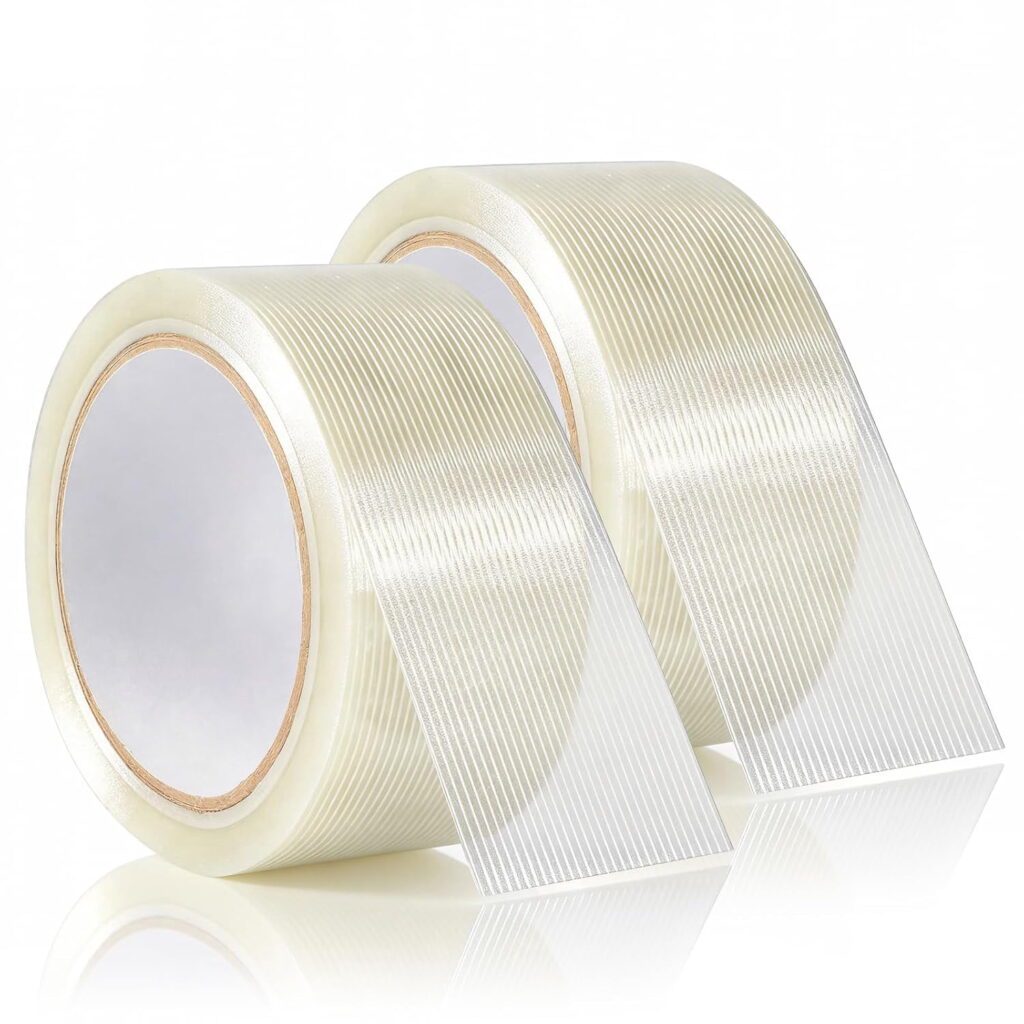
| Reinforced Kraft Paper Tape | Embedded fiberglass or synthetic yarn grid (typically 60/100 mesh); high tensile strength (100+ lbs/inch); tear-resistant backing | Heavy machinery export, metal parts packaging, construction materials, palletized agricultural goods | Pros: Exceptional load security, prevents box splitting during rough handling. Cons: Higher unit cost, fiberglass can irritate skin if not fully embedded, requires careful application |
| Custom Printed Kraft Paper Tape | Water-activated or PSA base with 1-3 color flexographic/digital printing; reinforces brand identity; serves as security seal | Subscription box services, brand-conscious retailers, corporate gifting, export documentation sealing | Pros: Marketing value, eliminates need for printed boxes, theft deterrent. Cons: Higher MOQs (typically 500+ rolls), longer lead times, design setup fees |
What is Water-Activated Kraft Paper Tape and When Should You Use It?
Water-activated tape utilizes a starch-based adhesive that requires moisture to create a molecular bond with corrugated fibers, resulting in a permanent, tamper-evident seal that cannot be resealed without visible damage. This type is ideal for B2B buyers managing high-value exports or compliance-sensitive shipments to regions with strict customs inspection protocols. When sourcing, verify the adhesive’s viscosity grade for your climate conditions—higher humidity regions like Southeast Asia or coastal Brazil require quick-setting formulations to prevent premature bonding during application, while arid climates need slower drying to ensure proper adhesion.
How Does Pressure-Sensitive Kraft Paper Tape Support Flexible Operations?
Pressure-sensitive kraft tape features a ready-to-tack adhesive layer that bonds instantly upon contact, eliminating the need for water dispensers and enabling immediate handling in variable warehouse conditions. This variation suits businesses with decentralized packing stations or operations in regions with inconsistent water quality that might compromise gummed tape activation. B2B procurement teams should evaluate the adhesive’s shear resistance—critical for hot climate shipping routes through the Middle East or Africa—and ensure compatibility with automated case sealers if scaling production volume beyond manual packing capabilities.
Why is Reinforced Kraft Paper Tape Essential for Heavy-Duty Export Logistics?
Reinforced kraft tape integrates longitudinal fiberglass filaments or cross-woven synthetic yarns within the paper backing, delivering tensile strength exceeding 100 lbs per inch for securing dense, abrasive cargo. This specification is non-negotiable for industrial exporters shipping metal components, stone products, or agricultural machinery to developing markets where handling equipment may be rudimentary. Buyers must specify yarn density and verify that the reinforcement is fully embedded to prevent fiber exposure during manual application, ensuring worker safety and consistent adhesion under rough transport conditions.
How Can Custom Printed Kraft Paper Tape Enhance Brand Security and Recognition?
Custom printed kraft tape transforms standard sealing into a branding opportunity through flexographic or digital printing of logos, handling instructions, or QR codes directly onto the tape surface. This solution provides dual value for international traders: it serves as a cost-effective alternative to printed corrugated boxes while creating a tamper-evident seal that displays visible evidence of interception. When negotiating with suppliers, confirm their capability to match Pantone colors accurately and inquire about plate fees versus digital printing options to optimize costs for medium-volume orders typical of growing e-commerce exporters.
Key Industrial Applications of What Is Kraft Paper Tape
| 산업/섹터 | Specific Application of What Is Kraft Paper Tape | 비즈니스를 위한 가치/혜택 | 이 애플리케이션의 주요 소싱 고려 사항 |
|---|---|---|---|
| 이커머스 및 소매 물류 | Carton sealing for last-mile delivery and warehouse consolidation in humid climates | Tamper-evident security reduces pilferage; recyclable with cardboard simplifies waste management; printable surface supports eco-branding | Pressure-sensitive for manual operations or water-activated for automation; humidity-resistant adhesives for tropical climates (Nigeria, Brazil); custom printing capabilities |
| 식음료 수출 | Sealing corrugated boxes for agricultural produce, processed foods, and cold chain shipments | Food-safe compliance with FDA/EU standards; biodegradable packaging meets sustainability mandates; strong seal prevents contamination and spoilage | Certified food-grade adhesives; moisture-resistant backing for ocean freight; traceability printing options for export documentation |
| Manufacturing & Industrial Equipment | Heavy-duty palletizing and bundling of machinery parts, metal components, and tools | Reinforced tensile strength (100+ lbs/inch) exceeds plastic tape; eliminates separation costs in recycling; tamper-evident for high-value parts | Reinforced grades with fiberglass; compatibility with rough/dusty surfaces; bulk volume pricing for continuous production |
| 제약 및 헬스케어 유통 | Tamper-evident sealing of medical supply cartons and temperature-sensitive drug shipments | Permanent bond shows immediate tampering; maintains adhesion in 2-8°C cold chain; supports GDP compliance and sterile opening | Water-activated gummed tape for permanent adhesion; hypoallergenic adhesive options; temperature stability certification |
| Construction & Building Materials | Bundling ceramic tiles, hardware, and building supplies for export shipment | UV-resistant adhesive prevents drying in hot climates; recyclable with construction waste; replaces plastic strapping for medium loads | UV-stabilized adhesives for extreme heat; width compatibility with tile boxes; bulk roll lengths to minimize downtime |
How Does Kraft Paper Tape Secure E-commerce Shipments in High-Humidity Climates?
In rapidly growing e-commerce markets like Nigeria and Brazil, packages face extreme humidity and rough handling during last-mile delivery. Water-activated kraft paper tape creates a permanent bond with corrugated fibers that actually strengthens under humid conditions, unlike plastic tapes that lose adhesion. This tamper-evident seal prevents pilferage in transit while allowing brands to print custom logos directly on the tape, turning every shipment into a sustainability statement that resonates with environmentally conscious consumers in European destination markets. The tape’s compatibility with both manual dispensers and automated packaging lines supports scaling operations without capital-intensive equipment changes.
Why Is Reinforced Kraft Paper Tape Critical for Agricultural Export Compliance?
Exporters of cocoa, coffee, and processed foods from Africa and South America must meet stringent EU and Middle Eastern import standards for sustainable packaging. Kraft paper tape provides food-grade, non-toxic sealing that complies with FDA and EU regulations while being fully recyclable with the cardboard box. Its moisture-resistant variants maintain seal integrity during ocean freight and cold chain logistics, preventing contamination and spoilage. The tape’s natural aesthetic also supports “green brand” positioning increasingly required by European supermarket chains, while custom printing options enable lot traceability for regulatory compliance in complex export markets.
What Makes Heavy-Duty Kraft Paper Tape Ideal for Industrial Logistics?
Manufacturers shipping machinery parts and metal components require packaging that withstands heavy weights and rough handling across international supply chains. Reinforced kraft paper tape, embedded with fiberglass filaments, offers tensile strength exceeding 100 lbs per inch, securing heavy cartons without the plastic waste associated with strapping. For industrial buyers in the Middle East and Europe, this
A stock image related to What Is Kraft Paper Tape.
3 Common User Pain Points for ‘What Is Kraft Paper Tape’ & Their Solutions
Scenario 1: Heavy Load Securing Failures in Humid Export Conditions
문제:
B2B buyers in tropical regions like Nigeria and Brazil frequently encounter catastrophic carton seal failures when exporting heavy agricultural machinery or dense manufactured goods. Standard non-reinforced kraft paper tape or conventional plastic alternatives often lose adhesive integrity in high-humidity shipping environments, causing tape edges to lift and boxes to burst open during ocean freight. This results in moisture-damaged inventory, costly customs delays, and increased insurance premiums. Many procurement teams mistakenly assume all kraft tapes offer identical tensile strength, leading to inadequate securing of loads exceeding 25kg and subsequent rejection by international logistics partners.
솔루션:
Implement reinforced water-activated kraft paper tape featuring cross-woven fiberglass strands for heavy-duty applications. This specialized variant provides superior tensile strength exceeding 60 lbs per inch and creates a permanent chemical bond with cardboard fibers that resists moisture penetration and temperature fluctuations. For operations in humid climates, pair the tape with automated water-activated dispensers to ensure consistent adhesive activation without over-saturation that could weaken the paper backing. Conduct rigorous load-testing with sample shipments to verify hold strength before full-scale deployment, ensuring compliance with ASTM D5486 standards for heavy cargo securing.
Scenario 2: Recycling Contamination Penalties in European Markets
문제:
Exporters targeting European Union and Middle Eastern sustainability markets face increasing financial penalties when cardboard shipments arrive contaminated with non-recyclable plastic tape residues. When standard polypropylene or PVC tape remains attached to boxes, recycling facilities must halt automated processing to remove synthetic materials, triggering contamination fines ranging from €150-€400 per ton or outright rejection of entire container loads. This creates unexpected disposal costs and damages critical supplier relationships with eco-conscious distributors who require verifiable sustainable packaging credentials for compliance with Extended Producer Responsibility (EPR) regulations and corporate ESG commitments.
솔루션:
Transition to 100% recyclable and biodegradable water-activated kraft paper tape that eliminates manual separation requirements entirely. Unlike plastic alternatives, pure kraft tape pulps seamlessly with cardboard during standard recycling processes without compromising fiber quality. Request third-party certification documentation from suppliers verifying compostability standards (ASTM D6400 or EN 13432) to satisfy stringent EU import requirements and Green Deal compliance. Implement clear multilingual labeling on packaging indicating “Plastic-Free Packaging” to expedite customs inspections and enhance brand positioning among European B2B buyers prioritizing circular economy partnerships and zero-waste supply chains.
Scenario 3: Production Line Inefficiencies from Tape Application Confusion
문제:
Warehouse managers frequently experience operational bottlenecks when procurement teams select water-activated (gummed) kraft tape without investing in compatible dispensing equipment, or conversely, choose pressure-sensitive variants for high-value shipments requiring tamper-evident security. This fundamental mismatch creates either severely slowed packing lines due to manual water application and drying delays, or critical security vulnerabilities from easily lifted tape edges that compromise shipment integrity. The confusion between these distinct adhesive technologies results in inconsistent seal quality, increased material waste from reapplication, and frustrated packing staff struggling with inappropriate tools for their specific throughput requirements.
솔루션:
Conduct a comprehensive operational audit analyzing your daily packaging volume, average box weight, and security requirements before procurement. For high-throughput operations processing 500+ boxes daily, invest in electric water-activated tape dispensers paired with reinforced gummed kraft tape to achieve instant bonding and permanent tamper-evident seals that deter pilferage. For smaller operations or irregular box sizes requiring flexibility, utilize pressure-sensitive kraft tape with natural rubber adhesive for immediate hand-application without capital equipment costs. Train warehouse staff on the critical technical distinction: water-activated tape bonds molecularly with cardboard for irreversible security, while pressure-sensitive offers temporary repositionability suitable only for light-duty applications under 15kg.
Strategic Material Selection Guide for What Is Kraft Paper Tape
Selecting the optimal Kraft paper tape specification requires understanding how backing material composition directly impacts supply chain performance, particularly for businesses operating in diverse climatic conditions across Africa, South America, and the Middle East. While all Kraft paper tapes share biodegradable properties, the specific fiber source, reinforcement methods, and surface treatments determine tensile strength, printability, and moisture resistance. Procurement teams must balance initial material costs against total cost of ownership, factoring in damage rates during long-haul international shipping, automated packaging line compatibility, and compliance with evolving EU packaging regulations such as the Extended Producer Responsibility frameworks.
How Does Virgin Unbleached Kraft Paper Deliver Superior Load-Bearing Capacity?
Virgin unbleached Kraft paper utilizes long-fiber wood pulp processed via the sulfate method, retaining natural lignin that provides exceptional tear resistance and tensile strength exceeding 30 lbs per inch. For B2B buyers in humid climates like Lagos or São Paulo, this material offers superior moisture resistance compared to recycled alternatives, preventing tape failure during monsoon seasons or maritime transport in non-climate-controlled containers. The natural brown aesthetic signals authentic sustainability to end consumers while eliminating bleaching chemical costs. However, reliance on fresh wood pulp creates price volatility linked to forestry commodity markets, and the darker substrate limits high-definition branding opportunities compared to white alternatives, potentially requiring additional labels for traceability.
What Are the Supply Chain Implications of Specifying Recycled Kraft Paper Tape?
Recycled Kraft paper incorporates post-consumer waste (PCW) fibers, typically ranging from 30% to 100% recycled content, appealing to European buyers facing strict Extended Producer Responsibility (EPR) regulations and the EU Packaging and Packaging Waste Directive. While environmentally advantageous, shorter fiber lengths from repeated pulping reduce tensile strength by approximately 15-20% compared to virgin grades, necessitating wider tape specifications or additional strips for equivalent performance in heavy-duty applications. Supply chain managers in emerging markets should verify consistent fiber sourcing, as recycled content quality varies significantly between municipal waste streams, potentially causing batch-to-batch adhesion inconsistencies during high-speed automated application that could slow production lines.
When Is Fiberglass-Reinforced Kraft Paper Tape Essential for Heavy-Duty Logistics?
Reinforced Kraft paper integrates fiberglass filaments or synthetic yarns embedded within the paper matrix, creating bidirectional strength that prevents splitting under extreme tensile loads exceeding 100 lbs. This specification is critical for Brazilian agricultural exporters shipping dense coffee or cocoa sacks, Nigerian manufacturers exporting heavy machinery components, or Middle Eastern construction material suppliers where carton integrity faces stress during rough handling and desert temperature fluctuations. The reinforcement eliminates the need for plastic strapping in many applications, reducing material complexity and disposal costs. However, the composite nature complicates pure paper recycling streams, requiring separation processes that may increase waste management costs in regions with limited industrial recycling infrastructure.
Why Does Bleached
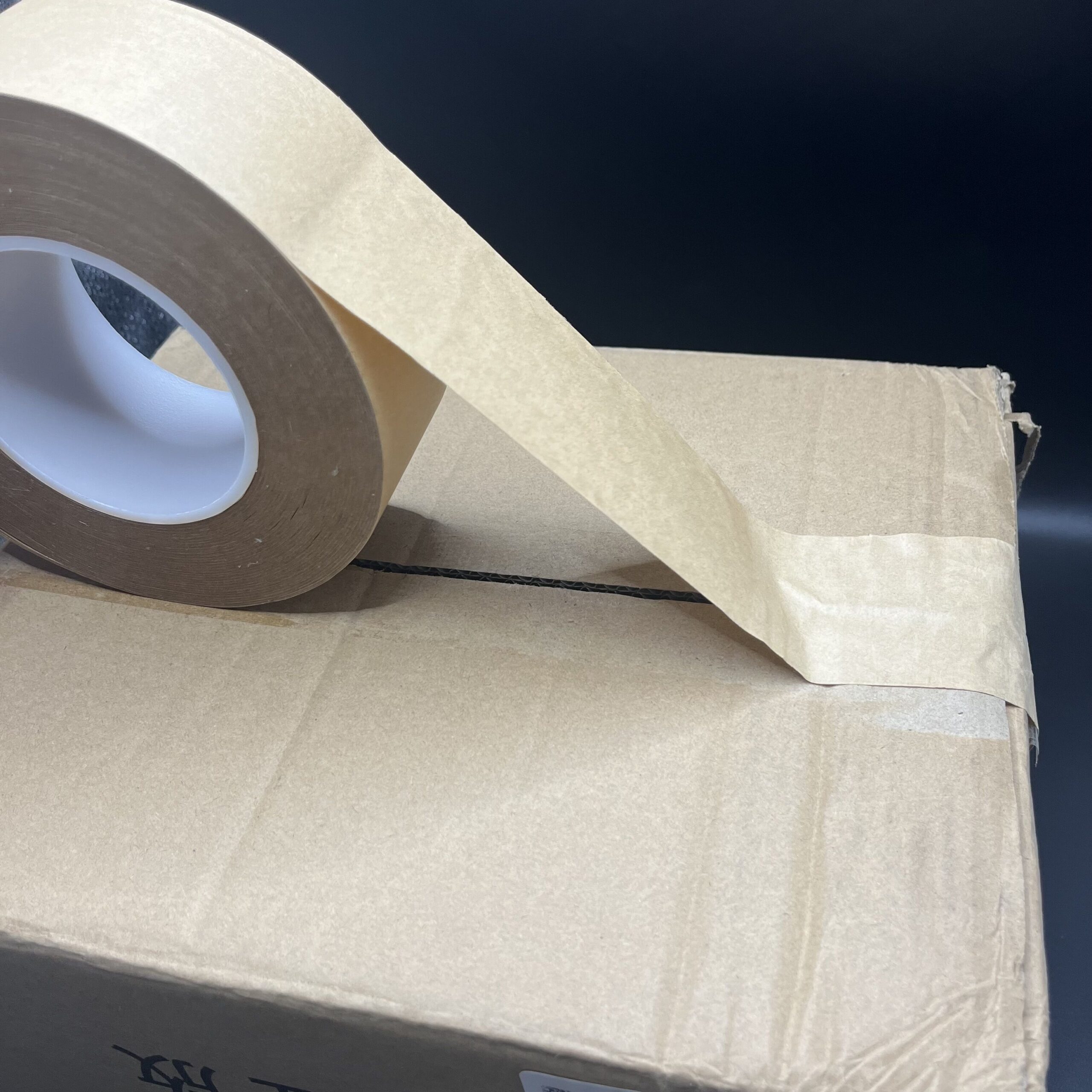
A stock image related to What Is Kraft Paper Tape.
In-depth Look: Manufacturing Processes and Quality Assurance for What Is Kraft Paper Tape
Understanding the manufacturing journey of kraft paper tape is essential for procurement teams seeking reliable suppliers across international markets. From the initial wood pulp processing to final quality inspections, each production phase directly impacts tensile strength, adhesive performance, and compliance with regional environmental regulations. For buyers sourcing from Asian manufacturing hubs to serve markets in Nigeria, Brazil, or the Middle East, visibility into production protocols ensures consistent product quality despite long supply chains and varying climate conditions during transit.
How Is Kraft Paper Tape Manufactured from Wood Pulp to Finished Product?
The production begins with the sulfate Kraft process, where wood chips—typically from softwood species like pine or spruce—are cooked in a solution of sodium hydroxide and sodium sulfide. This chemical treatment separates lignin from cellulose fibers while maintaining the natural strength of the wood pulp, resulting in the characteristic brown paper base that defines kraft tape. The pulp undergoes washing, bleaching (if white tape is required), and refining before being fed into Fourdrinier paper machines, where it forms continuous sheets through precise drainage and pressing operations.
Once the paper base achieves the target grammage—typically ranging from 60 to 150 grams per square meter depending on application requirements—manufacturers apply adhesive coatings through automated slot-die or roll-coating systems. Water-activated variants receive a starch-based adhesive layer that remains dormant until moistened, while pressure-sensitive types receive hot-melt synthetic rubber or acrylic coatings cured through controlled temperature zones. For reinforced kraft paper tape, fiberglass yarn or filament grids are embedded longitudinally between the paper substrate and adhesive layer, significantly enhancing tensile strength for heavy-duty industrial applications. The final manufacturing stage involves precision slitting and rewinding, where master rolls are cut to specified widths and wound onto cardboard cores, with automated tension controls preventing edge deformation or telescoping that could disrupt automated dispensing systems.
What Quality Assurance Protocols Ensure Industrial-Grade Reliability?
Reputable manufacturers implement ISO 9001-certified quality management systems that govern every production stage, from raw material incoming inspection to finished goods verification. Critical testing protocols include tensile strength assessments using ASTM D3759 standards to verify that the tape can withstand the stresses of automated packaging lines and long-distance shipping without snapping. Adhesion testing per ASTM D3330 measures the tape’s ability to bond with corrugated fibers under varying temperature and humidity conditions—particularly crucial for shipments destined for tropical climates in West Africa or South America.
Quality control laboratories also monitor moisture content within the paper substrate, as excessive humidity can compromise adhesive activation and structural integrity during ocean freight. In-line inspection systems equipped with machine vision technology detect coating inconsistencies, pinholes, or contamination during high-speed production, ensuring that every roll meets specified thickness tolerances and appearance standards. Batch traceability systems assign unique identifiers to each production run, enabling rapid quality investigations and recalls if defects are discovered post-shipment.
Which Certifications Matter for Importing into African, Middle Eastern, and European Markets?
B2B buyers must verify that manufacturers hold certifications relevant to their target import destinations. Forest Stewardship Council (FSC) certification ensures the wood pulp originates from responsibly managed forests—a growing requirement for European Union procurement policies and environmentally conscious Brazilian retailers. For food and beverage applications common in Middle Eastern markets, FDA compliance or EU Regulation 10/2011 certification confirms the tape is safe for indirect food contact.
Nigerian buyers should confirm SONCAP (Standards Organization of Nigeria Conformity Assessment Program) certification, while Brazilian importers require INMETRO compliance for certain industrial applications. REACH and RoHS certifications are non-negotiable for European markets, ensuring the tape contains no restricted heavy metals or hazardous substances. Additionally, ISO 14001 environmental management certification indicates that the manufacturer minimizes wastewater and chemical emissions during the Kraft pulping process, reducing regulatory risks for environmentally conscious procurement teams.
How Do Manufacturers Customize Production for Specific B2B Requirements?
Modern production facilities offer extensive customization capabilities that begin during the coating phase. Flexographic printing systems can apply up to six colors of water-based or UV-cured inks directly onto the kraft paper surface, enabling custom branding, handling instructions, or security patterns that enhance unboxing experiences for e-commerce applications. Dimensional customization extends beyond standard 48mm and 72mm widths; manufacturers can produce tapes ranging from narrow 24mm craft applications to extra-wide 144mm industrial sealing, with roll lengths extending to 1000 meters for high-volume automated operations.
Core diameter variations accommodate different dispensing equipment—76mm cores suit standard packing stations, while 50mm or 38mm cores fit handheld dispensers preferred in smaller Nigerian or Brazilian retail operations. Perforation capabilities allow manufacturers to create easy-tear patterns at specified intervals, reducing the need for cutting tools in fast-paced warehouse environments. These customization options are typically managed through computer-controlled slitting lines that can switch between specifications with minimal downtime, supporting mixed-container orders for distributors serving diverse end-user segments.
What Packaging and Storage Protocols Protect Quality During International Shipping?
Given the hygroscopic nature of paper-based products, export-oriented manufacturers implement rigorous moisture protection protocols essential for sea freight to humid destinations like Lagos or Rio de Janeiro. Finished rolls undergo individual polyethylene film wrapping followed by heat-sealed moisture barriers, with silica gel desiccants placed within each master carton to maintain relative humidity below 60% during transit. Palletization follows ISPM-15 standards for heat-treated wood, preventing customs delays related to pest control regulations in the European Union or Middle Eastern ports.
Container loading optimization ensures that heavy reinforced tapes are positioned at the bottom of shipping units to prevent crushing lighter pressure-sensitive variants, while climate-controlled storage at manufacturing facilities maintains adhesive stability before dispatch. Manufacturers typically guarantee 12-month shelf life for pressure-sensitive varieties and 24 months for water-activated tapes stored in original packaging, though buyers should request accelerated aging test data to verify performance after extended storage in tropical warehouse conditions. By scrutinizing these manufacturing and QA elements, procurement teams can secure kraft paper tape supplies that maintain consistent performance from production line to final application, regardless of geographic distance or environmental challenges.
Practical Sourcing Guide: A Step-by-Step Checklist for ‘What Is Kraft Paper Tape’
Procuring kraft paper tape for international B2B operations requires balancing sustainability objectives with complex supply chain realities. This actionable checklist guides procurement teams through critical decision points—from material specifications to climate-specific adhesive selection—ensuring your investment delivers both environmental credentials and operational reliability across diverse shipping corridors.
What Specifications Should You Define Before Ordering Kraft Paper Tape in Bulk?
Determine your precise application requirements before contacting suppliers. Assess whether you need water-activated gummed tape for tamper-evident security or pressure-sensitive varieties for high-speed automation. Calculate monthly consumption volumes to negotiate favorable MOQs, and specify required tensile strength—typically 50-100 N/cm for standard cartons, higher for reinforced industrial grades. Document your carton surface materials, as recycled corrugate requires different adhesion profiles than virgin fiber.
How Can You Verify Sustainability Certifications and Material Composition?
Request documentation proving FSC-certified paper sourcing and biodegradable adhesive formulations. Verify compliance with regional environmental regulations such as EU Packaging Directive or local sustainability mandates. Insist on heavy metal-free adhesives, particularly for food-contact applications, and confirm the Kraft process uses unbleached sulfate pulp to maintain structural integrity during transit. Ask for third-party biodegradability test reports to validate composting claims.
Which Adhesive Technology Performs Best in High-Humidity Environments?
Match adhesive chemistry to your destination climate. Water-activated starch-based adhesives create superior fiber-to-fiber bonds ideal for humid tropical regions like Nigeria or Brazil, preventing delamination during monsoon seasons. For arid Middle Eastern climates, pressure-sensitive natural rubber adhesives offer immediate tack without hydration requirements. Request climate-specific performance data showing shear resistance at 40°C+ temperatures and 85% relative humidity to ensure seal integrity.
How Do You Assess Supplier Export Experience and Quality Standards?
Evaluate manufacturers with proven export experience to your specific region, checking for ISO9001 certification and automated coating consistency. Verify their ability to provide consistent 48-72mm width tolerances and custom printing capabilities for branding. Request references from existing clients in Africa or South America to confirm reliability in handling international documentation, shipping logistics, and customs clearance procedures for adhesive products.
What Is the Complete Cost Structure for International Kraft Paper Tape Procurement?
Calculate total landed costs beyond unit pricing, including sea freight rates, import duties, and warehousing. Compare water-activated versus pressure-sensitive options—the former often requires dispenser investments but reduces material usage by 30% through stronger single-strip sealing. Factor in currency fluctuation buffers and negotiate Incoterms that minimize your risk exposure during ocean transit, particularly for moisture-sensitive gummed varieties.
How Should You Implement Storage Protocols for Tropical Climates?
Establish climate-controlled warehousing maintaining 15-25°C and 40-60% humidity to prevent premature adhesive activation or paper embrittlement. Implement FIFO inventory rotation and protect rolls from direct sunlight exposure using UV-blocking covers. For water-activated varieties, ensure storage areas remain absolutely dry until application, while pressure-sensitive stock requires vertical racking to prevent edge curling and adhesive migration in high-heat environments.
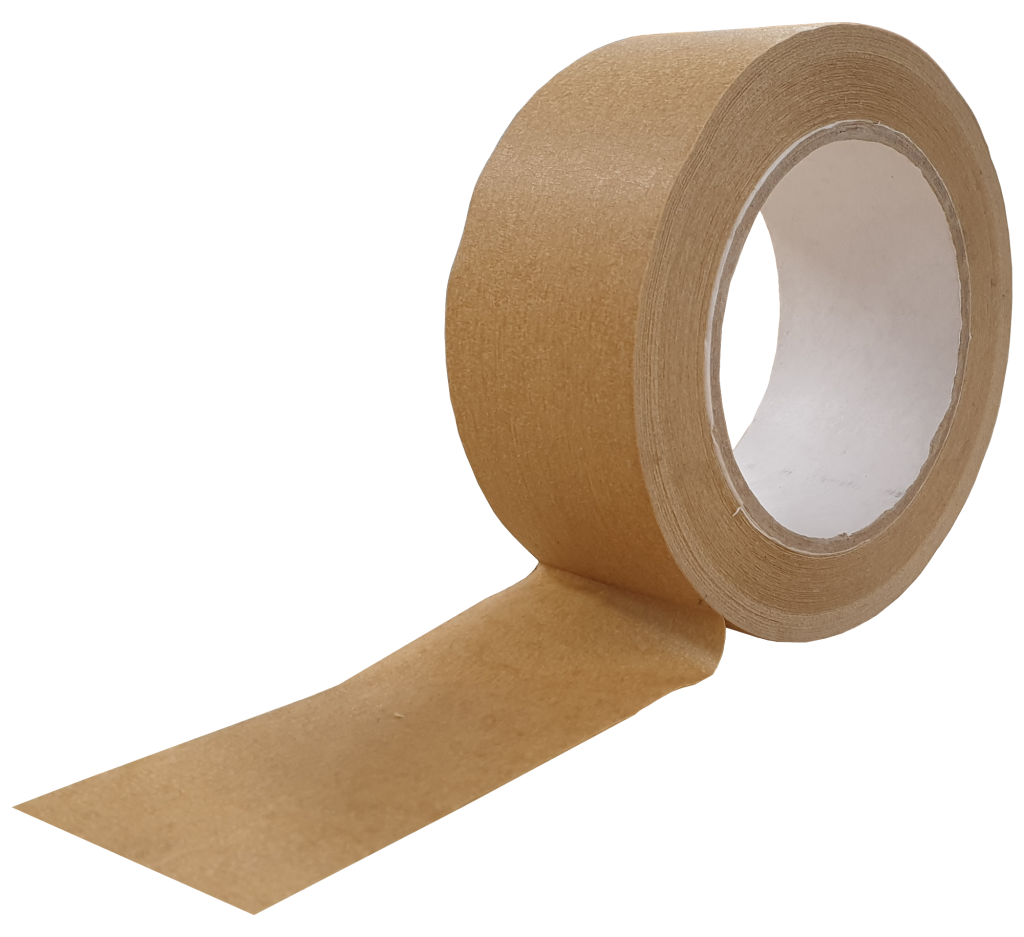
A stock image related to What Is Kraft Paper Tape.
Comprehensive Cost and Pricing Analysis for What Is Kraft Paper Tape Sourcing
When sourcing kraft paper tape internationally, understanding the complete cost architecture beyond the per-roll price is essential for procurement teams in Nigeria, Brazil, and across European markets. The total landed cost involves material specifications, adhesive technologies, and logistics complexities that vary significantly by region. Strategic buyers must evaluate not just the unit price, but the total cost of ownership including equipment needs, storage requirements, and customs duties.
What Raw Material Specifications Drive Base Pricing?
Kraft paper tape costs fluctuate primarily based on paper grammage (typically ranging from 60-120gsm) and adhesive formulations. Natural rubber adhesives command premium pricing compared to synthetic hot-melt options but offer superior adhesion in humid climates common in African and South American markets. Reinforced varieties incorporating fiberglass threads increase material costs by 15-25% compared to standard grades but reduce application waste through enhanced tensile strength, ultimately lowering per-package sealing costs for heavy-duty industrial applications.
How Do Minimum Order Quantities Affect Your Procurement Budget?
Chinese manufacturers typically structure pricing tiers at 5,000, 20,000, and 100,000+ roll thresholds, with unit costs dropping significantly at each level. For Middle Eastern and European buyers, full container load (FCL) shipments of 20-40ft containers reduce per-unit freight costs by 60-80% compared to LCL (Less than Container Load) alternatives. Custom printed tapes requiring flexographic plates incur one-time setup fees ranging $200-$500 but offer substantial branding value at volume, with printing costs adding only $0.02-$0.05 per roll at scale.
What Logistics Considerations Impact Total Landed Costs?
Water-activated kraft tape requires climate-controlled storage to prevent premature adhesive activation, potentially adding warehousing costs in tropical regions like Nigeria or Brazil. Sea freight from Asian manufacturing hubs to Lagos or São Paulo averages 25-35 days, with import duties ranging 5-15% depending on HS code classifications and local trade agreements. Pressure-sensitive varieties, while immediately usable, occupy approximately 30% more shipping volume due to release liner requirements, affecting container utilization rates and per-unit freight economics.
Which Tape Type Offers the Best ROI for High-Volume Operations?
While water-activated tape (WAT) requires initial dispenser investments ranging $150-$2,000 depending on automation levels, it reduces material consumption by 40% through superior bonding strength that eliminates the need for multiple strips. For Brazilian e-commerce operations handling 1,000+ packages daily, WAT prevents the “over-taping” habit common with plastic alternatives, generating labor cost savings. Pressure-sensitive kraft suits lower-volume European SMEs seeking immediate application without capital equipment expenditure, though per-roll costs run 20-30% higher than WAT equivalents.
How Can Buyers Mitigate Currency and Supply Chain Risks?
Procurement teams should negotiate quarterly pricing agreements hedged against USD/EUR fluctuations prevalent in African and South American markets to prevent margin erosion. Establishing buffer stock for 60-90 days insulates against shipping delays through critical chokepoints like the Suez Canal or Panama Canal routes. Working with suppliers offering flexible Incoterms—whether EXW for established importers or DDP for simplified landed cost forecasting—allows precise budget allocation and risk management tailored to specific regional banking and logistics infrastructures.
Alternatives Analysis: Comparing What Is Kraft Paper Tape With Other Solutions
When evaluating sealing solutions for export packaging or high-volume e-commerce fulfillment, procurement teams must assess Kraft paper tape against established alternatives that dominate different segments of the logistics market. While plastic-based options have historically offered convenience, shifting sustainability regulations in the EU and emerging EPR (Extended Producer Responsibility) frameworks across Africa and South America have altered the total cost of ownership calculations. The following analysis examines how Kraft paper tape performs relative to conventional plastic packing tape and industrial strapping systems—two solutions frequently considered for overlapping applications in manufacturing and distribution environments.
| 비교 측면 | Kraft Paper Tape | Plastic BOPP Packing Tape | PP/PET Strapping Systems |
|---|---|---|---|
| 머티리얼 구성 | Natural wood pulp with starch-based or synthetic adhesive | Polypropylene film with acrylic/rubber adhesive | Polypropylene or polyester plastic bands with metal buckles |
| 환경 영향 | Biodegradable, recyclable with cardboard, carbon-neutral options available | Non-biodegradable, contaminates paper recycling streams, landfill waste | Recyclable but energy-intensive production, requires separation from cardboard |
| 애플리케이션당 비용 | $0.08–0.15 per seal (single strip sufficient) | $0.02–0.05 per meter (multiple strips often required) | $0.50–2.00 per package (includes equipment depreciation) |
| 애플리케이션 속도 | Moderate (requires water activation or pressure application) | Fast (instant adhesion with handheld guns) | Slow (requires tensioning, threading, and sealing operations) |
| 보안 기능 | Tamper-evident permanent bond, cannot be resealed without damage | Resealable, leaves no visible damage evidence | Highly visible tampering, rigid immobilization of loads |
| 무게 용량 | Up to 40kg (reinforced variants), suitable for most cartons | Up to 20–25kg before adhesive failure risks | 100kg+ heavy-duty industrial loads |
| Storage Requirements | Stable in varied humidity; cool, dry environment recommended | Temperature sensitive; adhesive degrades in heat/cold cycles | Requires tensioning tools, buckles, and protective edge guards |
How Does Standard Plastic Packing Tape Compare to Kraft Paper Tape for Export Packaging?
Conventional plastic packing tape—typically BOPP (Biaxially Oriented Polypropylene)—represents the most widely adopted alternative due to its immediate availability and minimal upfront cost per roll. However, for B2B buyers operating in markets with emerging sustainability regulations across Europe and Latin America, this option presents significant downstream liabilities that offset initial savings. Unlike Kraft paper tape, which integrates seamlessly into paper recycling streams, plastic variants create costly contamination when left on corrugated boxes, requiring manual removal before pulping—a labor expense often overlooked in total cost of ownership calculations. While plastic tape offers faster application speeds suitable for high-velocity automated fulfillment centers, its synthetic acrylic adhesive frequently
Essential Technical Properties and Trade Terminology for What Is Kraft Paper Tape
When procuring kraft paper tape for international supply chains, understanding measurable technical standards and commercial terminology ensures specification alignment and cost optimization. The following specifications and trade definitions are essential for buyers operating across diverse regulatory environments and climatic conditions.
What Basis Weight (GSM) Defines Industrial-Grade Kraft Paper Tape?
Basis weight, measured in grams per square meter (GSM), determines tape durability and puncture resistance. Standard packaging grades range from 60-120 GSM, with heavier weights (100+ GSM) required for double-wall corrugated containers common in heavy machinery exports. Lighter variants suit standard e-commerce cartons but may compromise seal integrity under humid tropical conditions prevalent in West African and Southeast Asian markets.
How Does Machine Direction (MD) Tensile Strength Impact Load Security?
Tensile strength indicates resistance to breaking under stress, typically expressed in pounds per inch or Newtons per 25mm. High-quality kraft tape exhibits 30-50 N/25mm in the machine direction (MD)—the parallel fiber alignment during manufacturing. This specification proves critical when securing palletized loads subject to shifting during ocean freight, where inadequate MD strength risks catastrophic seal failure.
What Adhesion Values Ensure Reliable Bonding Across Temperature Extremes?
Adhesion strength, measured in ounces per inch or Newtons per 25mm, varies significantly between water-activated (WAT) and pressure-sensitive (PST) formulations. WAT systems typically achieve 20-30 N/25mm bond strength to corrugated fibers, creating permanent chemical adhesion, while PST ranges from 15-25 N/25mm. For Middle Eastern and Latin American exporters, specifying high-tack adhesives rated for 60°C+ environments prevents softening and seal degradation.
Why Does Elongation Percentage Matter for Automated Application?
Elongation at break—typically 2-4% for standard kraft paper—influences compatibility with high-speed automated dispensers. Excessive stretch causes misalignment during application, while insufficient flexibility risks tearing during sudden temperature fluctuations. Reinforced tapes incorporating fiberglass filaments reduce elongation to 1-2%, providing dimensional stability essential for precision sealing operations.
What Is Water-Activated Tape (WAT) vs. Pressure-Sensitive Tape (PST)?
Water-Activated Tape (WAT), commonly called “gummed tape,” requires moisture to activate starch-based adhesives that chemically bond with carton fibers, creating tamper-evident seals. Pressure-Sensitive Tape (PST) employs pre-coated hotmelt or solvent adhesives that adhere immediately upon contact, offering immediate handling strength but easier removal. WAT dominates security-conscious logistics, while PST suits rapid fulfillment environments.
How Do Reinforced and Non-Reinforced Specifications Differ?
“Reinforced” denotes tapes embedded with longitudinal fiberglass yarns or cross-woven synthetic fibers, increasing tensile strength by 300-400% compared to standard kraft. This specification appears in heavy industrial shipping where carton integrity is non-negotiable. Non-reinforced variants suffice for lightweight consumer goods but require double-seaming for heavy loads.
What Are Jumbo Rolls and Slit Rolls in Procurement Terminology?
Jumbo rolls refer to master production rolls (typically 1000-1500 meters) used for slitting into finished widths. B2B buyers purchasing jumbo rolls for in-house converting achieve 15-25% cost reductions versus slit rolls but require capital equipment. Slit rolls denote finished tape widths (48mm, 72mm standard) ready for immediate application, preferred by SMEs without converting capabilities.
How Do MOQ and Lead Times Affect Supply Chain Planning?
Minimum Order Quantity (MOQ) represents the lowest production volume manufacturers accept, typically 500-1000 rolls for custom-printed kraft tape or 5-10 jumbo rolls for standard grades. Lead times span 15-45 days depending on fiber sourcing and adhesive curing requirements. Buyers should negotiate buffer stock agreements when sourcing from Asian manufacturers to mitigate ocean freight delays affecting African and South American markets.
Navigating Market Dynamics and Sourcing Trends in the What Is Kraft Paper Tape Sector
The global transition toward circular packaging economies has positioned kraft paper tape as a strategic procurement category rather than a commodity supply item. For B2B buyers operating across diverse regulatory environments—from the EU’s Packaging and Packaging Waste Regulation to emerging sustainability frameworks in Nigeria and Brazil—understanding market dynamics ensures competitive advantage while mitigating supply chain risks. Navigating this sector requires insight into regional demand patterns, evolving quality standards, and the intersection of cost efficiency with environmental compliance.
How Is the Global Kraft Paper Tape Market Evolving for B2B Procurement?
The kraft paper tape sector is experiencing accelerated demand driven by exponential growth in e-commerce fulfillment centers across Africa and South America. Markets such as Nigeria and Brazil are witnessing surges in warehouse automation, creating heightened demand for water-activated reinforced varieties that integrate seamlessly with high-speed carton sealing equipment. Simultaneously, Middle Eastern logistics hubs are prioritizing tamper-evident security features, driving innovation in adhesive formulations that maintain integrity across extreme temperature variations from desert storage to refrigerated transport.
Supply chain resilience has become a critical procurement criterion following recent global disruptions. Forward-thinking buyers are diversifying sourcing strategies beyond traditional manufacturing centers, establishing relationships with suppliers offering regional distribution networks in Europe and the Middle East. This approach reduces lead times for bulk orders while providing flexibility to navigate fluctuating pulp prices and shipping cost volatility. The distinction between commodity-grade and industrial-grade kraft paper tape is also sharpening, with premium segments commanding growth through enhanced tensile strength specifications required for heavy-duty manufacturing exports.
Customization capabilities represent another significant market trend, as businesses leverage printable kraft paper tape for brand differentiation. B2B buyers are increasingly sourcing suppliers capable of low-minimum custom printing runs, allowing regional distributors to enhance unboxing experiences while maintaining eco-friendly credentials. This trend is particularly pronounced in European markets where consumer-facing businesses utilize branded packaging as a competitive differentiator.
Why Does Sustainable Sourcing Matter When Selecting Kraft Paper Tape Suppliers?
Sustainability in kraft paper tape procurement extends beyond the biodegradable end-product to encompass the entire forestry and manufacturing value chain. B2B buyers should prioritize suppliers demonstrating Forest Stewardship Council (FSC) certification, ensuring wood pulp originates from responsibly managed forests rather than contributing to deforestation pressures. This certification carries particular weight in European markets, where Extended Producer Responsibility schemes increasingly require documented proof of sustainable material sourcing and carbon footprint transparency.
Ethical manufacturing standards represent another crucial evaluation metric. Facilities adhering to ISO 14001 environmental management systems typically demonstrate reduced water consumption and chemical usage during the Kraft pulping process. For buyers in the Middle East and Africa, verifying social compliance—including fair labor practices and safe working conditions—protects brand reputation while ensuring supply continuity free from ethical controversies that could disrupt trade relationships.
The adhesive composition warrants specific scrutiny during supplier evaluation. While traditional water-activated tapes utilize starch-based adhesives, some manufacturers employ synthetic additives that compromise biodegradability. Buyers should request material safety data sheets and compostability certifications to verify environmental claims, particularly when serving food and beverage sectors where chemical migration concerns are paramount.
The total cost of ownership analysis frequently favors ethically sourced kraft paper tape despite higher unit prices. Superior fiber quality derived from sustainable forestry typically yields stronger adhesion and reduced application waste, lowering per-package sealing costs. Furthermore, alignment with circular economy principles enables seamless integration with existing cardboard recycling streams, eliminating labor costs associated with tape removal that plastic alternatives necessitate. As carbon border adjustment mechanisms expand globally, sourcing decisions prioritizing low-carbon manufacturing processes will increasingly influence import tariff calculations and market access permissions.
Frequently Asked Questions (FAQs) for B2B Buyers of What Is Kraft Paper Tape
What is the difference between reinforced and non-reinforced kraft paper tape?
Reinforced kraft paper tape embeds fiberglass threads or synthetic yarns between two layers of paper, delivering tensile strength exceeding 60 lbs per inch for heavy industrial shipments. Non-reinforced varieties consist of pure kraft paper fibers, suitable for standard cartons under 20kg typical in e-commerce and retail fulfillment. B2B buyers shipping machinery parts, metal components, or dense agricultural products should specify reinforced grades to prevent seam failure during rough international transit through multiple handling points.
Is kraft paper tape fully recyclable and biodegradable for sustainable packaging compliance?
Kraft paper tape biodegrades within 2-6 weeks in natural environments and recycles seamlessly with cardboard waste streams without manual separation. Unlike plastic tapes that contaminate pulp streams and require costly “de-taping” processes at recycling facilities, kraft tape fibers integrate completely into the repulping matrix. This characteristic proves essential for B2B buyers targeting EU markets with strict Packaging and Packaging Waste Directive (PPWD) compliance or corporate ESG reporting requirements across European and Middle Eastern markets.
What distinguishes gummed kraft paper tape from self-adhesive alternatives?
Gummed (water-activated) tape features starch-based adhesive that chemically bonds with cardboard fibers when moistened, creating a permanent tamper-evident seal that becomes part of the box structure. Self-adhesive varieties utilize pressure-sensitive rubber or acrylic compounds that adhere immediately without water, suitable for manual packing stations and field operations. For high-security B2B shipments, gummed tape provides superior integrity as removal destroys the box surface, while self-adhesive offers operational flexibility in locations without dispenser infrastructure.
How does kraft paper tape strength compare to standard plastic packing tape?
Kraft paper tape provides comparable tensile strength to polypropylene but superior shear resistance and edge tear performance under dynamic load. Once bonded, water-activated kraft tape distributes stress across the entire carton seam rather than concentrating it at tape edges, effectively reinforcing the box structure. Reinforced kraft varieties exceed plastic tape performance in temperature fluctuations common during Middle Eastern and South American shipping routes, maintaining adhesion integrity from -20°C to 60°C.
How does kraft paper tape perform in high-humidity climates typical of tropical regions?
Water-activated kraft tape actually strengthens in humid conditions once fully cured, as the starch adhesive creates a moisture-resistant crystalline bond with cardboard fibers. However, storage requires climate-controlled conditions below 70% humidity to prevent premature activation or roll deformation. For operations in Nigeria, Brazil, or Southeast Asia, specify moisture-resistant grades with synthetic adhesive additives or utilize pressure-sensitive variants for immediate application in uncontrolled warehouse environments.
What dispensing equipment is required for high-volume B2B implementation?
Water-activated tape requires specialized dispensers with integrated wetting brushes, ranging from manual bench models ($150-$400) to automated case sealers ($3,000-$15,000) for conveyor systems. Self-adhesive kraft tape functions with standard tape guns but benefits from industrial dispensers for consistent tension control. The equipment investment typically yields ROI within 12 months through reduced material consumption—kraft tape requires 40-50% less linear footage than plastic alternatives due to superior initial tack and structural bonding capabilities.
Can kraft paper tape be customized with branding and handling instructions for B2B shipments?
Kraft tape accepts flexographic printing up to three colors for logos, barcodes, fragile handling symbols, or multilingual shipping instructions. Custom printed rolls serve dual functions as tamper-evidence and mobile advertising, with minimum order quantities typically starting at 5,000 rolls for overseas buyers. This branding solution costs 60-70% less than custom-printed cartons while maintaining the rustic aesthetic preferred by eco-conscious European and North American importers.
What is the total cost of ownership when switching from plastic to kraft paper tape?
While per-roll procurement costs run 20-30% higher than polypropylene, total operational costs decrease through reduced application length (single strip vs. multiple strips), elimination of box damage claims, and streamlined recycling without labor-intensive tape removal. B2B buyers should factor in reduced waste management fees and potential green packaging incentives available in EU and UK markets. The sustainability premium typically pays for itself within 6-9 months for mid-volume shippers processing 500+ cartons daily.
중요 고지 사항 및 이용 약관
⚠️ 중요 고지 사항
제조업체, 기술 사양 및 시장 분석에 관한 내용을 포함하여 이 가이드에서 제공하는 정보는 정보 제공 및 교육 목적으로만 사용됩니다. 전문적인 조달 자문, 재무 자문 또는 법률 자문으로 간주되지 않습니다.
B2B 구매자는 독립적이고 철저한 실사를 수행해야 합니다. 구매 결정을 내리기 전에 반드시 확인하시기 바랍니다. 이 가이드의 정보에 의존하는 데 따른 위험은 전적으로 독자가 부담합니다.
Top 2 What Is Kraft Paper Tape Manufacturers & Suppliers List
1. Tape Jungle – Kraft Paper Tape
도메인: 테이프 정글
등록: 2010년(16년)
소개: Kraft Paper Tape features a natural rubber water-activated adhesive system (also available with starch-based vegetable adhesive) that creates an excellent bond to most packing products and surfaces. The tape has a tough kraft paper backing that remains strong under moist conditions with good resistance to outdoor weathering. Reinforced varieties (such as VENOM brand) feature fiberglass reinforceme…
2. Tape Providers – Eco-Friendly Kraft Paper Tape
도메인: tapeproviders.com
등록: 2017년(9년)
소개: Collection includes eco-friendly Kraft paper tapes that are durable, biodegradable, and sustainable for plastic-free packaging. Product types: (1) Kraft Paper Tape – 60 yards (FKT7) – Made in USA, 4.8/5 rating (26 reviews), alternatives to Uline S-14419/S-909/S-2492; (2) Brown Kraft Wrapping Paper 765 ft (KPN) – 100% Virgin Natural Kraft Paper, Made in USA, alternatives to Uline S-20806/S-20807; (…
Strategic Sourcing Conclusion and Outlook for What Is Kraft Paper Tape
How Can Procurement Teams Future-Proof Packaging Strategies with Kraft Paper Tape?
The transition from synthetic to fiber-based sealing solutions represents more than environmental compliance; it constitutes a strategic supply chain resilience imperative. For procurement teams across Nigeria, Brazil, and the broader Middle Eastern markets, kraft paper tape delivers tamper-evident security and circular economy compatibility that anticipates tightening EU import regulations and evolving B2B buyer preferences. While unit costs may initially exceed plastic alternatives, the superior adhesion strength—particularly in water-activated variants—reduces material consumption per carton and eliminates contamination costs in recycling streams, generating measurable total cost of ownership reductions within the first fiscal year of implementation.
What Supply Chain Trends Should B2B Buyers Monitor When Sourcing Sustainable Adhesive Solutions?
The global packaging landscape is witnessing accelerated demand for reinforced and gummed kraft paper tapes as manufacturers pivot from virgin plastics toward renewable resources. Forward-thinking buyers should prioritize suppliers offering FSC-certified substrates and humidity-resistant adhesive formulations critical for tropical climates prevalent in target African and South American regions. Establishing strategic partnerships with established Asian manufacturers now—before mainstream adoption triggers raw material competition—will secure favorable pricing structures and ensure consistent availability. Organizations that integrate kraft paper tape into their procurement portfolios today position themselves ahead of regulatory curves while meeting corporate ESG mandates without compromising operational security or package integrity.