Introduction: Navigating the Global Market for What Is Aluminum Tape Used For
When procuring critical sealing and insulation materials for large-scale HVAC, construction, or industrial projects, understanding what is aluminum tape used for becomes essential to preventing costly system failures. International buyers across Africa, South America, the Middle East, and Europe face unique challenges—from extreme desert heat in Saudi Arabia to high-humidity marine environments in Brazil—where substandard adhesive solutions can compromise entire infrastructure investments. Navigating these diverse climatic demands while ensuring compliance with varying regional standards requires more than basic product knowledge; it demands strategic sourcing intelligence.
Why Does Regional Climate Impact Your Aluminum Tape Procurement Strategy?
For B2B buyers managing cross-border supply chains, selecting pressure-sensitive aluminum foil tapes involves evaluating thermal resistance capabilities against local environmental stressors. Whether sealing HVAC ductwork in Riyadh’s scorching temperatures or protecting maritime equipment in Santos, the wrong adhesive backing or foil thickness can result in vapor leaks, corrosion, and project delays. This guide addresses how to match specific acrylic or rubber-based adhesive formulations to your region’s operational demands.
How Can This Guide Optimize Your International Purchasing Decisions?
This comprehensive resource examines aluminum tape types—from dead-soft foil to reinforced variants—alongside rigorous supplier vetting criteria and total cost of ownership analysis. We provide actionable frameworks for verifying flame resistance ratings, moisture barrier effectiveness, and customization capabilities tailored to African, South American, Middle Eastern, and European industrial standards. By the conclusion, you will possess the technical criteria and risk assessment tools necessary to secure high-performance aluminum sealing solutions that withstand extreme temperatures while optimizing your procurement budget across international markets.
Understanding What Is Aluminum Tape Used For Types and Variations
| 유형 이름 | 주요 차별화 기능 | 주요 B2B 애플리케이션 | 구매자를 위한 간략한 장단점 |
|---|---|---|---|
| Standard HVAC Aluminum Foil Tape | Dead-soft aluminum backing (30–50 micron), pressure-sensitive acrylic adhesive, operating range -30°C to 120°C, hand-tearable | Sealing HVAC ductwork, insulation vapor barriers, temporary pipe protection, light-duty construction sealing | Pros: Cost-effective for bulk procurement, excellent moisture/UV resistance, conforms to irregular surfaces. Cons: Limited mechanical strength unsuitable for high-stress seams, adhesive may degrade in extreme tropical humidity without proper storage |
| Reinforced Aluminum Scrim Tape | Fiberglass mesh or polyester scrim laminated between aluminum layers, high tensile strength (2–3x standard foil), puncture resistant, dimensional stability | Heavy-duty industrial ductwork, maritime shipping container sealing, desert construction moisture barriers, industrial pipe wrapping | Pros: Superior tear resistance, handles thermal expansion cycles, maintains integrity over large surface areas. Cons: Higher unit cost, requires meticulously clean surfaces for adhesion, less conformable to sharp irregularities than plain foil |
| High-Temperature Aluminum Tape | Thick aluminum gauge (80–150 micron), silicone or high-grade acrylic adhesive rated to 600°C, flame retardant (UL 723), chemical resistant | Furnace and refractory sealing, exhaust system joints, oil/gas pipeline insulation, aerospace component protection, power generation facilities | Pros: Extreme thermal tolerance, flame spread resistance, long service life in high-cycling environments. Cons: Premium pricing tier, requires temperature-controlled warehousing in hot climates, may need surface primers for optimal adhesion |
| Conductive Aluminum EMI Shielding Tape | Electrically conductive acrylic adhesive (surface resistivity <0.005 ohms), annealed aluminum foil, low-outgassing properties | Telecommunications infrastructure, data center grounding, cable shielding, electronics manufacturing, server room EMC compliance | Pros: Effective EMI/RFI attenuation without additional grounding, clean removal for maintenance, meets international EMC standards. Cons: Significantly higher cost per linear meter, vulnerable to oxidation if packaging compromised during maritime shipping, requires precise application technique |
What Is Standard HVAC Aluminum Foil Tape Used For in Commercial Projects?
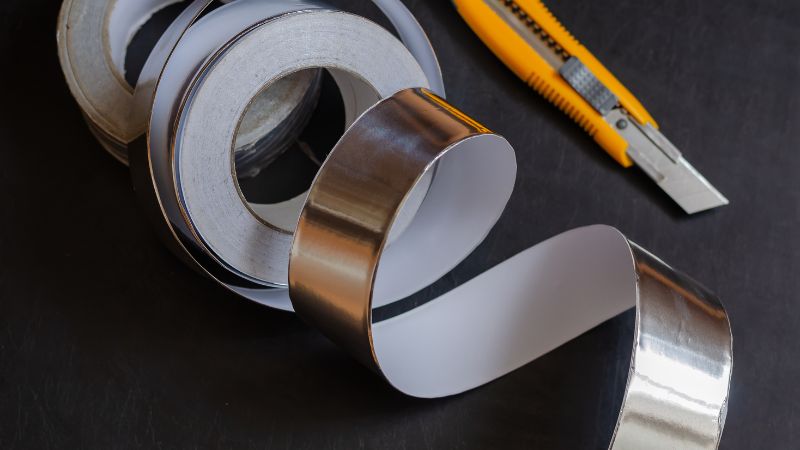
This entry-level variant features dead-soft aluminum foil (typically 30–50 microns) laminated with pressure-sensitive acrylic adhesive, offering superior conformability to corrugated ductwork and irregular insulation surfaces. It maintains reliable adhesion from -30°C to 120°C while providing an effective vapor barrier. For B2B buyers in tropical markets like Brazil or West Africa, prioritize formulations with enhanced UV stabilizers and mold-resistant adhesives. When procuring in bulk, specify liner release characteristics suitable for automated dispensers versus hand-application, and verify that the adhesive chemistry resists plasticizer migration common in flexible duct liners to prevent delamination during monsoon seasons or high-humidity storage.
How Does Reinforced Aluminum Scrim Tape Support Heavy-Duty Industrial Applications?
Engineered with a fiberglass mesh or polyester scrim embedded within the aluminum backing, this variant delivers exceptional tensile strength—often two to three times that of standard foil—and puncture resistance while maintaining flexibility. The reinforcement prevents tearing during application across large surface areas and provides dimensional stability under thermal expansion cycles. Critical for heavy-duty HVAC systems and construction moisture barriers in regions with extreme temperature differentials like the Middle East. B2B procurement teams should specify scrim density (6×6 or 8×8 mesh) based on mechanical load requirements and confirm that the adhesive system performs reliably on galvanized steel and fiberglass duct board substrates common in Saudi Arabian and European commercial construction.
Which High-Temperature Aluminum Tape Specifications Are Critical for Petrochemical Buyers?
Utilizing thicker aluminum gauges (80–150 microns) and specialized silicone or high-grade acrylic adhesives rated for continuous exposure from -40°C to over 600°C, this grade offers flame-retardant properties meeting UL 723 standards. Essential for sealing furnace components, exhaust systems, and high-pressure steam lines in petrochemical facilities and power generation plants prevalent across industrial zones in the Middle East and South America. B2B buyers must verify ASTM E84 flame spread and smoke developed indices for regulatory compliance. Given the premium pricing structure, evaluate total cost of ownership against standard tapes in high-cycling thermal environments,
Key Industrial Applications of What Is Aluminum Tape Used For
| 산업/섹터 | Specific Application of What Is Aluminum Tape Used For | 비즈니스를 위한 가치/혜택 | 이 애플리케이션의 주요 소싱 고려 사항 |
|---|---|---|---|
| HVAC & Climate Control Systems | Sealing ductwork joints, insulating fiberglass duct boards, and repairing sheet metal conduits in commercial and industrial HVAC installations | Prevents air leakage reducing energy costs by up to 30%; ensures moisture barrier integrity in high-humidity environments; extends system lifespan by preventing corrosion | Verify UL 181A-P/B certification for duct sealing; ensure acrylic adhesive formulation for extreme temperature cycling (-30°C to 150°C); check compliance with local energy efficiency codes |
| Oil, Gas & Petrochemical Infrastructure | Thermal insulation of pipelines, heat shielding for processing equipment, and sealing vapor barriers in offshore platforms and refineries | Reduces heat loss in steam pipes improving energy efficiency; provides flame-resistant sealing meeting safety standards; resists UV degradation and saltwater corrosion in marine environments | Require high-temperature resistance ( |
A stock image related to What Is Aluminum Tape Used For.
3 Common User Pain Points for ‘What Is Aluminum Tape Used For’ & Their Solutions
Scenario 1: Why Does HVAC Duct Tape Fail in Extreme Temperatures?
문제:
Facilities managers in regions like Saudi Arabia and Brazil frequently encounter adhesive degradation when using standard cloth duct tape on commercial HVAC ductwork. The extreme temperature fluctuations between scorching daytime heat and cooler nights cause rubber-based adhesives to melt or become brittle, creating air leaks that increase energy consumption by up to 30%. This results in failed compliance with international energy efficiency standards and significantly higher operational costs for large-scale climate control systems.
솔루션:
Specify pressure-sensitive aluminum foil tape with acrylic adhesive rated for continuous exposure from -30°C to 150°C. Ensure all duct surfaces are clean, dry, and free from oil contamination before application to maximize bonding strength. For large-scale commercial installations, select UL 181A-P/B-FX listed tapes that meet strict fire safety regulations. The aluminum backing maintains structural integrity under thermal stress while creating an airtight seal that prevents conditioned air loss and reduces HVAC system strain in demanding environments.
Scenario 2: Can Aluminum Tape Be Used for High-Temperature Electrical Shielding?
문제:
Industrial manufacturers across Africa and South America experience critical equipment failures when using generic adhesives for electrical shielding near high-heat machinery. Standard tapes degrade when exposed to temperatures above 80°C, exposing wire bundles to electromagnetic interference and creating potential fire hazards near furnace components or electrical panels. This leads to unplanned downtime, costly repairs, and safety compliance violations in heavy industrial environments where thermal management is critical.
솔루션:
Implement high-temperature aluminum foil tape rated for 600°C with silicone-based adhesive specifically designed for electrical shielding applications. Apply the tape with 50% overlap on wire harnesses and heat-generating components to ensure complete EMI protection and thermal management. For outdoor electrical infrastructure in humid climates, select UV-resistant variants that prevent moisture ingress while maintaining thermal conductivity to dissipate heat effectively from critical components and extend equipment lifespan.
Scenario 3: What Is Aluminum Foil Tape Used For in Moisture Barrier Protection?
문제:
Construction firms operating in coastal European and South American markets face rapid corrosion of metal ductwork and insulation degradation due to moisture penetration through failed seals. Standard tapes lose adhesion in high-humidity maritime environments, allowing water vapor to infiltrate fiberglass insulation systems. This compromises thermal efficiency, promotes mold growth within building envelopes, and accelerates corrosion of underlying metal substrates, significantly reducing infrastructure lifespan and increasing maintenance expenditures.
솔루션:
Deploy heavy-duty reinforced aluminum foil tape with aggressive acrylic adhesive for moisture barrier applications in thermal insulation systems. The internal reinforcement mesh provides mechanical strength for outdoor exposed seams, while the aluminum backing creates a 100% moisture vapor barrier. Apply during low-humidity conditions or specify tapes formulated for high-humidity adhesion to ensure permanent seals on sheet metal ducts and insulation joints, effectively preventing condensation and corrosion in harsh coastal environments.
Strategic Material Selection Guide for What Is Aluminum Tape Used For
When sourcing pressure-sensitive metallic tapes for industrial infrastructure across diverse economic zones—from Saudi Arabia’s mega-construction projects to Brazil’s offshore oil facilities—procurement teams must evaluate substrate performance beyond standard specifications. While aluminum foil tape dominates HVAC and insulation markets, strategic material selection requires understanding when alternative metal backings better serve specific environmental and regulatory demands. This analysis examines four primary substrate categories to optimize supply chain decisions for regional climate challenges and application-specific requirements.
Which Tape Material Offers the Best Versatility for HVAC and Moisture Barrier Applications?
Standard aluminum foil tape with acrylic or rubber-based
A stock image related to What Is Aluminum Tape Used For.
In-depth Look: Manufacturing Processes and Quality Assurance for What Is Aluminum Tape Used For
Understanding the manufacturing intricacies behind aluminum foil tape ensures procurement teams secure products capable of withstanding diverse operational environments—from the high-humidity conditions of Brazilian industrial facilities to the extreme temperature fluctuations in Saudi Arabian HVAC installations. The production process combines metallurgical precision with advanced adhesive chemistry to create pressure-sensitive tapes that maintain integrity across global supply chains.
What Raw Material Specifications Define Premium Aluminum Tape Production?
The manufacturing process begins with selecting aluminum alloys, typically 1050, 1145, or 1235 series, chosen for their optimal balance of malleability and tensile strength. Reputable manufacturers utilize dead-soft annealed aluminum foil ranging from 18 to 50 microns in thickness, depending on the intended application. This base material undergoes surface degreasing and corona treatment to enhance adhesive bonding properties. For B2B buyers sourcing for construction or aerospace applications, verifying the alloy grade ensures compatibility with specific thermal conductivity requirements and corrosion resistance standards prevalent in European and Middle Eastern building codes.
How Are Multi-Layer Lamination and Coating Processes Executed?
Modern production lines employ solvent-based or hot-melt coating technologies to apply pressure-sensitive adhesives (PSA) uniformly across the foil surface. Acrylic adhesives dominate HVAC-grade tapes, offering superior UV resistance and temperature stability from -30°C to 120°C, while rubber-based formulations provide aggressive initial tack for low-surface-energy substrates. The coating process involves precision roller systems that maintain adhesive thickness within ±2 microns tolerance, followed by thermal curing ovens that activate cross-linking polymers. For reinforced varieties, fiberglass scrim or polyester mesh undergoes simultaneous lamination between adhesive layers, creating mechanical strength essential for duct board sealing in heavy-duty industrial environments.
What Quality Control Measures Validate Adhesive Performance?
Rigorous testing protocols separate commodity-grade products from industrial-specification tapes suitable for international B2B procurement. Manufacturers conduct peel adhesion tests per ASTM D3330 standards, measuring force requirements between 20-80 oz/inch depending on application specifications. Shear strength testing evaluates resistance to slippage under load, critical for vertical duct installations. Climate chamber testing simulates extreme conditions—cycling samples between desert heat (60°C) and freezer environments (-30°C) to validate performance across diverse regional requirements from South American high-altitude facilities to African coastal humidity.
Which Certifications Should International Buyers Verify?
For cross-border commerce, compliance documentation proves essential. ISO 9001:2015 certification indicates consistent manufacturing processes, while REACH compliance ensures adhesive formulations meet European chemical safety standards. Buyers in Saudi Arabia should verify SASO (Saudi Standards, Metrology and Quality Organization) conformity, whereas Brazilian procurement teams require INMETRO-aligned quality assurance. Food-grade aluminum tapes demand FDA or EU 10/2011 compliance for packaging applications. Additionally, UL 723 (ASTM E84) certification for flame spread and smoke generation remains critical for HVAC contractors meeting Middle Eastern fire safety regulations.
How Do Manufacturers Ensure Consistency in Slitting and Winding?
Post-coating operations involve precision slitting to standard widths (48mm, 72mm, 96mm) or custom dimensions for bulk orders. Computer-controlled winding systems maintain tension uniformity to prevent telescoping or edge deformation during transit—crucial for container shipping to distant markets. Quality inspectors conduct 100% visual checks for pinholes, wrinkles, or adhesive voids that could compromise vapor barriers. Automated length verification ensures roll consistency, preventing short-length discrepancies that disrupt contractor inventory management on large-scale construction projects.
What Packaging Standards Preserve Product Integrity During Global Shipping?
Final quality assurance focuses on protective packaging suitable for extended sea freight. Moisture-barrier film wrapping with desiccant packets prevents humidity degradation of acrylic adhesives in tropical climates. Temperature-sensitive shipping indicators monitor exposure to heat spikes exceeding 40°C during transit through equatorial regions. Core materials utilize recycled cardboard or plastic to prevent crushing, while palletization follows international standards for forklift handling in African and South American port facilities. Storage recommendations typically specify 15-25°C ambient conditions with 40-60% relative humidity to maintain 12-24 month shelf stability.
Procurement teams evaluating aluminum tape suppliers should request batch-specific test reports documenting adhesion retention, foil thickness verification, and thermal cycling performance. This manufacturing transparency ensures selected products deliver reliable sealing across HVAC, refrigeration, and industrial applications regardless of regional climate challenges.
Practical Sourcing Guide: A Step-by-Step Checklist for ‘What Is Aluminum Tape Used For’
Procuring aluminum tape for international industrial operations requires systematic evaluation beyond basic product specifications. Buyers must account for regional climate variations, application-specific performance demands, and complex supply chain logistics to ensure product integrity upon delivery. This checklist provides a structured framework for sourcing decisions that minimize material waste, prevent installation failures, and optimize operational efficiency across diverse geographic markets.
1. How Do You Define Application Requirements Before Sourcing Aluminum Tape?
Begin by documenting the specific operational environment and substrate materials where the tape will perform. Determine whether the application involves HVAC duct sealing, electrical shielding, or marine insulation, as each requires different pressure-sensitive adhesive chemistries and backing thicknesses. Assess exposure to temperature extremes, humidity levels, and UV radiation prevalent in your region—environmental factors that directly influence whether acrylic or synthetic rubber adhesives will provide superior bonding longevity and thermal stability.
2. What Specifications Determine Aluminum Tape Performance in Extreme Climates?
Specify the aluminum foil thickness, typically ranging from 30 to 150 microns, based on mechanical stress and thermal conductivity requirements. For high-temperature environments common in Middle Eastern or African industrial settings, select tapes rated for continuous exposure above 120°C with reinforced scrim backing for additional tensile strength. Verify moisture vapor transmission rates and thermal resistance values to ensure the tape maintains airtight seals and insulation properties in humid conditions characteristic of South American coastal regions.
3. Which Certifications and Standards Should You Verify for International Procurement?
Confirm compliance with regional building codes and industry-specific standards such as UL 723 for flame spread resistance or ASTM E84 for surface burning characteristics. For European markets, ensure REACH compliance and CE marking where applicable, while Saudi Arabian projects may require SASO certification. Request Material Safety Data Sheets (MSDS) and certificates of analysis to verify that adhesive formulations meet local environmental regulations and do not contain restricted substances that could delay customs clearance or violate import restrictions.
4. How Do You Evaluate Supplier Capabilities for Custom Aluminum Tape Solutions?
Assess whether potential suppliers offer customization services such as die-cutting specific widths, printing identification markings, or developing proprietary adhesive formulations for unique substrates. Evaluate their technical support infrastructure and response times—suppliers should provide multilingual application guidance and troubleshooting for climate-specific challenges. Review their quality management certifications, including ISO 9001, and verify production capacity to ensure consistent batch-to-batch performance critical for large-scale infrastructure projects with tight deadlines.
5. What Packaging and Logistics Factors Prevent Quality Degradation During Transit?
Specify climate-controlled packaging requirements to prevent adhesive degradation and cold flow during shipping through high-temperature zones. Request moisture-barrier packaging with desiccant inserts and UV-protective wrapping when sourcing for humid regions, and verify that cores and spools meet your automated application equipment specifications. Confirm shelf life documentation—typically 12 to 24 months—and ensure the supplier uses shipping containers that protect against salt air corrosion when transporting through maritime routes to Brazilian or African ports.
6. How Should You Validate Aluminum Tape Performance Before Bulk Ordering?
Request production samples from shortlisted suppliers and conduct adhesion testing on your specific substrates under actual local environmental conditions. Perform peel strength tests after exposing samples to accelerated aging protocols that simulate regional climate extremes, including thermal cycling and humidity exposure. Validate that the tape maintains conformability to irregular surfaces, that the adhesive does not ooze or degrade when subjected to operational temperature fluctuations, and that the backing resists tearing during application.
A stock image related to What Is Aluminum Tape Used For.
Comprehensive Cost and Pricing Analysis for What Is Aluminum Tape Used For Sourcing
When sourcing aluminum foil tape for HVAC, construction, or industrial applications, understanding the cost structure beyond per-roll pricing is essential for procurement teams across diverse markets. Global aluminum commodity fluctuations, adhesive technology tiers, and regional logistics complexities create a nuanced pricing landscape that requires strategic analysis to optimize procurement budgets for projects in Saudi Arabia, Brazil, or Nigeria.
What Factors Drive Aluminum Foil Tape Pricing in Global Markets?
The primary cost driver remains the aluminum foil backing itself, typically measured in microns (30μm to 150μm), with thicker gauges commanding 25-40% price premiums over standard grades. Standard HVAC applications utilize 30-50μm thickness for cost-efficient duct sealing, while heavy-duty variants (80μm+) suit aerospace and marine applications requiring mechanical durability. Acrylic adhesive formulations provide economical solutions for moderate temperatures (-30°C to 120°C), whereas silicone-based systems—essential for high-temperature environments up to 600°C—can increase material costs by 50-60%. Additionally, specialized UV-resistant coatings for Middle Eastern and African climates add 10-15% to base pricing but prevent premature adhesive degradation under intense solar exposure, reducing long-term replacement cycles.
How Do Adhesive Specifications Impact Your Total Procurement Budget?
Acrylic adhesives dominate volume procurement due to their optimal balance of performance and cost-effectiveness, typically ranging $2-4 per standard roll. Rubber-based adhesives offer superior initial tack for cold-weather applications prevalent in European markets but require 15-20% higher investment per unit. For Saudi Arabian petrochemical facilities or Brazilian mining operations requiring extreme heat resistance, silicone adhesives represent premium tiers ($6-10 per roll) yet deliver significant lifecycle cost savings through reduced reapplication frequency and maintenance downtime. Procurement teams should carefully evaluate actual bonding strength requirements against environmental exposure conditions to avoid over-specification that unnecessarily inflates unit costs while compromising operational efficiency.
What Pricing Strategies Should Middle Eastern and African Buyers Consider?
Regional logistics significantly impact landed costs for buyers in Saudi Arabia, Nigeria, or Brazil. Container optimization becomes critical—aluminum tape’s high density allows 15-20% more linear meters per cubic meter compared to bulkier foam tapes, reducing shipping costs per unit when procuring full container loads (FCL). However, African markets often face challenging minimum order quantity (MOQ) requirements; negotiating mixed-container agreements (combining aluminum tape with complementary HVAC supplies or insulation materials) can help meet supplier thresholds while diversifying inventory risk. For Brazilian importers, factoring in Mercosur tariff structures versus direct Asian sourcing reveals potential 12-18% cost differentials that favor strategic supplier selection and forward contracting during favorable exchange rate periods.
How Does Reinforcement Technology Affect Cost-Effectiveness?
Reinforced aluminum tapes incorporating fiberglass scrim or polymer mesh command 30-50% price premiums over standard foil variants but deliver measurable ROI in demanding industrial applications. For European construction projects requiring mechanical strength and tear resistance, reinforced options reduce material waste by 40% during application on irregular surfaces and structural corners. Marine and offshore industries across the Middle East particularly benefit from these specifications, as enhanced durability prevents costly remediation of vapor barrier failures in corrosive environments. When calculating total cost of ownership, factor in application labor costs—reinforced tapes often require fewer overlap layers and resist tearing during installation, reducing labor time by 25-30% compared to standard foil products.
Why Should B2B Buyers Analyze Total Cost of Ownership Beyond Unit Price?
Strategic procurement requires evaluating storage longevity and application efficiency alongside sticker prices. Bulk purchasing of 5,000+ rolls typically yields 18-25% volume discounts, but buyers must balance this against capital tie-up and warehouse climate control requirements—aluminum tape adhesives can degrade in high-humidity storage common in tropical African or South American regions. Custom slitting services (converting 48-inch master rolls to specific widths) add $0.50-1.20 per roll but eliminate waste in specialized HVAC fabrication processes. For European buyers, compliance with REACH regulations and flame-retardant certifications (UL 723) may add upfront certification costs but prevent expensive customs delays, project penalties, and liability issues that far exceed initial material savings.
Alternatives Analysis: Comparing What Is Aluminum Tape Used For With Other Solutions
While aluminum foil tape dominates HVAC and industrial sealing applications across global markets, procurement teams often evaluate alternatives based on regional availability, upfront material costs, and specific installation constraints. For B2B buyers operating in diverse climates—from the humid coastal regions of Brazil to the extreme heat of Saudi Arabia—understanding how aluminum tape stacks against conventional substitutes ensures optimal long-term performance and total cost of ownership. The following analysis examines two prevalent alternatives: traditional cloth-backed duct tape and professional-grade mastic sealants.
How Does Aluminum Foil Tape Compare to Other Industrial Sealing Methods?
| 비교 측면 | Aluminum Foil Tape Solution | Cloth-Backed Duct Tape | Mastic Sealant (Duct Sealant) |
|---|---|---|---|
| Performance in Extreme Temperatures | Withstands -30°C to 150°C+; thermally conductive; flame resistant | Fails above 60°C; adhesive degrades rapidly in heat; not suitable for ductwork despite name | Withstands up to 200°C+ depending on formulation; excellent for high-heat exhaust systems |
| Moisture & Vapor Sealing | Creates immediate airtight, waterproof barrier; UV and mildew resistant | Permeable to moisture; cloth backing absorbs humidity; mold risk under insulation | Excellent vapor barrier when cured; prevents air leakage effectively |
| Application Speed & Labor | Instant adhesion; no curing time; conforms to irregular surfaces with minimal training | Fast application but requires frequent re-application; temporary solution only | Slow application (brushing/troweling); requires skilled labor; 24-48 hour curing period |
| Durability & Lifespan | 10-20 year service life; mechanical strength; maintains seal through thermal cycling | 1-3 years typical lifespan; dries out and peels; ongoing maintenance costs | Permanent bond; 20+ year durability; rigid when set; resistant to vibration |
| 총 소유 비용 | Moderate upfront cost; minimal maintenance; reduces energy loss long-term | Low initial cost; high lifecycle costs due to re-work and energy leakage | Low material cost; high labor costs; expensive for large-scale projects |
Why Do Some Regions Still Use Cloth-Backed Duct Tape for HVAC Applications?
Despite its ubiquitous presence in hardware supply chains across Africa and South America, cloth-backed duct tape represents a false economy for industrial HVAC applications. While the lower unit price appeals to budget-conscious procurement teams, this alternative fails to perform under the thermal stresses common in Middle Eastern and Brazilian industrial environments, where ambient temperatures regularly exceed the adhesive’s glass transition thresholds. The fabric backing and rubber-based adhesive degrade within months when exposed to the temperature fluctuations inherent in HVAC ductwork, creating microscopic air leakage paths that increase energy consumption by up to 30% according to industry efficiency studies. Furthermore, the tape’s permeability to moisture promotes condensation buildup and mold growth beneath insulation layers, creating health compliance risks in commercial buildings. For B2B buyers managing large facility portfolios, the hidden costs of premature failure—including emergency labor dispatch for re-application, inflated HVAC energy loads during peak seasons, and potential penalties for non-compliance with stringent EU or local building codes—far outweigh the initial per-roll savings, making aluminum foil tape the strategically sound capital investment despite higher upfront pricing.
Is Mastic Sealant a Viable Alternative to Aluminum Tape for High-Temperature Environments?
Mastic sealant offers a compelling alternative for specific industrial scenarios requiring substantial gap-filling capabilities or permanent rigid seals, particularly in large-scale commercial construction projects across Europe and the Middle East where building codes mandate zero-leakage standards. Unlike pressure-sensitive tapes, mastic compounds create a solid, inflexible barrier ideal for sealing irregular joints in sheet metal ductwork or fiberglass duct board where mechanical fasteners alone prove insufficient, effectively bridging gaps up to 1/4 inch without additional backing materials. However, procurement teams must rigorously factor in significant labor costs associated with extensive surface preparation, specialized application via brushes or pneumatic caulking systems, and mandatory 24-to-48-hour curing periods that delay project commissioning and impact construction timelines. While mastic excels in static, high-temperature exhaust applications exceeding 200°C where vibration is minimal and permanence is prioritized, it lacks the flexibility, immediate pressure-sealing capability, and field-repair convenience that aluminum tape provides for ongoing maintenance operations and emergency retrofit projects. Consequently, many facility managers in dynamic industrial environments adopt a hybrid approach, specifying mastic for initial new construction duct sealing while maintaining aluminum foil tape inventories for routine preventive maintenance, vibration-prone joint repairs, and rapid-response leak mitigation protocols.
Essential Technical Properties and Trade Terminology for What Is Aluminum Tape Used For
When procuring aluminum foil tape for international infrastructure projects across Africa, the Middle East, and South America, technical specifications determine compliance with regional building codes and long-term performance in extreme climates. Buyers must verify material properties that withstand thermal cycling, UV exposure, and humidity fluctuations to prevent costly failures in HVAC ductwork and industrial insulation systems.
What Temperature Range Should Aluminum Tape Withstand for Industrial Applications?
High-performance aluminum tapes must maintain adhesive integrity across extreme thermal cycles, typically rated from -30°C to over 120°C for standard HVAC applications. Specialized high-temperature variants utilizing silicone adhesives can withstand continuous exposure up to 600°C for furnace and exhaust applications in industrial settings. Buyers should specify temperature ratings that exceed local ambient extremes by at least 20% to account for system heat spikes and solar gain common in Saudi Arabian or Brazilian installations.
How Does Backing Thickness Impact Conformability and Tensile Strength?
Dead soft aluminum backing, typically ranging from 30 to 50 microns in thickness, provides superior conformability for sealing irregular duct seams and corrugated surfaces. Thicker reinforced grades incorporating fiberglass scrim offer higher tensile strength but reduced flexibility, requiring careful selection based on substrate geometry. For complex curved surfaces common in custom HVAC fabrication, specify dead soft alloys that resist cracking during application while maintaining structural integrity.
What Moisture Vapor Transmission Rate Ensures Effective Climate Barrier Protection?
The Moisture Vapor Transmission Rate (MVTR) indicates a tape’s effectiveness in preventing humidity penetration, measured in grams per square meter per 24 hours. Premium aluminum tapes achieve MVTR ratings below 1.0 g/m²/24h, creating impermeable seals critical for preventing condensation in chilled water piping. This specification proves vital for buyers in tropical climates or humid Middle Eastern coastal regions where mold prevention and corrosion resistance are paramount.
What Is Pressure Sensitive Adhesive (PSA) and Why Does Chemistry Matter?
Pressure Sensitive Adhesive (PSA) refers to the permanently tacky backing that requires only finger pressure to activate bonding without solvents or heat. In aluminum tapes, PSA formulations vary between acrylic systems offering excellent UV resistance for outdoor applications and rubber-based adhesives providing superior initial tack for low-energy surfaces. Understanding PSA chemistry helps procurement teams match tape selection to specific surface requirements of galvanized steel, aluminum, or fiberglass duct board.
What Do UL 181A-P and UL 181B-FX Classifications Mean for Duct Sealing Standards?
UL 181A-P and UL 181B-FX represent Underwriters Laboratories classifications for pressure-sensitive tape used in duct sealing, with A-P designating rigid fiberglass duct board and B-FX indicating flexible duct connections. These standards require rigorous flame spread and smoke development testing, making them mandatory for commercial HVAC projects in many international markets adopting North American building codes. Buyers should verify current UL listings as formulations change, ensuring compliance with local fire safety regulations in European and Middle Eastern jurisdictions.
How Does FSK Construction Differ from Plain Aluminum Backing in Vapor Barrier Applications?
Foil-Scrim-Kraft (FSK) describes a laminated backing combining aluminum foil, fiberglass reinforcing scrim, and kraft paper layers, distinct from plain dead soft foil tapes. This tri-layer structure provides dimensional stability and tear resistance for insulation jacketing where mechanical protection is required, though it sacrifices the extreme conformability of plain foil grades. FSK tapes serve as vapor barriers over fiberglass insulation in commercial buildings, with the scrim reinforcement preventing tearing during application over uneven surfaces.
Navigating Market Dynamics and Sourcing Trends in the What Is Aluminum Tape Used For Sector
As infrastructure development accelerates across emerging economies and energy-efficiency regulations tighten globally, aluminum foil tape has transitioned from a commodity accessory to a strategic procurement category. For B2B buyers operating in diverse climates—from the humid coastal regions of Brazil to the extreme desert temperatures of Saudi Arabia—understanding market volatility and sourcing ethics ensures not only cost optimization but also operational continuity. The pressure-sensitive adhesive (PSA) tape market demands particular attention to regional supply chain resilience, given the critical role these products play in HVAC sealing, moisture barrier applications, and thermal insulation across construction and industrial sectors.
How Is the Global Aluminum Tape Market Evolving for B2B Procurement?
The aluminum tape sector is experiencing robust expansion driven by massive
Frequently Asked Questions (FAQs) for B2B Buyers of What Is Aluminum Tape Used For
1. How do I ensure airtight sealing in commercial HVAC systems using aluminum foil tape?
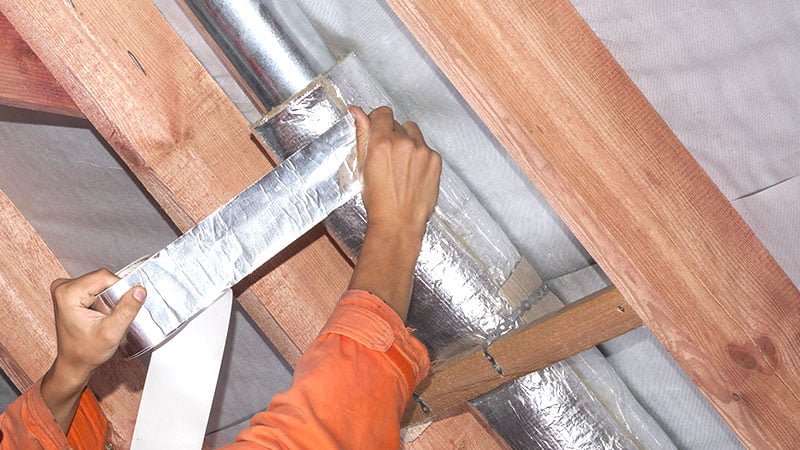
Aluminum foil tape creates vapor-tight seals on fiberglass duct boards and sheet metal joints in commercial HVAC systems, preventing energy loss and condensation buildup that leads to mold growth. Unlike mechanical fasteners, it conforms to irregular surfaces while maintaining structural integrity under thermal expansion and contraction cycles common in large-scale installations. For optimal performance, apply the tape to clean, dry surfaces at temperatures above 10°C (50°F) to ensure the acrylic or rubber adhesive achieves full bond strength within 24 hours.
2. What is the difference between aluminum foil tape and duct tape for industrial applications?
While duct tape offers temporary binding strength, it degrades rapidly under the temperature fluctuations and moisture levels typical in industrial HVAC environments, often failing within weeks of installation. Aluminum foil tape utilizes heat-resistant acrylic or rubber adhesives that maintain adhesion from -30°C to over 120°C, creating permanent seals that withstand thermal cycling and humidity without delamination. For B2B procurement in sectors like petrochemical processing or data center cooling across Saudi Arabia and Brazil, aluminum tape provides the UL-listed fire resistance and longevity required for code-compliant installations.
3. Can aluminum tape be used for high-temperature electrical shielding in industrial equipment?
Yes, specialized high-temperature aluminum tapes with silicone or glass cloth backings can withstand continuous exposure up to 600°C, making them suitable for wrapping furnace components, heat exchangers, and cable bundles in heavy manufacturing settings. The tape’s thermal conductivity helps dissipate heat while its reflective surface protects underlying wiring from radiant heat damage in automotive, aerospace, and metal processing applications. When sourcing for electrical shielding, verify the tape’s dielectric strength rating and ensure the adhesive system is rated for the specific temperature range of your equipment’s operating environment.
4. How do I implement thermal insulation and moisture barriers using aluminum foil tape in extreme climates?
Aluminum foil tape serves as the primary vapor barrier in cold chain logistics, refrigeration units, and building envelope systems by creating waterproof, airtight seals that prevent corrosion under insulation in high-humidity regions like coastal Brazil. Its UV-resistant backing maintains integrity in outdoor applications such as pipeline wrapping and roofing systems exposed to intense Middle Eastern solar radiation. For maximum moisture protection in extreme climates, specify tapes with reinforced scrim backings when applying over irregular substrates or where mechanical stress from thermal movement is anticipated.
5. How do I select the right adhesive backing for aluminum tape in high-humidity or high-heat environments?
Acrylic adhesives provide excellent UV resistance and long-term aging properties for outdoor exposure in African and Middle Eastern solar-intensive environments, maintaining effective tack across -30°C to 150°C ranges. Rubber-based adhesives offer superior initial tack and flexibility for cold-weather application or high-humidity conditions common in South American industrial zones, though they may degrade faster under constant UV exposure. For procurement teams managing multi-regional projects, specify acrylic formulations for permanent outdoor installations and rubber adhesives for temporary repairs or indoor climate-controlled environments.
6. What surface preparation protocols ensure maximum adhesion for aluminum tape in large-scale construction projects?
Maximum adhesion requires removing all oils, dust, and oxidation from metal substrates using isopropyl alcohol or specialized degreasing agents before application, particularly in coastal Middle Eastern or humid Brazilian environments where salt corrosion compromises bond strength. Allow surfaces to dry completely, as moisture trapped beneath the tape accelerates delamination and reduces the expected service life by up to 40%. In large-scale construction, implement automated surface preparation protocols or specify pre-cleaned ductwork to minimize labor costs and ensure consistent adhesion across thousands of linear meters of sealing.
7. How do I verify compliance with international fire safety and building codes when sourcing aluminum tape?
Verify that suppliers provide UL 723 (ASTM E84) flame spread and smoke development ratings for fire safety compliance in European and Middle Eastern commercial buildings, along with REACH and RoHS certifications for chemical safety in EU markets. For Saudi Arabian projects, ensure products meet SASO (Saudi Standards, Metrology and Quality Organization) requirements for building materials, while Brazilian imports require INMETRO certification for electrical applications. Request batch-specific test reports and Material Safety Data Sheets (MSDS) before shipment to prevent customs delays and ensure compliance with local building codes across your target markets.
8. What are the cost-benefit considerations for bulk procurement of reinforced versus standard aluminum foil tape?
Reinforced aluminum tapes with fiberglass or scrim backings offer 40-60% higher tensile strength for heavy-duty applications such as industrial furnace wrapping and external pipeline insulation where mechanical stress occurs. Standard foil tapes provide cost-effective solutions for internal HVAC sealing and light-duty moisture barriers, offering 20-30% unit cost savings on large-volume orders. When calculating total cost of ownership for infrastructure projects in Africa or South America, factor in that reinforced varieties reduce maintenance callbacks by approximately 25% in high-vibration environments, often justifying the higher initial procurement cost for critical systems.
중요 고지 사항 및 이용 약관
⚠️ 중요 고지 사항
제조업체, 기술 사양 및 시장 분석에 관한 내용을 포함하여 이 가이드에서 제공하는 정보는 정보 제공 및 교육 목적으로만 사용됩니다. 전문적인 조달 자문, 재무 자문 또는 법률 자문으로 간주되지 않습니다.
B2B 구매자는 독립적이고 철저한 실사를 수행해야 합니다. 구매 결정을 내리기 전에 반드시 확인하시기 바랍니다. 이 가이드의 정보에 의존하는 데 따른 위험은 전적으로 독자가 부담합니다.
Top 2 What Is Aluminum Tape Used For Manufacturers & Suppliers List
1. tesa – 4965 Original Next Gen Bonding Tape
도메인: tesa.com
등록: 1997년(29년)
소개: tesa® 4965 Original Next Gen (red roll tape). Industrial Solutions for: Appliances, Automotive, Buildings & Construction, Electronics, Print & Paper, Transportation, and Industrial Distribution. Product categories include: Bonding tapes (multipurpose and specialty adhesives, strong reliable adhesion on various materials/surfaces, alternative to gluing/fasteners for demanding environments); Bundlin…
2. IPG – Aluminum Foil Tapes
도메인: itape.com
등록: 1998년(28년)
소개: IPG offers a comprehensive line of aluminum foil tapes for building and construction applications. Product range includes: ALF300 (3 mil premium self-wound with acrylic adhesive, UV resistant); ALF150L (utility grade with rubber adhesive for fiberglass duct board, 40°F min temp); ALF161LA (cold temperature utility grade with acrylic adhesive, 35°F min temp, chemical resistant); ALF175L (medium gra…
Strategic Sourcing Conclusion and Outlook for What Is Aluminum Tape Used For
How Should Global Buyers Evaluate Aluminum Tape Suppliers for Long-Term Partnerships?
When sourcing aluminum tape across diverse markets—from Saudi Arabia’s extreme heat to Brazil’s humid coastal regions—procurement teams must prioritize suppliers offering region-specific adhesive formulations and comprehensive technical documentation. Acrylic adhesives perform reliably in high-temperature HVAC applications exceeding 120°C, while rubber-based variants excel in cold-storage and cryogenic environments. Verify flame-resistance certifications, UL listings, and moisture-barrier ratings to ensure compliance with varying local building codes, particularly for critical duct sealing and insulation projects in the Middle East and Europe. Establishing direct relationships with manufacturers who provide application engineering support can significantly reduce installation failures and material waste on large-scale construction sites.
What Strategic Considerations Will Define Aluminum Tape Procurement in 2025 and Beyond?
The outlook indicates robust growth in reinforced aluminum tape applications for infrastructure, marine construction, and aerospace across Africa and South America, where mechanical strength and UV resistance are non-negotiable performance criteria. Forward-thinking buyers should partner with manufacturers capable of custom width, thickness, and liner specifications while maintaining regional distribution hubs to mitigate logistics volatility and currency fluctuations. Additionally, specify corrosion-resistant backings for tropical climates and demand comprehensive application training for local installation teams—proper surface preparation (clean, dry, oil-free substrates) remains essential for achieving durable bonds that reduce long-term maintenance costs and prevent costly vapor seal failures in industrial environments.