Introduction: Navigating the Global Market for Features And Uses Of Foam Tape
Sourcing high-performance foam tape for industrial applications presents unique challenges in today’s fragmented global supply chain. Whether you are procuring features and uses of foam tape for automotive assembly lines in Germany or infrastructure projects in Saudi Arabia, navigating material specifications, adhesive technologies, and cross-border logistics requires precise market intelligence. Buyers across Africa, South America, and the Middle East increasingly face pressure to balance cost efficiency with compliance to international quality standards, often struggling to identify suppliers capable of delivering consistent product performance across diverse climate conditions and regulatory environments.
What critical factors should international buyers evaluate when selecting foam tape solutions?
This comprehensive guide examines the complete spectrum of foam tape technologies, from polyethylene and acrylic formulations to specialized VHB adhesives engineered for extreme temperatures. We analyze sector-specific applications spanning HVAC sealing, automotive gasketing, electronics vibration damping, and construction weatherproofing, while providing actionable frameworks for supplier vetting, quality certification verification, and total cost of ownership calculations.
How does this resource empower procurement teams across emerging and established markets?
Specifically tailored for B2B decision-makers in regions including South Africa, Brazil, the UAE, and Germany, this guide bridges the gap between technical specifications and commercial requirements. You will gain strategic insights into mitigating supply chain risks, optimizing inventory for tropical versus temperate climates, and establishing quality assurance protocols that ensure your foam tape investments deliver measurable ROI across industrial, automotive, and infrastructure projects.
Understanding Features And Uses Of Foam Tape Types and Variations
| Type Name | Key Distinguishing Features | Primary B2B Applications | Brief Pros & Cons for Buyers |
|---|---|---|---|
| Closed-Cell PE Foam Tape | Non-absorbent rigid structure; UV/moisture resistant; temp range -40°C to 90°C; high compression strength | HVAC duct sealing, curtain wall glazing, outdoor construction, automotive weatherstripping | Pros: Superior waterproofing, durable outdoor performance, high structural integrity. Cons: Less conformable to irregular surfaces; premium pricing compared to open-cell alternatives. |
| Open-Cell PU Foam Tape | Compressible breathable structure; high elasticity; excellent acoustic dampening; impregnated adhesive variants | Building acoustic insulation, appliance gasketting, interior automotive trim, electronics vibration damping | Pros: Excellent gap-filling on uneven substrates, superior sound absorption, cost-effective for high-volume procurement. Cons: Absorbs moisture (unsuitable for wet environments), lower load-bearing capacity than closed-cell options. |
| Acrylic Foam Tape (VHB) | Viscoelastic high-density core; permanent bonding strength; replaces mechanical fasteners; thermal expansion compensation | Structural glazing, metal cladding attachment, automotive emblems/mirrors, renewable energy panel mounting | Pros: Eliminates drilling/corrosion risks, distributes dynamic stress, withstands thermal cycling between dissimilar materials. Cons: Premium pricing tier, requires rigorous surface preparation, permanent application prevents repositioning. |
| PVC/Nitrile Foam Tape | Dense oil-resistant composition; flame retardant (UL94 V-0 rated); chemical/solvent resistance; wide temperature stability | Industrial gasketing, electrical enclosure sealing, oil & gas equipment insulation, marine applications | Pros: Excellent hydrocarbon resistance, meets strict fire safety standards, durable in harsh chemical environments. Cons: Limited flexibility compared to PE/PU, heavier weight increases shipping costs for bulk orders. |
Which Foam Tape Type Offers the Best Weather Resistance for Outdoor Construction?
Closed-cell polyethylene (PE) foam tape features a sealed cellular structure that prevents moisture ingress and withstands UV degradation across extreme climates from Saudi Arabian deserts to German winters. Its rigid yet compressible nature makes it ideal for curtain wall glazing, HVAC duct sealing, and outdoor construction applications requiring long-term weatherproofing. B2B buyers should prioritize density ratings above 30kg/m³ for structural load-bearing applications, verify UV stabilization certifications for prolonged outdoor exposure, and ensure the adhesive system matches regional temperature fluctuations common in Middle Eastern and European construction markets.
When Should Buyers Choose Open-Cell Polyurethane Foam for Acoustic Applications?
Open-cell polyurethane (PU) foam tape provides exceptional conformability to irregular substrates and superior sound dampening characteristics due to its interconnected cellular structure that effectively absorbs acoustic energy and vibration. This variation excels in appliance manufacturing,
Key Industrial Applications of Features And Uses Of Foam Tape
| Industry/Sector | Specific Application of Features And Uses Of Foam Tape | Value/Benefit for the Business | Key Sourcing Considerations for this Application |
|---|---|---|---|
| Automotive Manufacturing & EV Assembly | Bonding exterior trim, dashboard mounting, battery pack sealing, and NVH (noise/vibration/harshness) reduction in electric vehicles | Eliminates mechanical fasteners, reduces assembly time by 30-40%, provides permanent weatherproof seal against dust/moisture in harsh climates, and supports vehicle lightweighting initiatives | Require automotive-grade acrylic adhesives with -40°C to 150°C tolerance; verify OEM specifications compliance (e.g., German automotive standards); bulk roll availability for high-volume production lines; resistance to compression set under constant thermal cycling |
| Renewable Energy & HVAC Infrastructure | Solar panel frame sealing, wind turbine component bonding, ductwork gasketing, and thermal insulation for extreme climates | Prevents 15-20% energy leakage from poorly sealed systems, extends equipment lifespan in high-UV environments, reduces maintenance costs for remote installations where service access is expensive | UV-resistant closed-cell PE or PVC foam essential; flame retardancy ratings (UL94 or Euroclass); resistance to sand/dust infiltration for desert climates; ability to bond to aluminum and galvanized steel without primers |
| Electronics & Telecommunications | Smartphone/tablet component mounting, server rack gasketing, 5G antenna sealing, and shock absorption for international shipping | Protects sensitive components from thermal expansion damage during transport across varied climates, enables device miniaturization, ensures IP65+ enclosure ratings against monsoon-level moisture | Ultra-thin high-density foam (0.5mm-1mm); clean room manufacturing standards; anti-static properties; precise die-cutting tolerances (±0.1mm) for automated assembly; immediate tack for high-speed production |
| Construction & Industrial Equipment | Curtain wall glazing, temporary shelter sealing, heavy machinery cab insulation, and pipeline flange gasketing | Compensates for substrate thermal expansion in extreme diurnal temperature swings (common in African and Middle Eastern construction), bridges uneven concrete/metal surfaces without surface preparation | High-tack adhesive for dusty/rough substrates; closed-cell structure for waterproofing; compliance with local fire safety codes (SASO for Saudi Arabia, Euroclass for Germany); bulk availability to support rapid urbanization project timelines |
How Does Foam Tape Solve Thermal Expansion Challenges in Automotive Assembly?
In automotive manufacturing hubs like Germany and emerging EV markets across the Middle East, foam tape addresses critical thermal expansion differentials between aluminum body panels and plastic components. The tape’s compressibility compensates for metal expansion coefficients while maintaining adhesive integrity across -40°C to 120°C temperature swings common in desert logistics chains. For B2B buyers, this eliminates mechanical fasteners that corrode in humid climates or require complex installation tooling. High-bond acrylic foam tapes enable lightweighting by replacing welded joints, reducing vehicle weight by 2-3 kilograms while providing immediate handling strength for just-in-time assembly lines, crucial for plants importing components through varied port conditions.
What Are the Critical Sealing Requirements for Foam Tape in Desert Climate Infrastructure?
For solar installations in Saudi Arabia and HVAC systems across Africa’s Sahel region, foam tape must withstand intense UV exposure and sand infiltration while maintaining thermal insulation properties. Closed-cell polyethylene foam tapes create airtight seals around solar panel frames and air handling units, preventing the 15-20% energy loss typically caused by poorly sealed ductwork in extreme heat. Buyers should prioritize tapes with UV-stabilized acrylic adhesives and closed-cell structures that resist compression set under constant 60°C surface temperatures. This ensures decade-long performance without maintenance cycles required by traditional rubber gaskets, critical for remote renewable installations where service access costs exceed equipment value.
Why Is Foam Tape Essential for Protecting Electronics in High-Temperature Environments?
Electronics manufacturers in South America and telecommunications infrastructure deployers across target regions utilize high-density foam tapes to manage thermal cycling in outdoor enclosures and 5G base stations. The material’s shock absorption protects circuit boards during multi-modal transport across varied terrains, while its conformability seals irregular enclosure geometries against monsoon-level moisture ingress. B2B procurement teams must specify die-cut foam components with anti-static properties and precise thickness tolerances (±0.1mm) to accommodate high-speed automated assembly lines. This prevents costly field failures in base stations operating in 50°C ambient temperatures where traditional silicone seals degrade rapidly, ensuring network reliability in expanding digital infrastructure markets.
How Can Foam Tape Improve Building Energy Efficiency in Rapidly Urbanizing Markets?
In fast-growing construction markets from Nigeria to Colombia, foam tape serves as a critical barrier against thermal bridging in curtain wall systems and temporary modular structures. The material’s ability to bond to dusty, unfinished concrete and anodized aluminum substrates without extensive surface preparation reduces installation time by 60% compared to wet sealants. For buyers managing large-scale commercial projects, sourcing bulk rolls with high-tack rubber-based adhesives ensures immediate adhesion in high-humidity monsoon environments. This addresses the urgent need for climate-controlled spaces in regions experiencing rapid urbanization, where reducing HVAC energy consumption by even 10% translates to significant operational savings over building lifecycles.
A stock image related to Features And Uses Of Foam Tape.
3 Common User Pain Points for ‘Features And Uses Of Foam Tape’ & Their Solutions
Scenario 1: Thermal Expansion Mismatch in Multi-Material Bonding
The Problem: When assembling components from dissimilar materials—such as aluminum window frames bonded to glass panels or metal HVAC housings attached to plastic substrates—B2B buyers frequently encounter catastrophic bond failure due to differential thermal expansion. In regions with extreme temperature fluctuations, such as Saudi Arabia’s desert heat exceeding 50°C or Germany’s freeze-thaw cycles, rigid adhesives crack as materials expand and contract at vastly different rates. This leads to seal breakage, moisture ingress, and structural delamination, compromising product integrity in automotive, construction, and electronics applications while significantly increasing warranty costs and maintenance demands.
The Solution: Specify closed-cell polyethylene or acrylic foam tapes with high compression set resistance and excellent elongation properties. These tapes act as flexible intermediaries that absorb dimensional changes between materials without losing adhesion strength. For high-temperature environments (up to 90°C continuous), select acrylic-based foam tapes that maintain viscoelastic performance while accommodating thermal movement. Ensure the tape’s thickness accommodates the expected expansion differential—typically 1.5mm to 3mm for construction applications—to prevent stress concentration at bond lines. Always verify the tape’s temperature rating matches your specific climate zone requirements, and consider flame-retardant formulations for electrical enclosure applications.
Scenario 2: Inadequate Gap Sealing on Rough or Irregular Surfaces
The Problem: Industrial equipment, HVAC ductwork, and automotive assemblies often feature surface imperfections, weld seams, or cast textures that prevent rigid gaskets from forming airtight seals. B2B buyers across African mining operations and South American manufacturing facilities struggle with dust ingress, refrigerant leaks, and energy loss when standard tapes fail to conform to micro-voids and surface irregularities. This challenge intensifies in high-humidity environments where moisture penetration accelerates corrosion and electrical failures, particularly when sealing electrical enclosures, outdoor signage, or rough-surfaced transportation vehicles exposed to harsh elements.
The Solution: Deploy medium-density, conformable foam tapes with semi-closed-cell structures that balance gap-filling capability with moisture resistance. The foam should compress to fill surface voids while maintaining long-term rebound properties and airtightness. For rough metal surfaces, select tapes with aggressive hot-melt or solvent-based adhesives that effectively wet-out surface textures and resist solvent exposure. In HVAC applications, specify tapes with UV-resistant backings and thicknesses 25-50% greater than the maximum gap width to ensure continuous contact pressure despite thermal cycling. Prioritize formulations with excellent resistance to compression deformation to maintain seal integrity over years of service.
Scenario 3: Vibration-Induced Component Failure and Acoustic Transmission
The Problem: Manufacturers of automotive parts, white goods, and industrial machinery face significant warranty claims when components loosen due to constant vibration during transport or operation. Traditional mechanical fasteners create stress concentration points, add undesirable weight, and fail to dampen acoustic transmission between metal panels. B2B buyers in European automotive supply chains and Middle Eastern appliance manufacturing need solutions that simultaneously secure components, absorb mechanical shock, and reduce noise without complicating assembly processes or increasing material costs while meeting strict safety standards.
The Solution: Implement double-sided foam tapes specifically engineered for structural bonding and vibration damping. High-bond acrylic foam tapes distribute dynamic loads across the entire bonded area while isolating vibrations through the foam’s viscoelastic energy absorption properties. For load-bearing applications, select densities above 400 kg/m³ with thicknesses matched to the component mass—typically 1mm to 2mm for dashboard assemblies and door panels. Ensure proper surface preparation using isopropyl alcohol cleaning and primer application on low-surface-energy plastics. This approach effectively replaces mechanical fasteners in compressor mounts and electronic assemblies, improving NVH (noise, vibration, harshness) performance while reducing assembly time by up to 40%.
Strategic Material Selection Guide for Features And Uses Of Foam Tape
Selecting the optimal foam tape substrate requires balancing mechanical performance, environmental resistance, and procurement economics. For international buyers sourcing for projects across Africa, the Middle East, and Europe, material specification directly impacts longevity in climates ranging from desert heat to coastal humidity. Understanding the distinct cellular structures and adhesive compatibilities of each substrate ensures supply chain reliability and reduces costly field failures.
How Does Polyethylene (PE) Foam Tape Perform in Sealing and Gasketing Applications?
Polyethylene foam tape utilizes a closed-cell structure that delivers exceptional moisture resistance and chemical inertness, making it ideal for HVAC duct sealing and electrical enclosure gasketing in industrial environments across humid African climates and European manufacturing facilities. Its inherent compressibility allows for effective gap filling between mismatched substrates while maintaining airtight seals against dust, liquids, and gas leakage. With operational stability typically ranging from -40°C to 90°C, PE foam suits regions with moderate thermal cycling such as Northern Europe or high-altitude territories. However, its lower tensile strength relative to acrylic formulations limits structural load-bearing applications, restricting use to non-permanent fastening solutions. Procurement teams particularly value PE foam for its cost efficiency in high-volume applications where permanent mechanical fastening is unnecessary and rapid installation outweighs maximum durability requirements.
Is Polyurethane (PU) Foam Tape the Right Choice for Vibration Damping and Acoustic Management?
Polyurethane foam tape offers superior conformability due to its open-cell architecture, effectively absorbing mechanical vibrations and acoustic energy in automotive interiors, white goods manufacturing, and sensitive electronic assemblies. This material excels in applications requiring compensation for surface irregularities or thermal expansion differentials between dissimilar materials such as metal and plastic composites. While PU
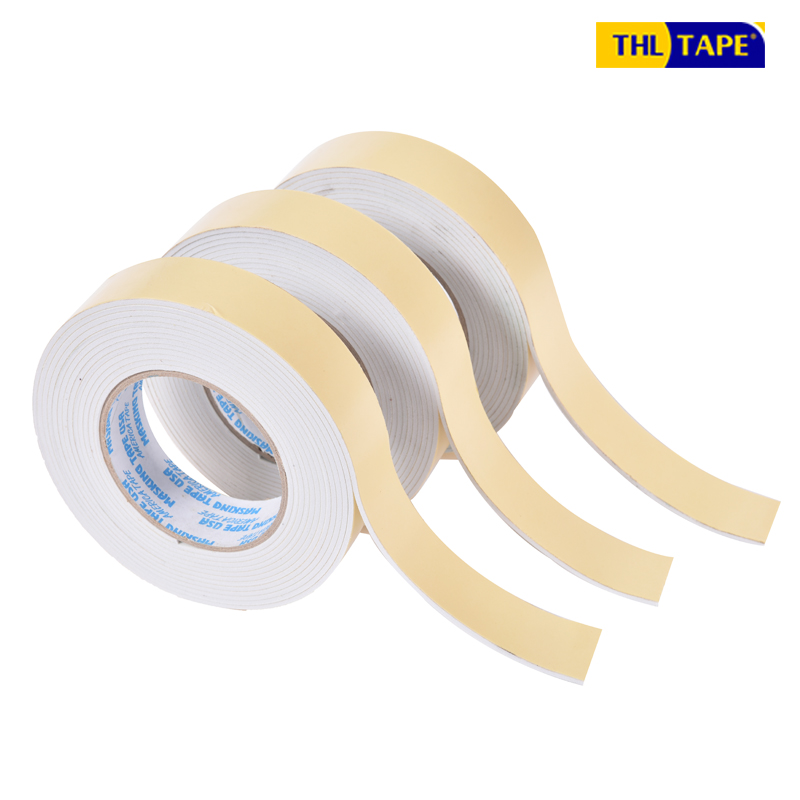
A stock image related to Features And Uses Of Foam Tape.
In-depth Look: Manufacturing Processes and Quality Assurance for Features And Uses Of Foam Tape
Understanding how foam tape transitions from raw polymer to finished product enables procurement teams to assess supplier capabilities and predict long-term performance in demanding environments. The manufacturing ecosystem combines material science precision with continuous quality monitoring to deliver consistent adhesion, compression resistance, and environmental stability across global supply chains.
How Is Foam Tape Manufactured for High-Performance Industrial Applications?
The production workflow begins with foam substrate formation, typically utilizing polyethylene (PE), polyurethane (PU), polyvinyl chloride (PVC), or closed-cell neoprene/EPDM blends. Manufacturers employ either physical or chemical foaming agents to create the cellular structure, controlling expansion ratios to achieve specific density targets—usually between 120-300 kg/m³ for standard industrial grades. This substrate formation determines the tape’s ultimate shock absorption, thermal insulation, and compression set characteristics.
Following substrate curing, the material undergoes surface treatment to enhance adhesive wetting. Corona treatment or plasma activation modifies the foam’s surface energy, ensuring subsequent adhesive layers penetrate cellular structures rather than sitting superficially. The prepared foam then enters coating lines where high-viscosity hot-melt adhesives or solvent-based pressure-sensitive adhesives (PSA) are applied via slot-die coating or roll-coating methods, achieving precise thickness control within ±0.05mm tolerances.
What Raw Material Selection Criteria Determine Foam Tape Quality?
Premium foam tape performance originates in polymer selection and additive packages. Closed-cell structures dominate industrial applications because they prevent moisture ingress and maintain airtight seals under compression, whereas open-cell variants suit sound-dampening applications requiring breathability. B2B buyers should verify that suppliers utilize virgin polymer resins rather than recycled content, as regrind materials create inconsistent cell walls that compromise compression recovery and weather resistance.
Adhesive chemistry selection critically impacts application success. Hot-melt rubber-based adhesives offer aggressive initial tack and cost-effectiveness for indoor applications, while acrylic adhesives provide superior UV resistance and temperature stability (-40°C to 150°C) for outdoor automotive and construction uses. For electronics and aerospace sectors, silicone-based adhesives ensure performance across extreme thermal cycling without outgassing that could contaminate sensitive components.
Which Adhesive Coating Technologies Ensure Optimal Bonding?
Advanced manufacturing facilities employ multi-layer coating systems that apply primer, adhesive, and release liners in continuous web processes. Precision slot-die coating minimizes adhesive waste while ensuring uniform coverage across foam surfaces, particularly crucial for double-sided configurations where alignment accuracy prevents edge lifting. Solvent-based coating lines incorporate enclosed drying tunnels with precise temperature gradients (60°C to 120°C) that evaporate carriers without creating skin layers that inhibit ultimate adhesion.
Quality-conscious manufacturers implement inline vision inspection systems during coating to detect voids, bubbles, or contamination in real-time. These automated systems use high-resolution cameras and laser profilometry to verify coating thickness uniformity across the entire web width, rejecting sections that deviate from specified tolerances before slitting operations begin.
How Do Manufacturers Ensure Consistent Cell Structure and Density?
Compression set resistance—the foam’s ability to rebound after prolonged pressure—depends entirely on uniform cell wall thickness and distribution. Leading producers utilize computer-controlled batch mixing and continuous extrusion foaming lines that monitor temperature, pressure, and chemical reaction rates millisecond-by-millisecond. Statistical process control (SPC) charts track density variations, with automatic feedback loops adjusting chemical ratios to maintain consistency within 3% variance across production lots.
Post-formation annealing processes stabilize the foam structure, relieving internal stresses that could cause dimensional changes during storage or application. This thermal conditioning typically occurs in climate-controlled chambers (23°C, 50% RH) for 24-72 hours before adhesive coating, ensuring the substrate maintains specified thickness when buyers apply it months later in Saudi Arabian heat or German winter conditions.
What Quality Control Standards Should B2B Buyers Verify?
Comprehensive QC protocols extend beyond visual inspection to mechanical testing. Peel adhesion testing (ASTM D3330) measures the force required to remove tape from stainless steel panels, with premium grades exceeding 20 N/25mm. Shear strength testing (ASTM D3654) evaluates resistance to sliding forces under load, critical for automotive and electronics applications where vibration occurs. Compression deflection testing (ASTM D1056) verifies that foam maintains sealing force after 50% compression at elevated temperatures.
Environmental aging tests simulate long-term performance through accelerated weathering chambers. Samples undergo 1000+ hours of UV exposure, humidity cycling (85°C/85% RH), and thermal shock (-40°C to 85°C rapid transitions) to validate that adhesives won’t yellow, foam won’t harden, and bonding strength won’t degrade in Middle Eastern deserts or South American tropical environments.
How Does Conversion Equipment Impact Foam Tape Precision?
Following coating and curing, master rolls undergo precision slitting and die-cutting operations. Rotary die-cutting equipment converts jumbo rolls into specific widths (typically 5mm to 1000mm) with ±0.5mm tolerances, while flatbed die presses create custom shapes for gasketing applications. Laser cutting technology serves high-precision electronics applications where mechanical dies introduce compression stress to delicate foam structures.
Lamination processes for double-sided tapes require tension-controlled unwind stands that prevent adhesive blocking while maintaining release liner integrity. Automated packaging systems incorporate moisture-barrier bags and desiccants to prevent humidity-induced adhesive degradation during ocean freight to African or South American ports, ensuring products arrive with intact tack and dimensional stability.
What Certifications and Compliance Documentation Matter for International Trade?
B2B buyers should demand suppliers maintain ISO 9001:2015 quality management systems with specific scope covering adhesive tape manufacturing. Material safety data sheets (MSDS) must detail RoHS and REACH compliance, confirming absence of restricted substances like heavy metals or phthalates. For construction and transportation applications, UL 94 flame retardancy ratings (V-0, V-1, or HF-1) and automotive specifications (OEM approvals like GM 6091M or Ford WSB-M3G341-B) provide assurance of regulatory compliance.
Traceability systems utilizing lot coding enable root-cause analysis if performance issues arise. Premium manufacturers provide Certificates of Analysis (CoA) for each batch, documenting actual test results versus specification ranges for adhesion, thickness, and density—documentation essential for Middle Eastern and European buyers managing strict import quality controls and liability requirements.
Practical Sourcing Guide: A Step-by-Step Checklist for ‘Features And Uses Of Foam Tape’
Procuring foam tape for industrial applications requires moving beyond basic product descriptions to verify performance under real-world operational conditions. This checklist equips procurement teams with targeted evaluation criteria to mitigate supply chain risks, ensure specifications align with end-use requirements, and validate supplier capabilities across diverse climatic and regulatory environments prevalent in Middle Eastern, African, and European markets.
What Specifications Should Buyers Define Before Sourcing Foam Tape for Extreme Climates?
Begin by documenting specific functional needs including compression force requirements, temperature exposure ranges (standard grades typically withstand -20°C to 90°C, while automotive underhood applications may require resistance up to 150°C), and chemical resistance profiles against oils, solvents, or UV radiation. Identify whether the application demands permanent structural bonding, temporary fixture, or removable repositioning to determine appropriate adhesive strength categories, backing materials, and whether single-sided or double-sided configurations best suit your assembly process.
How Does Cell Structure Selection Impact Sealing Performance in Industrial Applications?
Specify closed-cell polyethylene, PVC, or neoprene structures for waterproof gasketing and thermal insulation where moisture exclusion and air tightness are critical, while open-cell polyurethane variants better suit sound dampening, filtration, and vibration absorption scenarios. Request density specifications (typically ranging 25-500 kg/m³) and compression deflection data to ensure the foam maintains seal integrity under cyclic mechanical stress without excessive permanent deformation, collapse, or compression set that would compromise long-term sealing effectiveness.
Which Adhesive Technologies Ensure Reliable Bonding on Rough or Low-Energy Surfaces?
Match adhesive chemistry to substrate surface energy and texture—high-performance acrylic systems bond aggressively to metals, glass, and high-energy plastics, while rubber-based hot melt or solvent adhesives conform better to rough, textured, powder-coated, or low-energy polyolefin surfaces common in construction and automotive applications. Demand peel strength test reports (measured in N/cm), shear resistance data, and surface wetting characteristics specific to your target temperature ranges, humidity conditions, and required service life duration.
What Regulatory Certifications Are Required for Foam Tape in Automotive and Electronics Exports?
Confirm material compliance with regional regulations including RoHS and REACH for European markets, UL 94 flame retardancy ratings (V-0 or HB) for electrical enclosures, and automotive standards such as OEM specifications or ASTM testing for interior applications. Request material safety data sheets (MSDS), certificates of conformity, and third-party test reports to expedite customs clearance, satisfy importer-of-record requirements, and avoid regulatory penalties or shipment detentions in destination countries.
How Can Buyers Verify Manufacturing Consistency and Dimensional Tolerances?
Inspect supplier quality control protocols for thickness uniformity (±0.1mm tolerance for precision electronics applications), density consistency across production batches, and adhesive coat weight verification using standardized testing methods. Verify advanced converting capabilities including clean-edge slitting, rotary die-cutting, and multi-layer lamination services to ensure custom dimensions meet precise engineering tolerances without adhesive bleed, edge deformation, or contamination that could compromise sealing performance or automated assembly line compatibility.
What Storage Conditions Prevent Adhesive Degradation During International Shipping?
Establish storage protocols maintaining 15-25°C with 40-60% relative humidity to prevent adhesive degradation, foam oxidation, or release liner separation during extended international transit. Specify UV-protective packaging, moisture-barrier wrapping, and palletized loading for ocean freight routes through high-temperature zones, and confirm shelf-life documentation (typically 12-24 months from manufacture date) aligns with your inventory turnover rates, seasonal demand fluctuations, and just-in-time delivery requirements to minimize waste and ensure optimal bonding performance upon application.
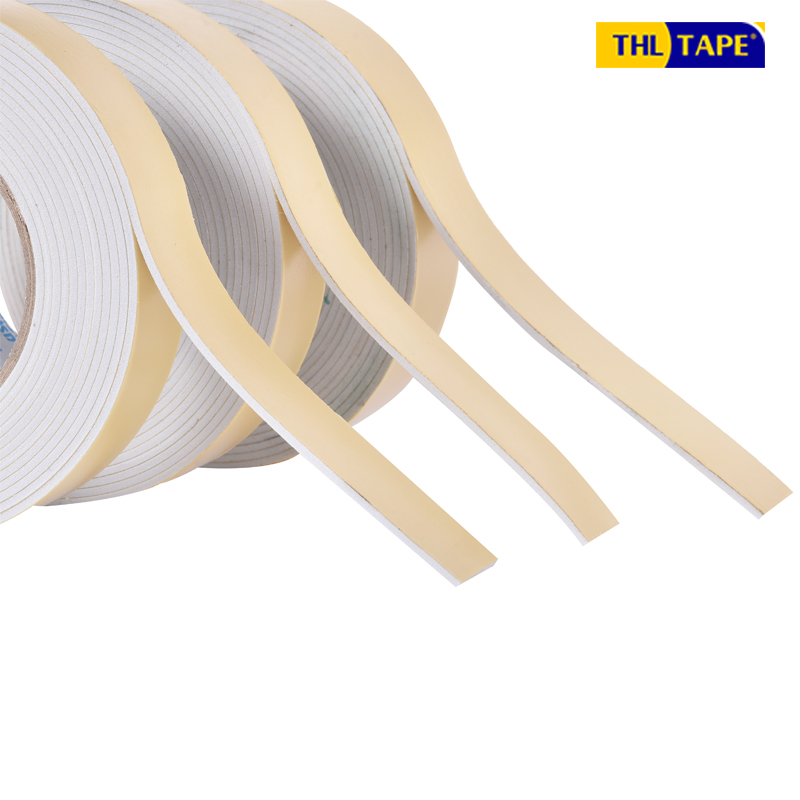
A stock image related to Features And Uses Of Foam Tape.
Comprehensive Cost and Pricing Analysis for Features And Uses Of Foam Tape Sourcing
Foam tape sourcing costs extend far beyond per-roll pricing. For international buyers across Africa, the Middle East, and Europe, understanding the cost architecture—from raw material specifications to logistics optimization—is essential for securing competitive margins while meeting application-specific performance standards.
What Factors Determine Foam Tape Pricing in Global B2B Markets?
Base materials drive 60-70% of unit costs. Closed-cell polyethylene (PE) and polyurethane (PU) foams command premium pricing over open-cell alternatives due to superior moisture resistance and compression set characteristics. Acrylic foam tapes, particularly VHB (Very High Bond) variants, typically cost 40-60% more than rubber-based adhesives but offer enhanced durability for automotive and construction applications. Adhesive coating technology—whether hot-melt, solvent-based, or UV-cured—significantly impacts pricing tiers, with specialized formulations for extreme temperatures (-40°C to 150°C) adding 15-25% to standard grades.
How Do Material Specifications Impact Your Sourcing Budget?
Density and thickness create non-linear cost escalations. High-density foams (above 25 kg/m³) required for heavy-duty gasketing in industrial machinery cost substantially more than low-density options used for packaging. Custom die-cutting or slitting to specific widths incurs tooling charges ($200-$800 per setup) but reduces material waste for high-volume applications. Buyers should evaluate whether single-sided or double-sided adhesive configurations justify the 30-35% price differential based on assembly requirements.
What Are the Hidden Logistics Costs When Importing Foam Tape?
Foam tape’s volumetric weight significantly affects landed costs. Bulk rolls shipped via sea freight from Asian manufacturing hubs to European or Middle Eastern ports offer 60-70% savings over air freight, though require 4-6 week lead times. Storage conditions matter: temperature-sensitive acrylic adhesives require climate-controlled warehousing, adding $0.02-$0.05 per square meter in handling costs. Import duties vary by HS code classification—typically 6-12% for adhesive tapes in most African and South American markets—necessitating accurate product specification documentation to avoid customs delays.
How Can Buyers Optimize Costs Without Compromising Performance?
Strategic specification alignment reduces total cost of ownership. For weatherstripping and gap-filling applications, medium-density PE foam (18-22 kg/m³) often delivers equivalent performance to premium grades at 20% lower cost. Consolidating orders to achieve full container loads (FCL) minimizes per-unit shipping expenses, particularly valuable for German and Saudi Arabian buyers importing from East Asian suppliers. Requesting mill-direct pricing for annual contracts above 5,000 square meters typically yields 12-18% discounts compared to distributor channels, while ensuring batch consistency for critical automotive or electronics applications.
Alternatives Analysis: Comparing Features And Uses Of Foam Tape With Other Solutions
When evaluating bonding and sealing solutions for industrial applications across diverse markets—from German automotive manufacturing to Saudi Arabian petrochemical facilities—procurement teams must weigh foam tape against established traditional methods. While foam tape offers distinct advantages in conformability and rapid deployment, liquid adhesive sealants and mechanical fastening systems remain viable alternatives depending on structural requirements, environmental exposure, and total cost of ownership calculations.
How Does Foam Tape Compare to Industrial Alternative Solutions?
| Comparison Aspect | Features And Uses Of Foam Tape | Liquid Adhesive Sealants | Mechanical Fastening Systems |
|---|---|---|---|
| Installation Speed | Immediate bonding; no curing or drying time required | Requires 24–72 hours curing time; immediate tack but full strength delayed | Immediate mechanical engagement; labor-intensive alignment and drilling |
| Surface Adaptability | Conforms to irregular, rough, or textured surfaces; compensates for gaps up to several millimeters | Requires clean, degreased, and often primed surfaces; poor gap-filling without backer rods | Requires precise alignment; cannot bridge gaps or surface irregularities |
| Vibration & Shock Resistance | Excellent dampening; distributes load evenly across bond line | Rigid cured film; may crack or delaminate under dynamic flex or impact | Concentrates stress at discrete points; susceptible to loosening under vibration without locking features |
| Environmental Sealing | Closed-cell structure blocks moisture, dust, and gases; effective -40°C to 90°C+ | Superior chemical resistance; temperature ranges from -60°C to 300°C+ depending on chemistry | Creates potential leak paths at penetration points; requires additional gasketing |
| Rework & Maintenance | Clean removal possible; leaves minimal residue; allows design modifications | Permanent bond; difficult to reverse without surface damage or grinding | Removable but leaves holes; requires patch/repair of substrate for reassembly |
| Labor Requirements | Low skill threshold; peel-and-stick application suitable for high-volume production | Moderate to high skill needed for proper bead geometry and thickness control | High skill required; needs specialized tooling (drills, torque drivers) and safety protocols |
| Climate Considerations | Performs in humid conditions; immediate water resistance after application | Curing compromised by high humidity or dust (common in African and Middle Eastern environments) | Unaffected by humidity or temperature during installation; corrosion risks in coastal regions |
When Do Liquid Adhesive Sealants Outperform Foam Tape Solutions?
Liquid adhesive sealants—including silicones, polyurethanes, and hybrid MS polymers—provide permanent chemical bonds that excel in submerged or high-pressure environments where tape edges might
Essential Technical Properties and Trade Terminology for Features And Uses Of Foam Tape
When evaluating foam tape for cross-border procurement, technical specifications must align with both application requirements and regional compliance standards such as EU REACH, Saudi SASO, or German DIN norms. Understanding these metrics alongside industry-specific terminology prevents specification mismatches and ensures supply chain efficiency.
What Are the Critical Technical Specifications for Industrial Foam Tape?
Compression Set Resistance measures the material’s ability to recover its original thickness after prolonged compression. Expressed as a percentage of permanent deformation, low values (typically <15%) indicate superior elastic memory—essential for automotive gasketing and HVAC sealing where long-term gap maintenance is critical.
Service Temperature Range defines operational limits from minimum to maximum degrees Celsius. Standard acrylic foam tapes operate between -40°C and +90°C, while silicone-based variants withstand extremes from -60°C to +200°C, crucial for Middle Eastern solar installations or Nordic refrigeration applications.
Cell Structure Classification distinguishes between open-cell (interconnected pores for breathability) and closed-cell (isolated pockets for waterproofing). This property determines suitability for acoustic dampening versus outdoor weatherstripping and chemical resistance.
Peel Adhesion Strength, quantified in Newtons per centimeter (N/cm), indicates the force required to remove the tape from a substrate. High-performance VHB tapes exceed 20 N/cm, providing structural bonding for metal fabrication and glass curtain walls.
Density and Thickness Tolerance affect load distribution and gap-filling precision. Measured in kg/m³, densities range from 30 kg/m³ (light cushioning) to 250 kg/m³ (heavy-duty gasketing), with tight tolerances (±0.1mm) ensuring consistent performance in precision electronics.
Which Trade Terms Define Foam Tape Applications and Procurement Standards?
Gasketing refers to using compressible foam tape as a static seal between mating surfaces, preventing leakage of fluids, gases, or electromagnetic interference. This term dominates automotive, electrical enclosure, and plumbing procurement specifications.
Weatherstripping describes perimeter sealing for doors, windows, and HVAC systems to prevent air infiltration. Buyers in energy-conscious markets like Germany prioritize tapes with specific thermal conductivity ratings for building efficiency standards.
Vibration Damping denotes the tape’s capacity to dissipate mechanical oscillations and impact energy. Critical for appliance manufacturing and automotive assembly, this property protects sensitive components from resonance damage during transport.
Conformability describes the material’s ability to adhere to irregular surfaces and curved geometries without bridging. High conformability ensures effective sealing on stamped metal parts or textured building materials common in industrial African and South American markets.
Release Liner Configuration specifies the protective backing material—typically silicone-coated paper or polyethylene film—that facilitates handling and die-cutting. Understanding liner types impacts automated assembly line compatibility and storage shelf life.
Pressure Sensitive Adhesive (PSA) Systems classify the bonding chemistry—acrylic (UV resistant), rubber (high tack), or silicone (extreme temperature). This terminology is essential when specifying tapes for outdoor signage in hot climates or freezer applications.
Navigating Market Dynamics and Sourcing Trends in the Features And Uses Of Foam Tape Sector
The global foam tape sector is experiencing accelerated demand diversification as industries from Riyadh to São Paulo prioritize lightweight bonding solutions over traditional mechanical fasteners. For procurement teams navigating this fragmented landscape, understanding the intersection of material innovation, regional regulatory frameworks, and supply chain resilience has become essential for maintaining competitive advantage. As foam tape applications expand beyond conventional sealing into thermal management for electric vehicles and 5G infrastructure, buyers must evaluate suppliers through both technical capability and geopolitical reliability lenses.
How Is the Global Foam Tape Market Evolving for Industrial Buyers?
Market analysts project sustained growth in the foam tape sector, driven primarily by automotive lightweighting initiatives and the proliferation of electronics manufacturing in emerging economies. The shift toward electric vehicles (EVs) has particularly intensified demand for high-performance acrylic foam tapes capable of managing thermal expansion while replacing metal fasteners in battery assembly and HVAC systems. Meanwhile, construction booms across Saudi Arabia’s giga-projects and Africa’s infrastructure development are creating robust demand for weather-resistant EPDM and polyethylene foam tapes capable of withstanding extreme thermal cycling from -20°C to 90°C. European buyers, particularly in Germany’s precision engineering sector, increasingly specify foam tapes with enhanced compression set resistance and flame-retardant properties that meet stringent DIN standards and REACH compliance requirements. This regional divergence necessitates that international buyers maintain flexible material specifications while ensuring consistent quality across diverse climatic applications.
What Supply Chain Risks Should B2B Buyers Monitor When Sourcing Foam Tape?
International procurement of foam tape presents unique logistical challenges due to the material’s high bulk-to-weight ratio and temperature-sensitive adhesive properties. Buyers sourcing from Asian manufacturing hubs must verify cold-chain integrity during ocean freight to prevent adhesive degradation, particularly for hot-melt formulations that can undergo premature aging in container heat. Regional quality standards vary significantly; while Middle Eastern markets prioritize UV and sand-resistant formulations for outdoor construction applications, South American industrial buyers often prioritize moisture resistance and fungal resistance for tropical manufacturing environments. Currency volatility and extended payment terms in emerging markets further complicate procurement negotiations. Establishing dual-sourcing strategies and maintaining strategic inventory buffers has become critical as geopolitical tensions and petrochemical raw material volatility continue to disrupt just-in-time delivery schedules for automotive and electronics manufacturers.
Why Does Sustainability Now Drive B2B Foam Tape Procurement Decisions?
Environmental compliance has transitioned from a peripheral concern to a core procurement criterion, with European Union regulations and Saudi Vision 2030 sustainability mandates driving demand for solvent-free adhesive systems and recyclable foam substrates. Leading manufacturers are now offering foam tapes with bio-based EVA or recycled PET foam cores, paired with water-based acrylic adhesives that eliminate volatile organic compound (VOC) emissions during application. The push toward circular economy principles has intensified scrutiny of silicone-coated release liners, with buyers increasingly demanding recyclable paper liners or linerless tape configurations to reduce construction and electronics waste. Green building certifications such as LEED and BREEAM now credit specifiers for using low-emitting foam sealants, creating market differentiation for suppliers offering comprehensive Environmental Product Declarations (EPDs). Carbon footprint considerations now extend to logistics, prompting regional sourcing strategies that minimize the environmental impact of shipping low-density foam materials across continents.
How Can Buyers Ensure Ethical and Quality-Assured Sourcing in the Foam Tape Sector?
Ethical sourcing in the foam tape supply chain requires rigorous verification of manufacturing practices, particularly regarding labor standards in adhesive coating facilities and the provenance of raw petrochemical inputs. B2B buyers should prioritize suppliers holding IATF 16949 automotive quality certifications and ISO 14001 environmental management standards, ensuring consistent material traceability from foam extrusion through slitting and die-cutting operations. For electronics applications, conflict mineral reporting templates (CMRT) and RoHS compliance documentation have become non-negotiable requirements, particularly when sourcing acrylic foam tapes for smartphone and tablet assembly. Digital traceability tools, including blockchain-enabled material passports, are emerging as best practices for verifying the absence of harmful substances and ensuring fair labor practices. Conducting comprehensive factory audits—focusing on worker safety in solvent handling operations, waste water treatment from adhesive processes, and fire safety in foam storage facilities—provides essential risk mitigation against supply chain disruptions and reputational damage in increasingly transparent global markets.
Frequently Asked Questions (FAQs) for B2B Buyers of Features And Uses Of Foam Tape
What are the key features to consider when selecting foam tape for industrial applications?
Prioritize compression set resistance and adhesive chemistry compatibility with your substrate materials. Closed-cell structures provide superior waterproofing and airtight seals for electrical enclosures, while open-cell variants excel in sound absorption and conformability. Verify the temperature operating range matches your environment, particularly for applications experiencing thermal cycling between -20°C and 90°C. Additionally, assess flame retardancy ratings and chemical resistance to solvents, oils, and UV exposure to ensure long-term performance in demanding industrial settings.
How is foam tape used in automotive assembly and HVAC installation?
In automotive manufacturing, foam tape replaces mechanical fasteners for dashboard mounting, trim attachment, and door panel bonding while providing critical NVH (noise, vibration, harshness) dampening. HVAC contractors utilize high-density closed-cell foam for duct sealing, preventing thermal losses, and isolating compressor vibrations in commercial units. The tape’s ability to compensate for thermal expansion between dissimilar materials makes it ideal for bonding aluminum HVAC components to steel frames. Its conformability also seals irregular duct joints more effectively than traditional gaskets, reducing energy leakage in extreme climate conditions common in Middle Eastern and European markets.
What is the difference between open-cell and closed-cell foam tape for sealing applications?
Closed-cell foam tape features sealed, non-interconnected cells that block moisture, gases, and air passage, making it essential for waterproof sealing, thermal insulation, and outdoor weatherstripping. Open-cell foam contains interconnected air pockets that allow breathability and superior acoustic absorption, ideal for indoor soundproofing and applications requiring rapid compression recovery. For B2B buyers in humid climates like coastal Africa or South America, closed-cell polyethylene or PVC foam prevents mold growth and material degradation. Open-cell polyurethane works best in dry environments where vibration dampening and cost-effectiveness outweigh moisture resistance requirements.
Which foam tape density and thickness specifications provide the best load-bearing capacity?
High-density foam tapes ranging from 30 kg/m³ to 90 kg/m³ deliver superior load-bearing capacity for structural bonding and heavy component mounting. Thickness selection should match gap tolerances—typically 1mm to 3mm thicker than the gap itself to ensure proper compression—but density matters more than thickness for weight support. Acrylic foam tapes with densities above 45 kg/m³ can permanently bond glass, metal, and plastics in automotive and construction applications. For heavy machinery vibration isolation, specify medium-density (20-30 kg/m³) closed-cell foam that balances load distribution with shock absorption.
How do I ensure reliable adhesion when applying foam tape to rough or irregular industrial surfaces?
Specify foam tapes with high-conformability closed-cell structures, such as polyethylene or acrylic formulations, that compress into surface irregularities without splitting. Clean substrates with isopropyl alcohol to remove oils, dust, and oxidation common in industrial environments, then apply a primer for low-surface-energy materials like polypropylene or powder-coated metals. Allow 24-hour curing time before subjecting to stress, as adhesive wet-out improves significantly during this period. For extremely rough concrete or unfinished metal surfaces common in African and South American manufacturing facilities, consider thicker foam tapes (3mm-5mm) that can bridge gaps while maintaining contact pressure.
What temperature resistance specifications should international buyers prioritize for extreme climate operations?
For Middle Eastern markets experiencing ambient temperatures exceeding 50°C, select acrylic adhesive foam tapes rated for continuous operation up to 90°C with short-term peaks to 150°C. European and high-altitude applications require low-temperature flexibility down to -40°C without adhesive embrittlement or foam cracking. Rubber-based adhesives typically offer better initial tack but narrower temperature ranges (-20°C to 60°C), while acrylic systems provide superior long-term stability across extreme thermal cycling. Always verify thermal expansion coefficients match your substrate materials to prevent delamination during seasonal temperature fluctuations.
How does foam tape compare to mechanical fasteners for vibration damping in heavy machinery?
Foam tape distributes dynamic loads evenly across bonding surfaces, eliminating stress concentration points that cause metal fatigue in welded or bolted joints. Unlike mechanical fasteners, viscoelastic foam cores absorb resonant frequencies and convert vibrational energy into negligible heat, extending equipment lifespan in manufacturing plants. This damping capability prevents loosening from thermal expansion cycles, a critical advantage in automotive and power generation applications. Additionally, foam tape installation eliminates drilling that compromises structural integrity and provides corrosion isolation between dissimilar metals like aluminum and steel.
What certifications and compliance standards should B2B buyers verify when sourcing foam tape for international electronics and automotive sectors?
Require RoHS and REACH compliance documentation to ensure absence of restricted substances for European and Middle Eastern markets. For automotive applications, demand OEM-specific approvals and UL 94 flame retardancy ratings (V-0 or HB classifications) for interior components. Electronics manufacturers should verify tapes meet IEC standards for dielectric strength and thermal conductivity. ISO 9001:2015 certification from suppliers ensures consistent batch quality critical for automated assembly lines, while IATF 16949 certification specifically addresses automotive quality management systems for Tier 1 and Tier 2 suppliers.
Important Disclaimer & Terms of Use
⚠️ Important Disclaimer
The information provided in this guide, including content regarding manufacturers, technical specifications, and market analysis, is for informational and educational purposes only. It does not constitute professional procurement advice, financial advice, or legal advice.
B2B buyers must conduct their own independent and thorough due diligence before making any purchasing decisions. The risk of relying on any information in this guide is borne solely by the reader.
Top 3 Features And Uses Of Foam Tape Manufacturers & Suppliers List
1. VST Insan – Foam Tape
Domain: vst-insan.com
Registered: 2002 (24 years)
Introduction: Foam tapes are adhesive materials with foam backing categorized into five main types: 1) Polyethylene (PE) Foam Tape – closed-cell structure providing moisture resistance, lightweight and cost-effective for general-purpose mounting, insulation and sealing; 2) Polyurethane (PU) Foam Tape – open-cell structure allowing air/moisture passage, soft and flexible for acoustic insulation, vibration dampen…
2. Gaska Tape – Foam Tape Products
Domain: gaska.com
Registered: 1996 (30 years)
Introduction: Gaska Tape Inc. manufactures foam and foam tape products including the Eco Series Foam Tape and Gaska Hi Bond (GHB) Series. Key product features include thermal insulation, acoustic insulation/soundproofing, sealing capabilities, vibration dampening, shock absorption, and strong adhesive properties. Primary applications span multiple industries: Construction (thermal/acoustic insulation, weatherst…
3. IQS Directory – Foam Tape
Domain: iqsdirectory.com
Registered: 2004 (22 years)
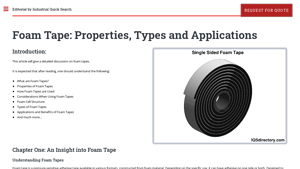
Introduction: Foam tape is a pressure-sensitive adhesive tape constructed from foam materials including PVC, polyurethane, polyethylene, neoprene, EPDM, acrylic, and silicone. Available in single-sided (for sealing) and double-sided (for bonding) configurations, as well as rolls, sheets, or die-cut shapes. Features open-cell foam (soft, breathable, sound-absorbing) and closed-cell foam (dense, waterproof) varie…
Strategic Sourcing Conclusion and Outlook for Features And Uses Of Foam Tape
How Can B2B Buyers Optimize Foam Tape Specifications for Regional Climate Challenges?
For procurement teams operating across diverse climates—from the humid tropics of South America to the arid heat of the Middle East and the freezing European winters—material specification is paramount. Prioritize closed-cell polyethylene or acrylic foam tapes with verified temperature stability spanning -40°C to 150°C and UV-resistant adhesive formulations to prevent degradation in high-sunlight environments. Density selection should align with application-specific compression requirements; higher-density variants excel in heavy-duty automotive gasketing and construction sealing, while lower-density options suit delicate electronics assembly and vibration damping. Always verify solvent resistance and flame-retardant certifications to ensure compliance with regional safety standards.
What Strategic Sourcing Trends Are Shaping the Future of Foam Tape Procurement?
The global shift toward lightweighting positions foam tape as a critical alternative to mechanical fasteners, reducing material waste across automotive and renewable energy sectors. Forward-thinking buyers should seek suppliers offering advanced customization—including precision die-cutting and multi-layer laminations—to address complex bonding challenges in electric vehicle battery enclosures. Establishing partnerships with manufacturers holding ISO 9001 and IATF 16949 certifications ensures consistent quality across supply chains, mitigating risks associated with thermal expansion mismatches and ensuring long-term seal integrity.
Why Is Supplier Technical Support Critical for Complex Foam Tape Applications?
Beyond material selection, access to application engineering support distinguishes strategic suppliers from commodity providers. Complex installations involving curved surfaces, dissimilar material bonding, or extreme thermal cycling require collaborative development to optimize adhesive chemistries and foam densities. Proactive buyers should prioritize partners offering comprehensive technical documentation, sample validation programs, and localized inventory hubs to minimize lead times and ensure project continuity across continents.