Introduction: Navigating the Global Market for Gaffer tape
Sourcing industrial-grade gaffer tape for international production workflows presents unique procurement challenges that extend far beyond simple adhesive specifications. As global supply chains grow increasingly complex, B2B buyers must navigate varying quality standards, regional compliance requirements, and logistical hurdles to secure reliable inventory that meets demanding professional standards across entertainment, construction, and industrial sectors.
What challenges do international buyers face when sourcing gaffer tape?
The global gaffer tape market suffers from significant quality inconsistencies, with products ranging from premium cotton-cloth professional grades to inferior vinyl substitutes that leave residue and fail under high-temperature conditions. Procurement teams across Africa, South America, the Middle East, and Europe—including major markets like Saudi Arabia and Germany—must contend with counterfeit certifications, fluctuating raw material costs, and suppliers who lack consistent export capabilities or understanding of regional fire-safety standards.
How does this guide streamline global procurement decisions?
This comprehensive resource examines critical procurement factors including tape construction types (matte cotton backing weights, synthetic blends), application-specific requirements for film production versus industrial maintenance, and rigorous supplier vetting methodologies. We analyze cost-optimization strategies for bulk international shipping, quality assurance protocols, and compliance frameworks essential for cross-border trade. Whether securing non-reflective solutions for Saudi Arabian media productions or sourcing flame-resistant varieties for German industrial applications, this guide equips procurement professionals with actionable intelligence to mitigate supply chain risks and establish reliable vendor partnerships.
Understanding Gaffer tape Types and Variations
| Type Name | Key Distinguishing Features | Primary B2B Applications | Brief Pros & Cons for Buyers |
|---|---|---|---|
| Standard Matte Cloth Gaffer Tape | Cotton cloth backing, matte finish, balanced adhesion, available in multiple colors | General cable management, temporary equipment mounting, stage marking | Pros: Versatile, cost-effective, clean removal. Cons: Limited durability in extreme weather, not for permanent outdoor use |
| Heavy-Duty Pro-Grade Gaffer Tape | Thicker woven backing, higher tensile strength, aggressive adhesive formula | Industrial rigging, outdoor event production, heavy equipment securing | Pros: Superior holding power, weather resistant. Cons: Higher cost, may require more effort to remove, potential residue on delicate surfaces |
| Spike Tape (Narrow Width) | 1/2″ to 1″ width, same cloth backing as standard, precise application | Actor/position marking (“spiking”), color coding wires, instrument marking | Pros: Less material waste, precise placement, highly visible. Cons: Not suitable for heavy bundling, limited structural strength |
| Fluorescent/UV-Reactive Gaffer Tape | Bright neon colors, glows under blacklight, matte finish maintained | Concert/theater stage marking, safety hazard highlighting, emergency egress paths | Pros: High visibility, non-reflective under normal light, enhances safety compliance. Cons: Fades faster in direct sunlight, premium pricing |
| Low-Tack Precision Gaffer Tape | Reduced adhesive strength, ultra-clean removal, compatible with sensitive substrates | Museum installations, painted venue walls, polished flooring, temporary retail displays | Pros: Zero residue risk, surface-safe, ideal for short-term use. Cons: Poor adhesion in high heat/humidity, unsuitable for heavy loads |
What Are the Specifications of Standard
Key Industrial Applications of Gaffer tape
| Industry/Sector | Specific Application of Gaffer tape | Value/Benefit for the Business | Key Sourcing Considerations for this Application |
|---|---|---|---|
| Film, Broadcast & Live Events | Cable management and “spiking” positions on sets/stages | Prevents trip hazards; matte finish prevents light reflection; residue-free removal protects expensive flooring and equipment | High-temperature resistance for hot climates; bulk roll sizes for large productions; color variety for coding |
| Industrial Manufacturing & Maintenance | Temporary cable routing and masking during powder coating/painting | Enables quick equipment reconfiguration without permanent installation; clean removal prevents production delays | Chemical resistance; adhesion strength on metal surfaces; availability of narrow widths for precision work |
| Construction & Infrastructure | Floor marking and surface protection during fit-out phases | Non-slip temporary marking; protects finished surfaces from damage; visible but removable safety boundaries | Heavy-duty adhesion for dusty concrete surfaces; UV stability for outdoor storage in sunny regions; residue-free formula for client handovers |
| Exhibition & Trade Show Management | Booth assembly and temporary cable concealment | Rapid setup/breakdown; professional appearance without visible fasteners; safe cable management in high-traffic areas | Lightweight rolls for international shipping; neutral colors to match booth designs; easy-tear cloth backing for quick application |
| Energy & Utilities (Oil, Gas, Renewables) | Heat-resistant cable bundling in refineries and solar installations | Withstands extreme temperatures; prevents cable damage in harsh environments; maintains flexibility in outdoor conditions | Flame-retardant certifications; UV and weather resistance for desert/solar applications; high tensile strength for heavy cable loads |
How Does Gaffer Tape Solve Cable Management Challenges in Film and Live Events?
In film production and live event venues across Saudi Arabia, Germany, and Brazil, gaffer tape serves as the primary solution for securing cables across walkways and stages. Its matte cotton backing prevents light reflection that could disrupt filming or audience sightlines, while the heat-resistant adhesive withstands hot stage lights and outdoor desert conditions. For international buyers, selecting high-temperature rated varieties ensures performance in climates ranging from humid South American venues to arid Middle Eastern production sites, preventing adhesive failure during critical performances.
What Are the Industrial Applications of Gaffer Tape in Manufacturing Maintenance?
Manufacturing facilities in emerging markets utilize gaffer tape for temporary cable routing during equipment reconfigurations and masking during powder coating processes. Unlike permanent adhesives, it allows maintenance teams to reposition machinery without leaving residue that attracts dust or interferes with precision components. Buyers should prioritize chemical-resistant formulations that maintain adhesion in industrial environments with airborne oils and solvents, particularly important for automotive and heavy machinery sectors prevalent in European and Latin American manufacturing hubs.
Why Is Gaffer Tape Critical for Construction Site Safety and Surface Protection?
Construction projects across Africa and the Middle East employ gaffer tape for temporary floor marking and protecting finished surfaces during fit-out phases. Its cloth backing provides durability underfoot while remaining removable for client handovers—a crucial advantage over duct tape that leaves permanent marks on marble, hardwood, or epoxy flooring common in commercial developments. Sourcing UV-stable variants prevents degradation during outdoor storage in high-sunlight regions, ensuring the tape maintains tensile strength throughout extended project timelines.
How Does Gaffer Tape Facilitate Rapid Exhibition and Trade Show Setup?
Exhibition managers rely on gaffer tape for rapid booth assembly and cable management in convention centers from Johannesburg to Frankfurt. The tape’s ability to adhere to carpet, concrete, and fabric backdrops without surface damage allows for same-day setup and breakdown, reducing labor costs and venue rental time. For international exhibitors shipping materials across borders, lightweight cloth rolls reduce freight costs compared to heavy-duty alternatives, while color-coded options enable systematic cable identification in complex audiovisual installations.
How Is Gaffer Tape Utilized in Energy Sector Infrastructure Maintenance?
Energy facilities from Nigerian oil refineries to German solar farms utilize gaffer tape for heat-resistant cable management in environments where standard vinyl tapes fail. Its ability to withstand high temperatures while maintaining flexibility makes it ideal for temporary repairs and cable bundling near heat sources or outdoor renewable installations. Procurement teams should verify flame-retardant certifications meeting regional safety standards and ensure UV-resistant formulations that prevent brittleness in constant sun exposure, critical for Middle Eastern and African utility projects where equipment faces extreme thermal cycling.

A stock image related to Gaffer tape.
3 Common User Pain Points for ‘Gaffer tape’ & Their Solutions
Scenario 1: Adhesive Residue Damaging Rental Equipment and Venue Surfaces
The Problem: Procurement teams frequently substitute duct tape for gaffer tape to reduce per-unit costs, only to discover that the aggressive adhesive leaves permanent residue on expensive cables, camera gear, and polished venue floors. This creates significant financial exposure, particularly for event rental companies and production houses operating across Saudi Arabia, Germany, and Brazil, where equipment return conditions are strictly monitored. The residue not only damages client assets but also requires costly cleaning labor, potential replacement of cables, and can result in penalty charges from venue owners. In humid climates common to parts of Africa and South America, this residue can become nearly impossible to remove without chemical solvents that further damage sensitive electronics.
The Solution: Specify genuine cotton-cloth gaffer tape with low-residue natural rubber adhesive rather than polyethylene-backed duct tape. Before committing to bulk container orders, request clean-removal certification from suppliers and conduct spot tests on your specific equipment surfaces under local climate conditions. For international procurement, verify that the adhesive formulation remains stable during shipping to hot climates—some natural rubber adhesives can degrade and become permanent if exposed to heat in transit. Establish clear procurement guidelines that distinguish between temporary cable management (gaffer tape) and permanent repairs (duct tape), ensuring field crews understand when each category applies. Consider ordering multiple widths (1-inch for labeling, 2-inch for heavy bundling) to prevent misuse of inappropriate substitutes.
Scenario 2: Reflective Glare Compromising Professional Productions
The Problem: Production managers in film, television, and live events frequently encounter visibility issues when using glossy vinyl tapes or low-grade alternatives that reflect stage lighting and camera flashes. This is particularly problematic in high-definition broadcasting and theatrical environments across Europe and the Middle East, where intense lighting creates distracting hot spots on taped cables and equipment. The reflection breaks audience immersion, reveals production infrastructure, and can require expensive post-production editing or live shot adjustments. In outdoor settings with bright sunlight, such as event productions in South Africa or Brazil, reflective tape becomes a safety hazard for camera operators and talent due to glare.
The Solution: Specify matte-finish cotton fabric backing with zero gloss rating (typically under 5 GU at 60°). For color-critical applications, request samples under your specific lighting conditions—black gaffer tape should appear truly non-reflective under both tungsten and LED lighting. When procuring for outdoor events in sunny climates, consider that UV exposure can increase reflectivity over time; specify UV-stabilized matte coatings. Train crews to apply tape with the fabric weave running perpendicular to primary light sources to minimize any potential sheen from the cloth texture itself. For multi-national operations, standardize on specific color codes (electrician’s black, marking yellow, spike tape colors) to ensure consistency across different country teams while maintaining the non-reflective standard.
Scenario 3: Adhesive Failure Under High-Heat Lighting Conditions
The Problem: Gaffer tape used to secure lighting fixtures, power distribution boxes, and hot camera equipment often fails in high-temperature environments, causing dangerous cable drops and equipment shifts. This risk amplifies in regions with extreme ambient temperatures, such as outdoor film shoots in the Middle East or industrial applications in South America, where surface temperatures on lighting equipment can exceed 150°F (65°C). Standard adhesives soften and lose tack, creating liability issues for production safety and potential damage to expensive lighting instruments. Procurement teams often overlook temperature ratings when buying in bulk, focusing instead on price per roll, only to discover the tape turns gummy or separates when exposed to hot lights or stored in non-climate-controlled warehouses.
The Solution: Verify temperature resistance specifications before bulk ordering—professional-grade gaffer tape should maintain adhesion up to 200°F (93°C) for short durations. Specify synthetic rubber-based adhesives rather than standard natural rubber for high-heat applications, as they offer superior thermal stability. For securing hot lights, implement a double-taping protocol using heat-resistant tape for the equipment contact point and standard gaffer tape for cable management. When procuring for international projects, request technical data sheets showing performance curves across temperature ranges relevant to your operating regions, ensuring the cotton cloth backing won’t shrink or the adhesive won’t ooze during peak thermal exposure. Calculate tensile strength requirements based on
Strategic Material Selection Guide for Gaffer tape
B2B procurement decisions for gaffer tape require rigorous analysis of substrate materials that determine performance longevity, climate adaptability, and total cost of ownership. While all gaffer tapes share pressure-sensitive adhesive properties and non-reflective matte finishes, the backing material fundamentally impacts heat resistance, conformability, and residue profiles. For international buyers sourcing entertainment and industrial supplies across diverse operational environments—from Saudi Arabian desert film shoots to humid Brazilian production sites and German precision manufacturing facilities—material selection directly correlates with project success and equipment protection. Understanding these substrate distinctions enables procurement teams to align specifications with specific application demands rather than defaulting to generic commodity options.
Why Does Cotton Cloth Remain the Industry Standard for Professional Gaffer Tape?
The traditional heavy cotton cloth backing continues to dominate professional film and theater procurement specifications due to its unique combination of conformability and thermal resistance. This natural fiber substrate, typically woven at 8-12 ounces per square yard, offers superior adaptability around irregular cable bundles and lighting fixtures while maintaining the essential non-reflective matte finish required for camera-visible applications. Cotton’s inherent high melting point—approximately 230°C—prevents adhesive failure when securing hot lighting equipment, a critical safety consideration for gaffers managing high-wattage fixtures in confined studio spaces. However, procurement teams operating in humid tropical climates, such as those prevalent in West Africa or Southeast Asia, must account for cotton’s hygroscopic properties; moisture absorption can compromise adhesive integrity and promote mold growth in storage facilities. Additionally, pure cotton backings exhibit higher tear propagation rates under sustained tension compared to synthetic alternatives, necessitating careful handling during rapid application scenarios.
When Should B2B Buyers Choose Polyester-Cotton Blend Gaffer Tape?
Hybrid polyester-cotton backings—typically manufactured in 65/35 or 70/30 synthetic-to-natural ratios—address durability concerns while preserving the matte aesthetic essential for stage and screen work. The synthetic component enhances dimensional stability, preventing the longitudinal stretching that can cause pure cotton tapes to sag when securing heavy power distribution cables across ceiling grids or truss systems
A stock image related to Gaffer tape.
In-depth Look: Manufacturing Processes and Quality Assurance for Gaffer tape
For B2B procurement teams sourcing gaffer tape across diverse climates and regulatory environments—from the humid production sets of São Paulo to the high-temperature installations in Riyadh—understanding manufacturing intricacies separates commodity-grade products from professional-grade solutions. The manufacturing process directly impacts tensile strength, residue profiles, and batch consistency that determine whether your inventory performs reliably in critical entertainment, construction, or industrial applications.
What raw materials distinguish industrial-grade gaffer tape from commodity alternatives?
Premium gaffer tape manufacturing begins with woven cotton cloth rather than synthetic polyester blends. Reputable manufacturers utilize high-thread-count cotton scrim—typically 35 to 70 mesh per square inch—providing the dimensional stability required for clean hand-tearing while maintaining structural integrity under load. This woven backing receives a matte coating, usually applied through precision calendar coating processes that embed pigments directly into the fabric fibers rather than surface-printing, ensuring non-reflective properties essential for film and television applications.
The adhesive layer distinguishes true gaffer tape from duct tape variants. Quality manufacturers employ natural rubber-based formulations rather than synthetic acrylic or silicone adhesives. Natural rubber compounds provide the unique combination of high initial tack and clean removal characteristics, though they require solvent-based coating systems that demand stricter environmental controls during manufacturing. For buyers sourcing for European markets like Germany, verifying that manufacturers use low-VOC (Volatile Organic Compound) solvent recovery systems ensures compliance with stringent EU environmental directives while maintaining adhesive performance.
How does the coating process create the signature matte finish and heat resistance?
The transformation from raw cotton weave to stage-ready gaffer tape involves multiple coating stages. First, the woven substrate undergoes heat-setting to stabilize dimensions and prevent shrinkage during subsequent processing. Manufacturers then apply a base saturation coat that fills interstitial spaces in the weave, creating a smooth surface for the pigmented topcoat. This topcoat utilizes specialized matte resins—often urethane or vinyl acetate copolymers—that diffuse light rather than reflecting it.
Heat resistance characteristics critical for Middle Eastern and African markets derive from both the cotton substrate and adhesive formulation. Cotton’s high decomposition temperature (approximately 210°C) provides inherent thermal stability, while quality manufacturers cross-link the rubber adhesive to prevent melting or oozing when securing lighting equipment operating at elevated temperatures. The coating line maintains precise temperature and tension controls throughout the 50-100 meter per minute production speed to ensure uniform thickness—typically 0.3mm to 0.4mm total caliper—which affects conformability around cable bundles and irregular surfaces.
What adhesive compounding methods ensure residue-free removal under thermal stress?
The pressure-sensitive adhesive (PSA) layer requires sophisticated compounding to balance aggressive initial tack with clean removability. Manufacturers utilize milled natural rubber combined with tackifying resins—typically rosin esters or hydrocarbon resins—at specific ratios determined by intended climate zones. For hot climates like Saudi Arabia or parts of South America, formulations incorporate higher molecular weight rubbers and UV stabilizers to prevent adhesive bleed-through or residue transfer when tape remains applied for extended periods in 40°C+ environments.
Solvent-based coating remains the industry standard for premium gaffer tape, applied through reverse-roll coating or knife-over-roll systems at thicknesses between 0.15mm and 0.25mm. The manufacturing process includes a controlled solvent evaporation phase followed by silicone release coating on the backing’s opposite side to prevent adhesive-to-adhesive blocking during high-temperature shipping or storage. B2B buyers should verify that manufacturers conduct accelerated aging tests—typically 70°C for 72 hours—to simulate extended warehouse storage in tropical climates common to African and South American supply chains.
Which quality control protocols validate performance for demanding B2B applications?
Systematic quality assurance separates reliable manufacturers from inconsistent suppliers. Incoming inspection should verify cotton cloth tensile strength (minimum 40 N/cm warp and weft) and adhesive solids content. During production, automated vision systems detect coating voids or contamination, while rheological testing ensures adhesive viscosity remains within ±5% of specification to prevent batch-to-batch variation.
Critical performance testing includes loop tack testing (measuring immediate adhesion), 180-degree peel adhesion (typically 4-6 N/cm for quality gaffer tape), and static shear resistance to prevent slippage on vertical surfaces. For international buyers, manufacturers should provide certificates of analysis (COA) documenting temperature cycling tests from -10°C to 80°C, validating performance across European winters and Middle Eastern summers. Residue testing involves applying tape to stainless steel panels for 24-72 hours at elevated temperatures, then measuring adhesive transfer using standardized tape pull tests—premium grades should leave less than 10% residue coverage.
What certifications and compliance standards should global buyers prioritize?
B2B procurement teams must verify manufacturer certifications aligned with destination market regulations. ISO 9001:2015 certification indicates systematic quality management, while ISO 14001 demonstrates environmental responsibility in adhesive processing. For European distribution, REACH compliance and RoHS certification (Restriction of Hazardous Substances) are non-negotiable, ensuring tapes contain no restricted heavy metals or phthalates.
Fire safety certifications vary by application and region. Manufacturers serving the entertainment industry should provide UL 723 (ASTM E84) flame spread ratings or equivalent European Class B fire ratings, particularly critical for theater installations in Germany and Saudi Arabia where fire codes are strictly enforced. For African and South American markets, verifying compliance with local electrical insulation standards (where gaffer tape serves temporary cable bundling) prevents customs delays and regulatory rejection.
How do customization capabilities and slitting precision affect bulk procurement?
Professional-grade manufacturers offer customization that commodity suppliers cannot match. Color matching capabilities utilizing Pantone references ensure brand consistency for corporate event companies or rental houses maintaining color-coded inventory systems. The slitting process—converting master rolls (typically 1-meter width) to finished widths—requires precision knife setups that prevent edge fraying or adhesive squeeze-out that causes blocking.
B2B buyers should evaluate manufacturers’ minimum order quantities (MOQs) for custom colors—typically 500-1000 rolls for standard widths—and lead times for specialized widths (1-inch, 2-inch, 3-inch being standard). Packaging specifications matter for international shipping: moisture-barrier poly-wrapped pallets with desiccant packs prevent humidity damage during sea freight to humid climates, while core labeling in multiple languages facilitates customs clearance in diverse markets.
Understanding these manufacturing variables enables procurement teams to audit suppliers effectively, negotiate specifications confidently, and secure inventory that performs reliably from Johannesburg soundstages to Munich exhibition halls.
Practical Sourcing Guide: A Step-by-Step Checklist for ‘Gaffer tape’
Procuring gaffer tape for professional entertainment, industrial, or event management sectors requires moving beyond consumer-grade specifications to evaluate technical performance, supply chain reliability, and regional compliance. This checklist provides procurement teams with actionable criteria to secure high-performance cloth tape that meets operational demands across diverse climates and regulatory environments.
1. How Do You Verify Cloth Backing Weight and Heat Resistance Specifications?
Begin by confirming the cotton cloth backing density, typically measured in mil thickness (11–14 mil for standard professional grade). For buyers in Saudi Arabia, Nigeria, or Brazil where ambient temperatures exceed 40°C, request technical data sheets verifying the adhesive’s melting point and the fabric’s heat resistance. Specify matte-finish vinyl-coated cotton that eliminates light reflection for film and photography applications, while ensuring the natural rubber adhesive formulation guarantees clean removal from cables and flooring without residue transfer.
2. What Width and Color Configurations Optimize Inventory Management?
Standardize your procurement across multiple widths to reduce waste: 2-inch rolls for general cable securing, 1-inch for precision labeling, and ½-inch “spike tape” for stage marking. For multi-industry distributors serving both construction and entertainment sectors, specify color-coding systems—black for visibility reduction, fluorescent colors for safety marking, and white for labeling. Request custom pantone matching if supplying branded event management kits, ensuring your supplier can maintain dye lot consistency across bulk orders.
3. How Can You Evaluate Manufacturer Export Readiness and Capacity?
Assess suppliers on their experience with FOB and CIF shipping arrangements to African and Middle Eastern ports. Verify production capacity minimums (MOQs typically range from 500–2000 rolls depending on customization) and inquire about ISO 9001 certification for quality management. For European markets like Germany, confirm the facility maintains REACH-compliant adhesive formulations and can provide English-language material safety data sheets (MSDS) for customs clearance.
4. Which Compliance Certifications Are Mandatory for Your Target Regions?
European buyers must verify REACH and RoHS compliance regarding chemical substances in adhesives. For Middle Eastern markets, request SABER conformity certificates for Saudi Arabia or equivalent UAE ECAS marks. Fire-retardant specifications (UL 723 or EN 13501-1 ratings) prove critical for venue safety compliance in theater and exhibition hall installations across all regions.
5. What Packaging and Storage Protocols Prevent Adhesive Degradation?
Specify climate-controlled packaging for ocean freight, as humidity above 60% can compromise natural rubber adhesives during transit to tropical destinations. Request individual cellophane wrapping for rolls to prevent edge lifting, and pallet configurations that maximize container space (typically 40-foot high-cube containers fitting 20–22 pallets). Confirm shelf-life guarantees of 3–5 years when stored in temperatures between 10°C–25°C.
6. How Should You Structure Quality Assurance and Payment Terms?
Insist on pre-shipment samples for adhesion testing on your specific surface types (carpet, concrete, aluminum). Establish third-party inspection clauses (SGS, Bureau Veritas) for first orders exceeding $10,000. Structure payment terms using 30% deposit with 70% against bill of lading for new suppliers, transitioning to net-30 terms after establishing delivery reliability. Include penalty clauses for residue-related damage claims to protect against substandard adhesive batches.
A stock image related to Gaffer tape.
Comprehensive Cost and Pricing Analysis for Gaffer tape Sourcing
What Factors Drive Gaffer Tape Pricing in Global B2B Markets?
Understanding the cost structure of gaffer tape requires analyzing its material composition and manufacturing complexity. Unlike standard duct tape, premium gaffer tape utilizes heavy cotton cloth backing rather than polyethylene, combined with specialized low-residue natural rubber adhesives. These material choices directly impact pricing tiers, with cotton-backed variants commanding 40-60% higher costs than synthetic alternatives due to raw material volatility and weaving processes. For buyers in Saudi Arabia and Germany, where entertainment and industrial sectors demand residue-free removal for temporary installations, investing in higher-grade cotton backing prevents costly surface damage and labor-intensive cleanup operations.
How Do Material Specifications Impact Your Total Cost of Ownership?
The distinction between matte-finish professional grade and economy options significantly affects long-term procurement budgets. High-tensile cotton backing with heat-resistant properties—essential for securing lighting equipment on hot surfaces—typically ranges in higher price brackets but reduces waste through clean tearability and repositionability. B2B purchasers should evaluate adhesive formulations carefully; synthetic acrylic adhesives offer lower upfront costs but may leave residues that require expensive solvent cleaning or surface repairs. For event management companies across Africa and South America, where rapid venue turnover is critical, selecting true low-residue formulations minimizes labor costs associated with post-event restoration, delivering superior ROI despite higher per-roll pricing.
What Volume-Based Pricing Strategies Should Bulk Buyers Expect?
International procurement typically follows tiered pricing structures based on container load efficiency and customization requirements. Standard MOQs (Minimum Order Quantities) for direct manufacturer relationships generally start at 500-1000 rolls for generic black or silver variants, with price breaks at 20-foot and 40-foot container equivalents. Custom color matching for corporate branding or specific theatrical applications—such as chroma key green or precise matte black—incur additional setup costs ranging from $200-$500 per color run. German industrial buyers and Saudi event contractors should negotiate blanket order agreements that lock in pricing quarterly while allowing flexible shipping schedules to manage cash flow and storage constraints.
How Can Regional Buyers Optimize Logistics and Import Costs?
For markets in Africa and South America, freight costs often represent 25-35% of landed costs, making supplier geographic proximity crucial. Buyers should evaluate whether Asian manufacturers offer competitive enough unit pricing to offset extended shipping timelines versus regional distributors holding European or Middle Eastern inventory. Import duties vary significantly by region; gaffer tape typically falls under HS Code 3919 or 5906 depending on backing composition, affecting tariff rates. Establishing relationships with suppliers who provide DDP (Delivered Duty Paid) terms eliminates customs clearance complexities, particularly valuable for first-time importers in emerging markets lacking established logistics infrastructure.
Which Hidden Costs Determine True Value Beyond Unit Price?
Sophisticated procurement teams analyze total application costs rather than per-roll metrics. Inferior tapes that curl during application or fail to adhere to fabric surfaces increase labor time and material waste. For European construction and entertainment sectors facing stringent safety regulations, certified flame-resistant gaffer tape commands premium pricing but ensures compliance with workplace safety standards, avoiding potential liability costs. Additionally, storage conditions in humid climates—common in South American and African markets—degrade adhesive quality over time; purchasing moisture-resistant packaging or climate-controlled warehousing prevents inventory loss. The most cost-effective sourcing strategy balances unit price with performance reliability, ensuring that temporary fastening solutions do not become permanent financial liabilities.
Alternatives Analysis: Comparing Gaffer tape With Other Solutions
While gaffer tape remains the gold standard in entertainment and industrial sectors, procurement teams across Saudi Arabia, Germany, and emerging markets frequently evaluate alternatives to optimize cost structures and sustainability metrics. Understanding when to deploy substitute solutions—and when gaffer tape’s unique properties justify the investment—enables strategic inventory decisions that align with project-specific performance requirements and regional supply chain realities.
| Comparison Aspect | Gaffer Tape | Industrial Duct Tape | Reusable Hook-and-Loop Systems |
|---|---|---|---|
| Initial Cost per Meter | Moderate to High | Low to Moderate | High (capital investment) |
| Surface Residue Risk | Minimal (clean removal) | High (requires solvents) | None (non-adhesive) |
| Heat Resistance | Excellent (up to 200°F/93°C) | Poor (adhesive softening in heat) | Good (varies by backing material) |
| Lifecycle / Reusability | Single-use | Single-use | 500+ application cycles |
| Professional Aesthetic | Matte, non-reflective | Glossy, reflective | Bulky, visually intrusive |
| Tensile Strength | High (woven cloth backing) | Very High (polyethylene reinforcement) | Moderate |
| Climate Suitability | All climates (Middle East, Africa, Europe) | Temperate only (risk of adhesive failure in heat) | All climates |
Is Industrial Duct Tape a Cost-Effective Alternative to Gaffer Tape for Temporary Applications?
Industrial duct tape presents an immediate cost advantage for budget-conscious operations in South American and African construction markets, offering superior tensile strength for permanent repairs and heavy-duty binding tasks. However, the polyethylene-coated backing creates reflective glare that compromises lighting design in film and theater applications, while the aggressive rubber-based adhesive leaves persistent residue on expensive equipment and venue surfaces—particularly problematic in high-temperature Middle Eastern climates where adhesive migration accelerates under direct sunlight. Procurement teams should reserve duct tape for rough construction phases and permanent utility fixes, avoiding deployment on client-facing production equipment or temperature-sensitive surfaces where removal costs and surface damage risks could exceed initial material savings.
How Do Reusable Cable Management Systems Compare to Gaffer Tape for Event Production Infrastructure?
Hook-and-loop cable straps deliver superior long-term value for recurring event productions common in German exhibition halls and Saudi Arabian conference centers, eliminating single-use waste while providing adjustable tension for varying cable diameters across multiple deployment cycles. Unlike gaffer tape’s single-application limitation, these systems support rapid venue strikes without generating adhesive waste or requiring surface cleaning between uses—critical for facilities with strict environmental compliance standards or LEED certification requirements. However, the visible bulk and limited color matching of Velcro systems make them unsuitable for camera-visible applications or discreet cable camouflage against stage floors, limiting their utility in broadcast environments where gaffer tape’s matte finish and low-profile application remain irreplaceable for professional aesthetics.
Essential Technical Properties and Trade Terminology for Gaffer tape
When procuring gaffer tape for entertainment, construction, or industrial applications, understanding precise technical specifications ensures compliance with project requirements and regional safety standards. B2B buyers across diverse climates—from the humid conditions of South America to the extreme heat of the Middle East—must verify material performance beyond generic product descriptions to prevent adhesive failure or surface damage during critical deployments.
What Technical Specifications Should B2B Buyers Prioritize When Sourcing Gaffer Tape?
Tensile Strength and Elongation
High-tensile cotton cloth backing, typically rated between 40–50 pounds per inch, prevents snapping when securing heavy cable runs or lighting fixtures. This specification determines whether the tape can withstand lateral stress during crowd events or industrial staging without fiber separation.
Low-Residue Adhesive Formulation
Natural rubber-based adhesives provide aggressive initial tack while ensuring clean removal within 48–72 hours. For rental companies and venue managers, this property protects expensive flooring and equipment surfaces from ghosting or sticky residue that could incur penalty fees or replacement costs.
Temperature Resistance Ratings
Verify melting points exceeding 120°C (250°F) to ensure tape integrity when applied to hot lighting instruments or outdoor infrastructure in high-ambient-temperature regions like Saudi Arabia or Nigeria. Temperature-stable adhesives prevent bleeding or backing separation during extended outdoor shoots.
Matte Finish and Light Absorption
Non-reflective surface treatment eliminates light bounce during filming and live broadcasts. Unlike glossy duct tape alternatives, matte gaffer tape absorbs rather than reflects stage lighting, maintaining visual continuity for broadcast-quality productions.
Backing Weight (Mil Thickness)
Standard industrial grades range from 11–13 mil, balancing conformability around irregular surfaces with sufficient durability for foot traffic. Thicker variants (14+ mil) offer enhanced abrasion resistance for heavy-duty construction applications.
What Industry Terminology Is Essential for Negotiating Gaffer Tape Contracts?
“Gaffing” vs. “Spiking”
“Gaffing” refers to securing cables horizontally to eliminate trip hazards, while “spiking” denotes marking vertical positions on stage floors where performers or equipment must stand. Understanding this distinction ensures you procure appropriate widths—standard 2-inch for gaffing, narrow 1/2-inch for spiking.
Clean Removal Specifications
This technical term indicates adhesive performance standards guaranteeing no residue transfer after 72 hours of surface contact. When drafting procurement contracts, specify “clean removal” rather than “temporary” to establish measurable quality benchmarks with suppliers.
Hand-Tearability or Rippability
Refers to the cotton backing’s ability to tear cleanly perpendicular to the roll without cutting tools. This property directly impacts field labor efficiency; inferior synthetic backings require blade cutting, slowing installation crews and increasing operational costs.
Color-Coding Protocols
Industry standards utilize specific colors to communicate safety systems: white for lighting grids, yellow for caution zones, and black for cable concealment. Specifying color requirements by application type ensures compatibility with international crew expectations and venue safety regulations.
Spike Tape Distinctions
While often used interchangeably, “spike tape” technically refers to narrow-width gaffer tape (typically 1/2 or 1 inch) specifically manufactured for position marking. Confirming this terminology prevents ordering errors when sourcing materials for theatrical versus electrical applications.
Mastering these specifications and terminologies enables procurement teams to draft precise RFQs, verify supplier testing certifications, and avoid costly material failures during high-stakes productions or infrastructure installations.
Navigating Market Dynamics and Sourcing Trends in the Gaffer tape Sector
What Are the Current Global Demand Drivers for Gaffer Tape in B2B Markets?
The gaffer tape market continues to expand beyond its entertainment industry origins, driven by diversification into construction, industrial maintenance, and large-scale event management sectors. While film and television production remain core consumers—particularly in emerging media hubs across Nigeria, South Africa, and the UAE—industrial buyers increasingly recognize the value of residue-free, matte-finish cloth tapes for temporary cable management and delicate surface protection. The global shift toward experiential marketing and mega-events has further amplified demand, with Saudi Arabia’s Vision 2030 entertainment initiatives and Germany’s robust trade fair economy creating significant procurement opportunities for high-performance adhesive solutions. Additionally, the renewable energy sector has emerged as a growth vertical, utilizing heat-resistant gaffer tape for solar farm cable management and wind turbine maintenance in regions with extreme climate variations. Buyers should note that regional specifications vary considerably; European markets prioritize REACH-compliant adhesives and low-VOC formulations, while Middle Eastern and African buyers often require UV-stabilized variants capable of withstanding intense solar exposure without adhesive degradation.
How Are Supply Chain Dynamics and Raw Material Costs Impacting Sourcing Strategies?
Cotton cloth backing and natural rubber adhesives constitute the primary cost drivers in premium gaffer tape manufacturing, making supply chains vulnerable to agricultural commodity fluctuations and petroleum-based chemical price volatility. Recent market trends indicate a strategic shift toward vertically integrated manufacturers who control cotton processing, weaving, and adhesive formulation under unified quality management systems, offering B2B buyers greater price stability and batch-to-batch consistency. For procurement teams in Brazil, Colombia, and Kenya, establishing direct relationships with Asian manufacturers while maintaining EU-quality standards presents both cost advantages and complex compliance challenges regarding shipping logistics and import tariff optimization. Smart buyers are increasingly negotiating framework agreements that include raw material price adjustment clauses and flexible minimum order quantities, ensuring predictable budgeting for high-volume consumables in production environments. Furthermore, regional warehousing strategies have become critical risk mitigation tools, with importers in Jeddah, São Paulo, and Lagos maintaining safety stock to buffer against maritime shipping delays that commonly affect industrial consumables.
Which Sustainability Certifications Should B2B Buyers Prioritize When Sourcing Gaffer Tape?
Environmental responsibility in adhesive tape procurement has evolved from niche preference to operational necessity, particularly for European buyers facing stringent Extended Producer Responsibility (EPR) regulations and single-use plastic reduction mandates. Traditional gaffer tape offers inherent sustainability advantages over PVC alternatives through its biodegradable cotton cloth backing, yet the natural rubber adhesive and silicone-coated release liners present end-of-life challenges that conflict with zero-waste objectives. Forward-thinking suppliers now offer FSC-certified cotton backings, solvent-free adhesive formulations, and recyclable core programs that align with Germany’s Packaging Act and similar circular economy frameworks. When evaluating suppliers, B2B purchasers should verify Cradle to Cradle certification, Global Recycled Standard (GRS) compliance, or comparable third-party validations that confirm biodegradability claims and ethical material recovery processes. Additionally, buyers should inquire about manufacturer take-back programs that accept used tape cores and production scrap for industrial composting or energy recovery, creating closed-loop systems that support corporate sustainability targets while reducing landfill burden.
What Ethical Sourcing Considerations Are Critical for International Procurement Teams?
Ethical sourcing in the gaffer tape sector extends beyond environmental metrics to encompass fair labor practices in cotton cultivation and manufacturing facilities, particularly relevant for buyers sourcing from regions with variable labor oversight standards. Procurement professionals should conduct comprehensive due diligence on suppliers’ cotton sourcing origins, prioritizing those with Sedex, SA8000, or Fair Trade certifications that demonstrate compliance with international labor standards and living wage commitments. For Middle Eastern markets like Saudi Arabia, ensuring products meet SASO quality marks while maintaining ethical production standards requires careful supplier vetting and often necessitates working with manufacturers who maintain halal-compliant adhesive formulations free from animal-derived ingredients. Additionally, buyers should assess water stewardship practices in cotton processing and adhesive production, as water scarcity concerns increasingly influence corporate sustainability reporting in both European and emerging markets. Establishing supplier diversity programs that include cooperatively run cotton producers or women-owned manufacturing facilities can enhance supply chain resilience while meeting corporate social responsibility objectives and providing compelling procurement narratives for clients in the creative industries.
Frequently Asked Questions (FAQs) for B2B Buyers of Gaffer tape
What is the difference between gaffer tape and duct tape for industrial temporary fastening applications?
Gaffer tape utilizes a cotton cloth backing with a matte finish and low-residue natural rubber adhesive, whereas duct tape employs a polyethylene-coated fabric with aggressive synthetic adhesive that leaves permanent residue. For industrial applications requiring temporary fastening—such as securing cables at exhibitions or mounting sensors in manufacturing facilities—gaffer’s clean removal prevents surface damage and eliminates costly cleanup labor, while its non-reflective surface ensures safety markings remain visible without creating glare under lighting rigs. While duct tape offers higher initial adhesion to rough surfaces, gaffer tape provides superior conformability to irregular shapes and leaves no ghosting on floors or equipment, making it the preferred choice for rental equipment and venue contracts where damage deposits are at risk.
What critical specifications should procurement teams evaluate when sourcing gaffer tape in bulk for international logistics?
Procurement teams should prioritize tensile strength ratings (typically 40–60 lbs per inch width), adhesive mass (measured in ounces per square yard), and temperature resistance ranges suitable for destination climates—particularly critical for shipments to Middle Eastern or South American regions with extreme heat. Verify that formulations comply with regional chemical regulations such as EU REACH, Saudi SASO standards, or South American Mercosur technical requirements to avoid customs delays. Additionally, specify core dimensions (3-inch vs. 2-inch) to ensure compatibility with existing dispensers in your warehouse, and request batch consistency guarantees for color-critical applications like floor marking in broadcast studios.
Is gaffer tape heat resistant enough for professional lighting and AV equipment in high-temperature environments?
Professional-grade gaffer tape typically withstands temperatures between 50°C and 80°C (122°F–176°F) without adhesive failure or backing degradation, making it suitable for securing cables near hot lighting fixtures and AV equipment in studios or outdoor events. The cotton cloth backing possesses a higher melting point than synthetic alternatives, preventing the tape from melting onto expensive equipment or creating fire hazards in enclosed truss systems. However, for extreme desert environments like Saudi Arabia or industrial applications involving direct contact with heat sources, specify high-temperature variants rated to 100°C+ and ensure proper ventilation to prevent adhesive softening that could cause slippage under heavy cable loads.
How do you calculate the tensile strength requirements for heavy-duty gaffer tape in industrial cable management?
Calculate tensile requirements by determining the total weight of cables or equipment per linear meter, then multiply by the length of unsupported runs and apply a safety factor of 2.5 to account for dynamic loads from foot traffic or wind in outdoor installations. Standard industrial gaffer tape offers approximately 45–50 lbs per inch width, sufficient for bundling standard power cables, while heavy-duty variants providing 60+ lbs per inch are necessary for industrial hose management or securing heavy-duty power distribution units. For procurement accuracy, request manufacturers’ shear strength data at various temperatures, as adhesive performance degrades in high-heat environments common in African and Middle Eastern logistics chains, potentially requiring higher tensile grades than temperate climate calculations would suggest.
How should bulk gaffer tape inventory be stored to maintain adhesive integrity in humid climates?
Store bulk inventory in climate-controlled environments maintaining 10°C–25°C (50°F–77°F) with relative humidity below 60% to prevent adhesive degradation and edge curling, particularly crucial for sea freight containers crossing equatorial regions. Maintain original shrink-wrapping and utilize desiccant packets when shipping to humid destinations like coastal Brazil or West African ports; implement first-in-first-out rotation to ensure adhesive freshness, as natural rubber formulations typically maintain optimal performance for 12–18 months from manufacture. Avoid stacking pallets above 1.5 meters to prevent compression damage to outer rolls, and store away from direct sunlight exposure which can accelerate oxidation of the cotton backing.
What color coding systems work best for international production crews using gaffer tape for floor marking and equipment identification?
Implement the international entertainment industry standard where red indicates power cables, yellow marks caution zones or trip hazards, white designates lighting positions, and blue identifies audio or communication lines, ensuring crew safety across multilingual teams in European and Middle Eastern productions. Matte-finish neon variants provide high visibility for low-light venues common in theater and concert applications, while custom-printed options with company logos enhance brand presence at corporate events in Saudi Arabia or German trade shows. When sourcing, verify color consistency across production batches to prevent mismatched floor markings that could confuse camera operators or safety inspectors, and consider cultural color associations—for instance, avoiding green in certain Middle Eastern contexts where it carries specific religious significance.
Can gaffer tape be safely used on delicate surfaces and expensive flooring without causing damage during removal?
Premium gaffer tape is specifically engineered for clean removal from delicate surfaces including polished concrete, marble, and hardwood floors commonly found in European conference centers and Middle Eastern hotel venues, provided removal occurs within 30 days of application. The natural rubber adhesive bonds aggressively yet releases without leaving residue or pulling up surface finishes, unlike duct tape which can damage expensive flooring and forfeit venue damage deposits. For maximum protection on highly sensitive surfaces such as painted drywall or antique wood, conduct patch tests 48 hours before full deployment, and always remove by pulling parallel to the surface rather than perpendicular to minimize stress on the substrate.
What is the total cost of ownership comparison between premium gaffer tape and economy alternatives for temporary event installations?
While economy cloth tapes or vinyl alternatives may offer 30–40% lower unit costs, premium gaffer tape reduces total project costs by eliminating post-event residue removal labor—often requiring 15–20 minutes per meter with chemical solvents—and preventing damage charges from venue operators that can exceed the initial tape expenditure by tenfold. Factor in reduced re-application frequency, as professional-grade gaffer maintains adhesion through multi-day events and varying humidity levels common in South American and African climates, whereas cheaper alternatives often fail mid-production requiring emergency repairs. For procurement teams managing recurring events, calculate break-even points based on venue deposit risks and labor rates; typically, premium tape becomes cost-effective when daily technician wages exceed $25 USD or when working in high-value rental spaces.
Important Disclaimer & Terms of Use
⚠️ Important Disclaimer
The information provided in this guide, including content regarding manufacturers, technical specifications, and market analysis, is for informational and educational purposes only. It does not constitute professional procurement advice, financial advice, or legal advice.
B2B buyers must conduct their own independent and thorough due diligence before making any purchasing decisions. The risk of relying on any information in this guide is borne solely by the reader.
Top 2 Gaffer Tape Manufacturers & Suppliers List
1. Pro Tapes – Pro Gaff Tape
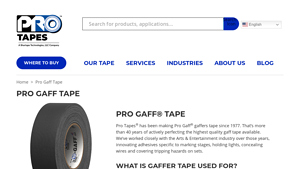
Domain: protapes.com
Registered: 1997 (29 years)
Introduction: Pro Gaff® Tape (gaffers tape) manufactured by Pro Tapes® since 1977. Available in 20 colors including standard colors (black, white, blue, electric blue, green, purple, yellow, red, tan, teal, olive drab, brown, burgundy, grey) and fluorescent options (green, orange, yellow, pink, blue) plus chroma green. Standard size is 2″ x 55 yards (fluorescent and chroma colors available in 2″ x 50 yards). Fe…
2. iTape – Matte Gaffers Tape
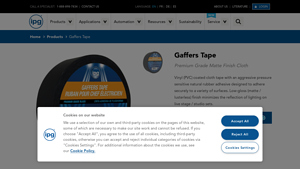
Domain: itape.com
Registered: 1998 (28 years)
Introduction: Premium Grade Matte Finish Cloth Gaffers Tape. Vinyl (PVC) coated cloth tape with aggressive pressure-sensitive natural rubber adhesive designed for secure adhesion to various surfaces. Features low-gloss matte finish that minimizes lighting reflection on live stage and studio sets. Primary applications include bundling and wrapping wires, securing cords to prevent trip hazards, masking stage floo…
Strategic Sourcing Conclusion and Outlook for Gaffer tape
How Can Procurement Teams Future-Proof Their Gaffer Tape Sourcing Strategy?
As infrastructure investments accelerate across Africa, South America, the Middle East, and Europe, demand for professional-grade gaffer tape extends beyond traditional entertainment sectors into construction, energy, and large-scale event management. B2B buyers should prioritize suppliers offering consistent cloth-weave quality and certified low-residue adhesives to ensure compliance with diverse international safety standards while supporting rapid deployment capabilities in varying climate conditions.
What Supply Chain Considerations Ensure Reliability for Global Operations?
When sourcing across continents, verify that manufacturers maintain rigorous batch-to-batch consistency in tensile strength and temperature resistance—critical performance factors for Saudi Arabian outdoor installations or German precision industrial applications. Establishing direct relationships with certified mills rather than relying solely on distributors mitigates currency fluctuation risks and ensures priority fulfillment during regional peak seasons. The tape’s evolution from stage floors to critical infrastructure cable management signals a permanent market shift toward residue-free, high-visibility safety solutions, making strategic inventory planning and proactive supplier verification essential for maintaining competitive advantage in emerging markets.